The Auto Insurance Claims Process: How to File After a Collision

Auto Insurance Claims: A Clear, Step-by-Step Guide to Filing After a Collision
An insurance claim starts the moment you tell your insurer a crash happened. The claim turns on-scene facts into documented damage, repair plans, and potential payments. This guide walks you through the claims process so you can protect your health, gather solid evidence, and get factory-quality repairs — even while working with adjusters and policy rules. You’ll find clear next steps for the scene, how to report and document the claim, how adjusters assess damage, why OEM-certified repairs matter, and what to expect with deductibles, total-loss decisions, and diminished-value claims. We include practical checklists, suggested phrasing for reporting a claim, and tips for coordinating with shops and insurers to keep you and your vehicle safe. Where helpful, we note local resources — like 24/7 towing and free estimates from a Prime Time Collision Center in Glendale — as optional support if you need immediate help. Follow the steps below to move from on-scene safety to a completed repair with confidence and good records.
What Should You Do First After a Car Accident?
Right after a collision, focus on safety, preserving evidence, and creating a clear record for your claim. Taking calm, methodical steps protects you medically and legally, and it gives insurers the documentation they need. Start by checking for injuries and calling emergency services if anyone is hurt. After that, document the scene with photos, notes, and witness information. Those early actions reduce disputes over fault and speed claim handling by providing precise, timestamped evidence.
Use this quick checklist at the scene to protect people and preserve the strongest possible evidence for your claim.
- Call 911 for injuries or hazards, and keep the scene secure while you can.
- Move to a safe spot if it’s possible and turn on your hazard lights to warn others.
- Take photos of all vehicles from several angles — include license plates and close-ups of damage.
- Exchange names, insurance companies, policy numbers, vehicle details, and phone numbers.
- Get witness names and brief statements with contact info.
- File a police report when required or if fault is unclear; write down the report number.
- Don’t admit fault — stick to the facts when talking at the scene.
- If needed, arrange towing and a shop estimate to document damage and move your vehicle to safety.
These steps build the factual foundation your claim needs and prepare you to report the loss to your insurer. If you need immediate removal or a fast damage estimate, services such as 24/7 towing and free estimates can help secure the vehicle and start repair paperwork quickly.
How Do You Stay Safe and Document the Accident Scene?
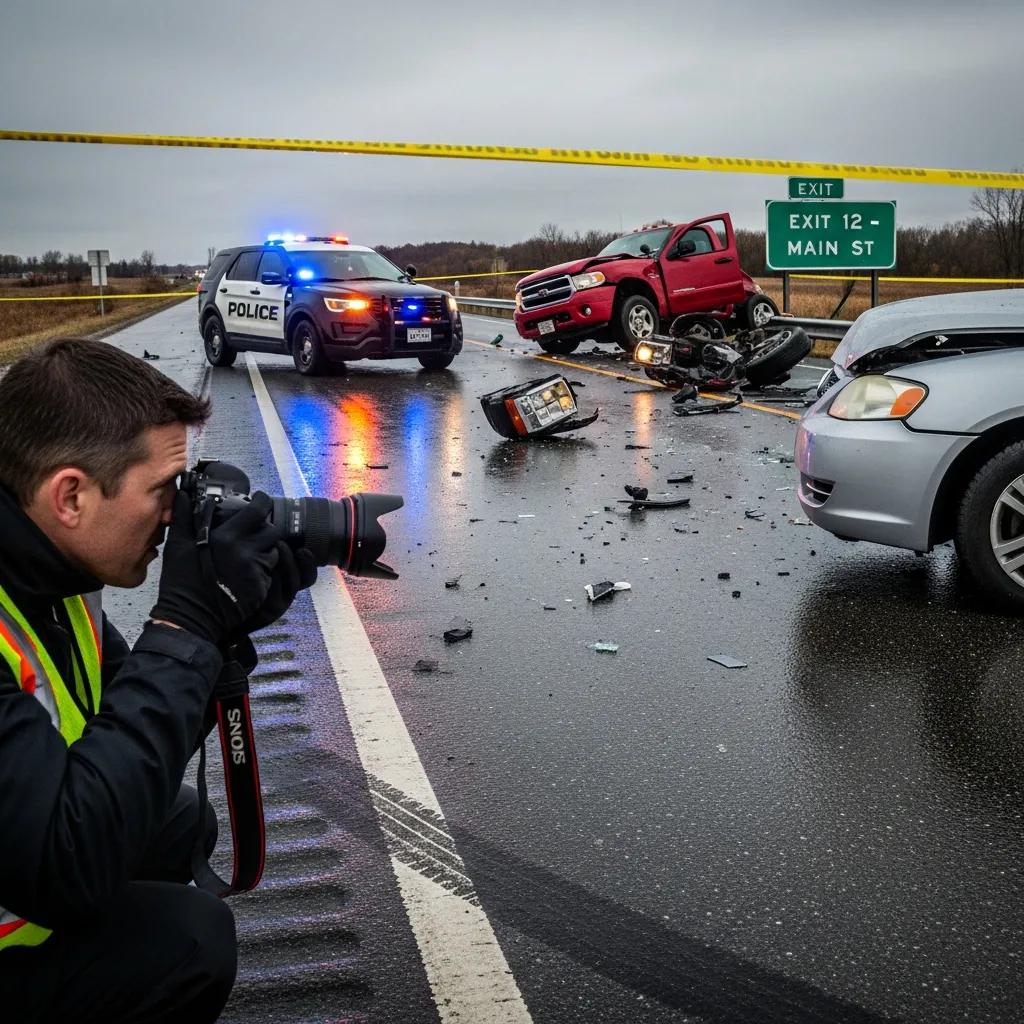
Balancing personal safety with evidence collection is key. Check for injuries first — call emergency responders if anyone needs help. When it’s safe, take photos before cars are moved: overall shots, side angles, close-ups of damaged panels, license plates, and any skid marks or road signs that show what happened. Save the date, time, and exact location (GPS or nearby landmarks) so timestamps stay intact — adjusters and insurers rely on that information when they review the claim.
Include interior photos if airbags deployed or injuries are visible, since interior damage and airbag status affect repair scope and safety work. After photographing the scene, jot down a short account of how the crash happened, the weather and road conditions, and any statements made — those notes help later when memory fades and you need to explain the incident.
What Information Should You Exchange and Collect?
Collecting complete, accurate information at the scene reduces later disputes and speeds up reporting. At minimum, exchange full names, phone numbers, insurance company names, and policy numbers. Note vehicle makes, models, license plates, and VINs if you can. If the other driver cooperates, take a photo of their license and insurance card — that helps insurers verify coverage quickly.
Also record any witnesses with brief statements and phone numbers; neutral witnesses can clarify fault when parties disagree. Keep any physical evidence you can — loose parts, damaged personal items, or parking marks — and save receipts for emergency towing, rental cars, or temporary repairs, since insurers will ask for these during the claim review.
How to File Your Car Insurance Claim: Step-by-Step
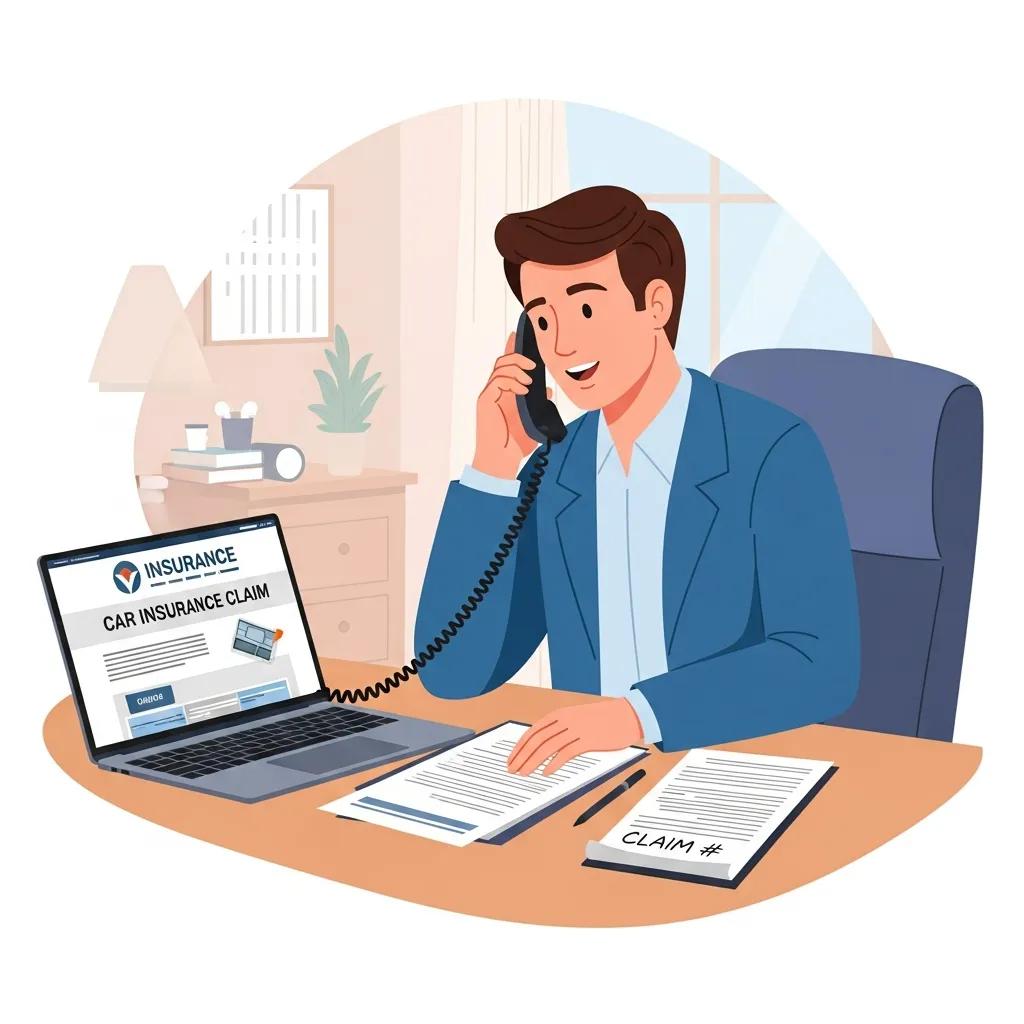
Filing a claim turns your on-scene documentation into an official record with your insurer and starts inspections, estimates, and repair approvals. The main steps are collecting your documents, contacting your insurer through your chosen channel, submitting evidence and estimates, and tracking your claim number and adjuster communications. Organized photos, the police report number, witness statements, and a repair estimate from a trusted shop reduce delays and help the insurer scope the job correctly.
Follow this action sequence when you file your claim, and consider the differences between filing methods.
- Gather documents: policy number, date/time/location, photos, police report, and witness contact info.
- Pick a reporting method — insurer portal, mobile app, phone, or local agent — and open the claim.
- Give a short, factual description of the incident and upload photos and the police report number.
- Write down your claim number and the adjuster’s name and contact details right away.
- Share an independent repair estimate if you have one, and ask which repair centers the insurer recommends and about rental coverage.
- Track the claim steps: adjuster inspection, estimate approval, repair authorization, and final payment.
Getting a free estimate from an OEM-focused shop can help: Prime Time Collision Center works with most insurers and provides detailed OEM-style scopes that highlight ADAS recalibration and structural work. A shop estimate is optional but useful for speeding insurer review and ensuring the repair scope matches factory procedures.
Below is a quick comparison showing what documents each filing path typically asks for and when they’re most useful.
| Submission Path | Typical Documents Requested | Best For |
|---|---|---|
| Online portal / app | Photos, police report number, date/time, vehicle details | Quick uploads and easy tracking |
| Phone reporting | Policy number, short incident description, claim opening | Complex situations that need immediate discussion |
| Agent-assisted | All documentation plus statements and endorsements | Personal guidance and help with negotiations |
The same core documents — photos, police report, and vehicle info — work for any path. Choose the channel that fits the claim’s complexity and whether you want a live conversation. Sharing a clear estimate from a certified shop often shortens inspection time and aligns expectations with the insurer.
What Information Do Insurers Need to Open a Claim?
Insurers usually ask for a consistent set of facts to open a claim. Have your policy number, exact location and direction of travel, date and time, names and contact information for everyone involved, and a concise damage description ready. Attach clear photos of the damage, license plates, and the surrounding scene, and provide the police report number when it’s available — the report often contains official details that affect liability determinations.
Adding a repair estimate from a collision center and any documentation for rental needs or medical expenses helps the adjuster assess costs and approve payments faster. Name your files clearly with timestamps (for example, “2024-12-01_front_left.jpg”) so claims teams can process them with fewer follow-ups.
Should I File My Claim Online or by Phone?
File online if the claim is straightforward — single-vehicle incidents work well with apps and portals because you can upload photos and get instant confirmation. Call if the claim involves multiple parties, injuries, or unclear fault — a phone conversation lets you explain nuances and ask immediate questions. Whatever method you choose, always record the claim number and who you spoke to, and save any confirmation screens or emails for your records.
If more than one vehicle or injuries are involved, start with a phone call or agent-assisted filing so a real person can capture the details and advise on next steps like adjuster visits or towing authorization. Keeping a paper trail of submissions and promises will help if timelines need follow-up.
Working with Your Insurance Adjuster and Policy
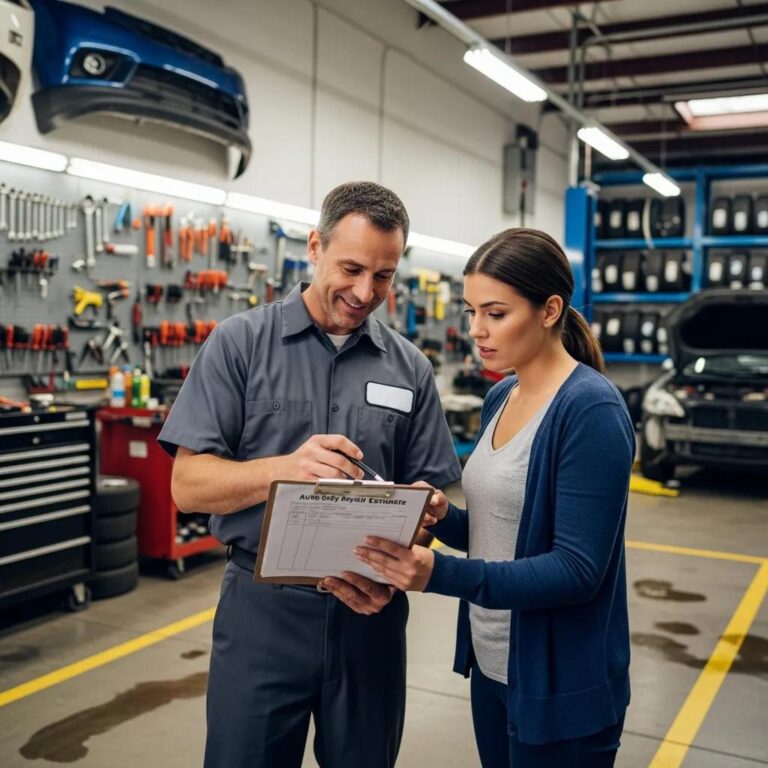
An adjuster documents damage, estimates repair costs, and recommends whether to repair or total the vehicle; knowing their role and communicating clearly protects your claim’s value. Adjusters review photos, inspect the car, and apply your policy’s terms — deductibles, limits, and coverage types — to calculate payments. Coming prepared with photos, an independent estimate, and receipts for rentals or medicals lets you have a constructive conversation and reduce the risk of undervaluation.
Practical tips to work smoothly with adjusters and protect your claim:
- Stick to the facts when you describe the incident — avoid admitting fault.
- Share your independent estimate and ask the adjuster to explain any line-item differences.
- If items are denied, request written reasons and the basis for depreciation or salvage adjustments.
These steps help you control the claim narrative and give you evidence to challenge low settlements or request a re-inspection. If needed, a detailed OEM repair estimate or a certified shop’s second opinion gives you leverage and shows why manufacturer-specific parts or calibrations are necessary.
What Does an Insurance Adjuster Do?
An adjuster documents damage, assesses who’s at fault, and prepares an initial settlement by estimating repair costs or valuing a total-loss. They may review uploaded photos and do a desk review, or schedule an in-person appraisal. Adjusters also communicate with repair shops and claimants to verify the repair scope and apply policy details to determine payment. If you provide extra evidence or independent estimates, adjusters will factor that into negotiations.
When an adjuster inspects your car, present your documentation and ask for line-item explanations if something’s missing. If you believe the adjuster missed ADAS or structural items, request a re-inspection with a shop representative present so critical safety work isn’t overlooked.
How Different Coverage Types Affect Your Claim
Your coverage — liability, collision, comprehensive, or uninsured motorist — determines who pays and whether your deductible applies. Collision usually covers your repairs after you meet the deductible; liability covers damage you cause to others; comprehensive handles non-collision losses like theft or weather damage; uninsured/underinsured motorist coverage helps when the other driver lacks sufficient insurance. Which coverage applies affects payments and subrogation paths.
Knowing which coverage you’re using helps you estimate out-of-pocket costs and what the insurer will pay. For example, collision claims usually require your deductible, while liability claims do not. Check rental-car provisions, medical payment limits, and any endorsements like diminished-value coverage so you know what to request during the claim process.
If you’re injured, you may also have legal options to recover medical bills and lost income in addition to insurance claims.
Compensation Options After an Injury
People injured in a crash sometimes pursue legal remedies to recover medical costs and lost earnings tied to their injuries. Depending on the state and situation, that may include no-fault benefits or a civil lawsuit to help cover treatment, rehabilitation, and economic losses.
Why OEM-Certified Collision Repair Matters for Your Claim
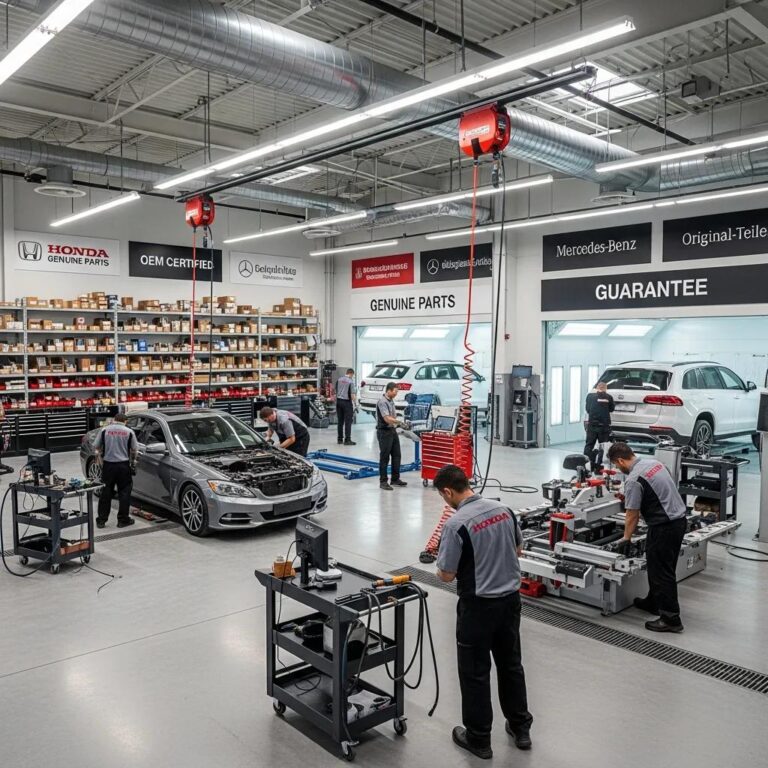
OEM-certified repairs follow the manufacturer’s procedures, use specified parts when needed, and include required ADAS recalibration and structural work so the vehicle returns to its original safety and performance. Choosing a shop that follows factory specs protects occupants, preserves warranties, and supports accurate insurance payments for necessary repairs. Insurers increasingly recognize the difference between OEM-aligned repairs and generic fixes, and documentation from an OEM-certified shop helps justify specific parts and calibrations that affect both cost and safety.
Here are the main benefits to consider when picking a shop for an insurer-backed repair:
- Safety: Manufacturer procedures and OEM parts help preserve structural integrity and proper airbag performance.
- ADAS Accuracy: Certified shops perform required sensor recalibration and system testing.
- Warranty & Records: OEM repairs keep manufacturer warranties intact and create clear documentation for resale value.
These points show why repair choice affects safety, insurance negotiations, and future vehicle value. A detailed OEM repair estimate makes clear what’s necessary — something generic scopes can miss.
Industry experts note that following manufacturer standards helps maintain vehicle safety and long-term integrity.
Why OEM-Certified Shops Matter
Choosing an OEM-certified shop helps ensure repairs use the manufacturer’s recommended parts and procedures — an important factor for vehicle safety and long-term performance.
Quick comparison: common repair approaches and their typical safety and claims impacts.
| Repair Approach | Safety Impact | Insurance Consideration |
|---|---|---|
| OEM Certified Repair | Maintains crashworthiness and warranty; includes ADAS recalibration | Strong documentation for insurer approval |
| Aftermarket / Generic Parts | Quality varies; may affect fit and long-term performance | Insurer may propose a lower settlement |
| Cosmetic-Only Repair | Fixes visible damage but can miss structural issues | Risk of safety problems and reduced resale value |
What Makes OEM-Certified Repairs Important for Safety?
OEM-certified repairs follow manufacturer repair manuals, use specified parts and adhesives, and include recalibration of advanced driver-assistance systems so the vehicle performs as intended. Fit, corrosion protection, and crash energy management are engineered to precise tolerances — straying from factory methods can reduce protection in a future collision. For vehicles with ADAS features like lane-keep assist or automatic emergency braking, correct sensor alignment and software calibration are essential for reliable operation after repairs.
Providing documentation of OEM procedures and calibration in your claim explains why certain parts or processes are necessary and reduces disputes over repair scope. Because ADAS work is safety-critical and sometimes costly, certified shops that document calibration and testing create stronger evidence for an accurate insurance settlement.
How Prime Time Collision Center Helps Your Claim
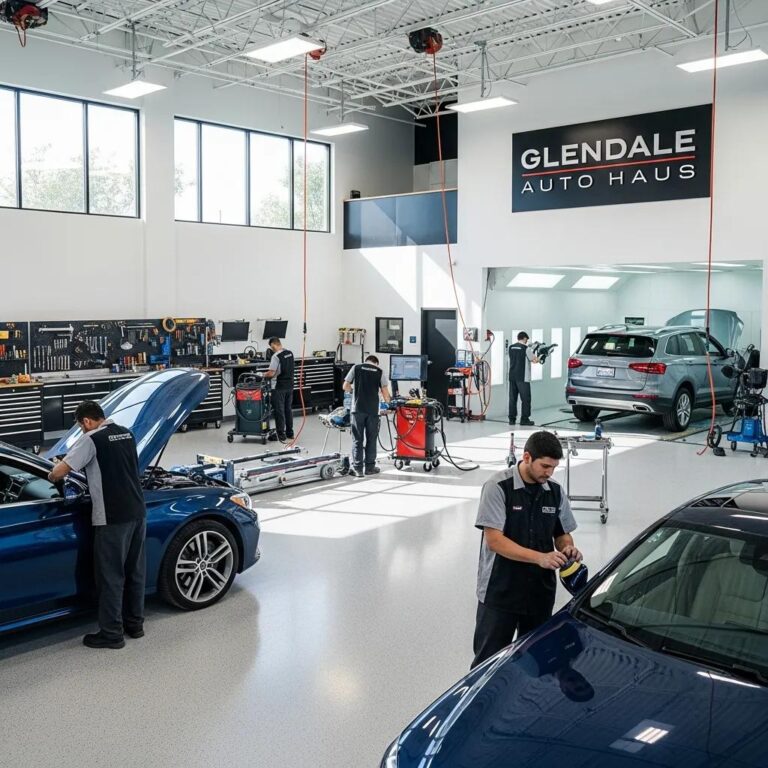
Prime Time Collision Center in Glendale, CA focuses on OEM-aligned repairs and factory-quality restorations that meet insurer expectations for safety and documentation. Our I-CAR Platinum Certified technicians follow manufacturer procedures and produce detailed estimates that show necessary structural work and ADAS recalibration. We work with all major insurers, offer free estimates, and provide 24/7 towing — services that can speed claim documentation and move you from filing to repair faster.
Choosing a certified shop that coordinates directly with insurers simplifies communication and reduces back-and-forth about repair scope. Requesting a free estimate from a manufacturer-focused facility gives your adjuster an authoritative repair plan they can rely on. If you want to protect safety and resale value, a certified collision center creates the clearest path to a factory-quality repair.
Deductibles, Total Loss, and Diminished Value — What You Should Know
Understanding deductibles, total-loss thresholds, and diminished value matters because each affects your settlement and whether you file a claim. Your deductible is the out-of-pocket portion on collision claims; total-loss valuation decides if the insurer will replace rather than repair your vehicle; and diminished value covers the drop in market value after a repair. Knowing how insurers calculate these numbers and how to present evidence to contest them helps you make informed choices during negotiation.
The table below summarizes the financial concepts and the actions you can take as a claimant.
| Financial Concept | What It Determines | Claimant Action |
|---|---|---|
| Deductible | Your out-of-pocket cost before insurance pays on collision claims | Compare repair estimate to deductible to decide whether to file |
| Total Loss | Whether repair cost exceeds a percentage of the vehicle’s actual cash value (ACV) | Provide market comparables and condition evidence to challenge ACV |
| Diminished Value | Loss in resale value after damage and repair | Obtain an independent appraisal and submit documentation |
Decisions about filing often come down to simple math — repair cost versus deductible and repair cost versus ACV. Supporting evidence like market comparables or independent appraisals strengthens your negotiating position. If damage is close to your deductible, think about whether certified repairs and documentation could protect future resale value enough to justify filing a claim.
How Do Deductibles Affect Claim Costs?
Your deductible is what you pay toward a repair before collision coverage kicks in, so it influences whether filing a claim makes financial sense for small damage. For example, with a $1,000 deductible and a $1,200 repair, you’d pay the first $1,000 and the insurer the remaining $200 — some drivers choose to pay out of pocket to avoid potential rate effects. For larger repairs well above the deductible, filing is usually the right move to limit your expenses and use insurer-approved repair processes.
Weigh the trade-offs: filing a minor claim can create administrative work and possibly affect premiums, while certified repairs and good documentation can justify filing when safety systems are involved. Talk with your insurer and the repair shop to decide the best path for cost, safety, and long-term value.
When Is a Vehicle Considered a Total Loss and How Is It Valued?
An insurer declares a vehicle a total loss when repair costs exceed a threshold of the vehicle’s actual cash value (ACV); thresholds vary by company and state but commonly sit between 70% and 80% of ACV. Insurers determine ACV using market comparables, vehicle condition, mileage, and regional pricing, then subtract salvage value to arrive at a payout. If you disagree with the ACV, provide comparable sales, maintenance records, and photos to support a higher valuation.
If you receive a total-loss offer, request a written breakdown of how the ACV and salvage values were calculated and supply independent comparables or an appraisal to negotiate. Working with a reputable OEM-focused repair center can also inform whether repairs are reasonable and provide documented costs that influence the insurer’s decision.
What Is a Diminished Value Claim and How Do You File One?
Diminished value is the reduction in a vehicle’s market value after it’s been damaged and repaired, and in some states or situations you can pursue this against the at-fault party’s insurer. To file, document the vehicle’s pre-accident value, gather full repair records and OEM documentation, and assemble market comparables showing similar vehicles’ prices post-repair. An independent appraisal that estimates diminished value, together with repair records, strengthens your claim.
Rules vary by state and insurer, so check local regulations before filing. If the diminished value is significant, present the appraisal and repair documentation to the at-fault insurer and be ready to negotiate or escalate with additional market data. A certified repair shop or appraiser can produce the technical documentation that supports a diminished-value claim.
If you need help with estimates, insurer coordination, or OEM-quality repairs after a collision, consider contacting Prime Time Collision Center. We offer free estimates, work with all major insurers, and provide 24/7 towing to get you back on the road safely. Our OEM repair scopes and certified technicians can strengthen your claim paperwork and move repairs from estimate to completion with safety and value in mind.
Frequently Asked Questions
What should I do if the other driver is uninsured?
Report the crash to your insurance company right away. If you carry uninsured motorist coverage, it may cover your damages. Document the scene with photos and witness statements — that evidence is important. If injuries or major damage occurred and recovery is uncertain, consider speaking with an attorney to review your options for recovering costs.
How can I speed up my insurance claim?
Gather all documents before you file: photos, police reports, witness contacts, and repair estimates. File quickly through your insurer’s preferred channel (app, online portal, phone, or agent) and keep a clear record of every communication. Prompt follow-ups and organized evidence help move the claim along faster.
What if my insurance claim is denied?
Read the denial letter to understand why. Common causes include lack of coverage, missing documentation, or policy exclusions. You can appeal by providing additional evidence or clarification. Talk to your insurer for a full explanation and consider legal advice if you need to contest the decision.
Does my driving record affect my claim?
Your driving history can influence future premiums and how insurers view your risk, but it doesn’t automatically change the facts of a current crash. A history of violations or accidents can lead to closer scrutiny and higher rates later. Maintain safe driving and address violations promptly to protect your record.
What are the benefits of using an OEM-certified repair shop?
OEM-certified shops follow manufacturer procedures, use specified parts, and document needed calibrations — all of which help keep your vehicle safe and preserve warranty and resale value. That documentation also supports your insurance claim by clearly showing why certain repairs are required.
Can I pick any repair shop after an accident?
Yes — you generally have the right to choose your repair shop. Some policies list preferred shops, but you can still select a facility that fits your needs. An OEM-certified shop often makes coordination with insurers smoother and helps ensure repairs meet manufacturer standards. Check your policy for any insurer requirements.
What should I do if I disagree with the adjuster’s assessment?
Collect supporting evidence: independent repair estimates, photos, and documentation of the vehicle’s condition. Ask the adjuster for a detailed explanation and the basis for their conclusions. If needed, request a second inspection or bring in a certified repair shop for an expert opinion. Solid evidence strengthens your position during negotiations.
Conclusion
Knowing the claims process helps you handle a post-collision situation with confidence — from protecting people at the scene to choosing a repair shop that preserves safety and value. Follow the steps here, document everything, and consider working with a certified collision center for OEM-quality repairs and clear paperwork. If you need help, reach out to a trusted shop for an estimate and assistance through the claims process. Take control of your claim and make sure your vehicle gets the care it deserves.