
Wheel Alignment After a Car Accident: Restore Safety and Driving Performance
A collision can knock your vehicle’s steering and suspension out of precise alignment. Post‑accident wheel alignment corrects those angles so your car tracks straight, brakes predictably, and components last longer. This guide walks you through what a post‑crash alignment is, how misalignment affects safety and fuel economy, and the inspection and repair steps technicians use to return a vehicle to factory specifications. You’ll learn common warning signs like uneven tire wear and steering pull, the basics of camber/caster/toe, and what to expect from two‑wheel, four‑wheel, and ADAS‑calibrated alignments after a crash. We also explain the tools and workflow shops use, how insurance typically handles alignment as part of collision repairs, and how to schedule an inspection and free estimate. Read on for a clear, safety‑first plan to document and address alignment needs after an accident.
Why Wheel Alignment Matters After a Collision
After a crash, alignment is about returning wheel angles and steering geometry to the manufacturer’s specs so the vehicle steers true, wears tires evenly, and reacts predictably under braking. Impacts can bend suspension parts or change the relationship between tie rods and control arms, shifting camber, caster, toe, and thrust angle — all of which affect stability and driver control. Correcting alignment reduces abnormal tire wear, improves fuel economy by lowering rolling resistance, and prevents extra stress on suspension parts that leads to bigger repairs. Restoring OEM alignment after a crash protects safety, cuts lifetime maintenance costs, and keeps handling where it should be.
The sections that follow explain how misalignment compromises safety and outline the long‑term risks of leaving it unaddressed so you can prioritize inspections after any collision.
How Misalignment Impacts Safety and Vehicle Control
Misalignment changes how tires meet the road and how steering inputs translate to direction. That can cause steering pull, wandering, and reduced stability in emergency maneuvers. For example, a vehicle that pulls to the right at highway speed likely has asymmetric toe or camber — that increases stopping distance and makes evasive corrections harder, raising crash risk. Misalignment can also upset braking balance and interfere with ABS and stability control systems, so a proper alignment helps electronic safety systems work as intended. That’s why a post‑collision alignment check is a safety priority, not an optional service.
Next, we cover the longer‑term mechanical and financial consequences of ignoring misalignment so you can see why timely inspection matters.
Long‑Term Risks of Ignoring Post‑Accident Alignment
Leaving alignment problems untreated speeds up uneven tire wear — often showing as inner‑ or outer‑edge wear — and increases the chance you’ll need tires replaced sooner. Over time, misalignment puts extra load on tie rods, ball joints, control arms, and steering racks, which can lead to fatigue, failure, and bigger repair bills than the original alignment would have cost. Unchecked alignment issues can also hide deeper damage; what starts as a simple adjustment may become part replacement or suspension repair if not caught early. Early inspection, documentation, and correction save money and reduce the risk of cascading failures.
With that context, the next section helps you spot the most common post‑crash symptoms so you can judge how urgent an inspection is.
Common Signs of Wheel Misalignment After an Accident
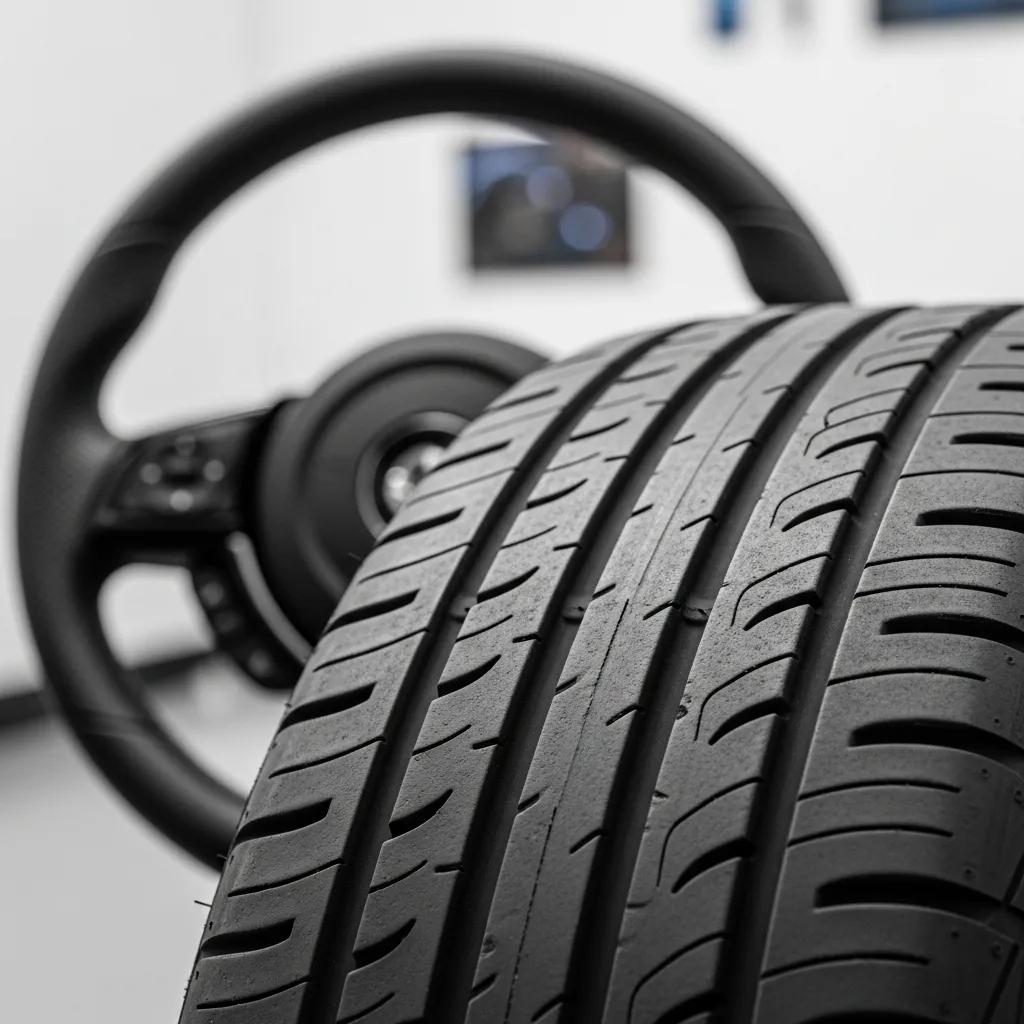
After an impact, watch for a few clear signs that indicate wheel misalignment and the need for a professional check. Typical symptoms include an off‑center steering wheel when driving straight, the vehicle pulling to one side, uneven or accelerated tire wear, and unusual vibrations or suspension noises. Catching these early lets a technician target inspections and prevents a simple adjustment from turning into a larger repair.
Use this practical checklist of easy self‑checks and test‑drive observations to decide whether to bring the vehicle in.
- Steering Wheel Off‑Center: When driving straight on level pavement, the wheel should sit near center. A noticeable offset suggests alignment issues.
- Vehicle Pulling to One Side: If you must constantly correct to stay straight, toe or camber is likely out of spec.
- Uneven Tire Wear: Inner‑ or outer‑edge wear on one or more tires points to specific angle errors.
- Vibrations and Noises: Persistent vibrations or clunking over bumps can indicate bent suspension parts or alignment‑related stress.
These simple checks give immediate clues; the sections below explain how to inspect tires and run basic road tests before you visit a shop.
How to Spot Uneven Tire Wear and Steering Problems
A visual tire inspection often maps directly to an alignment fault: inner‑edge wear commonly signals negative camber or toe‑out, while outer‑edge wear suggests positive camber or toe‑in. Run your hand across the tread to feel for cupping, scalloping, or one‑sided wear and compare front to rear tires for thrust angle issues. For steering, do a low‑speed straight‑road check: on a calm, level stretch, let the wheel self‑center and note any constant corrections needed to maintain a straight line. Photos of tire wear and notes about driving conditions are useful for repair estimates and insurance discussions.
These visual and simple dynamic checks help you judge urgency before a professional alignment and deeper suspension inspection.
Vehicle Behaviors That Point to Suspension or Alignment Damage
Pulling under braking, wandering at speed, or instability during lane changes usually indicate alignment or suspension damage rather than just a balance issue. Wheel balance vibration is usually RPM‑specific, while alignment pull persists across speeds and needs steering correction; they feel different. Clunks or pops over bumps often mean bent control arms or worn bushings that should be repaired before attempting an alignment. A professional inspection separates bent parts from adjustable geometry problems so alignment actually restores OEM handling.
Detecting these behaviors helps decide whether suspension repair is required before alignment — a factor that affects cost and scheduling covered later.
How Prime Time Collision Center Handles Post‑Collision Wheel Alignment
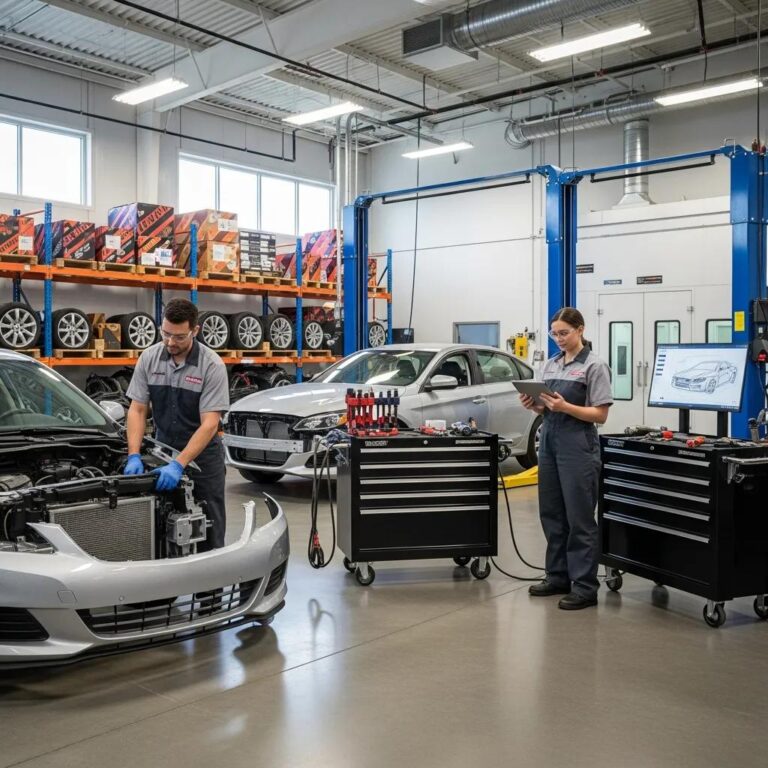
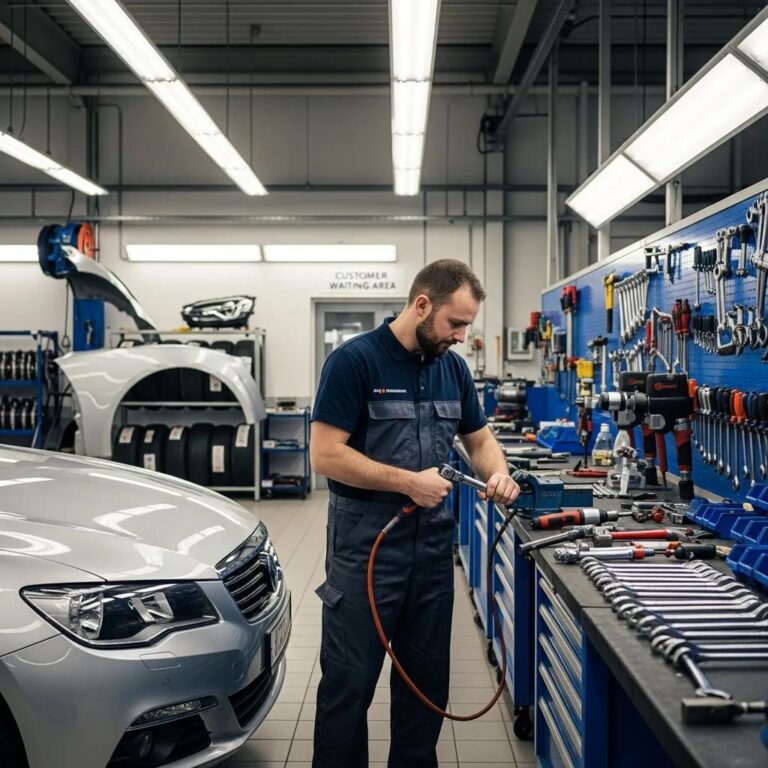
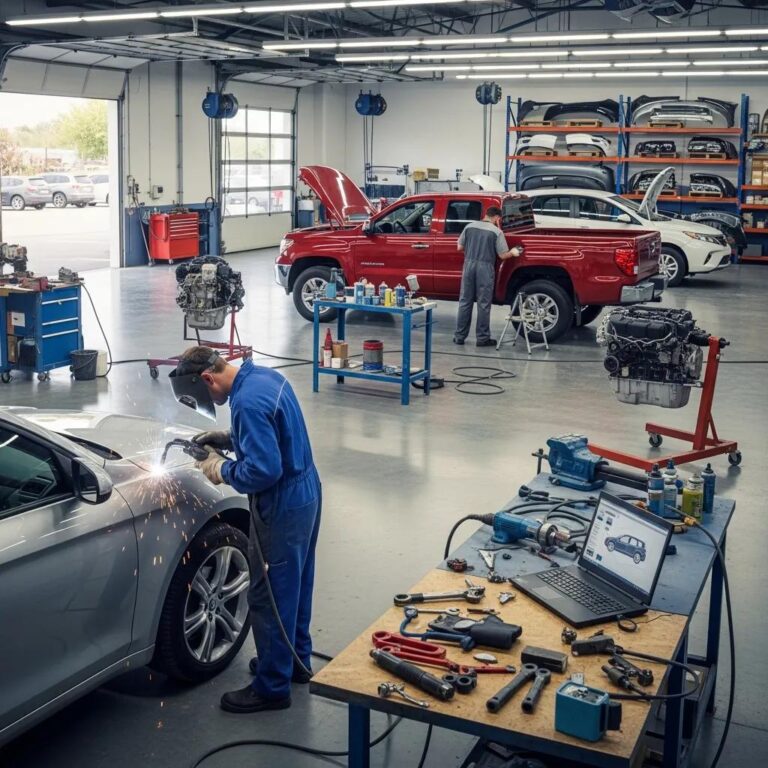
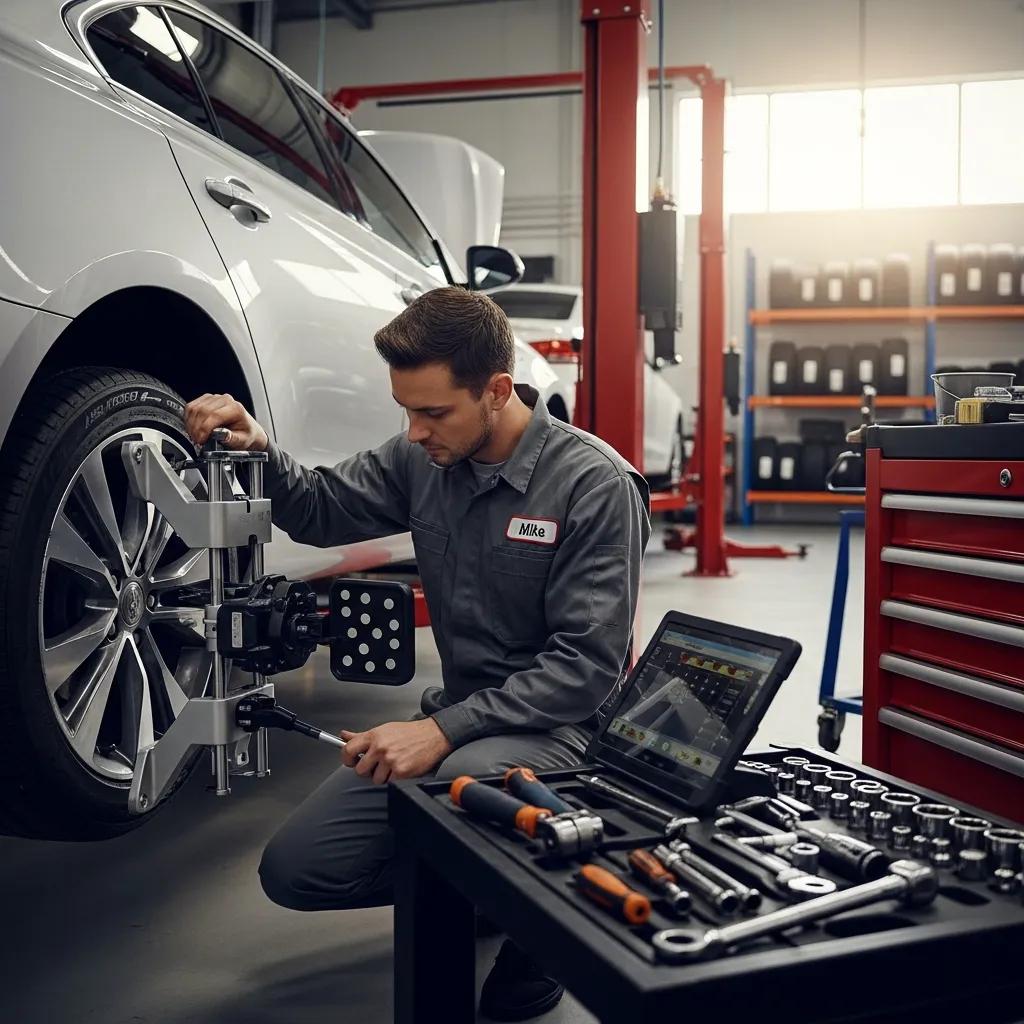
Our post‑collision alignment process starts with a documented visual and electronic inspection, followed by any needed repairs to bent or damaged components, and finishes with precise measurement and adjustment to factory tolerances. Technicians verify suspension integrity, measure camber/caster/toe, and check thrust and steering systems before making adjustments. When alignment follows required part repairs, the result is steering geometry and electronic systems that perform as designed, restoring safe handling and even tire life. Below we outline the equipment and credentials that produce consistent, accurate results after a crash.
Next, we list the advanced tools commonly used in modern shops and describe how certified techs follow OEM procedures during alignment work.
Advanced Technology and Equipment We Use
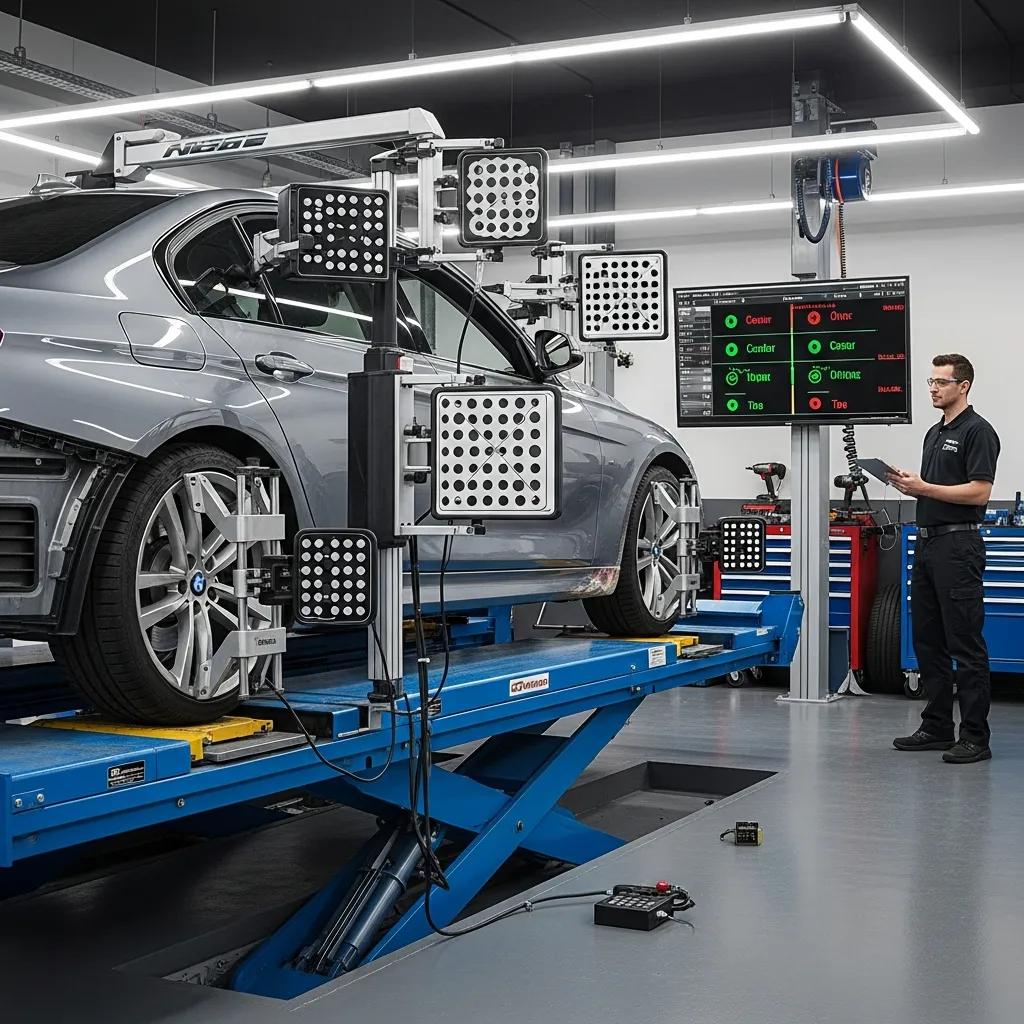
Precision alignment racks, sensor‑based measurement systems, camera or laser alignment heads, and ADAS calibration rigs are core tools that let shops measure and correct wheel geometry within tight manufacturer tolerances. Alignment racks give a stable platform, while multi‑camera systems read wheel angles and thrust to fractions of a degree for reliable four‑wheel alignments. ADAS calibration equipment re‑establishes sensors and cameras that feed driver‑assist systems after suspension or body work — critical for safety features to function correctly. Using calibrated tools ensures adjustments match OEM specifications instead of rough estimates.
The table below summarizes each tool, its key attribute, and why it matters for post‑collision alignment accuracy.
| Equipment | Attribute | Why it matters |
|---|---|---|
| Alignment rack | Stable, level platform | Creates a consistent reference for accurate measurements and adjustments |
| Camera/laser measurement system | High‑resolution angle sensing | Measures camber, caster, and toe within OEM tolerances |
| ADAS calibration rig | Sensor and camera recalibration | Restores lane‑keep, adaptive cruise, and automatic braking systems tied to steering geometry |
These tools, used with documented procedures, reduce variability in post‑collision alignments and support reliable, safe outcomes.
Why I‑CAR Platinum Certification Matters
I‑CAR Platinum certification shows technicians have completed advanced training covering manufacturer repair procedures and quality control steps — enabling them to follow OEM alignment tolerances and collision repair workflows. Certified techs understand suspension geometry, tie‑rod adjustments, torque specs, and manufacturer service bulletins that affect alignment and ADAS recalibration. When certification is paired with calibrated equipment, it creates a quality‑control chain that restores vehicle performance to manufacturer intent and produces documentation that supports insurance claims.
Technicians who follow OEM procedures minimize rework and help ensure safety systems function correctly after alignment and calibration.
Key Alignment Terms: Camber, Caster, and Toe
Knowing camber, caster, and toe helps you read inspection reports and understand how each adjustment affects handling, tire wear, and steering feel. Camber is the wheel tilt inward or outward from vertical and affects the tire contact patch in turns; caster is the steering axis tilt that helps steering return and high‑speed stability; toe is how wheels point relative to each other and directly influences tire scrub and wear. These definitions let you ask targeted questions about which angles were out of specification after an accident.
The quick‑reference table below pairs terms with plain‑English definitions and the practical effects you’ll notice.
| Term | What it is | Effect on vehicle |
|---|---|---|
| Camber | Wheel tilt inward (negative) or outward (positive) | Changes cornering contact and can cause inner/outer tire wear |
| Caster | Forward or rearward tilt of the steering axis | Helps steering return to center and improves straight‑line stability |
| Toe | Angle wheels point toward or away from the vehicle centerline | Directly causes tire scrub and rapid, uneven tread wear |
How Camber Affects Alignment
Camber determines how the tire contacts the road: negative camber loads the inner edge during turns and can cause inner‑edge wear if excessive; positive camber shifts load to the outer edge. After a curb strike or side impact, camber can change because of bent control arms or damaged strut mounts, producing characteristic wear patterns. Proper camber balances cornering grip and even tread life; manufacturers tune camber to optimize grip while limiting uneven wear. Recognizing camber‑related wear helps technicians decide if an adjustment alone will do or if parts need replacing.
Next we look at how caster and toe influence everyday handling and tire longevity.
The Roles of Caster and Toe in Handling
Caster stabilizes the steering and helps it return to center by creating self‑aligning torque — insufficient caster can make steering feel vague and reduce high‑speed stability. Toe affects immediate steering response and tire scrub: toe‑in tends to wear outer edges, while toe‑out can accelerate inner‑edge wear and make the car feel twitchy. After a collision, toe often moves out of spec due to bent steering linkages or mispositioned tie rods; correcting toe is usually the most direct way to eliminate steering pull. Together, caster and toe adjustments tune directional stability and tire life, making accurate measurement central to any post‑impact alignment.
Understanding these roles helps you read alignment reports and prioritize repairs before measurement and adjustment.
How Much Does a Post‑Accident Wheel Alignment Cost?
Alignment costs after a collision vary by service: two‑wheel (front) alignments typically cost less than four‑wheel alignments, and added ADAS calibration or suspension repairs increase the total. Cost drivers include whether bent components need replacement, ADAS sensor recalibration, vehicle type (luxury models can cost more), and labor rates tied to diagnostic time. The final price depends on inspection findings and whether alignment is included in the overall collision repair estimate submitted to insurance.
Below are the common factors that influence cost and a comparison table that maps alignment types to typical service attributes.
- Extent of damage: Replacement parts like tie rods or control arms increase the repair bill.
- Type of alignment: Two‑wheel vs. four‑wheel affects labor and measurement complexity.
- ADAS calibration: Modern safety systems add calibration time and special equipment costs.
- Vehicle class: Manufacturer procedures for certain models can require extra steps and tools.
| Alignment Type | Characteristic | Typical cost driver |
|---|---|---|
| Two‑wheel alignment | Front‑end only | Lower labor time; used when rear geometry is unaffected |
| Four‑wheel alignment | All‑wheel geometry | Higher precision; needed when thrust angle or rear suspension is involved |
| ADAS‑calibrated alignment | Includes sensor calibration | Adds calibration equipment time and verification steps |
What Raises the Price of Post‑Collision Alignment?
Labor to access and disassemble components, replacement parts, ADAS calibration time, and diagnostic complexity all help determine the final price. Shops start with a drive test and measured inspection to see if adjustments alone will suffice or if bent parts require replacement; parts and added labor drive estimates higher. Luxury or specialty vehicles may need manufacturer‑specific tools and procedures that increase cost. Extensive frame or suspension damage pushes alignment from a service into a major repair. Clear, line‑itemed estimates help owners and adjusters evaluate coverage and authorize necessary repairs.
Knowing these factors helps you anticipate variability and have transparent conversations with repairers and insurers.
Will Insurance Pay for Alignment After a Crash?
Alignment is frequently covered by collision insurance when misalignment results directly from a covered accident and the need for alignment is documented in a damage inspection or repair estimate. To support a claim, document measured angle readings, photos of damaged components or tire wear, and a clear explanation of how the impact affected steering or suspension. Prime Time Collision Center works with major insurers to document collision‑related alignment needs, provide free estimates, and guide customers through the inspection‑to‑claim process to help ensure required alignments are authorized. Including measured defects and alignment on the overall repair estimate increases the chance of coverage.
The table below outlines common scenarios, the documentation that supports a claim, and the documentation’s value for approval.
| Scenario | Required documentation | Value for claim |
|---|---|---|
| Alignment after visible suspension damage | Photos, measured angles, repair estimate | High — directly links alignment to collision damage |
| Alignment supported by tire wear evidence | Tire photos, tread measurements, drive test notes | Moderate — supports need when tied to the accident |
| Alignment plus ADAS calibration | Sensor scan, calibration logs, before/after measurements | High — documented recalibration is critical for safety systems |
How to Schedule Your Post‑Accident Wheel Alignment
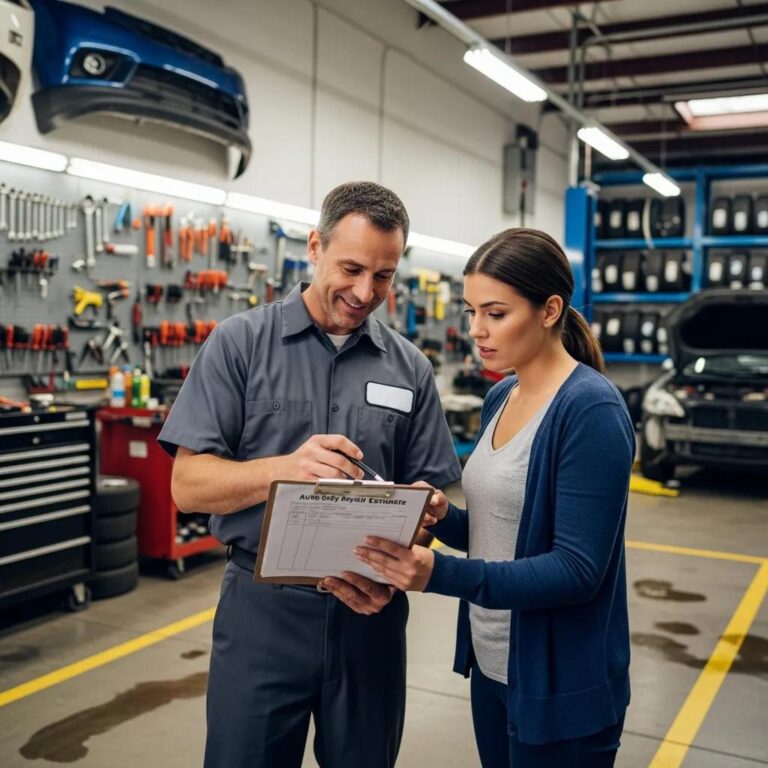
Start by requesting a documented inspection and bring photos of damage, a brief list of symptoms, and any insurance claim information. That lets technicians prioritize parts, diagnostics, and ADAS calibration needs. At the shop, expect a visual inspection and drive test followed by a written estimate itemizing alignment, repairs, and calibration work if needed. Prime Time Collision Center offers free estimates, works directly with insurers to speed authorization, and uses I‑CAR Platinum‑trained techs and calibrated equipment to restore OEM standards — ensuring the alignment is done right and documented for claims. Scheduling balances inspection, any required repairs, and calibration windows so you get a reliable timeline to get back on the road safely.
Use the checklist below to prepare for your appointment and make inspection and authorization go smoothly.
How to Get a Free Alignment Estimate
Collect photos of visible damage, a clear summary of symptoms (pulling, off‑center steering, unusual tire wear), and any insurance claim reference before you arrive. The shop will do a visual and mechanical inspection, test drive the vehicle to reproduce symptoms, and take measured alignment readings to show deviations from manufacturer specs. You’ll receive a written estimate that separates parts, labor, alignment, and ADAS calibration items — which helps the insurance review and approval process. Clear documentation speeds the process and reduces surprises when repairs begin.
This documented approach ensures transparency and helps secure insurance authorization when alignment is collision‑related.
How Long Will a Post‑Collision Alignment Take?
An alignment alone usually takes 30–90 minutes. After a collision, the process often takes longer because of inspection, parts replacement, and ADAS calibration — total turnaround can range from a few hours to several days depending on parts availability. The initial inspection confirms whether the vehicle can be aligned immediately or if bent components must be repaired or replaced first, and each repair step adds labor and scheduling time. ADAS calibration requires extra verification and sensor checks, which add specialized equipment time. Shops that coordinate with insurers and provide documented estimates help minimize delays and set realistic completion windows.
- Bring documentation: Photos of damage and any insurance claim numbers to speed evaluation.
- Ask for a written estimate: Make sure alignment, parts, and ADAS calibration are itemized for insurance submission.
- Confirm certification and equipment: Request that techs follow OEM procedures and perform any required ADAS calibration.
| Service Step | What the shop does | Why it matters |
|---|---|---|
| Inspection | Visual check, drive test, measured readings | Determines whether alignment alone is sufficient |
| Repairs | Replace bent components as needed | Ensures alignment settings can be restored accurately |
| Alignment & Calibration | Precision adjustments and ADAS setup | Restores OEM handling and safety system function |
This structured process creates a documented trail for insurance and returns your vehicle to safe, reliable operation.
Frequently Asked Questions
1. How often should I get my wheel alignment checked after an accident?
Have your alignment checked right after a collision, even if you don’t notice symptoms. After that, regular checks every 6,000–10,000 miles are a good rule of thumb, or sooner if you see uneven tire wear or steering pull. If you drive frequently on rough roads, consider more frequent inspections. Early detection prevents further damage and keeps the vehicle safe and efficient.
2. Can I drive my car if I suspect misalignment after a collision?
We don’t recommend driving a vehicle with suspected post‑collision misalignment. It can cause unsafe handling, faster tire wear, and compromised braking. If you notice pulling or an off‑center steering wheel, avoid driving until a professional inspects it. Continuing to drive can worsen damage and increase repair costs.
3. What should I do if my insurance denies coverage for alignment?
If coverage is denied, review the denial for the specific reason and gather supporting documentation: inspection reports, photos of damage, and evidence linking misalignment to the accident. You can appeal with additional information or request a re‑evaluation. Your repair shop can often help by providing detailed measurements and documentation to clarify the necessity of the alignment.
4. Are there any DIY checks for alignment issues?
While a professional inspection is best, you can do some basic checks: look for uneven tire wear, see whether the steering wheel sits off‑center when driving straight, and note if the car pulls to one side or vibrates. These signs suggest misalignment, but accurate diagnosis and correction require professional equipment.
5. How does wheel alignment affect fuel efficiency?
Proper alignment reduces rolling resistance so your engine doesn’t have to work as hard. Misalignment increases drag, which raises fuel consumption. Keeping wheels aligned helps maintain fuel economy and saves money at the pump over time.
6. What’s the difference between two‑wheel and four‑wheel alignment?
Two‑wheel alignment adjusts the front wheels and is often enough for vehicles with a solid rear axle. Four‑wheel alignment adjusts all four wheels, ensuring front and rear axles meet manufacturer specs — necessary for independent rear suspensions or significant rear impacts. The right choice depends on vehicle design and damage extent.
7. How should I prepare for my wheel alignment appointment?
Bring photos of the damage, a clear list of symptoms you’ve noticed, and any insurance claim details. Arrive knowing whether the car pulls or has uneven tire wear. This helps the technician diagnose the problem faster and provide a more accurate estimate.
Conclusion
Post‑accident wheel alignment is essential to restore safety, extend tire life, and keep your vehicle handling as intended. Addressing misalignment quickly helps avoid larger repairs and preserves fuel efficiency. Don’t wait for symptoms to get worse — schedule an alignment inspection today. Contact Prime Time Collision Center for a free estimate and expert service you can rely on.