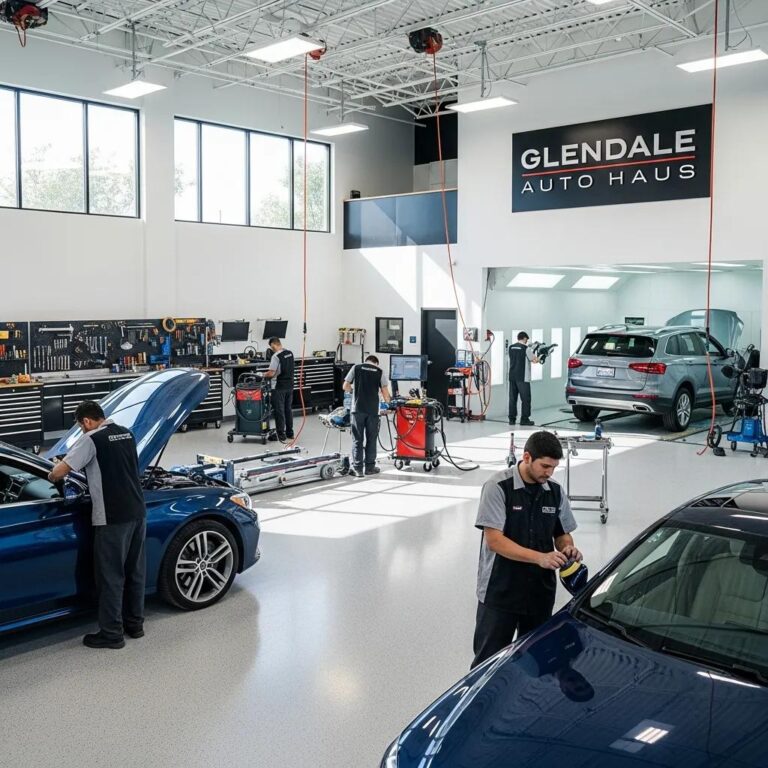
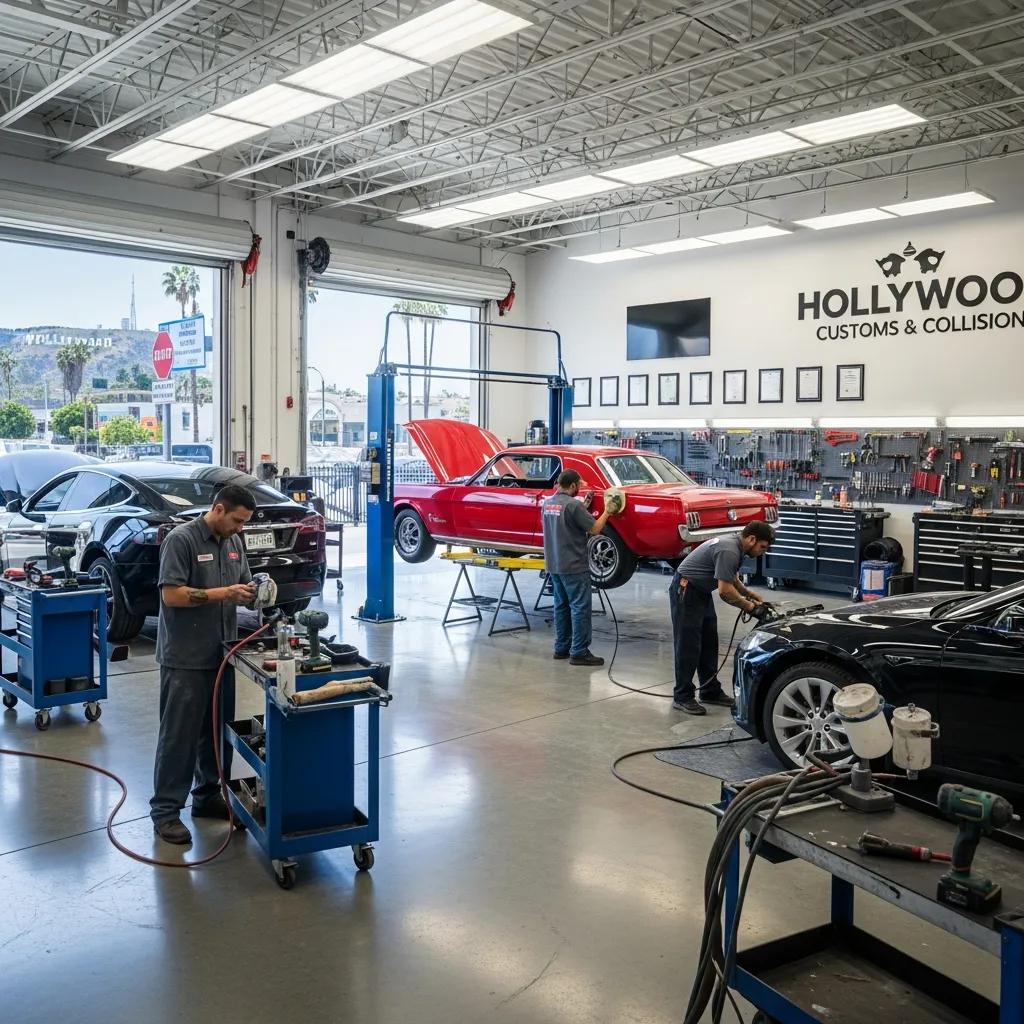
Hollywood Auto Body Shop — OEM-Certified Collision Repairs You Can Trust
After a collision, the repair decisions you make affect safety, electronics, and long‑term value. Choosing an OEM‑certified repair path helps preserve crash protection, factory electronics, and resale appeal for Hollywood drivers. This guide walks through how factory‑quality collision repairs are done, why OEM parts and accurate system calibration matter for today’s cars, and what to expect with insurance, towing, and repair timelines after an accident. You’ll find clear explanations of certified repair benefits, the services that restore structure and finish, the importance of ADAS recalibration, and practical next steps for filing claims and getting reliable estimates. Practical checklists and comparison tables make it simple to weigh options and know when to insist on OEM procedures — all with a local focus to help Hollywood car owners protect safety, fit, and long‑term value.
Prime Time Collision Center is a local auto body and collision repair shop committed to OEM‑quality repairs, smooth insurance coordination, and straightforward communication. We emphasize factory‑level repair methods and work with insurers to reduce delays during the claim process, offering common conveniences drivers need after an accident. Beyond insurer coordination, we highlight technician training and repair standards that follow OEM guidance — reassuring owners concerned about structural integrity and vehicle electronics. That commitment to OEM practices frames the technical details below and shows how certified procedures translate into real, measurable safety benefits for Hollywood drivers.
Why choose OEM‑certified repairs to protect your vehicle in Hollywood?
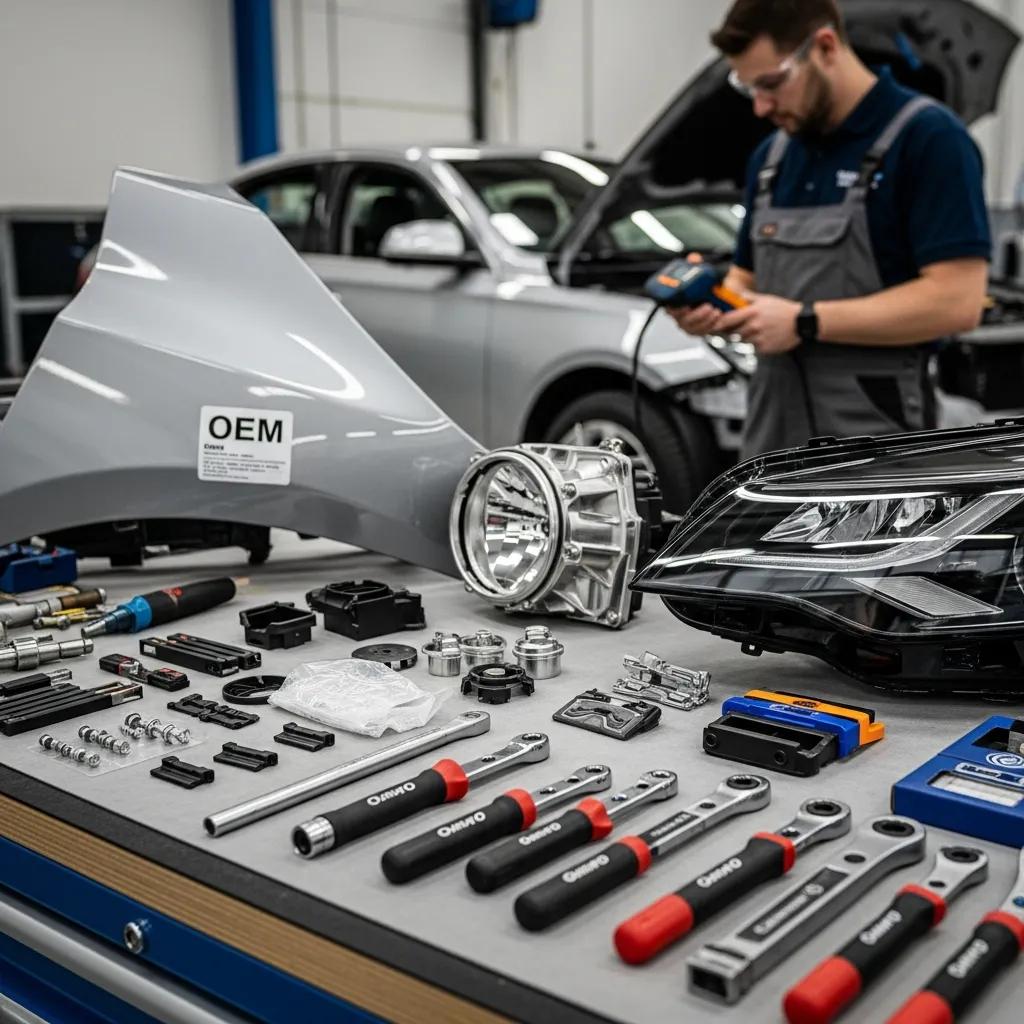
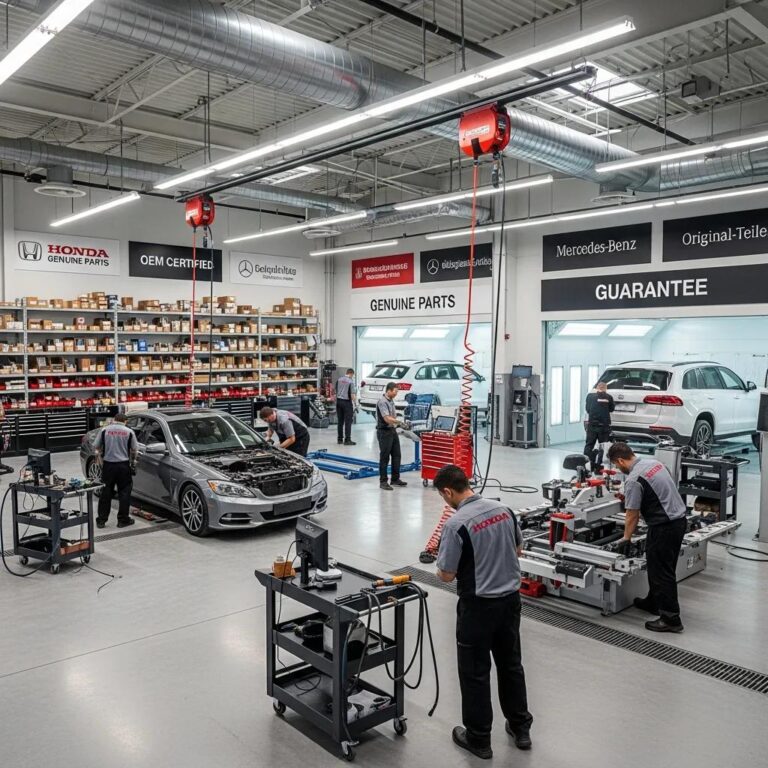
OEM‑certified collision repair means following the vehicle manufacturer’s repair sequences, installing OEM parts when required, and completing necessary calibrations so the car retains its engineered crashworthiness and system performance. That approach addresses visible damage and the hidden structural or electronic components that can affect occupant protection. The chief advantage is safety: correct part fitment and manufacturer‑approved steps help ensure seatbelts, airbags, and ADAS sensors work as designed. Knowing these differences helps you prioritize repairs that protect long‑term safety and keep warranty and resale value intact. Below we’ve summarized the direct benefits so you can scan them quickly.
Here are the practical benefits of OEM‑certified collision repair for safety, warranty and resale:
- Preserves crashworthiness: Manufacturer repair methods restore structural integrity and energy‑management zones to original specs.
- Proper ADAS recalibration: OEM procedures include sensor and camera calibration so features like automatic braking and lane assist function reliably.
- Maintains warranty and parts compatibility: Using OEM parts reduces fitment issues and supports warranty requirements.
- Protects resale value: Factory‑direct repairs are clearer to buyers and to vehicle‑history reviewers.
Insisting on OEM‑certified repairs can be a long‑term safety and value decision — the next section explains how certifications back up those practices.
The repair approach matters because certifications signal technician training and facility readiness to meet manufacturer standards. The table below compares OEM‑certified and non‑OEM approaches so you can see the practical differences.
| Repair Approach | Key Components | Safety & Warranty Implication |
|---|---|---|
| OEM‑Certified Repair | OEM parts, manufacturer procedures, ADAS calibration | Maximizes restored safety and supports warranty and resale value |
| Aftermarket / Unspecified Repair | Non‑OEM parts, nonstandard procedures | Higher risk of fit issues, safety variances, and warranty questions |
| Cosmetic‑Only Repair | Surface refinishing without structural verification | May look right but can leave hidden safety risks |
This comparison shows how OEM certification focuses on repair integrity beyond appearance, and it leads into what specific certifications mean for customers.
What are the real benefits of OEM‑certified collision repair?
OEM‑certified collision repair delivers tangible advantages for safety, system reliability, and ownership costs. Certified processes restore manufacturer tolerances so crash energy is absorbed as intended and occupant protection systems deploy correctly. For modern cars, proper ADAS and sensor calibration is often as critical as frame alignment — misaligned sensors can give false warnings or fail in a critical moment. Choosing OEM‑certified repairs lowers the chance of follow‑up issues, helps maintain warranty coverage, and documents factory‑directed procedures that support resale value. For Hollywood drivers comparing estimates, certification is a meaningful factor.
Which OEM certifications does Prime Time Collision Center hold?
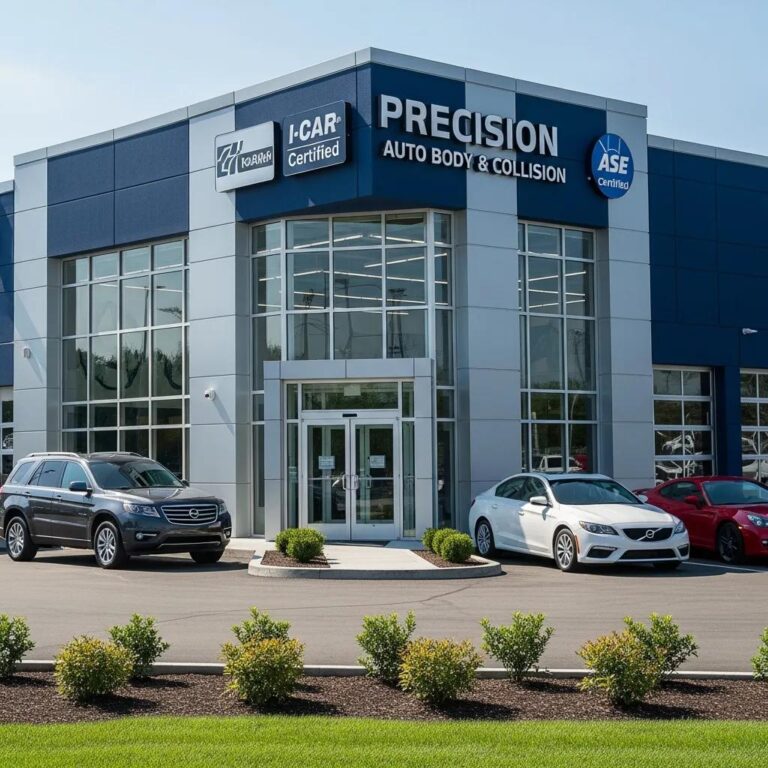
Prime Time Collision Center emphasizes technician training and certifications that align with factory repair standards. One notable credential listed locally is I‑CAR Platinum — a designation that reflects extensive technician training and ongoing education in collision repair best practices and safety. For vehicle owners, I‑CAR Platinum signals that technicians receive current, manufacturer‑relevant instruction and are better prepared to follow the latest repair advisories. Certifications are one important indicator of competence; combined with documented procedures, OEM parts usage, and quality checks, they help ensure the final repair meets safety expectations.
How Prime Time Collision Center simplifies insurance claims in Hollywood
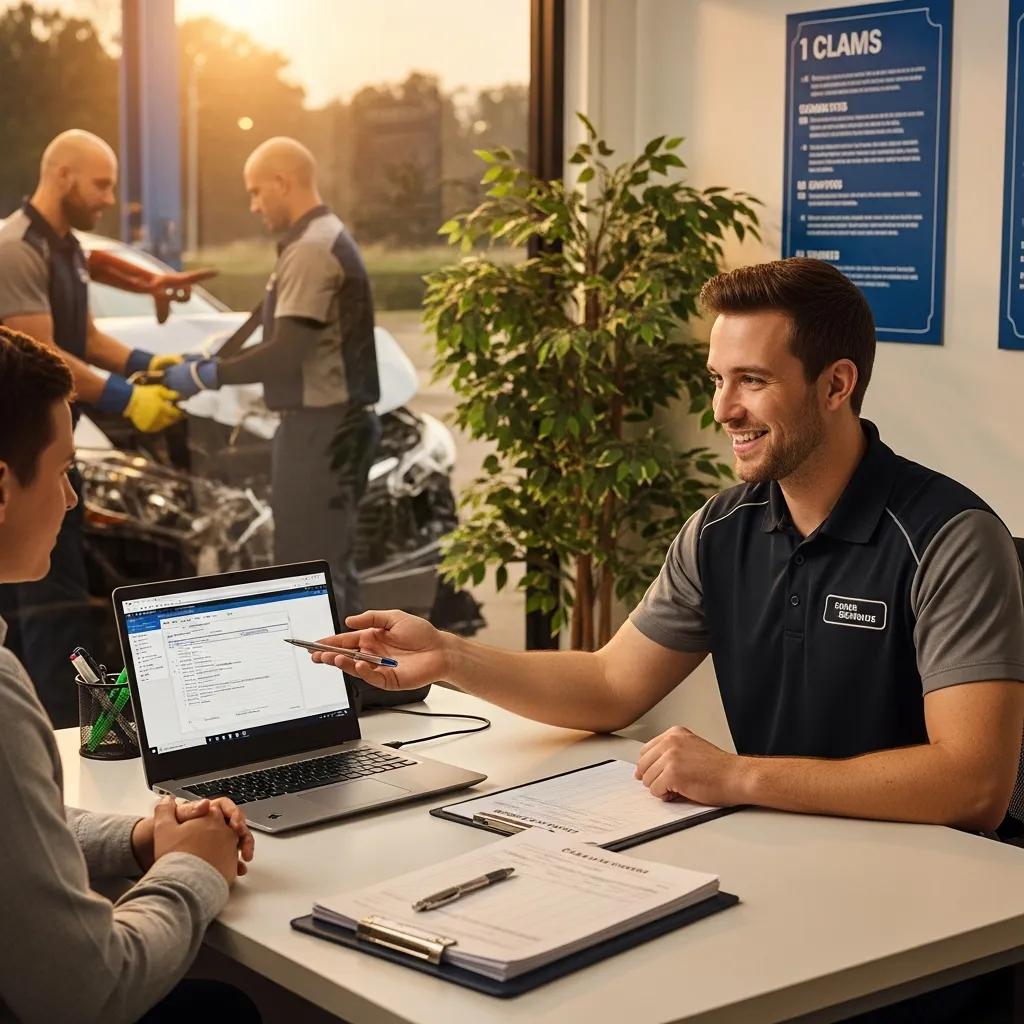
Handling an insurance claim can be the most stressful part of getting repairs. Knowing the typical workflow helps you plan and set expectations. A claim usually follows these steps: initial estimate, insurer review and approval, parts sourcing, scheduled repairs, and final quality checks — with communication at every stage so you’re kept informed. We work with all major insurers to coordinate approvals and streamline documentation, and we offer customer conveniences like free estimates and 24/7 towing assistance to reduce friction. Understanding where the shop helps — estimate documentation, insurer communication, and repair scheduling — lets you focus on getting back on the road safely. Below is a clear breakdown of the usual claim steps.
How a shop typically coordinates a claim with insurers:
- Initial estimate & documentation: We inspect the vehicle and document damage for your insurer.
- Insurer communication & approval: We send documentation and clarify the repair scope to secure authorization.
- Repair scheduling & updates: Once approved, repairs are scheduled and you receive progress notifications.
- Final QA & billing coordination: After repairs, the vehicle undergoes final checks and we coordinate settlement with the insurer.
These steps demystify the process and show where a repair facility adds value. The table below clarifies who usually handles each part of the claims workflow and the customer benefit.
| Claims Step | Who Handles It | Typical Timeframe / Customer Benefit |
|---|---|---|
| Damage estimation | Repair shop prepares estimate | Immediate clarity on needed repairs and an initial cost projection |
| Insurer review | Insurance adjuster and repair shop liaison | Often 1–7 business days depending on complexity |
| Parts authorization | Repair shop obtains approvals | Reduces delays by confirming OEM part sourcing early |
| Repair execution | Repair technicians | Restores safety systems and finish; reduces rework risk |
How we work with all major insurance companies
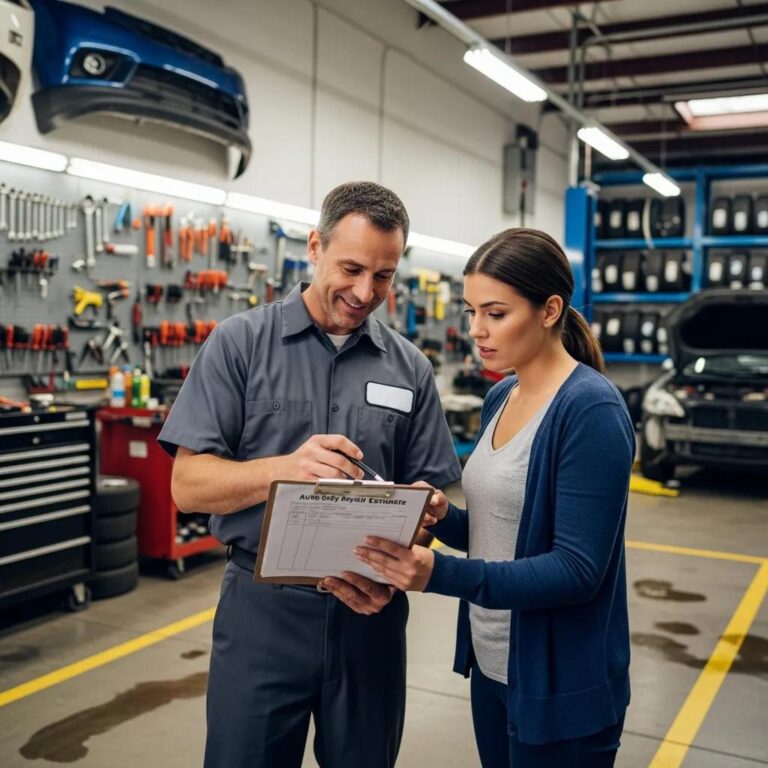
We coordinate directly with insurers to present thorough damage estimates, explain the OEM procedures needed, and obtain approvals that reflect manufacturer repair requirements. Our documentation includes photos, disassembly notes, and calibration needs to make the adjuster’s review straightforward. Acting as your advocate during approvals helps speed decisions that might otherwise delay repairs, while keeping your priorities — safety and OEM compliance — front and center. If an insurer suggests alternatives, we outline the safety trade‑offs so you can make an informed choice.
What you should know about your insurance policy and deductibles
Knowing your policy terms and deductible structure helps you decide whether to file a claim or pay out‑of‑pocket for specific repairs, and it affects rental coverage and timelines. Liability versus comprehensive coverage determines who pays and when your deductible applies; rental coverage varies by policy and can influence how long you’ll need a loaner. Documenting the scene and damage at intake helps insurers apply benefits correctly, and telling the shop about your deductible and rental needs lets us coordinate estimates and rental coverage. A basic understanding of your policy lets Hollywood drivers make timely choices about claims and repairs.
What premium auto body services are available in Hollywood?
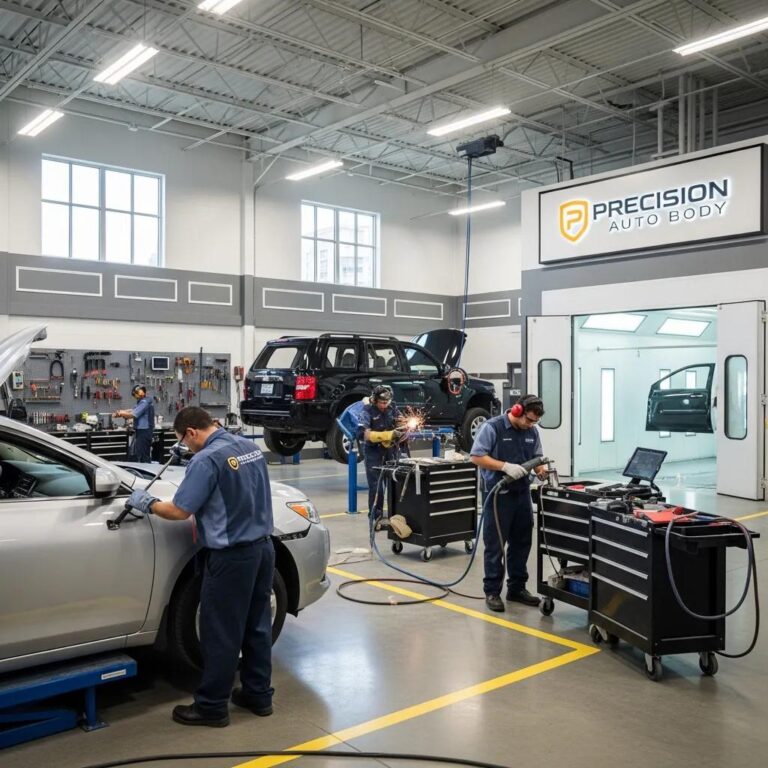
Premium auto body centers offer a range of services to restore structure, finish, and electronic systems to manufacturer standards. Core services include full collision repair, frame straightening, precision paint and refinishing, paintless dent repair (PDR), ADAS/sensor calibration, and specialized work for luxury or electric vehicles. A clear services comparison helps match repair type to damage severity and expected turnaround, and explains typical benefits and warranties for each option. The table below summarizes common premium services so you can quickly identify the right repair path.
| Service | What It Fixes / Scope | Typical Turnaround & Benefits |
|---|---|---|
| Collision repair | Structural work, panel replacement, frame alignment | Multi‑day to multi‑week; restores OEM fit and safety |
| Paintless Dent Repair (PDR) | Small dents and hail damage without repainting | Same‑day to a few days; preserves factory paint |
| Precision paint & refinish | Color match, partial or full repaint | Several days; factory‑matched finish and corrosion protection |
| Frame straightening | Structural correction using a frame machine | Several days; restores alignment and crash performance |
This overview clarifies options and sets up how technicians plan repairs across makes and models to preserve OEM specifications.
- Structural & frame repair: Corrects alignment and restores energy‑management zones.
- Paint & refinishing: Digital color matching and controlled booths for a factory finish.
- Electronics & ADAS calibration: Restores sensor accuracy after repairs.
How we handle expert collision repair for all makes and models
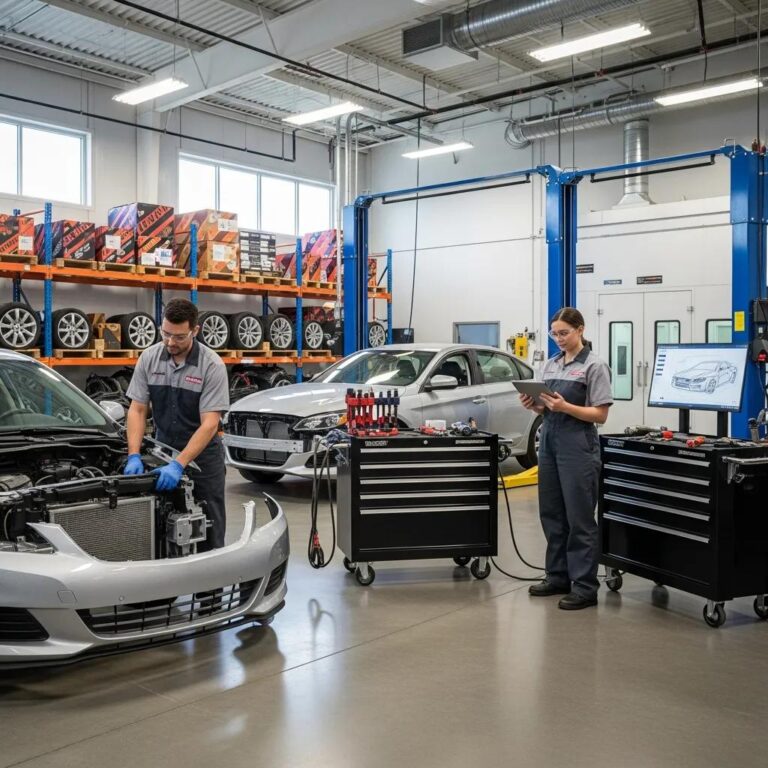
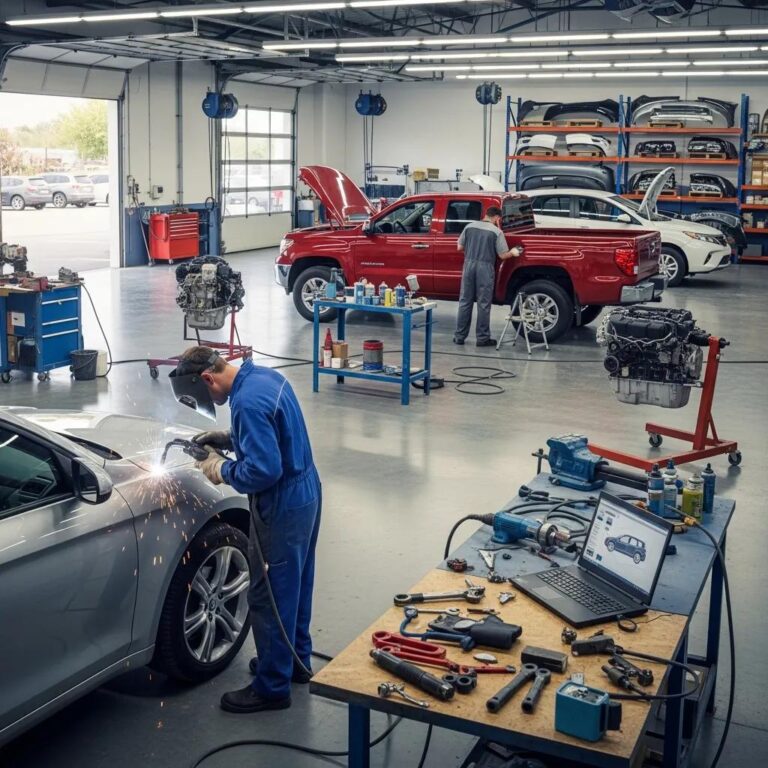
Expert repair begins with a thorough inspection and diagnostics to find structural issues, component faults, and calibration needs. The repair plan follows manufacturer procedures: disassembly to reveal hidden damage, sourcing OEM parts when needed, frame alignment to specified tolerances, and controlled refinishing to match factory finishes. Our technicians perform ADAS calibrations and system tests where required so sensors and safety features work after reassembly. Final QA — including road tests and diagnostics — confirms the vehicle meets safety and performance standards before we return it to you.
Specialized services for luxury and high‑end vehicles
Luxury and high‑end vehicles demand careful disassembly, exact color blending, and strict manufacturer repair sequences to protect finish quality and electronics. Our specialist services prioritize OEM parts, precise color matching, and meticulous interior and exterior reassembly to avoid damage to delicate trim and finishes. ADAS and sensor recalibration for these vehicles often requires manufacturer‑specific procedures or OEM‑level tooling to meet original performance specs. The sensitivity of luxury repairs reinforces the need for certified training and attention to detail to restore these vehicles to factory standards.
How paintless dent repair and refinishing improve your vehicle’s appearance
Paintless dent repair (PDR) preserves the original factory paint while returning panel contours to shape, making it ideal for minor dents and hail damage when the paint surface is intact. When PDR isn’t appropriate, precision refinishing restores full coverage and color match using digital color tools, blending techniques, and controlled paint booths for consistent curing. Choosing between PDR and repaint depends on dent size, paint condition, and location; understanding cost and turnaround trade‑offs helps you pick the best restoration path. Below are the specific advantages of PDR for Hollywood drivers looking for fast, cost‑effective cosmetic repairs.
Advantages and outcomes of paintless dent repair for common scenarios:
- Preserves factory paint: Avoids repainting and keeps the original finish intact.
- Faster turnaround: Often completed in hours or a single day, minimizing disruption.
- Cost‑effective for minor damage: Lower labor and materials compared with filler and repainting.
PDR is a strong first option when the paint surface is undamaged. The table below compares PDR with full refinishing to help your decision.
| Approach | Ideal Damage Type | Typical Benefit |
|---|---|---|
| Paintless Dent Repair | Small dents, no paint break | Quick, lower cost, preserves OEM paint |
| Precision Refinish | Paint damage, large panels, corrosion | Restores full finish and protects metal |
| Hybrid (PDR + Refinish) | Mixed damage | Balances speed with finish quality |
Why paintless dent removal is a smart choice in Hollywood
Paintless dent removal restores panel shape while keeping the factory paint intact, protecting coatings and eliminating overspray concerns. Technicians access the dent from behind the panel and use specialized tools, avoiding fillers or repainting in many cases and speeding turnaround. For hail, door dings, and small parking lot dents, PDR is often less expensive than conventional methods and preserves the vehicle’s resale appearance. Speed, cost savings, and finish preservation make PDR a preferred choice for many minor‑damage situations.
How we ensure precision paint matching and full vehicle repaints
Precision paint matching starts with the vehicle’s color code and digital spectrophotometer readings to formulate an OEM‑equivalent blend. We perform test sprays and blend adjacent panels to ensure seamless transitions. Controlled paint booths keep temperature and humidity stable for consistent curing, and technicians use factory formulas and blending techniques to avoid visible demarcation. Final inspection includes gloss and color checks under multiple lighting conditions plus clearcoat and polish to achieve a factory look. We document color codes and test results to help with future maintenance and protect long‑term finish quality.
Why Prime Time Collision Center is a trusted choice for Hollywood drivers
Trust is built from documented repair standards, continuous technician training, clear communication, and customer conveniences that reduce repair friction. Prime Time Collision Center highlights I‑CAR Platinum certified technicians and a commitment to factory‑quality repairs, showing our focus on technician skill and OEM procedures. We also provide customer‑focused services like free estimates and 24/7 towing to simplify immediate post‑accident logistics. Combining certification, documented workflows, and helpful customer services creates confidence that we’ll protect your vehicle’s safety and value.
- Technician training & certification: Shows our commitment to current manufacturer procedures.
- Transparent estimates & communication: Helps avoid surprises and aligns expectations.
- Customer conveniences & advocacy: Towing, estimates, and support to ease the post‑accident process.
How I‑CAR Platinum certified technicians deliver quality repairs
I‑CAR Platinum requires comprehensive, ongoing training that keeps technicians current with evolving collision repair methods and safety protocols. Certified technicians receive manufacturer‑relevant instruction on structural repair, electronics, and ADAS recalibration, which supports accurate diagnosis and repair execution. This training lowers the risk of repair errors that could affect occupant safety or system performance and promotes consistent quality across jobs. For vehicle owners, I‑CAR certification is a practical sign that the shop invests in the skills needed for factory‑quality repairs.
Customer testimonials that reflect our priorities
Verified reviews tend to highlight what matters most after a collision: clear communication, accurate estimates, timely completion, and a vehicle returned safe and looking right. Common themes include successful insurance coordination, satisfaction with finish quality, and appreciation for towing and free estimate services. These repeated points show how an emphasis on OEM‑quality repairs and attentive service translates into reliable outcomes. Reading verified feedback can help confirm that our approach matches what we promise.
Essential steps to take after a car accident in Hollywood
Taking the right actions right after a collision protects safety, preserves evidence for insurance, and speeds repair and recovery. Priorities are ensuring personal safety, calling emergency services if needed, documenting the scene with photos, exchanging information, and notifying your insurer. Clear photos of damage and the scene support accurate estimates and insurer assessments, and contacting a repair shop early can secure towing and a free estimate to start the repair process quickly. The checklist below is a mobile‑friendly reference for drivers at the scene.
- Ensure safety first: Move to a safe spot if you can and check for injuries; call emergency services when needed.
- Document the scene: Photograph damage, vehicle positions, license plates, and any road conditions that contributed.
- Exchange information: Collect insurance and contact details, and note witness information if available.
- Notify your insurer and a repair shop: Report the claim to your insurance company and contact a repair facility to arrange towing and an estimate.
Following these steps preserves safety and evidence and sets the stage for the repair and claims coordination described above.
Immediate actions to follow right after an accident
Right after an accident, put people first, call emergency services for injuries, and move to safety if the vehicle is driveable. Take systematic photos from multiple angles and note lighting and road conditions to create an objective record. Exchange required contact and insurance information with other parties, and collect witness statements if possible to support claims. Completing these actions speeds the transition from incident to repair planning and helps when you contact a qualified collision center for towing and a detailed estimate.
How Prime Time Collision Center helps with towing and free estimates
We offer conveniences designed to reduce post‑accident stress, including free estimates and coordination of towing to our facility to speed initial assessment and repair planning.
When your vehicle is towed to our center, technicians can perform a deeper inspection to uncover hidden damage and calibration needs, producing a complete repair scope for insurer review. The free estimate includes photographic documentation, recommended OEM procedures, and a clear explanation of next steps so you can make informed choices. To use these services, contact Prime Time Collision Center to request towing and schedule your free estimate — our staff will walk you through intake and the repair timeline.
This final section is a practical reminder: quick documentation, timely insurer notification, and a reliable repair partner shorten repair time and help preserve your vehicle’s safety after an accident.
Frequently Asked Questions
What should I look for when choosing an auto body shop in Hollywood?
Look for shops that follow manufacturer procedures and hold OEM or industry certifications like I‑CAR Platinum. Verify they use OEM parts when required and can explain repair sequences and ADAS calibration. Check customer reviews, confirm experience with your vehicle make and model, and ensure the shop works directly with insurers. Transparent, written estimates and clear communication are essential for a smooth repair experience.
How long does the collision repair process typically take?
Repair time varies with damage severity. Small jobs like paintless dent repair can take a few hours, while structural repairs and parts‑dependent jobs can take several days to weeks. Factors include parts availability, repair complexity, and shop workload. Speak with the repair shop early for a tailored timeline based on your vehicle and damage.
Are aftermarket parts a good option for collision repairs?
Aftermarket parts can be less expensive, but they don’t always match OEM fit, finish, or safety specs. Using non‑OEM components can lead to fitment issues or affect warranty terms. For optimal safety and performance after a collision, OEM parts are generally the preferred choice, especially for structural components and safety systems.
What is ADAS recalibration, and why is it important?
ADAS recalibration adjusts advanced driver‑assistance systems after repairs. These systems — like automatic emergency braking, lane‑keep assist, and blind‑spot monitoring — rely on precisely aligned sensors and cameras. If they’re not recalibrated, they may not work correctly, which could compromise safety. Ensuring proper ADAS recalibration is a critical part of modern collision repair.
How can I expedite my insurance claim process after an accident?
Document the scene with clear photos, gather contact information, and report the claim promptly. Choose a repair facility experienced with your insurer — they can help package estimates and documentation to speed approval. Providing thorough, organized evidence and staying in regular communication with your insurer and repair shop helps move the process along faster.
What are the benefits of using paintless dent repair (PDR)?
PDR preserves the original factory paint, avoids repainting, and typically finishes faster and at lower cost than conventional repairs. Because it doesn’t use fillers or repainting, it reduces the risk of overspray and color mismatch. PDR is an excellent option for small dents, dings, and many hail impacts when the paint surface remains intact.
What should I do if my vehicle has hidden damage after a collision?
If you suspect hidden damage, have your vehicle inspected by a qualified collision shop. Technicians can perform a detailed assessment to find structural or mechanical issues not evident at first glance. Document findings and share them with your insurer so necessary repairs are covered. Prompt inspection and repair help prevent further problems and restore safety and performance.
Conclusion
Choosing OEM‑certified collision repair helps preserve your vehicle’s safety, electronics, and resale value by following factory standards. Understanding the benefits of certified procedures lets you make informed decisions that prioritize long‑term integrity. For a straightforward, professional repair experience, reach out to Prime Time Collision Center — we’ll guide you through estimates, insurance coordination, and repairs so your vehicle gets the care it deserves.