



Car Battery Maintenance Guide: Simple, Practical Tips to Extend Your Battery’s Life
Your car’s battery stores the electrical energy that starts the engine and powers electronics when the engine is off. Keeping it healthy helps you avoid roadside surprises and ensures your vehicle remains safe after a collision. This guide breaks down how batteries work, the common types you’ll see, routine maintenance that prolongs life, how to spot a failing battery, and when to test or replace it. If you’ve had a recent accident or noticed electrical issues, OEM-quality repairs and correct battery service matter — Prime Time Collision Center in Glendale, CA offers OEM-focused battery checks and works with your insurer when repairs are needed. Read on for clear, vehicle-focused steps on battery types and charging basics, terminal care, warning signs, weather protection, DIY testing with voltage thresholds, and when OEM-certified replacements make sense.
What Are the Different Types of Car Batteries and How Do They Work?
A car battery is an electrochemical device that turns stored chemical energy into electrical current to start your engine and stabilize voltage for onboard electronics. Battery chemistry affects how energy is stored, how quickly the battery accepts charge, cold-cranking ability, and long-term durability — all factors that determine the right choice for a vehicle. Knowing the differences helps you pick the proper replacement and understand charging behavior during drives or when using a maintainer. Below we compare the most common battery types and explain how the alternator and charging cycle affect each chemistry so you can match battery features to your vehicle’s needs.
What Are the Common Car Battery Types: Lead-Acid, AGM, and Lithium-Ion?
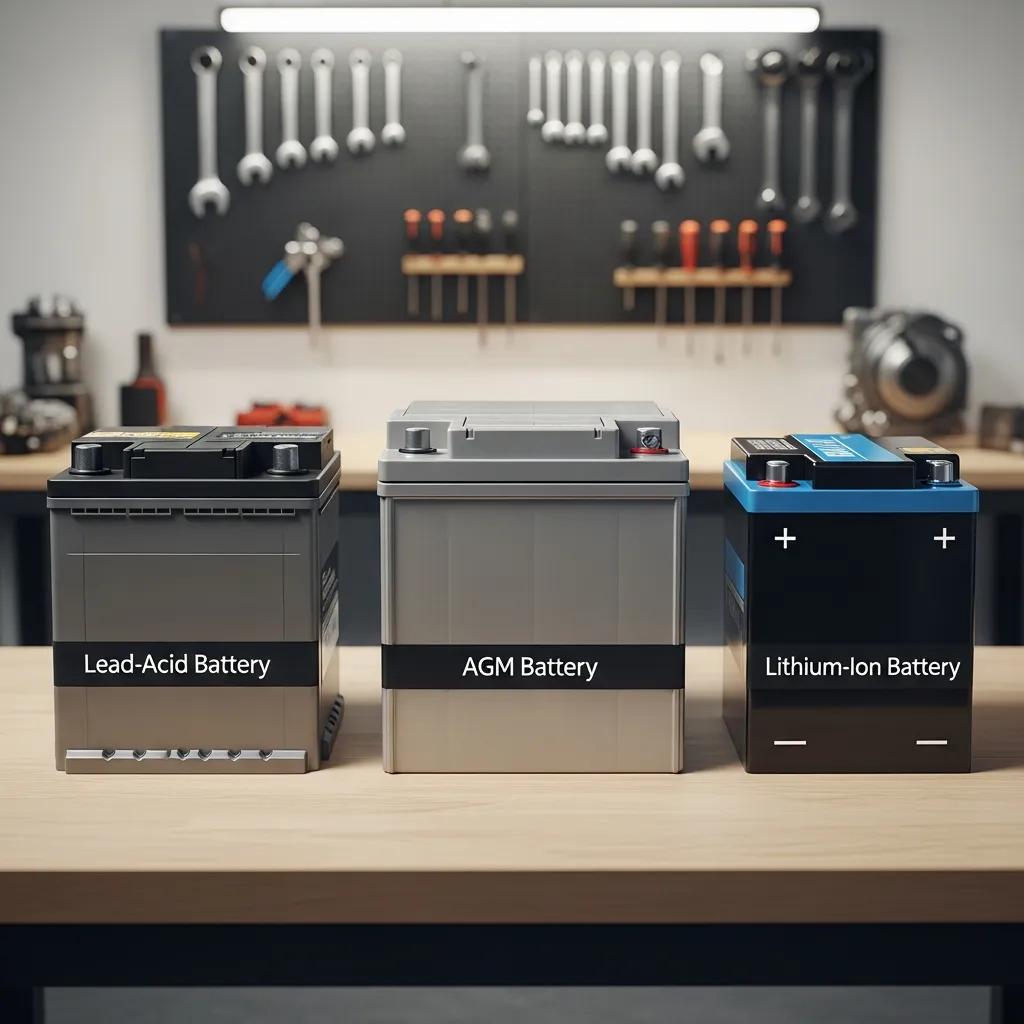
Lead-acid (flooded) batteries are the long-standing, serviceable option in many cars. They deliver dependable starting power at a lower cost but weigh more and benefit from regular terminal cleaning. These batteries use lead plates and liquid electrolyte and can develop sulfation if left discharged. AGM (Absorbent Glass Mat) batteries trap electrolyte in fiberglass mats, which improves vibration resistance, cycle life, and charge acceptance — useful for vehicles with start-stop systems or heavy electronics. Lithium-ion options are lighter and hold more energy per pound, with faster recharge times, but they need a battery management system and cost more; they’re common in performance and hybrid applications. Your vehicle’s OEM specs, expected electrical load, and driving habits should guide your choice.
Note: the table below highlights typical characteristics and the use-cases that suit each chemistry.
| Battery Type | Typical Voltage / CCA Profile | Lifespan & Ideal Use-Case |
|---|---|---|
| Lead-Acid (Flooded) | 12V nominal, wide CCA range | 3–5 years in regular-use cars; a budget-friendly option for conventional vehicles |
| AGM (Absorbent Glass Mat) | 12V nominal, higher CCA and reserve capacity | 4–7 years; suited to cars with many electronics or start-stop systems |
| Lithium-Ion (LiFePO4 & variants) | 12.8V nominal systems or module-managed | 5+ years with a BMS; best for weight-sensitive or high-performance setups |
This table highlights trade-offs: lead-acid favors cost and serviceability, while AGM and lithium variants offer improved performance and cycle life for modern electrical systems. Alternator behavior explains why charging looks different across these types.
How Does a Car Battery Function with the Alternator and Charging Cycle?
The alternator converts engine power into electricity to recharge the battery and run vehicle systems while you drive, using a voltage regulator to hold system voltage in a target range. During normal driving the alternator restores charge, but short trips and heavy accessory use can leave the battery partially discharged because charging needs sustained RPM and time to return to full state-of-charge. Different chemistries accept charge differently — AGM takes charge faster but is sensitive to overcharge, while lead-acid needs longer, gentler charging to avoid sulfation. Alternator faults, loose belts, or poor connections reduce effective charging and speed battery wear. Understanding how these parts interact helps diagnose repeated charging or starting problems and plan maintenance that protects both battery and alternator.
What Essential Maintenance Practices Extend Car Battery Life?
Routine maintenance preserves state-of-charge, prevents corrosion, and reduces mechanical stress — all of which slow sulfation and electrolyte imbalance and lengthen service life. Simple checks like inspecting terminals, confirming secure hold-downs, and using a maintainer on rarely driven vehicles address common failure causes. The short list below covers high-impact tasks you can do yourself or ask a technician to perform during service.
- Clean and inspect terminals monthly: Remove corrosion with a baking soda solution and a brush, then apply dielectric grease to slow re-corrosion.
- Ensure secure mounting: Tighten hold-downs so vibration can’t damage plates or internal connections.
- Maintain charge with a battery tender: Use a smart maintainer for vehicles stored long-term or used for short trips.
- Minimize parasitic drains: Turn off aftermarket accessories when parked and investigate unusual current draws if the battery keeps draining.
Following these steps lowers failure risk and improves crank reliability. The next sections cover practical cleaning steps and driving habits that support battery health.
Note: the maintenance table below maps recommended frequency to typical lifespan benefits so you can prioritize tasks.
| Maintenance Action | Frequency | Benefit / Impact on Lifespan |
|---|---|---|
| Terminal cleaning and protection | Monthly or as needed | Reduces resistance and prevents corrosion-related failures |
| Voltage/reserve checks | Every 6-12 months or during service | Detects slow decline early and helps avoid sudden no-start events |
| Battery hold-down inspection | Every oil change or service | Prevents vibration damage and plate displacement |
| Use of maintainer/trickle charger | When vehicle idle >2 weeks | Prevents sulfation and preserves cycle life during long storage |
Prioritize terminal care and maintainers — they deliver measurable lifespan gains compared with waiting to replace a failed battery.
How to Clean Battery Terminals and Prevent Corrosion Effectively?
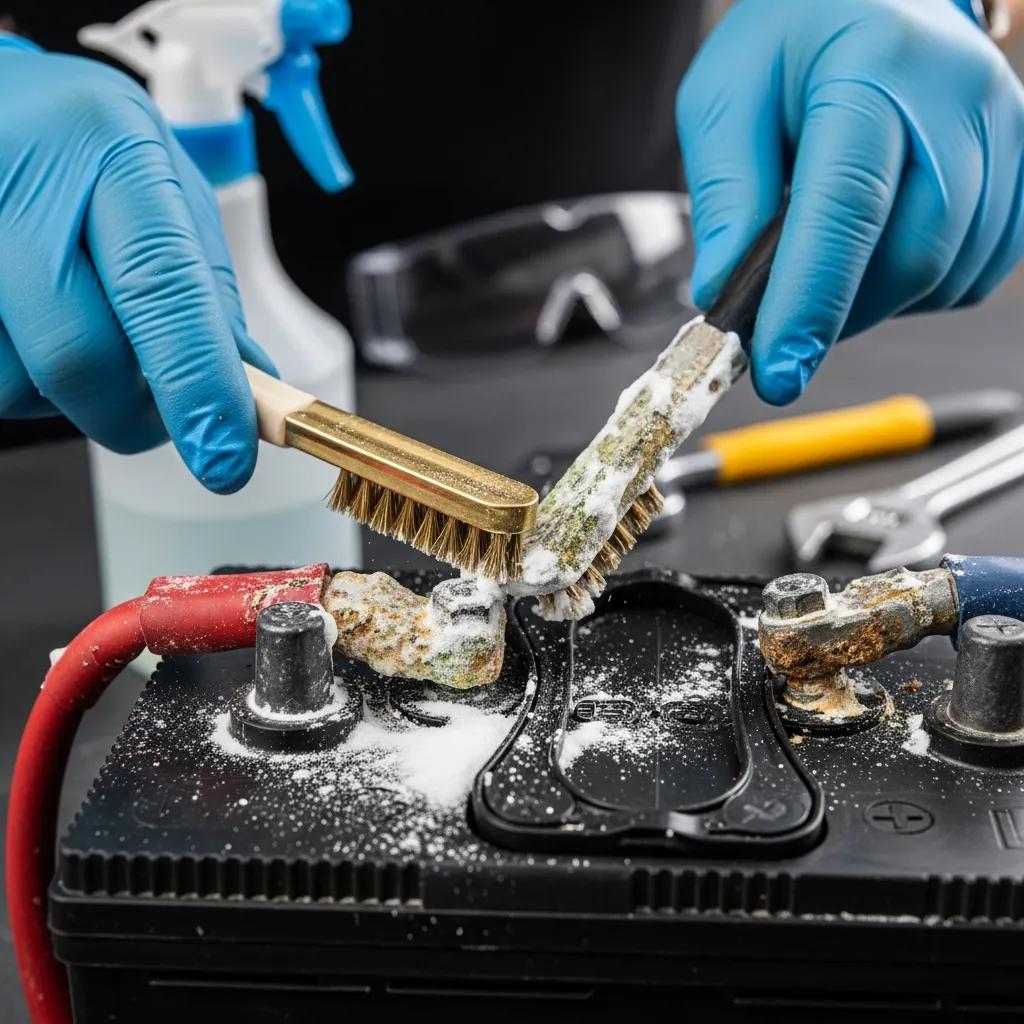
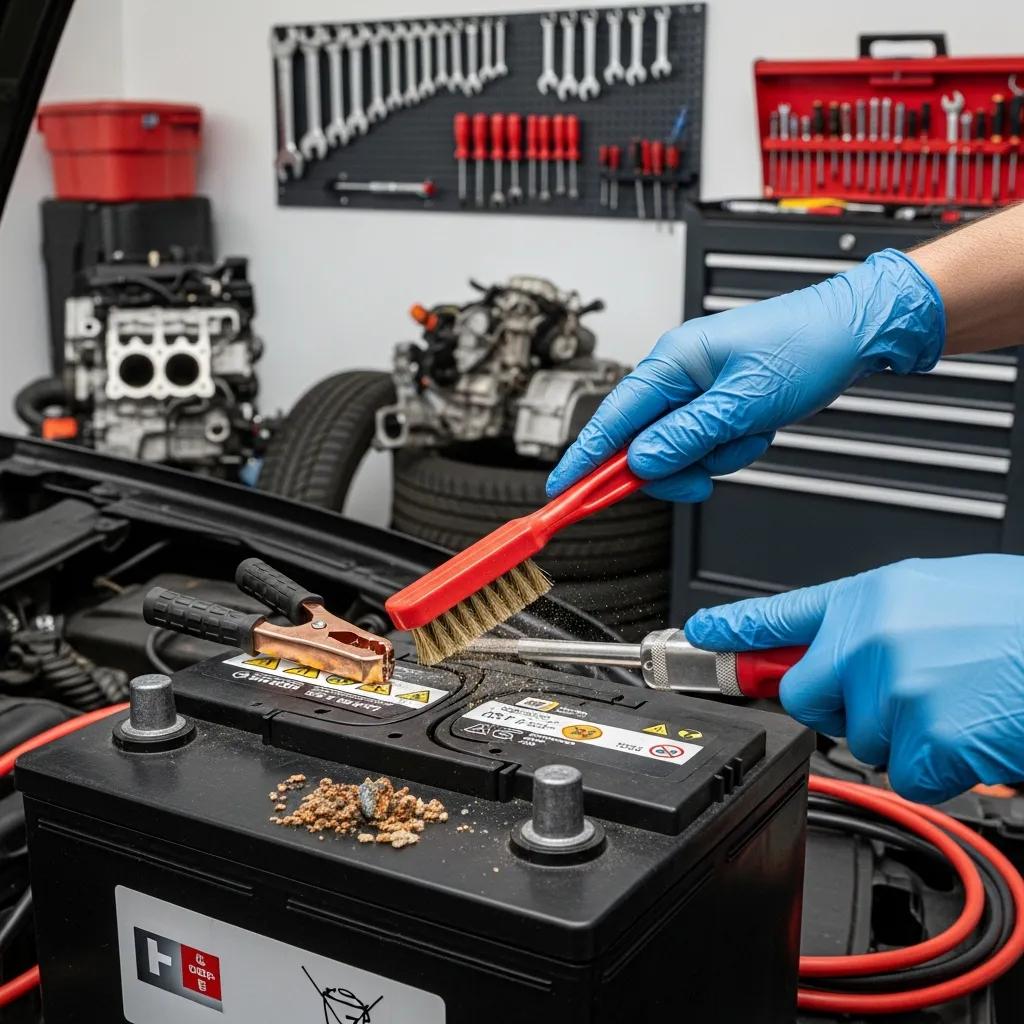
For safe terminal cleaning, wear gloves and eye protection and work in a ventilated area. You’ll need a stiff brush or terminal tool, baking soda mixed with water, and a rag. Disconnect the negative terminal first. Brush away loose corrosion, apply the baking soda paste to neutralize acid, scrub the contacts clean, rinse lightly, and dry completely. Reconnect the positive terminal first, negative last, to reduce short risk. Finish with a thin coat of dielectric grease or petroleum jelly to slow future corrosion and ensure tight connections to prevent voltage drop. Clean terminals as part of routine upkeep or after noticing slow cranking or visible white/green buildup — consistent care reduces electrical resistance and helps the alternator charge the battery reliably.
Which Driving Habits and Battery Fastening Techniques Promote Longevity?
Driving patterns and secure mounting both affect internal battery wear. Long, steady drives give the alternator time to fully recharge the battery; repeated short trips cause chronic undercharging and sulfation. To extend life, add occasional longer drives (20–30 minutes at highway speeds) and use a smart maintainer for cars driven infrequently. Keep battery hold-downs tight and trays clean to prevent vibration and corrosion that harm plates and terminals. Ask your technician to inspect fasteners and tray condition during routine service — stable mounting plus good charging habits will preserve capacity and delay replacement.
What Are the Key Signs of a Dying Car Battery to Watch For?
A failing battery shows electrical symptoms that range from mild to severe; catching them early lets you test before a no-start. Watch for slow cranking, dim or flickering lights, persistent dashboard battery warnings, and electronics glitches — these often point to lower cold-cranking amps or reduced state-of-charge. Physical signs such as a swollen case, corrosion that returns quickly after cleaning, or a sulfur/rotten-egg smell indicate internal failure or leakage and need immediate attention. The list below pairs common symptoms with likely causes and what to do next.
- Slow engine crank: Likely low charge or reduced CCA; turn off accessories and try restarting, then test battery voltage.
- Dim or flickering lights: Could be a weak battery or a charging issue; check charging voltage with the engine running.
- Repeated jump-starts needed: Suggests declining capacity or a parasitic drain; inspect for drains and schedule a load test.
- Swollen case or sulfur smell: Sign of internal failure or overcharging; stop driving and arrange professional replacement.
How to Identify Symptoms Like Slow Engine Crank and Dim Headlights?
Slow crank feels like the starter turning more slowly than usual and often comes with a weaker starter sound — a sign the battery’s cold-cranking amps or charge are low. Dim headlights during startup or acceleration mean the battery can’t meet peak current demands or the alternator isn’t keeping up; you can check by watching light brightness as you rev the engine. Try turning off accessories and restarting; if cranking improves after a jump or charge, schedule a voltage and load test to find out whether the battery, alternator, or a parasitic draw is at fault. These quick checks lead into the DIY voltage testing steps below.
What Does a Swollen Battery Case or Sulfur Smell Indicate?
A swollen case signals internal gas buildup from overcharging or thermal stress and usually means the battery is near failure — keep the vehicle off if you can and get it inspected. A sulfur or rotten-egg smell points to electrolyte leakage or a vented cell and is hazardous. In either case, don’t try repairs yourself; arrange professional inspection and replacement. These physical signs are more urgent than electrical warnings and typically require shop-based intervention to protect safety and electronics.
How Do Environmental Factors Affect Car Battery Lifespan and Performance?
Temperature extremes change how quickly battery chemistry happens: cold reduces available cranking power, while heat speeds chemical breakdown and water loss in flooded cells. Cold weather lowers effective capacity and cold-cranking amps, making starts harder; hot climates increase corrosion and shorten overall life even if starts still feel fine. Your local climate determines which seasonal checks matter most — in cold months, confirm full charge and battery health; in hot months, look for case deformation and check electrolyte levels if applicable. The practical protection steps below explain how insulation and parking choices can reduce weather-related wear.
What Impact Do Cold and Hot Weather Have on Battery Health?
Cold can cut a battery’s available capacity by 20–50% depending on temperature, which raises the chance of slow cranking or failed starts if the battery isn’t kept charged. Hot weather speeds corrosion of internal plates and causes evaporative water loss in flooded batteries, shortening lifespan even when starting stays easy. Seasonal cycling also stresses separators and connections. Preventive charging and regular inspection help keep starts reliable year-round and reduce weather-related failures.
How Can Battery Insulation and Parking Tips Protect Your Battery?
Insulated battery blankets or heat shields help moderate temperature swings and reduce heat-related degradation in warm climates, while shaded parking prevents prolonged sun exposure that elevates case temperature. Parking in a garage or under shade and using a ventilated battery cover slows electrolyte loss and preserves life. If you park outside often, consider a smart maintainer to keep the battery topped off and avoid deep discharges in cold weather. Professional shops can recommend installer-ready insulation and perform seasonal checks to make sure protective measures match your vehicle’s needs and OEM guidance.
How Can You Test Your Car Battery Health and When Should You Seek Professional Help?
Start with a simple voltage check and move to load testing when results are unclear — clear voltage thresholds help decide if a professional test is needed. A healthy resting battery measures about 12.6 volts; readings below 12.4 volts show partial discharge, and below 12.0 volts usually means you should recharge and evaluate further. A basic multimeter test gives quick insight; professional load tests and charging-system diagnostics reveal failing cells, weak alternators, or parasitic drains. Below is a short, safe how-to for a DIY voltage check and guidance on when to call a pro.
How to Perform a DIY Voltage Test Using a Multimeter?
Park with the engine off and accessories off. Set a digital multimeter to DC volts (20V range). Touch the red probe to the positive terminal and the black probe to the negative terminal, observing polarity. A resting voltage near 12.6V indicates a full charge; 12.4V–12.5V suggests a partial discharge, and below 12.0V usually needs recharge and further inspection. Next, start the engine and check charging voltage at the terminals — about 13.7V–14.7V generally means the alternator and regulator are working. If readings are borderline, erratic, or the symptoms continue, schedule a professional load test to confirm capacity and safety.
Note: the thresholds above help you decide whether a pro load test is the right next step. The table below summarizes common DIY readings and likely interpretations.
| Test Condition | Measured Value | Likely Interpretation |
|---|---|---|
| Resting voltage | ~12.6V | Fully charged — battery likely healthy |
| Resting voltage | 12.4V–12.5V | Partial discharge — monitor and recharge |
| Resting voltage | <12.0V | Deep discharge — recharge and test for damage |
| Charging voltage (engine running) | 13.7V–14.7V | Alternator charging normally |
These quick rules help you decide if a professional load test is needed, which is especially important after an accident or when results are unclear.
When Is a Professional Load Test or Battery Health Check Recommended?
Take your vehicle in for professional load testing when DIY voltages are marginal, starting problems return after charging, the battery shows physical damage or swelling, or the car was involved in an accident that may have stressed the electrical system. A shop load test applies a controlled load to measure cold-cranking amps and internal resistance, giving a definitive result that supports replacement decisions and insurance documentation. Prime Time Collision Center includes battery testing and diagnostics in our OEM-quality repair process — our I-CAR-certified technicians can perform load tests and coordinate results with insurers when required. Call or visit our Glendale location to schedule documented testing and a clear repair recommendation.
When Should You Replace Your Car Battery and What Are the Cost Considerations?
Replace a battery based on measured capacity loss, recurring symptoms, and age-related decline. Most drivers replace batteries around 3–5 years, depending on climate and use, but objective tests should guide timing. Replace when slow starts persist, load tests show CCA below OEM specs, or physical damage or leaks are present. Costs vary by chemistry and whether you choose OEM or aftermarket. OEM-certified replacements meet vehicle specs and preserve safety and warranty standards, while premium batteries can offer longer warranties or higher CCA. The table below summarizes replacement options and typical lifespans to help you compare choices without listing specific prices.
| Replacement Option | Typical Lifespan | Typical Range / Value |
|---|---|---|
| Standard lead-acid replacement | 3–5 years | Common, cost-effective replacement option |
| AGM replacement | 4–7 years | Higher cycle life; recommended for vehicles with heavy electrical loads |
| OEM-certified replacement | Matches OEM spec | Ensures compatibility with vehicle systems and safety standards |
Choosing OEM or AGM is often wise for modern cars with complex electronics; use testing data to decide the best timing for replacement.
What Is the Average Car Battery Lifespan and Replacement Indicators?
Typical lifespan for conventional batteries is about three to five years, influenced by local climate, driving habits, and charging-system health. Hot climates and frequent short trips shorten service life. Key indicators for replacement include repeated slow starts, failing or borderline load-test results, persistent low resting voltage after charging, and physical signs like swelling or leakage. Keep a simple routine: check resting voltage periodically, note how often symptoms occur, and schedule a professional test if readings drop below manufacturer-specified CCA or problems persist despite charging. Objective measurements and symptom tracking reduce unnecessary replacements and ensure safe, timely battery changes.
How Do OEM Certified Battery Replacements at Prime Time Collision Ensure Quality?
An OEM-certified replacement matches cold cranking amps, dimensions, and specifications to your vehicle, preserving electrical compatibility and safety. At Prime Time Collision Center we focus on factory-aligned repairs and integrate battery work with collision and maintenance services; our I-CAR-certified technicians follow industry repair standards and help manage insurance when battery replacement is part of a claim. To schedule an OEM-aligned battery inspection or installation that ties into your repair records, contact Prime Time Collision Center in Glendale by phone or visit our shop.
Frequently Asked Questions
1. How can I tell if my car battery is still good?
Use a multimeter to check resting voltage: around 12.6 volts means the battery is fully charged. Readings between 12.4 and 12.5 volts show a partial discharge; below 12.0 volts usually requires charging and further inspection. Also watch for slow cranking, dim lights, or visible corrosion or swelling — those are signs the battery may need attention.
2. What should I do if my car battery is leaking?
If your battery is leaking, stop driving when it’s safe and avoid contact with the fluid. Have the battery disconnected and removed by a professional — beginning with the negative terminal — and replace it. Leaking batteries are hazardous and should be disposed of properly by a mechanic or battery recycler.
3. Can extreme temperatures affect my car battery’s performance?
Yes. Cold weather can cut a battery’s effective capacity by 20–50%, making starts harder. High heat accelerates corrosion and water loss in flooded batteries, shortening life. Keep the battery maintained, use insulation if needed, and park in shaded or covered areas to reduce temperature stress.
4. How often should I have my car battery tested?
Have your battery tested every 6 to 12 months, especially on older vehicles or if you notice starting problems. Test after major weather changes or if the battery shows symptoms like slow cranking or dim lights. Professional load tests give the most complete picture of battery health.
5. What is the difference between OEM and aftermarket batteries?
OEM batteries are built to the vehicle maker’s specifications for fit, CCA, and performance, which helps ensure compatibility and safety. Aftermarket batteries can vary in quality and specs; they’re often less expensive but may not always match OEM requirements. For vehicles with complex electronics, OEM replacements are usually the safer choice.
6. How can I extend the lifespan of my car battery?
Extend battery life by keeping terminals clean, ensuring secure mounting, and using a smart maintainer for cars driven infrequently. Minimize parasitic drains by turning off accessories when parked, and avoid many short trips that prevent full charging. Check voltage regularly and address warning signs promptly.
7. What should I do if my battery warning light comes on?
If the battery light appears on your dash, first check for loose or corroded connections. If connections look fine, test battery voltage and alternator output. If the light stays on or you experience starting problems, get professional help — the issue could be a failing battery or alternator.
Conclusion
Keeping your battery in good shape is one of the simplest ways to avoid unexpected breakdowns and keep your vehicle reliable. Regular checks, basic cleaning, and smart charging habits go a long way. If you want a professional inspection or an OEM-certified replacement, Prime Time Collision Center is ready to help — contact our Glendale team for battery testing and service that fits your repair needs.