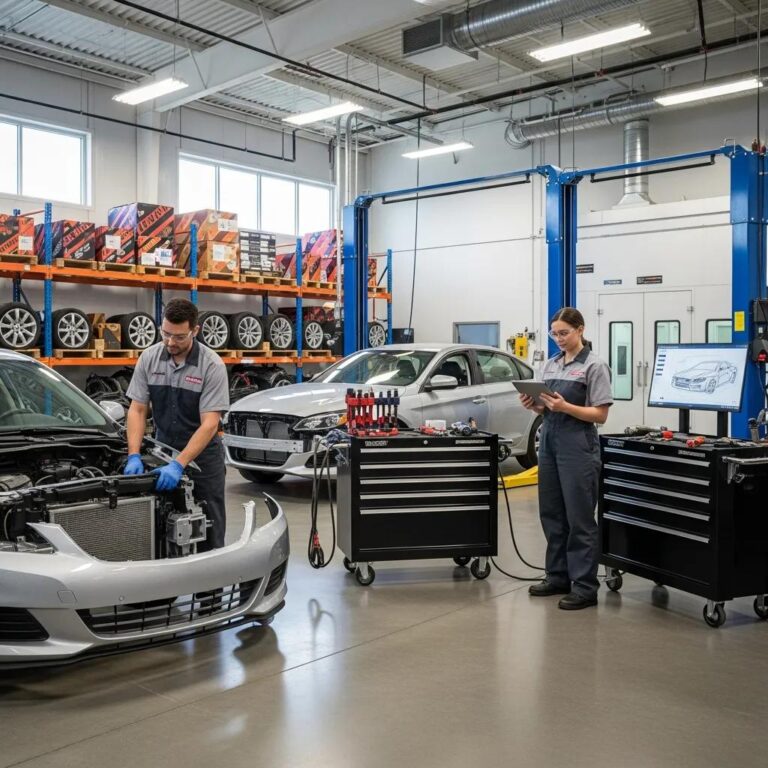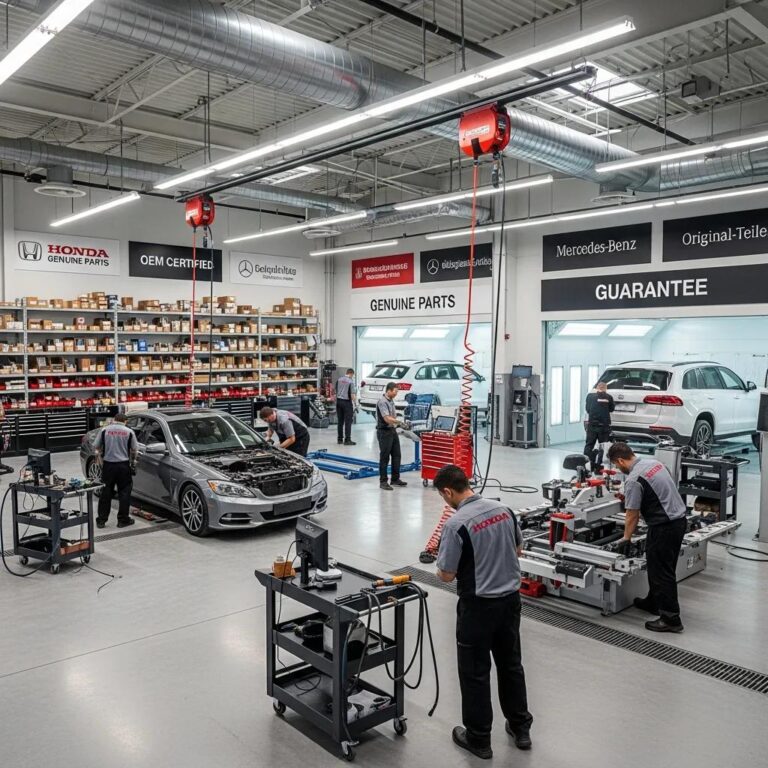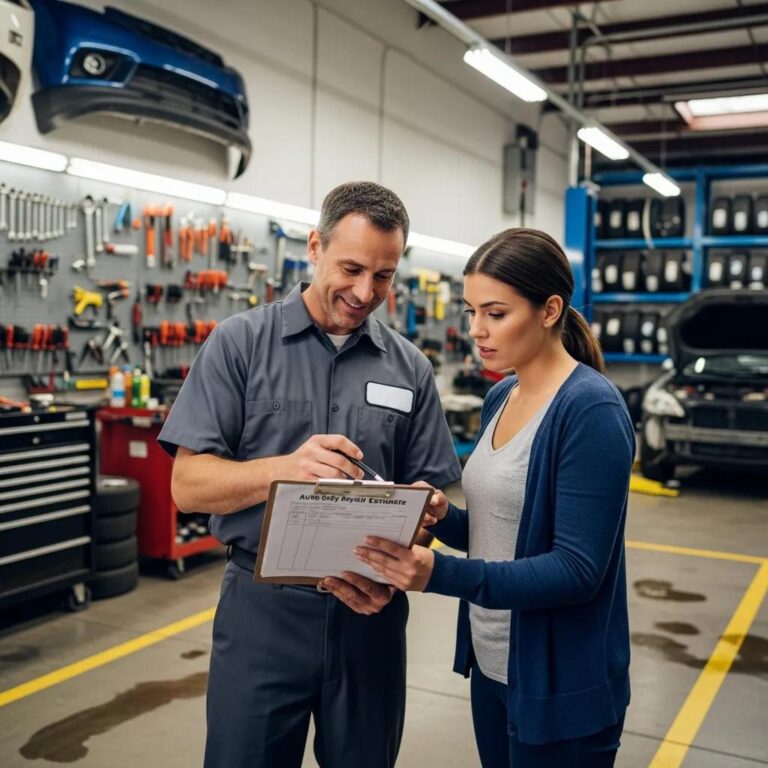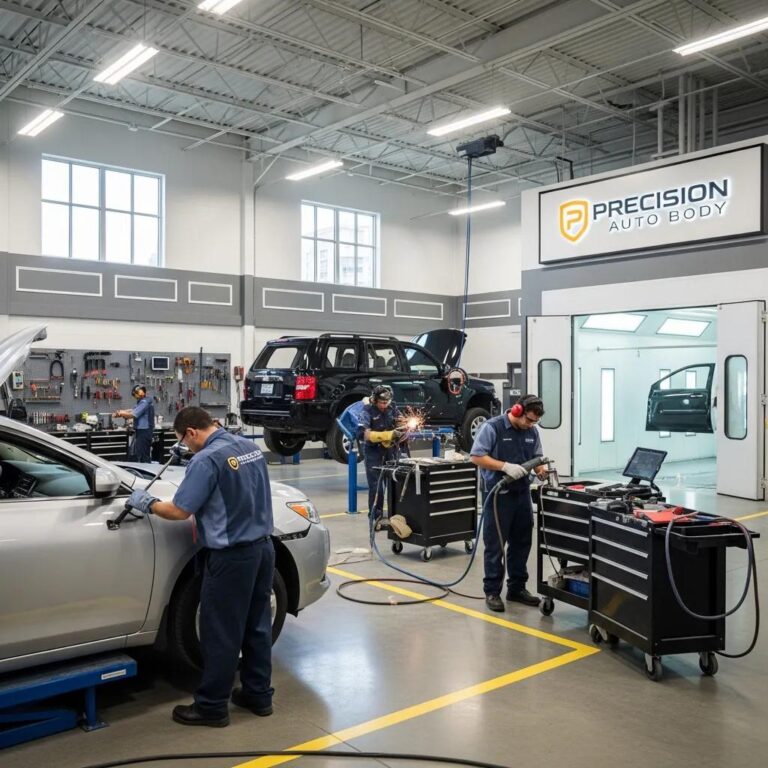
Our Car Painting Process in Los Angeles, CA — Step‑by‑Step for Flawless, OEM‑Quality Paint Repairs
Dealing with collision damage or years of wear can be stressful. Choosing the right paint repair—one that restores the factory look and protects your vehicle’s value—matters. This guide walks through our full car painting process in Los Angeles, from the first damage assessment to precision color matching, multi‑stage application, controlled curing, and final quality checks. You’ll learn why careful prep prevents rust and adhesion problems, how computerized color matching helps us hit OEM colors, and which finishing and protection options help your paint last in Southern California’s sun and pollution. We also explain the main cost drivers and how we work with insurers, plus simple care tips to keep repaired paint looking great. Throughout, we describe professional refinishing practices and how Prime Time Collision Center supports you with trained technicians, insurer coordination, free estimates, and towing when needed.
What Are the Key Steps in Our Professional Car Paint Process in Los Angeles?
Our paint process follows a reliable sequence: detailed assessment, precise preparation, exact color matching, multi‑stage application, controlled curing, and final quality inspection.
Each step lowers the chance of peeling, color mismatch, or corrosion and restores both appearance and protection.
Below is a concise, numbered breakdown of each stage for quick reference.
- Initial assessment and damage analysis to define scope and reveal hidden issues.
- Precision paint preparation—sanding, filler, and masking—to ensure lasting adhesion.
- Advanced color matching using spectrophotometers and OEM paint codes for seamless blends.
- Multi‑stage application: primer, base coat, and clear coat applied to manufacturer specs.
- Controlled curing and finishing with wet sanding and polishing to restore factory gloss.
- Final quality control inspection and documentation to verify repair conformity.
This method protects safety, resale value, and visual continuity across panels. The table below summarizes typical time, purpose, and customer impact so you can see where time and cost are allocated.
| Process Step | Typical Time | Customer Impact |
|---|---|---|
| Assessment & Damage Analysis | 1–2 hours (varies) | Accurate scope and proper insurance estimate |
| Paint Preparation | Several hours to days | Ensures adhesion and long‑term durability |
| Color Matching | 30–90 minutes | Seamless visual match across panels |
| Application (Primer/Base/Clear) | 2–6 hours per panel | Restores factory finish and protection |
| Curing & Finishing | 12–48 hours (curing plus polishing) | Durable gloss and scratch resistance |
| Quality Control | 30–60 minutes | Documentation, verification, and customer confidence |
The assessment most directly affects insurance estimates, while preparation and application determine long‑term durability. Our technicians follow this sequence using manufacturer‑recommended materials and documented procedures. We offer free estimates and work directly with insurers to keep the process moving.
How Do We Conduct Initial Assessment and Damage Analysis?
The initial assessment sets the repair plan by identifying visible and hidden damage and linking repairs to safety and cost outcomes. We start with a visual inspection of the affected area and adjoining panels, looking for substrate damage, rust, or prior repairs that could affect adhesion. Measurement tools—panel alignment checks and thickness gauges—reveal bent structures or spots that need disassembly. Technicians document findings thoroughly to produce an accurate estimate for you and your insurer. That documentation also speeds adjuster reviews, helping us move efficiently into prep and paint matching.
What Does Precision Paint Preparation Involve?
Preparation is the foundation of a long‑lasting repair. Our prep work includes controlled sanding and feathering to blend old and new paint, corrosion treatment or rust removal when needed, and application of body filler to restore contours. We clean and degrease surfaces to remove contaminants, and carefully mask surrounding panels and trim to prevent overspray. Approved primers seal and protect the substrate. Proper prep reduces the risk of bubbling, peeling, or color drift and sets the stage for accurate color matching and application.
How Does Advanced Color Matching Technology Ensure Perfect Paint Repair?
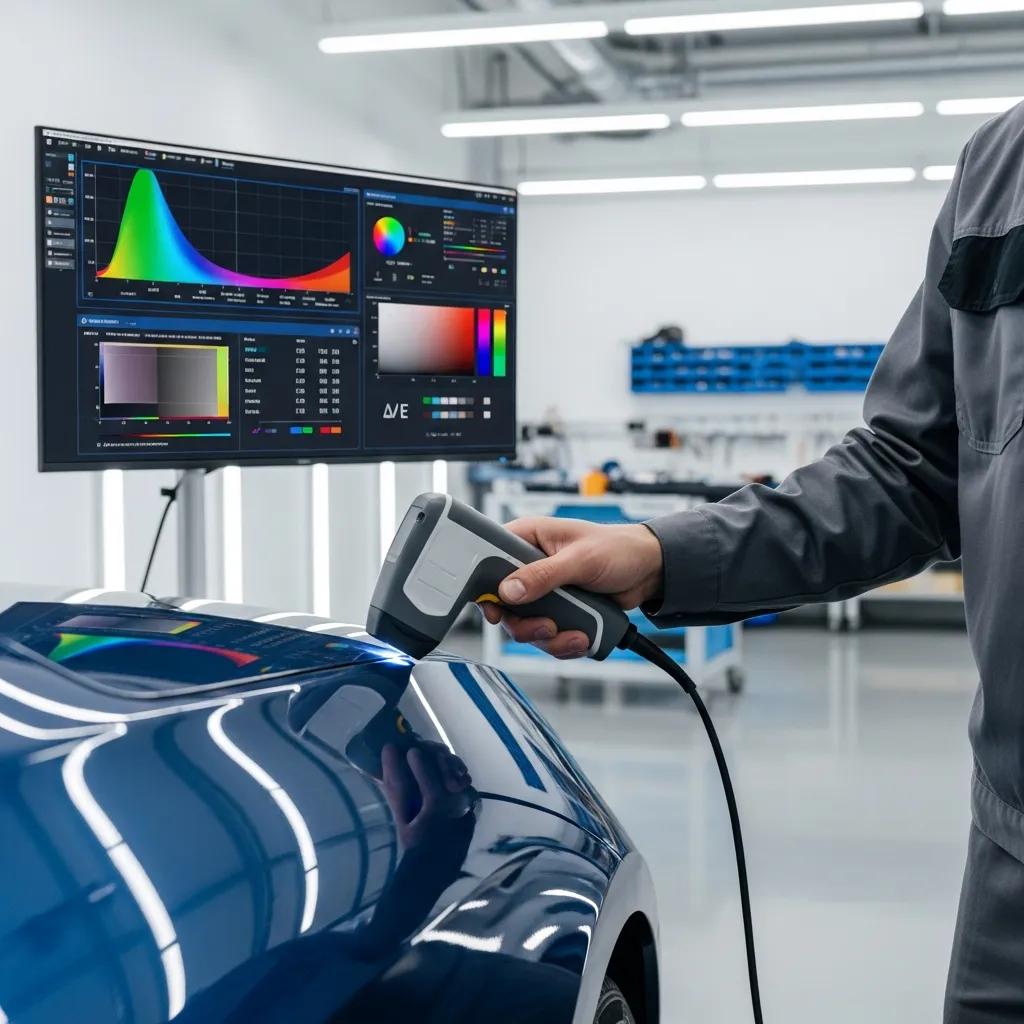
Modern color matching pairs objective measurement with experienced judgment to reproduce OEM colors across different lighting. Spectrophotometers scan the panel and generate a starting formula from a large paint database; software proposes a blend that accounts for pigments, metallics, and pearls. We validate that formula with a test spray and review it under natural light, shade, and booth lighting to spot any metamerism or color shift. Technicians then fine‑tune the mix and use blending techniques to feather repairs into adjacent panels for an invisible transition.
Key computerized techniques we use include:
- Spectrophotometer scanning for precise color capture under controlled geometry.
- Formula databases and mixing banks that calculate pigment ratios for OEM colors.
- Test‑spray evaluations under multiple light sources to check for metamerism.
These tools cut down on guesswork, but they work best when combined with seasoned technician judgment. Prime Time uses computerized color matching together with I‑CAR Platinum‑trained staff to refine formulas and confirm results, reducing rework and increasing OEM‑level matches.
What Computerized Techniques Do We Use for Accurate Color Matching?
We start with a spectrophotometer scan of the existing finish, producing spectral data the mixing software translates into a starting formula. The mixing bank dispenses water‑borne or solvent‑compatible pigments to that formula, and we spray a test panel to evaluate hue, chroma, and value under several light sources. For metallics or pearls that shift with angle, we perform layered tests and tweak pigment concentration or clear‑coat effects. That iterative scan → mix → test → refine loop produces repeatable, documented results and minimizes visible seams.
How Do We Achieve OEM Certified Paint Color Accuracy?
OEM accuracy depends on using the manufacturer paint code, approved materials, and application tolerances specified by the vehicle maker. We cross‑check spectral reads against OEM databases and select primers, base coats, and clears that meet the manufacturer’s chemistry and film‑build specs. We document the formula and application parameters as part of the repair record to support warranty or insurance needs. Technology gives us precision, but following OEM procedures and maintaining technician training ensures long‑term finish performance.
What Is Our Multi-Stage Car Painting Application and Curing Method?
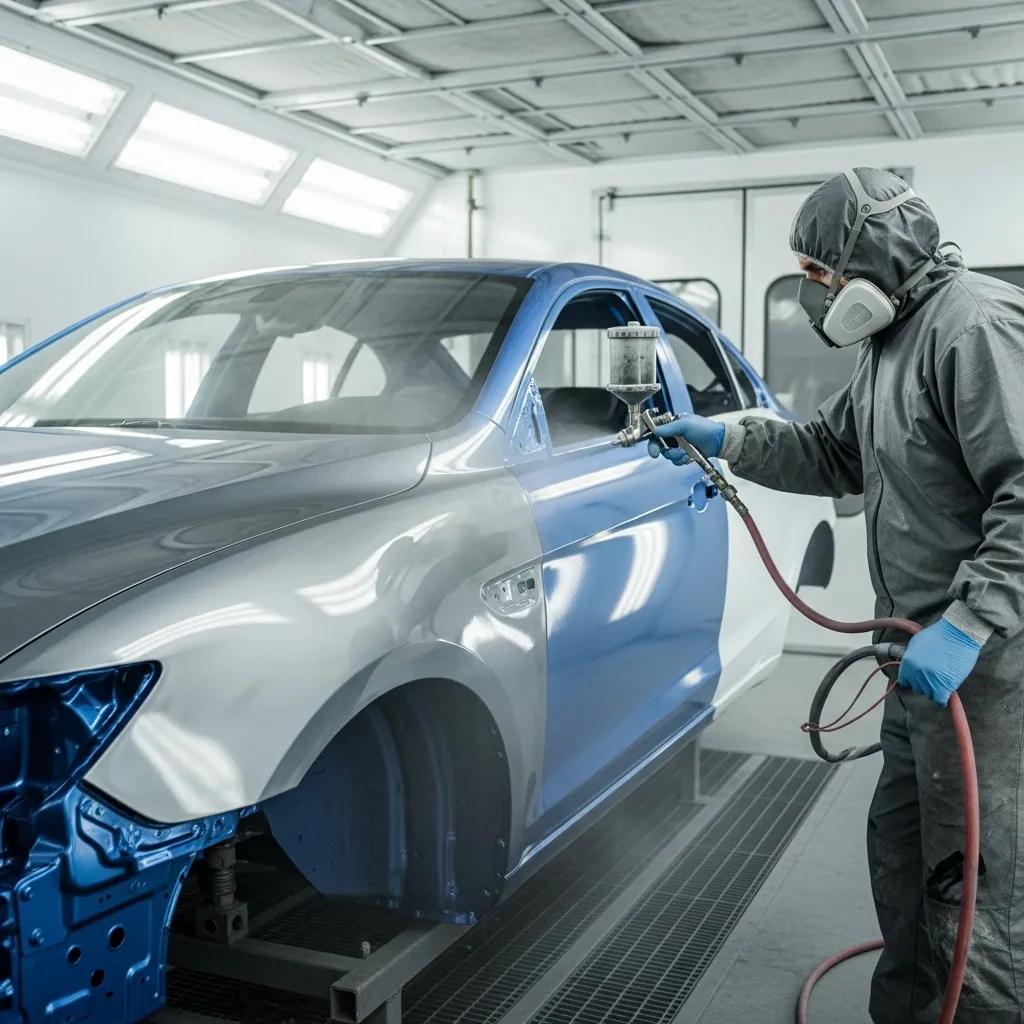
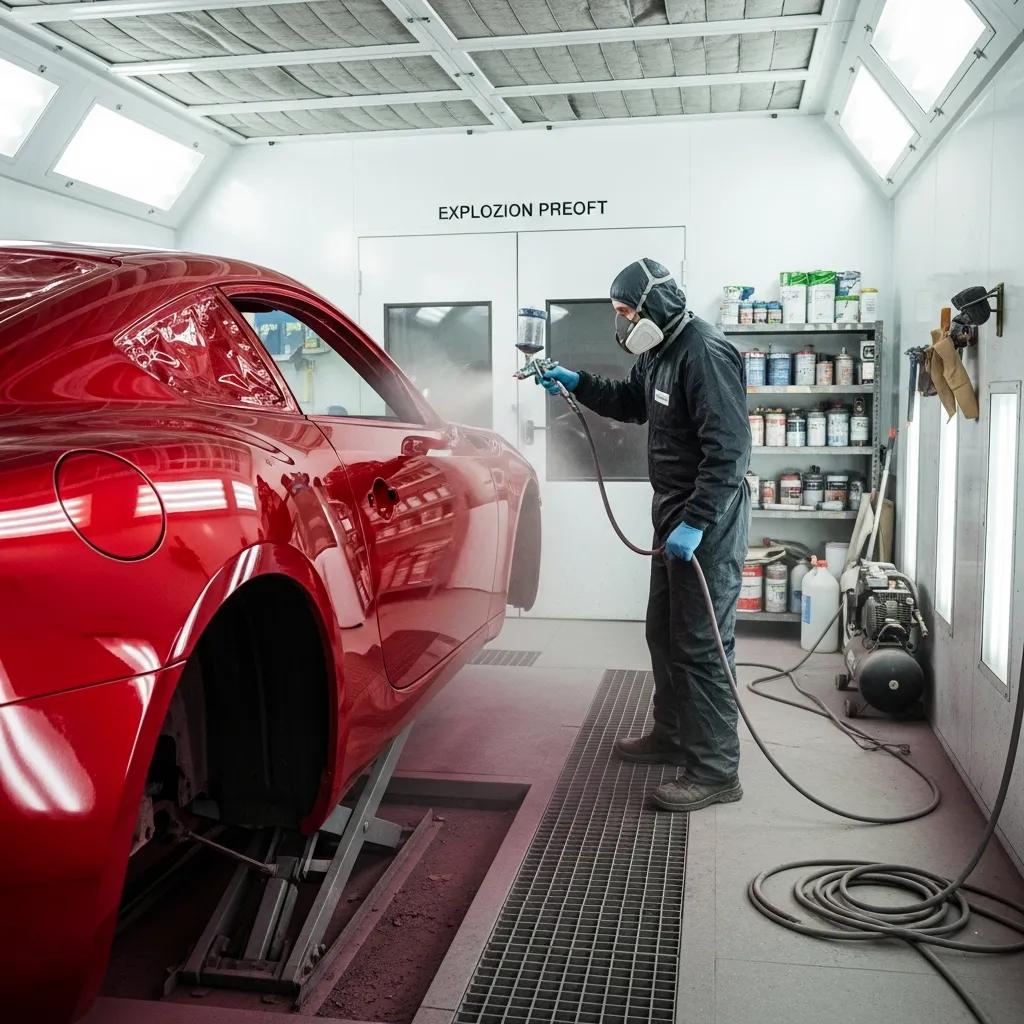
Multi‑stage painting restores both visual depth and protective film thickness through sequenced coating layers followed by controlled curing and finish work. The system typically includes primer to seal and level, base coat for color and effect, and clear coat for gloss and environmental protection. Each layer has target film builds and flash times. Materials (water‑borne vs. solvent systems) dictate application technique, and we use calibrated spray equipment and controlled booth conditions—temperature and humidity—for consistent curing. Finishing—wet sanding, compounding, and polishing—brings the surface to factory gloss before final inspection.
Below is a quick table explaining each coating layer, its role, and application notes.
| Layer | Function | Application Notes |
|---|---|---|
| Primer | Seals substrate and enhances adhesion | Applied to prepared surface; prevents corrosion and evens substrate |
| Base Coat | Provides color and optical effect | Multiple thin passes build depth; metallics require layering techniques |
| Clear Coat | Protects color and provides gloss | Specified film build; cured under controlled conditions for durability |
Knowing how these layers work explains why timing and controlled conditions matter—rushing phases often causes premature failure. Proper curing and finishing determine longevity and gloss retention.
How Are Primer, Base Coat, and Clear Coat Applied?
Primer is applied after final prep to seal and promote adhesion, then lightly sanded for smoothness. Base coat is sprayed in multiple thin passes for even color and correct metallic/pearl orientation; technicians respect flash times between coats to control solvent release. Clear coat is applied to a specified film build to protect color from UV and abrasion; booth conditions and technique affect orange peel, sag, or lapping. Throughout, we use calibrated spray equipment and manufacturer‑recommended mixing ratios to ensure consistent film thickness and avoid de‑lamination.
What Are the Curing and Finishing Steps for Durable Paint?
Curing consolidates the coatings and drives off solvents—this can be accelerated in heated booths or allowed to progress at ambient conditions, depending on paint chemistry. Proper cure times prevent softness in the clear coat and avoid problems during polishing; recommended wait periods vary by material but always include measured intervals before wet sanding or compounding. Finishing includes wet sanding to remove texture, compounding to erase sanding marks, and final polishing for optical clarity and gloss. A final inspection checks film thickness, color match, and surface integrity; documented verification provides confidence for you and records for insurers.
Why Choose Prime Time Collision Center for OEM Certified Paint Repairs in Los Angeles?
Pick a repair shop based on proven OEM procedures, trained technicians, insurer relationships, and local reliability. Prime Time Collision Center is a Glendale‑based collision repair facility serving greater Los Angeles—including Burbank and Pasadena—focused on OEM‑quality repairs, insurer coordination, and straightforward communication. We employ I‑CAR Platinum‑trained technicians, work with all major insurers, and provide free estimates plus 24/7 towing to simplify the repair journey.
Our mix of certified technicians and insurer experience helps ensure repairs follow manufacturer procedures and that documentation is clear for claims. Local convenience matters for post‑repair checks and follow‑up service—our Glendale location supports customers across the area seeking factory‑aligned results. If you’re preparing a claim or deciding on repairs, contact us for a free estimate and inspection to get a clear plan and timeline.
What Is the Importance of I-CAR Platinum Certified Technicians?
I‑CAR Platinum means ongoing, role‑specific training that keeps technicians current with collision repair methods and safety procedures. Technicians with this credential complete a structured curriculum covering vehicle‑specific repairs, structural integrity, and advanced refinishing. For customers, I‑CAR Platinum signals that the team follows industry standards and that the shop invests in continuous education to handle modern vehicle materials and coatings correctly. That training supports accurate assessments, proper material selection, and consistent results across complex paint repairs.
How Do We Guarantee Factory-Quality Repairs and Lifetime Warranty?
Factory‑quality repairs come from following OEM procedures, documenting materials and formulas, and verifying results against manufacturer tolerances. We record paint formulas, application parameters, and inspection outcomes to demonstrate conformity—useful for insurers and resale value. The specific warranty terms aren’t listed here, so please contact the shop to confirm available warranty coverage for paint repairs. Ask for written warranty details during the estimate so you’re clear on scope and duration.
How Do We Assist with Car Painting Cost and Insurance Claims in Los Angeles?
Paint repair costs depend on several interacting factors. Key drivers include damage extent, whether parts must be replaced, the need for panel blending, color complexity (metallics/pearls), and labor hours for prep and finishing. Our role is to document damage, prepare a detailed estimate, and communicate with adjusters about repair procedures and parts sourcing to reduce back‑and‑forth and speed approvals.
The table below compares common damage types, conceptual cost ranges, and how insurers typically handle each to help you understand pricing drivers and claims behavior.
| Damage Type | Typical Cost Range | Insurance Handling Notes |
|---|---|---|
| Minor scratch/spot repair | Low–moderate | Often paid as cosmetic repair; blending may be recommended |
| Panel dent with paint damage | Moderate | Repair vs. replace decision depends on structural damage |
| Multiple panels or structural repairs | High | Requires adjuster approval and documented procedures |
| Specialty finishes (metallic/pearl) | Moderate–High | May require OEM paint and blending for color integrity |
Some repairs are straightforward; others need more insurer coordination and longer timelines. Prime Time works with major insurance companies and provides free estimates and clear documentation to simplify claims and reduce administrative delays.
What Factors Influence Vehicle Paint Repair Costs?
Several variables affect paint repair cost: size and location of damage, whether adjacent panels must be blended, the paint system required (water‑borne vs. specialty effects), and whether parts need replacing. Labor for detailed prep and finish work—especially on complex contours or correcting prior poor repairs—increases time and cost. Environmental controls for curing and controlled light booths add overhead. Because exact pricing varies by vehicle and damage, get a written estimate that itemizes tasks and materials before authorizing work.
How Does Prime Time Simplify Insurance Claim Processes?
We help customers with clear documentation, free estimates, and direct communication with adjusters to explain necessary repairs and OEM‑aligned methods. Our typical workflow: provide a detailed estimate, photograph and document hidden damage, liaise with the insurer to clarify scope, and secure authorization before work begins. This minimizes surprises and speeds the start of repairs once approved. To prepare a claim, gather photos, maintenance records, and our free estimate to make authorization smoother.
What Are the Best Practices for Long-Term Car Paint Care and Protection in Los Angeles?
Los Angeles’ strong sun, heat cycles, and urban pollutants mean you should be intentional about maintenance. Regular washing removes abrasive particles and contaminants that can degrade clear coat. Periodic waxing or sealants add sacrificial protection against UV and smog. Park in shade when possible and remove bird droppings or tree sap quickly to avoid etching. For longer protection, professional options—paint protection film (PPF) or ceramic coatings—offer durable barriers against chips and environmental wear.
Here are simple daily and seasonal maintenance steps to preserve paint in Southern California conditions.
- Regular Washing: Use pH‑neutral soap to remove smog and salt residues.
- Frequent Inspections: Check for chips, scratches, or contaminants and address them promptly.
- Protective Parking: Choose shade or covered parking to reduce UV exposure.
How Can Vehicle Owners Maintain Paint Durability?
Keep paint durable with a regular routine: wash every 1–2 weeks depending on exposure, use microfiber towels to avoid swirl marks, and apply a quality wax or sealant several times a year to restore hydrophobic properties. For repaired areas, wait the manufacturer‑recommended cure time before aggressive cleaning or polishing to avoid marring the finish. Periodic professional inspections after repair can catch early delamination or substrate issues before they worsen. These practices protect appearance and long‑term performance against California’s UV and pollution stresses.
What Paint Protection Options Are Recommended Post-Repair?
Protection options depend on priorities and budget. Traditional wax offers short‑term gloss and protection. Ceramic coatings provide longer‑lasting chemical and UV resistance and make maintenance easier. Paint protection film (PPF) gives a physical barrier against rock chips and abrasion on high‑impact areas. Trade‑offs: wax is low cost but short lived; ceramic coatings last longer and reduce maintenance; PPF protects against physical damage where chips are common. For a repaired finish, consult a professional installer—Prime Time can recommend and arrange follow‑up protection based on your driving habits and vehicle type.
- Wax: Affordable, short‑term protection and improved gloss.
- Ceramic Coating: Longer‑lasting hydrophobic and UV resistance.
- Paint Protection Film (PPF): Physical barrier against chips and abrasion.
Choosing the right protection starts with understanding local exposure and the repaired finish; professional installation ensures proper adhesion and coverage.
Frequently Asked Questions
What should I expect during the car painting process?
Expect a clear series of steps: an initial assessment, careful preparation, advanced color matching, multi‑stage application, controlled curing, and thorough quality control. Each step ensures the paint bonds correctly, matches the original color, and performs long term. The process typically takes several days, depending on damage and the vehicle’s finish.
How can I ensure my vehicle’s paint lasts after repair?
Follow a regular maintenance plan: wash with pH‑neutral soap, use waxes or sealants to protect against UV and pollutants, and park in shade when possible. Address chips and scratches quickly and schedule professional inspections if you suspect adhesion issues. Following cure times and maintenance recommendations will help the repair last.
What types of paint protection options are available after a repair?
Options include traditional wax, ceramic coatings, and paint protection film (PPF). Wax is affordable and temporary; ceramic coatings offer longer chemical and UV resistance; PPF protects against chips and abrasions on high‑impact areas. We can help you pick the right option for your needs.
How does the weather in Los Angeles affect car paint?
Los Angeles’ strong sun, heat swings, and urban pollutants can speed clear coat fading and cause surface etching if contaminants sit on the paint. Regular washing, protective coatings, and covered parking help reduce those effects and extend the life of repaired paint.
What are the common signs that my car’s paint needs repair?
Look for visible scratches, chips, fading, bubbling, or peeling—these signs suggest the clear coat or underlying paint is compromised. Early signs caught during regular inspections are easier and less expensive to repair than advanced corrosion or delamination.
How can I prepare my vehicle for a paint repair service?
Remove personal items from the vehicle, clean the exterior so technicians can assess damage, and take photos of existing scratches or dents. Have your insurance information ready to speed claims. These steps help us give an accurate estimate and start work sooner.
What should I know about the warranty on paint repairs?
Ask for written warranty details during the estimate. Reputable shops—including Prime Time Collision Center—typically offer warranties covering workmanship and materials, but terms and durations vary. Getting the warranty in writing clarifies coverage and next steps if an issue appears.
Conclusion
Knowing the car painting process helps you choose repairs that restore factory appearance and preserve value. Prime Time Collision Center delivers trained technicians, precise color matching, and documented processes designed for long‑lasting results. Combine professional repairs with regular maintenance and protective measures to keep your vehicle looking its best. Contact us for a free estimate and let our team guide you through a smooth, OEM‑aligned repair.