

When and How to Replace Your Car’s Brake Pads: A Practical Guide to Safety and OEM Repairs
Brake pads create the friction that slows your vehicle by turning kinetic energy into heat — and their condition has a direct impact on stopping distance and crash risk. This guide walks you through when to replace brake pads, how the brake system’s parts work together, and straightforward steps for inspection and repair. You’ll learn to spot common signs of worn pads (squeal, grinding, soft pedal), see how pad material and driving style affect lifespan, and decide when a DIY job is reasonable versus when to choose a professional. We map the brake system (pads, rotors, calipers, fluid, sensors), outline practical diagnostic checks and safe DIY limits, and explain costs and how insurance usually handles post-accident repairs in 2024. Where relevant, we highlight how certified collision centers — including Prime Time Collision Center in Glendale, CA — handle post-accident inspections, insurance coordination, and OEM-quality repairs backed by I-CAR Platinum-trained technicians and a lifetime warranty. Read on to build useful, actionable knowledge so you catch problems early and pick the safest repair path.
What Are the Key Components of Your Car’s Brake System?
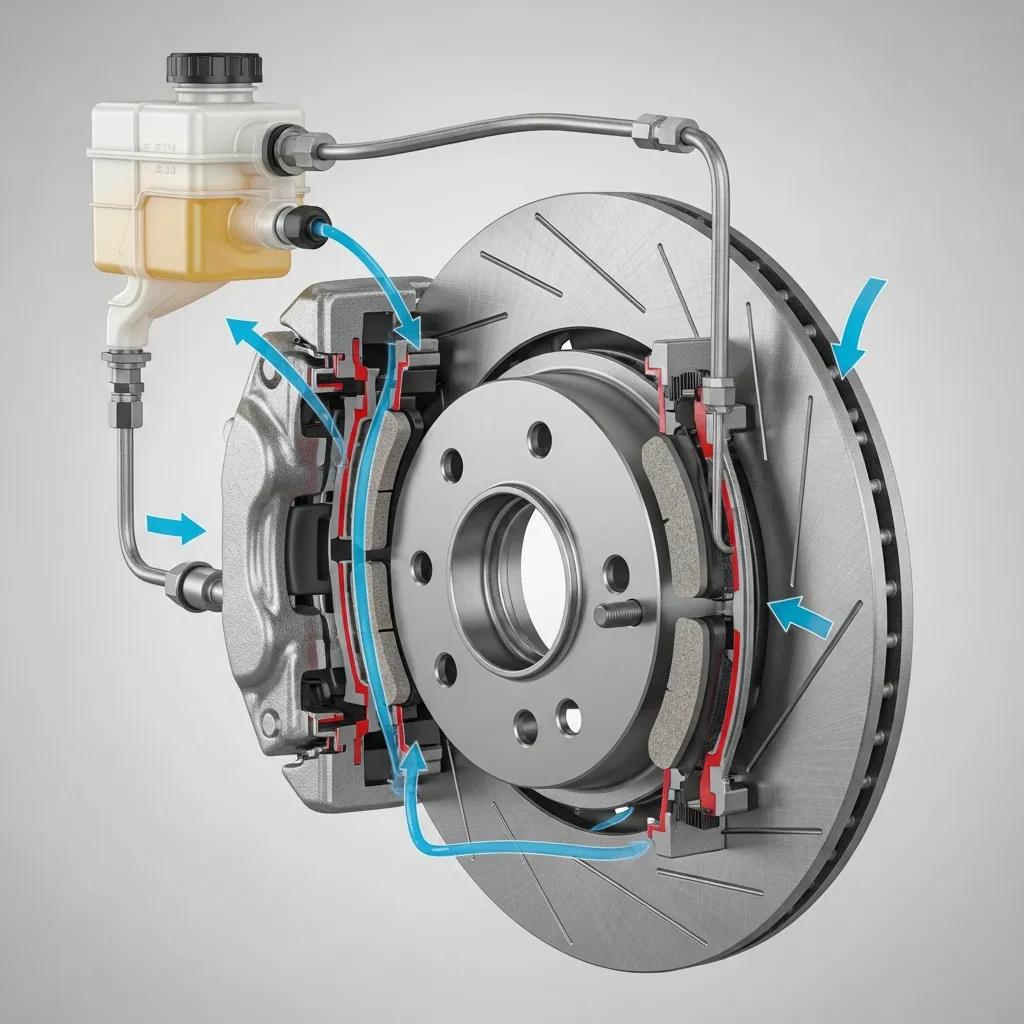
Your brakes are a hydraulic system made of several parts that must work together: brake pads, rotors, calipers, brake fluid, and related sensors. Pads press against rotors inside the calipers to create friction; brake fluid transmits pedal force through the master cylinder and lines; wear indicators and ABS/ADAS sensors monitor system health. Knowing how these parts interact explains why worn pads can damage rotors and why fluid or sensor issues can look like pad problems. This section defines each component and shows how they relate so you can diagnose symptoms and prioritize the right repairs.
How Do Brake Pads, Rotors, and Calipers Work Together?
When you press the brake pedal, hydraulic pressure pushes caliper pistons so the pads clamp onto the rotors — that contact produces the friction that slows the car. Heat from braking must dissipate through the rotor; if it doesn’t, pads can glaze and wear unevenly. Over time pads thin and can transfer uneven wear to rotors, which may warp, score, or need resurfacing if ignored. That mechanical chain is why replacing pads usually includes a close look at rotors and calipers to keep braking consistent and avoid repeat visits.
Why Is Brake Fluid Important for Brake Performance?
Brake fluid is the incompressible medium that moves pedal force to the caliper pistons, so its condition affects pedal feel and stopping power. Fluid contaminated with moisture lowers the boiling point and can cause a spongy pedal, longer stopping distances, and corrosion in ABS components. When you replace pads is a good time to check fluid quality and, if needed, perform a flush. Regular fluid checks preserve hydraulic integrity and protect pads, rotors, and expensive electronic parts from avoidable damage.
What Are the Most Common Signs of Worn Brake Pads?
Worn pads give clear audible, tactile, and visual signals you can watch for before performance suffers. The most common signs are high-pitched squealing, grinding noises, pedal vibration, increased stopping distance, and dashboard brake warnings. Visually, pads thinner than about 1/4 inch (≈6 mm) mean replacement is near. Catching wear early prevents rotor damage and helps ABS and ADAS keep working as designed. Regular checks and prompt action reduce repair complexity and keep braking at manufacturer standards.
The top everyday indicators of worn brake pads are:
- Squealing or high-pitched noise when braking that doesn’t go away after a short break-in.
- Grinding sounds that suggest the pad backing plate is contacting the rotor.
- A vibrating or pulsating brake pedal or steering wheel during braking.
Those signs help you decide whether to schedule an inspection or stop driving immediately. If you hear grinding or notice a big loss of braking force, pull over safely and get a professional check.
Prime Time Collision Center offers quick post-accident and wear inspections for drivers in Glendale, CA and nearby areas like Burbank, Pasadena, and Los Angeles. Our I-CAR Platinum technicians perform OEM-focused diagnostics, provide free estimates, and can arrange 24/7 towing if your vehicle needs immediate removal. Fast local support and a lifetime warranty on repairs turn symptom recognition into safe, factory-quality fixes and reduce uncertainty after you notice warning signs.
How Do Squealing or Grinding Noises Indicate Brake Wear?
Squealing often comes from built-in wear indicators or glazed pads and usually warns that pads are thinning or overheating — it’s often a warning, not immediate failure. Grinding is more serious: it usually means pads are worn to the metal backing or the rotor is being contacted directly, which can score rotors and reduce braking efficiency. If you hear grinding, it’s safer to avoid driving further and get a professional inspection to prevent more costly rotor and caliper damage. Addressing noise early usually limits repair scope and cost.
What Does a Brake Warning Light Mean for Your Safety?
A brake warning light can indicate several problems: a pad sensor, low brake fluid, or an ABS/system fault — the safety risk depends on the cause. If the light points to a pad sensor or low fluid, a prompt check often solves it before performance drops. But an ABS or hydraulic fault needs immediate professional diagnosis. Treat persistent or flashing brake lights as higher risk and avoid high-speed driving until a qualified technician confirms system integrity. Modern cars may need manufacturer-level diagnostics to read sensor codes correctly, which is why OEM-certified repairs matter.
When Should You Replace Your Brake Pads? Understanding Lifespan and Influencing Factors
Brake pad life depends on pad material, driving habits, vehicle class, and conditions — expect about 25,000 to 70,000 miles for most cars. Aggressive city driving, towing, steep downhill use, and performance driving shorten life, while steady highway miles tend to extend it. Check pads every 10,000–15,000 miles or during scheduled services so you can replace them before rotor damage occurs. The table below compares common pad materials and their typical mileage ranges to help you plan replacements.
Different pad materials have distinct life and performance profiles:
| Pad Material | Typical Lifespan (miles) | Typical Characteristics |
|---|---|---|
| Organic (non-asbestos) | 25,000–40,000 | Quiet and gentle on rotors but wears faster under high heat |
| Semi-metallic | 30,000–60,000 | Durable with decent heat dissipation; moderate noise |
| Ceramic | 40,000–70,000 | Long-wearing, quiet, and cleaner — usually higher cost |
| Performance compound | 20,000–50,000 | Built for high-heat stopping; shorter life in stop-and-go city use |
This comparison shows how material choices trade off longevity, noise, and heat tolerance; city drivers often pick durable compounds while commuters may prefer ceramics for quiet operation. Matching pad type to how you drive and monitoring wear keeps braking consistent and timed with maintenance intervals.
How Do Driving Habits and Vehicle Type Affect Brake Pad Life?
Stop-and-go urban driving increases pad wear by raising friction cycles and heat exposure — it can cut expected life significantly versus steady highway driving. Heavier vehicles, SUVs, and towing put more strain on pads and rotors, shortening service intervals and increasing the chance rotor work is needed. Performance or mountain driving with repeated high-energy stops consumes pads quickly and may require higher-spec compounds and upgraded rotors. Knowing these scenarios helps you schedule inspections earlier and choose pads suited to real-world use.
What Is the Typical Mileage Range for Brake Pad Replacement?
Most drivers replace pads between 25,000 and 70,000 miles, depending on vehicle weight, pad material, and driving style — aggressive driving and specialty vehicles are exceptions. Economy commuter cars in heavy urban use often sit toward the lower end, while luxury cars with ceramic pads trend toward the higher end. Visual checks and measurements are the best way to move from estimated mileage to an actual service decision, especially if wear is uneven or rotors show scoring. Regular checks and early intervention prevent surprise rotor replacements and keep OEM-level braking performance.
Should You Replace Brake Pads Yourself or Choose Professional Service?
Choosing DIY or professional service comes down to your mechanical skill, tools, system complexity, and whether ADAS recalibration is needed. Simple, single-axle pad jobs on older vehicles with standard calipers can be within a capable DIYer’s scope if you follow safety steps and torque specs. But post-accident inspections, cars with ABS/ADAS sensors, luxury/performance vehicles, and any job involving rotor machining or caliper rebuilding should go to an OEM-certified shop. Certified shops follow factory procedures that preserve safety systems and warranty coverage.
When weighing DIY vs. professional, consider these points:
- When DIY Is Reasonable: The job is limited to one axle, pads are a direct fit, and you have the right tools and experience.
- When to Choose a Pro: After a collision, when electronic sensors are present, or when rotors and calipers need machining or replacement.
- Safety Thresholds: If you’re unsure about torque specs, bedding procedures, or brake bleeding, professional service is the safer choice.
Use this framework to balance cost savings against system integrity and safety.
Prime Time Collision Center provides OEM-certified brake repairs if you prefer professional handling. Our technicians follow manufacturer procedures to protect vehicle safety systems. For post-accident work or cars with ADAS, we perform diagnostics and repair workflows that reduce the risk of improper installation or sensor misalignment. We also coordinate with major insurers, provide free estimates, and back repairs with a lifetime warranty — making certified service an easy option when safety or complexity exceed DIY limits.
What Tools and Steps Are Needed for DIY Brake Pad Replacement?
A safe DIY pad swap needs the right tools and care: a jack and sturdy stands, a torque wrench, proper sockets, a C-clamp or piston tool, brake cleaner, and new pads plus hardware. Basic steps are: safely lift and support the vehicle, remove the wheel, retract the caliper piston, fit new pads and hardware, torque bolts to spec, and complete a careful test drive with progressive stops. Safety notes: never rely on a hydraulic jack alone, avoid contaminating pad surfaces with grease, and follow the vehicle maker’s bedding and torque specs. If any step feels uncertain, stop and consult a professional — brakes are safety-critical.
When Is It Safer to Trust OEM Certified Brake Repair Experts?
Trust OEM-certified experts when repairs touch safety-critical systems — after collisions that may have damaged suspension or mounts, or whenever ADAS sensors need recalibration. Examples include a modern luxury car that needs sensor alignment after a front impact or a vehicle with warped rotors and potential caliper damage following an accident. Certified shops follow factory tolerances and keep documentation, which helps preserve warranty and resale value while lowering safety and legal risks. For complex systems, the extra cost of certified repair is an investment in reliable stopping performance and long-term vehicle health.
Why Choose OEM Certified Brake Repair After an Accident?
After a collision, OEM-certified repair helps ensure structural alignment, correct part fit, and adherence to manufacturer safety procedures that affect crashworthiness and braking. Manufacturer-spec brakes, calibrated sensors, and trained technicians reduce the chance of hidden failures or compromised ADAS performance that can come from non-OEM parts or improvised fixes. Using OEM parts and certified procedures supports consistent pedal feel, braking balance, and long-term reliability while protecting warranty and resale value.
The table below compares certification, OEM parts, and aftermarket approaches so you can weigh safety and value tradeoffs.
| Credential / Part Type | What It Ensures | Typical Benefit |
|---|---|---|
| I-CAR Platinum Certification | Trained technicians and repair standards | Greater confidence in factory-level procedures |
| Genuine OEM Parts | Factory-fit components and sensor compatibility | Preserves OEM performance and warranty alignment |
| Aftermarket Parts | Varies by supplier and spec | Lower cost but variable fit and long-term outcome |
This comparison shows that I-CAR training combined with genuine OEM parts offers the closest match to manufacturer expectations, lowering the chance of post-repair performance drift. Drivers concerned about safety after a collision gain measurable value from certified processes and documented factory methods.
Prime Time Collision Center recommends OEM-certified brake work for post-accident repairs in the Glendale area. Our I-CAR Platinum-trained technicians follow factory procedures, use genuine parts when appropriate, and coordinate with insurers to restore safety and preserve vehicle value. Choosing certified repair gives you documented assurance that brakes and related sensors were returned to manufacturer-aligned condition.
How Does I-CAR Platinum Certification Ensure Repair Quality?
I-CAR Platinum certification shows a commitment to continuous training and proven technician competency across collision repair areas, including safety-critical systems like brakes and ADAS sensors. Certified technicians complete manufacturer-specific courses and assessments that teach factory repair sequences, tolerances, and diagnostic methods for braking and sensor recalibration. That training reduces variability in outcomes, ensuring caliper alignment, rotor fit, and sensor programming follow validated procedures. The result is a lower risk of recurring issues and greater confidence in post-repair safety.
What Are the Benefits of Using Genuine OEM Brake Parts?
Genuine OEM parts match original specs for pad shape, friction compound, wear indicators, and sensor fit — which helps preserve manufacturer braking performance and proper fit. OEM components lower the chance of fitment problems that cause uneven wear, noise, or sensor errors, and they support warranty and resale value compared with generic parts. The tradeoff is higher upfront cost, but better long-term compatibility and fewer follow-up repairs often make OEM parts more economical over the vehicle’s life. For cars with ADAS or complex sensor networks, OEM parts are typically the safer choice to keep integrated systems working correctly.
What Is the Expected Brake Pad Replacement Cost in 2024 and How Does Insurance Help?
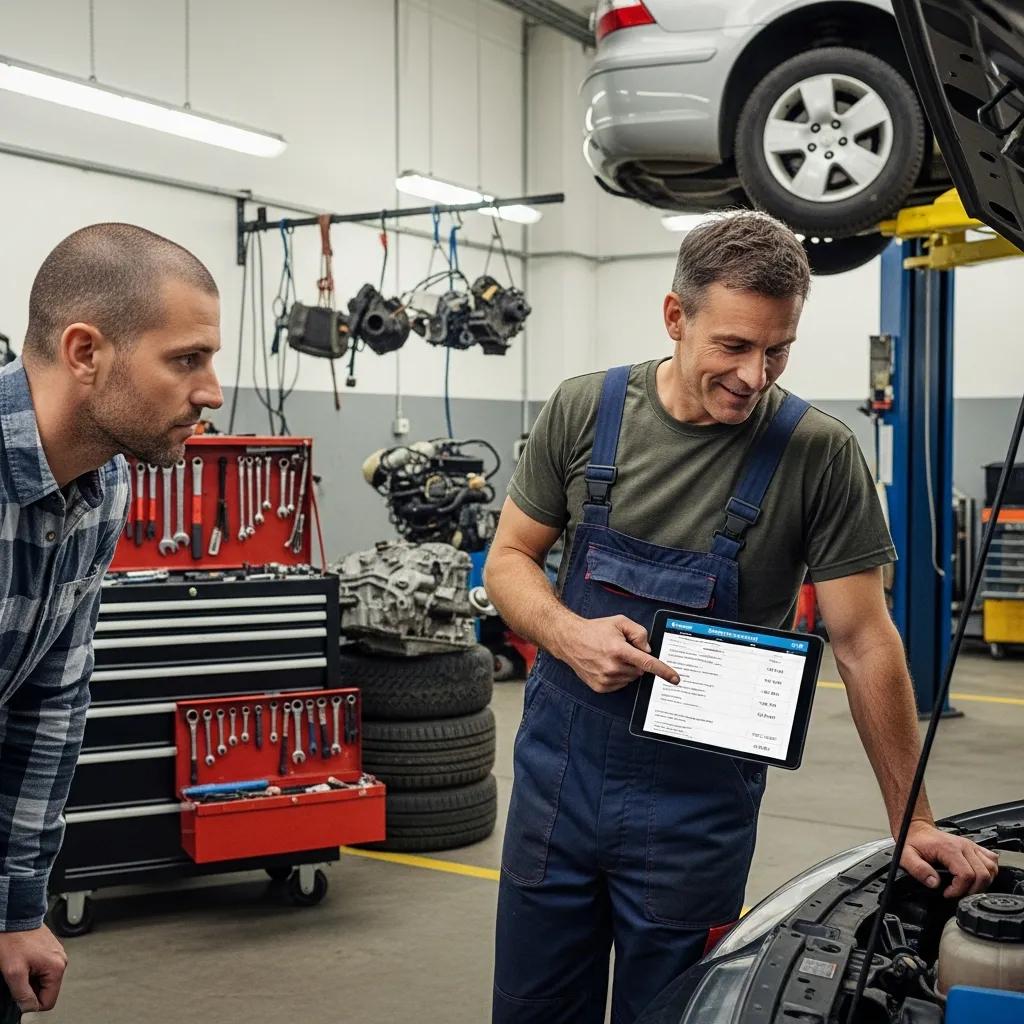
Brake pad replacement costs in 2024 vary by vehicle and whether rotors, calipers, or sensor work are needed. Typical per-axle ranges are roughly $150–$800 depending on parts and labor. Economy cars with standard pads sit at the low end; luxury or performance vehicles using ceramic or premium materials sit higher. Rotor machining or replacement and ABS/ADAS diagnostics raise the price. Insurance may cover brake repairs if damage came from an accident, and shops that work directly with insurers can simplify claims and approvals.
The table below shows typical cost ranges by vehicle class to set expectations.
| Vehicle Type | Typical Cost per Axle | Cost Drivers |
|---|---|---|
| Economy / Compact | $150–$300 | Standard pads, minimal labor |
| Mid-size / Crossover | $250–$450 | Higher-grade pads, occasional rotor work |
| SUV / Light Truck | $300–$600 | Heavier components, higher labor |
| Luxury / Performance | $400–$800+ | Ceramic pads, sensors, precision labor |
This range shows that part quality and repair complexity drive price differences, and that rotor or caliper replacement increases costs significantly. Knowing these ranges helps you budget and ask targeted questions during estimates so you avoid unnecessary upsells.
Which Factors Influence Brake Pad Replacement Pricing?
Pricing depends on pad material, rotor condition (resurface vs. replace), local labor rates, and diagnostics for ABS/ADAS recalibration.
Premium ceramic pads and vehicles with sensor-heavy systems add parts and diagnostic time, while simple pad swaps on older cars remain relatively inexpensive. Ask for a clear breakdown of parts, labor, and any recommended rotor work, and whether OEM parts are suggested for sensor compatibility. Understanding these drivers helps you compare quotes more effectively.
- Pad material and brand determine the baseline parts cost.
- Rotor condition dictates whether machining or replacement is needed.
- Labor rates and diagnostic time for ABS/ADAS recalibration affect the total price.
A transparent estimate that separates those elements makes it easier to choose repairs that match safety needs rather than sales pressure.
How Does Prime Time Collision Center Assist with Insurance Claims?
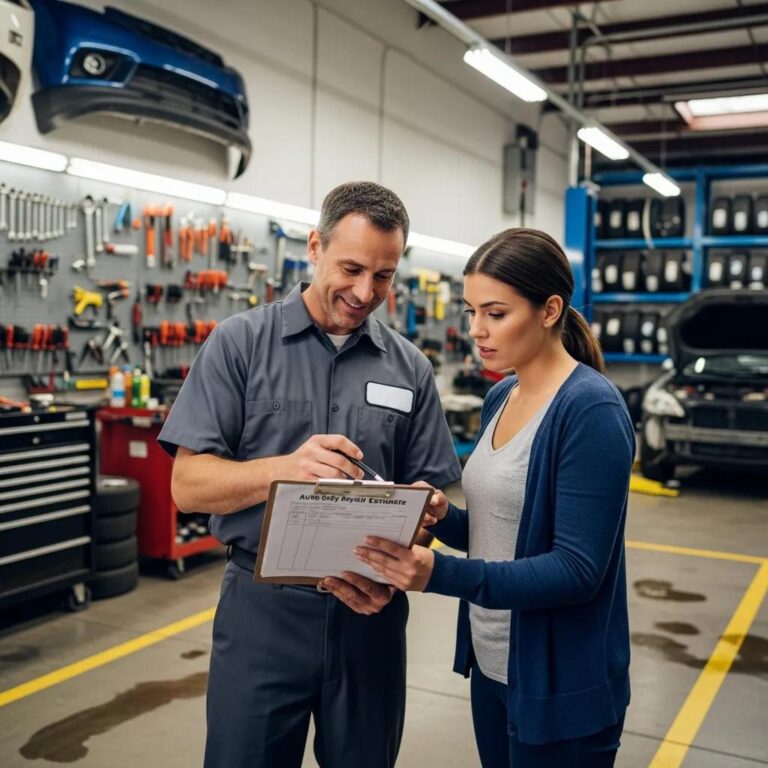
Prime Time Collision Center helps customers with free estimates, detailed damage documentation for claims, coordination with all major insurers, and 24/7 towing when needed after accidents. We compile repair documentation and work directly with insurers to speed authorization and reduce customer hassle. Once approved, repairs follow OEM procedures and carry a lifetime warranty, and our technicians handle any needed sensor recalibration or component replacement to restore safety. This end-to-end support lets you focus on recovery while we manage the technical and administrative work.
- Initial Support: Free estimates and 24/7 towing get your vehicle safely to a certified facility.
- Claims Coordination: We document repairs and communicate with insurers to secure authorization.
- Repair & Warranty: OEM-aligned repairs with a lifetime warranty provide long-term confidence.
These steps show how a certified collision center can simplify post-accident brake repairs and improve the odds of a safe, lasting outcome.
Frequently Asked Questions
What are the risks of ignoring worn brake pads?
Ignoring worn pads raises serious safety risks: longer stopping distances, reduced braking efficiency, and possible damage to rotors that leads to costly repairs. Left unchecked, brake problems can also affect ABS and ADAS systems, which are important for safe driving. In extreme cases, neglected brakes can fail entirely. Regular inspections and timely replacements are essential to keep you and others safe on the road.
How can I extend the lifespan of my brake pads?
You can stretch pad life by driving more smoothly — use gradual acceleration and braking — and avoiding heavy loads or excessive towing. Regular maintenance, including brake fluid checks and timely inspections, helps catch wear early. Picking higher-quality pads matched to your driving conditions also helps: semi-metallic or ceramic pads are often better for frequent stop-and-go traffic.
What should I do if my brake warning light comes on?
If the brake warning light comes on, act promptly. First check brake fluid level — low fluid often triggers the light. If fluid is fine, the light may indicate worn pads or an ABS fault. Avoid high-speed driving and schedule a professional inspection as soon as possible. Don’t ignore warning lights — they can signal problems that affect safety.
Are there any specific maintenance tips for vehicles with ADAS?
Vehicles with ADAS need special attention during brake service. After any brake work, recalibration of ADAS sensors may be required to keep systems accurate. Regularly check sensor alignment and condition, because misaligned sensors cause incorrect readings and reduced safety feature performance. Using OEM parts during repairs helps maintain ADAS integrity. Always consult a certified technician familiar with ADAS requirements.
What are the signs that I need to replace my brake rotors?
Signs you may need new rotors include vibration or pulsation in the brake pedal while stopping (often a sign of warped rotors), grinding noises that suggest metal-on-metal contact, and visible scoring or grooves. If a rotor is below the manufacturer’s minimum thickness, it should be replaced to maintain braking performance and safety.
How can I choose the right brake pads for my vehicle?
Choose pads based on your driving habits, vehicle type, and conditions. For daily commuting, organic or semi-metallic pads often work well; for towing or performance driving, high-performance or ceramic pads may be better for heat resistance. Check your owner’s manual for manufacturer recommendations and consider noise and dust levels. Talk with a certified technician to balance performance, longevity, and safety for your needs.
Conclusion
Knowing when and how to replace your brake pads is key to keeping your vehicle safe and performing as it should. Spot the warning signs early, understand the factors that affect pad life, and choose the repair route that matches your situation. If you prefer professional service, Prime Time Collision Center delivers OEM-certified repairs from expert technicians and backs work with a lifetime warranty. Schedule an inspection to keep your braking system in top condition.