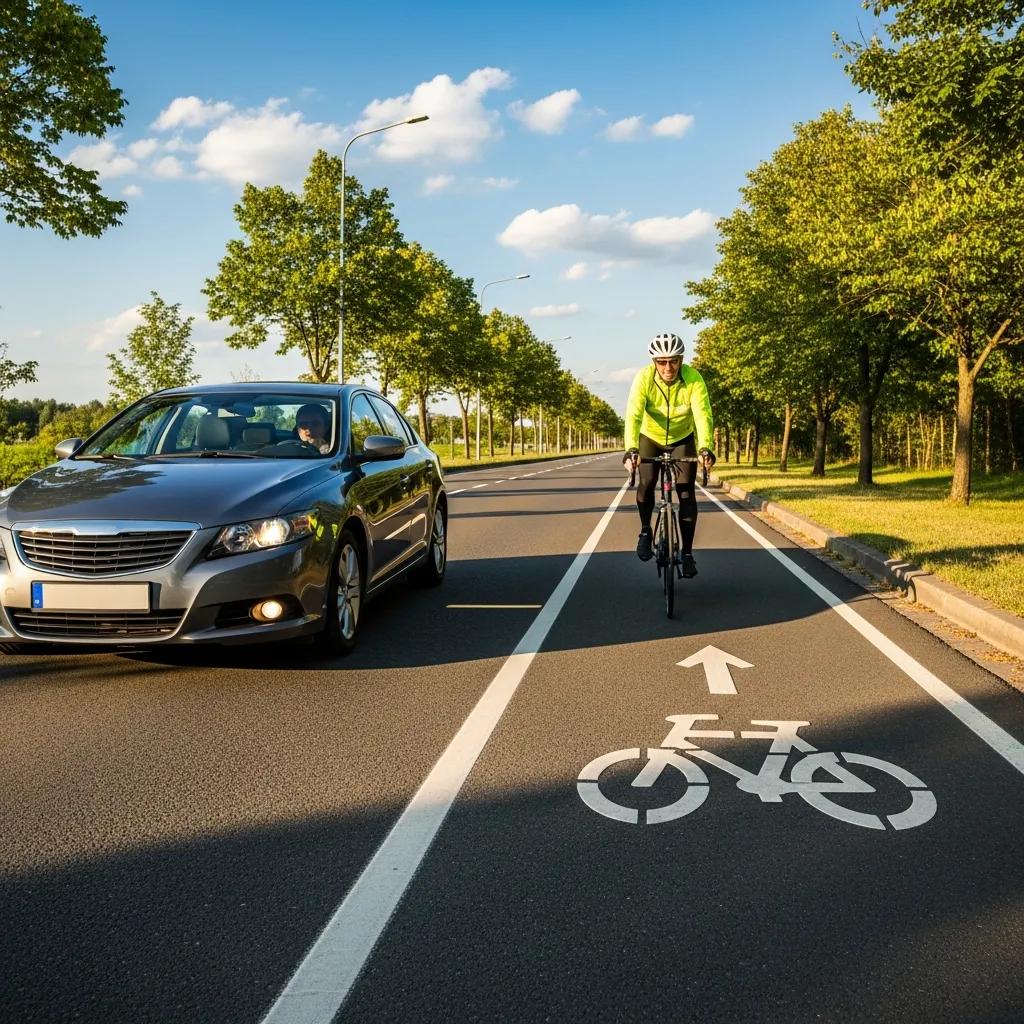
How to Drive Safely Around Cyclists: A Clear, California-Focused Guide to Sharing the Road
Sharing the road with cyclists starts with treating bikes as legitimate road users, anticipating their moves, and adjusting your driving to protect people who are most vulnerable. Research and crash data show predictable driver behavior and clear rules lower collision risk and serious injuries. This guide gives practical, California-specific steps you can use to prevent crashes and act correctly if one happens. You’ll get the key bike lane rules in California, how to pass safely and avoid blind spots, common car-bike crash scenarios and how to prevent them, plus the exact actions to take after a collision. We also explain why I-CAR Platinum and OEM repair processes matter, how to evaluate shops, and what to expect from insurance and repairs. Read on for laws, step-by-step checklists, quick-reference tables, and concise tips for drivers, fleet managers, and anyone who encounters cyclists on busy streets.
What Are the Key Bike Lane Rules for Cars in California?
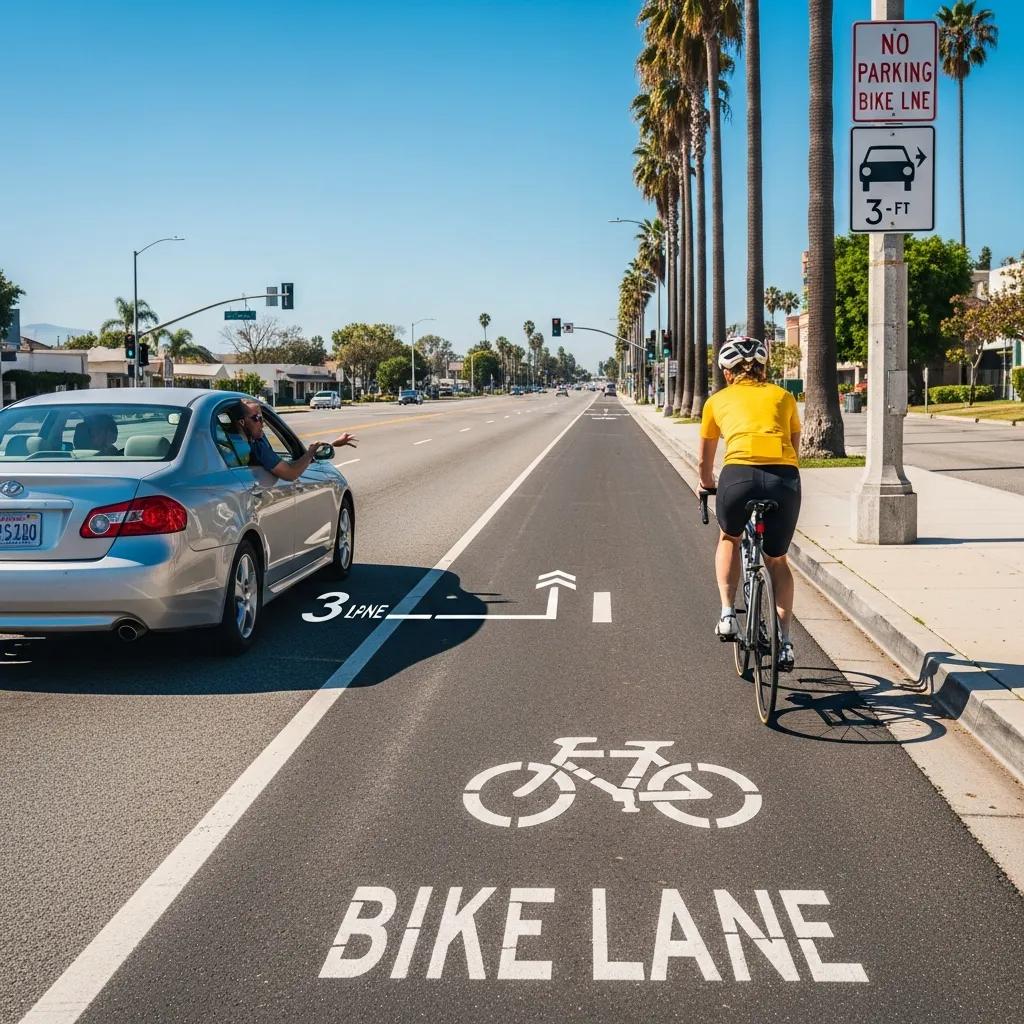
Bike lanes are meant for bicycles, and California law places specific duties on motorists to reduce conflict and make cyclist behavior more predictable. Markings can be solid lines, dashed lines, or buffered zones; unless signs say otherwise, drivers must not drive, stop, or park in bike lanes. When you need to cross or turn through a bike lane, yield to any rider in the lane and only change lanes when it’s safe. Those simple expectations help prevent right-hook and crossing collisions. Below are the practical rules every driver in California should know.
California bike lane rules drivers should follow:
- Yield to cyclists traveling inside a marked bike lane when you are entering, crossing, or turning across it.
- Do not drive, stop, or park in a bike lane unless signs explicitly allow it for a short time.
- When passing, leave the legally required clearance and be extra cautious on narrow or congested streets.
These basics set the stage for the legal definitions and everyday etiquette that follow.
Which California Laws Define Cyclist Rights and Vulnerable Road Users?
In California the Vehicle Code treats people on bicycles as vehicle operators with many of the same roadway rights. Cyclists may take a travel lane when needed and are protected by safe-passing rules. The law also highlights vulnerable road users—pedestrians, bicyclists, and motorcyclists—requiring drivers to exercise extra care. Violations that cause harm can result in citations. Knowing these legal points helps drivers understand that a cyclist’s lane position is often lawful and intended to improve visibility and safety.
With the law in mind, the next section covers simple etiquette to respect cyclists and reduce surprises.
How Should Drivers Respect Bike Lane Etiquette and Cyclist Right of Way?
Good etiquette makes interactions predictable. Signal early, scan for cyclists before crossing or opening doors, and yield when turning across a bike lane so cyclists have space and time to pass. If you’re behind a cyclist, avoid sudden acceleration or squeezing by—slow down and pass only when you can provide the required clearance. Small habits, like waiting a few seconds for a cyclist to clear an intersection before you turn, cut down on conflicts and match right-of-way rules.
These practices lead into the passing and awareness steps we recommend below.
How Can Drivers Maintain Safe Passing Distance and Awareness Around Cyclists?
Safe passing distance plus constant awareness are two of the most effective ways to reduce collisions. Use the California three-foot rule as your baseline, slow down when passing, and only change lanes when you can do it safely. Keep a steady mirror-and-shoulder-check rhythm and learn common cyclist signals and positioning. Here are three practical steps you can put into practice immediately.
- Respect the three-foot rule first: Leave at least three feet of lateral space when overtaking a cyclist whenever the road allows.
- Reduce your speed: Slow enough to pass calmly without surprising the rider or forcing an abrupt correction.
- Change lanes when possible: Move fully into the adjacent lane to create safe separation rather than squeezing by in the same lane.
Next we explain the three-foot rule in more detail and cover blind-spot checks and signal recognition.
What Is the California Three-Foot Rule for Passing Cyclists?
California’s three-foot rule requires drivers to give a minimum lateral clearance of three feet when passing a bicycle, when it’s safe to do so. That clearance reduces the chance of contact from handlebar wobble, road debris avoidance, or sudden course changes. If the road is too narrow to provide three feet plus safe vehicle clearance, slow down and follow behind until a safe passing opportunity appears. On narrow two-lane streets, that often means waiting behind the cyclist until the roadway widens. Knowing when to wait prevents dangerous squeeze passes and follows the law.
Now let’s cover how to check blind spots and read cyclist hand signals so you can anticipate moves.
How to Check Blind Spots and Recognize Cyclist Hand Signals Effectively?
A reliable blind-spot routine plus quick recognition of cyclists’ signals makes their behavior more predictable. Use this mirror-shoulder-check cadence: scan the rearview, check the side mirror, then do a quick shoulder check into the lane you plan to enter right before you change lanes. Common cyclist signals to watch for: left arm straight for a left turn; right arm straight (or left arm bent upward) for a right turn; arm down for slowing or stopping. Spotting these cues and combining them with steady lateral space lowers the chance of sudden conflicts.
These habits matter most when preventing the common crash types below.
What Are Common Car-Bike Accident Scenarios and How to Prevent Them?
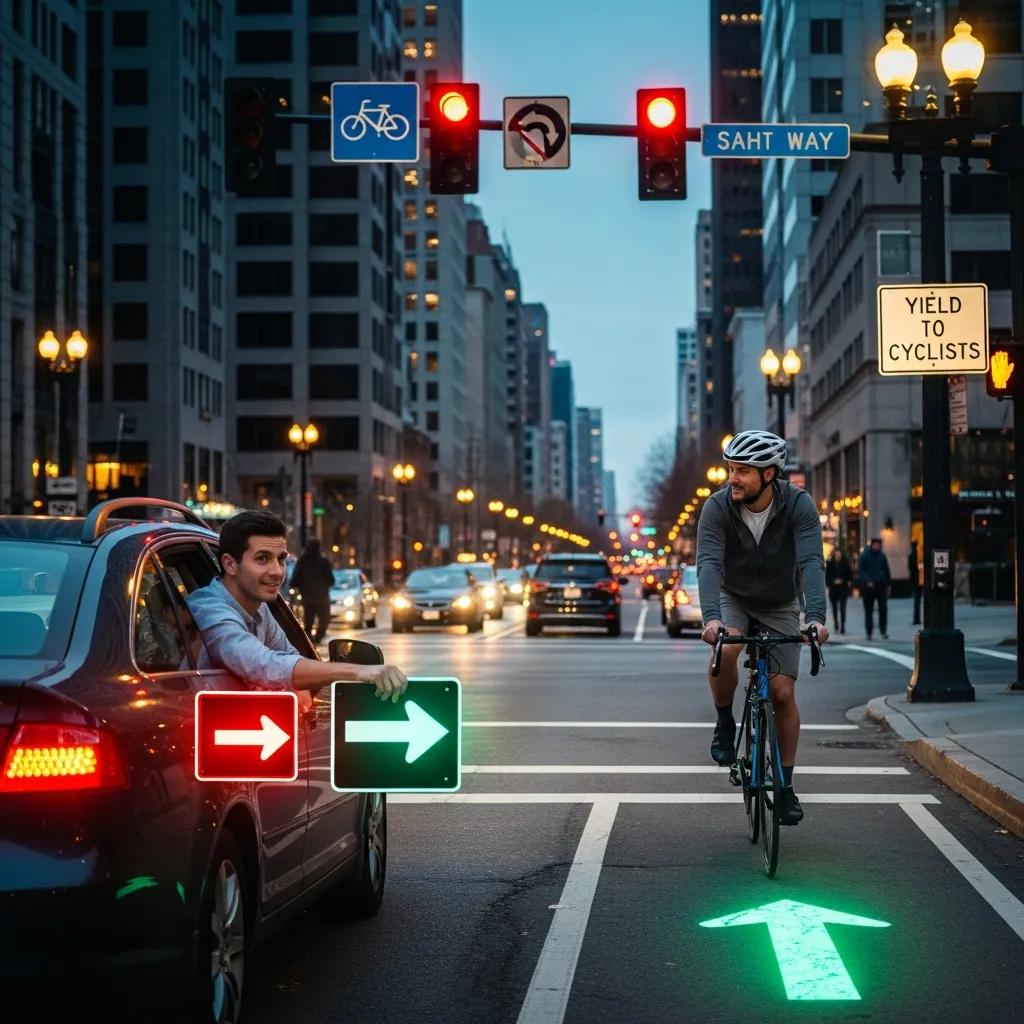
Most car-bike crashes fall into a few repeatable patterns. Right-hook crashes occur when a vehicle turns across a cyclist’s path, left-cross collisions happen at intersections, rear-end crashes stem from following too closely, and dooring happens when someone opens a car door into a passing rider. Each scenario has predictable warning signs—turning across a bike lane, not seeing a rider, tailgating, or opening a door without checking—that drivers can counter with scanning, yielding, and small behavior changes. Below are targeted prevention tactics for the most common situations.
Prevention tactics for common car-bike collisions:
- Right-hook avoidance: Signal early, yield to cyclists in bike lanes, and wait until the rider has passed before turning right.
- Left-cross prevention: Complete your intersection scan, confirm sightlines are clear, and don’t start a left turn if a cyclist is approaching.
- Rear-end reduction: Keep a safe following distance and expect cyclists to slow for hazards or lane narrowings.
- Dooring prevention: Check the curb lane before opening a door and teach passengers the inside-hand method to glance back for cyclists.
Below we expand on intersection avoidance and dooring prevention in practical terms.
How to Avoid Right Hook, Left Cross, and Rear-End Collisions with Cyclists?
Preventing intersection and passing crashes comes down to steady scanning, clear signaling, and assuming cyclists have the right of way when they’re in a bike lane or legally occupying a lane. Before turning right, do a final mirror and shoulder check and, if a cyclist is passing your turning point, wait behind them. For left turns, don’t begin until you’re sure no cyclist is approaching in the opposite direction. To avoid rear-end collisions, leave extra stopping room and be ready to slow smoothly when cyclists face obstacles or narrowing lanes.
Next we cover simple steps to stop dooring incidents before they happen.
What Strategies Prevent Dooring and Opening Door Accidents?
Dooring happens when someone opens a car door into a cyclist’s path. Small changes make a big difference. Use the Dutch Reach: open the door with the hand farthest from it—this naturally turns your body so you look over your shoulder toward oncoming cyclists. Teach passengers to do the same and to check before exiting, especially next to bike lanes. When possible, park a little farther from the bike lane and always check mirrors and the curbside before opening the door.
With these prevention steps in mind, the next section explains what to do immediately after a bicycle-vehicle collision.
What Should Drivers Do Immediately After a Bicycle-Vehicle Accident?
If a bicycle-vehicle collision happens, following a clear, prioritized response protects people and evidence. First, make the scene safe: move vehicles out of traffic only if it’s safe and call emergency services for injuries. Exchange contact and insurance information, photograph the scene and damage from multiple angles, and collect witness names and numbers. Report the crash to law enforcement when required and tell your insurer promptly; keeping receipts and documentation helps the claims process. The checklist below summarizes those steps for quick reference.
- Ensure safety: Move to a safe spot and call emergency services if anyone is injured.
- Secure the scene: Turn on hazard lights and, if it’s safe, move vehicles out of traffic.
- Document evidence: Take photos of vehicle and bicycle damage, road conditions, and any injuries from multiple angles.
- Exchange information: Share names, vehicle registration, and insurance details; get the cyclist’s information if available.
- Gather witness contacts: Note names and phone numbers of bystanders who saw what happened.
- Report and notify: Contact law enforcement if required and report the incident to your insurer as soon as practical.
Next we summarize California-specific reporting duties and what to expect from insurance and repairs.
What Are the Legal Steps and Reporting Requirements After a Bike Collision?
California law spells out when collisions must be reported and the consequences of failing to do so. Generally, crashes involving injury, death, or property damage over $1,000 must be reported to local police or the DMV using the proper forms within the required timeframe. If there are injuries, call emergency services immediately and make sure officers prepare an incident report—this becomes a primary record for insurance and legal purposes. Timely documentation of damage and injuries reduces legal risk and helps insurers and authorities assess fault.
With reporting done, the next step is handling insurance claims and choosing a repair shop.
How to Navigate Insurance Claims and Choose Certified Repair Services?
After you’ve handled safety and reporting, start the insurance process and pick a repair facility that will restore your vehicle’s safety. Notify your insurer quickly and provide the photos, witness contacts, and police report number. When choosing a shop, look for certifications, documented repair processes, and ADAS calibration capability. Shops that follow OEM repair procedures, use calibrated equipment, and employ trained technicians are more likely to return the vehicle to its original crashworthiness. Helpful shop features—free towing, free estimates, and lifetime warranties—also make recovery easier.
The next section explains why I-CAR Platinum and OEM-aligned repairs matter, plus a comparison table to help you choose.
After immediate legal and insurance steps, many drivers need dependable towing, estimates, and repairs. Prime Time Collision Center offers free 24/7 towing and free repair estimates, I-CAR Platinum certified technicians, help coordinating insurance claims, and a lifetime warranty on repairs at our Glendale, CA location—serving the greater Los Angeles area. We help drivers move from scene response to complete, OEM-quality restoration.
| Situation | Who to Contact | Timeframe / Purpose |
|---|---|---|
| Injuries or immediate danger | Emergency services (911) | Immediate — get medical care and an official response |
| Property damage without injury | Non-emergency police or local reporting service | As soon as practical — obtain an incident report |
| Towing and transport | Tow provider / shop with 24/7 towing | Immediately if the vehicle is disabled — safe transport to a repair shop |
| Insurance notification | Your insurer / claims department | Within the insurer’s required timeframe — start the claim process |
This quick table clarifies who to contact and when—follow it to protect safety and preserve evidence for claims and repairs.
Why Is Choosing I-CAR Platinum Certified Collision Repair Essential for Vehicle Safety?
I-CAR Platinum certification shows a shop invests in ongoing technician training and follows repair procedures designed to restore structure and safety systems. OEM-aligned repairs and I-CAR training ensure repair steps match manufacturer guidance, use appropriate parts, and include ADAS calibration when needed—each of which affects occupant protection and crash-avoidance systems. Non-certified repairs can risk misaligned frames, improperly installed components, or uncalibrated sensors. If long-term safety and warranty protection matter to you, these differences are important.
Use the comparison below to weigh repair options when choosing a shop.
| Repair Approach | Characteristic | Likely Outcome |
|---|---|---|
| I-CAR/OEM-aligned repairs | Trained technicians, OEM procedures, ADAS calibration | Restored crash performance and safety systems; warranty retention |
| Non-certified repairs | Variable training, aftermarket parts, limited calibration | Potential safety compromises, sensor errors, warranty disputes |
| Cosmetic-only focus | Emphasis on appearance without structural verification | Looks fixed but underlying safety issues may remain |
How Do OEM Certified Repairs Restore Vehicle Safety Features and Structural Integrity?
OEM-certified repairs follow manufacturer procedures for damage assessment, structural measurement and alignment, parts sourcing, and ADAS recalibration. The process starts with a detailed damage inspection and measurement to identify frame or component misalignment, then uses OEM or approved parts to match original material and fit. Modern ADAS components—cameras, radar, lidar—often require precise recalibration after an impact; certified shops use the correct equipment and procedures so collision-avoidance systems work as intended. Proper OEM repairs restore crashworthiness and electronic safety features critical to occupant protection.
What Benefits Does Prime Time Collision Center Offer with Lifetime Warranty and Expert Repairs?
Prime Time Collision Center is a local Glendale auto body and collision repair shop focused on OEM-quality repairs, insurance coordination, and customer trust. Our I-CAR Platinum certified technicians complete advanced training and follow manufacturer repair processes to protect structural integrity and safety system function.
We provide owner conveniences like free 24/7 towing and free repair estimates to ease the post-crash logistics, and we back our work with a lifetime warranty for long-term peace of mind. Serving Glendale and the greater Los Angeles area, we help drivers move from incident response to complete, OEM-quality repairs.
After the section above, drivers who need help can contact a certified repair provider for immediate towing, free estimates, and OEM-quality repair planning. Prime Time Collision Center offers these services—I-CAR Platinum technicians, free 24/7 towing, free estimates, and a lifetime warranty at our Glendale, CA location—and our team can guide you through insurance coordination and repair options by phone.
Frequently Asked Questions
What should I do if I encounter a cyclist on the road?
If you meet a cyclist, stay calm and patient. Yield to riders in bike lanes and keep a safe distance when passing. Check your mirrors and blind spots before any maneuver. If you’re turning, signal early and wait for the cyclist to pass if they’re in your path. Respecting their right of way keeps everyone safer.
How can I educate my passengers about cyclist safety?
Talk to passengers about the importance of checking for cyclists before opening doors, especially near bike lanes. Teach the Dutch Reach to encourage looking over the shoulder before exiting. Explain why maintaining safe distances and respecting cyclists’ right of way matters. Small conversations create safer habits for everyone.
What are the penalties for violating bike lane rules in California?
Violating bike lane rules can lead to fines and citations. Examples include driving, stopping, or parking in a bike lane where it’s not permitted, or failing to yield when turning across a bike lane. Exact fines vary by jurisdiction, but enforcement exists to protect vulnerable road users. Knowing and following the rules keeps you compliant and safer on the road.
How can I report a bicycle accident effectively?
To report a bicycle accident: first make sure everyone is safe and call emergency services for injuries. Collect names, contact details, and insurance information from all parties. Photograph the scene and take notes on conditions and events. If police respond, request the incident report number—this is important for insurance and legal follow-up. Accurate, timely reporting helps the claims process.
What are the best practices for driving in areas with heavy bicycle traffic?
In areas with lots of cyclists, stay alert and proactive. Watch intersections and turning points, use mirrors often, and shoulder-check before lane changes. Keep a safe following distance and be prepared to stop if a cyclist slows or shifts. Learn local bike lane rules and common hand signals to improve your responses.
What should I do if I witness a cyclist being hit by a vehicle?
If you witness a collision, prioritize safety—call emergency services immediately. If you’re trained, offer first aid; otherwise, avoid moving the injured unless they’re in immediate danger. Document the scene with photos and notes, and record vehicle descriptions and license plates if possible. Your information can be vital to law enforcement and insurance investigators.
Conclusion
Driving safely around cyclists protects vulnerable road users and builds a culture of shared responsibility. By following California’s bike lane rules, keeping safe passing distances, and practicing predictable, courteous behavior, drivers can significantly lower crash risk. Small changes—signal earlier, check blind spots, and respect space—add up to safer streets for everyone. For more tips and resources, explore our other guides.