



How Your Driving Record Affects Car Insurance Rates — What It Means and How to Manage Costs
Your driving record is a running log of what happens behind the wheel — tickets, at-fault crashes, suspensions — and insurers use that history to price your auto policy. Carriers pull Motor Vehicle Reports (MVRs) and claims data to judge risk, convert violations into surcharges, and set rates. Knowing what shows up on your record helps you predict costs, choose the right coverage, and take steps to limit long-term impact. A single mistake won’t always wreck your premiums: insurers weigh how serious an event was, how often it happens, and how much time has passed when deciding whether to surcharge.
Prime Time Collision Center — a Glendale, CA auto body and collision shop serving greater Los Angeles, including Burbank and Pasadena — can help after a crash. We offer OEM-certified repairs, I-CAR Platinum technicians, free estimates, 24/7 towing, a lifetime warranty on repairs, and help talking with insurers. Below you’ll find clear definitions, comparison tables, and practical steps you can take — including repair-quality tips that affect claims and future premiums. Read on to learn how to read your record, estimate likely rate changes, and protect your driving profile and insurance costs.
What Is a Driving Record and How Does It Influence Car Insurance?
Your driving record is the state’s official summary of your on-road history and insurers view it through the Motor Vehicle Report (MVR). The MVR flags moving violations, fault findings, suspensions and other administrative actions — all signals insurers use when they underwrite and price your policy. When you understand what the MVR shows and how underwriters score events, you can forecast possible rate changes and take targeted steps (like defensive driving or comparing carriers) to limit increases.
The MVR is different from claims databases (for example, CLUE). The MVR lists violations and administrative entries; claims files record paid losses and more detail about accidents. Insurers cross-check both sources to judge frequency versus severity — several minor tickets can look as risky as one serious claim. Knowing this helps you focus the right fixes and speak clearly with your insurer after any incident.
Bottom line: a clean driving record helps keep premiums low, while violations and claims raise the chance of surcharges or placement in higher-risk tiers. Think of it this way — Driving Record → Informs → Insurance Underwriting — and you’ll see why steady, safe driving pays off over time.
What Information Does a Driving Record Contain?
An MVR usually lists moving violations, at-fault accident notations, state-assessed points, license actions (suspensions or revocations) and other administrative items. Each entry gives insurers a clue about future risk. The report shows dates, violation types (speeding, reckless driving, DUI), dispositions (convicted, dismissed) and sometimes fault determinations for collisions. Because point systems and retention periods vary by state, the same offense can have different consequences depending on jurisdiction — and insurers adjust for those differences with lookback windows. For example, a single isolated speeding ticket might bring a small surcharge or none at all with some carriers, while multiple speeding convictions over two years usually trigger rate increases.
An MVR is an administrative record and often has fewer narrative details than a claims file, so insurers use both to get the full picture. Drivers who check their records and correct errors lower the risk of unfair rate bumps. In some cases, taking a defensive driving course can help prevent points from turning into higher premiums.
How Do Insurers Use Driving Records to Assess Risk?
Insurers use driving records as a core input for risk scoring. They pull the MVR when you apply and sometimes again at renewal, sort violations into severity categories (minor, major, serious), then combine that with claims history and other factors to set your rate. A DUI, for example, is typically weighted far more heavily than a single minor speeding ticket, and that difference creates distinct pricing outcomes between carriers.
Because each insurer has its own rules, two people with the same record can see different changes — which is why shopping for quotes matters. Insurers also use time-based decay: many offenses lose weight after three to five years, so consistent clean driving helps restore a better profile. Understanding the process — pull MVR → classify event → apply surcharge — makes it easier to predict insurer reactions and choose the best mitigation steps.
How Do Accidents Affect Your Car Insurance Rates?
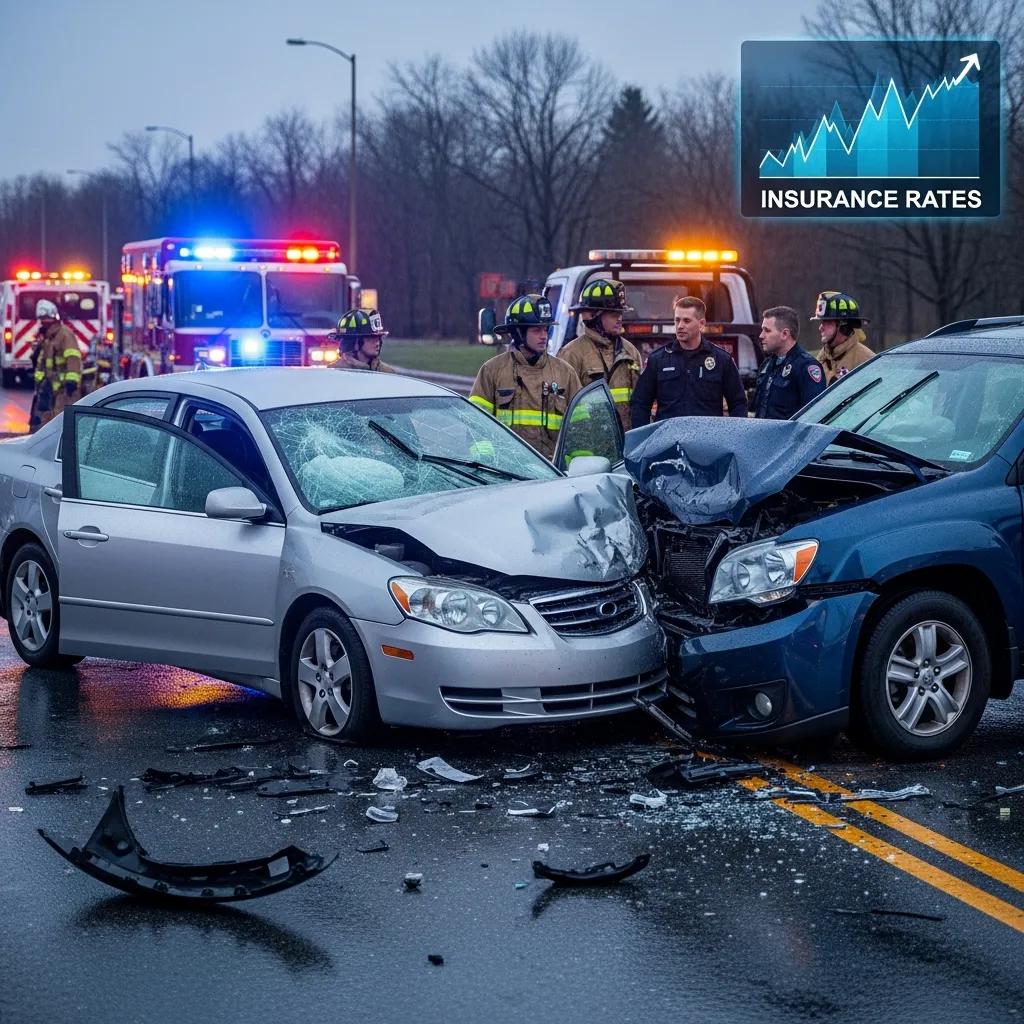
Accidents affect premiums mostly through fault and claim size. At-fault collisions usually lead to bigger surcharges than not-at-fault crashes, and the more costly the claim (property damage, injuries), the stronger the insurer’s response. An at-fault accident raises the insurer’s expected cost to cover you, which can mean higher renewals or loss of discounts. A not-at-fault crash may have little immediate effect with some carriers but will still appear in claims history and matter if incidents are frequent.
Below is a quick reference table comparing accident types with typical premium increases and how long they commonly affect records.
| Accident Type | Typical Premium Increase | Typical Duration on Record |
|---|---|---|
| At-fault accident | Approximately 20–50% increase | 3–5 years (insurer lookback) |
| No-fault accident | 0–10% increase (often none) | 1–3 years for claims visibility |
| Minor fender-bender (no injuries) | 10–25% increase if at-fault | 2–4 years |
| Major collision (injuries/total loss) | 40%+ increase depending on severity | 3–7 years or longer in records |
This table highlights that fault and severity drive rate changes: worse or clearly at-fault crashes cause bigger, longer increases. Repeated at-fault accidents in a short time often push drivers into high-risk tiers or can even prompt non-renewal at some companies.
What you do right after a crash matters: clear documentation, prompt repair estimates, and solid liability evidence can reduce disputes. Professional OEM-certified repairs and good claims communication make it easier to close a claim cleanly and lower the chance of reopened disputes that could affect your claims history. For example, using a repair shop that documents OEM parts and proper procedures helps insurers verify the work and avoid later supplements that would show up against your record.
What Is the Difference Between At-Fault and No-Fault Accidents?
An at-fault accident means you were found responsible for causing the collision — that finding commonly leads to policy surcharges and a higher expected loss for your insurer. No-fault accidents are those where you’re not found responsible; depending on state rules and carrier policies, a not-at-fault crash may have little or no immediate premium effect but will still appear in claims history and could matter if there are many incidents.
Practically speaking, at-fault crashes often trigger the other party’s insurer to pursue recovery or litigation, which can raise the claim’s size and the insurer’s reaction. Not-at-fault crashes can still affect rates if you file through your own policy or if your insurer flags frequent incidents. Because fault determinations sometimes conflict, careful documentation and cooperation with investigators can help influence the final outcome and any premium effect.
How Much Can Insurance Rates Increase After an Accident?
After an at-fault accident, typical premium increases fall in a broad range — commonly about 20–50% — but the exact change depends on your prior record, the claim size, and the carrier’s underwriting. Factors that raise the impact include bodily injury claims, uninsured motorists, multiple prior incidents, and violations tied to the crash (like reckless driving). For example, a driver in their mid‑30s with one at-fault minor collision might see a renewal bump roughly 25–35%, while a major injury claim could push increases much higher or move you to a high-risk insurer.
To make it concrete: if you pay $1,200 a year, an at-fault accident might add $240–$600 a year, depending on underwriting and state rules. Features like accident forgiveness, if active on your policy, can reduce or eliminate increases for a first at-fault accident — so check your policy and consider shopping carriers that offer forgiveness.
How Do Traffic Violations Impact Your Insurance Premiums?

Traffic violations change premiums because they signal risky behavior to insurers. The more serious the violation, the larger the usual premium increase and the longer insurers weigh it. Insurers rank violations by risk: DUI and reckless driving are at the top, followed by hit-and-run or criminal traffic offenses, then major moving violations like excessive speeding, and finally minor infractions. Frequency matters, too — a string of minor tickets often triggers a bigger response than a single ticket.
Here’s a quick table showing common violations, typical premium effects, and how long they usually stay relevant to insurers.
| Violation | Typical Premium Increase | Typical Time on Record |
|---|---|---|
| DUI / DWI | Substantially higher premiums; long-term surcharge | 5–10 years visibility; may require SR-22 |
| Reckless driving / hit-and-run | Large increases (material underwriting impact) | 5+ years |
| Major speeding (excessive) | Moderate to large increases | 3–5 years |
| Minor speeding ticket | Small increase or none depending on insurer | 1–3 years (may decay) |
This table shows the relative severity: DUI and reckless driving carry the heaviest, longest-lasting consequences and may require extra filings or specialty coverage. In California and similar states, a DUI can affect both your license and your insurance for several years and may require an SR-22, which further raises premiums.
Violations are treated differently by severity. The list below ranks common infractions by their typical insurance impact.
- DUI / DWI: Highest impact — legal and safety risks that often bring multi-year surcharges and administrative actions.
- Reckless driving / Hit-and-run: Severe underwriting consequences and possible policy non-renewal.
- Major speeding / Aggressive violations: Significant increases, especially when combined with accidents.
- Minor speeding / Equipment violations: Lower immediate impact, but multiple tickets raise your risk profile.
Understanding this ranking helps you prioritize mitigation — for example, avoid the behaviors that cause the most severe insurer reactions and consider defensive driving for lesser infractions when eligible.
Which Traffic Violations Cause the Highest Insurance Rate Increases?
The biggest rate jumps come from violations that signal extreme risk or criminal behavior — mainly DUI/DWI, hit-and-run, and reckless driving. These offenses correlate with severe claims and liability exposure, so insurers often respond with large surcharges, policy limits, or SR-22 requirements. You may also face more scrutiny at renewal and have a harder time finding standard-market coverage.
Because these violations carry both legal penalties (license suspension, SR-22) and financial penalties (higher premiums), expect layered consequences: higher rates, possible coverage limits, and longer lookback periods. Together, those factors make serious offenses the most damaging to your driving record and insurance costs.
Do Minor Violations Like Speeding Tickets Affect Insurance Costs?
A single minor ticket — like a low-level speeding citation — may have little effect on premiums if you have a long clean history; some insurers will apply only a small surcharge or none at all. The real risk is accumulation: multiple minor tickets in a short window suggest habitual risky driving and commonly trigger underwriting changes or loss of preferred discounts. Options to limit the impact include traffic school (where allowed), defensive driving courses, or contesting inaccurate tickets.
Insurers vary in tolerance. Some offer forgiveness for occasional infractions while others penalize even one ticket through automated scoring. To manage costs, consider disputing errors, taking an approved driving course when eligible, and checking your policy for forgiveness programs.
How Long Do Accidents and Violations Stay on Your Driving Record and Affect Insurance?
For many incidents, insurers look back three to five years when setting premiums. Most points, minor violations, and routine at-fault collisions fall in that window for underwriting. Insurers use a rolling review period — older events lose weight over time — so consistent clean driving after an incident usually reduces its premium impact. That said, state record retention and carrier policies can extend visibility beyond the typical lookback, so exact timelines vary.
What Is the Typical Duration for Insurance Impact After an Incident?
Most insurers use a 3–5 year lookback for common moving violations and minor accidents, meaning a single incident typically affects premiums during that period before its influence drops. During those years it can affect renewals, discount eligibility, and access to standard-market rates. Repeated incidents can effectively reset or extend this practical lookback because insurers evaluate patterns, not just isolated events.
Keep in mind that multiple incidents in a short span can push the practical impact past the typical window. Rebuilding a clean record and showing several years of safe driving is the most reliable way to get back to lower premium tiers.
Are There Exceptions for Serious Violations Like DUIs?
Yes — serious violations such as DUIs usually have longer reporting and insurance consequences, often remaining relevant for five to ten years depending on state rules and insurer practices. DUIs can bring license suspensions, SR-22 requirements, and sustained insurer scrutiny; an SR-22 signals high risk to carriers and typically multiplies premiums while complicating placement with standard insurers. Because state procedures and carrier rules vary, drivers facing serious violations should talk with licensing authorities and insurance professionals to understand timelines and paths back to standard rates.
What Factors Contribute to High-Risk Auto Insurance and How Can You Manage Them?
High-risk status comes from a mix of factors that predict higher claim frequency or severity: frequent accidents, recent serious violations (DUI, reckless driving), repeated major speeding offenses, and a claims history with multiple paid losses. Insurers also consider age, vehicle type, and sometimes credit-based measures along with driving history. Being labeled high-risk usually means higher premiums, fewer coverage options, or the need for specialty/nonstandard carriers.
Managing high-risk status takes both behavior changes and administrative moves that reduce measured risk and prove you’re driving safer. Focus on safety, documentable repairs by certified providers, and smart shopping to compare how different carriers treat your history.
Here are practical tactics to help lower rates and manage a high-risk label.
- Safe driving and consistent claim-free behavior: The most reliable long-term path out of high-risk tiers.
- Shop and compare insurers: Carriers weigh violations differently; quotes can vary a lot.
- Defensive driving courses and policy features: Where allowed, courses or accident forgiveness can reduce or prevent surcharges.
Summary: Pair better driving with administrative fixes and selective shopping to improve your chances of moving out of high-risk tiers over time.
What Defines a High-Risk Driver in Insurance Terms?
A high-risk driver fits a statistical profile showing higher claim frequency or severity: multiple at-fault crashes, recent serious violations like DUI, repeated high-speed offenses, or a steady pattern of claims. Insurers translate those signals into higher expected costs and place such drivers in more expensive rating tiers or specialty markets. Because each insurer uses proprietary scoring, there’s no single threshold — but repeated or severe events commonly push drivers into the high-risk category.
Knowing which combinations of events insurers consider most damaging helps you pick corrective steps that lower both perceived and actuarial risk.
What Strategies Can Lower Insurance Rates After an Accident or Violation?
Practical steps to limit rate increases include: compare quotes from multiple carriers, check for accident forgiveness or reinstatement options, take defensive driving courses when eligible, bundle policies for discounts, and insist on quality repairs with complete documentation when you file a claim. Timely, manufacturer-standard repairs and clear documentation help close claims cleanly and reduce the chance of reopened disputes that add to your claims history. Certified repairs plus straightforward insurer communication give you a stronger defense against escalations that extend premium impact.
Choosing a repair shop that documents OEM parts, follows manufacturer procedures, and provides clear estimates helps insurers accept repairs without dispute and cuts down on later disagreements. Combine that with better driving and active shopping for competitive underwriting and you’ll have a clear plan to lower insurance costs after an incident.
How Does Prime Time Collision Center Support You After an Accident to Protect Your Insurance Rates?
Prime Time Collision Center offers services that help create cleaner claim outcomes and limit long-term insurance impact. We prioritize OEM repair standards, employ I‑CAR Platinum technicians, and maintain organized claims communication so insurers can verify repairs quickly. Our free estimates, 24/7 towing, and lifetime warranty on repairs reduce friction during claims handling, speeding up settlements and lowering the chance of follow-up disputes that could affect your claims history.
Below we map Prime Time Collision Center’s core services to the attributes they offer and the benefits they deliver for claims and insurance outcomes.
| Service | Attribute | Benefit to Insurance Outcome |
|---|---|---|
| OEM Certified Repairs | Manufacturer repair standards | Clear documentation that supports insurer acceptance of repairs |
| I-CAR Platinum Technicians | Industry-recognized technician training | Reduced risk of improper repairs and fewer reopened claims |
| Free Estimates | Prompt, documented cost assessment | Faster claim initiation and clearer scope for adjusters |
| 24/7 Towing | Immediate vehicle recovery | Preserves evidence and reduces secondary damage claims |
| Claims Assistance / Insurer Communication | Direct coordination with carriers | Smoother approvals and reduced documentation disputes |
| Lifetime Warranty on Repairs | Long-term repair assurance | Demonstrates repair quality if future issues arise |
That mapping shows how high-quality repairs and proactive claims handling reduce the administrative friction insurers evaluate. Better documentation and certified work make it easier for carriers to accept repairs and lower the chance of reopened or disputed claims that could raise future premiums.
Prime Time Collision’s claims workflow is designed to keep things simple for drivers: intake and a free estimate, towing if needed, documented photos and repair scope, clear coordination with your insurer, and OEM-standard repairs backed by a lifetime warranty. This process cuts down on unresolved issues that lead to follow-up claims and positions you with a complete, well-documented claims file for underwriters.
- Free Estimate and Intake: A quick written estimate starts the claims timeline.
- Towing and Inspection: 24/7 towing preserves vehicle condition and evidence.
- Documentation and Insurer Communication: Photos and clear scope reduce disputes.
- OEM Repairs by I-CAR Technicians: Manufacturer-level repairs backed by a lifetime warranty.
Summary: Our practical workflow, certified repair standards, and hands-on claims coordination help insurers resolve claims cleanly — which keeps extra claim entries and disputes off your record and helps protect your premiums.
How Do OEM Certified Repairs Influence Insurance Claims and Future Rates?
OEM-certified repairs follow manufacturer procedures and use specified parts and techniques to preserve safety and performance. When insurers see documentation that repairs were completed to OEM standards by trained technicians, they’re more likely to accept the repair scope and close the claim without extra review. That lowers administrative burden and reduces the risk of reopened claims that would otherwise add to your claims history and can affect future premiums.
By contrast, non-OEM or poorly documented repairs can trigger supplemental reviews or additional paid claims if issues surface later. OEM work and certified technicians create a defensible record that supports both vehicle safety and insurer acceptance, which reduces the chance of claims-related rate impacts down the road.
What Insurance Claim Assistance Does Prime Time Transaction Provide?
Prime Time Collision Center helps policyholders with free estimates, towing coordination when needed, and direct communication with insurers to explain repair scope and documentation. We document repairs to OEM standards, use I‑CAR trained technicians for quality work, and back everything with a lifetime warranty — all steps that streamline claims resolution. That support reduces the chance of supplemental disputes, speeds approvals, and delivers a complete claims file for underwriters to evaluate.
Here’s how the customer experience typically flows: call or drop off your vehicle, arrange towing if necessary, get a free written estimate with photos, let us coordinate with your insurer on scope and approvals, complete OEM-standard repairs by certified technicians, and receive a lifetime warranty on the work. This end-to-end help minimizes administrative friction and supports better long-term outcomes for your driving record and insurance premiums.
- Free Estimate and Intake: Quick written estimate starts the claims timeline.
- Towing and Inspection: 24/7 towing preserves vehicle condition and evidence.
- Documentation and Insurer Communication: Clear scope and photos reduce disputes.
- OEM Repairs by I-CAR Technicians: Manufacturer-level repairs backed by a lifetime warranty.
Summary: Our workflow, certified repair standards, and claims coordination make it easier for insurers to resolve claims cleanly, helping policyholders avoid extra claim entries or disputes that could otherwise raise premiums.
Frequently Asked Questions
1. How can I check my driving record?
Request a copy from your state’s Department of Motor Vehicles (DMV) or the equivalent agency. Most states let you view your record online for a small fee. Check your record regularly — mistakes happen and errors can lead to unfair rate increases. Some insurers also provide free access or summaries, so ask your agent if they offer that service.
2. What steps can I take to improve my driving record?
Drive safely and avoid repeat violations. If eligible, take defensive driving courses or traffic school to reduce points or qualify for discounts. Contest inaccurate tickets and address any citations promptly. Over time, consistent claim-free driving is the best way to restore your risk profile.
3. How do insurance companies determine the severity of a violation?
Insurers look at the type of violation, how it relates to public safety, and your driving history. Serious offenses like DUIs or reckless driving get heavy weight because they’re linked to higher claim costs. Frequency also matters — a pattern of minor infractions can look risky. Each carrier uses its own scoring system, so the same violation can have different effects across insurers.
4. Can I appeal an insurance rate increase due to my driving record?
Yes. Start by reviewing your driving record and the insurer’s reason for the increase. Gather supporting evidence, like completion certificates for driving courses or documentation correcting errors. Contact your insurer to request a review. If you’re not satisfied, you can file a complaint with your state’s insurance department for further help.
5. What is the impact of a clean driving record on insurance premiums?
A clean record typically lowers premiums because insurers view you as lower-risk. Drivers with no violations or claims can qualify for discounts and better underwriting. Over time, a spotless record is one of the most reliable ways to reduce insurance costs and access more competitive quotes.
6. How does the type of vehicle I drive affect my insurance rates?
Your vehicle’s safety ratings, repair costs, theft risk, and performance all affect premiums. High-performance or luxury cars usually cost more to insure because they’re more expensive to repair and more likely to be involved in costly claims. Cars with strong safety features and lower theft rates often qualify for discounts.
7. What should I do if I have multiple violations on my record?
Review your record for accuracy and contest any errors. Enroll in defensive driving courses if eligible and focus on safe driving to avoid further citations. Shop around for quotes — different insurers weigh violations differently, so you may find a carrier that offers a better rate given your history.
Conclusion
Your driving record has a big influence on what you pay for car insurance, but it’s not fixed forever. Knowing how violations and accidents affect premiums — and taking practical steps after an incident — puts you back in control. Use the tips here, document repairs properly, and shop your options. Start protecting your driving profile and your wallet today.