
How to Pick the Right Auto Body Shop: Certified Repairs and Practical Advice
Picking a trustworthy auto body shop matters — not just for the look of your car, but for safety and long-term value. A good shop restores your vehicle properly, follows manufacturer guidelines, and keeps you informed through the process. This guide walks through what to check when choosing a shop: key certifications, why OEM parts matter, how to read a shop’s reputation, and what to expect from the insurance and repair process. We’ll also cover services you should look for if you drive a modern or luxury vehicle, so you can choose a shop that delivers both
quality repairs and clear communication.
What certifications should you look for in a top auto body shop?
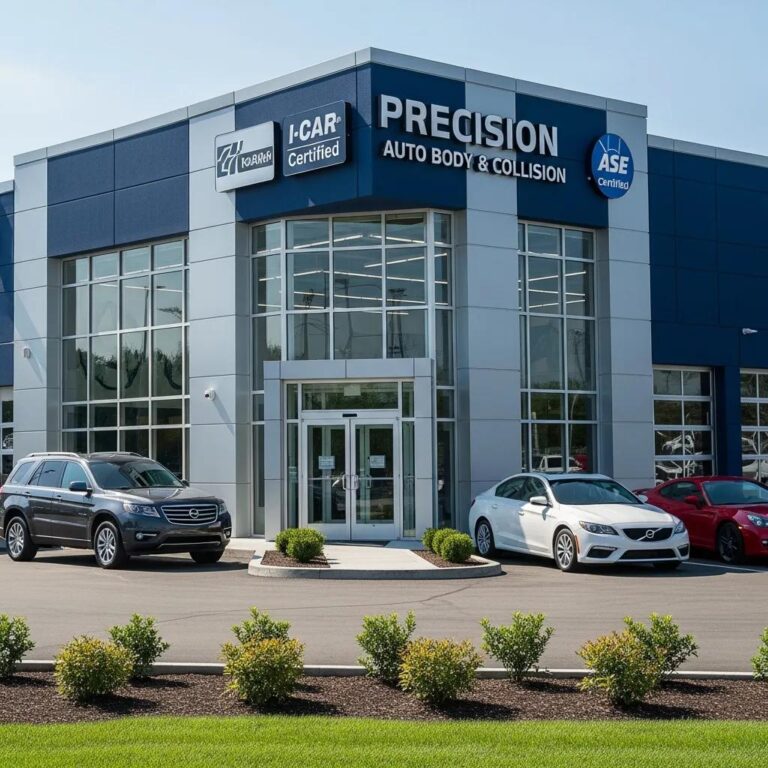
Certifications are a quick way to tell if a shop invests in training and follows industry standards. They show that technicians receive ongoing education and that the shop keeps up with modern repair methods. Important credentials to watch for include I‑CAR Platinum and manufacturer (OEM) certifications — both signal a strong commitment to doing repairs the right way.
Why does I‑CAR Platinum matter for collision repair?
I‑CAR Platinum is a widely respected industry credential that means technicians have completed comprehensive training. Shops with I‑CAR Platinum technicians are more likely to use current repair procedures and industry best practices. In short, that certification raises the odds your vehicle will be repaired safely and returned to its pre-accident condition.
Strong training and certification programs matter worldwide — different countries have developed systems to ensure technicians meet high standards.
Global approaches to training and quality in auto body repair
Studies have noted various national systems — from specialized repair business models in the U.S. to Germany’s Vehicle Technician Meister training and Japan’s recognition programs — as useful references when improving local repair standards.
해외 자동차정비제도 현황 분석을 통한 국내 제도 개선방안 연구, 2020
How do OEM certifications help ensure quality repairs?
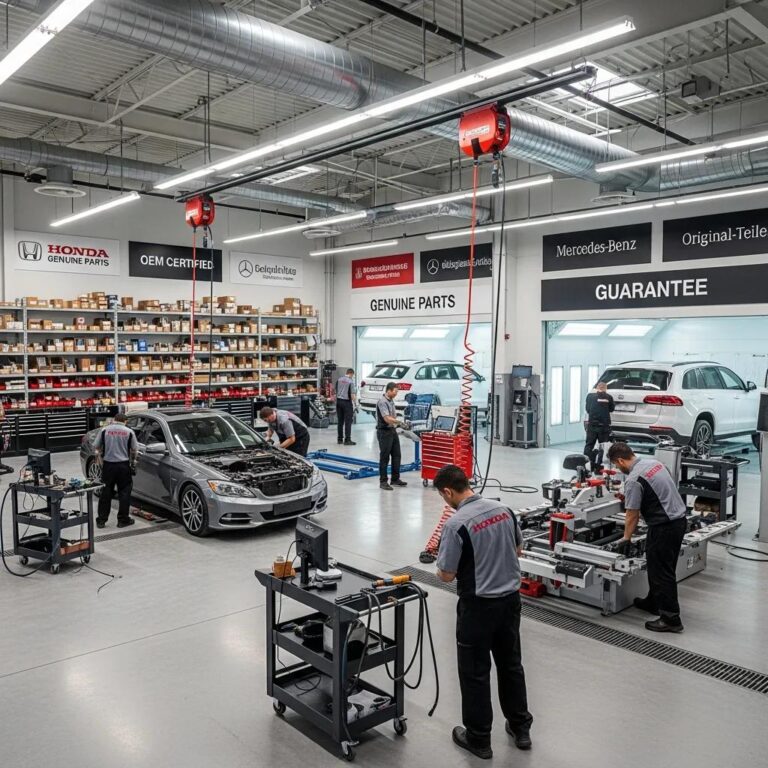
OEM certifications indicate a shop follows the vehicle manufacturer’s repair specifications and often uses original parts. That alignment helps protect your vehicle’s safety systems and resale value. Choosing an OEM‑certified shop gives you confidence the repairs will match the maker’s standards.
Why are OEM parts important for safe, reliable repairs?
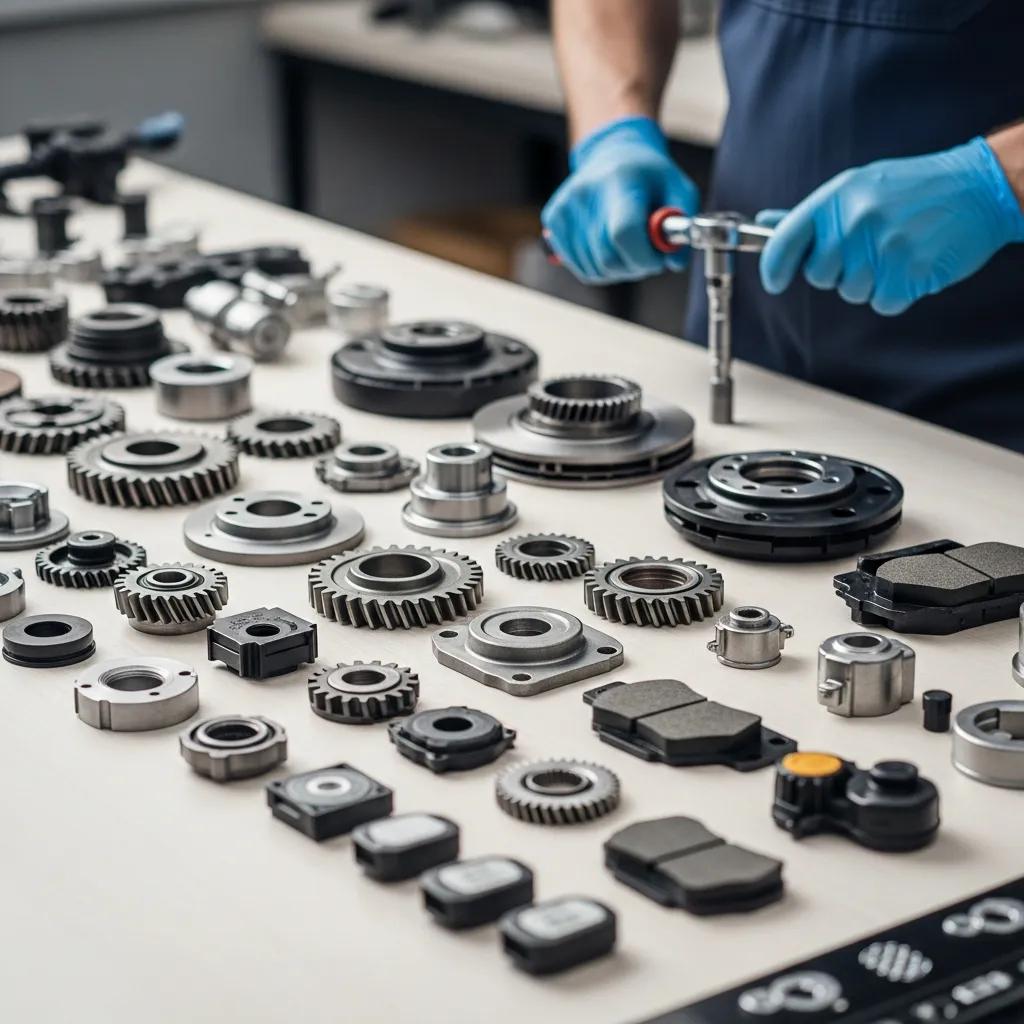
OEM parts are built for your vehicle’s exact make and model, so they fit correctly and perform as intended. Aftermarket parts can be fine in some cases, but they may not match factory tolerances, which can affect safety, fit, and finish. When safety and long‑term value matter, OEM parts are usually the safer choice.
What’s the difference between OEM and aftermarket parts?
- Quality:
OEM parts match factory specifications, offering consistent fit and performance.
- Warranty:
OEM components often include manufacturer-backed warranties for added protection.
- Fit and finish:
OEM parts are made to fit your vehicle without modification; aftermarket pieces may need adjustments.
Choosing OEM parts can influence how well repairs hold up over time and how the vehicle performs after service.
How do OEM parts affect safety and resale value?
Repairs using OEM parts reduce the risk of fit‑or‑function issues that can cause safety problems. They also create a clearer service history for future buyers, which can help maintain resale value. Documented OEM repairs typically reassure buyers and insurance companies alike.
How can you evaluate a shop’s reputation and customer service?
A shop’s reputation tells you a lot about what to expect. Look at reviews, testimonials, and direct interactions with staff. Pay attention to responsiveness, openness about repairs and pricing, and whether the shop stands behind its work.
What questions reveal a shop’s transparency and communication style?
- What is your repair process?
Ask them to walk you through each step so you understand how your vehicle will be handled.
- How do you handle insurance claims?
A shop that helps with paperwork and communications can save you time and stress.
- What warranties do you offer on repairs?
Clear warranty terms show the shop’s confidence in its workmanship.
How should you interpret customer reviews and testimonials?

Reviews are most useful when you look for trends: consistent praise for on-time delivery, thorough explanations, and quality repairs is a good sign. Repeated complaints about the same issue — like missed deadlines or poor communication — are red flags. Also notice how the shop responds to negative feedback; responsive shops often try to make things right.
What should you know about insurance claims and choosing a repair shop?
The insurance claims process can feel confusing, but you have choices. You are not required to use the shop your insurer recommends. Pick a shop for its workmanship, certifications, and communication — not just convenience.
Must you use your insurance company’s recommended shop?
No — you can choose any licensed repair shop. Insurance‑recommended shops may be convenient, but they aren’t always the best fit for every vehicle or owner. Base your choice on reputation, certifications, and clear communication.
How does Prime Time Collision Center help with insurance claims?
Prime Time Collision Center assists customers through the insurance process to reduce stress and speed up repairs. With over 15 years of experience, we work with all major insurers and advocate for repairs that follow factory standards. Our team helps manage paperwork, explains coverage, and keeps you informed so repairs aren’t delayed by confusion or missing information. That hands‑on support is part of what makes us a
trusted choice for collision repair .
What are the key steps in a clear, reliable collision repair process?
A trustworthy repair process is organized, documented, and communicated. Knowing the typical steps helps you spot transparency and professionalism when selecting a shop.
How is a detailed repair estimate prepared and explained?
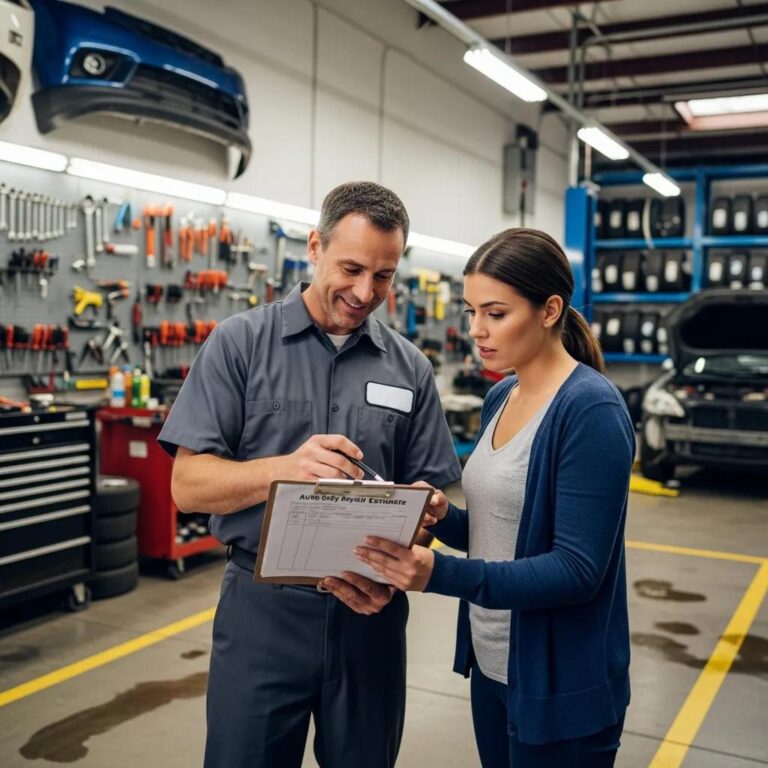
A reputable shop will give a written estimate that breaks down labor, parts, and any additional items. They should explain each line so you understand the work needed and why. A clear estimate prevents surprises and shows the shop values honest communication.
Why is regular communication important during repairs?
Regular updates keep you informed about progress, potential delays, or cost changes. A shop that checks in — by phone, text, or email — makes the repair experience smoother and builds trust that your vehicle is being managed responsibly.
What specialized services matter for modern and luxury vehicles?
Modern and luxury cars include advanced sensors, electronics, and unique components that require specific skills and tools. Make sure a shop has the training and equipment to handle these systems correctly.
What is ADAS calibration and why is it important?
ADAS stands for Advanced Driver Assistance Systems — features like lane‑keep assist and adaptive cruise control. After a collision, these systems often need recalibration to work properly. Proper ADAS calibration restores safety features so they perform as designed.
Beyond ADAS, electric and hybrid vehicles demand careful attention to high‑voltage systems after a crash to protect both technicians and occupants.
Addressing high‑voltage safety in EV post‑collision repairs
High‑voltage safety is critical for electric vehicles. Research on rear‑impact scenarios has examined strategies like high‑voltage cutoff systems, integrity checks for high‑voltage components, cable layout, and structural crashworthiness to meet safety regulations. These measures help ensure passenger safety and compliance with standards such as FMVSS 305.
High‑voltage safety improvement design for electric vehicle in rear impact, 2018
How does expertise with luxury vehicles benefit owners?
Shops experienced with luxury brands know the nuances of high‑end components, finishes, and proprietary systems. That expertise leads to more precise repairs, better parts sourcing, and careful attention to fit and finish — all important for preserving performance and resale value.
Choosing the right auto body shop protects your vehicle and your peace of mind. Focus on certifications, the use of OEM parts, and a shop’s reputation for communication and quality. Know your rights with insurance, and look for shops that offer transparent estimates and ongoing updates. For modern and luxury vehicles, confirm the shop can handle ADAS, high‑voltage systems, and brand‑specific repairs. With these points in mind, you’ll be better equipped to pick a shop that meets your expectations.
Frequently Asked Questions
What should I look for in customer reviews when choosing an auto body shop?
When reading reviews, prioritize specific examples: on‑time completion, clear communication, and repair quality. Look for repeat mentions of the same strengths or problems. Also note how the shop responds to complaints — an open, problem‑solving response often signals a customer‑focused team.
How can I ensure that my auto body shop uses quality materials?
Ask the shop directly whether they use OEM or aftermarket parts, and request documentation or warranty details. Reputable shops will explain their parts policy and show proof of sourcing or certifications when asked.
What role does technician experience play in repair quality?
Experienced technicians spot hidden damage, choose the right repair methods, and avoid unnecessary work. Ask about certifications and years of experience with your vehicle type to ensure skilled hands are working on your car.
Are there specific questions I should ask about the repair timeline?
Yes — ask for an estimated completion date, what could cause delays, and how the shop will notify you of changes. A clear timeline and update plan helps you plan around the repair process.
What should I do if I am unhappy with the repairs after they are completed?
Start by explaining the issue to the shop and providing photos or examples. Most shops will inspect the concern and correct any problems covered by their warranty. If the issue isn’t resolved, you can involve your insurer or a consumer protection agency as a next step.
How can I find out if an auto body shop has experience with my vehicle type?
Ask the shop about previous work on your make and model, check for brand‑specific certifications, and read customer testimonials. For luxury or electric vehicles, confirm they have the tools and training for ADAS, EV high‑voltage work, and manufacturer procedures.
Conclusion
Choosing the right auto body shop comes down to trust: trained technicians, transparent processes, and the right parts. Prioritize certifications, OEM parts when appropriate, and clear communication through insurance and repair steps. If you drive a modern or luxury vehicle, make sure the shop has the specialized skills and equipment required. Use this guide to ask the right questions and find a shop that treats your vehicle — and you — with care.