
Paintless Dent Repair vs Traditional Body Work: Clear Cost, Time, and Quality Guidance for Vehicle Owners
Overview
Paintless dent repair (PDR) and traditional body work take different paths to the same goal: returning your vehicle to pre-damage condition. Your choice affects out‑of‑pocket cost, repair time, and how well the original factory finish and structural integrity are preserved. This guide walks through how PDR works, when conventional repairs are required, and which approach best protects OEM paint and fit — whether you’re dealing with a door ding, hail, or collision damage. You’ll find simple rules for judging dent suitability, the main cost drivers for each method, typical turnaround expectations, and how insurers usually handle claims. The content is organized across six practical sections: how PDR is done and its ideal use cases; what traditional body work involves and when it’s necessary; a side‑by‑side cost comparison; typical repair timelines; quality and certification considerations; and insurance guidance for PDR versus traditional repairs. Keywords like paintless dent repair, door ding repair, hail damage repair, and I‑CAR certified body shop are woven in naturally to help you compare options and plan the next step.
What is Paintless Dent Repair and How Does It Work?
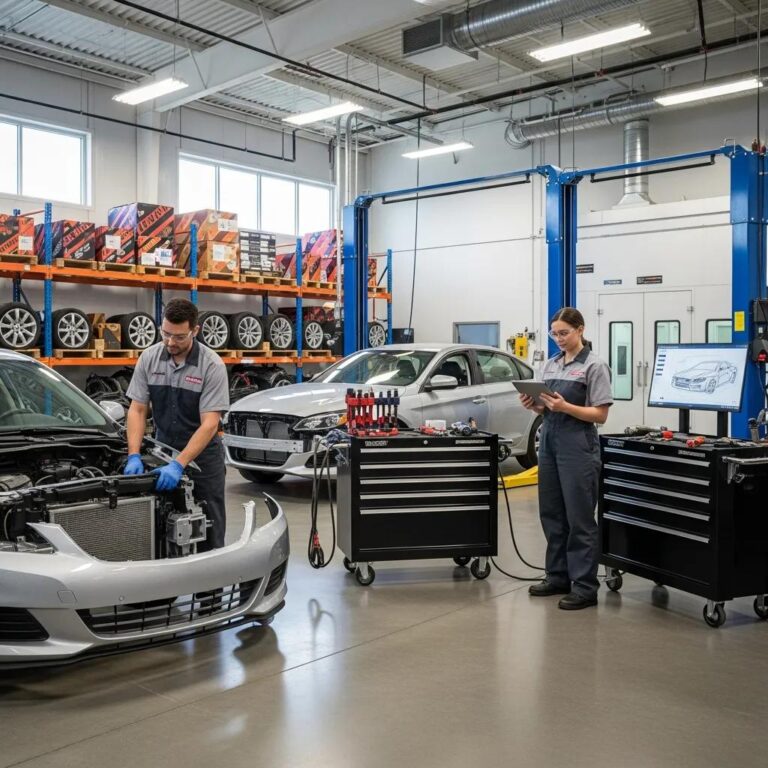
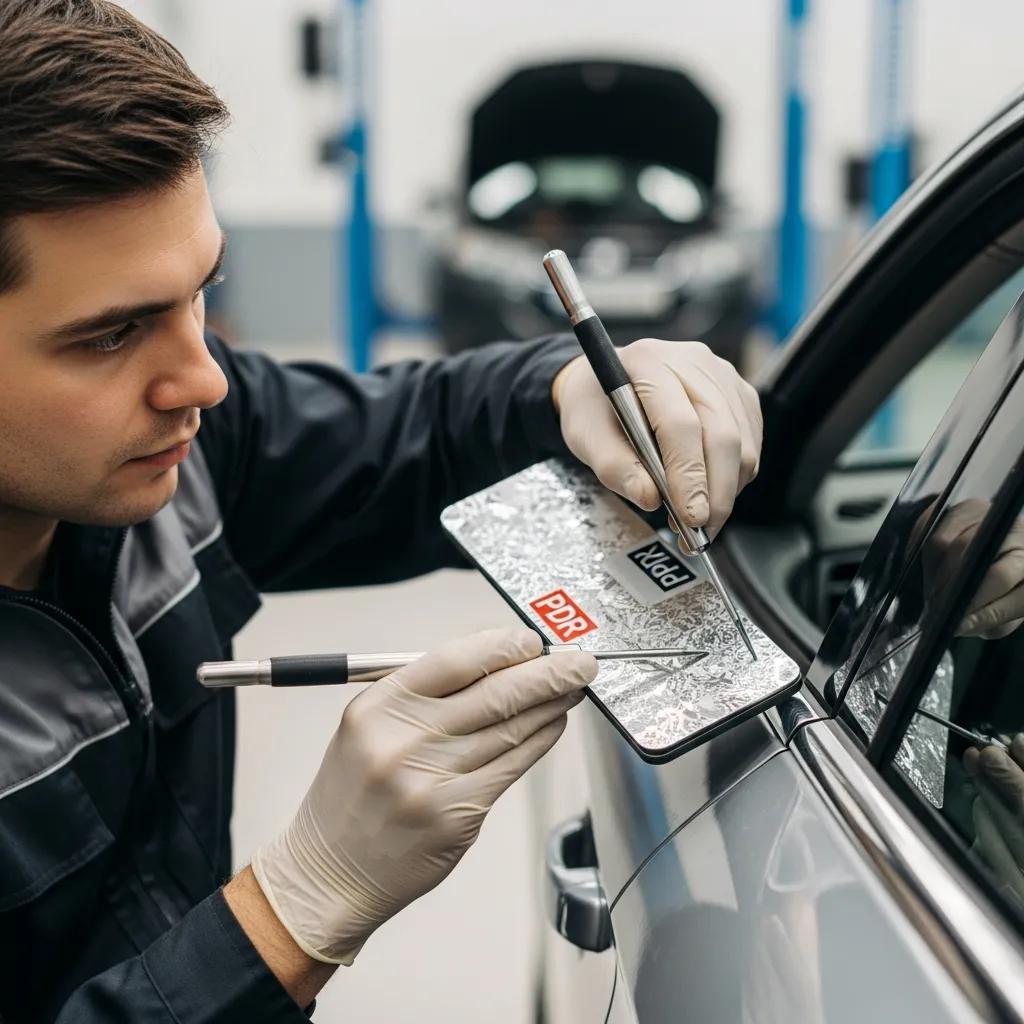
Paintless dent repair is a minimally invasive method that restores dents without repainting by carefully reshaping the metal back to its factory contour while keeping the original paint and clearcoat intact. Technicians use specialized PDR rods, picks, and knockdown tools to push or massage the dent from behind the panel, combined with surface taps to refine the finish. PDR depends on the metal’s elasticity and rear access to the damaged area — when paint hasn’t cracked or the metal hasn’t been overstretched, technicians can often return the panel to like‑new geometry with no fillers or new paint. Because it removes the need for sanding, filler, and paint cycles, PDR often shortens repair time and helps maintain resale value compared with repaint‑centered repairs. That’s why many door ding repairs and eligible hail jobs in Glendale can be completed the same day, while some dents still require traditional body work.
Which Types of Dents Are Suitable for Paintless Dent Repair?
PDR is most effective on small to moderate dents where the paint surface is intact and the technician can access the panel’s backside — common examples are door dings, shallow creases, and many hail marks. Typical candidates include round dents from shopping carts, small panel impacts, and shallow hail damage without cracked or chipped paint. Areas with limited rear access (like some trunk lips, certain bumper assemblies, or highly contoured panel edges), deep creases, or visible paint damage usually rule out PDR. Practical checks for Glendale drivers: look for paint cracks and count dents — multiple small hail dents can still be repaired with PDR but will increase labor. When PDR applies, it preserves the OEM paint, which is a strong selling point for long‑term finish consistency and vehicle value.
What Are the Key Benefits of PDR Compared to Traditional Methods?
PDR keeps the factory paint and clearcoat untouched, so you avoid repainting and preserve the original finish and texture. That preservation supports resale value since OEM coatings and paint codes remain intact. PDR also shortens turnaround time — many eligible dents are repaired in hours instead of days — and uses fewer materials, avoiding body filler and reducing environmental impact. Because PDR is frequently charged per dent rather than per panel, it can be considerably less expensive for single door dings or isolated hail dents. Those advantages make PDR an attractive option when the damage and access allow.
Prime Time Collision Center provides local Paintless Dent Repair with I‑CAR Platinum certified technicians and free estimates — a convenient choice for Glendale drivers who want OEM‑quality dent removal.
What Does Traditional Body Work Involve and When Is It Necessary?

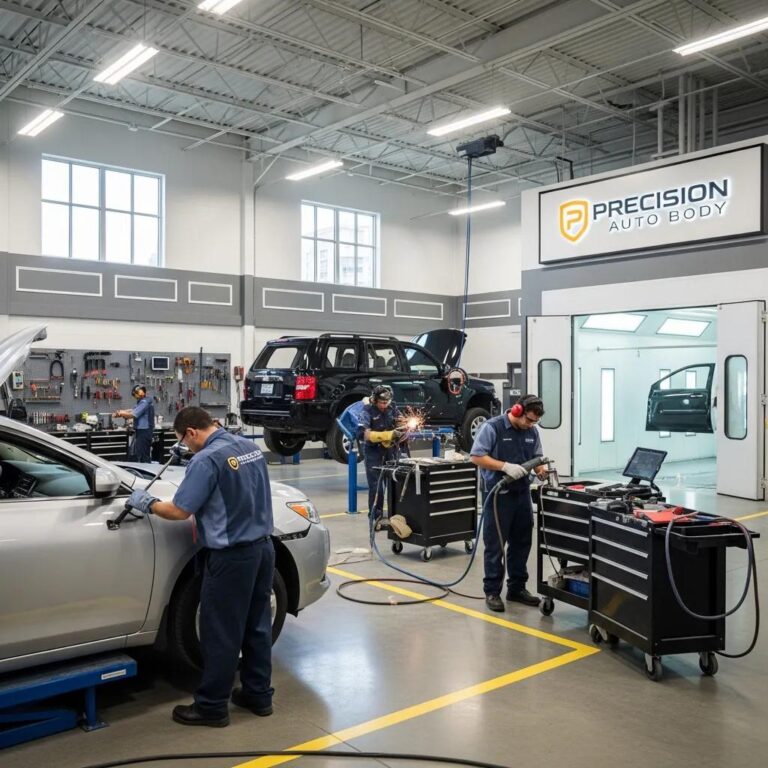
Traditional body work is a multi‑step restoration: metal straightening or panel replacement, filler application, sanding, priming, color matching, repainting, curing, and final reassembly to factory tolerances. It’s the right route when damage includes paint loss, stretched metal, panel‑edge damage, or structural impacts that affect alignment or safety systems — situations where repainting is required to restore corrosion protection and visual continuity. The process typically begins with a teardown to inspect hidden damage, followed by metalwork or panel replacement, body filling to reestablish geometry, and professional paint blending and clearcoat. Because of the many stages — each requiring skilled labor, paint‑booth cycles, and sometimes OEM parts — traditional repairs usually take longer and cost more than PDR when PDR is an option. Understanding the steps helps owners determine when repainting and parts replacement are necessary for safety and longevity.
How Does Traditional Repair Address Severe Damage and Paint Issues?
When paint is cracked, flaking, or the metal has stretched, traditional repair restores the panel through metal straightening, filler to rebuild surface geometry, and repainting with factory‑matched color and blending techniques. Metal straightening corrects curvature and alignment; filler smooths minor surface irregularities; sanding and priming prepare the area for paint. Accurate color matching and blending require calibrated mixing and controlled booth conditions to avoid visible seams or texture differences. Certified technicians follow OEM repair procedures to maintain corrosion protection, finish adhesion, and safety attachments — that training is often the difference between a quick cosmetic fix and a factory‑quality restoration.
What Are Common Scenarios Requiring Traditional Body Work?
Traditional body work is typically needed after deep curb strikes that scrape and bend panels, collisions that affect frame mounts or alignment, paint loss from impacts, or damage at panel edges where PDR access is impossible. Other cases include crushed quarter panels, multi‑panel damage that requires blending across adjacent areas, and repairs involving safety systems or chassis components. When alignment problems, odd noises, or visible gaps suggest hidden structural issues, a full assessment and traditional repair are usually the safe choice.
How Do Paintless Dent Repair and Traditional Body Work Compare in Cost?
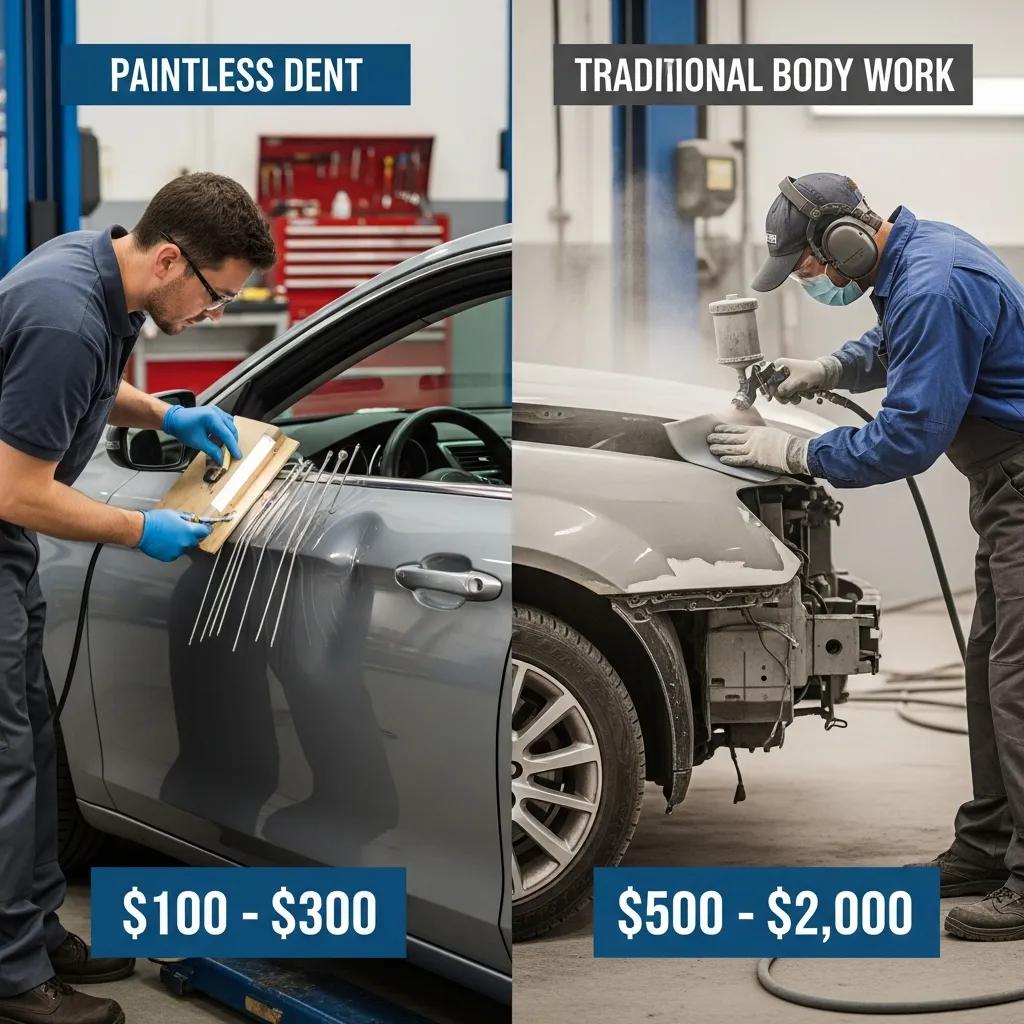
Costs vary by method. PDR is generally less expensive for eligible dents because it requires fewer materials and less labor time; traditional repairs grow costlier as parts, paint, and multiple labor stages are added. PDR pricing depends on the number of dents, their size and depth, access to the panel’s backside, and material (aluminum panels typically take longer). Traditional repair costs rise with parts replacement, paint and materials, and labor for metalwork and paint cycles. The table below shows typical cost bands and the main drivers to help you estimate which approach is more cost‑effective for your damage.
These cost drivers explain why PDR can be dramatically cheaper for small damage, while traditional repairs justify higher costs when structural or paint restoration is essential.
| Approach | Typical Cost Range | Typical Cost Driver |
|---|---|---|
| Paintless Dent Repair (per dent) | $75–$450 | Number/size of dents, accessibility, aluminum vs steel panels |
| Traditional Repair (per panel) | $300–$3,000+ | Parts replacement, paint blending, labor hours, OEM parts |
| Hail Damage Multi-Panel | $200–$3,000+ total | Multiple dents increase labor; full‑panel repaint if paint damaged |
The table shows PDR is often less expensive per dent, while traditional repairs add paint and parts costs that quickly raise the total bill.
What Factors Influence the Cost of Paintless Dent Repair?
PDR pricing hinges on the number of dents, their size and severity, tool access to the panel’s interior, and the panel material — aluminum panels usually require more skill and time. Local labor rates and shop credentials can affect price, since I‑CAR trained technicians may command premium rates for guaranteed technique and finish. Numerous small dents (as with hail) add cumulative labor and may be quoted per panel or per hour, changing the effective per‑dent cost. Technician experience influences speed and final results, so get estimates from experienced PDR providers to set realistic expectations.
What Are the Cost Drivers for Traditional Auto Body Repair?
Traditional repairs are driven by replacement parts (panels, trim, fasteners), paint and materials (primer, basecoat, clearcoat), and labor hours for teardown, metalwork, filling, sanding, and paint‑booth time. Color matching and blending require experienced painters and multiple paint cycles with curing time, both of which extend shop hours and increase cost. Hidden damage discovered during disassembly — bent brackets or structural components — adds parts and labor. Certified shops that follow OEM procedures document these items, which helps justify repairs during insurance claims.
How Long Do Paintless Dent Repair and Traditional Repairs Typically Take?
PDR often finishes in hours to a single day for single dents, and in one to two days for larger multi‑dent hail jobs. Traditional repairs normally take several days to multiple weeks depending on parts availability and paint cycles. PDR’s faster timeline comes from a single workflow that reshapes and inspects the panel immediately, with no paint cure times. Traditional work requires disassembly, possible parts ordering, paint‑booth cycles with cure time, and reassembly, which lengthens total duration to three days, two weeks, or longer if parts are delayed. Insurance approvals, supplements discovered during teardown, and shop scheduling also affect timelines for both methods. The table below summarizes typical durations and common factors that extend each approach’s schedule.
This comparison explains why PDR often returns vehicles faster for cosmetic dents while traditional repairs naturally take longer because of additional process steps.
| Repair Method | Typical Duration | Common Time Extenders |
|---|---|---|
| PDR (single dent) | Hours to same day | Technician availability, number of dents |
| PDR (hail/multi-panel) | 1–2 days | Quantity of dents, scheduling |
| Traditional repair | 3–14 days (or more) | Parts lead time, paint cure cycles, insurance approvals |
This table highlights PDR’s speed advantage for eligible dents and the procedural causes of longer traditional repair timelines.
What Is the Average Repair Time for PDR Services?
For a single door ding, PDR typically takes a few hours, so many customers leave the same day. Multi‑panel hail work usually completes within 24–48 hours depending on the number of dents and crew size. Scheduling and technician backlog can shift same‑day service to the next day, so booking early improves your chances of fast turnaround. Because PDR eliminates paint booth cycles, verification is immediate through visual checks and test drives when needed.
How Does Damage Severity Affect Traditional Repair Duration?
As damage severity increases, traditional repair timelines lengthen because more steps are required: deeper metal straightening, parts replacement, and broader paint blending all add labor hours and include paint cure times. Complex jobs may need OEM panels or trim, which introduces lead time; structural alignment, welding, or specialized equipment can further extend the schedule. Insurance supplements discovered after teardown also add time while adjusters review scope. Expect moderate‑to‑severe damage to add days or weeks compared with minor cosmetic work.
How Does Repair Quality Differ Between PDR and Traditional Body Work?
Quality depends on choosing the right method. PDR preserves OEM finish and factory coatings when paint is intact; traditional work restores cosmetic and structural integrity when paint or structure is compromised. PDR keeps the original paint and clearcoat, delivering an OEM‑consistent surface without new paint layers and helping maintain color stability over time. Traditional repairs performed to OEM standards by certified technicians restore alignment, corrosion protection, and appearance through professional color matching and blending — though repainted areas can show texture or sheen differences if blending is not done expertly. I‑CAR certification and adherence to OEM repair procedures strongly influence final outcomes because they ensure correct materials and sequences are used. The table below compares quality attributes and typical impacts for each approach.
These contrasts show why certification and OEM‑aligned processes matter for durable, reliable repairs.
| Repair Method | Attribute | Outcome / Impact |
|---|---|---|
| PDR | OEM paint preserved | Factory finish and texture retained; minimal resale impact |
| Traditional | Paint and panel restoration | Restores structural integrity and corrosion protection; requires expert blending |
| Both (certified shop) | Technician training & OEM procedures | Higher likelihood of safe, durable repairs and clear insurance documentation |
Prime Time Collision Center puts OEM‑quality repairs first, with I‑CAR Platinum certified technicians and a lifetime warranty, giving vehicle owners confidence whether they need PDR or traditional restoration.
How Does PDR Maintain OEM Finish and Vehicle Integrity?
PDR preserves OEM finish by avoiding sanding, filler, and repainting, keeping the original basecoat and clearcoat that define color, gloss, and protection. By reshaping the metal from behind without disturbing the paint, PDR retains factory coatings that help ensure long‑term color stability and corrosion resistance. The process also avoids adding body filler that can change panel thickness or stiffness, preserving the panel’s original engineering characteristics. Ask for before/after photos and documented technician notes to verify PDR quality and support future inspections or disclosures.
What Role Do I-CAR Certifications and OEM Standards Play in Repair Quality?
I‑CAR certification shows technicians have completed manufacturer‑recommended training and understand the materials, repair sequences, and safety steps needed to meet OEM standards. Shops that follow OEM procedures lower the risk of missed fasteners, compromised safety systems, or improper bonding that can cause future issues — and that adherence helps with insurance approvals. Training also helps technicians choose between PDR and traditional methods appropriately, protecting both safety and appearance. Choosing a certified facility links technician competence to better long‑term results and fewer surprises after repair.
How Do Insurance Claims Differ for Paintless Dent Repair vs Traditional Repairs?
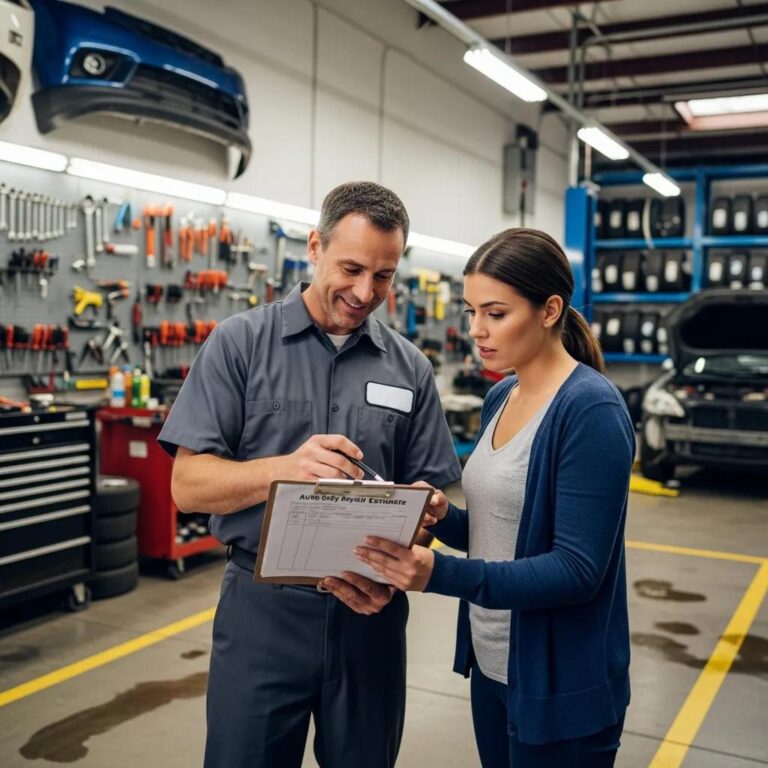
Insurance handling varies. Many carriers approve PDR quickly for eligible dents because it’s less expensive and resolves claims faster, while traditional repairs typically require detailed line‑item estimates, parts authorization, and a longer claim workflow. For PDR, insurers often accept photos and a written estimate, which can shorten claim cycles and lower out‑of‑pocket costs; in some cases the repair total falls below the deductible. Traditional repairs generally involve more documentation: adjusters review parts, paint, and labor line items, and supplements are common when teardown reveals additional damage. Document the damage, get a free estimate, and let the repair shop coordinate with the insurer to streamline approvals and avoid delays.
For claim work in Glendale, Prime Time Collision Center works with all major insurers, offers free estimates, and provides 24/7 towing — contact the shop to schedule an estimate and discuss next steps.
Is PDR Generally Covered by Insurance and How Does It Affect Claims?
Yes — many insurers cover PDR for eligible damage because it restores appearance at lower cost and faster turnaround, which simplifies claims. To improve approval chances, supply clear photos, a written PDR estimate, and technician notes explaining suitability; these help adjusters confirm scope without unnecessary teardown. Because PDR usually reduces labor and materials, it can lower total payouts and sometimes keep repairs under the deductible, saving money for the owner. If you’re unsure, ask the shop to submit documentation directly to your insurer to speed the process.
What Should Vehicle Owners Know About Insurance Handling for Traditional Repairs?
Traditional repairs typically require detailed estimates listing parts, paint, labor, and replacement panels; insurers may pre‑authorize parts ordering and paint work before repairs begin. Supplements are common when additional damage appears during disassembly, so expect adjustments to the initial estimate and maintain clear communication between your repair facility and the adjuster. Choosing a certified shop that documents OEM procedures and parts usage helps justify the scope and supports insurer approvals, reducing disputes and keeping repairs on schedule.
- Document damage: Photograph the damage from several angles as soon as possible.
- Get a written estimate: Request a detailed estimate that specifies whether PDR or traditional steps are recommended.
- Coordinate with the shop: Let the repair facility handle insurer communication to shorten back‑and‑forth delays.
Following these steps makes claims smoother and helps ensure repairs proceed without unnecessary administrative delays.
Frequently Asked Questions
What are the limitations of Paintless Dent Repair?
PDR works really well for many minor dents, but it has limits. It won’t work when the paint is cracked, chipped, or missing, and it’s less effective on deep dents, severe creases, or locations with poor rear access. Knowing these limits helps you choose the right repair method.
Can Paintless Dent Repair be performed on all vehicle types?
PDR can be used on most cars, trucks, and SUVs, but effectiveness varies by panel material and design. Aluminum panels often require special skills, and heavily modified or unusually shaped panels can present challenges. A certified technician can evaluate whether your vehicle is a good candidate.
How can I find a qualified PDR technician?
Look for shops with I‑CAR training, read reviews, and ask for references. Many reputable providers offer free estimates so you can judge expertise and service before you commit. Ask about experience with your specific damage type and for before/after photos.
What should I expect during a PDR appointment?
A qualified technician will inspect the damage, explain whether PDR is suitable, and give a time and cost estimate. If PDR is appropriate, they’ll access the back of the panel and gently reshape the metal. Minor dents often take a few hours; you should receive a clear explanation of the work and any warranties.
Is there a warranty for Paintless Dent Repair services?
Many reputable PDR shops back their work with warranties that vary in length and scope. A warranty typically covers defects related to the repair itself. When choosing a provider, ask what the warranty includes and how claims are handled — a solid warranty offers valuable peace of mind.
How does weather affect the need for PDR?
Weather, especially hail storms, can create many small dents that make PDR an efficient solution. Extreme temperature swings can also change metal elasticity and make dents more noticeable. After severe weather, it’s best to have a professional inspect the vehicle so you can address damage promptly and protect value.
Final Thoughts
The right repair depends on the damage. PDR preserves factory paint, costs less, and is fast for eligible dents; traditional body work restores paint and structure when the damage is severe or the paint is compromised. For reliable, OEM‑aligned results, choose a certified facility like Prime Time Collision Center — we offer free estimates, I‑CAR Platinum technicians, and support through the insurance process. Contact us to schedule an estimate and we’ll help you pick the repair approach that makes the most sense for your vehicle.