What to Do After a Car Accident: Step-by-Step Guide
After a Car Accident: A Clear, Step‑by‑Step Guide for Safety and Repair
A crash puts two things first: people’s safety and the evidence you’ll need for a smooth repair and insurance claim. This guide walks you, step by step, through what to do at the scene and in the hours and days afterward so you protect health, document what happened, and get your vehicle back on the road quickly. You’ll learn how to check for injuries, when to call emergency services, exactly which photos and details to collect, how and when to notify your insurer, why OEM‑quality repairs matter, and which post‑accident services can make recovery easier. Read on for a practical checklist, documentation tips, sample scripts for insurance calls, and a plain explanation of why certified repairs and trained technicians matter for safety and vehicle value.
What Are the Immediate Steps to Take After a Car Accident?
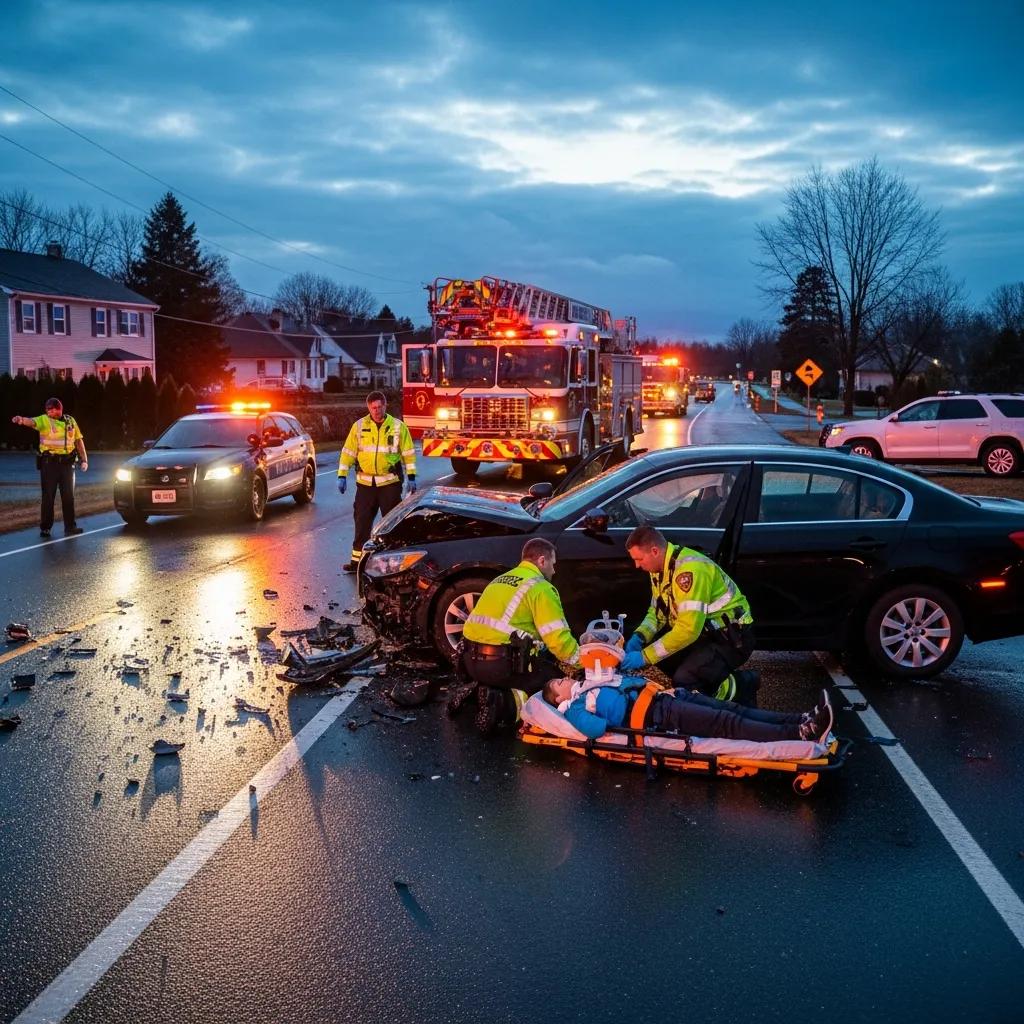
Start with actions that protect people and prevent more harm: get everyone out of danger if it’s safe to do so, call emergency services for injuries or hazards, and protect the scene so evidence is preserved. These first choices reduce risk and build the record your insurer and repair shop will need. The numbered checklist below gives the on‑scene priorities in order — use it as a quick reference. After you take these initial safety steps, move into documenting the scene and exchanging information carefully.
Research underscores how careful evidence collection and trained investigators improve the accuracy of traffic accident reconstructions and legal outcomes.
Securing Evidence in Traffic Accident Investigations
This study highlights challenges in applying modern scientific methods to traffic accident investigations and stresses the need for experienced investigators. Detailed scene work — including video reconstruction tools like PC CRASH — can create virtual evidence that helps clarify how collisions occurred and supports legal findings.
The quality and completeness of evidence gathered at the scene is crucial for traffic accident investigations and for building reliable legal records, 2018
- Move to safety if you can and turn on your hazard lights to reduce the chance of a secondary crash.
- Check yourself and passengers for injuries; call 911 for any serious or obvious harm.
- Call the police when there are injuries, major damage, or disputed fault and ask for a report.
- Keep the scene intact for photos and video; don’t admit fault or speculate about what happened.
- Exchange names, phone numbers, insurance details, and vehicle information with other drivers and any witnesses.
These steps protect people and preserve the facts so adjusters and technicians can accurately assess damage and safety systems. Completing this checklist sets you up for the documentation phase that follows.
How Do You Prioritize Safety and Assess Injuries at the Accident Scene?
Quick, calm injury assessment saves lives and creates medical records that support later claims. Start with a rapid check of airway, breathing, and circulation for each occupant and look for heavy bleeding, obvious deformities, or altered consciousness. If a serious injury is likely, don’t move the person unless the scene is unsafe — wait for EMS. Symptoms like neck stiffness, headaches, or abdominal soreness may appear later, so seek medical evaluation even if someone seems fine at first, and note any refusal of treatment. If someone is stable, give basic first aid within your skill level and record the time and names of responding personnel. This sequence protects health and builds a clear care timeline for insurers and legal needs.
When and How Should You Contact Emergency Services and Police?
Call 911 for any injuries, fire, or hazards such as leaking fuel — and when damage is significant or responsibility is unclear. Tell dispatch your exact location, the number of vehicles, whether anyone is hurt, and any immediate dangers like downed wires. If police respond, ask for the report number and the officer’s name and badge so you can reference the official record when filing an insurance claim or scheduling repairs.
How Do You Properly Document the Accident Scene and Exchange Information?
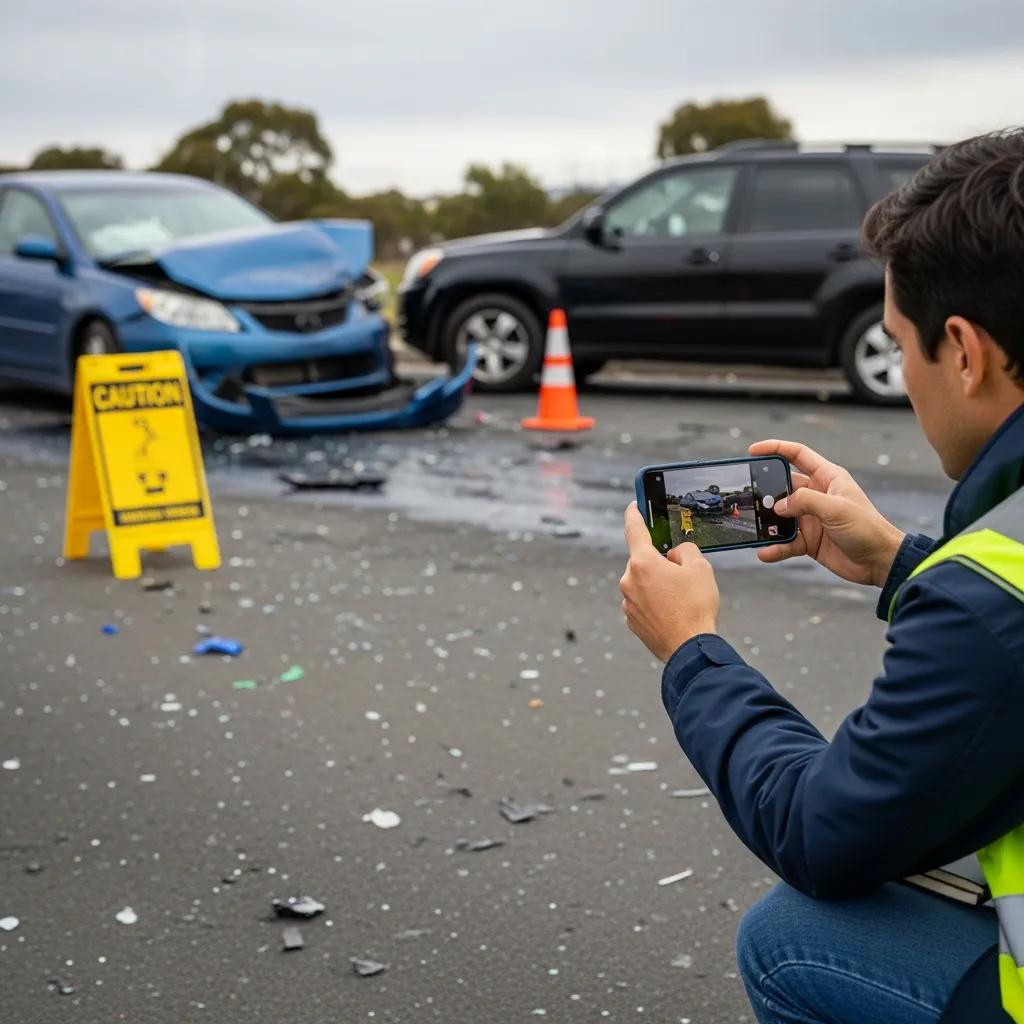
Good documentation turns the scene into a reliable record for claims, repairs, and legal needs. Begin with wide shots that show vehicle positions and lane placement, then take close‑ups of damaged panels, VINs, license plates, deployed airbags, and dashboard warning lights. Photograph road signs, skid marks, and traffic signals for context. Collect written details: names, phone numbers, insurance company and policy numbers, driver’s license numbers, vehicle make/model/year, and any witness contacts. Avoid admitting fault — record facts and exact quotes only if necessary.
Introductory note: The table below shows useful photo categories, what to capture for each, and why those images matter for claims and repairs.
| Image Category | What to Capture | Why it Matters |
|---|---|---|
| Vehicle Damage | Wide view of vehicle positions and close‑ups of damaged areas | Helps adjusters see impact points and estimate repairs |
| Identification | License plates, VIN, driver’s license or insurance card photos | Verifies vehicle and responsible parties |
| Scene Context | Road signs, traffic signals, lane markings, skid marks | Provides environmental clues for fault analysis |
| Safety Systems | Airbag deployment, seatbelt position, dashboard warnings | Signals severity and potential safety‑system repairs |
| Witness & Surroundings | Photos of witnesses (with consent) and clear views of the scene | Supports statements and corroborates conditions |
This checklist helps prioritize documentation so insurers and repair shops can quickly assess liability and repair needs. Once you’ve captured photos and basic details, prepare to exchange information and report the claim.
What Essential Photos and Videos Should You Take for Insurance Claims?
Start with wide shots showing both vehicles and their positions on the road, then take close‑ups of all damage from multiple angles to show depth and repair needs. Photograph license plates, the VIN, and any registration stickers, and capture deployed safety systems like airbags or broken lights to reflect impact severity. Record environmental evidence — skid marks, signs, traffic signals, and weather — and consider a short video sweep to preserve sequence and motion. Back up photos and videos to cloud storage or email them to yourself right away and keep timestamps to strengthen their value for claims.
Research shows physical scene evidence is often more reliable than witness statements for reconstructing accidents, underscoring the value of thorough visual documentation.
Traffic Accident Investigation & Evidence Documentation
Incident clearance depends on accurate physical evidence collected at the scene. This research explains that physical evidence often provides more reliable information than witness accounts and highlights surveying and scanning techniques (photogrammetry, laser scanning, total station) that improve reconstruction and documentation.
An overview of traffic accident investigation using different techniques, SI Mohammed, 2023
What Information Must You Collect from Other Drivers and Witnesses?
Gather a concise but complete set of details: names, phone numbers, insurance company and policy number, license plate, vehicle make/model, and driver’s license number. Ask witnesses for a brief statement and contact info — with their permission you can record a short audio note of what they saw. Don’t argue about fault or admit blame; just exchange facts and confirm contact details before you leave. A photo of the other driver’s insurance card and license is a quick way to verify information.
How Do You Navigate the Insurance Claim Process After a Car Accident?

A clear, timely insurance report reduces delays and confusion when settling repairs and losses. Report the accident within your insurer’s required timeframe — ideally within 24–72 hours — while photos are fresh and any medical visits are recent. Have your images, police report number, and witness contacts ready. When you speak with an adjuster, stick to facts: describe the scene, point them to your photos and the police report, and provide the repair shop’s estimate when available to speed approval. Collision centers often work directly with insurers to share estimates and technical documents, which can reduce back‑and‑forth. The short list below summarizes key steps to get your claim started.
- Report the collision to your insurer as soon as possible and give the police report number when you have it.
- Share photos, witness contacts, and any medical records that relate to the claim.
- Ask for a claim number and your adjuster’s name, and request an expected timeline for next steps.
Starting your claim with clear records and contacts helps avoid misunderstandings and keeps repairs moving.
After you’ve covered those basics, prepare the specific information you’ll need when you call your insurer.
When Should You Report the Accident to Your Insurance Company?
Follow your insurer’s guidelines, but report sooner rather than later — ideally within 24 to 72 hours — to preserve evidence and speed handling. Be ready with a brief, factual summary: date, time, location, number of vehicles, police report number (if any), and whether there were injuries. Avoid assigning blame; point the adjuster to your photos and witness contacts. Record the adjuster’s name, claim number, and what to expect next so you have a clear trail for follow‑up.
How Does Prime Time Collision Center Assist with Insurance Claims?
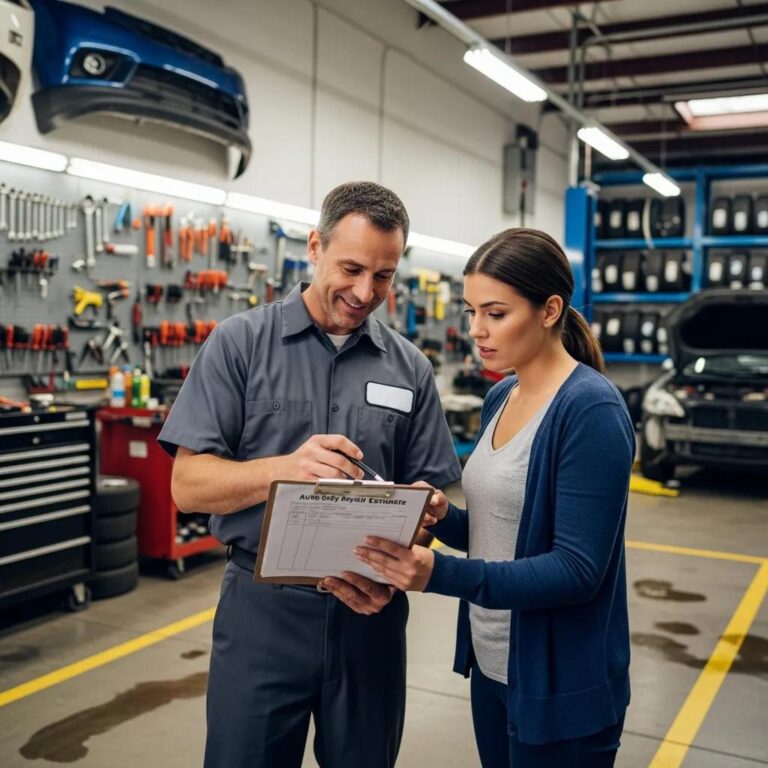
Prime Time Collision Center helps by preparing professional, OEM‑based estimates, communicating directly with insurance adjusters, and supplying documentation that clarifies repair scope and parts needs. Our team can explain required repairs — including ADAS calibrations — to reduce back‑and‑forth with insurers. We work with all major insurance companies and guide customers through towing, estimates, and repair scheduling while emphasizing factory‑quality repairs and I‑CAR Platinum certified technicians to protect your vehicle’s safety and value. If you prefer, we can handle most insurer communication so you can focus on recovery.
Why Is Choosing OEM Certified Collision Repair Important After an Accident?
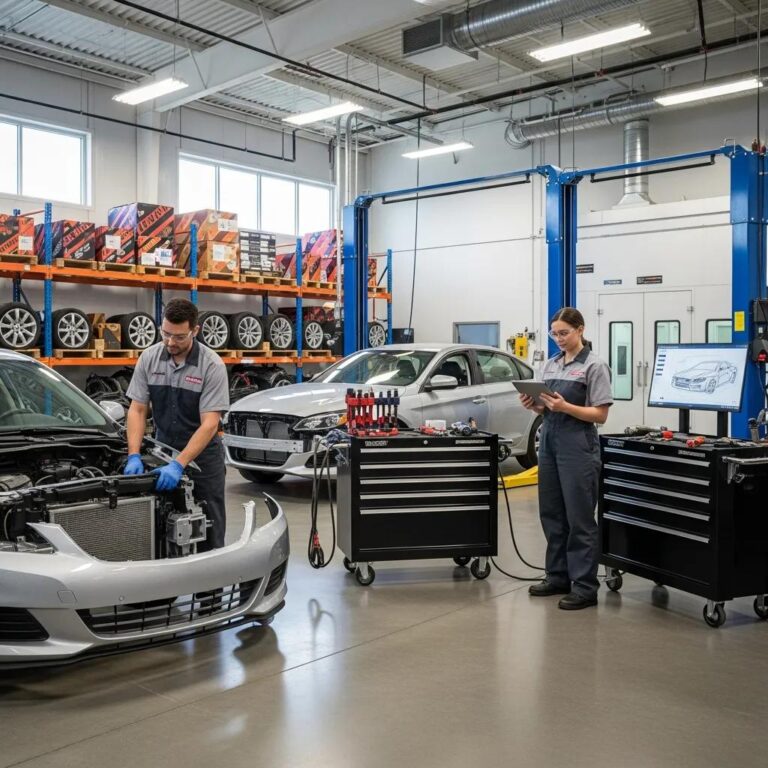
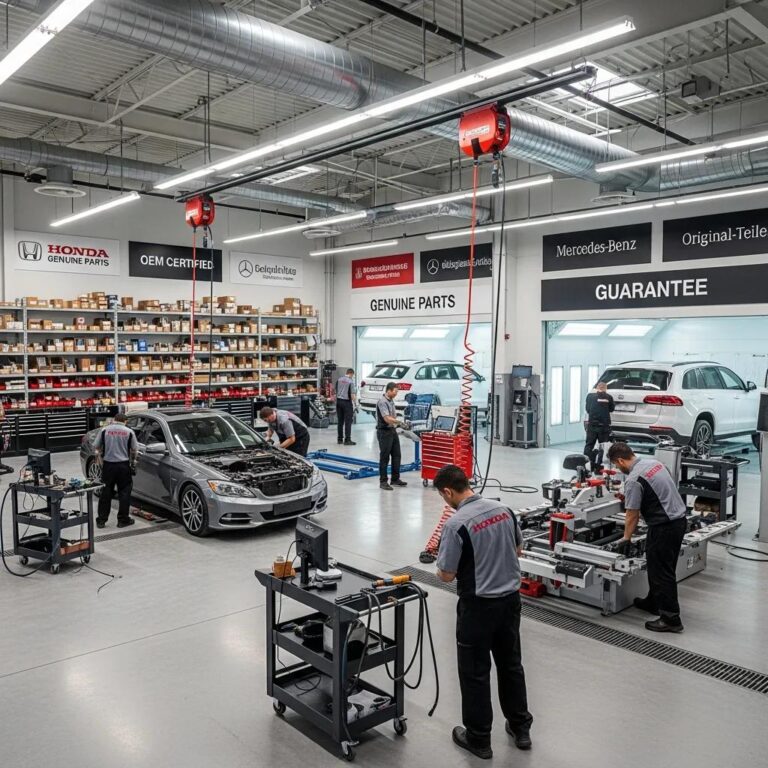
OEM certified collision repair follows manufacturer procedures and uses original or approved parts and calibrations to restore a vehicle’s safety, fit, and long‑term integrity. Modern cars have complex systems — ADAS sensors, integrated restraints, and structural components — that need precise replacement and calibration. OEM repairs help preserve factory warranties and resale value, reduce the risk of poor fit or premature corrosion, and ensure safety systems work correctly after repair.
The short comparison table below highlights differences between OEM‑certified and non‑OEM repair approaches so you can decide which best protects your vehicle.
| Repair Approach | Safety & Integrity Outcome | Parts & Warranty Implications |
|---|---|---|
| OEM Certified Repair | Restores factory safety tolerances and required calibrations | Uses manufacturer parts or approved equivalents; aligns with warranty expectations |
| Aftermarket/Non-OEM Repair | Fit or sensor performance may vary | Often cheaper but can affect fit, longevity, and warranties |
| Paintless Dent Repair (PDR) | Preserves factory paint and reduces corrosion risk | Non‑invasive option for minor dents without paint damage |
This comparison shows why specialists follow OEM procedures for complex repairs and why those choices matter for safety and resale. Below we explain why I‑CAR Platinum certification and technician training are important.
What Are the Benefits of I-CAR Platinum Certified Technicians and OEM Certified Repairs?
I‑CAR Platinum certification means a shop has invested in advanced, ongoing technician training that meets industry standards for collision repair. Certified technicians receive regular training on structural repairs, welding, and calibration of modern safety systems, reducing the risk of repair errors that could affect occupant protection or vehicle handling. Combining OEM repair procedures with I‑CAR‑trained technicians delivers accurate diagnostics, correct parts selection, and validated ADAS calibrations to restore pre‑accident performance. Those qualifications help you choose a repair facility focused on safety and long‑term integrity.
How Does Prime Time Collision Center Ensure Factory-Quality Repairs?
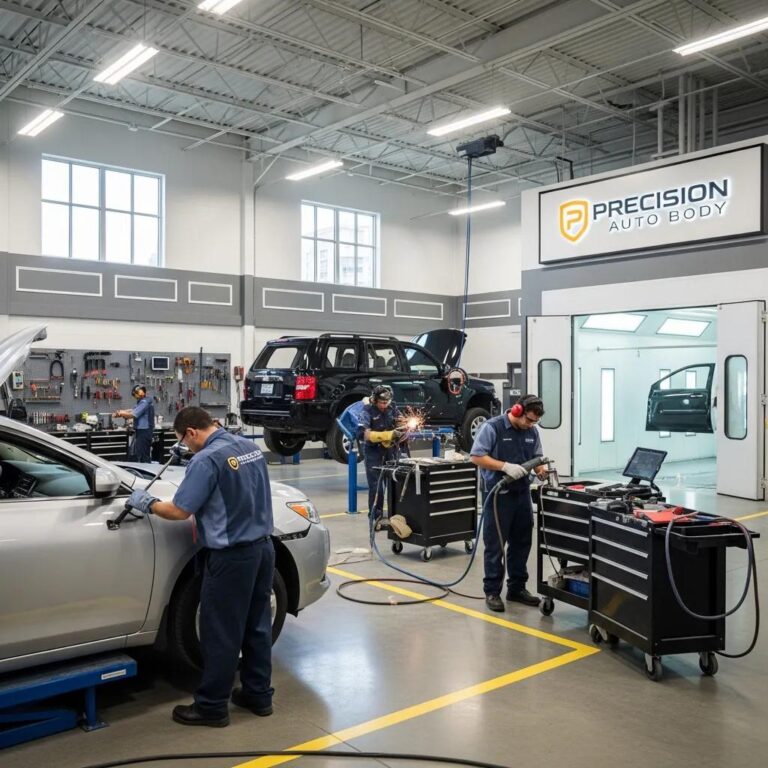
Prime Time Collision Center keeps factory‑quality standards by using OEM parts when required, following manufacturer repair procedures, and employing I‑CAR Platinum certified technicians skilled in structural and systems repairs. We document repair workflows, perform ADAS calibrations when needed, and complete post‑repair inspections to confirm fit, function, and finish before returning the vehicle. These steps reduce the chance of future safety or warranty issues. We also provide clear estimates and explain repair choices to both owners and adjusters so the repair path aligns with safety and manufacturer expectations. Prioritizing certified repairs preserves engineered safety performance and long‑term value.
What Services Does Prime Time Collision Center Offer to Support Your Post-Accident Recovery?
Prime Time Collision Center offers services designed to ease stress and restore your vehicle to factory standards: 24/7 towing, free repair estimates, OEM‑certified repairs, paintless dent repair (when appropriate), and insurance claim assistance. We guide you from the roadside through repair completion while keeping communication open with your insurer and ensuring safety systems are restored correctly.
Introductory note: The service table below outlines practical support options and the value each provides during recovery.
| Service | What it includes | Why it matters |
|---|---|---|
| 24/7 Towing | Round‑the‑clock vehicle recovery to our shop | Protects your vehicle and preserves evidence for claims |
| Free Repair Estimates | Detailed OEM‑based damage assessments | Speeds insurer approvals and clarifies repair scope |
| Insurance Assistance | Adjuster coordination and supporting documentation | Simplifies processing and reduces delays |
| Paintless Dent Repair | Non‑invasive dent removal when applicable | Preserves factory paint and shortens repair time |
| Warranty Support | Post‑repair inspection and follow‑up guidance | Gives confidence in repair quality and longevity |
This overview helps you choose immediate actions after a crash and shows how a certified shop supports the full repair lifecycle. Next is practical guidance on towing and estimates.
How Can You Utilize 24/7 Towing and Free Repair Estimates?
If your car isn’t safe to drive, ask to tow it to a certified collision center that offers 24/7 recovery — this preserves evidence and gets the repair process started sooner. When your vehicle arrives, an estimator will perform a free visual and diagnostic assessment, including photos, OEM parts sourcing, and initial labor projections; bring your insurance and vehicle documents to streamline the estimate. The shop can share the estimate with your insurer and, with authorization, begin repairs once approved — shortening storage time and the overall repair schedule. Using shop towing and an immediate estimate moves you faster from accident to completed, OEM‑quality repair.
What Should You Know About Repair Warranties and Post-Repair Vehicle Maintenance?
After repairs, review the written warranty for parts and workmanship so you know what’s covered and for how long. Check your vehicle in the weeks after repair for alignment changes, warning lights, odd noises, or trim issues, and return promptly if you notice anything — the shop can re‑inspect and correct problems while documentation is fresh. Keep all service records, receipts, and photos to support warranty claims and preserve resale value. Good documentation ties repairs to buyer confidence and long‑term reliability.
When Should You Seek Medical Attention and Legal Advice After a Car Accident?
Medical evaluation and, in some cases, legal advice are key parts of recovery because they protect your health and your rights while preserving documentation for claims. Even minor‑seeming symptoms can indicate delayed injuries like whiplash or concussion, and early medical records create a timeline insurers and attorneys rely on. Consider legal counsel when injuries are serious, fault is disputed, or an insurer denies or undervalues coverage — an experienced attorney can protect compensation for medical bills and lost wages. The sections below explain why early medical care matters and when to consult legal help.
Why Is It Important to Get Medical Evaluation Even for Minor Injuries?
Some injuries show up hours or days after an accident — whiplash, concussion, or soft‑tissue damage, for example. A prompt medical exam creates baseline records that help with treatment and with any later claims. Save all visit notes, imaging reports, and prescriptions to support your claim. Prompt medical care protects your health and preserves the evidentiary trail insurers and lawyers use.What Are Your Rights and When Should You Consult a Legal Professional?
You have the right to fair compensation for medical bills, lost income, and vehicle repair or replacement. Consider speaking with an attorney when injuries are significant, liability is unclear, or settlement offers seem low. Signs to consult a lawyer include ongoing or worsening medical problems, disputes between insurers over fault, or a denied claim that leaves you unable to pay bills. When you meet an attorney, bring all documentation — medical records, police reports, photos, and repair estimates — so they can evaluate your case efficiently. If you need referrals, certified collision centers can often suggest impartial resources while you focus on recovery and repairs.
This article covered immediate safety steps, documentation best practices, how to report to insurance, why OEM‑certified repairs and technician qualifications matter, the services a certified collision center provides, and when to get medical or legal help. For collision repair and claim support, Prime Time Collision Center in Glendale serves nearby areas including Burbank, Pasadena, and Los Angeles and offers 24/7 towing, free estimates, OEM‑certified repairs, and I‑CAR Platinum certified technicians to restore vehicle safety and value.
Frequently Asked Questions
What should I do if I feel fine after an accident but later experience pain?
Even if you feel OK right after a crash, get a medical check. Some injuries — like whiplash or concussion — can appear later. Early medical records link your symptoms to the accident and help with treatment and any insurance claims. When in doubt, have a professional evaluate you.
How can I ensure my insurance claim is processed smoothly?
Report the accident to your insurer as soon as you can, ideally within 24–72 hours. Provide photos, the police report, and witness information. Be factual and keep notes of all conversations. Clear documentation and prompt reporting make the process faster and reduce misunderstandings.
What if the other driver does not have insurance?
If the other driver is uninsured, check whether your policy includes uninsured motorist coverage — it can help pay for your damages. Document the scene thoroughly and report the accident to your insurer so they can advise on next steps and potential recovery options.
How do I choose the right collision repair shop?
Pick a shop that follows OEM procedures and uses certified technicians — look for I‑CAR Platinum or manufacturer certification. Read reviews, ask for recommendations, and confirm the shop will communicate with your insurer. Clear communication and documented processes matter as much as skill.
What are the long-term benefits of OEM-certified repairs?
OEM‑certified repairs restore factory safety and fit, keep safety systems calibrated, and help preserve warranties and resale value. Using the right parts and following manufacturer procedures reduces the risk of future problems and gives you confidence in the repair.
What should I do if I receive a low settlement offer from my insurer?
Don’t accept a low offer right away. Compare it to your documented expenses — repairs, medical bills, and lost wages — and present additional evidence like estimates and medical records. If negotiations stall, consider consulting a lawyer who specializes in insurance claims.
How can I prepare for a potential legal consultation after an accident?
Bring all relevant documents: medical records, police reports, photos, repair estimates, and any correspondence with insurers. Make a list of questions about your rights and possible compensation. Being organized helps an attorney assess your case quickly and give clear advice.
Conclusion
Knowing the right steps after a car accident makes a big difference for safety, documentation, and repair outcomes. Prioritize immediate safety, document the scene carefully, and choose OEM‑quality repairs when possible to protect your vehicle’s safety and value. If you need help, reach out to Prime Time Collision Center — we’re here to support you through towing, estimates, and factory‑quality repairs so your vehicle is restored correctly and safely.