
ADAS Calibration After Collision Repair — Expert Care to Keep You Safe on the Road
Advanced Driver Assistance System (ADAS) calibration is the controlled process of restoring cameras, radar, lidar and related sensors to OEM-specified alignment and software settings after a collision or component replacement. Correct calibration returns critical safety functions — like automatic emergency braking, lane‑keeping assist and adaptive cruise control — to the way the manufacturer intended. This guide explains why calibration matters after any collision repair, how diagnostics find faults, and the shop workflows that meet manufacturer tolerances using both static and dynamic methods. You’ll get a clear, step‑by‑step look at the calibration process, which safety features rely on precise sensor alignment, how pricing and insurance usually handle calibration, and practical advice for deciding when to schedule recalibration. We use terms such as radar calibration, camera calibration, sensor alignment and ADAS recalibration service near me to keep the technical picture clear and useful for drivers and repair pros alike.
Why Is ADAS Calibration Essential After a Collision?
Even tiny physical shifts or electrical faults can change how sensors relate to the vehicle’s geometry, and that can make safety systems misread the road. When a camera or front radar is off by millimeters, features like automatic emergency braking and adaptive cruise control can give false warnings or fail to act when needed — raising crash risk. Calibration restores OEM tolerances so sensors and ECUs match manufacturer settings and the systems perform as designed. Understanding how collisions affect sensors makes it easier to spot the kinds of damage that matter and which safety features are most at risk, which we cover next.
How Do Collisions Affect Advanced Driver Assistance Systems?
Collisions can shift sensor mounts, damage connectors, or trigger ECU fault codes that stop ADAS features from working properly. A front bumper hit can move the radar module or bend its mount; replacing a windshield can change a camera’s angle and create calibration offsets. Electrical problems — like a nicked wiring harness or corroded connector — will show up in a pre‑scan and must be fixed before calibration. Even a minor parking bump that twists a parking sensor bracket a few degrees can cause persistent ADAS warning lights and degraded system behavior until alignment and software offsets are corrected.
What Safety Features Depend on Proper ADAS Calibration?
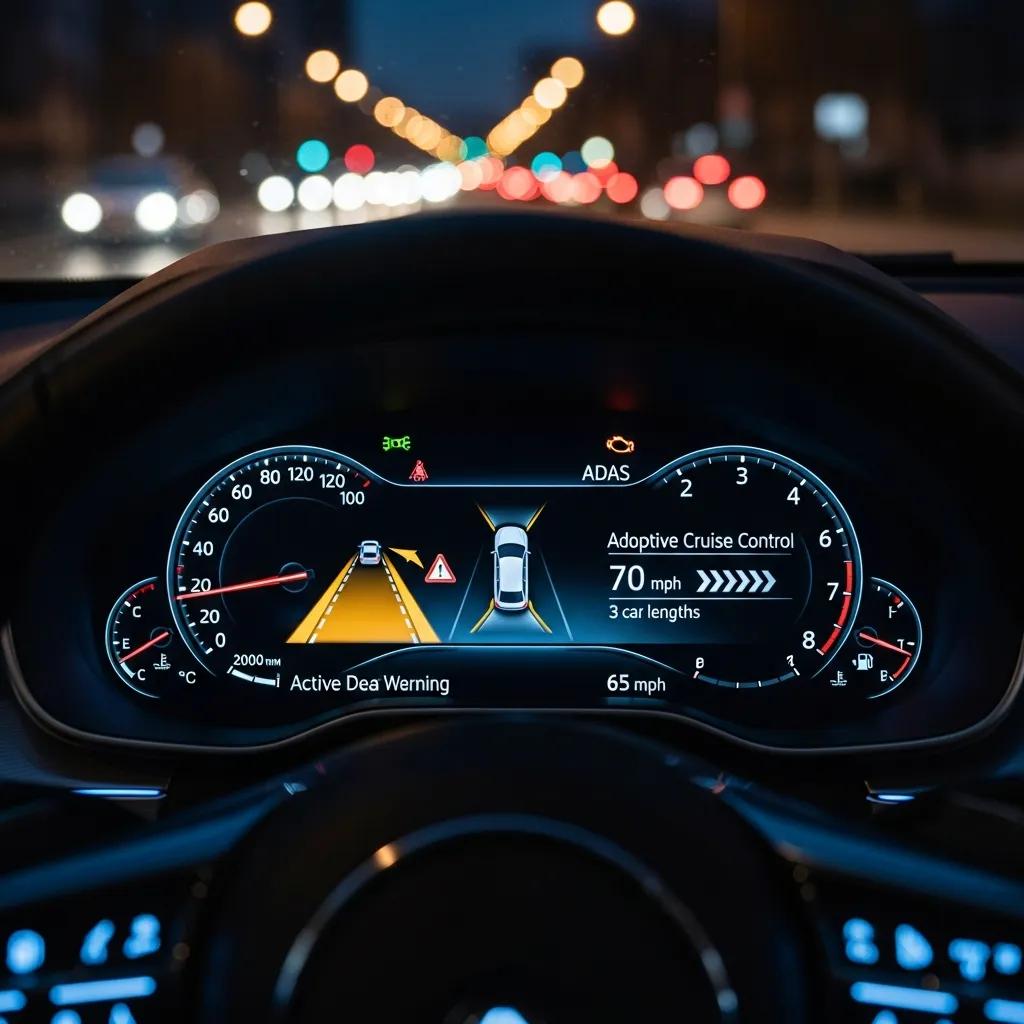
Many important safety features rely on exact sensor input and need accurate ADAS calibration after body or glass work. Automatic Emergency Braking (AEB) combines radar and camera data to detect imminent collisions and apply the brakes — that system needs correct sensor alignment to work reliably. Adaptive Cruise Control (ACC) depends on radar ranges and camera cues to keep safe following distances; misalignment can cause inappropriate braking or failure to maintain speed. Lane Keep Assist (LKA) and Lane Departure Warning (LDW) use camera orientation to read lane lines, and blind‑spot monitoring or rear cross‑traffic alerts need correct sensor positioning to detect hazards. These systems are core ADAS safety benefits, and calibration after relevant repairs is not optional.
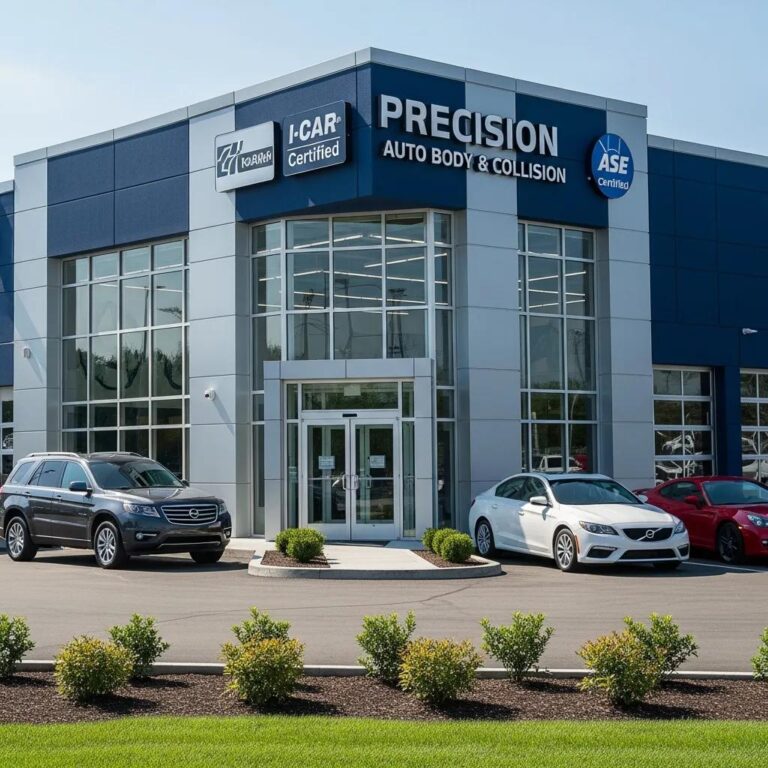
If you’re wondering who should do the recalibration, choose a shop that follows OEM procedures and uses certified technicians. Prime Time Collision Center performs OEM‑quality repairs and relies on I‑CAR Platinum® Certified Technicians to restore ADAS systems before we return your vehicle to the road.
How Does Prime Time Collision Center Deliver OEM‑Certified ADAS Calibration?
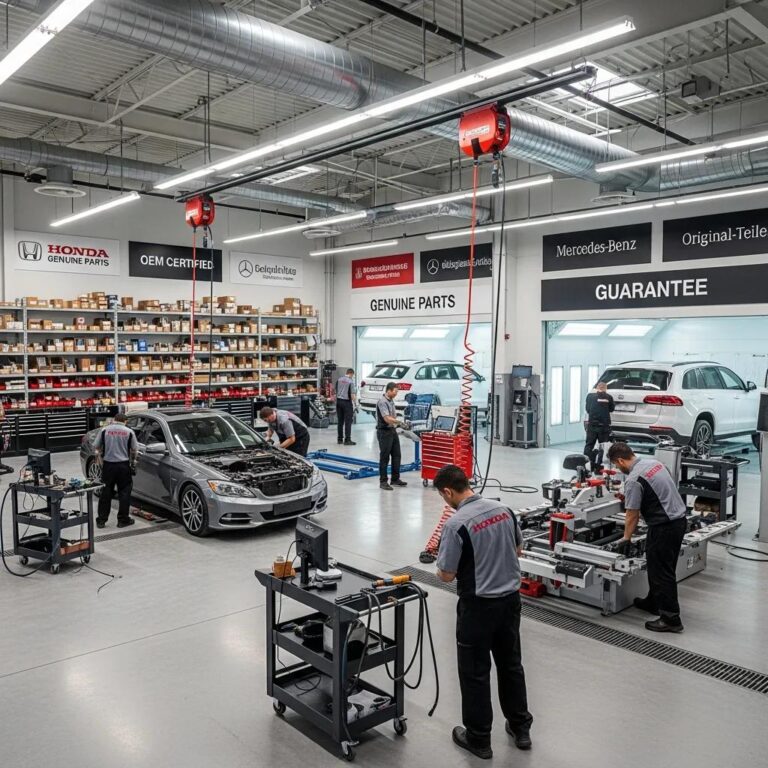
We combine certified technician training, manufacturer diagnostic workflows, and specialized alignment tools to deliver OEM‑level ADAS calibration that restores factory tolerances and dependable system behavior. Our technicians follow manufacturer procedures with OEM diagnostic software and guided calibration sequences to clear fault codes, set sensor offsets, and validate ECU responses. That reduces the chance of repeat warning lights and helps systems like AEB and ACC operate as intended. We provide free estimates, help with insurance claims, and communicate required OEM steps to insurers when authorization is needed.
Before listing equipment, here are the core capabilities we rely on to build trust and ensure safety for our customers.
| Certification / Equipment | Attribute | Purpose / Benefit |
|---|---|---|
| I-CAR Platinum® Certified Technicians | Training level and competency | Ensures technicians follow current repair and calibration practices and understand OEM procedures |
| OEM diagnostic software | Manufacturer-specific diagnostic access | Allows guided calibration sequences, ECU programming, and fault‑code resolution |
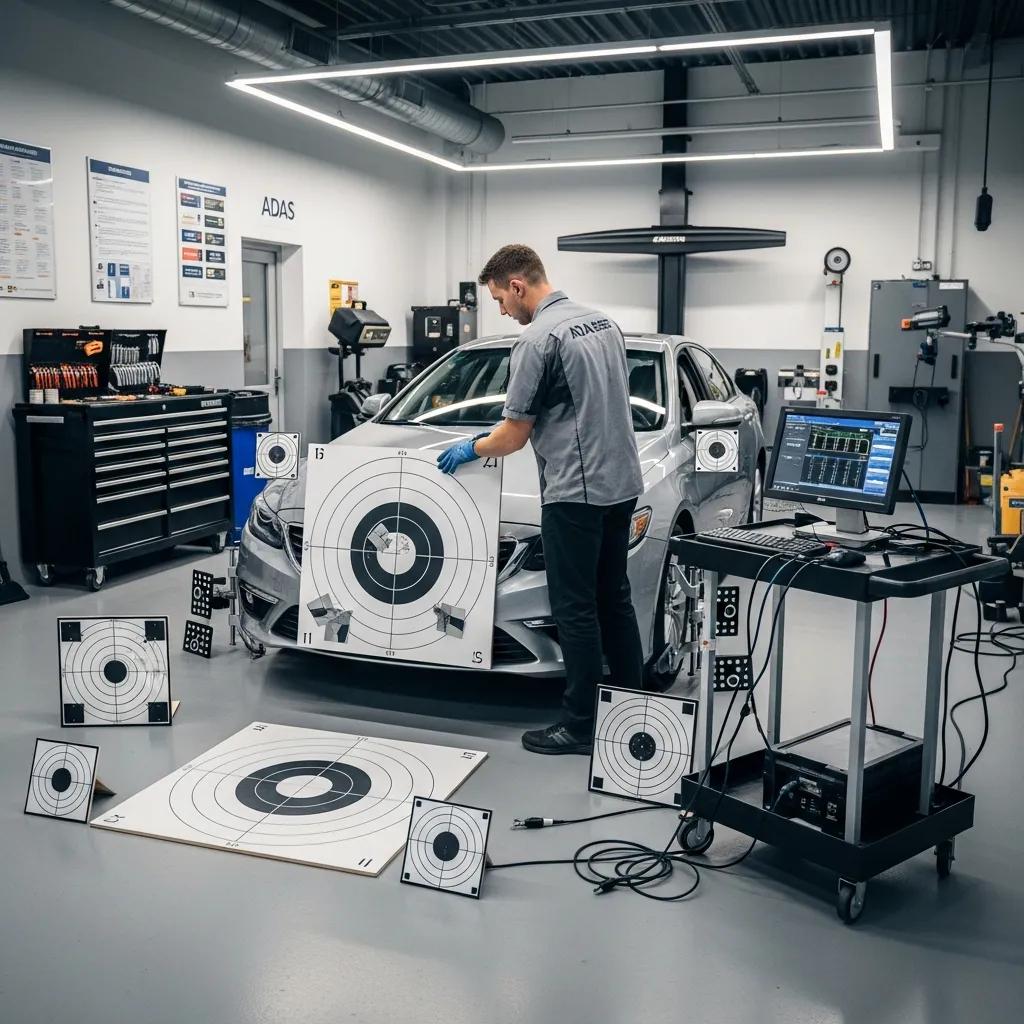
| Target boards & alignment rigs | Physical fixtures for static calibration | Provide precise reference geometry to align cameras and radars to OEM tolerances |
| Dynamic calibration tools & test routes | Road‑test protocols and data logging | Validate sensor performance in motion and confirm ACC/LKA behavior under real driving conditions |
This comparison makes clear why certification and the right tools matter: trained technicians plus dedicated calibration equipment create repeatable, verifiable safety outcomes.
What Role Do I-CAR Platinum® Certified Technicians Play?
I‑CAR Platinum® certification shows our technicians have completed advanced training in modern repair methods, including structure and electronics — a key to accurate ADAS recalibration. Certified techs know how body measurements, sensor mounts and ECU behavior interact, so they diagnose root causes instead of applying quick fixes. Their training supports documented OEM sequences — pre‑scan, target setup, calibration pass, post‑scan verification — and helps us clearly explain required procedures to insurers. Technician competence directly affects calibration quality, reducing rework and increasing confidence that safety systems will perform after repair.
Which Specialized Equipment Ensures Precise Sensor Alignment?
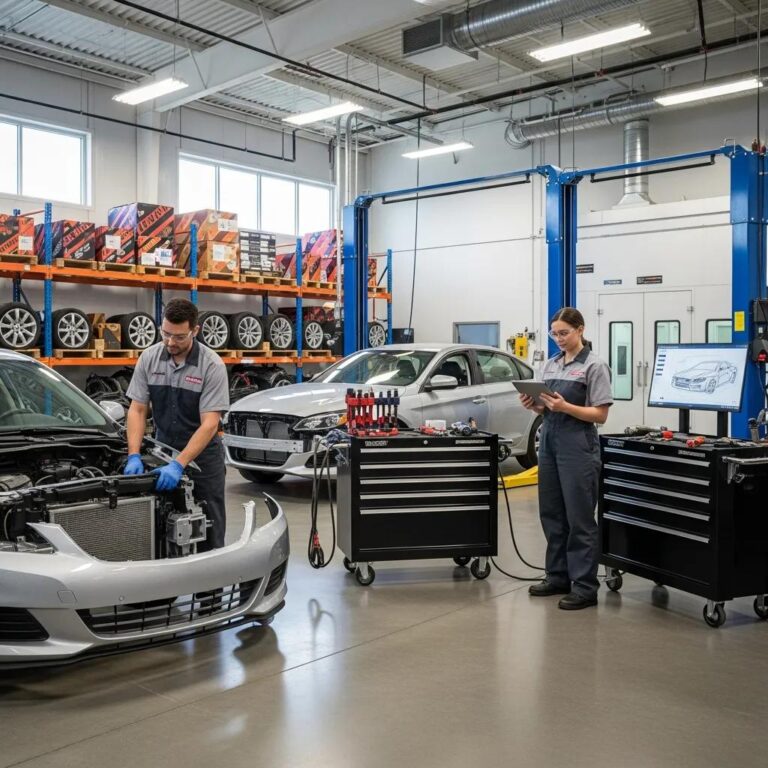
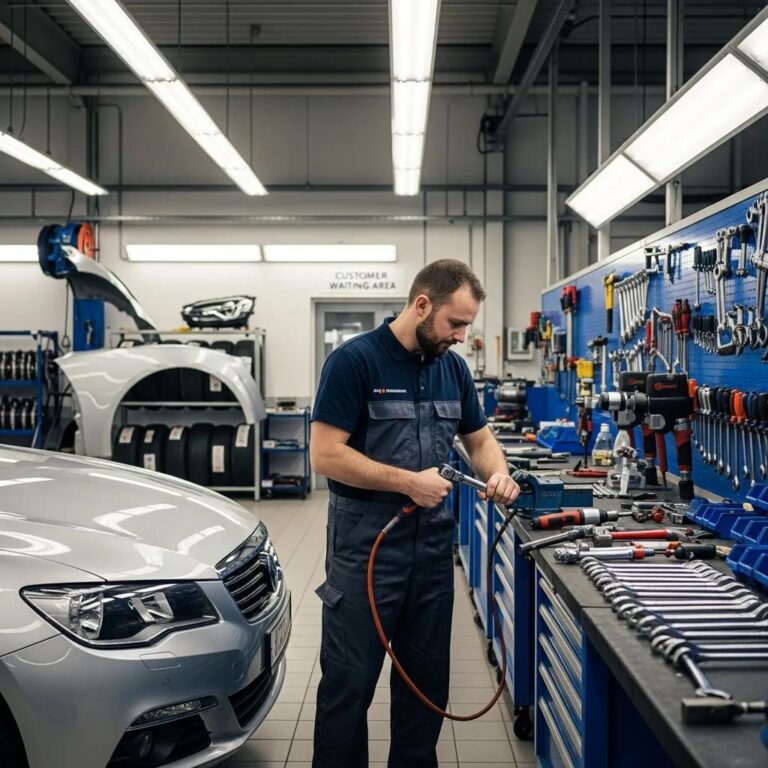
Accurate ADAS calibration depends on tools like adjustable target boards, OEM scan tools, laser alignment rigs and calibrated mounting fixtures that match manufacturer reference points. Target boards and mounts are essential for static calibration, holding camera and radar targets at exact heights and offsets so diagnostic software can set alignment values. OEM software connects to the vehicle ECU to read and write calibration data, while dynamic calibration uses controlled road tests with data capture to verify sensors in real driving conditions. Together, these tools let us align and verify camera modules, radar units and parking sensors before returning the vehicle to service.
What Is the Step‑by‑Step ADAS Calibration Process After Collision Repair?
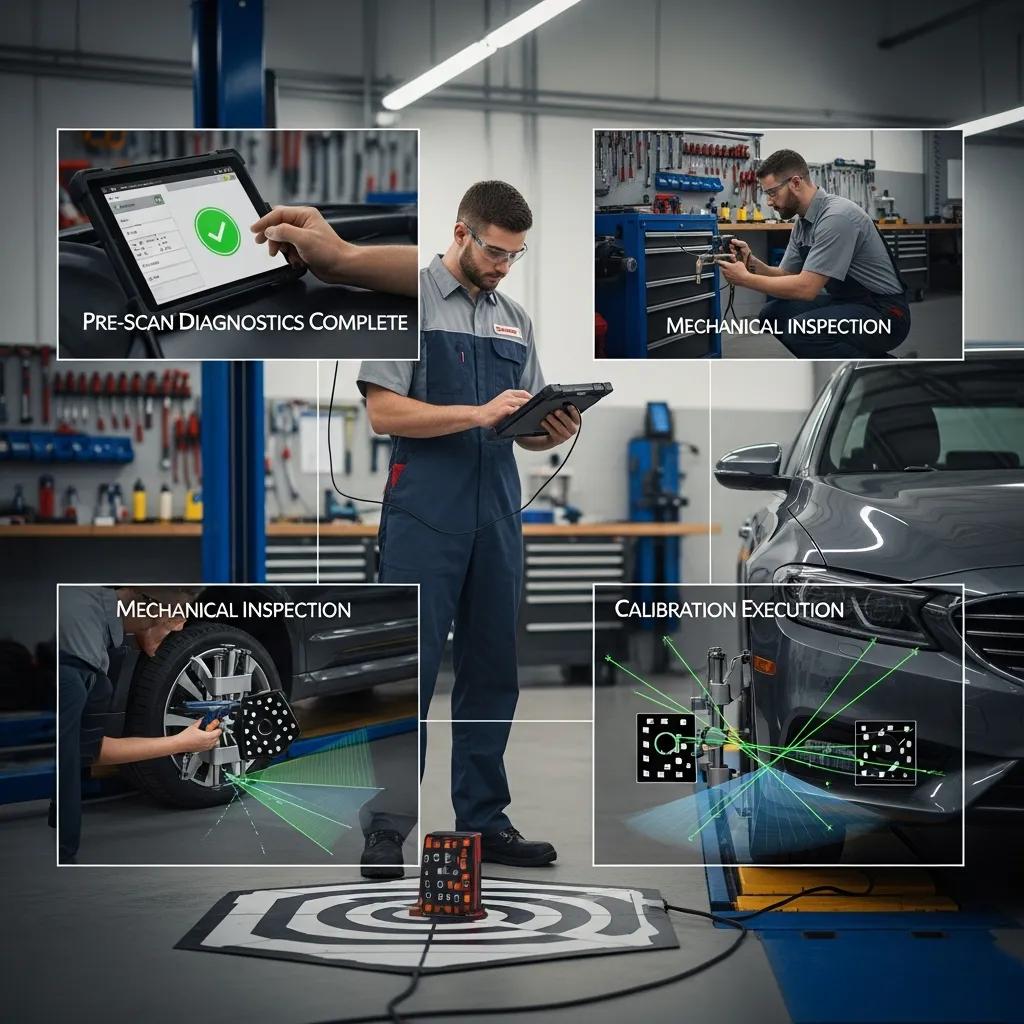
ADAS calibration after collision repair follows a clear workflow from diagnostics through verification to make sure sensors and ECUs meet OEM tolerances. First, we run a pre‑scan to find active fault codes and document sensor status. Next, we check mechanical mounts and complete necessary body or glass repairs that affect sensor geometry. Then we perform static calibration with target boards or dynamic calibration with controlled road testing per manufacturer requirements. Finally, a post‑scan and road test confirm faults are cleared and systems like AEB, ACC and LKA respond correctly in real conditions.
The numbered steps below summarize the process for quick reference.
- Pre‑scan diagnostics: Read and record ECU codes and sensor status to determine the required calibration method.
- Mechanical inspection and repair: Confirm sensor mounts, connectors and windshield positioning meet OEM tolerances.
- Static or dynamic calibration: Use target boards and OEM software for static alignment or perform calibrated road tests for dynamic calibration.
- Post‑scan verification and road test: Confirm faults are cleared and safety systems function properly during normal driving.
This stepwise workflow outlines the diagnostic and calibration actions technicians take; the following sections go into the pre/post‑scan role and both calibration methods in more detail.
| Step | Tool / Entity Involved | Expected Outcome |
|---|---|---|
| Pre‑scan diagnostics | OEM scan tool, fault‑code reader | Identifies sensor faults and determines static vs dynamic calibration needs |
| Mechanical inspection | Mounting fixtures, body measurements | Confirms physical alignment and repairs any displaced components |
| Calibration execution | Target boards or dynamic test routes, OEM software | Sets sensor offsets and aligns sensors to manufacturer specifications |
| Post‑scan verification | Road test, data logging | Validates system behavior and clears diagnostic codes |
What Happens During Pre‑Scan and Post‑Scan Diagnostics?
Pre‑scan diagnostics use OEM‑compatible scanners to read ECU fault codes, check sensor status, and document baseline conditions that determine the calibration approach. Common codes point to misaligned camera modules, blocked radar beams, or wiring faults that must be fixed before calibration. After calibration, a post‑scan verifies codes are cleared, calibration values are stored, and no new faults prevent safe operation. The post‑scan also records that the system passed final checks. Documenting both pre‑ and post‑scan results creates an audit trail for insurers and confirms the vehicle meets the manufacturer’s safety performance.
How Are Static and Dynamic Calibration Methods Applied?
Static calibration happens in a controlled shop setting using target boards, precise vehicle positioning and OEM software to adjust sensors while the vehicle is stationary. It’s commonly required when windshield‑mounted cameras or front radar modules need exact angular alignment to chassis reference points. Dynamic calibration happens on the road under specified conditions and uses live sensor data to fine‑tune systems like adaptive cruise control; manufacturers often require dynamic passes for certain models. Which method is needed depends on make/model, the sensors involved and OEM guidance found during the pre‑scan — technicians choose the method that delivers verifiable, manufacturer‑approved results.
How Much Does ADAS Calibration Cost and Is It Covered by Insurance?
Insurance usually covers ADAS calibration when it’s part of collision repairs, as long as the insurer authorizes the OEM procedures and the repair facility documents the need. Costs vary by vehicle complexity, number of sensors, and whether static or dynamic methods are required; some calibrations are quick, while others need more labor or specialized equipment time. Prime Time Collision Center helps customers with insurance claims and provides free estimates, submitting OEM procedure details to insurers so calibration is authorized and covered when appropriate. The table below shows common cost factors and typical time estimates to help you plan.
| Vehicle / System | Attribute | Estimated Time Range |
|---|---|---|
| Compact vehicle with single camera | Complexity low | 0.5–1.5 hours |
| Mid-size vehicle with radar + camera | Complexity medium | 1–3 hours |
| Luxury vehicle with multiple sensors | Complexity high | 2–5 hours |
More sensors and the need for dynamic calibration generally increase labor time and cost. When you speak with insurers, documenting pre‑scan diagnostics and OEM‑specified procedures supports coverage and clarifies the repair scope.
What Factors Influence ADAS Calibration Pricing?
Pricing depends on vehicle make and model, the number and types of sensors (camera, radar, lidar), whether calibration is static or dynamic, and whether extra diagnosis or parts replacement is needed. Some OEM procedures require licensed software or factory tools, which can affect shop costs. Time for careful target setup or extended road testing also increases the charge. Knowing these factors helps you understand why calibration quotes vary and why insurer authorization matters for OEM‑required steps.
How Does Prime Time Collision Assist with Insurance Claims?
We streamline claims by providing detailed estimates, pre‑scan diagnostic reports, and clear references to OEM calibration procedures when talking with adjusters. We offer free estimates and work with all insurance companies to document why calibration is necessary after a collision. Our support includes submitting diagnostic logs, itemized repair and calibration line items, and explaining the safety reasons for OEM methods to reduce disputes over coverage. That coordination helps ensure ADAS recalibration is recognized as part of a safe, OEM‑quality repair.
What Are Common Questions About ADAS Calibration After Collision Repair?
Vehicle owners often ask whether calibration is required after minor impacts, how long it takes, and whether they can safely drive before calibration. Clear answers help drivers make safe interim choices and encourage timely scanning and calibration. The short answers below point you to diagnostic scans as the reliable way to confirm needs.
- Immediate concern: Will ADAS warning lights appear after a repair?
- Timing question: How long does calibration usually take?
- Safety question: Is it safe to drive before calibration is completed?
These common questions reflect practical owner needs and lead into the conditions that determine whether calibration is necessary, which we cover next.
Do I Need ADAS Calibration After Minor Accidents?
It depends, but even minor bumper hits or windshield replacements can require calibration because mounts or glass positioning can change. If a collision affects any component near sensors — the front bumper, grille, windshield or sensor brackets — a diagnostic pre‑scan is the only sure way to tell if recalibration is needed. Visual checks and warning lights are good indicators to schedule a scan. When in doubt, a pre‑scan protects safety and helps with potential insurance coverage for required calibration work.
Can I Drive Safely Without ADAS Calibration?
Driving without ADAS calibration carries real safety risks: systems may give false alerts, fail to warn, or not intervene when needed, and inconsistent behavior can create dangerous expectations for drivers who rely on assistance features. You can drive manually with extra caution, but don’t rely on automated systems until calibration and verification are complete. The safest interim step is a prompt diagnostic scan and scheduling calibration with a facility that documents OEM procedures — that reduces liability and restores intended safety protections.
Where Is Prime Time Collision Center Located and How Can You Schedule ADAS Calibration?
Prime Time Collision Center serves Glendale, CA and nearby communities, offering OEM‑quality collision repairs and ADAS recalibration performed by I‑CAR Platinum® Certified Technicians. We emphasize factory‑quality repairs, provide free estimates, assist with insurance claims, and offer 24/7 towing for accident recovery and timely repairs. To speed a free estimate and claim coordination, have your VIN, photos of damage, and insurance claim number (if available) ready. Below we outline our primary service areas and booking tips to help you plan next steps.
What Areas Do We Serve for ADAS Calibration Services?
We primarily serve Glendale and nearby communities like Burbank, Pasadena and parts of Los Angeles, and we offer 24/7 towing to bring accident vehicles to our facility quickly so diagnostics and repairs can start without delay. Working locally helps us coordinate with insurance adjusters and offer faster turnarounds while following OEM repair and calibration procedures. If a vehicle can’t be driven safely after a collision, towing it to a certified repair facility reduces further damage and speeds the path to full ADAS recalibration.
How Can Vehicle Owners Book a Free Estimate or Consultation?
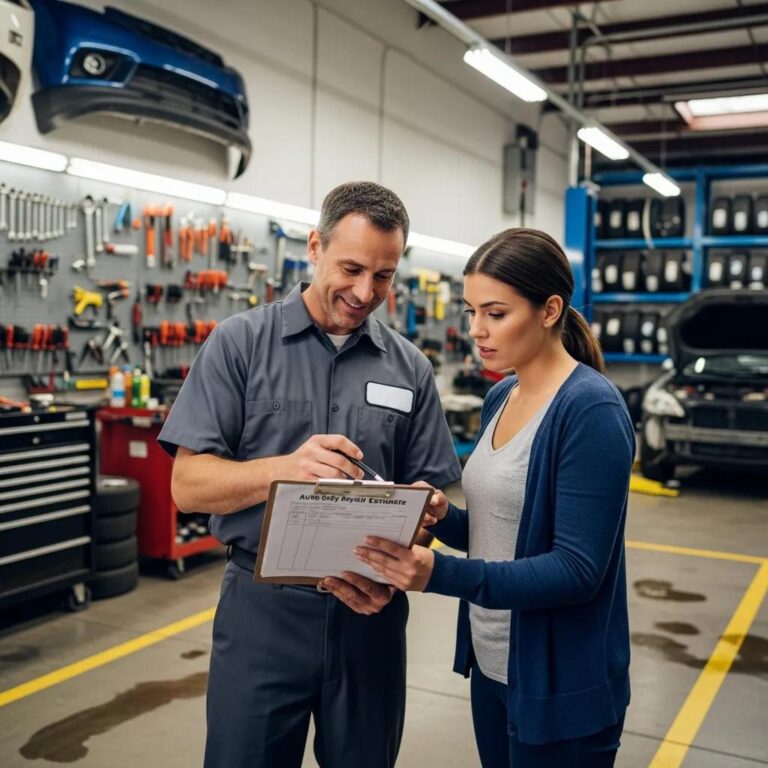
To book a free estimate or consultation, bring your VIN, photos of the collision damage, and insurance details if available. Those items help our technicians perform an informed pre‑scan and prepare an itemized estimate. The free estimate usually includes a diagnostic pre‑scan, documentation of faults, and a recommended calibration plan that specifies static or dynamic methods if required by the manufacturer. Providing photos and VIN upfront speeds insurance coordination and helps us submit the documentation insurers need to approve OEM calibration steps. With that preparation, most owners find the estimate process straightforward and helpful for planning repairs to restore full ADAS functionality.
Prime Time Collision Center focuses on factory‑quality repairs, offers free estimates, assists with insurance claims, and employs I‑CAR Platinum® Certified Technicians to make sure recalibration meets manufacturer standards. If you suspect ADAS systems were affected by a collision, schedule a professional pre‑scan and estimate to confirm requirements and restore your vehicle’s safety systems.
Frequently Asked Questions
What are the signs that my vehicle needs ADAS calibration?
Look for persistent warning lights on the dash, odd behavior from safety features (like unexpected AEB activation or lane‑keeping problems), or noticeable changes in handling after a collision. False alerts or systems that don’t activate when they should are strong signs calibration is needed. A diagnostic pre‑scan is the most reliable way to confirm.
How often should ADAS calibration be performed?
Calibration should be done after any collision that affects sensors, and it’s a good idea to check ADAS performance after major repairs such as windshield replacement or bodywork. If you notice changes in how features behave, schedule a scan — regular checks help keep ADAS systems working safely.
Can I perform ADAS calibration myself?
No — ADAS calibration requires specialized equipment and OEM procedures, so it’s not practical for most owners to do it themselves. Calibration needs manufacturer‑specific tools and diagnostic software. For safety and compliance, have calibration done by certified technicians at a professional repair facility.
What should I expect during the ADAS calibration process?
Expect a structured workflow: a pre‑scan to find fault codes, mechanical inspections to confirm sensor mounts, static or dynamic calibration to align sensors, and a post‑scan and road test to verify systems. The goal is to restore safety features to OEM specifications so they work reliably.
Are there any risks associated with driving before ADAS calibration?
Yes. Misaligned sensors can cause false warnings, fail to trigger safety actions, or behave unpredictably — all of which pose risks to you and others on the road. Don’t rely on automated systems until calibration is complete and verified.
How can I ensure my insurance covers ADAS calibration costs?
Document the need for calibration after a collision: provide detailed estimates, pre‑scan diagnostic reports, and references to OEM procedures. Communicate the safety reasons to your adjuster. Prime Time Collision Center helps customers with this paperwork to improve the chances that insurers will cover necessary calibration.
Conclusion
Proper ADAS calibration after a collision is essential to restore safety features like automatic emergency braking and lane‑keeping assist. Choosing a certified repair facility such as Prime Time Collision Center ensures your systems are recalibrated to OEM standards and your vehicle is returned to safe, reliable operation. Don’t compromise on safety — schedule a professional pre‑scan and calibration today. Contact us to book your free estimate and get back on the road with confidence.