California Smog Check Requirements 2025 — A Practical Guide for Vehicle Owners
California updated smog check rules for 2025 to tighten emissions testing, clarify who needs inspection, and change how OBD‑II readiness is handled. This guide breaks those updates down in plain language so you can quickly see whether your vehicle needs a check, how often tests happen, what exemptions apply, and what the October 1, 2025 readiness‑monitor enforcement means for onboard diagnostics. We also cover how collision damage can affect emissions systems, why OEM‑level repairs matter, and the next steps if your vehicle fails. Expect clear explanations of terms like OBD‑II, catalytic converter, EVAP system, and BAR/DMV processes so you can act fast and avoid registration delays.
What Are the Basic California Smog Check Requirements for 2025?
Smog checks help California control vehicle emissions by finding excessive tailpipe and evaporative pollution. For most gasoline vehicles in smog‑check areas, inspections are required every two years. The state uses OBD‑II scans and tailpipe tests where they apply, checking components such as catalytic converters and oxygen sensors. You’ll get registration reminders and must complete any required inspection before renewing registration. Specific test types depend on vehicle class and weight—knowing the basics helps you plan, spot exemptions, and prepare if a test fails.
Different vehicle categories follow distinct testing cadences and exemptions for 2025:
| Vehicle Category | Typical Test Frequency | Common Exemptions |
|---|---|---|
| Passenger cars (gasoline) | Every two years in smog‑check areas | Battery electric vehicles are exempt from tailpipe testing |
| Heavy‑duty trucks (subject to CTC) | Follow Clean Truck Check schedules | Certain heavy‑duty classes follow alternate timelines |
| Change‑of‑ownership or out‑of‑state registration | May require a smog inspection at transfer | Temporary out‑of‑state documents can affect the requirement |
Use this quick breakdown to see which path likely applies to your vehicle. For edge cases, check BAR and DMV guidance or ask a certified station to confirm your testing needs.
Who Needs a Smog Check and How Often Is It Required?
Most gasoline passenger vehicles registered in smog‑check areas need an inspection every two years to renew registration. Depending on vehicle year and type, the test can be an OBD‑II scan or a tailpipe test. Diesel and heavy‑duty vehicles follow different schedules (for example, the Clean Truck Check). Hybrids are treated based on model‑year and their emissions control systems. Transfers of ownership, lease returns, or out‑of‑state registrations can trigger a smog requirement—buyers and sellers should confirm whether a current certificate is needed. If you’re unsure, the DMV, BAR, or a licensed smog station can verify your interval.
What Are the Key Smog Check Exemptions in California?
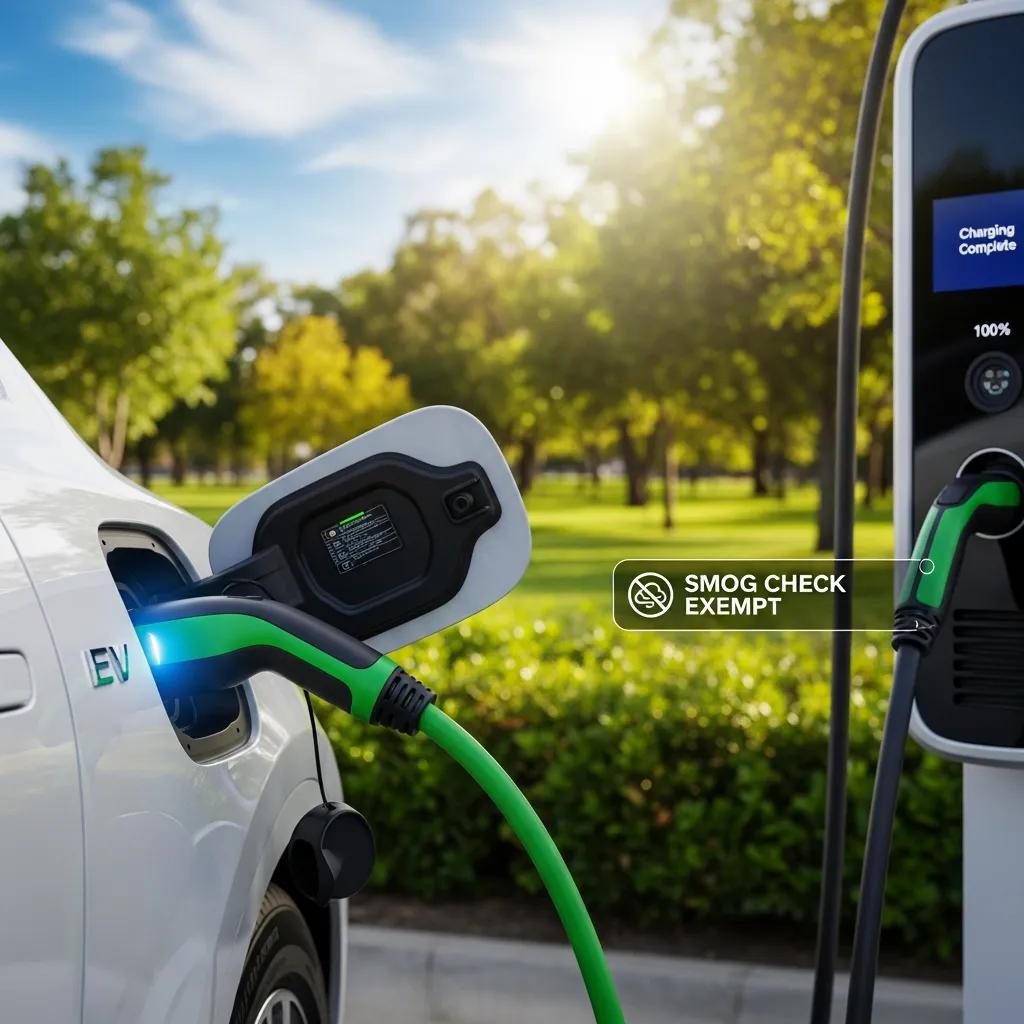
Some vehicles are exempt from smog checks—knowing these exemptions can save time and money. Electric and certain zero‑emission vehicles don’t need tailpipe tests. Very new vehicles may have a temporary exemption window, and special cases (like historic or certain out‑of‑state temporary registrations) may be excluded. Exemption status usually requires documentation when you register or transfer a vehicle, so keep records handy. If you think your vehicle qualifies, confirm with BAR or DMV and retain proof to avoid delays.
What Are the New Smog Check Rules in California for 2025?
The 2025 updates focus on enforcement details, clearer OBD‑II readiness‑monitor rules, and revised procedures for heavy‑duty and Clean Truck Check inspections. Regulators tightened how incomplete readiness monitors are handled and improved coordination between agencies to make notifications and follow‑up clearer for owners. The goal is to reduce false failures and make diagnostics more consistent—expect clearer failure codes, better diagnostic direction for technicians, and more predictable timelines for repairs and retests.
Key changes owners should know about:
- DMV and BAR clarified reporting and notification responsibilities to reduce confusion.
- Readiness‑monitor enforcement is stricter—vehicles with certain incomplete monitors after Oct 1, 2025 may be treated as failing unless an exception applies.
- CTC and heavy‑duty inspection schedules were updated to better align with emissions‑reduction goals.
How Has the DMV Changed Smog Check Oversight?
Recent administrative changes make state agency roles clearer and streamline record keeping, notifications, and enforcement. The DMV now coordinates more closely with BAR to ensure registration holds, repair deadlines, and retest steps are communicated consistently. For vehicle owners, that means clearer deadlines for repairs and less uncertainty about when a registration hold could be placed. Knowing this helps you act quickly when you get a notice and makes working with licensed stations easier during diagnostics and retests.
What Are the Updated OBD‑II Readiness Monitor Requirements?
Readiness monitors are OBD‑II flags that show whether emissions subsystems—like the EVAP system, catalytic converter, and oxygen sensors—have been tested by the vehicle’s engine control module. The 2025 rules tighten how incomplete monitors are treated: after the enforcement date, certain incomplete monitors can lead to a failed result unless a documented exception applies. Technicians address incomplete monitors by reproducing the required drive cycle, clearing pending codes, and checking sensor operation. EVAP and catalyst monitors are commonly incomplete because they need specific driving conditions. Completing these monitors with timely diagnostics avoids unnecessary part swaps and speeds up retest clearance.
How Does Collision Repair Impact Smog Check Compliance?
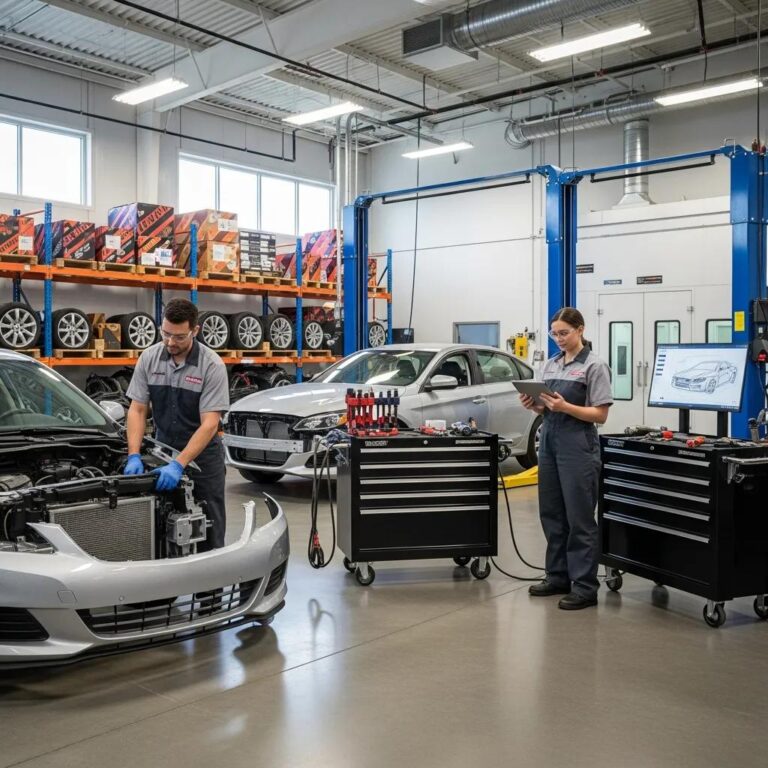
Collision damage can harm emissions parts and sensors, which may cause smog test failures if repairs don’t restore original fit and function. Common issues include damaged catalytic converters, bent or cracked exhaust components that leak, and knocked‑out oxygen sensors or wiring—any of which can trigger OBD‑II fault codes or incomplete readiness monitors. Accurate repairs that restore OEM fit, alignment, and sensor position matter because small changes in exhaust routing or sensor angle can alter emissions readings. After a collision, inspecting emissions components early reduces the chance of failing a future smog check and avoids a chain of extra repairs and registration headaches.
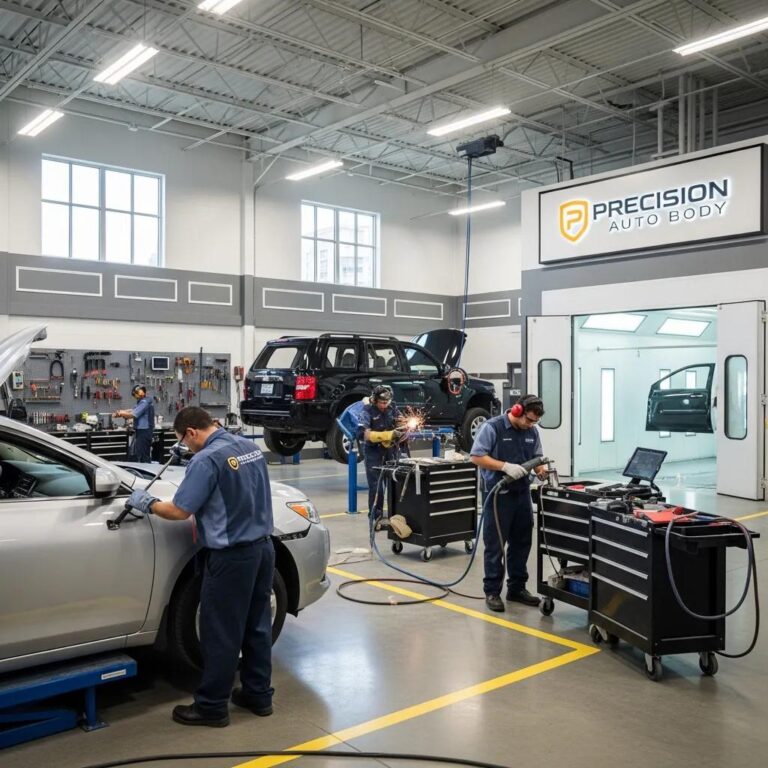
Many owners need a trusted shop that can restore emissions systems precisely after a crash. Prime Time Collision Center focuses on OEM‑quality collision repairs that include emissions‑system work, we coordinate with insurers, and we offer free estimates and towing support when needed. Our I‑CAR Platinum‑certified technicians follow manufacturer repair steps, use OEM parts for emissions‑critical components, and back repairs with a lifetime warranty—giving you the documentation and confidence you need for a smog retest.
How Can Accident Damage Affect Your Vehicle’s Emissions System?
Collisions often impact the undercarriage and bumper areas where catalytic converters, exhaust piping, and O2 sensors live. Direct hits can crush converters, kink pipes, or displace sensors. Wiring harnesses can be pinched or heat‑damaged, creating intermittent signals the ECM reads as faults—this commonly lights the check engine light and leaves readiness monitors incomplete. After an accident, a proper diagnostic should include a visual inspection, an OBD‑II scan for stored and pending codes, and EVAP pressure/leak testing. Fixing these problems right away prevents further damage and smooths the path to a successful smog retest.
Why Are OEM Certified Repairs Critical for Passing Smog Checks?
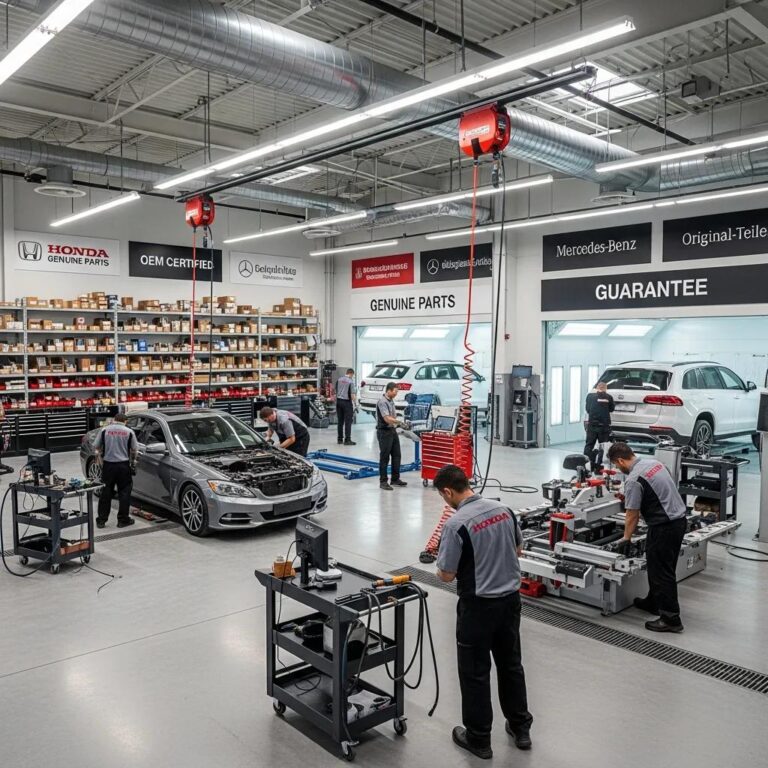
OEM‑level repairs make sure parts fit and perform the way the manufacturer intended—maintaining sensor placement, catalytic converter efficiency, and exhaust backpressure, all of which affect emissions. Certified technicians follow manufacturer torque specs, calibration steps, and any required software relearns so repaired systems won’t trigger OBD‑II faults or readiness failures. Using OEM parts and documented procedures also creates repair records that support insurance claims and BAR referee reviews if a smog result is disputed. Investing in OEM restoration lowers the chance of repeat repairs and increases the odds your vehicle will pass reliably.
What Should You Do If Your Car Fails a Smog Check in California?
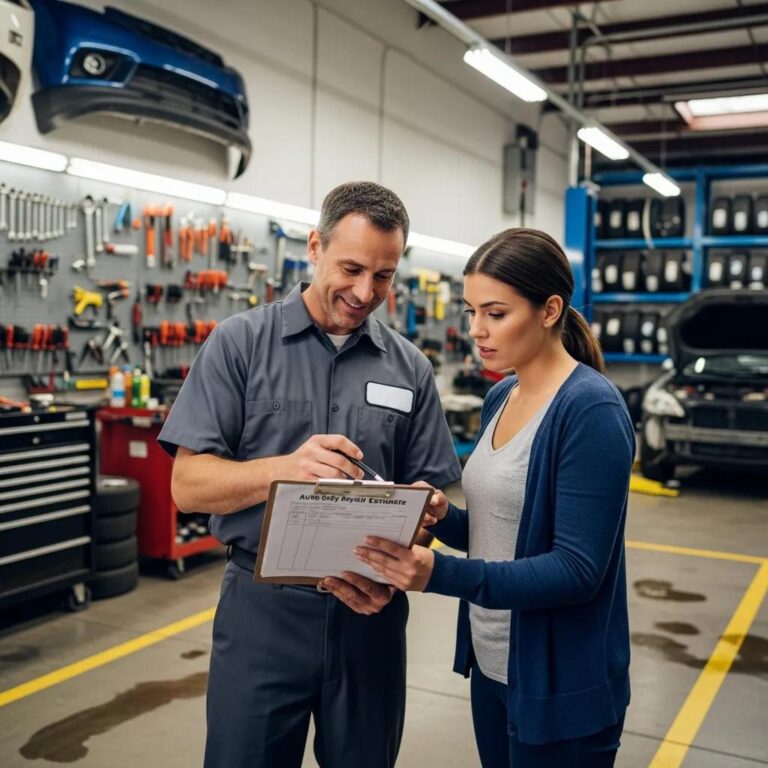
If your vehicle fails a smog inspection, start by reviewing the smog report to see the failing items, stored OBD‑II codes, and whether the problem is mechanical or an incomplete readiness monitor. Then prioritize diagnostics that match the failure: scan for codes, inspect the catalytic converter and exhaust for damage, check sensors and wiring, and run EVAP leak tests where needed. Get a written repair estimate and confirm whether insurance will cover collision‑related work; if it’s not covered, plan for out‑of‑pocket repairs or certified reconditioning. Acting quickly and with a targeted plan shortens retest time and helps avoid a registration hold.
Below is a quick comparison of common failure causes, typical repair actions, and estimated timeframes to help you plan:
| Failure Cause | Diagnostic/Repair Action | Typical Time-to-Repair |
|---|---|---|
| Catalytic converter failure | Visual inspection, emissions test, replace with OEM‑equivalent | 4–8 hours |
| Oxygen sensor fault | OBD‑II scan, replace sensor, drive‑cycle verification | 2–4 hours |
| EVAP system leak | Smoke test, replace hoses or purge valve, complete readiness cycle | 2–6 hours |
| Incomplete readiness monitors | Reproduce drive cycle, clear codes, retest | 1–3 days (depending on required driving) |
Use this table when talking with shops and your insurer so everyone agrees on likely downtime and repair complexity.
What Are Common Reasons for Smog Check Failure?
Common causes include worn or failing parts (like catalytic converters or oxygen sensors), electrical problems such as damaged wiring or intermittent sensor signals, EVAP leaks that allow fuel vapors to escape, and incomplete OBD‑II readiness monitors because the vehicle hasn’t completed the required drive cycle. Less often, ECU failures or exhaust leaks change sensor readings and trigger failures. Identifying whether the issue is a replaceable part, a wiring repair, or an incomplete readiness status determines the repair path, cost, and time. Knowing these failure modes helps you have a focused conversation with your technician and get back on the road faster.
How Can Prime Time Collision Center Help With Smog Check Repairs?
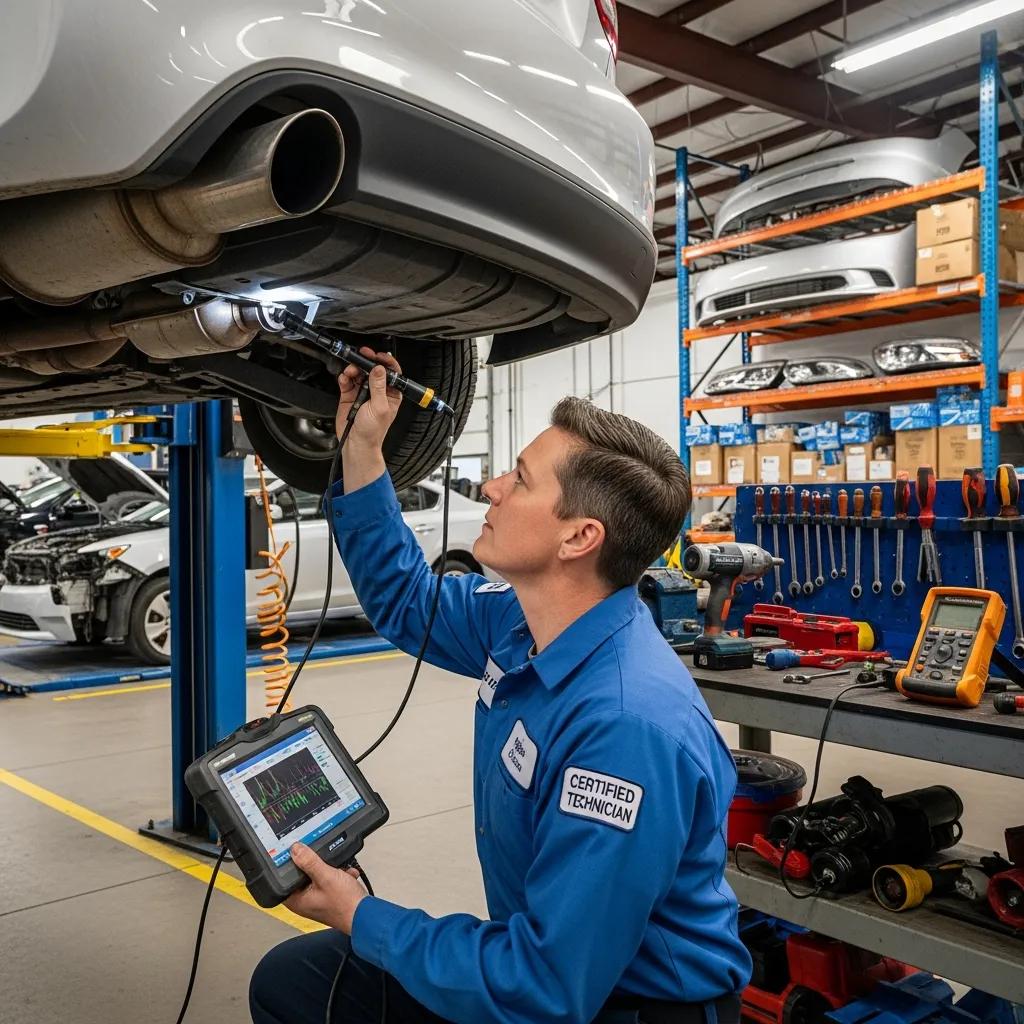
Prime Time Collision Center doesn’t perform smog tests, but we specialize in restoring emissions systems after collisions so your vehicle is ready for inspection. We begin with a free estimate and diagnostic scan to find collision‑related emissions faults, then work with your insurer and arrange towing if needed. Our I‑CAR Platinum‑certified technicians use OEM parts, follow manufacturer repair sequences and recalibration steps, and back repairs with a lifetime warranty—giving you the documentation required for a smog retest. For owners who need emissions‑system restoration after an accident, our diagnostics, insurer coordination, and certified repairs reduce the chance of a repeat failure and help return your vehicle to compliant operation.
How to Choose the Right Repair Partner for Smog‑Related Vehicle Issues?
Pick a repair partner by checking certifications, OEM program participation, warranty coverage, insurance coordination, and local logistics like towing and free estimates. The best shops show trained technicians, documented processes, and can produce repair records needed for BAR or insurance. Turnaround time and proximity matter because completing drive cycles and scheduling retests often needs coordination. Compare shops using clear criteria to find one that accurately restores emissions systems and protects your registration eligibility.
When comparing providers, use this quick checklist to guide your decision:
- I‑CAR or OEM program participation — proof of technician training and correct procedures.
- Clear warranty terms that cover emissions repairs and provide documentation.
- Insurance coordination and towing services to simplify claim handling and vehicle recovery.
- Local service area and realistic repair/retest timelines to reduce downtime.
What Certifications and Qualifications Ensure Quality Repairs?
Certifications like I‑CAR Platinum show advanced technician training and adherence to industry repair standards. OEM program participation indicates access to manufacturer procedures and parts. Technicians with these qualifications perform correct structural alignment, sensor calibration, and software relearns that preserve emissions performance. Documented training and OEM program work also create a defensible repair record for insurance or BAR referee questions. When evaluating a shop, ask about certifications, OEM training, and how they handle emissions‑system calibration and testing as part of collision repairs.
Why Trust Prime Time Collision Center for Emissions System Restoration?
Prime Time Collision Center serves Glendale and nearby communities with OEM‑quality collision repairs that include emissions‑system restoration. We offer free estimates, 24/7 towing support, and hands‑on insurance claim help to make the repair process easier. Our I‑CAR Platinum‑certified technicians follow manufacturer repair procedures, use OEM parts for emissions‑critical components, and back their work with a lifetime warranty—giving you long‑term protection and the documentation authorities may request. If you need a local partner that coordinates with insurers and focuses on emissions compliance after a collision, Prime Time Collision Center provides certified technicians, warranty coverage, and customer‑first service. To schedule an estimate or discuss repairs, call (818) 396-4997 or visit us at 6010 San Fernando Rd, Glendale, CA 91202.
- Verify certifications: Confirm I‑CAR Platinum or OEM program participation before authorizing emissions repairs.
- Request written warranty: Make sure emissions repairs are covered and that you receive documentation for future inspections.
- Confirm insurance coordination: Ask how the shop communicates with adjusters, manages towing, and handles estimate approvals.
Following these steps helps you pick a repair partner who will restore emissions integrity and provide the records needed for a successful smog retest.
Frequently Asked Questions
What should I do if my vehicle is exempt from smog checks?
If your vehicle is exempt, keep proof of that status—registration documents for electric vehicles or historic vehicle paperwork, for example. You may need to show that documentation when registering or transferring ownership to avoid unnecessary inspections. Always confirm exemption rules with the California DMV or BAR and keep any supporting paperwork handy to prevent delays.
How can I prepare my vehicle for a smog check?
To prepare, make sure routine maintenance is current—oil changes, air filter, and spark plugs as recommended. Clear any dashboard warning lights, especially the check engine light, and consider a pre‑inspection from a qualified technician to identify issues before the official test. Addressing small problems ahead of time improves your chances of passing.
What are the consequences of failing a smog check?
Failing a smog check can prevent you from renewing your registration until repairs are completed. You’ll likely face repair costs and may need to schedule a retest. In some cases, repair assistance programs are available for eligible owners. Acting quickly to diagnose and repair the issues helps avoid fines or penalties for driving an unregistered vehicle.
Are there financial assistance programs for smog check repairs?
Yes—California offers programs to help with repair costs in some cases. For example, the Consumer Assistance Program (CAP) can provide financial aid for qualifying low‑income owners to repair or replace vehicles that fail smog checks. Eligibility rules vary, so check CARB’s website or your local DMV office for details and application steps.
How often should I have my vehicle’s emissions system checked?
Even though smog checks are generally every two years, it’s smart to have your emissions system inspected sooner if you notice performance issues or warning lights. Regular maintenance and diagnostics catch problems early. If your car was recently in an accident, have the emissions system checked right away to prevent future smog failures.
What role do aftermarket parts play in smog compliance?
Aftermarket parts can affect smog compliance. Some are designed to meet emissions standards, but others are not compliant with California regulations. For emissions‑critical parts—catalytic converters, oxygen sensors, EVAP components—use certified, OEM‑equivalent parts to avoid failed smog tests and potential legal issues. Always verify part compatibility with California emissions rules before installing replacements.
Conclusion
Knowing the 2025 smog check changes helps you navigate inspections, stay compliant, and avoid registration problems. Learn your vehicle’s testing interval, keep exemption documents handy if they apply, and understand how collision repairs can affect emissions readiness. Working with certified repair shops like Prime Time Collision Center can improve your chances of passing and protect your vehicle’s performance. For help with emissions‑system restoration or to schedule an estimate, contact us today.