
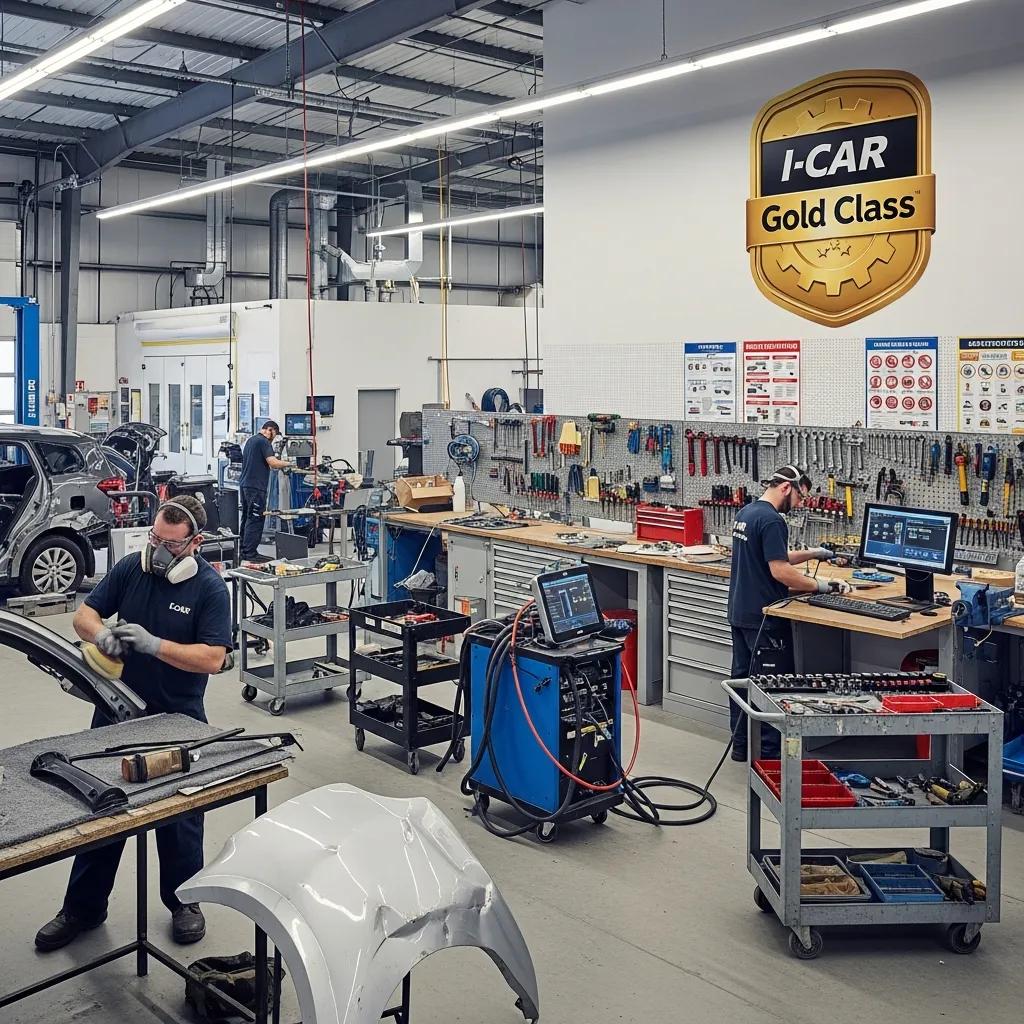
Why I‑CAR Gold Class Certification Matters for Your Repair — Protecting Safety, Performance, and Value
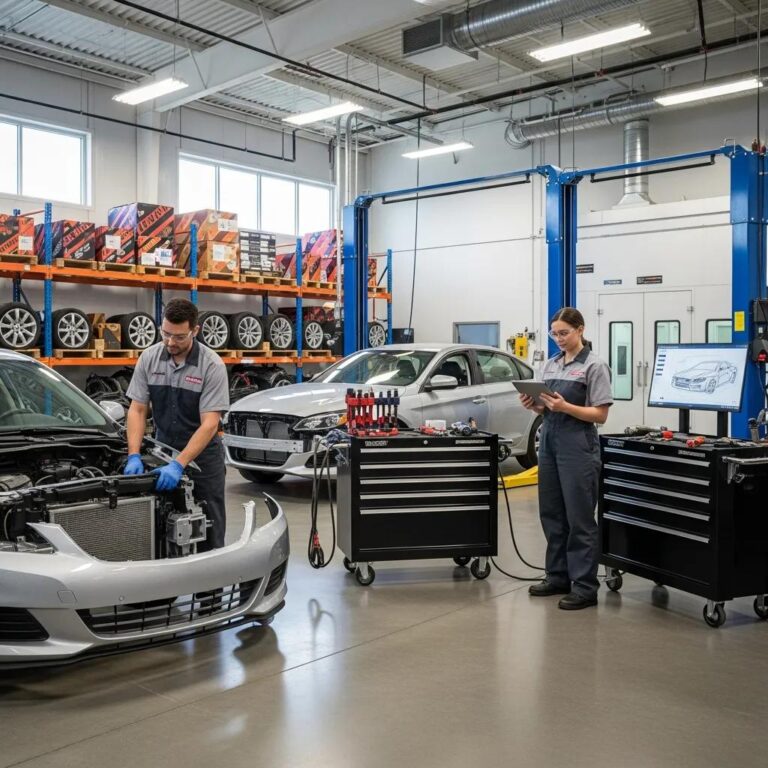
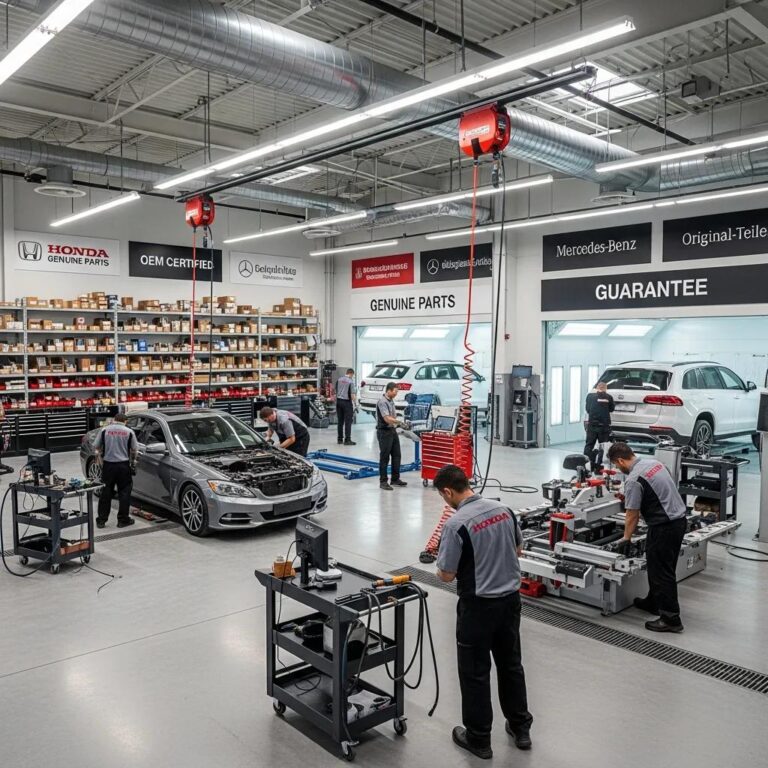
I‑CAR Gold Class is an industry-recognized benchmark that shows a repair shop invests in role‑based technician training and follows OEM‑recommended repair practices. Below we explain what Gold Class means in plain terms, how technician training improves structural and electronic repairs, and why that matters for your safety and your vehicle’s performance. Many owners don’t realize post‑collision results depend as much on trained people and documented procedures as on parts and materials. Knowing what certification represents helps you choose a shop that follows manufacturer guidance. We’ll outline the certification requirements, how certified practices protect crashworthiness and ADAS, and the insurance and resale benefits that follow. Finally, you’ll see what to look for locally and why Prime Time Collision Center is a nearby example of a shop that prioritizes advanced training and documented repair workflows. Read on to learn how Gold Class certification safeguards your car, your safety, and your investment.
What Is I‑CAR Gold Class Certification and Why Does It Matter?
I‑CAR Gold Class is a shop‑level recognition showing a set percentage of technicians have completed required, role‑specific training and keep that training current as repair standards evolve. I‑CAR maps training modules to roles — estimators, refinish techs, structural techs, and electronics specialists — so the whole team can follow OEM repair instructions. For vehicle owners, Gold Class signals a shop’s commitment to ongoing education, consistent procedures, and clearer communication about what a repair requires. It explains why some jobs need special tools, approved processes, or OEM parts instead of quick fixes that can compromise safety. The next section describes what Gold Class looks like day‑to‑day and how it translates into tangible repair outcomes.
What Does I‑CAR Gold Class Certification Represent in Auto Body Repair?
Gold Class is a practical assurance that key staff finished role‑based training and that the shop maps repair tasks to manufacturer instructions. Certified shops keep training records, follow OEM procedures for structural and electronic work, and use processes that reduce guesswork on complex repairs. The certification also tells insurers and owners that repairs will be documented — useful when questions arise about parts, methods, or safety. Checking a shop’s training evidence gives you a straightforward way to compare repair standards before you approve work.
Quick comparison: how common certifications differ in practice.
| Certification Type | Core Requirement | Practical Consumer Impact |
|---|---|---|
| I‑CAR Gold Class | Role‑based training for the majority of technicians | Closer adherence to current repair methods |
| I‑CAR Platinum (shop level) | Broader shop policies, documentation, and higher commitments | Shows added organizational investment in consistent processes |
| ASE Certification | Individual mechanic exam‑based credentials | Proof of technical competence in specific systems |
| OEM‑endorsed training | Manufacturer‑specific repair instruction | Direct alignment with factory repair specifications |
This table helps you see where Gold Class fits among other credentials and why it matters when choosing a collision repair shop.
How Does I‑CAR Training Enhance Technician Expertise and Repair Quality?
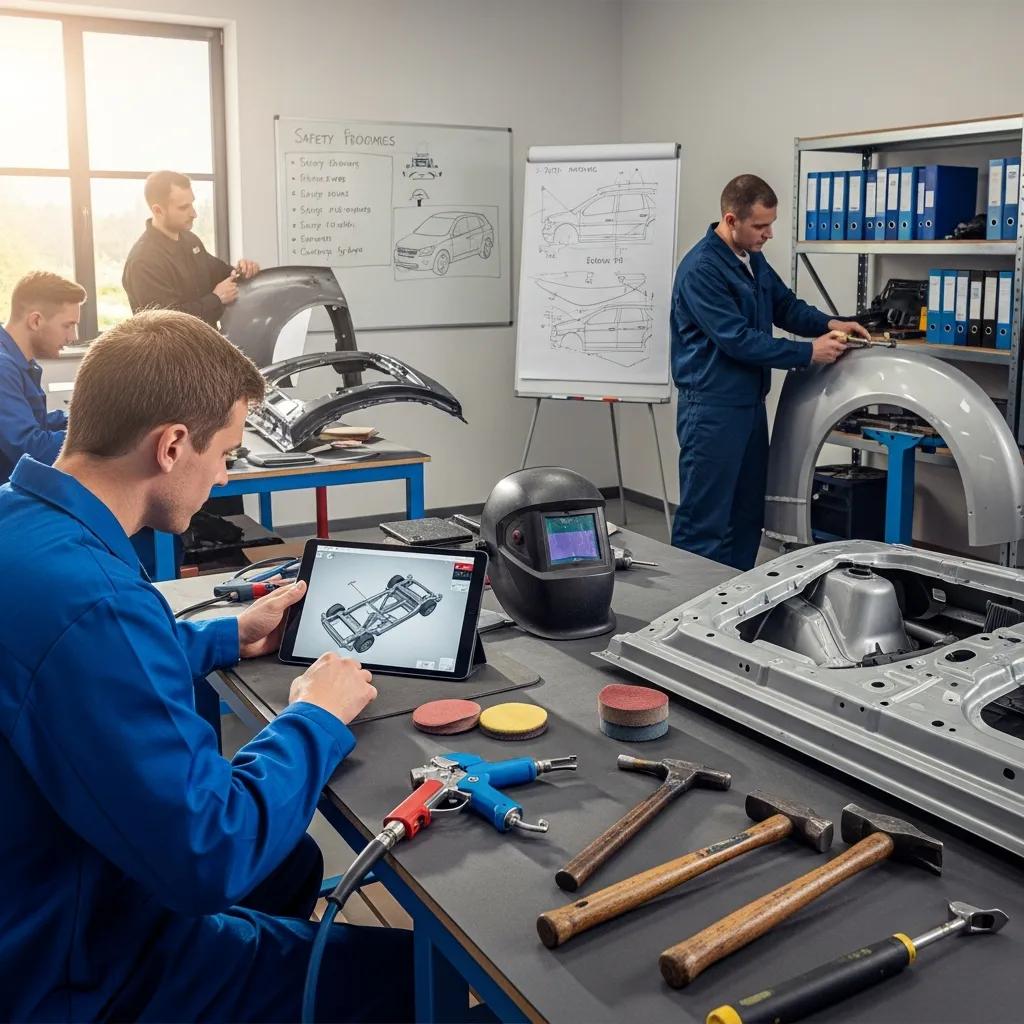
I‑CAR training gives technicians focused, role‑specific instruction in areas like structural measurement, welding, materials handling, and electronics diagnostics. Techs learn manufacturer sequences, measurement tolerances, and approved repair methods that reduce variability and rework. That targeted education leads to more consistent repairs, fewer hidden failures, and better restoration of crashworthiness after serious damage. Because training is updated regularly, certified techs stay current with high‑strength steels, aluminum repairs, adhesives, and sensor‑rich systems. Keeping technicians trained on those topics cuts down on improper repairs and supports safer outcomes after a collision.
How Does I‑CAR Gold Class Certification Ensure Vehicle Safety and OEM Repair Standards?
Gold Class creates a training‑to‑procedure pipeline that emphasizes following OEM repair instructions and documenting verifiable repair steps, reducing deviations that can compromise occupant protection. The framework requires shops to record training and apply manufacturer repair instructions for structural components, fasteners, and restraint systems — all areas that affect crashworthiness. By insisting on role‑based competence, Gold Class shops are more likely to use correct measurement protocols, welding specs, and replacement criteria that restore factory performance. Those documented processes produce traceable records useful for safety checks, insurance reviews, and resale paperwork. Below we break down how certified practices map to structural results and why strict OEM adherence matters.
In What Ways Does Certification Support Structural Integrity and Crashworthiness?
Certification aligns technician work with OEM instructions for load‑bearing parts, crumple zones, and safety attachments. Certified shops follow measurement and alignment procedures, use specified fasteners and welding methods, and replace or repair parts within manufacturer limits to restore the vehicle’s designed energy‑absorption paths. These practices lower the risk of weakened joints, improper welds, or misaligned frames that can change crash behavior and reduce occupant protection. Verification steps — post‑repair measurements, documented QA checks, and restraint system tests — confirm the vehicle meets safety expectations before it returns to the road. Following these steps limits long‑term risk and helps preserve the vehicle’s engineered crash performance.
How specific certified practices affect safety.
| Practice | Attribute | Impact on Safety |
|---|---|---|
| OEM torque and welding specs | Exact fastener and weld standards | Maintains structural strength and designed energy paths |
| Measurement and alignment | Frame and suspension tolerances | Preserves handling and crash geometry |
| Component replacement criteria | Replace vs. repair rules | Prevents weakened parts that can fail in a crash |
This mapping shows how specific certified practices produce measurable protection for occupants, underscoring why OEM procedures matter.
Why Is Adherence to OEM Certified Repair Procedures Critical for Safety?
OEM procedures exist because manufacturers design specific sequences, materials, and tolerances to restore engineered crash performance and system compatibility. Skipping those instructions — using the wrong fasteners, incorrect welding methods, or substitute repair sequences — can change load paths and restraint timing, increasing injury risk in later collisions. Certification adds accountability by requiring documented training and procedural proof, which reduces ad‑hoc shortcuts that favor speed or cost over safety. For vehicle owners, insisting on OEM‑aligned repairs gives you the best chance of returning a car to factory‑level protection and helps avoid liability or insurance disputes linked to nonconforming repairs. One modern example of why this matters is ADAS calibration — explained next.
Why Is ADAS Calibration Important in I‑CAR Gold Class Certified Repairs?

ADAS calibration matters because cameras, radar, lidar, and ultrasonic sensors control active safety features like automatic emergency braking, lane‑keep assist, and adaptive cruise. After a collision, sensor mounts, angles, or software can shift enough to give wrong readings — precise recalibration is often needed to restore reliable behavior. I‑CAR training teaches techs how to diagnose sensor issues, follow OEM calibration steps, and use the right tools to verify system performance before returning the vehicle. Proper ADAS calibration reduces false activations and missed interventions, protecting occupants and reducing liability exposure.
Below we outline the ADAS workflow under certification and the risks when calibration is skipped or done wrong.
Common ADAS components and the consequences of not calibrating.
| Component | Calibration Required? | Consequence if Not Calibrated |
|---|---|---|
| Forward‑facing camera | Yes | Misaligned lane detection and braking errors |
| Radar sensor | Often | Incorrect distance/speed readings for collision avoidance |
| Ultrasonic sensors | Sometimes | Poor parking and low‑speed assist performance |
This table highlights which ADAS parts commonly need calibration and the safety impacts of skipping those steps.
How Does I‑CAR Certification Address Advanced Driver Assistance Systems Repairs?
I‑CAR covers ADAS in targeted training that includes system diagnosis, OEM calibration sequences, and verification testing. Technicians learn to decide when a sensor or module needs recalibration versus replacement, how windshield and mount angles affect cameras, and how to document each calibration. Typical workflow: scan and diagnose, repair or replace as needed, perform OEM calibration with approved tools, then verify function with tests. Standardizing this process reduces variability in ADAS outcomes and gives documented assurance that safety‑critical electronics are working correctly. Proper calibration links structural repair to active safety restoration.
What Are the Safety Risks of Improper ADAS Sensor Calibration?
Improper ADAS calibration creates real safety, legal, and insurance risks. Misaligned sensors can cause false positives (unexpected braking) or false negatives (no intervention when needed), eroding driver trust and increasing crash risk. Systems like lane‑keep, adaptive cruise, and automatic emergency braking rely on accurate data; when calibration is off, these systems may act unpredictably at critical moments. Beyond safety, improper calibration can lead to insurance disputes and higher liability if a post‑repair collision is tied to sensor failure. Documenting calibration reduces these risks and restores intended system performance.
Key safety risks include:
- Unexpected braking or steering interventions that surprise drivers.
- Collision‑avoidance systems failing to engage when required.
- Greater legal and insurance exposure if sensors are not calibrated properly.
Because of these risks, ADAS calibration is a vital part of certified collision repair. Next, we explain how certification helps with insurance interactions and gives customers confidence.
How Does I‑CAR Gold Class Certification Benefit Insurance Claims and Customer Peace of Mind?
Gold Class helps insurance claims and customer confidence by producing clear, documented proof that repairs were done by trained technicians following OEM procedures. Certified shops provide training records, repair plans tied to manufacturer instructions, and verification steps (including ADAS calibration) that insurers recognize as objective evidence of repair quality. That documentation reduces disputes over parts or methods and often speeds approvals by giving adjusters transparent, standardized information. For customers, certification signals a lower risk of rework, better warranty support where offered, and a higher chance that post‑repair systems will operate correctly. Below are practical ways certification smooths the claims process and how warranties factor into reliability.
How Does Certification Streamline the Insurance Claims Process?
Certification aligns repair documentation with insurer expectations and creates a traceable record of training and repair steps. When a shop presents OEM repair procedures, role‑based training logs, and post‑repair verification, adjusters can more quickly accept the necessary parts and labor, cutting back‑and‑forth. Certified shops also prepare systematic estimates tied to documented procedures, reducing ambiguity during appraisal and approval. For vehicle owners, this means fewer delays and disputes and a clearer path to settling claims based on verifiable standards rather than subjective judgment. Those efficiencies let repairs move forward faster with fewer administrative holdups.
- Certification provides documented training and procedural evidence that insurers accept as objective.
- Standardized repair records reduce disagreements over parts, labor, and methods.
- Defined verification steps (measurements, ADAS calibration) speed approvals and cut rework.
Together, these points show how certification turns repair work into insurer‑friendly, verifiable processes that protect your timeline and interests.
What Warranty and Reliability Advantages Do Certified Repairs Provide?
Certified repairs combine documented procedures with shop warranties where offered, boosting reliability and customer confidence. Following OEM methods and keeping technicians trained lowers the chance of latent issues — structural weak points, sensor failures, or alignment drift. Many certified shops back their work with workmanship warranties; when that warranty is paired with training records, owners have added reassurance that post‑repair problems will be handled. This mix of documented competence and warranty protection reduces ownership risk and supports resale claims that the vehicle was repaired to recognized standards.
How Does Choosing an I‑CAR Gold Class Certified Shop Protect Your Vehicle Investment?
Choosing a Gold Class shop protects your investment by preserving structural integrity, ensuring electronic systems work properly, and providing documentation that supports resale value and buyer confidence. Certified repairs lower the risk of hidden damage and future mechanical or electronic problems by restoring the vehicle to manufacturer tolerances and verified procedures. While certified repairs can have higher upfront costs, they often save money over time by avoiding repeat work, diminished performance, or lower resale values tied to questionable repairs. If you plan to resell or trade your vehicle, repair documentation from a certified shop can positively affect appraisals and buyer trust. The sections that follow explain how certification helps resale value and long‑term performance.
In What Ways Does Certification Preserve Vehicle Resale Value?
Certification preserves resale value by creating a clear repair history showing OEM‑aligned work by trained technicians. When post‑collision repairs are supported by training logs, OEM procedures, and verification steps like ADAS calibration, buyers and appraisers view the vehicle as safer and more reliable. Certified documentation reduces suspicion of shortcut or cosmetic‑only fixes that can depress prices. Clear records of what was repaired, why, and how it was verified help sellers get fairer valuations and ease buyer concerns about hidden defects. Keeping this documentation is a simple step owners can take to protect long‑term value.
Why Is Trusting Certified Technicians Important for Long‑Term Vehicle Performance?
Trusting certified technicians matters because their training covers correct part selection, material handling, and repair sequencing that reduce rework and latent failures. Trained techs know when to replace versus repair components, how modern adhesives and metals behave, and how electronics interact after structural work. That expertise prevents improper repairs that can lead to corrosion, alignment issues, or sensor faults months later. Certified QA processes and post‑repair verification help ensure vehicles return to the road as intended, protecting long‑term performance and lowering lifetime repair costs.
How certified repairs protect long‑term performance:
- Correct parts and procedures reduce hidden mechanical issues.
- Proper ADAS recalibration prevents recurring electronic faults.
- Documented QA lowers the chance of future warranty disputes.
These protections show why investing in certified repairs is an investment in long‑lasting reliability and reduced ownership risk.
What Makes Prime Time Collision Center the Trusted Choice for I‑CAR Gold Class Certified Repairs in Glendale and Surrounding Areas?
Prime Time Collision Center is a local collision repair shop serving Glendale and nearby communities including Burbank, Pasadena, and Los Angeles. We emphasize certified training and customer‑first claims support. Our team includes I‑CAR Platinum‑level technicians and we bring more than 15 years’ experience working with major insurers — a practical example of the training and documentation practices discussed above. We work with all major insurance companies, offer complimentary 24/7 towing, and stand behind repairs with warranties. If you want OEM‑aligned repairs, transparent claims help, and documented verification steps, a certified local shop like Prime Time Collision Center combines technical capability with helpful customer services to guide you through the post‑collision process.
How Do Our I‑CAR Platinum Certified Technicians Exceed Gold Class Standards?
Platinum recognition builds on Gold Class by adding broader shop‑level commitments: documented policies, training tracking, and QA systems that make sure skills are used consistently across every repair. While Gold Class focuses on role‑based technician training, Platinum shows the shop has added organizational practices to support repeatable, high‑quality outcomes. For customers, a Platinum team means extra assurance that the shop maintains systems — training logs, QA checks, and documented workflows — that reinforce technician expertise and reduce variation between jobs. Displaying certification badges and team credentials helps customers confirm those training commitments.
What Local Services and Customer Testimonials Highlight Our Commitment to Quality?
Prime Time Collision Center pairs certified repair expertise with local services designed to ease the repair experience: insurance claim support, free 24/7 towing, and repair warranties that back our workmanship. Those services address the logistical and financial stressors owners face after an accident, from getting the car to the shop to negotiating with insurers. We also collect verified testimonials and display review schema to reinforce our local reputation — real feedback that helps future customers judge reliability and service. If you want certified repairs plus practical support through the claims process, Prime Time Collision Center is a local option that blends training credentials with customer‑focused services.
- Insurance support: We work with all major insurers to simplify claims.
- Towing convenience: Complimentary 24/7 towing removes a major logistical headache after an accident.
- Warranty protection: We back our repairs with warranties to give you added confidence.
Combined with certified training, these services help vehicle owners get back on the road with fewer surprises and more peace of mind.
Frequently Asked Questions
What are the key differences between I‑CAR Gold Class and Platinum certifications?
Gold Class shows that a significant percentage of a shop’s technicians have completed required role‑based training. Platinum goes further: it requires the same technician training plus stronger shop‑level processes, training tracking, and QA systems. In short, Platinum signals an extra organizational commitment to consistent, documented repairs across every job.
How can I verify if a repair shop is I‑CAR Gold Class certified?
You can check the official I‑CAR website directory to confirm a shop’s Gold Class status. Many certified shops also display their certification in‑shop and online. If you’re unsure, ask the shop to show proof of their certification and training records — a reputable shop will be transparent about it.
What should I expect during the repair process at a certified shop?
At a certified shop you should expect a structured repair plan based on OEM guidelines: a clear damage assessment, a repair plan tied to manufacturer specs, documentation of each repair step, and any necessary ADAS calibrations. The shop should keep you updated and provide final documentation showing the work completed and verification steps taken.
Are certified repairs more expensive than non‑certified options?
Certified repairs can cost more up front because they follow OEM procedures and use trained technicians, but they often save money over time by reducing rework and latent problems. Certification also helps avoid insurance disputes and can support resale value, making it a smart long‑term investment.
How does I‑CAR certification impact insurance claims?
I‑CAR certification helps claims by providing objective, documented evidence of training, procedures, and post‑repair verification. That information makes it easier for adjusters to accept repairs and can reduce back‑and‑forth during approvals, leading to faster, smoother claim resolution.
What role does customer feedback play in choosing a certified repair shop?
Customer feedback offers real insight into a shop’s reliability, communication, and workmanship. Verified reviews and testimonials help you see how a shop handles claims, timelines, and follow‑up. Combining certification status with strong customer reviews gives you a fuller picture when choosing where to repair your vehicle.
Conclusion
Choosing an I‑CAR Gold Class certified shop means trained technicians, OEM‑aligned procedures, and documented verification steps — all of which improve safety, performance, and long‑term value. Certification protects your investment and gives you confidence that your vehicle was repaired to recognized standards. If you’d like certified repairs handled locally and backed by helpful claims support, contact Prime Time Collision Center today to see how we can help.