Bumper Repair & Replacement in Glendale, CA — A Clear, Practical Guide to OEM-Quality Auto Body Work
A damaged bumper isn’t just cosmetic — it can affect energy absorption, sensor alignment, and important safety systems. This guide walks you through how bumper repair and replacement work, when to repair versus replace, and which factors — like ADAS calibration and OEM parts — affect cost and safety. You’ll learn inspection cues, common repair methods such as paintless dent repair and plastic welding, and how insurance and modern safety systems change repair scope. We also outline typical price ranges, explain certifications like I-CAR Platinum, and offer practical next steps for working with an auto body shop. For drivers in Glendale and nearby communities, Prime Time Collision Center is a local option that focuses on OEM-quality repairs, clear communication with insurers, free estimates, 24/7 towing, and I-CAR Platinum certified technicians.
What Types of Bumper Damage Can Be Repaired or Require Replacement?
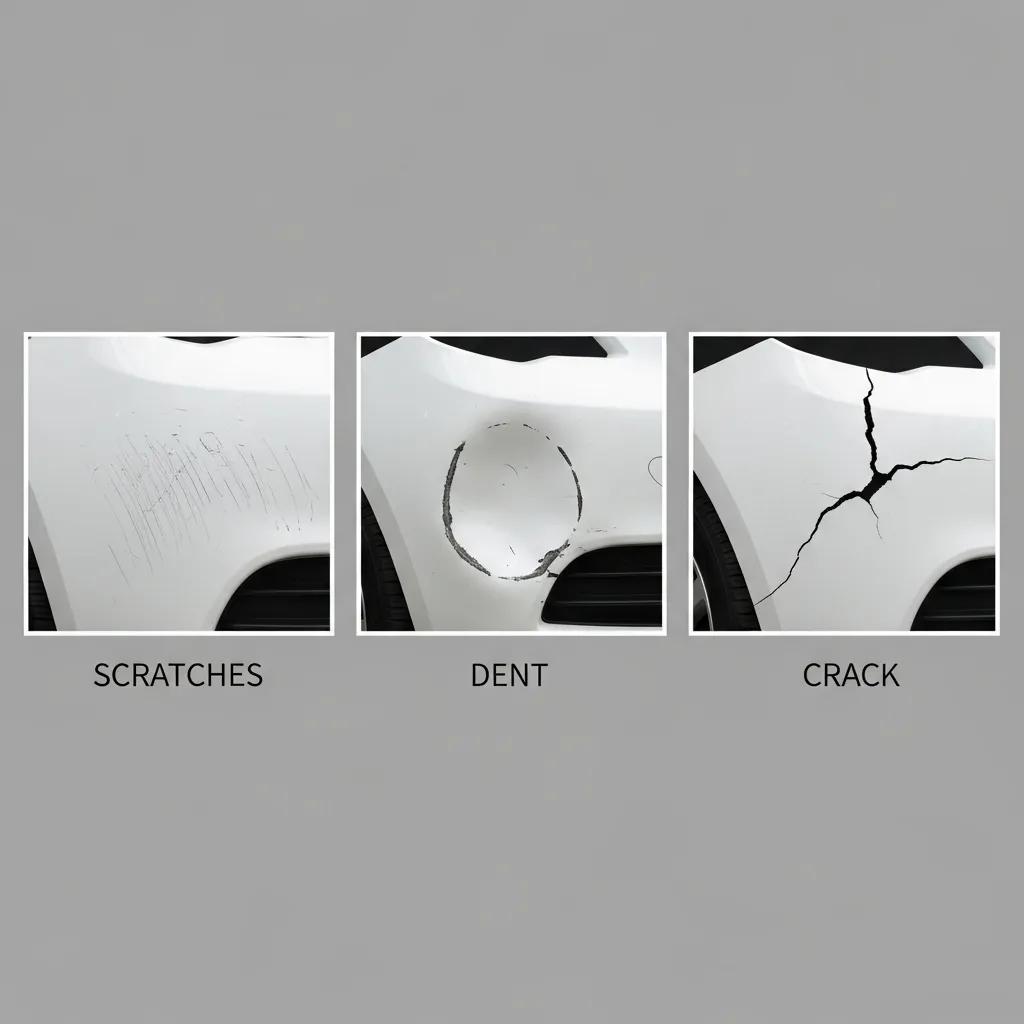
Bumper damage ranges from light surface scratches to structural failures that affect crash performance and sensor mounts. Knowing whether a dent, scratch, crack, or puncture is repairable helps you balance safety and cost. Small surface problems usually need paint work and blending; cracks or broken mounts may call for plastic welding or full replacement to restore strength. This section outlines common damage types, how to spot repairability, and why damaged sensors or camera mounts can increase repair scope and price.
Common bumper damage types and what they mean right away:
- Minor scratches and scuffs: Cosmetic work and paint blending restore appearance and protect the underlying material.
- Dents and compressions: Paintless dent repair (PDR) or targeted reshaping can save the original bumper cover when structure is intact.
- Cracks and splits: Some cracks can be fixed with plastic welding and reinforcement; widespread splits or broken mounts usually require replacement.
- Punctures and structural damage: If energy absorbers, reinforcement bars, or mounting points are harmed, safety is affected and replacement is often required.
These categories guide a technician’s assessment. The next section explains the repair techniques commonly used for dents, scratches, and cracks.
How Are Dents, Scratches, and Cracks Professionally Fixed?
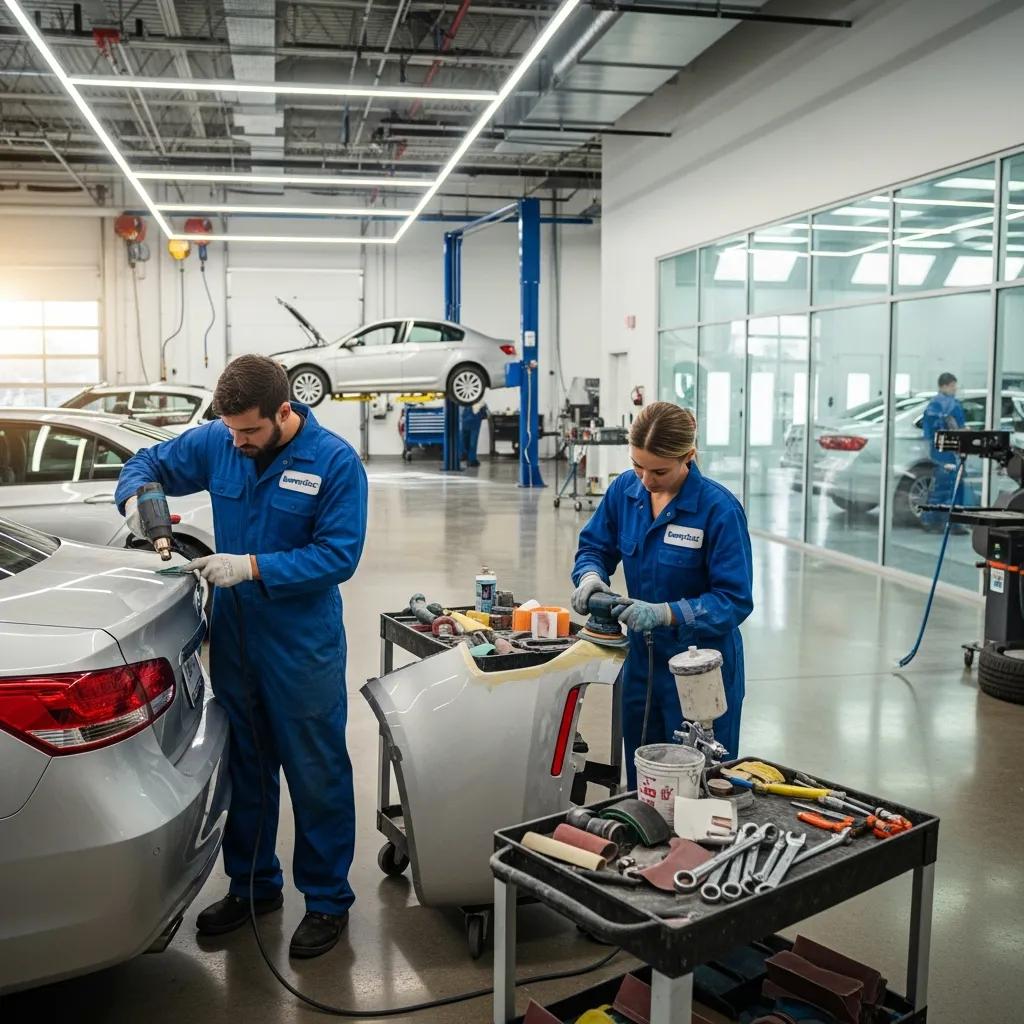
Technicians use focused methods to restore structure and finish. Paintless dent repair (PDR) works when the paint is intact and the bumper material is flexible — the tech massages the panel from behind to return its shape without fillers. For plastic cracks, plastic welding or structural adhesives re-bond polymer edges, followed by reshaping and filler where needed to match the contour. Final steps include primer, accurate color matching, and multi-stage clearcoats to blend the repair into surrounding panels and protect the surface.
Repair choice depends on material and damage extent; the visual result relies on precise color formulation and blending. That leads into when a full bumper replacement is the safer, more durable option.
When Is Full Bumper Replacement Necessary?
Replacement is needed when structural pieces, mounting points, or integrated sensors and cameras are damaged beyond reliable repair. If the reinforcement bar, impact absorber, or sensor mounts are distorted, the vehicle’s designed crash energy path can be compromised and occupant protection reduced. Extensive fragmentation, multiple fracture lines, or damage that prevents accurate ADAS sensor alignment are also strong reasons to replace the bumper.
Use this practical checklist when deciding on replacement: structural damage, compromised mounting integrity, ruined sensor or camera housings, or repair estimates that approach replacement cost. Understanding these factors helps set clearer expectations about cost and safety for Glendale repairs.
How Much Does Car Bumper Replacement Cost in Glendale CA?
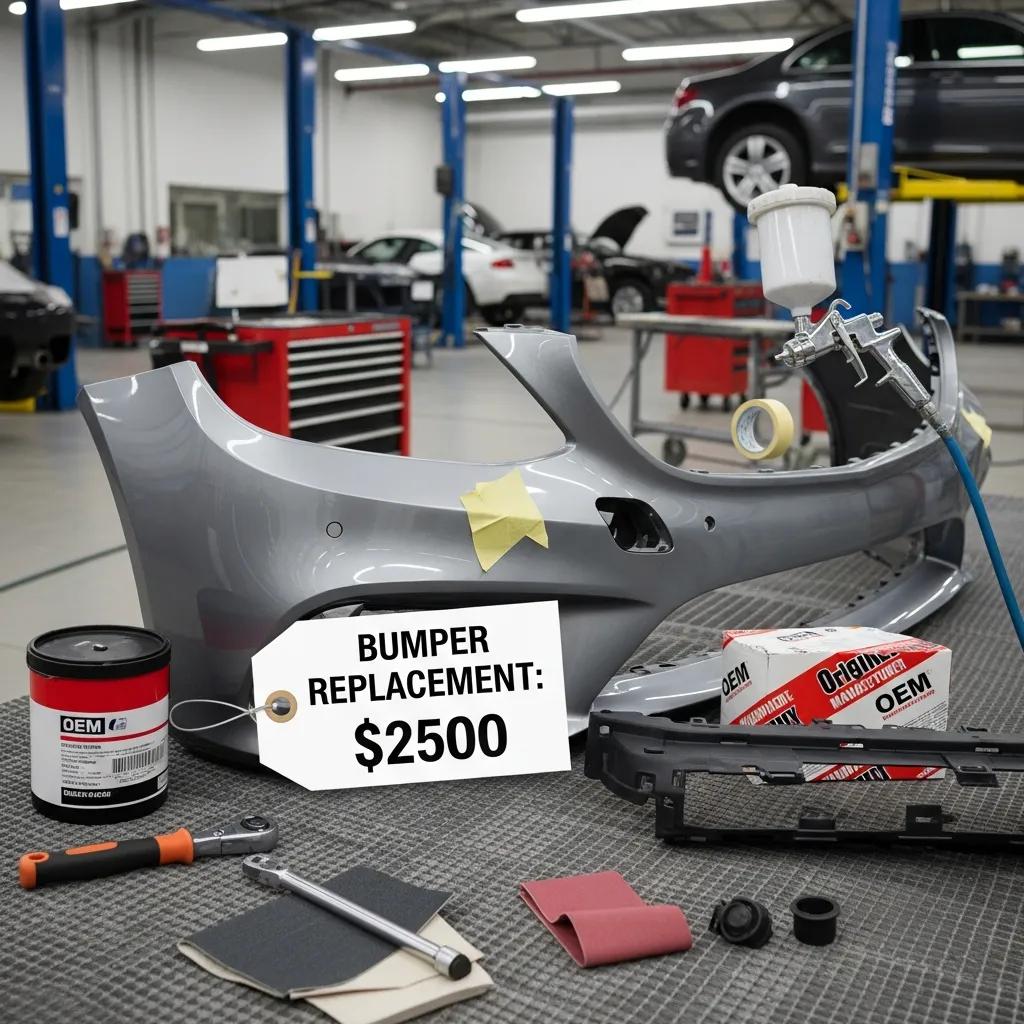
Costs vary based on vehicle make, where parts come from, paint complexity, and ADAS calibration. Minor paint and dent repairs sit at the low end, while OEM replacements for luxury cars with sensors and complex finishes are at the high end. Main cost drivers include parts (OEM vs aftermarket), labor for disassembly and paint blending, ADAS recalibration, and integrated features like parking sensors and cameras.
Key cost factors to consider:
- Parts: OEM parts cost more but offer factory fit, finish, and potential warranty benefits.
- Labor: Removing and reinstalling bumpers, testing sensors, and blending paint require skilled time.
- ADAS calibration: Cameras and radar often need recalibration after repair or replacement, adding specialized labor.
- Paint complexity: Multi-stage metallic and premium finishes take extra time and materials.
To make comparisons easier, the table below shows typical ranges by vehicle class and repair type.
| Vehicle Type | Part Type | Typical Cost Range |
|---|---|---|
| Economy sedan | Minor repair (paint + PDR) | $200 – $700 |
| Mid-size vehicle | Partial repair or aftermarket cover | $700 – $1,500 |
| Luxury vehicle | OEM replacement + paint & calibration | $1,500 – $4,000+ |
This table shows how vehicle class and part choices affect pricing. The next section explains how specific factors influence estimates and insurance outcomes.
What Factors Influence Bumper Repair and Replacement Pricing?
Several variables shape the final price, from part selection to technical needs. Choosing OEM versus aftermarket parts affects upfront cost and long-term value — OEM matches factory fit and finish but typically costs more. Labor climbs when disassembly involves brackets, sensors, or trim, and when paint blending spans adjacent panels. ADAS calibration adds diagnostic work and time, especially when cameras or radar are built into the bumper.
Other pricing influences include insurer policies, deductible amounts, and local labor rates, which affect out-of-pocket costs. The table below summarizes the main factors, what they mean, and how they typically move pricing so you can compare scenarios quickly.
| Factor | Attribute | Typical Impact |
|---|---|---|
| Parts | OEM vs aftermarket | OEM increases cost but preserves fit/warranty |
| Labor | Disassembly & reassembly complexity | More hours = higher labor charge |
| Technology | ADAS sensors and cameras | Calibration adds specialized labor/time |
| Paint | Color complexity and blending area | Multi-stage or metallic paints increase cost |
Knowing these drivers helps you judge whether repair or replacement makes the most sense. The next section compares typical affordability scenarios.
Is Repairing a Damaged Bumper More Affordable Than Replacement?
Repair is usually less expensive when damage is limited to the surface or small structural areas that can be restored without replacing key components. PDR and localized paint work keep the original bumper and generally cost less than replacement. But if mounting points fail, sensors are damaged, or the repair needs extensive reinforcement, replacement can be more sensible long-term for safety and durability.
Factors that favor repair: intact sensor mounts, limited crack spread, and cosmetic-only damage. Factors that favor replacement: structural compromise, unreliable plastic welds, or repairs that nearly match replacement cost. Also consider resale value and warranty — an OEM replacement can protect long-term value more than a visible or questionable repair.
What Does OEM-Certified Bumper Repair Mean and Why It Matters
OEM-certified bumper repair follows the vehicle manufacturer’s standards for parts and procedures to preserve safety performance and fit. That can mean using OEM parts when required, following factory repair steps, and performing necessary recalibrations so the vehicle works as intended after service. The benefits include preserved crashworthiness, accurate sensor performance, warranty protection in some cases, and stronger resale value compared with shortcuts that use mismatched parts or unverified methods.
Prioritizing certified repairs matters because modern safety systems and sensors depend on correct alignment and factory-compatible mounting. The table below links certification elements to procedures and the customer benefits those bring.
| Certification/Element | Required Procedure | Benefit |
|---|---|---|
| I-CAR Platinum alignment | Technician training & documented processes | Higher repair competency and QA |
| OEM parts usage | Use manufacturer-specified components | Preserves fit, finish, and sensor compatibility |
| ADAS calibration | Manufacturer-recommended calibration steps | Restores safety system accuracy |
These links explain why certification and OEM methods matter. The next section describes how I-CAR Platinum technicians put these standards into practice.
How Do I-CAR Platinum Certified Technicians Ensure Quality Repairs?
I-CAR Platinum reflects structured training and shop-level standards for equipment and processes. Technicians complete courses on modern vehicle construction, safety systems, and repair procedures, which shows up as consistent shop workflows: documented inspections, step-by-step repair plans, and quality checks. This training prepares crews to handle complex repairs involving high-strength steels, composites, and ADAS systems that need precise calibration.
Shops that meet I-CAR standards add quality-control checkpoints and keep diagnostic gear for sensor verification, helping ensure the repaired vehicle meets safety and performance expectations. That’s also why OEM parts are often recommended for bumper repairs.
What Are the Benefits of Using OEM Parts for Bumper Repairs?
OEM parts match factory material, fit, and mounting geometry — important for crash energy management and sensor alignment. Using OEM components reduces the chance of misaligned sensors, poor fit, or premature wear that can come from lower-cost aftermarket parts. OEM parts also help maintain warranty conditions and resale value since replacements match the original components in fit and finish.
The table below compares OEM, aftermarket, and reconditioned options so you can weigh safety and cost.
| Part Type | Characteristic | Practical Benefit |
|---|---|---|
| OEM Part | Factory-specified materials & geometry | Accurate fit and reliable sensor mounting |
| Aftermarket | Variable quality and fit | Lower cost but potential alignment/finish issues |
| Reconditioned | Refurbished original parts | Midpoint option; may lack warranty parity |
Choosing OEM parts can raise upfront cost but reduce long-term risks and help preserve manufacturer-aligned performance. Next, we explain how Prime Time Collision helps with insurance when OEM choices affect claims.
How Does Prime Time Collision Center Handle Insurance Claims for Bumper Damage?
Prime Time Collision Center helps drivers through the claims process while keeping safety and OEM-quality repairs front and center. We work with all major insurance companies, offer free estimates, and provide 24/7 towing — services that cut the administrative load and speed repairs. Our I-CAR Platinum certified technicians follow manufacturer procedures and document repair plans for insurers, which helps justify OEM parts and ADAS calibration when needed. That approach helps protect safety standards while smoothing insurer approvals where possible.
Below is a simple step-by-step checklist you can use right after an incident to protect safety and speed up claims handling.
- Ensure safety and document: Make sure everyone is okay, then take photos of the damage, vehicle position, and surrounding scene for evidence.
- Exchange information and notify insurer: Share required details with other parties and call your insurer to start the claim.
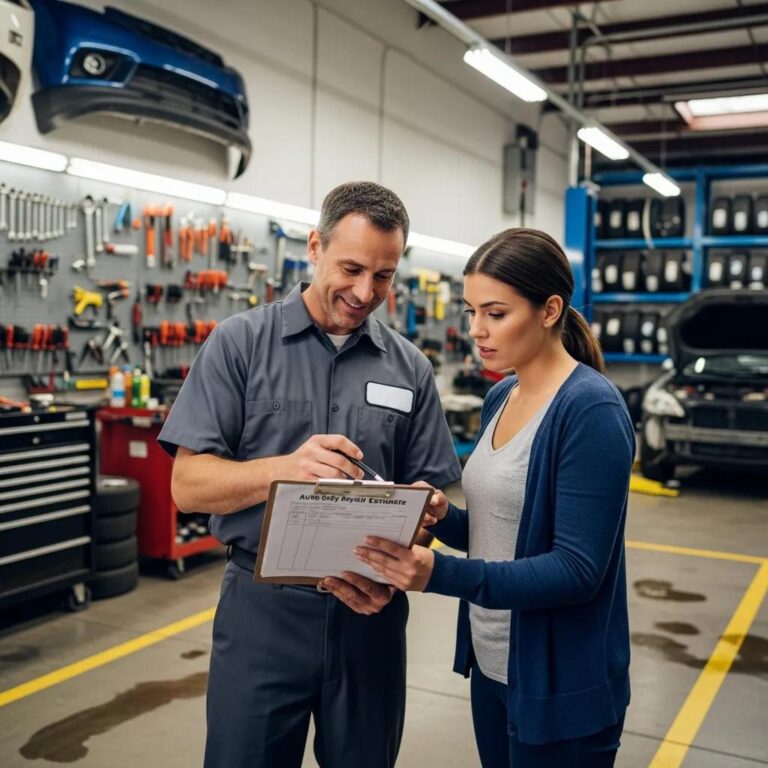
- Request a professional estimate: Get a free estimate from a reputable shop to document the needed repairs and OEM recommendations.
- Arrange safe towing if needed: If the vehicle isn’t drivable, use 24/7 towing to bring it to a trusted repair facility and preserve evidence.
- Coordinate repairs and approvals: Give the shop’s estimate to your insurer and authorize OEM procedures when appropriate.
Following these steps reduces delays and helps ensure repair decisions prioritize safety and OEM standards. The next section explains how Prime Time Collision supports paperwork and insurer interaction.
What Steps Should Vehicle Owners Take After an Accident?
After an accident, prompt, documented action protects safety and the claim. First, check yourself and passengers. Photograph the damage and the scene, noting any visible sensor or structural issues. Call your insurer to open a claim and ask about towing and approved repair centers. Get a detailed estimate that lists parts, labor, and any ADAS calibration so you can share it with your insurer and make informed repair choices.
Keeping clear records and choosing a shop that provides OEM-quality estimates lowers the chance of surprises and helps the insurer reach accurate coverage decisions. The next section describes how Prime Time Collision helps with those administrative steps.
How Does Prime Time Collision Assist with Insurance Paperwork and Claims?
Prime Time Collision Center prepares detailed estimates and documentation that meet insurer requirements, including photos and diagnostic notes to justify OEM parts, ADAS calibration, and labor. We communicate directly with claims adjusters to explain repair scope, push for safety-driven OEM choices when needed, and keep you updated during the repair. That coordination reduces your administrative burden by handling authorizations, timelines, and parts sourcing when insurers ask for extra detail.
The usual result is quicker approval for necessary OEM work and a smoother repair timeline — saving you time and ensuring repairs follow proper safety protocols. With that administrative support in place, the article moves to material-specific repair workflows.
What Specialized Services Does Prime Time Collision Offer for Different Bumper Types?
Bumpers are made from different materials and each needs the right repair approach to restore fit, finish, and safety. Plastic bumpers focus on polymer re-bonding and reshaping, metal bumpers need straightening and corrosion protection, and luxury vehicles often require OEM parts, exact paint matching, and precise sensor calibration. Turnaround time depends on complexity: cosmetic paint repairs are fastest; replacements with ADAS calibration take longer because of diagnostic and alignment steps.
The table below compares common bumper types, repair methods, and timing considerations to help you plan.
| Bumper Type | Repair Method | Typical Considerations |
|---|---|---|
| Plastic bumper | Plastic welding, filler, paint blend | Material ID & internal reinforcement may be needed |
| Metal bumper | Straightening, rust prevention, repaint | Restore structural integrity & prevent corrosion |
| Luxury/OEM bumper | OEM parts, exact paint match, ADAS calibration | Higher cost, precise color and sensor work |
Knowing these differences helps you pick the right service. The next sections walk through plastic repair steps and luxury-specific considerations.
How Is Plastic Bumper Repair Performed?
Plastic bumper repair starts with identifying the material and mapping the damage to decide between welding, adhesive bonding, or replacement. Technicians clean and prep the area, use plastic welding or high-strength adhesives to fuse cracked sections, and add internal reinforcement when needed to restore structural continuity. After reshaping and sanding, they apply filler as required, prime the surface, and perform exact color matching and paint blending so the repair looks seamless.
Proper plastic repair requires knowledge of polymer behavior and controlled heating techniques. If the material is brittle or mounting points are broken, replacement may be the safer, more cost-effective choice. The next section covers luxury vehicles.
What Are the Considerations for Luxury Car Bumper Repair?
Luxury vehicles require precise color matching, OEM parts, and careful handling of integrated sensors and multi-layer finishes to preserve appearance and function. High-end paints often use multi-stage basecoats and specialized clearcoats that need controlled curing and blending to avoid visible transitions. Parking sensors, radar, and cameras built into bumpers must be calibrated precisely to protect ADAS functionality and maintain warranties.
Technicians working on luxury cars rely on OEM parts, manufacturer processes, and diagnostic tools to verify sensor performance after repair — steps that can increase time and cost but protect safety and resale value. That’s why choosing an experienced, certified shop matters.
Why Choose Prime Time Collision Center for Your Bumper Repair Needs?
Pick a repair provider that combines technical skill, transparent communication, and strong customer support. Prime Time Collision Center serves Glendale, Burbank, Pasadena, and Los Angeles with OEM-quality repairs performed by I-CAR Platinum certified technicians. We offer free estimates, 24/7 towing, and work with all major insurance companies — services that simplify claims and help keep manufacturer-recommended repair methods intact. Our focus on certified training and OEM practices helps make sure repaired vehicles keep their structural integrity and sensor performance.
Core reasons to consider Prime Time Collision:
- I-CAR Platinum certified technicians who follow trained repair procedures and quality checks.
- Free estimates and 24/7 towing to reduce friction right after an incident.
- Insurance coordination and OEM-focused repairs to protect safety, warranty, and resale value.
These strengths combine technical competence with customer-focused service. The following sections summarize customer feedback and how our experience benefits repairs.
What Do Customer Testimonials Say About Our Bumper Repair Quality?
Customers consistently praise communication, attention to detail, and help with insurance as reasons they trust our work. Reviews often mention clear estimates, timely updates, and satisfaction with finish and fit — especially when color matching and sensor function are fully restored. Testimonials noting smooth claims coordination and the use of OEM parts highlight a common preference for safety-first repairs and transparent service.
Those themes show why certified technicians and clear processes make a difference, and why many drivers choose a seasoned repair center.
How Does Our 15+ Years of Experience Benefit Your Vehicle?
More than 15 years in the business brings refined workflows, established insurer relationships, and institutional knowledge that reduce mistakes and rework. A long-standing shop usually has quality-control checkpoints, reliable OEM parts channels, and technicians familiar with many vehicle platforms and ADAS systems. That experience shortens diagnostics, improves estimate accuracy, and raises the chance the repair meets manufacturer and insurer expectations the first time.
Experience also helps plan complex repairs to avoid unnecessary delays and preserve long-term vehicle performance. If you’re ready to move forward, the next paragraph summarizes how we can help.
Prime Time Collision Center is a local, trusted provider with I-CAR Platinum certified technicians, 24/7 towing, free estimates, and coordination with all major insurance companies. We offer appointment booking and free estimate options to make the repair process straightforward while prioritizing OEM-quality, safety-focused repairs.
Frequently Asked Questions
What should I do if my bumper is damaged in an accident?
Put safety first: make sure everyone is okay. Photograph the damage and the scene, then notify your insurer to start a claim. Get a professional estimate from a certified auto body shop that details needed repairs and parts. If your vehicle can’t be driven, arrange towing to a trusted facility. These steps help the claim process and ensure repairs are done safely and correctly.
How can I tell if my bumper needs repair or replacement?
That depends on the damage. Minor scratches and small dents can often be repaired with PDR or localized paint work. Structural issues — ruined mounting points, large cracks, or compromised energy absorbers — usually require replacement to keep the vehicle safe. A professional inspection will give you the best guidance, balancing safety and cost.
What is the difference between OEM and aftermarket parts for bumper repairs?
OEM (Original Equipment Manufacturer) parts are made to the vehicle maker’s specifications for fit and function. Aftermarket parts come from third parties and can vary in quality and fit. While aftermarket parts may cost less, they don’t always match factory fit or warranty protections. Choosing OEM parts is often recommended to keep vehicle integrity and resale value.
How long does a typical bumper repair take?
Time varies by damage and repair type. Minor cosmetic fixes like paint touch-ups or small dents can take a few hours. More involved repairs that include structural work, parts replacement, or ADAS calibration can take several days. Ask your repair shop for a timeline tailored to your situation.
Will my insurance cover bumper repairs?
Coverage depends on your policy and the circumstances. If you have collision coverage and the damage resulted from an accident, your insurer may pay for repairs minus your deductible. Review your policy and talk with your agent to confirm coverage. Working with a shop that coordinates with insurers can simplify the process.
What are the benefits of choosing a certified repair shop?
A certified shop — for example, one with I-CAR Platinum — ensures technicians have up-to-date training and follow industry repair standards. Certified shops are more likely to use OEM parts, follow manufacturer procedures, and perform required recalibrations, which is critical for preserving vehicle safety and performance. Certification gives you confidence the repair will be done right.
How can I maintain my bumper after repair?
After repair, avoid harsh chemicals and abrasive cleaners. Wash the area regularly to prevent dirt buildup and protect the paint. Let fresh paint fully cure before exposing it to extreme conditions. Consider applying a protective wax or sealant for extra durability, and inspect the bumper periodically for signs of wear or new damage.
Conclusion
Knowing how bumper repair and replacement work helps you make choices that protect safety and value. Choosing a certified shop like Prime Time Collision Center gives you access to OEM-quality repairs, clear insurer coordination, and experienced technicians who prioritize safety and fit. With free estimates, 24/7 towing, and hands-on claims support, we make the repair journey easier and more reliable. Contact us today to learn how we can help with your bumper repair needs.