
Pasadena BMW Repair Shop — Certified Collision & Auto Body Experts
Modern BMW repair requires precise diagnostics, OEM parts, and certified workflows to restore safety and performance after an accident. This guide explains how certified BMW collision repair protects structural integrity, preserves electronic safety systems, and safeguards resale value. You’ll learn why factory-standard methods matter for models from the M line to everyday BMWs, how advanced diagnostics and ADAS recalibration keep occupants safe, which specialized services a BMW-focused body shop provides, and how insurance coordination and warranties protect your investment. Follow the repair journey from assessment to final inspection and discover the technical reasons behind each step so you can evaluate any shop’s ability to deliver OEM-equivalent results.
Why Choose Prime Time Collision Center for Your BMW Repairs in Pasadena?
Certified BMW collision repair combines manufacturer procedures, trained technicians, and documented processes to return your vehicle to pre-accident safety and performance. A shop that follows OEM standards reduces the risk of compromised crash behavior, preserves ADAS functionality, and helps protect resale value. For BMW owners, the main differences are technician certifications, parts sourcing practices, and quality-assurance protocols—each one ensures repairs meet factory tolerances. Below are the direct benefits that show why a certified approach matters for BMW ownership.
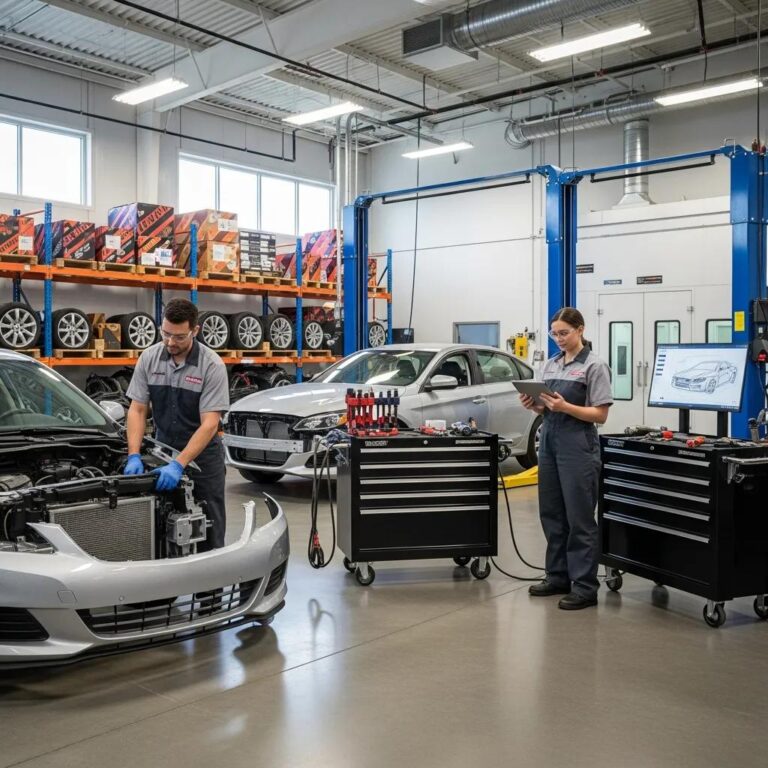
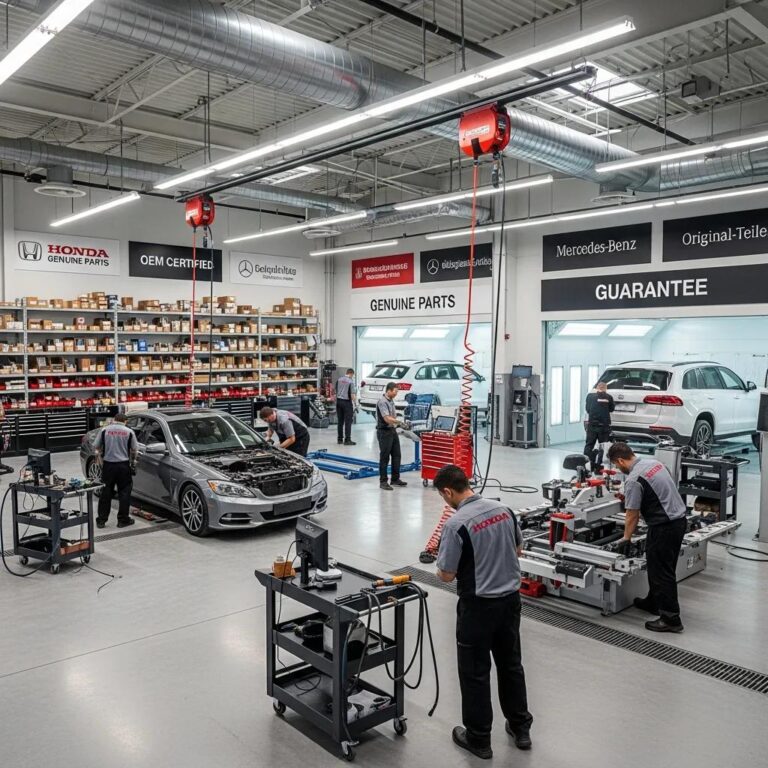
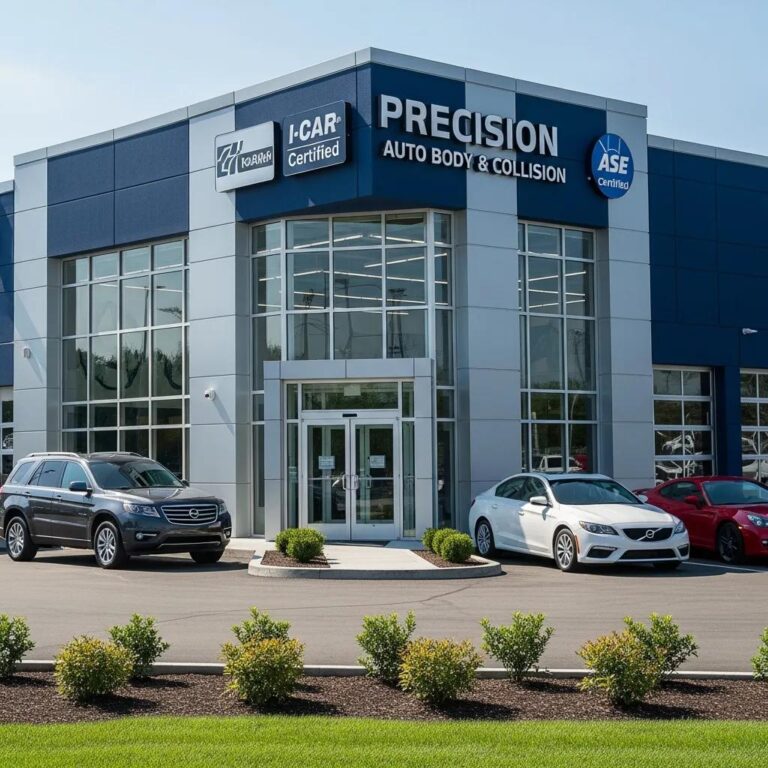
Prime Time Collision Center shows the practical trust signals BMW owners expect while serving Pasadena and nearby communities.
- I-CAR Platinum certified technicians who receive ongoing training in modern collision repair.
- Factory-quality repair standards and use of original BMW parts to support structural and electronic integrity.
- Service guarantees including a lifetime workmanship warranty, free estimates, 24/7 towing, and partnerships with major insurers.
Those proof points demonstrate readiness and owner protection, and they lead into the technical practices that define certified BMW collision repair.
What Makes Our BMW Certified Collision Repair Stand Out?
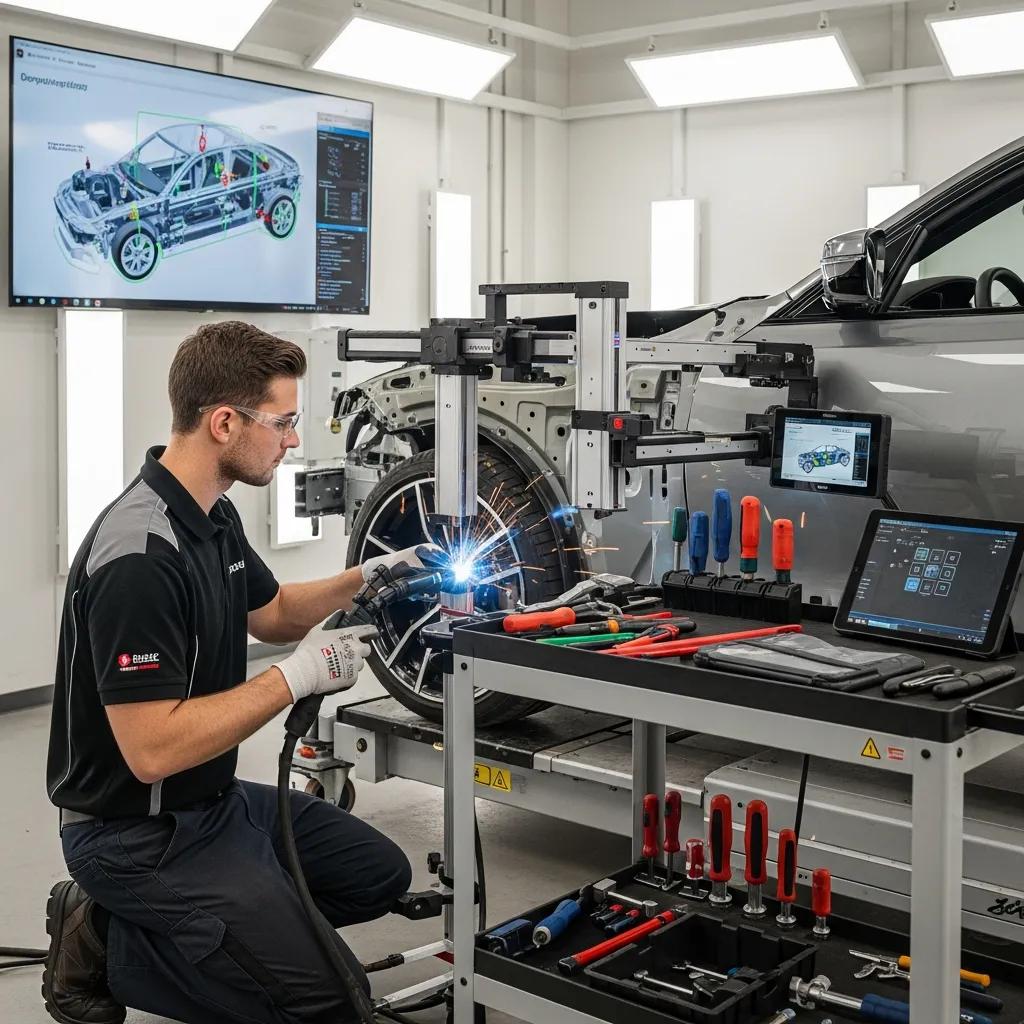
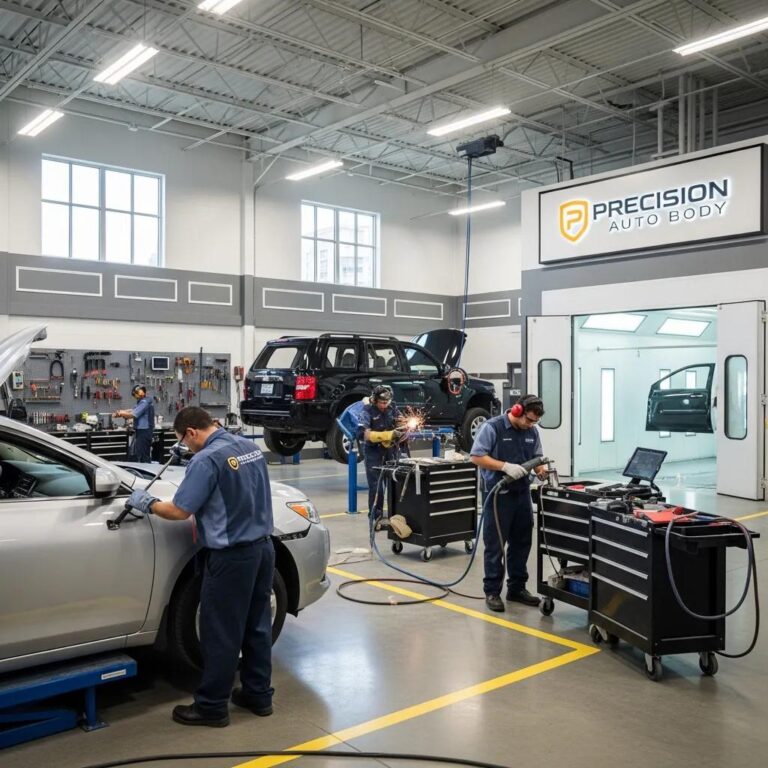
Certified collision repair means following manufacturer procedures, using specified parts, and employing trained staff and calibrated tools to meet safety targets. For BMWs, that includes precision sheet-metal alignment, approved welding and bonding for aluminum and high-strength steels, and controlled paint processes that match factory finishes. Specialized equipment—BMW-compatible frame racks, OEM diagnostic scanners, and calibrated paint booths—helps preserve sensor fitment and panel gaps. Those methods directly influence crash energy management and occupant protection, which is why certified repair translates to measurable safety and resale advantages.
Sticking to OEM procedures also lowers the chance of downstream mechanical or electronic problems and creates a clear documentation trail for insurers and future owners, further protecting the vehicle’s value.
How Do I-CAR Platinum Certified Technicians Ensure Quality Repairs?
I-CAR Platinum certification reflects a sustained, role-specific training program across structural repair, welding, electronics, and refinishing. Technicians with this credential stay current with BMW materials and ADAS technology so they can follow factory repair methods accurately. In practice, certified teams use documented workflows: damage mapping, OEM part verification, calibrated structural correction, and final systems validation including ADAS checks. That methodical approach reduces rework and keeps every repair step aligned with BMW safety standards.
Trusting I-CAR Platinum technicians gives owners confidence that critical work—sensor mounting, weld integrity, and paint curing—is handled to the standards that matter for safety and long-term reliability.
What Is the BMW Certified Collision Repair Process at Prime Time?
Our certified BMW repair process is a structured workflow that starts with a detailed inspection and finishes with documented quality assurance and ADAS validation. The ordered steps uncover hidden damage, ensure OEM parts and procedures are used, and restore electronic safety systems to factory specifications before we return your vehicle. Below is the typical repair journey so you know what to expect and can verify each phase follows manufacturer requirements.
- Initial intake and visual inspection to map visible damage and capture photos for records.
- Advanced diagnostics and OEM scans to reveal hidden structural and electronic faults.
- Written estimate with a line-item repair plan referencing OEM procedures and part numbers.
- Parts sourcing with original BMW components for safety-critical repairs.
- Structural or panel repairs using calibrated frame equipment and manufacturer-approved techniques.
- Paint, finish, and corrosion protection using factory-matching processes and colorimetry.
- ADAS recalibration and system validation to make sure sensors and driver-assist features operate correctly.
- Final quality-control inspection, documentation handoff, and an owner walk-through.
These steps keep the repair path transparent and protect your vehicle’s function and resale integrity while preparing it for safe return to the road.
Quick reference: the table below summarizes each repair phase, what we check, and typical outcomes so you can scan the process quickly.
| Phase | What We Check | Typical Outcome / Timeline |
|---|---|---|
| Initial Assessment | Visible panels, airbag deployment, signs of structural damage | Estimate & photos in 24–48 hours; claims documentation prepared |
| Diagnostic Scans | OEM fault codes, ADAS sensor status, ECU communication | Hidden electronic or structural issues identified; repair scope updated |
| Structural Repair | Frame alignment, welds, rivets, bonding points | Factory-tolerance alignment restored; typical 3–7 day repair window |
This table sets realistic expectations and clarifies checkpoints during BMW collision repair. Next, we describe the diagnostic tools and inspection checklist used to find concealed damage common to BMWs.
How Do We Diagnose and Assess BMW Collision Damage?
Diagnosis starts with a checklist that combines visual inspection, dimensional measurement, and OEM electronic scanning to find both obvious and hidden faults. We use calibrated frame racks to verify chassis geometry, manufacturer diagnostic tools to read fault codes and sensor status, and targeted teardown to inspect reinforcements and wiring harnesses. Typical hidden issues include shifted substructure members, sensor misalignment, and micro-fractures in aluminum parts that can affect crash performance. Estimates are updated as diagnostics reveal additional work, and our documentation supports insurer review and your records.
This diagnostic phase makes sure we address root causes rather than surface symptoms—essential for preserving engineered safety systems and long-term reliability.
Why Are Original BMW Parts Essential for Your Vehicle’s Safety?
Original BMW parts are engineered to fit precisely, integrate with vehicle electronics, and behave predictably in a collision—qualities that preserve factory crash performance and ADAS accuracy. OEM components have the correct material properties and mounting points that influence deformation and energy absorption, which aftermarket parts may not replicate. OEM parts also maintain electrical compatibility for sensors and wiring, reducing the chance of calibration errors and warning lights after repair. Using original parts creates clear documentation that helps with insurer negotiations and protects resale value.
Choosing OEM components is the most reliable path to restored safety performance and fewer post-repair issues, which is why factory parts are the recommended standard for modern BMW repairs.
Which Expert BMW Collision and Auto Body Services Are Offered in Pasadena?
Our BMW-focused services cover structural, cosmetic, and electronic repairs tailored to BMW construction and safety systems. We handle everything from small dents and paint correction to complex aluminum structural work, OEM panel replacement, and ADAS sensor restoration—each requiring materials-specific techniques and calibrated equipment. For BMWs, matching factory paint systems, following bonding and welding specifications for mixed-material assemblies, and performing precise electronic recalibration are necessary to return the vehicle to factory condition. The table below summarizes common BMW-specific services, why they matter, and their insurance or safety implications.
| Service | Why Needed | Benefit / Insurance Implication |
|---|---|---|
| ADAS Recalibration | Resets sensor alignment after repairs | Restores driver-assist safety; often required by insurers to close claims |
| Structural/Frame Repair | Corrects chassis geometry and mounting integrity | Ensures crash energy pathways perform as designed |
| Paint Matching & Refinishing | Achieves factory color and clearcoat specifications | Preserves appearance and resale value; avoids finish-related warranty issues |
This overview helps owners prioritize repairs and understand which actions affect both safety and insurance. Below are the core BMW collision services and their practical benefits.
- The list below outlines our core BMW collision offerings and what each delivers.
- Dent and Minor Body Repair: Precision metalwork and blend-paint techniques restore factory surfaces without weakening panels.
- Structural and Frame Repair: Calibrated alignment corrects chassis dimensions to OEM tolerances.
- OEM Panel Replacement: Factory panels ensure correct fitment and crash performance for major repairs.
- Paint Matching and Refinish: Colorimetry and multi-stage coatings reproduce BMW’s complex factory finishes.
- ADAS Recalibration and Sensor Repair: Restores lane-keeping, adaptive cruise, and collision mitigation systems.
- Electrical and Sensor Diagnostics: OEM scanners troubleshoot ECUs and wiring affected by impact.
How Do We Handle BMW Dent, Paint, and Structural Repairs?
BMWs combine aluminum, high-strength steel, and lightweight alloys, so repair methods must respect each material and the manufacturer’s joining techniques. For aluminum panels we use controlled straightening and approved adhesives or rivet bonding rather than conventional welding that can weaken the metal. High-strength steel repairs rely on calibrated alignment and heat-controlled welding where specified, followed by corrosion protection. Paint work uses spectrophotometry and factory-cure processes to match gloss and UV protection. Every step adheres to factory tolerances because fitment and safety depend on it.
What Is the Importance of ADAS Recalibration for BMWs After a Collision?
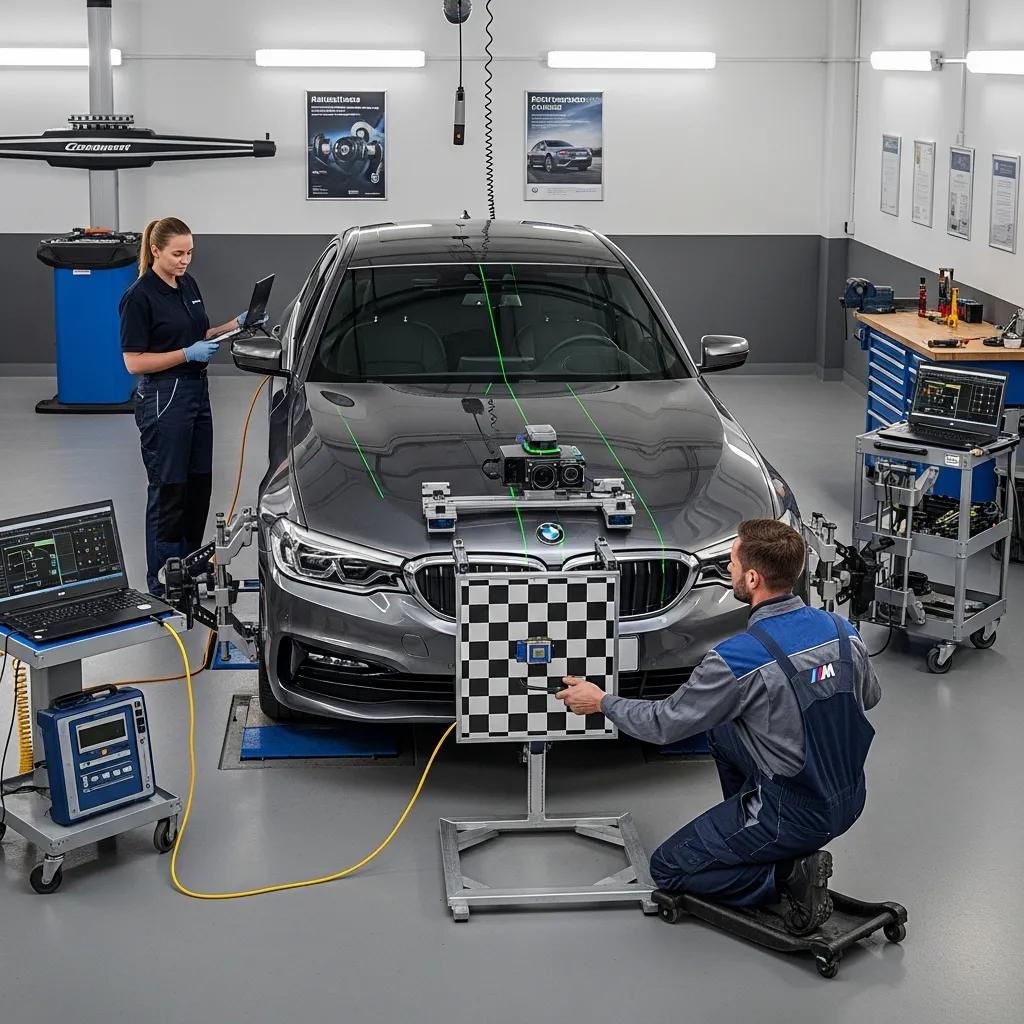
ADAS cameras and sensors need exact alignment and software validation—small positional shifts change system behavior and safety performance. Features like lane-keeping assist, adaptive cruise, blind-spot detection, and automatic emergency braking depend on calibrated sensors; misalignment can trigger false alerts or missed detections. Recalibration follows OEM procedures and uses calibration rigs to place sensors precisely, then validation drives or closed-course tests confirm proper operation. Skipping recalibration risks occupant safety and can affect insurance or warranty coverage.
Recalibration restores the link between sensor inputs and vehicle responses so driver-assist systems work as intended and contribute to overall safety.
How Does Prime Time Assist with Insurance Claims for BMW Repairs in Pasadena?
We streamline the insurance process with thorough documentation and clear communication so OEM-quality repairs get approved and covered when appropriate. Prime Time prepares detailed estimates, photographs damage, and coordinates with adjusters to explain why OEM parts and certified procedures are necessary for safety. Our relationships with major insurers help speed parts authorization and clarify repair scope while we advocate for factory methods on safety-critical components. The result: less friction for owners and better protection for vehicle value during claims resolution.
Here’s the three-step process owners can expect when seeking insurance help for BMW repairs.
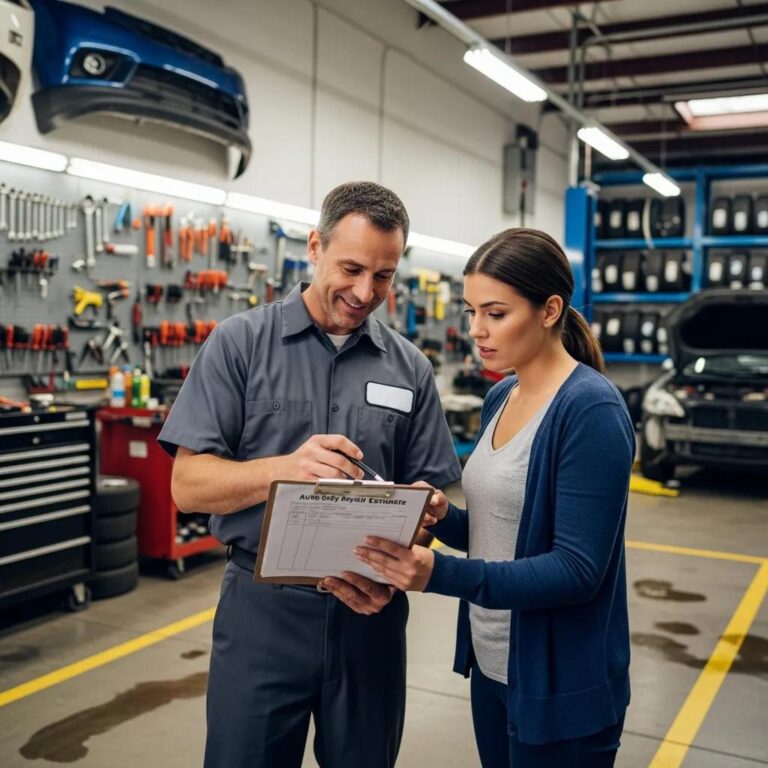
- Free Estimate and Documentation: We photograph damage, record findings electronically, and prepare a comprehensive OEM-aligned estimate.
- Adjuster Coordination and Parts Authorization: We work with adjusters to justify OEM parts or specific repair methods and secure approvals.
- Repair, Validation, and Claims Closeout: After repairs and ADAS recalibration, we submit documentation to finalize the claim and close insurer requirements.
This transparent process reduces owner effort and emphasizes safety-first repair decisions. Our insurer collaboration aims to protect OEM standards and your vehicle’s future value while simplifying claim handling.
What Is the Process for Hassle-Free BMW Insurance Claim Assistance?
Expect a clear, step-by-step interaction where we manage technical documentation and liaise with your insurer to limit surprises and delays. First, we provide a no-cost estimate with photos and scan data to support the repair plan. Next, we communicate with the insurer, advocating for OEM parts and certified technicians when structural or safety systems are involved, and we request necessary authorizations. Finally, repairs proceed under documented procedures and a final inspection and system validation are completed to close the claim. You receive all records for your files.
This hands-off approach saves you time while ensuring repair quality and insurer compliance.
Which Insurance Companies Do We Collaborate With for BMW Repairs?
Prime Time works with all major insurance companies to streamline approvals and support OEM-based repair recommendations for BMWs. These partnerships create direct communication channels for adjuster reviews, speed parts procurement, and reduce administrative delays on claims requiring specialized components or calibration services. Our familiarity with insurer documentation expectations also helps protect owner interests during discussions about parts and repair methods.
Our insurer relationships are designed to reduce friction and prioritize safe, manufacturer-aligned repairs for BMW owners.
What Warranty and Customer Support Does Prime Time Provide for BMW Repairs?
Warranty coverage and ongoing support are important assurances that repairs were completed correctly and will remain durable. Prime Time offers a lifetime warranty on workmanship, giving owners a safety net if issues arise after repair. Post-repair support includes documented inspection records, guidance for warranty claims, and clear communication during follow-up visits to address concerns. This warranty commitment and accessible support protect your BMW investment and give you confidence in the work performed.
How Does Our Lifetime Warranty Guarantee BMW Repair Quality?
Our lifetime warranty covers workmanship on completed repairs, so properly executed structural and finish work is addressable if related defects appear. Owners can request follow-up inspections and our documented repair history helps expedite warranty reviews and corrective action. This warranty supports value retention by providing verifiable proof of quality work for future buyers and underscores our accountability for both safety-related and cosmetic outcomes.
Keep repair documentation to streamline any future warranty requests and to show your vehicle’s maintenance history at resale.
What Do Pasadena BMW Owners Say About Their Repair Experience?
Owner feedback commonly praises clear communication, safe returns to the road, and satisfaction with OEM-level finishes. Clients often note prompt estimates, thorough documentation for insurance, and reassurance that ADAS systems were recalibrated and validated before handoff. Before-and-after photos reinforce perceived quality, and owners appreciate transparency about parts selection and repair scope. Check local reviews and our service gallery to see examples of BMW-specific repairs and client outcomes.
This consistent focus on communication and documented quality builds owner trust and reflects the technical standards we follow.
Frequently Asked Questions
What should I do immediately after a collision involving my BMW?
First, make sure everyone is safe. Move to a safe location if possible and check for injuries—call emergency services if needed. Take photos of the scene and damage, exchange information with other parties, and notify your insurer. Then schedule an inspection with a certified BMW collision repair shop to document damage and start the repair process.
How long does a typical BMW collision repair take?
Repair time varies with damage severity and parts availability. Minor dent and paint work can take a few days; more extensive structural repairs or parts replacements may take a week or longer. We provide an estimated timeline after the initial assessment and keep you updated throughout the repair.
Are aftermarket parts a good option for BMW repairs?
Aftermarket parts can be less expensive but often don’t match OEM fit, materials, or electronic compatibility. For safety-critical repairs and ADAS components, original BMW parts are recommended to preserve crash performance and reduce post-repair issues. Using OEM parts also supports insurance documentation and resale value.
What is the role of ADAS in BMW collision repairs?
ADAS (Advanced Driver Assistance Systems) are central to modern BMW safety features like lane-keep assist and adaptive cruise. After a collision, sensors and cameras must be recalibrated to restore correct operation. A certified repair shop has the tools and procedures to perform ADAS recalibration and validate system function.
How can I ensure my BMW repair is covered by insurance?
Document the damage carefully and get a detailed estimate from a certified collision shop. Tell your insurer why OEM parts and certified repair methods are needed—your repair facility can help by supplying photos, diagnostics, and technical justification to support coverage decisions.
What should I look for in a certified BMW collision repair shop?
Look for I-CAR Platinum certified technicians, use of OEM parts, adherence to manufacturer repair procedures, and warranty coverage on workmanship. Check customer reviews and the shop’s experience with BMW vehicles, and make sure they communicate clearly and provide documentation throughout the repair.
What happens if I don’t use a certified repair shop for my BMW?
Using a non-certified shop can risk repairs that don’t meet OEM standards, potentially affecting structural integrity, safety systems, and warranty or insurance outcomes. Improper repairs may reduce resale value and create safety risks in future incidents. Prioritize certified repair services to keep your BMW safe and reliable.
Conclusion
Choosing a certified collision repair shop ensures your BMW is returned to its original safety and performance standards, protecting value and integrity. With certified technicians, OEM parts, and a commitment to quality, Prime Time Collision Center provides the expertise and documentation you need for a confident repair experience. Schedule a consultation today and let us restore your BMW with the care and precision it deserves.