
How Prime Time Collision Brings Eco-Friendly Auto Body Repair to Glendale Drivers
At Prime Time Collision Center in Glendale, we pair OEM-quality collision repairs with practical, eco-conscious shop practices. This page explains how sustainable repair choices — from waterborne paints to certified recycling and energy-efficient equipment — lower emissions, protect our technicians, and help preserve your vehicle’s value. If you care about air quality, long-term durability, and clear communication with insurers, you’ll find straightforward explanations of how green methods differ from conventional ones and which certifications and technologies validate those choices. We cover water-based paint systems, shop recycling and waste handling, energy-saving upgrades including renewables, and the certifications that tie environmental responsibility to OEM repair standards. Throughout, you’ll see how sustainable collision repair supports cleaner air, compliant waste practices, and OEM-compatible finishes without compromising insurer confidence or repair quality.
Why Choose Eco-Friendly Auto Body Repair at Prime Time Collision Center?
Eco-friendly collision repair focuses on materials and workflows that cut VOC emissions, limit hazardous waste, and protect worker health while delivering repairs that meet manufacturer standards. Choosing sustainable repair means the whole process contributes to a cleaner neighborhood: lower VOCs improve local air, recycling keeps materials out of landfills, and energy-efficient equipment reduces the shop’s carbon footprint. For you, the benefits are practical — safer conditions during repair, factory-quality color and durability, and clear documentation that simplifies insurance claims. We make it easy for drivers after an accident with free estimates and 24/7 towing while keeping environmental choices front and center.
How Our Green Practices Protect Glendale’s Environment and Community

Green collision repair reduces local pollutant loads and supports public health by limiting airborne and waterborne contaminants from shop operations. By using low‑VOC waterborne paints instead of high‑solvent options and capturing waste fluids for certified disposal, we cut emissions that contribute to smog and indoor air pollution in Glendale neighborhoods. Our practices also include diverting recyclable metals and plastics from the waste stream and preventing hazardous runoff that can harm soil and waterways. Those steps reduce community exposure to toxic substances and support broader air‑quality efforts so residents can breathe easier and local ecosystems remain healthier.
What Makes Our Repairs Safe, Reliable, and Sustainable?
Sustainable repairs stay safe and dependable because we follow OEM procedures, employ trained technicians, and run strict quality checks that verify structural integrity and finish performance. Our team applies and cures green materials — like waterborne primers and basecoats — to manufacturer specs so crashworthiness and corrosion protection are preserved.
Quality controls — from computerized color matching to final inspections — make sure sustainable choices never sacrifice safety or longevity. By matching eco-friendly materials with certified repair processes, we deliver results that protect passengers, retain resale value, and earn insurer confidence.
How Do Water-Based Paint Systems Enhance Sustainable Collision Repair?
Water‑based paint systems use water as the main carrier for pigments and binders, which significantly lowers solvent content and cuts VOC emissions versus solvent systems. Swapping organic solvents for waterborne chemistry brings environmental advantages (fewer airborne VOCs), occupational health benefits (less inhalation risk for technicians), and easier compliance as emission rules tighten. When applied with the right equipment and trained technique, modern waterborne systems can meet OEM color, gloss, and durability expectations — offering a factory‑quality finish. Industry developments show that properly cured water‑based paints can match traditional solvent systems for longevity and chip resistance, making them a practical, greener option for collision repair.
Paint systems differ in VOC output, durability, OEM fit, and technician safety.
| Paint System | VOC Levels | OEM Compatibility |
|---|---|---|
| Water‑based basecoat | Low VOC — substantially reduced | High when matched and cured to OEM specs |
| Solvent‑based basecoat | Higher VOCs | Traditionally used; OEM compatible when applied correctly |
| Clearcoat formulations | VOC levels vary by chemistry | Formulated to meet OEM gloss and UV resistance |
| Low‑VOC primers | Reduced emissions | Engineered for corrosion protection and adhesion |
This comparison shows water‑based systems lower emissions without sacrificing finish standards when paired with OEM procedures and correct curing. Knowing these differences helps shops and vehicle owners pick paint approaches that balance sustainability and long‑term performance.
What Are the Benefits of Low VOC Water-Based Auto Paints?
Low‑VOC waterborne paints cut emissions that form smog and indoor air pollution, improving both neighborhood air and the shop environment. Technicians face less exposure to hazardous solvents, which supports occupational health and can reduce reliance on intensive respiratory controls for routine work. From a regulatory standpoint, lower VOCs make compliance easier as regional standards tighten. Consumers still get accurate color and factory‑grade finishes when manufacturers’ application and cure specs are followed — so sustainability doesn’t mean compromising appearance or protection. Choosing low‑VOC systems also signals to buyers and insurers that repairs prioritized environmental responsibility along with OEM quality.
How Water-Based Paints Maintain Durable, OEM-Quality Finishes
Modern water‑based paints reach OEM‑level durability through precise color formulation, computerized color matching, and controlled curing that mirror factory processes. The approach pairs pigment and binder chemistry to OEM targets, then applies basecoat and clearcoat layers with proper oven or ambient curing to achieve required hardness and weather resistance. Durability testing — like adhesion and UV exposure checks — confirms that correctly applied waterborne finishes resist chipping and fading on par with solvent systems. Routine quality checks, including gloss and adhesion measurements, make sure repaired panels meet the same visual and protective standards as original equipment.
What Automotive Recycling and Waste Management Programs Do We Implement?
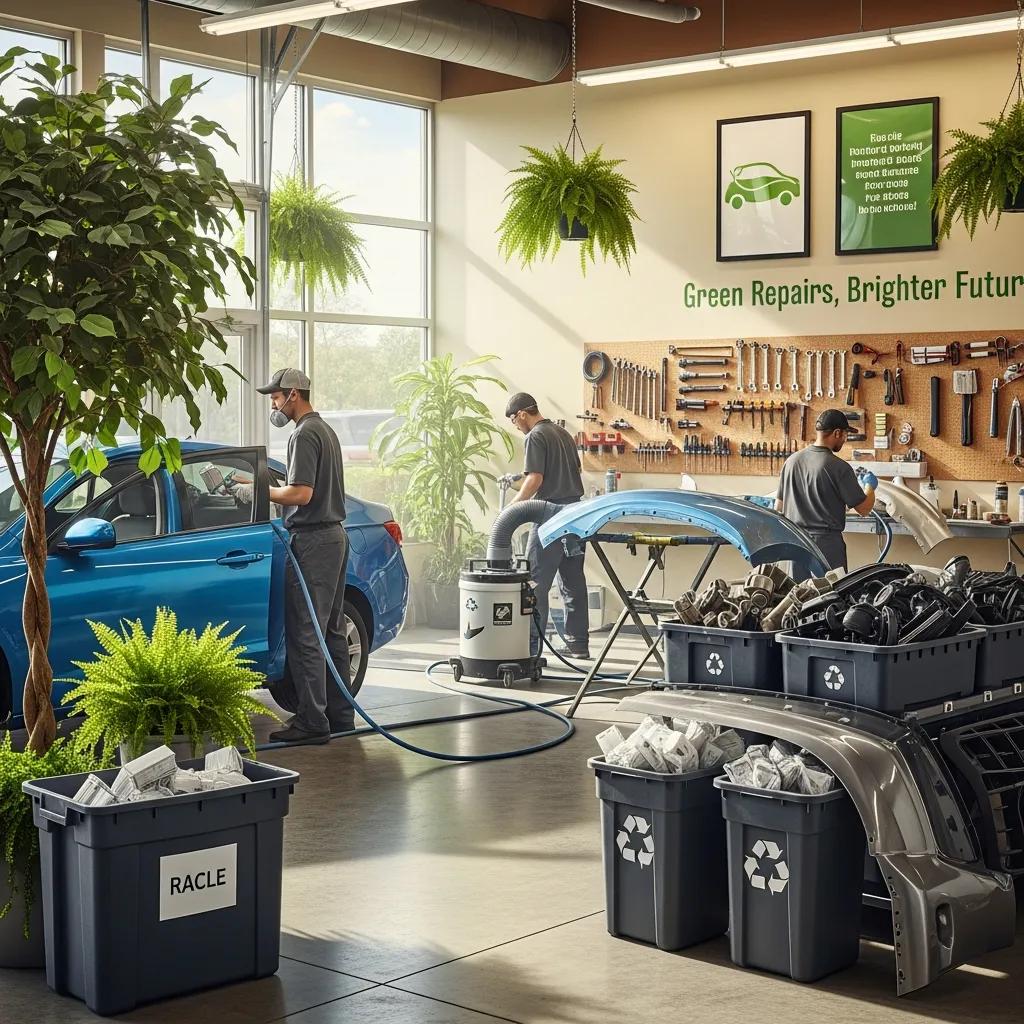
Good recycling and waste management means separating recyclable materials and routing hazardous fluids and components to certified processors. The goal is to keep hazardous materials out of landfills and waterways and to reclaim metals and plastics for reuse, reducing demand for new resources. Working with licensed recyclers and waste handlers keeps us aligned with EPA guidelines and state rules and gives customers traceable disposal records. These programs lower environmental liability and demonstrate accountability to vehicle owners and insurers who increasingly want documented sustainable practices.
| Material | Collection Method | Disposal or Recycling Method |
|---|---|---|
| Steel & Aluminum | Segregated scrap bins | Sold to metal recyclers for reuse |
| Plastics & Glass | Sorted containers | Processed with plastics and glass recyclers |
| Used Motor Oil & Coolant | Closed waste‑fluid units | Handled by certified hazardous waste haulers |
| Tires | Stored separately | Recycled or retreaded through specialized vendors |
| Batteries | Contained collection | Recycled under battery stewardship programs |
This inventory shows how targeted collection and certified processing prevent contamination, recover resources, and keep shop operations compliant. Clear documentation of these flows provides transparency for vehicle owners and insurers.
Which Materials Are Recycled in Our Auto Body Shop?
Typical collision shops recycle metals, plastics, glass, batteries and tires, and capture used fluids for certified disposal — creating a near‑complete circular approach to material handling. Steel and aluminum are the most commonly reclaimed items and are routed to metal recyclers. Plastics and glass from bumpers and windows are separated and sent to appropriate processors, while batteries and tires follow stewardship channels for safe recycling or retreading. Fluid capture systems store used oil, brake fluid, and coolant in sealed containers to prevent leaks and ensure handoff to licensed hazardous waste handlers. These steps cut landfill inputs and lower the environmental footprint of each repair.
How Responsible Waste Disposal Reduces Environmental Impact
Proper disposal keeps hazardous liquids out of storm drains and groundwater, protecting soil, waterways and public health. Recycling metals and plastics conserves raw materials and reduces the energy required to produce new components, lowering lifecycle emissions tied to repairs. Proper handling of batteries and electronics prevents release of heavy metals and persistent pollutants. For Glendale, these practices help keep waterways cleaner, reduce hazardous exposure, and ease the municipal waste burden — delivering real environmental gains beyond the shop walls.
How Does Prime Time Collision Center Optimize Energy Efficiency in Our Shop?
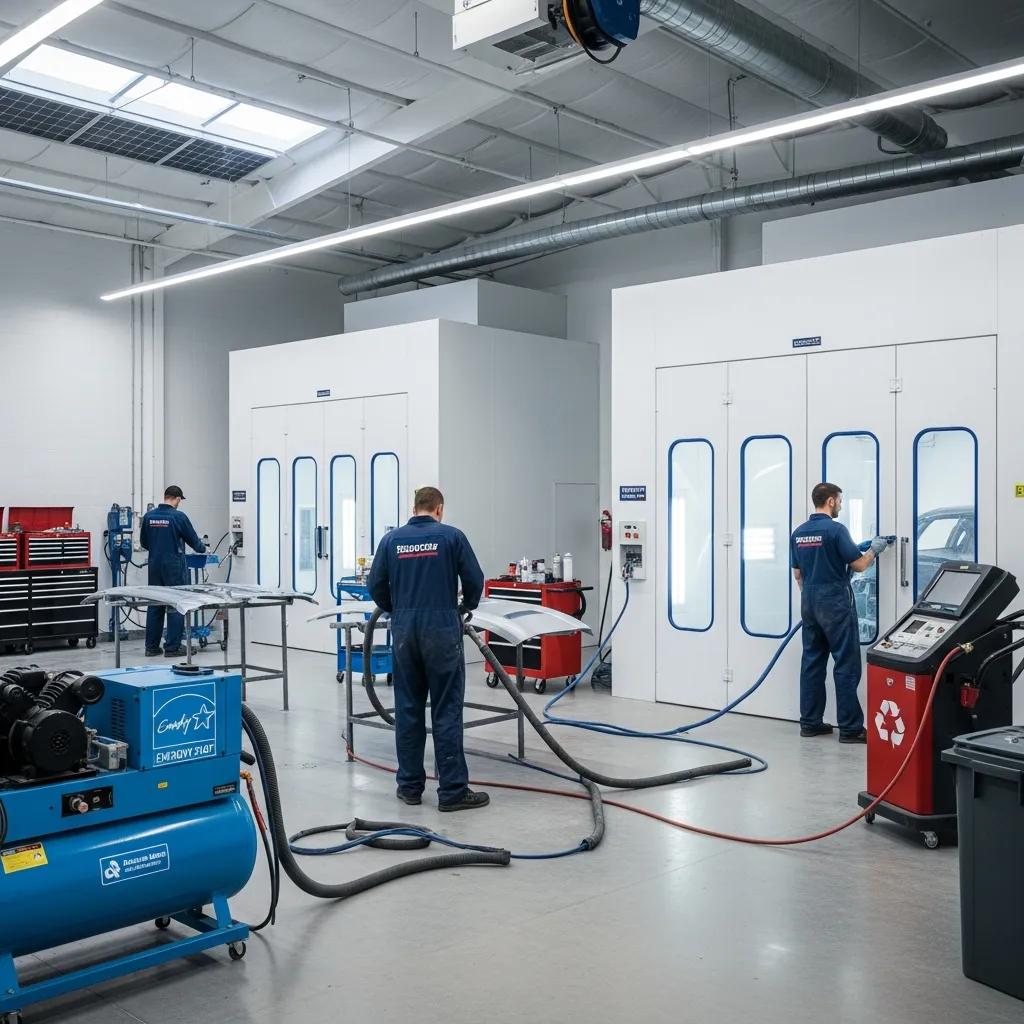
Improving energy efficiency combines smart equipment choices, workflow changes, and regular maintenance to lower electricity and fuel use without slowing repairs. Key upgrades focus on lighting, HVAC and paint‑curing ovens, while operational tactics — like batching paint work to maximize oven efficiency — reduce energy per job. Prime Time Collision Center invests in measures to cut idle energy, uses targeted task lighting and optimized layouts to boost productivity, and evaluates renewable options where they make sense. These steps lower operating costs and the shop’s carbon intensity while keeping repair quality high.
| Investment | Attribute | Estimated Impact |
|---|---|---|
| LED lighting retrofit | Lower wattage, directional illumination | Reduces lighting energy use significantly |
| High‑efficiency paint booths | Optimized airflow and insulation | Lowers oven runtime and energy per job |
| HVAC zoning & maintenance | Targeted heating and cooling | Reduces overall HVAC energy consumption |
| Energy management practices | Scheduling and idle reduction | Cuts standby energy losses |
These investments translate into measurable energy savings and smoother operations. Prioritizing them helps shops reduce emissions while maintaining fast, high‑quality repairs.
What Energy-Saving Technologies and Equipment Do We Use?
Energy‑saving tools in collision repair include LED lighting, high‑efficiency curing ovens and booths, and HVAC zoning that limits energy to occupied areas. LEDs give bright, focused light at much lower power and maintenance cost, improving visibility for technicians. Modern paint booths use better insulation and airflow control to meet cure schedules with less energy. Pairing equipment upgrades with smart practices — like grouping paint jobs to avoid repeated oven heat‑ups — realizes extra savings.
Are There Plans for Renewable Energy Integration Like Solar Power?
Many shops evaluate solar to lower grid electricity use and long‑term costs, but installation requires feasibility work, capital planning, and permitting. Solar can offset daytime loads from paint booths and lighting, shrinking the carbon footprint and exposure to energy price swings. Feasibility steps include roof and structural review, load analysis, and payback modeling to find the right system size and timeline. Pursuing renewables also signals a commitment to community decarbonization; when practical, solar arrays can noticeably reduce the embodied carbon of repair operations.
Which Green Certifications and Standards Demonstrate Our Environmental Commitment?
Certifications and standards give outside verification that a shop meets quality, safety and environmental benchmarks, helping customers and insurers evaluate repair credibility. Credentials like I‑CAR Platinum confirm technician training and the ability to follow OEM repair procedures, while green accreditations (for example, Green Garage–style programs or documented EPA waste‑management compliance) show strong environmental controls and handling practices. Holding or pursuing these credentials demonstrates a structured approach to repair integrity and environmental responsibility, and the documentation helps build trust during insurance claims and resale.
How Does I-CAR Platinum Certification Ensure Quality and Safety?
I‑CAR Platinum denotes top‑level training for collision technicians and shows staff have the knowledge to perform repairs that follow OEM procedures and safety requirements. Skilled, trained technicians are more likely to choose the right materials, follow correct structural sequences, and verify repairs with objective tests. This certification reassures customers and insurers that repairs preserve crashworthiness and meet manufacturer guidance. Combined with environmentally responsible material choices, I‑CAR Platinum helps ensure sustainability and safety go hand in hand.
What Green Certifications Are We Pursuing for Eco-Friendly Auto Repair?
Shops seeking green certification typically target programs that review waste handling, emissions controls and energy use, such as Green Garage–style accreditation or documented EPA‑compliant waste management. Earning these credentials requires written procedures, staff training on environmental protocols, and recordkeeping for audits — all of which boost transparency and accountability. For customers, certified environmental practices mean verifiable hazardous‑waste disposal and tangible steps to reduce emissions. Clearly stating which certifications are achieved and which are in progress gives a transparent roadmap for continuous improvement.
What Are the Benefits of Choosing Green Auto Body Repair for Drivers and the Community?
Choosing green collision repair delivers health, environmental and practical benefits: cleaner air, lower hazardous‑waste risks, and repairs that preserve vehicle value by following OEM methods. For drivers, eco‑friendly repairs mean safer shop conditions, factory‑matching finishes, and documented processes that support insurance claims and resale. Communities benefit from reduced local emissions and less soil and water contamination, improving public health. Those combined advantages make a strong case for picking repair providers who bake sustainability into every step of collision restoration.
How Does Eco-Friendly Repair Support Healthier Air and a Safer Environment?
Eco‑friendly repair reduces VOCs and airborne particulates, improving both indoor shop air and outdoor air near repair facilities. Capturing and properly disposing of used fluids and hazardous parts protects waterways and soil from contamination. Safer working conditions lower technician exposure to harmful substances and support a healthier workforce, which helps deliver consistently high repair quality. Combined, these practices scale to better public health in the community.
In What Ways Do Sustainable Repairs Maintain Vehicle Value and Build Trust?
Sustainable repairs performed to OEM procedures by certified technicians create documented records that support resale value and insurer confidence. Accurate paint match, retained structural integrity, and clear parts and process documentation reassure buyers and insurers the vehicle was restored correctly. Transparent environmental practices — like certified recycling and waste disposal logs — add credibility and show operational rigor. For owners, a repair history that combines OEM‑quality restoration with verified environmental stewardship protects long‑term asset value and builds trust.
- Reduced Emissions: Green repairs lower VOC and particulate output from painting and shop operations.
- Maintained Safety: Certified technician training ensures repairs follow OEM safety and structural standards.
- Documented Accountability: Recycling and disposal records give traceable proof of responsible handling.
These benefits show eco‑friendly collision repair is both an environmental choice and a practical one for safety, insurance, and vehicle value.
If you want repairs that balance quality and sustainability, ask for estimates that list materials, certifications, and waste‑handling practices. For local drivers needing help after an accident, Prime Time Collision Center provides free estimates, 24/7 towing, and guidance through insurance claims — all while delivering OEM‑quality, environmentally responsible repairs.
Frequently Asked Questions
What types of eco-friendly materials are used in auto body repairs?
Eco‑friendly repairs use materials like low‑VOC waterborne paints, recycled metals, and biodegradable cleaning agents. These options reduce environmental impact while maintaining repair quality. Water‑based paints, for example, cut harmful emissions compared with solvent systems, and recycled plastics and metals help close the loop on material use. Together, these choices lower the shop’s carbon footprint without sacrificing results.
How can I verify the eco-friendliness of an auto body shop?
Ask about certifications such as Green Garage–style accreditation or documented compliance with EPA waste management practices. Request details about low‑VOC materials, recycling programs, and energy‑saving equipment. A reputable shop will share documentation and disposal records and point to technician training. Customer reviews and referrals can also help confirm a shop’s environmental commitments.
What are the long-term benefits of choosing eco-friendly auto body repair?
Long‑term benefits include better local air quality, reduced hazardous waste, and repairs that protect vehicle value by following OEM standards. Eco‑friendly practices support public health and conserve resources, while documented, OEM‑compliant repairs help with resale and insurer confidence. Choosing sustainable repair supports both the environment and your vehicle’s long‑term worth.
How does energy efficiency in auto body shops impact repair costs?
Energy efficiency lowers a shop’s operating costs — for example, through LED lighting and efficient paint booths — and those savings can help keep prices competitive. Efficient equipment also helps maintain steady turnaround times, which benefits customers. Over time, reduced energy bills and better workflow can translate into more stable pricing and improved service speed.
What role do technicians play in ensuring eco-friendly practices?
Technicians are essential. Their training ensures sustainable materials are applied correctly and OEM procedures are followed. They also handle proper waste segregation and safe disposal. Ongoing education on new eco‑friendly products and methods empowers technicians to implement practices that meet both safety and environmental goals.
Are there any financial incentives for choosing eco-friendly auto body repair?
There can be. Some insurers offer incentives for repairs using sustainable practices, and government programs or grants may support green upgrades for businesses. Eco‑friendly repairs can also deliver long‑term savings through better durability and resale value. Ask your insurer and the repair shop about available incentives in your area.
Conclusion
Choosing eco‑friendly auto body repair helps protect your vehicle and the Glendale community. By prioritizing low‑VOC materials, responsible waste handling, and energy efficiency, we deliver repairs that meet quality standards and reduce environmental impact. If you want transparent, reliable service after an accident, Prime Time Collision Center offers free estimates and 24/7 towing to make the recovery process easier. See how our commitment to sustainability can protect your car and our community.