Advanced Paint Matching Technology for Flawless Car Paint Repair and OEM Certified Finishes
When a panel comes back from repair with the wrong shade, it’s obvious — and it can lower your car’s resale value. Modern paint-matching blends precise measurement, digital formulas, and skilled blending so repaired panels look factory-fresh, hold value, and last. This guide walks through how spectrophotometers, computerized dispensers, technician tradecraft, I‑CAR training, and climate‑controlled booths work together to deliver OEM‑grade finishes. You’ll see the measurement‑to‑formula process, how automated dispensers cut error and waste, why metallic and pearl finishes are more demanding, and how certified techs and proper booths lock in long‑term results. We also reference real shop practices — Prime Time Collision Center in Glendale, CA emphasizes I‑CAR Platinum technicians, streamlined claims support, and free estimates — so you know what to ask for when evaluating a repair.
How Does Spectrophotometer Technology Ensure Precise Car Paint Matching?
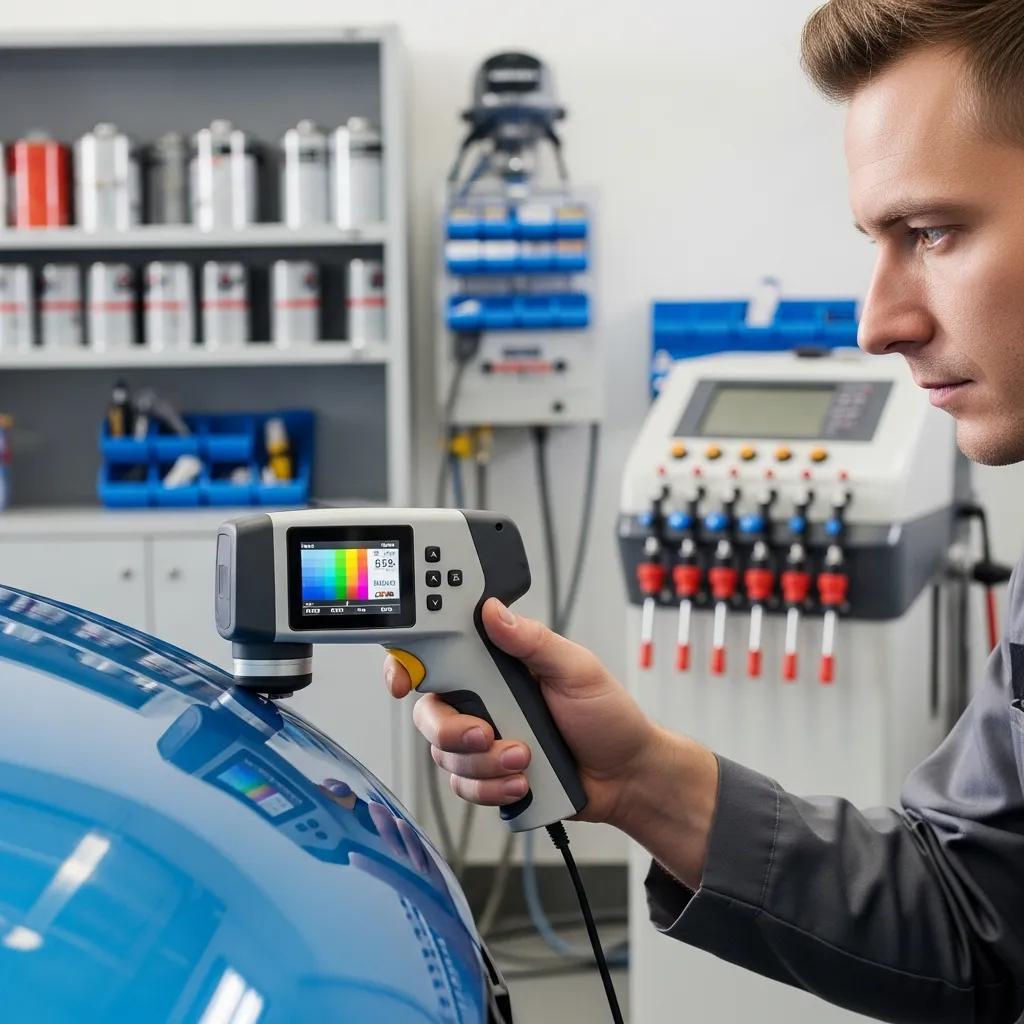
Spectrophotometers measure a paint’s spectral signature and turn reflected light into objective color coordinates, removing guesswork from visual matching. That measurement‑to‑formula workflow quantifies hue, chroma and brightness across wavelengths — especially helpful when lighting or faded finishes deceive the eye. The spectral data feeds color analysis software and mixing systems to generate consistent paint recipes that closely match OEM shades, cutting rework and customer frustration. Technicians still inspect visually and often scan multiple spots, because surface texture, clearcoat gloss and oxidation change how color reads. Knowing those limits leads naturally into how the device and its software produce usable paint formulas.
What Is a Spectrophotometer and How Does It Measure Vehicle Paint Color?
A spectrophotometer is an optical tool that measures reflected light in narrow bands to produce a spectral curve unique to the paint sample. It illuminates the surface and reads the reflected spectrum to calculate objective coordinates like L*a*b* and spectral reflectance — far more reliable than a visual match alone. That data reveals subtle differences in effect pigments and translucency that the eye misses, letting technicians select and tweak formulas with confidence. For dependable results, techs typically take several scans, average the readings, and record surface condition before accepting a single measurement as the base formula.
How Does Digital Color Analysis Improve Paint Matching Accuracy?
Digital color analysis links spectrophotometer output to extensive color libraries and formulation databases so software can suggest the closest OEM recipe and recommend tint adjustments. These systems compare your spectral read against thousands of entries, compensate for fade or oxidation, and calculate pigment ratios to reproduce effect and metallic finishes under real‑world light. Software also logs metadata — angle, gloss, panel location — helping techs decide whether to spot blend or respray a full panel. As workshops adopt integrated measurement and formulation, industry data through 2025 shows fewer trial‑and‑error mixes and more consistent, factory‑like matches.
- Spectrophotometer workflows increase repeatability by removing subjective color calls.
- Digital libraries let techs look up OEM codes and historical formulas quickly.
- Compensation algorithms correct for fading, oxidation and viewing‑angle effects.
Those capabilities help the technician choose between spot blending and full‑panel repair — a choice we cover later.
What Role Do Computerized Paint Mixing Systems Play in Flawless Automotive Finishes?
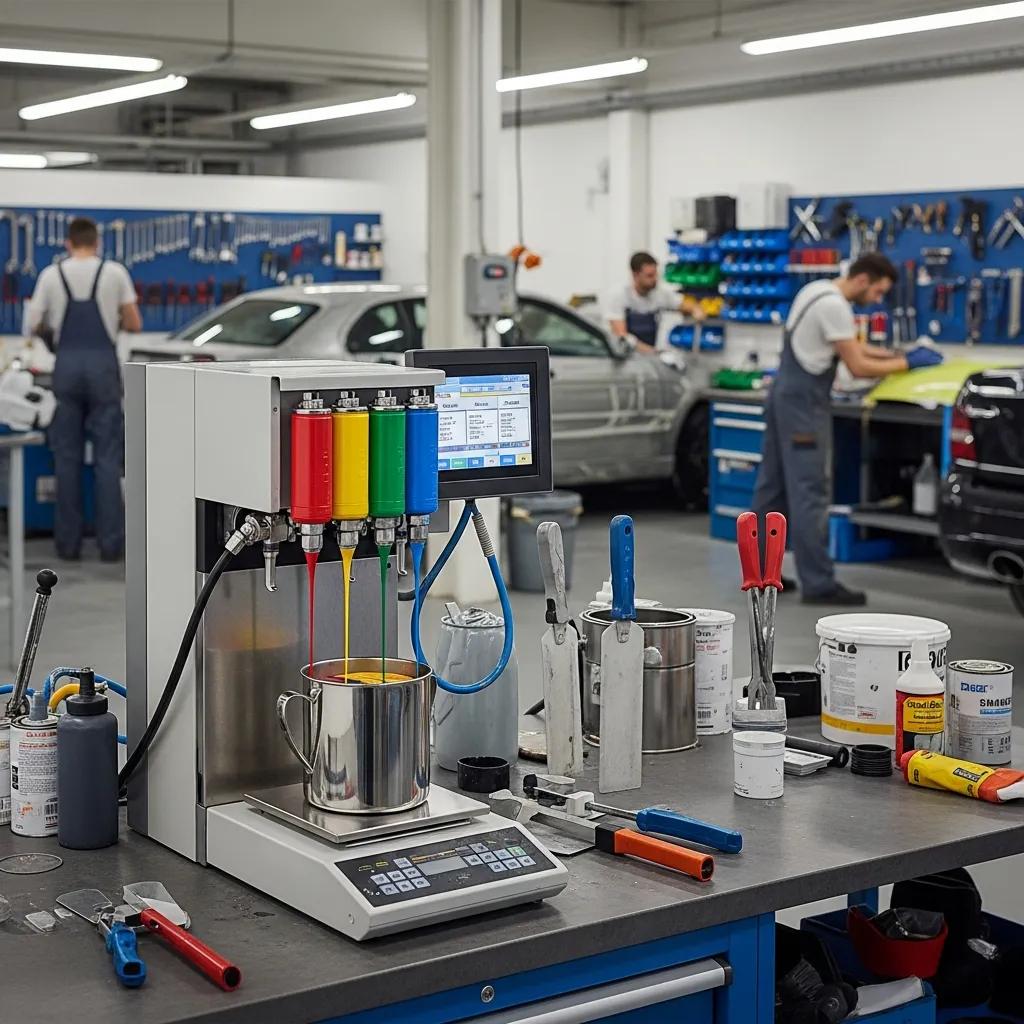
Computerized paint mixing systems convert digital formulas into exact pigment dispensing and automated mixing, producing repeatable color and consistent batch accuracy. By pulling OEM codes and calibrated recipes, these systems scale mixes to the repair volume and account for pigment batch differences — preserving the original look and supporting warranty‑compliant work. When tied to spectrophotometer output, you get a closed‑loop process: measure, analyze, retrieve and dispense. That reduces human error and speeds turnaround. The next sections explain how OEM lookups work and how automated dispensing trims waste while improving inventory control for shops.
How Do Computerized Systems Formulate Exact Paint Recipes Using OEM Codes?
Computerized systems accept an OEM code or spectro ID, query an internal or manufacturer database, and produce exact pigment formulas scaled to the required quantity. The software shows component volumes and mixing order and flags required reducers or clearcoats to meet OEM layering. Technicians validate the recipe with a test mix and visual checks under controlled lighting before applying it to the vehicle — preserving warranty compliance and resale value. Relying on OEM‑correct formulations avoids ad‑hoc substitutions that cause color drift and creates a documented record for insurance and owner peace of mind.
How Do These Systems Reduce Human Error and Material Waste?
Automated dispensers deliver precise pigment volumes by weight or pump, eliminating manual measuring errors and batch variance. These systems track inventory, warn of low stock, and keep digital mix records for traceability, reducing waste with optimized batch sizes and fewer trial mixes. Shops that switch from manual to computerized mixing report meaningful drops in rework and consumable overspend. The table below outlines common systems and their practical benefits so managers can compare options.
Before the table: this comparison highlights how systems differ in accuracy features and practical benefits.
| System | Accuracy Features | Typical Benefit |
|---|---|---|
| PPG/Color Retrieval Module | OEM database access, spectral integration | Fast OEM formula retrieval and high fidelity |
| Standox Mixing Server | Automated scaling, dispense pump calibration | Reduced waste and consistent batch repeatability |
| Independent Color Software | Spectral matching algorithms, cloud updates | Flexibility across brands; frequent formula updates |
The takeaway: integrated OEM access and calibrated dispensing do the most to reduce errors and improve match consistency. From here, technician blending techniques complete the visual integration.
How Do Expert Paint Blending Techniques Achieve Seamless Color Transitions?
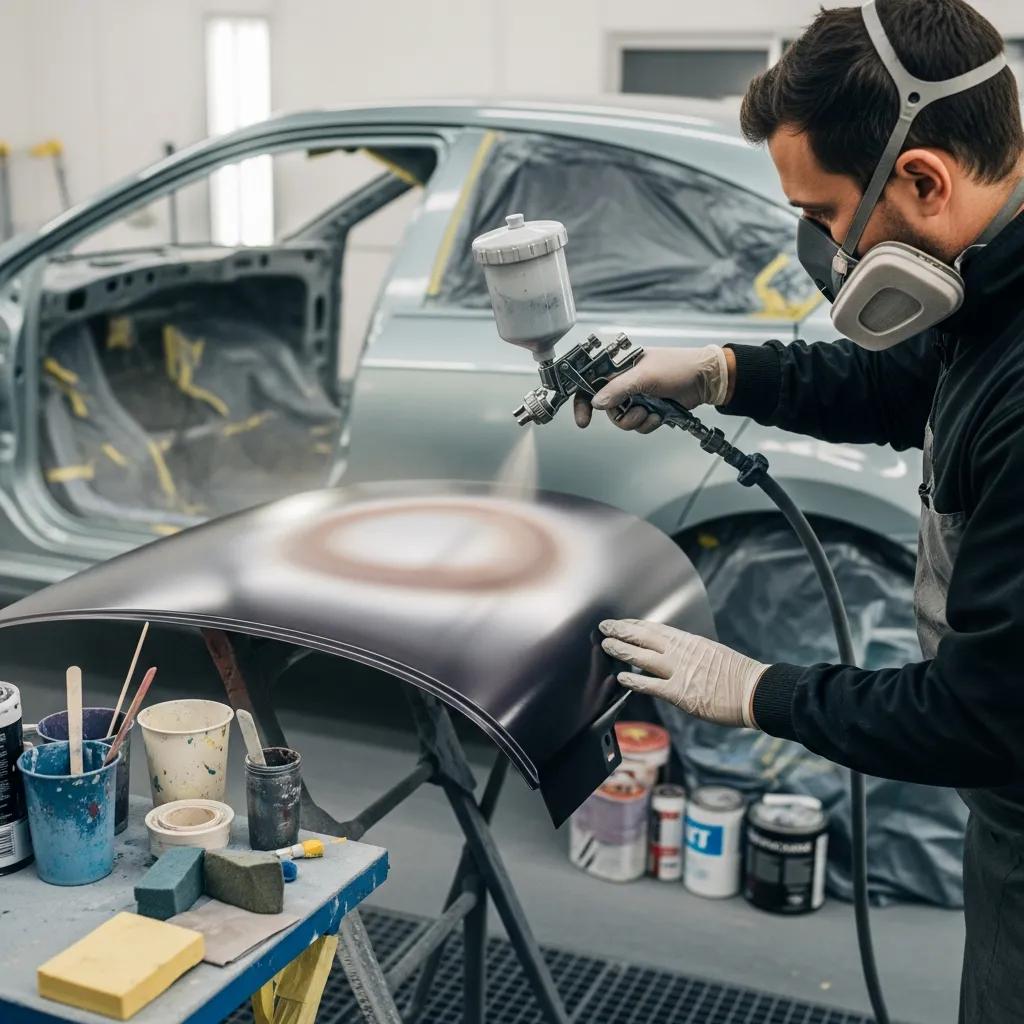
Blending is where precise formulas meet a trained eye. Expert techs control spray transitions, layer sequencing and overlap zones so repaired areas flow into adjacent panels. Blending uses feathering edges, transitional spray patterns and clearcoat strategy to manage gloss and texture differences that change perceived color. Techs decide whether to spot‑blend, soft‑blend or respray whole panels based on paint type, age and surrounding fade, then make controlled passes to hide the repair. This tradecraft complements spectrophotometer data and computerized mixing — especially on metallic and pearl finishes, covered next.
What Are the Challenges of Matching Metallic and Pearl Paint Finishes?
Metallic and pearl finishes have layered effects and directional flakes that shift with angle and light, so they’re tougher to match than solids. Challenges include matching flake size and distribution, aligning flake orientation during spraying, and sequencing basecoat and clearcoat to recreate depth and sparkle. Technicians address these by adjusting flake concentration, using directional spray techniques, and testing on panels while viewing from multiple angles. Effect finishes require spectral measurement plus on‑the‑gun judgment — skills only experienced refinishers can reliably deliver.
How Do Technicians Blend New Paint with Faded or Existing Panels?
When nearby panels show sun fade or oxidation, techs evaluate the condition and, after prep, use tinting, glazing or transitional spraying to match tonality before the final clearcoat. Typical steps include light compounding or sanding to normalize gloss, tinting the basecoat to compensate for fade, and feathering transitional coats to hide edges; the clearcoat is then matched for gloss and texture. Choosing blending vs. full‑panel refinish depends on the amount of fade and the customer’s preference; techs document the decision and test under varied lighting to confirm the match. Successful blending builds on precise measurement and accurate mixing so the formula can be adapted in the booth.
- Assess oxidation and measure color variance.
- Normalize surface gloss and prepare the substrate.
- Apply tinted basecoat and feather transitions.
- Match clearcoat thickness and finish.
Following this sequence delivers predictable visual results and long‑term integrity.
Why Are I-CAR Certified Technicians Essential for Flawless Paint Repairs?
I‑CAR certification means structured, ongoing training in collision repair — including refinishing protocols, material compatibility and OEM sequences. Certified techs follow standardized procedures that reduce mistakes that can damage color match or structural integrity. Certification proves knowledge of paint chemistry, substrate prep and approved curing practices needed for durable, OEM‑equivalent finishes. Shops with I‑CAR Platinum techs take a systems approach to quality, which lowers rework and satisfies insurer and OEM expectations. The table below maps common certification levels to practical repair outcomes.
| Certification Level | Skills / Training | Impact on Repair Quality |
|---|---|---|
| I-CAR Technician | Basic refinish processes, material handling | Correct surface prep and basic color layering |
| I-CAR Gold | Advanced refinishing, OEM procedures | Improved adherence to manufacturer specifications |
| I-CAR Platinum | Continuous training across disciplines | Highest consistency, reduced rework, OEM compliance |
Higher certification typically means tighter procedural adherence and fewer mistakes that affect match and durability. That’s why quality‑focused shops highlight I‑CAR credentials and structured training paths.
What Training and Skills Do I-CAR Platinum Certified Technicians Possess?
I‑CAR Platinum techs complete modules in advanced color theory, refinishing science, OEM procedures and integrated repair sequencing, equipping them to judge blending, material choice and curing. Practical skills include understanding surface chemistry, achieving correct film builds, and compensating for environmental factors during application and cure — all critical with effect coatings or composite substrates. Ongoing education keeps them current with manufacturer updates and new paint systems, preventing mismatches from outdated methods. Those training elements reduce visible mismatch and premature finish failure, protecting owners and insurers alike.
How Does Technician Expertise Impact Paint Match Quality and Durability?
Expertise matters at every step: surface prep, measurement, formula validation, spray technique and cure control. Mistakes at any point can lead to visible mismatch or adhesion failures. Skilled techs control film thickness, keep spray angles consistent, and verify cure parameters to secure clearcoat hardness and UV resistance — extending finish life. Shops with certified teams document fewer touch‑ups and warranty claims because expertise removes guesswork and enforces OEM‑compatible sequences. The next layer supporting application and cure is the paint booth environment.
How Do State-of-the-Art Paint Booths Enhance Paint Application and Finish Quality?
Modern paint booths offer climate control, directed airflow and high‑efficiency filtration to remove particulates and keep temperature and humidity steady during application and curing — all vital for uniform leveling and clearcoat clarity. Controlled booths cut dust and overspray contamination, allow predictable solvent evaporation, and support catalytic or force‑cure cycles that reduce orange peel, fisheyes and solvent pops. The environmental controls also help achieve consistent clearcoat hardness and bond strength to protect effect pigments and gloss over time. The table below compares common booth features and the direct impact on finish durability and appearance.
Introductory paragraph for booth table: this comparison clarifies how booth design choices affect particulate control and curing performance.
| Booth Type | Particulate Control | Curing Method / Impact |
|---|---|---|
| Downdraft Climate-Controlled | High-efficiency downdraft filtration | Uniform airflow minimizes recontamination; consistent cure |
| Crossdraft Standard Booth | Moderate filtration, variable airflow | Higher risk of edge contamination; less predictable cure |
| High-Speed Force-Cure Booth | HEPA filtration + accelerated curing | Faster turnaround with strong clearcoat properties |
In short, a downdraft, climate‑controlled booth with proper curing capability lowers defect rates and improves long‑term performance. With controlled conditions, technicians can trust formulas and technique to reproduce the OEM look.
What Are the Benefits of Climate-Controlled, Dust-Free Paint Booths?
Climate‑controlled, dust‑free booths stabilize temperature and humidity so solvents evaporate and films form evenly, producing consistent color and gloss across repaired areas. Good filtration removes airborne particles that cause surface flaws, and proper airflow prevents turbulence that creates inconsistent texture. These conditions cut rework and polishing, preserving pigment orientation and clearcoat depth important for effect finishes. For techs, predictable booth environments mean fewer variables to manage during blending and final QA.
How Do Paint Booths Contribute to Long-Term Finish Durability?
Booth‑controlled curing prevents solvent entrapment and helps full crosslinking of clearcoat polymers, increasing hardness, abrasion resistance and UV stability — all key to long‑term gloss and color retention. Consistent film thickness achieved in a controlled booth reduces differential weathering between repaired and original panels, keeping the finish seamless for years. Proper curing also lowers the risk of early delamination or color shift, protecting resale value and supporting warranties. Those durability gains still depend on correct technician execution and the right materials.
How Does Perfect Paint Matching Preserve Vehicle Value and Appearance?
Perfect paint matching — using OEM materials, documented formulas and certified procedures — preserves a vehicle’s factory look and helps avoid depreciation tied to visible repairs. Appraisers and informed buyers view consistent finish and documented OEM procedures as signs of a quality repair, which can prevent unnecessary markdowns at resale. Keeping records of spectrophotometer readings, OEM codes and technician certifications creates a traceable file that supports claims of OEM‑quality work. The checklist below helps owners know what to request after a repair to protect value.
Checklist intro paragraph: requestable documentation can reassure buyers and maintain vehicle value.
- Spectrophotometer measurement report with the recorded coordinates.
- OEM paint code and the exact formula used for the mix.
- Technician certification level and notes on the procedures performed.
That documentation gives transparency and can prevent disputes during resale or lease return. After reviewing verification steps, here are practical actions you can take next to ensure a factory‑quality repair.
Why Is OEM Certified Paint Matching Critical for Resale Value?
OEM‑certified matching shows approved materials and processes were used — reassuring appraisers and buyers that repairs meet factory intent. When repairs follow OEM guidance and certified technicians perform the work, vehicles keep a more factory‑accurate appearance and maintain warranty compatibility where applicable. Documented OEM‑compliant repairs reduce negotiation leverage for depreciation and provide objective evidence at appraisal, lease return or private sale. Owners who insist on OEM adherence usually see smoother resale outcomes and fewer value disputes.
How Does a Flawless Finish Restore Original Factory Aesthetics?
Restoring factory aesthetics means matching color, effect, gloss and texture so repaired panels look identical under varied lighting and angles. Techs achieve this with precise measurement, matched formulations, controlled application and correct curing — each step aimed at reproducing the original film build and visual properties. Final inspection includes spectral checks, multi‑angle visual review and consistent clearcoat gloss and texture to confirm a factory‑like result. Shops that combine spectrophotometer technology, computerized mixing, climate‑controlled booths and I‑CAR certified techs offer the most reliable path to a flawless finish.
For drivers in Glendale and nearby communities who expect OEM‑quality paint work, Prime Time Collision Center focuses on I‑CAR Platinum certified technicians, insurance coordination, free estimates and 24/7 towing so you get perfect matches and documented repairs. If you want proof, ask your provider for measurement reports, OEM formula logs and certification notes to include with your paperwork — it helps protect resale value and confirms a factory‑level restoration.
Frequently Asked Questions
What are the key benefits of using advanced paint matching technology?
Advanced paint matching technology brings clearer matches, less rework and longer‑lasting repairs. Tools like spectrophotometers and computerized mixers help techs reproduce OEM shades more reliably, cut human error and reduce waste. The net result is a better visual match, fewer touch‑ups and a faster, more predictable repair process that helps maintain your vehicle’s value.
How can vehicle owners ensure they receive high-quality paint repairs?
Choose a shop that uses advanced paint‑matching tools and employs I‑CAR certified technicians. Ask for documentation — spectrophotometer reads, OEM paint codes and the formula used. Ask about the shop’s experience with metallic and pearl finishes and check customer reviews or recommendations. Those steps help you pick a shop that prioritizes quality and consistent results.
What should I look for in a paint repair shop’s certification?
Look for I‑CAR certification levels, especially I‑CAR Platinum, which indicates ongoing training across collision repair disciplines. Certification shows the shop’s techs understand modern materials and OEM procedures. Also ask whether the shop documents repair steps and follows manufacturer specifications — that traceability matters for quality and resale.
How does climate control in paint booths affect repair quality?
Climate control stabilizes temperature and humidity so solvent evaporation and film formation happen predictably during application and curing. That reduces defects like orange peel or fisheyes and prevents contamination from airborne particles. A well‑maintained booth improves finish appearance and durability, so it’s an important part of a high‑quality repair.
What role does technician experience play in achieving a flawless paint match?
Experience is critical. Skilled techs know color theory, blending techniques and how environmental factors affect application. Their judgment shapes material selection, spray technique and curing control — all essential to meet OEM standards. Shops with experienced, certified techs tend to have fewer reworks and higher customer satisfaction.
Can I request documentation after a paint repair, and why is it important?
Yes — and you should. Request spectrophotometer measurement reports, the OEM paint code and the exact formula used, plus the technician’s certification level. This paperwork provides transparency, serves as proof of quality and helps preserve resale value by showing repairs were done to OEM standards.
What are the common challenges in matching effect finishes like metallic or pearl?
Effect finishes change with angle and light because of flake orientation and layered depth. Matching them requires aligning flake size and distribution, matching orientation in application and sequencing basecoat and clearcoat correctly. Advanced measurement tools and experienced judgment are essential to achieve a seamless match that holds up under different viewing conditions.
Conclusion
Advanced paint matching technology — paired with certified technicians and proper shop equipment — is the best way to restore your vehicle to factory appearance and protect its value. Spectrophotometers, computerized mixing systems, climate‑controlled booths and I‑CAR certified techs work together to deliver OEM‑grade results. Ask for documentation of the process to confirm quality. For consistent, documented finishes, choose a repair shop that prioritizes OEM compliance and expert craftsmanship.