
Immediate Steps After a Car Accident — A Practical Guide from Prime Time Collision Center
An accident creates urgent tasks: keep people safe, preserve evidence, and start the insurance and repair process. This guide walks you through clear, prioritized steps — from on-scene safety checks and documenting damage to notifying insurers, getting medical care, and choosing OEM-certified repairs. You’ll find checklists, decision points, and practical tips across six focused sections: immediate safety, documenting the scene and contacting authorities, filing claims and asserting repair‑shop rights, medical and legal follow-up, why Prime Time Collision Center is a reliable OEM-certified option, and answers to common post-accident questions. Use this as a step-by-step checklist to act quickly, protect health and legal rights, and move from crash to repair with confidence.
What should you do first to stay safe after a crash?
Safety comes first: protect people, prevent further collisions, and keep the scene stable for responders. Start by checking yourself and passengers for consciousness and breathing, then check others only if it’s safe to do so. If a vehicle is a traffic hazard and it’s drivable, move it to a safer spot with hazard lights on; if not, leave it and wait for emergency crews. These actions lower the risk of secondary crashes and help preserve evidence until police or tow trucks arrive.
- Check for injuries and call 911 if anyone is seriously hurt or unresponsive.
- Turn off engines, set parking brakes, and put on hazard lights to warn traffic.
- Move to a safe location only if the car is drivable and no one has serious injuries.
- Use cones or flares, if available, to mark the scene and prevent further collisions.
- Stay calm, breathe, and avoid discussing fault at the scene.
Securing the scene and checking for injuries prepares you for the next priority: basic triage and decisions about moving vehicles.
How do you prioritize injuries and care for everyone involved?
Start rapid triage: check responsiveness, breathing, and any heavy bleeding. Call emergency services if you see red‑flag signs like unconsciousness, trouble breathing, major bleeding, or obvious deformities. Comfort victims but don’t move anyone with suspected spinal or serious head injuries unless they’re in imminent danger. Basic first aid — apply pressure to bleeding wounds, keep airways clear, and keep people warm — stabilizes until EMS arrives. Note any observed injuries; that documentation helps later with medical care and insurance.
Spotting serious symptoms early guides whether to transport someone immediately or wait for professionals, which matters for health and for claims documentation.
When should you move vehicles and how should you do it?
Only move vehicles when it improves safety and won’t worsen injuries. If cars are operable and blocking traffic, move them to the shoulder or nearby parking, turn on hazards, and—if possible—take photos of the original positions before you move anything. If airbags deployed, structural damage is obvious, or anyone is hurt, leave vehicles in place so police can preserve evidence. Recording why and how you moved vehicles helps police reports and insurance reviews.
Documenting your decision and the scene before moving vehicles lets investigators and adjusters understand the original conditions and reduces disputes over fault.
How should you document the accident and contact authorities?
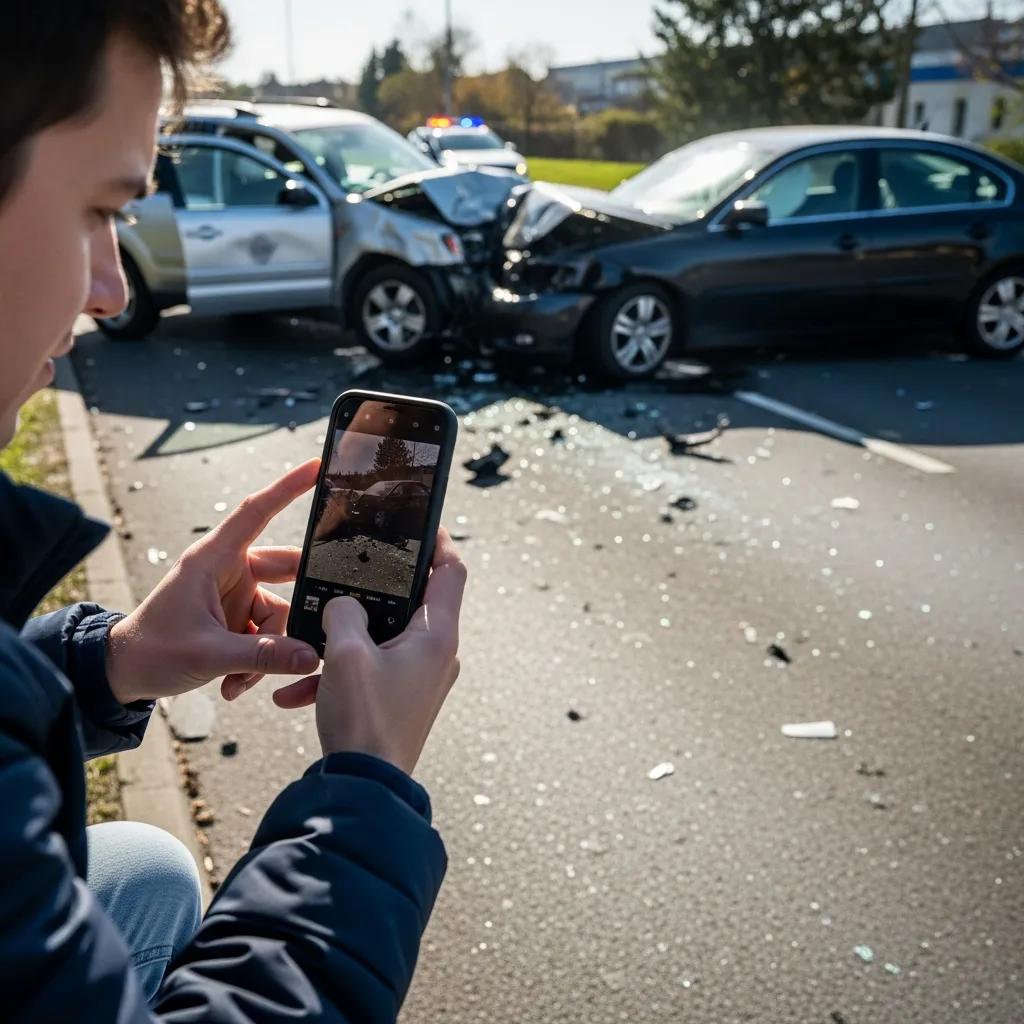
Calling police and documenting the scene creates an official record that supports medical care and insurance claims and preserves evidence for liability decisions. Dial 911 when there are injuries, major damage, or blocked traffic. Give your exact location, the number of vehicles, and any known injuries so dispatch sends the right help. While you wait, collect names, phone numbers, license plates, and insurance details from other drivers. Stick to facts and avoid admitting fault. Use your phone to take wide photos for context and close-ups of damage, VIN/odometer, skid marks, signs, and visible injuries.
Here’s a quick-reference table of the information to exchange with other drivers and why it matters.
| Person/Vehicle | What to Record | Notes |
|---|---|---|
| Other Driver | Full name, phone number, driver’s license number | Don’t discuss fault; photograph license only if it’s safe |
| Vehicle | License plate, make/model, visible damage | Take wide and close-up photos that show positions |
| Insurance | Insurer name, policy number, claim contact | Note insurer phone/app and any claim number you get |
These details back up police reports and insurer investigations and form a factual baseline for claims and repairs.
Prime Time Collision Center can help document vehicle damage and explain what evidence adjusters need. Our technicians can perform an initial damage triage and provide a free OEM‑aware estimate that makes adjuster coordination smoother.
What information must you exchange with other drivers?
Exchange key identifiers and policy data, but avoid assigning blame. Record names, phone numbers, insurance company and policy numbers, driver’s license numbers, and license plates; photograph insurance cards and IDs when safe to do so to avoid transcription errors. Note the VIN and visible damage locations, and get witness contact info if available. Limit your statements to what you observed—no apologies or admissions—and back up the exchange with photos of the documents.
Accurate contact and policy details speed filing claims and help recreate the sequence of events during investigations.
How do you properly document vehicle damage and the scene?
Good documentation combines multiple photo angles, context shots, and written notes so adjusters and repairers can assess damage and scene dynamics accurately. Capture wide shots showing all vehicles and their positions, mid-range shots of damage areas, and close-ups of dents, broken glass, deployed airbags, VIN plates, and dashboard indicators. Photograph road signs, skid marks, traffic lights, and weather conditions. Back up photos to the cloud and email copies to yourself for timestamped records. Label images by sequence and jot a brief account of events while details are fresh—time‑stamped evidence speeds up adjuster reviews and repair authorizations.
A short photo-and-notes checklist ensures nothing important is missed and reduces the need for repeat inspections.
What are the essential steps to notify your insurance and understand your rights?
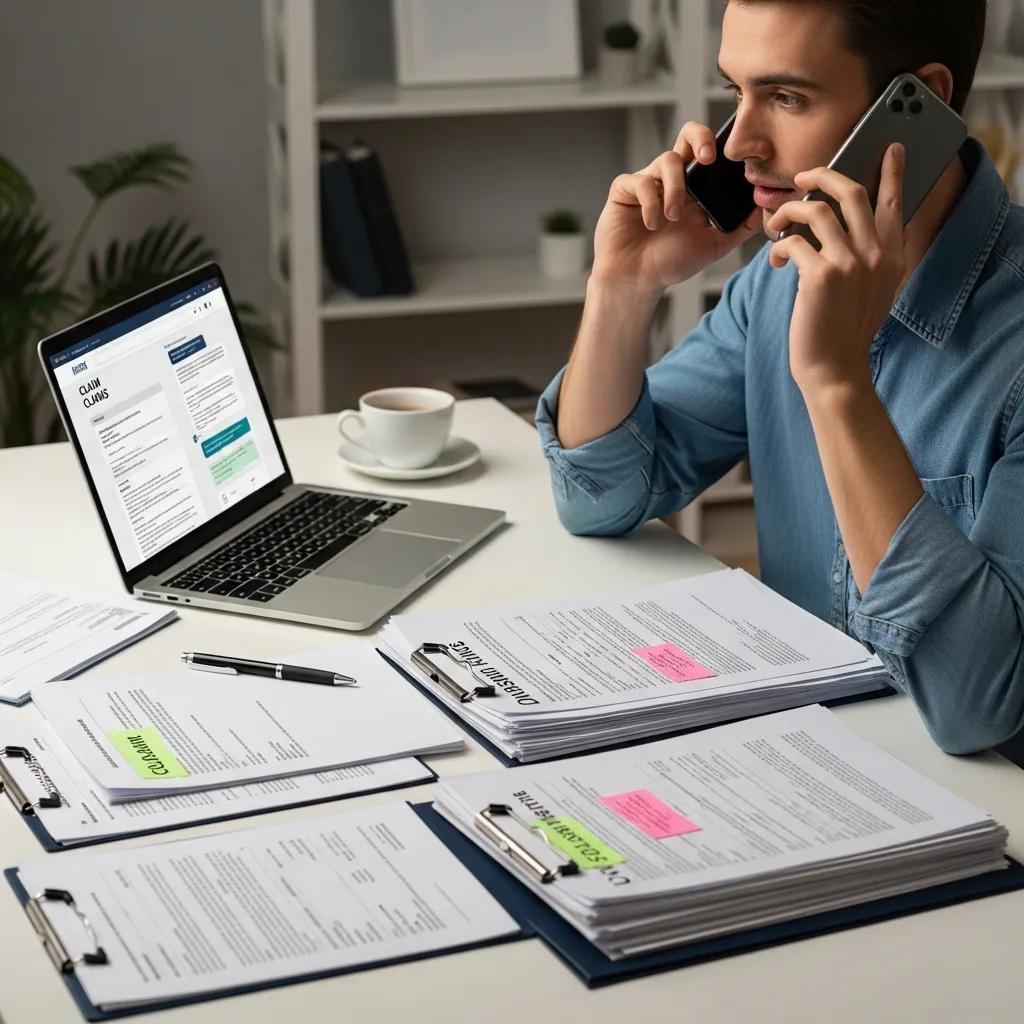
Notify your insurer promptly and know your consumer rights so the claim moves smoothly and you protect your choice of repair shop. File a claim by phone, app, or online as soon as practical and provide the police report number, photos, witness contacts, and any initial repair estimate. An adjuster will review damage—virtually or in person—and issue a claim number and timeline; keep records of all communications with dates and names. You typically have the right to choose your repair facility, and OEM‑certified shops follow manufacturer procedures and parts that preserve safety and resale value.
Here’s a compact comparison of common claim pathways to clarify immediate steps and likely outcomes.
| Claim Type | Immediate Steps | Who Pays / What to Expect |
|---|---|---|
| At-Fault | Report promptly, provide facts, await adjuster | The at-fault driver’s liability insurer usually pays third-party repairs |
| Not-At-Fault | File with your insurer and the at-fault insurer | Expect subrogation or direct payment from the at-fault insurer once liability is established |
| Uninsured Driver | Report incident, check UM coverage, document thoroughly | Your uninsured motorist (UM) coverage may apply; otherwise you risk out-of-pocket costs |
A documented estimate and clear photo record reduce disputes and speed approvals—many drivers get a professional assessment early for this reason.
How do you start an insurance claim after a collision?
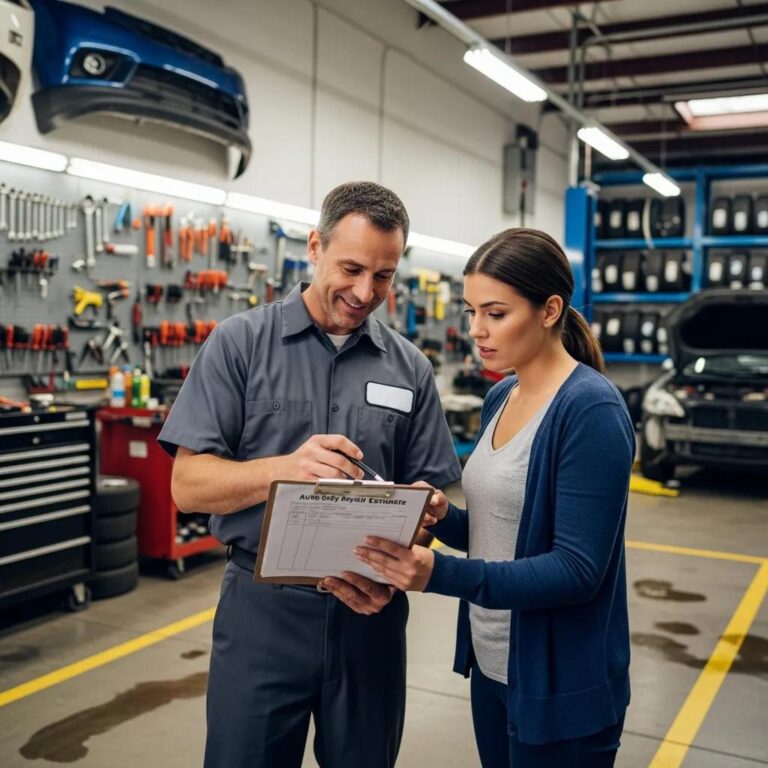
Be organized: have police report details, photos, contact info, and a repair estimate ready before you call or use an app. Give basic facts—date, time, location, parties involved—and reference the police report number if available. Speak calmly and ask for a claim reference number and next steps. An adjuster may inspect the vehicle and will outline repair timelines; ask about rental coverage and whether they accept shop-supplied estimates. A professional repair shop can supply an OEM-focused estimate and work directly with your insurer to explain required procedures and parts.
An estimate from an OEM-aware shop strengthens your position with adjusters and helps protect the vehicle’s safety and value as the claim progresses.
Can you choose an OEM-certified repair shop?
Yes — you generally have the right to pick your repair facility, even if an insurer suggests preferred shops. Choosing an OEM-certified shop ensures repairs follow manufacturer procedures, use approved parts, and include required calibrations—critical for vehicles with ADAS, aluminum, or high-strength steel. If an insurer recommends a shop, tell them you choose a certified facility and provide an estimate documenting OEM repair needs. That documentation helps advocate for proper procedures. Prioritizing OEM-certified repairs protects long-term reliability and resale value.
Knowing your right to shop selection lets you focus on safety and quality rather than convenience alone.
When should you seek medical care or legal advice after a crash?
Get medical attention promptly to protect your health and preserve documentation for injury claims. Seek emergency care for obvious serious injuries, and get a check-up within 24–72 hours for symptoms like neck pain, headaches, dizziness, or numbness—conditions such as whiplash or concussion can show up later. Medical records create a timeline linking symptoms to the crash. Consider legal counsel when injuries are significant, fault is disputed, or insurers deny coverage; an attorney can review releases, negotiate settlements, and protect your rights.
Knowing when to involve medical or legal professionals reduces long-term health and financial risk and clarifies the documentation needed for claims and repairs.
Why get an immediate medical check-up after an accident?
Some injuries—whiplash, internal trauma, concussions—don’t show right away. An early medical exam documents symptoms, provides diagnosis or imaging if needed, and starts any treatment. Those records are important for both your recovery and any injury claim. Follow recommended care and keep copies of all medical reports and bills for your claim.
Medical documentation protects your health and creates a clear evidentiary record for insurance or legal proceedings.
When should you talk to a lawyer?
Talk to a lawyer when injuries are serious or permanent, fault is unclear, the other driver is uninsured, or settlement offers are inadequate. A collision attorney can review medical and accident records, value your claim, negotiate with insurers, and advise about litigation. Don’t sign major releases or accept low settlements without legal review—early counsel helps preserve your rights and organize evidence for the best outcome.
Early legal input ties medical, accident, and repair records into a coherent strategy that protects recovery and compensation prospects.
Why trust Prime Time Collision Center for OEM-certified repairs and emergency help?
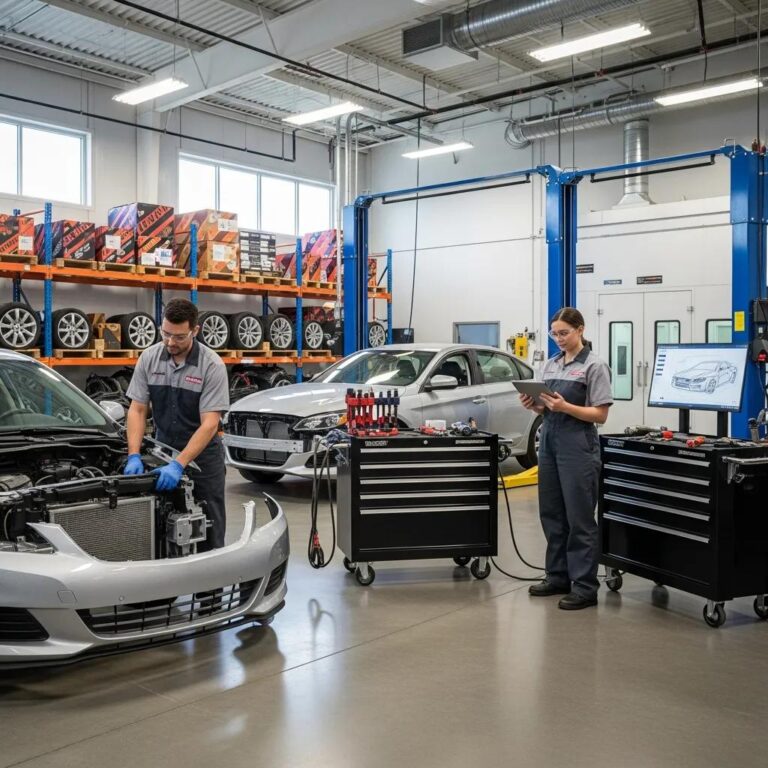
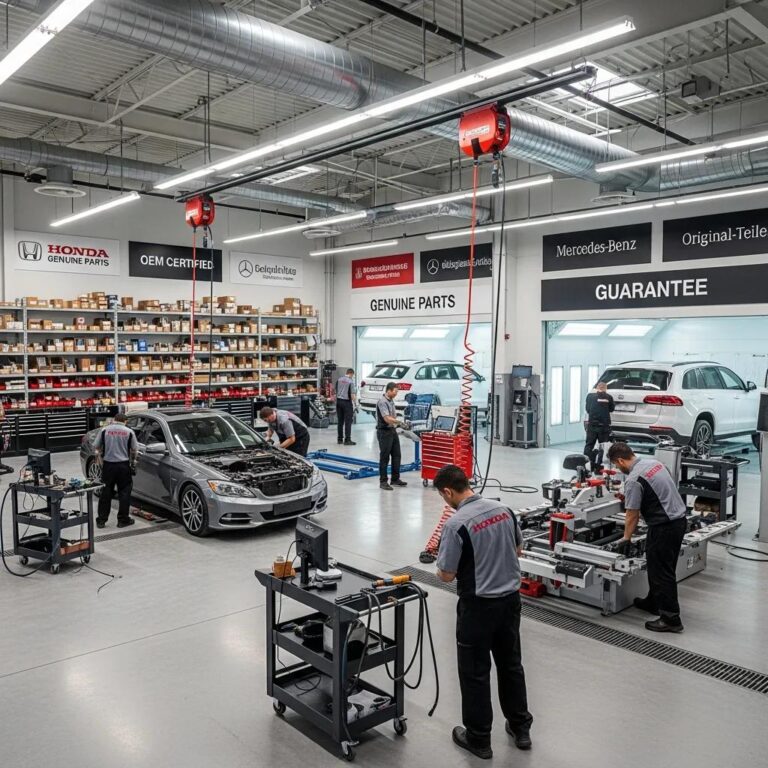
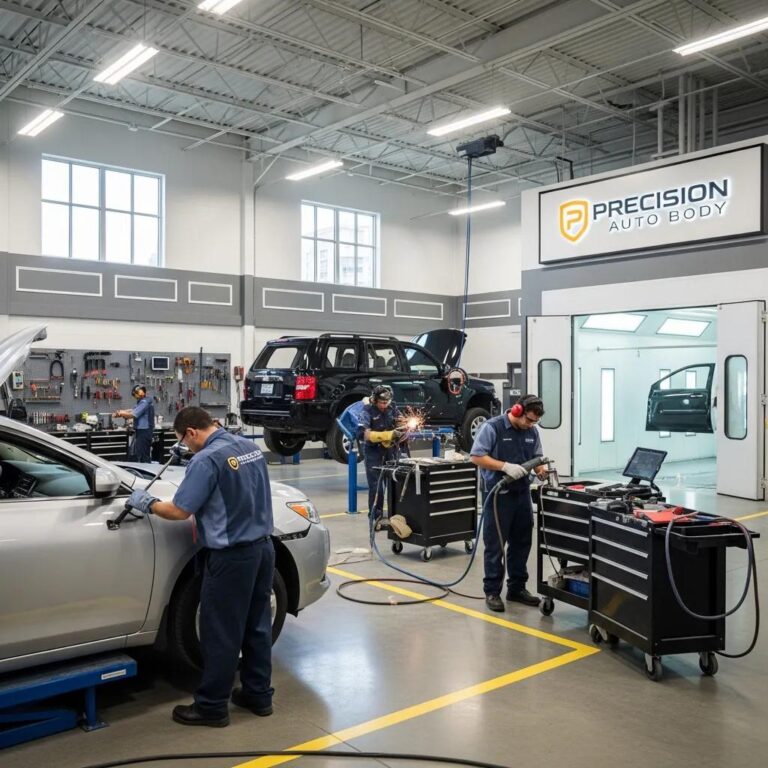
Prime Time Collision Center is a local collision repair shop focused on OEM-quality work, honest claims support, and fast, reliable service. Our facility uses I-CAR Platinum certified technicians who follow manufacturer repair procedures. We provide free estimates that help document damage for insurers and offer 24/7 towing to secure vehicles after a crash. Our lifetime warranty gives added peace of mind, and we work with major insurers to streamline approvals while standing up for OEM parts and procedures. Serving Glendale, Burbank, Pasadena, and Los Angeles, Prime Time is set up to move you from on-scene documentation to safe, certified repair.
| Repair Provider | Certification | Warranty | Towing | Insurance Assistance |
|---|---|---|---|---|
| Prime Time Collision Center | I-CAR Platinum Certified technicians | Lifetime warranty on repairs | 24/7 towing available | Works with insurers and provides claims support |
| Insurance-Network Shop | Varies by shop | Varies by network | May offer towing | Often preferred, coordination varies |
| DIY / Independent | Typically no OEM certification | No factory warranty | Owner-arranged | No insurer liaison services |
This comparison shows how an OEM-certified shop with trained technicians and guaranteed repairs reduces safety and resale concerns. For a free estimate and fast help, call (818) 396-4997 or visit us at 6010 San Fernando Rd, Glendale, CA 91202.
What makes our I-CAR Platinum certified technicians the safest choice?
I-CAR Platinum certification means our technicians receive advanced, ongoing training in modern collision repair. They follow manufacturer procedures for structural repairs, ADAS calibration, and parts installation — vital for vehicles built with high-strength steel, aluminum, or integrated electronics. Continuous training lowers the risk of improper repairs that could affect crashworthiness or require rework. Choosing a certified team gives you confidence that repairs meet safety expectations and manufacturer intent.
Skilled, certified technicians and OEM procedures are central to long-term vehicle safety and value retention.
How do our free estimates and 24/7 towing help after an accident?
Fast towing and a timely, documented estimate limit further damage and give insurers a clear, OEM-focused repair plan to authorize work sooner. A 24/7 tow places your vehicle in a secure facility for inspection and protects it from weather or vandalism, while a free OEM-aware estimate captures damage, parts needs, and calibration requirements insurers need for approvals. Prime Time coordinates directly with insurers to submit estimates and explain manufacturer procedures, which shortens authorization time and avoids delays. Together, these services make the transition from crash to certified repair smoother and faster.
Streamlined towing, professional estimates, and insurer coordination reduce downtime and support safe, accurate repairs.
Frequently Asked Questions
What should you do if symptoms appear days after an accident?
If you develop pain, dizziness, headaches, or other symptoms days after a crash, seek medical attention right away. Delayed symptoms can signal serious issues like whiplash or concussion. Record when symptoms started—those details help with insurance and any injury claims. Prioritize your health and follow recommended treatment.
How can you protect yourself from insurance claim denials?
Protect against denials with thorough documentation: photos, witness statements, and a police report. Keep records of all communications with your insurer—dates, names, and what was discussed. Know your policy and provide requested information promptly. If a claim is denied, ask for a written explanation and consider legal advice to explore appeals. Being organized and proactive improves your chances of a successful claim.
What common mistakes should you avoid after a car accident?
Common mistakes include not calling the police, failing to document the scene, admitting fault, and skipping medical evaluation. Don’t argue about fault at the scene. Report the accident to your insurer promptly, and understand your repair-shop rights so you’re not pressured into a poor choice.
How do you ensure your vehicle is repaired to OEM standards?
Choose an OEM-certified repair shop that follows manufacturer guidelines and uses approved parts. Ask for a detailed estimate outlining the repair steps and parts. Verify the shop’s certifications and experience with your vehicle make and model. Keep open communication between the shop and your adjuster to confirm repairs meet safety and quality standards.
What if you’re unsure about your insurance coverage?
Review your policy or call your agent to clarify coverage limits, deductibles, and benefits like uninsured motorist or rental reimbursement. Keep a copy of your policy handy for quick reference after an accident. Knowing your coverage helps you make informed choices during the claim process.
When should you involve law enforcement after an accident?
Call law enforcement when there are injuries, significant property damage, or if the other driver is uncooperative. A police report creates an official record that insurers and courts rely on. Even in a minor crash, a report can help clarify liability. Always call 911 if anyone is hurt or traffic is blocked.
What if the other driver has no insurance?
If the other driver is uninsured, document the scene thoroughly, collect witness statements, and report the incident to your insurer right away so they can advise on uninsured motorist (UM) coverage. Check whether your policy includes UM benefits for repairs and medical costs when the at-fault party lacks insurance, and keep all evidence and the police report. Get a professional repair estimate to document damage; repair shops familiar with insurer processes can help submit that documentation. If UM coverage isn’t available, a lawyer can advise on civil claims depending on the other driver’s assets.
Thorough documentation and early insurer contact are essential when the other party lacks insurance, and a certified repair estimate helps substantiate your damages.
How long does the claim process usually take?
Timelines vary. Typical steps run from initial report and adjuster review (days to weeks) to parts sourcing and repairs (weeks to months). Minor claims with available parts can finish in a few weeks; structural repairs, ADAS recalibration, or backordered parts extend the schedule. Prompt documentation and choosing a shop experienced with OEM procedures and insurer coordination help reduce delays. Keep in regular contact with your adjuster and repair provider to track progress and avoid surprises.
Knowing the milestones and what can slow progress helps you set realistic expectations and pick providers who minimize delays.
Do you have to use your insurer’s recommended repair shop?
You generally have the right to select your repair shop even if your insurer recommends a network shop. Recommended shops may be convenient, but they don’t override your choice. Insurers may offer streamlined billing with preferred shops, but you can choose an OEM-certified facility to ensure manufacturer procedures and parts are used. Tell your insurer which shop you choose and provide the estimate to speed authorization. If there’s a dispute, document why you picked an OEM-certified shop and ask for insurer confirmation in writing.
Asserting your right to a certified repair facility protects vehicle integrity and aligns repairs with manufacturer standards.
Conclusion
Knowing the right steps after a car accident keeps people safe, preserves evidence, and makes the insurance and repair process smoother. Follow these priorities to protect your health, legal rights, and vehicle value. If you need expert help and OEM-certified repairs, Prime Time Collision Center is ready to assist. Reach out to us to get a free estimate and fast, reliable support to get your vehicle back to its best condition.