Find a Trusted Car Paint Shop in Los Angeles — Expert Auto Paint Repair & Services
After a collision or years of wear, choosing the right paint shop in Los Angeles comes down to matching technical skill with local convenience. This guide walks you through how professional auto painting restores appearance and protects vehicle value using OEM‑quality repairs, precision color matching, and controlled refinishing processes. You’ll learn what matters when evaluating shops, how advanced paint workflows deliver seamless results, why OEM‑certified repairs matter for resale, which services handle common damage, and how to work with insurance for paint jobs in L.A. We use practical comparisons, step‑by‑step process descriptions, and clear service tables so owners of daily drivers and luxury cars can make informed decisions. If your goal is an invisible repair and correct insurance handling, the sections below show what to expect and how to prepare for factory‑standard results.
Why Choose Prime Time Collision Center for Car Paint Repair in Los Angeles?
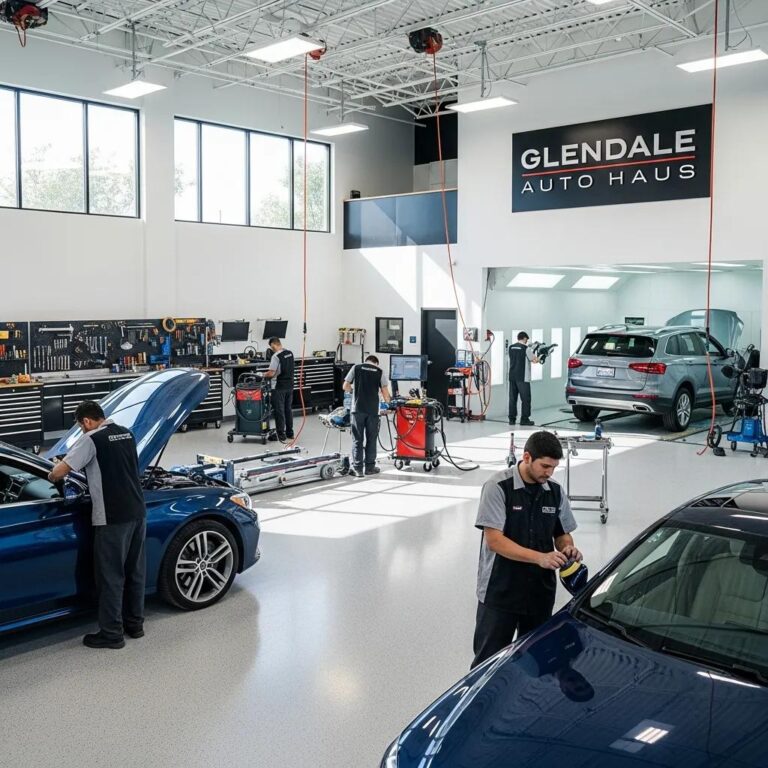
Picking the right paint shop starts with proven credentials and reliable results: certified technicians, controlled facilities, and straightforward customer service create consistently high‑quality paint repairs. Shops that commit to OEM‑quality repairs follow manufacturer material specs, run work in proper paint booths, and keep documented quality checks to ensure adhesion, color accuracy, and long‑term durability. For Los Angeles drivers, proximity and claims support matter too — quick, well‑documented estimates and clear communication reduce downtime and speed approvals. Below we unpack the trust signals and practical services that make repairs smoother.
Prime Time Collision Center bundles the credentials and services people look for when searching “car paint shop Los Angeles.” Our technicians hold I‑CAR Platinum credentials, ensuring training that aligns with manufacturer standards for collision and refinishing. We emphasize OEM‑quality repairs and work closely with insurers. We also offer free estimates, a lifetime warranty on repairs, and free 24/7 towing — services that simplify recovery, create clear documentation for insurers, and get repairs moving faster, which is critical for paint scheduling and parts ordering.
What certifications and expertise ensure quality paint repairs?
Technician certification sets a baseline for quality paint work — I‑CAR Platinum shows comprehensive training across collision repair and refinishing. Certified techs know color capture, substrate prep, proper use of primers and sealers, and careful reassembly to preserve fit and finish and avoid repaint‑related alignment issues. That training also covers modern waterborne paint systems and OEM material compatibility so technicians choose the correct primers, basecoats, and clearcoats for each make. Those skills translate into consistent gloss, reliable adhesion, and long‑term resistance to peeling or delamination.
How does Prime Time Collision Center handle insurance claims and customer service?
A dependable shop manages documentation, coordinates with adjusters, and keeps customers updated to avoid admin delays and scope surprises. Prime Time Collision Center provides free estimates, detailed repair documentation for adjusters, and direct liaison with insurance reps to justify OEM parts or specific refinishing steps. We keep you informed with status updates and scheduling so you can plan around vehicle downtime. That hands‑on claims support is especially valuable when insurers review multi‑stage paint processes or OEM‑compliant parts.
What Is the Advanced Car Painting Process at Our Los Angeles Shop?
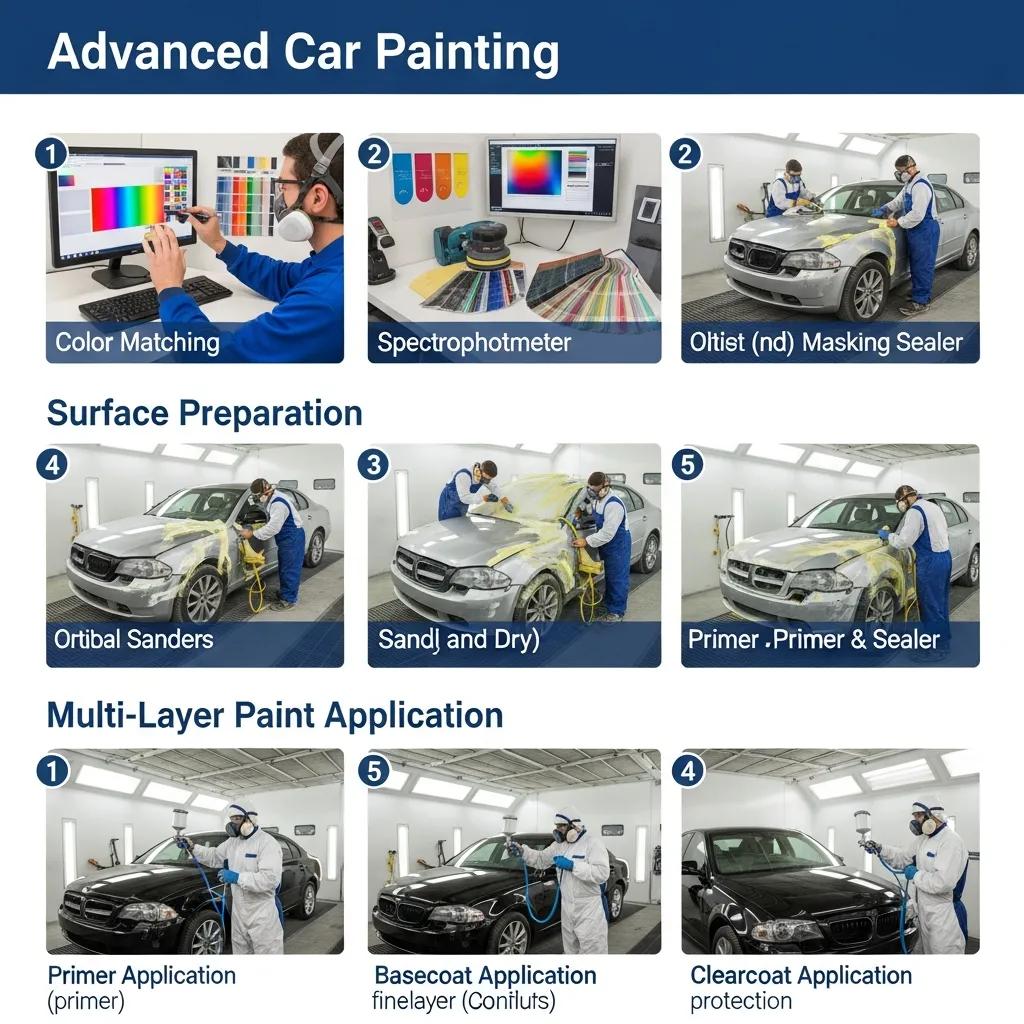
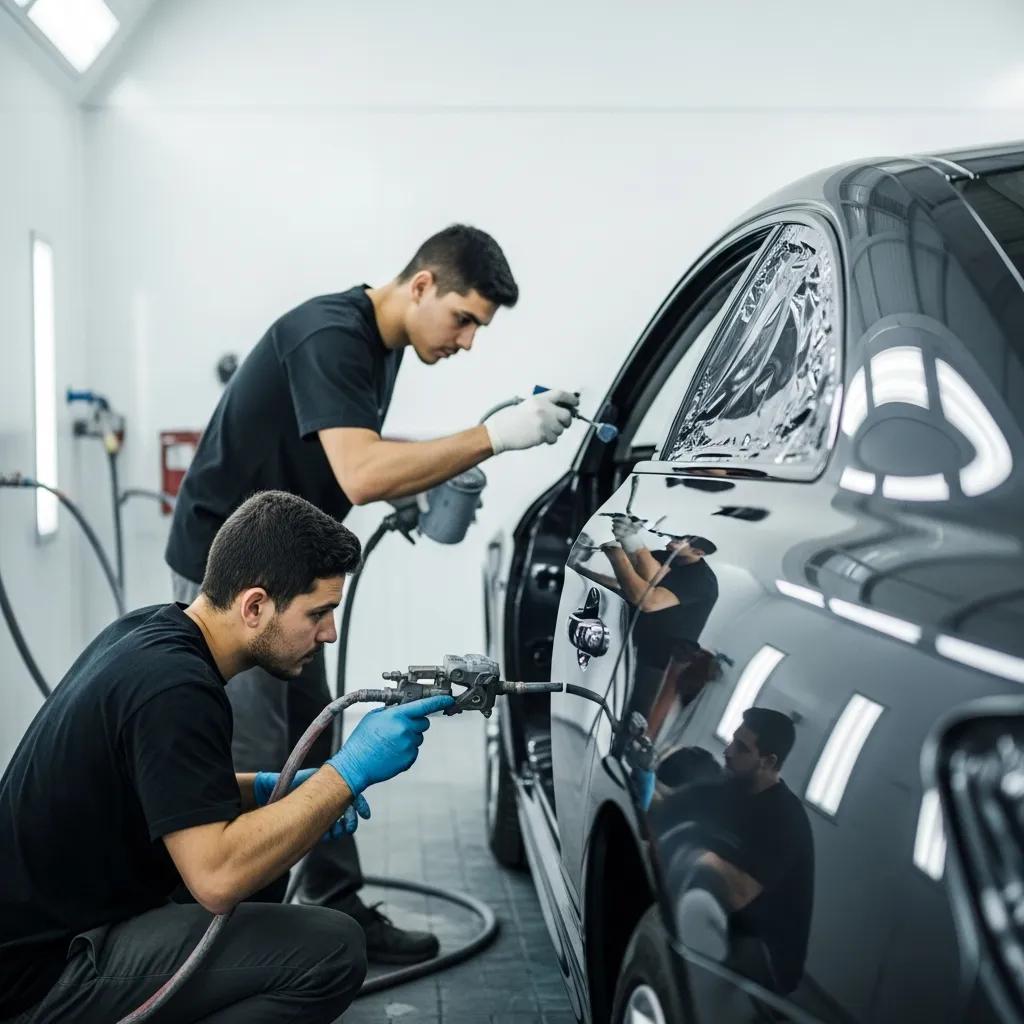
Advanced auto painting is a controlled, multi‑stage workflow that begins with assessment and ends with engineered curing and inspection to reproduce factory appearance and durability. The process uses precision color capture and mixing, substrate repair and sealing, multilayer paint application in a ventilated paint booth, and methodical curing and measurement so the finish blends at panel edges. Controlled workspaces and documented procedures reduce contamination, runs, and mismatches, delivering results suitable for everyday vehicles and high‑value luxury brands. The sections below explain color matching tools and the stepwise paint sequence.
How does precision color matching technology achieve flawless finishes?
Precision color matching combines a spectrophotometer, OEM paint codes, and a large color database to read tint, metallic direction, and pearl effects across lighting conditions. Technicians capture spectral data from the vehicle, match that to factory formulas, and run small test mixes to account for fade, substrate differences, and batch variation before full‑panel work. For metallic or pearl finishes, we control flake orientation and layer sequencing so the visual effect aligns across adjoining panels and minimizes transition lines. This technical capture and testing produce the near‑invisible matches that separate OEM‑quality repairs from quick spot jobs.
What are the steps in our multi-stage paint application and quality inspection?
A repeatable, multi‑stage application assures adhesion, consistent gloss, and durability. We begin with thorough cleaning and surface repair, then move through primer, basecoat, and clearcoat stages with inspections at each phase. Technicians sand and feather edges, mask surrounding panels, apply primer to specified film builds, spray basecoat in even passes, and follow with multiple clearcoat layers to achieve gloss and depth. Between coats we allow controlled flash and do intermediate sanding to remove texture and create a smooth surface for polishing. Curing follows manufacturer‑recommended heat cycles or infrared systems to stabilize the film. Final inspection checks color match, gloss, and panel alignment, with wet sanding and buffing as needed for a factory‑quality finish.
The refined painting process typically follows these practical steps:
- Assessment and color capture to determine repair scope and exact color formula.
- Structural and substrate repairs, rust treatment, and primer application for adhesion.
- Basecoat application with precise layering and metallic orientation control.
- Clearcoat application, engineered curing, and final inspection with polishing.
- Customer walkthrough and documentation for warranty and insurance records.
This step‑by‑step workflow shows how technical controls and disciplined processes reduce rework and produce long‑lasting paint repairs, which leads into why OEM certification matters for results.
How Do OEM Certified Paint Repairs Benefit Your Vehicle?
OEM‑certified paint repairs use manufacturer‑approved materials and methods, reducing fit‑and‑finish issues and protecting warranty and resale value. Following OEM standards means using approved primers, basecoats, and clearcoats at correct film thicknesses and keeping procedure records that inspectors, insurers, and buyers accept as factory‑compatible. That compliance helps prevent improper adhesion, lowers future corrosion risk, and keeps visual continuity across panels. The next sections define OEM standards and explain how they affect a vehicle’s long‑term integrity.
What are OEM paint standards and why are they important?
OEM paint standards specify material systems, application tolerances, and color formulas tied to a vehicle’s production codes so repairs match factory finish and performance. Adhering to those standards controls variables like primer chemistry, film build, and curing cycles — all factors that determine adhesion strength and UV resistance. Manufacturers may require specific repair sequences or calibrations for advanced finishes like multi‑layer pearl or electrocoat substrates; following those rules prevents incompatibilities that can cause premature failure. Knowing these standards helps owners pick a shop that replicates factory methods rather than relying on generic materials that risk durability.
How do OEM certified repairs maintain vehicle integrity and resale value?
OEM‑level repairs matter when vehicles are inspected by buyers, appraisers, or lease evaluators because documented use of manufacturer components and processes signals a proper restoration. Repairs done with correct materials and documented procedures reduce the chance of color mismatch, delamination, and corrosion that can reduce resale value or trigger insurer disputes. The table below highlights direct benefits, attributes, and practical outcomes so owners can see why OEM certification matters.
| Benefit | Attribute | Value / Explanation |
|---|---|---|
| Safety & Fit | Manufacturer-approved materials | Ensures correct adhesion and structural compatibility, reducing failure risk |
| Appearance | Exact color formulas & application tolerances | Preserves factory gloss, texture, and seamless panel blending |
| Resale / Warranty | Documented OEM-compliant process | Facilitates appraisals, lease acceptance, and warranty preservation |
That comparison shows the practical outcomes of OEM‑compliant paint repairs and leads into the list of services that apply these standards across common damage types.
What Comprehensive Car Paint Services Are Available in Los Angeles?
A full paint service catalog covers everything from spot repairs to full vehicle repaints and specialty finishes, so you can pick the right level of work for the damage and the vehicle’s value. Choice depends on whether damage affects a single panel, multiple panels, or underlying structure, and turnaround times change accordingly. The sections below describe typical services, when to choose them, and a table summarizing common damage types and expected turnaround to help you decide.
Which services cover full vehicle repainting, scratch, dent, and bumper repairs?
Service options include full vehicle repainting for widespread wear, spot/partial paint repair for localized chips and scratches, bumper paint repair for impact‑damaged plastic parts, and paint chip repair for discrete blemishes. Each service includes prep—dent repair or paintless dent repair when paint is intact—followed by color‑matched refinishing and finish correction. Turnaround varies by scope: spot repairs often take a few days, bumper refinish needs time for plastic repair and adhesion, and full repaints may require 7–10 days for masking, multi‑stage application, and proper curing.
| Service | Common Damage Type | Typical Turnaround / Notes |
|---|---|---|
| Spot / Partial Paint Repair | Small chips, single-panel scratches | 1–3 days; cost-effective for minor damage |
| Bumper Paint Repair | Scuffs, impact scratches, minor cracks | 2–5 days; may require plastic repair before painting |
| Full Vehicle Repainting | Extensive fade, multiple-panel damage | 7–10 days; recommended for uniform finish restoration |
| Paint Chip Repair | Isolated stone chips or primer exposure | 1–2 days; blends small areas to invisible condition |
Specialized finishes for luxury and high‑end vehicles need extra steps and QA checks beyond standard repairs. Luxury finishes often use multi‑coat base and effect layers, requiring precise flake orientation, controlled layering, and advanced clearcoat systems to preserve depth and sheen. Technicians use specialized polishing, gloss meters, and repeated color checks under multiple light sources to ensure fidelity. Those extra procedures reduce visible mismatch risk and are essential for brands with complex color profiles.
Key considerations for luxury finishes include:
- Layer sequencing: Multi‑coat systems require precise order and flash times.
- Flake orientation control: Metallic and pearl effects need consistent directional alignment.
- High‑precision QA: Multiple light‑source inspections and gloss metering confirm the match.
Once you choose a service level, the next steps usually involve insurance coordination and documentation to secure approvals and scheduling.
How Can You Navigate Insurance Claims for Car Paint Damage in Los Angeles?
Filing a paint damage claim requires clear documentation, prompt estimates, and the right way to explain repair scope to an adjuster to avoid denials or underpayment. A methodical approach — photographing damage, getting a detailed estimate, and understanding what insurers check — helps speed approvals. The sections below give a customer checklist for filing claims and show how a shop can assist, including a concise step‑by‑step table for quick reference.
What is the process for filing and managing paint damage insurance claims?
Start by documenting damage with clear photos from multiple angles and note the date and circumstances to create a factual record. File the claim quickly, attach your documentation, and request an itemized estimate from a shop that details OEM‑quality steps; adjusters typically review that estimate and may inspect the vehicle. Timelines vary — common delays happen when additional parts or structural issues appear during disassembly; thorough initial documentation and a detailed estimate reduce those delays. Preparing solid evidence and using a shop experienced with adjusters helps speed approval and sets an accurate repair scope.
Simple claims checklist to prepare:
- Document photos: Close‑ups and wide shots of all affected panels.
- Estimate request: Obtain a written, line‑item estimate specifying materials and labor.
- Police report: If applicable, include official documentation for collision claims.
- Communication log: Keep notes of calls and emails with insurer and shop.
Below is a compact table clarifying who performs each step and what the expected outcome is — a quick reference to help customers follow the workflow.
| Step | Who Does It | What You Need / Outcome |
|---|---|---|
| Document Damage | Vehicle owner | Photos, incident notes; creates claim evidence |
| Get Estimate | Repair shop | Detailed line-item estimate; informs adjuster review |
| Adjuster Review | Insurer / Adjuster | Vehicle inspection or virtual review; approval or clarification |
| Repair Authorization | Repair shop & Insurer | Work order and schedule; documented scope and timeline |
How does Prime Time Collision Center assist with insurance claim approvals?
We help customers by creating detailed, OEM‑aligned estimates and speaking directly with adjusters to justify repair methods and parts when needed. We provide free estimates, thorough documentation including photos and repair breakdowns, and liaison services to explain manufacturer‑specified steps that support OEM‑compliant repairs. By coordinating towing when necessary and following up on adjuster questions, we keep repairs moving and reduce the administrative burden on owners. This hands‑on support is especially helpful when claims involve specialty finishes or multi‑stage paint work that require insurer understanding to approve correctly.
What Do Los Angeles Customers Say About Our Car Paint Services?
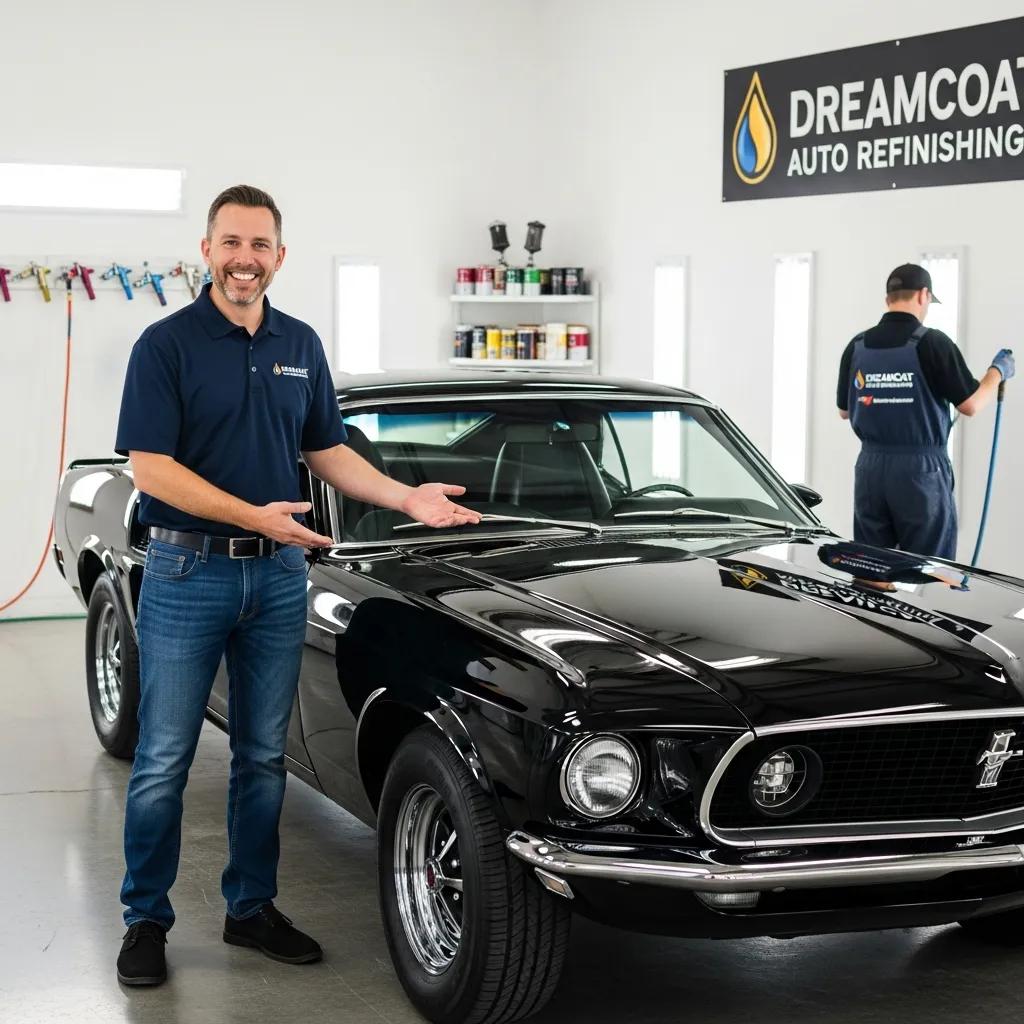
Customer feedback consistently highlights three things: color match, reliable turnaround, and clear communication — the core indicators of a shop’s refinishing skill and customer care. Before‑and‑after photos and review excerpts that focus on color fidelity and finish quality give objective proof of results. The sections below summarize common testimonial themes and show what to look for in visuals to judge repair excellence.
Which testimonials highlight paint quality, color matching, and service satisfaction?
Local reviews often praise precise color matches across panels, durable finishes that resist delamination, and straightforward communication about timelines and insurance. When customers call a repair “invisible” or note a gloss match under different lighting, that points to solid color capture and finishing work. These review themes set realistic expectations and help you ask the right questions before a repair. We encourage viewing full reviews on our Google Business Profile or website for deeper confirmation.
How do before-and-after visuals demonstrate our paint repair excellence?
Before‑and‑after photos show repair quality by revealing edge blending, gloss and texture parity, and seamless panel alignment — details words alone can’t convey. Look for consistent metallic orientation across panels, no visible overspray or edge lines, and preserved factory gaps that signal correct reassembly. Curated galleries should include short captions describing the repair steps taken (for example, “edge feathered and multi‑stage blend applied”) so you understand why the outcome is superior. Viewing examples from both luxury and everyday vehicles helps set realistic expectations for your repair.
Key indicators to evaluate in repair images:
- Edge blending visibility: Minimal perceptible transition at panel edges.
- Gloss and texture parity: Consistent sheen and surface texture across panels.
- Panel alignment: Correct gaps and reassembly indicating careful workmanship.
- Lighting checks: Photos under different lights show consistent color fidelity.
This customer‑focused section helps you evaluate results after reviewing our services, processes, and insurance guidance above.
Frequently Asked Questions
What should I look for when choosing a car paint shop in Los Angeles?
Look for technician certifications, customer reviews, and a shop’s commitment to OEM standards. Prefer shops that give transparent, written estimates, offer a warranty, and keep communication clear throughout the repair. If you own a luxury vehicle, confirm the shop has specific experience with that brand. Proximity and the shop’s ability to work with your insurer are also important.
How can I ensure my car’s paint repair is durable?
Choose a shop that uses OEM‑approved materials and follows manufacturer specifications. Durable repairs begin with correct surface prep, multiple paint layers, and a protective clear coat. Ask about the shop’s curing process — controlled curing improves adhesion and longevity. After the repair, regular maintenance like washing and waxing helps preserve the finish.
What types of paint finishes are available for my vehicle?
Shops typically offer solid colors, metallics, pearlescent finishes, and matte options. Solid colors are classic and low‑maintenance; metallics add depth and shimmer; pearlescents shift with viewing angle and are common on luxury cars; mattes are non‑reflective but need special care. Talk with the shop about which finish fits your vehicle and lifestyle, and learn the maintenance each requires.
How long does a typical car paint repair take?
Turnaround depends on damage and service type. Minor spot repairs can finish in a few days, while full vehicle repaints commonly take 7–10 days or longer to allow for masking, multi‑stage application, and curing. Drying times, curing cycles, and additional repairs can extend timelines, so ask for an estimated schedule when you get your quote.
What should I do if my paint repair doesn’t match the original color?
If you notice a mismatch, contact the shop right away. A reputable shop will stand behind its work and make adjustments under warranty if needed. Document the issue with photos and keep records of communications to help resolve the problem smoothly.
Are there any warranties on paint repairs?
Many reputable shops offer warranties that range from a few years to lifetime coverage, depending on their policy. Warranties often cover peeling, fading, or delamination. When choosing a shop, ask for the warranty terms and what is included so you know your protection.
Conclusion
Choosing a trusted car paint shop in Los Angeles means getting repairs that protect your vehicle’s appearance and value. With OEM‑certified processes, experienced technicians, and clear communication, you can expect durable, factory‑grade results. Contact us for a free estimate and see the difference professional refinishing makes. Explore your options today and get your vehicle looking its best.