Fender Repair & Replacement — Expert Service, Clear Pricing, and Lasting Quality
Fender repair and replacement restore a vehicle’s outer panels and mounting points to factory safety and appearance standards while protecting alignment and modern driver‑assist systems. We know vehicle owners need straightforward guidance: how damage is assessed, when paintless dent repair (PDR) makes sense, and when OEM parts or full replacement are the safer choice. This guide walks through common fender damage, repair vs. replacement decision criteria, realistic cost ranges and estimating steps, and why OEM‑level procedures and I‑CAR Platinum technicians matter for long‑term performance. You’ll also find a shop workflow overview, a plain explanation of ADAS calibration, and practical insurance tips to help you make confident decisions after a fender incident.
Common Fender Damage and How Professionals Fix It
Fender damage can be a simple surface scratch or a complex structural issue. Each type of damage has a different repair path to restore safety and appearance. Identifying whether the problem is paint penetration, metal creasing, or rust helps determine whether PDR, spot repairs, or full fender replacement is best. Skilled repairs preserve mounting points, wheel‑arch geometry, and finish quality — and they reduce the chance of alignment or ADAS sensor issues after the work is done. Below is a quick look at the most common fender problems and the professional solutions we use.
- Minor dents and dings: often repaired with paintless dent repair when the paint is intact.
- Scratches and scuffs: fixed with localized blending, clearcoat repair, or full repainting when needed.
- Collision deformation: may require sectioning, structural straightening, or complete fender replacement.
- Rust and corrosion: handled by cutting out affected metal, treating corrosion, and replacing panels if necessary.
When possible we preserve original panel geometry and paint. The next section explains how paintless dent repair works on fenders and where it’s limited.
How Minor Dents and Paintless Dent Repair Work on Fenders
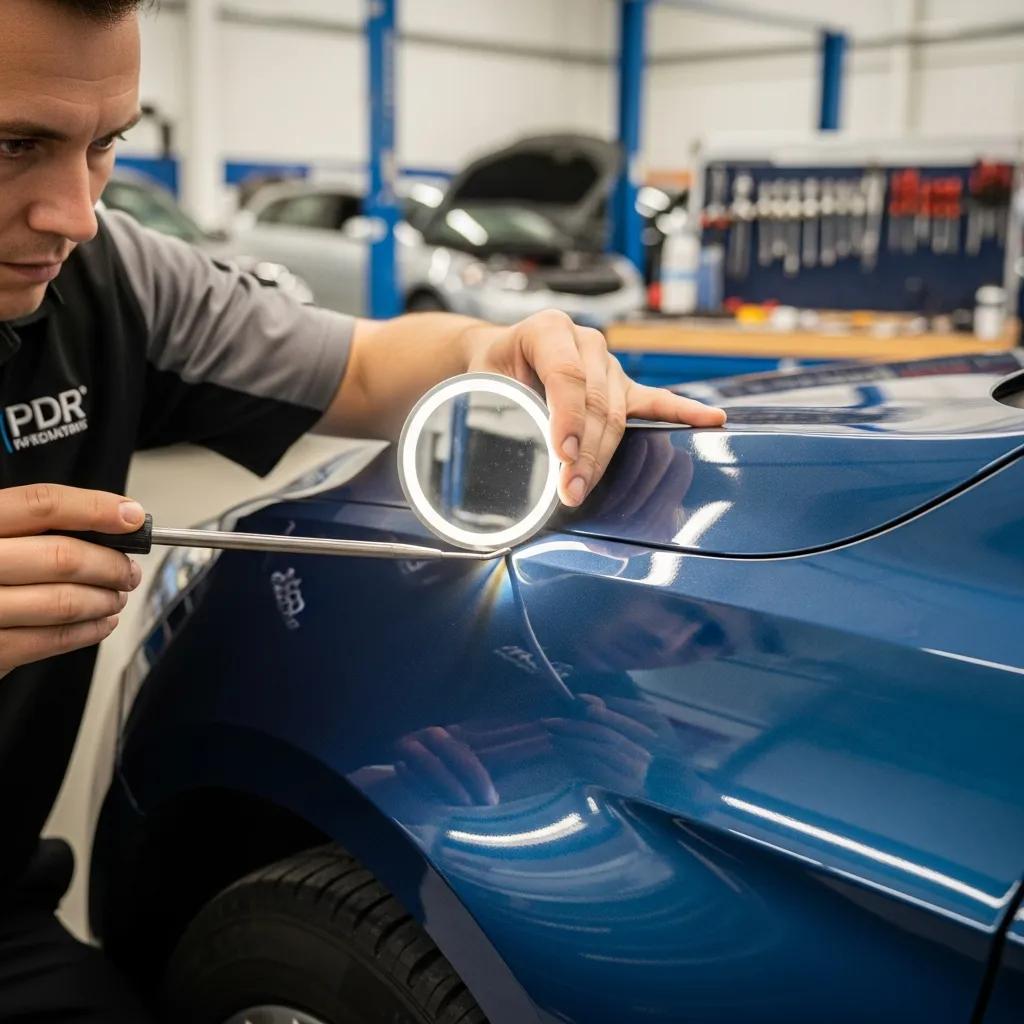
Paintless dent repair (PDR) restores metal panels by working the metal back into shape from behind the dent — all without repainting when the finish is intact.
Technicians check paint condition, dent depth, and access to the panel’s backside to decide if PDR is a good option. When paint and clearcoat are undamaged, PDR preserves the factory finish and avoids visible blend lines.
A typical PDR workflow includes a careful inspection, measured pushing or tapping from behind, fine tuning with micro‑tools, and a final polish to level the surface.
PDR is usually faster and less expensive than repainting, and it eliminates color‑mismatch risk. It’s not appropriate for sharp creases, stretched metal, or areas where paint is cracked near ADAS sensors or mounting points.
Knowing these limits helps you choose PDR when it’s right and more involved repairs when it’s not — which leads into the steps for major collision repair and replacement.
Processes for Major Collision Fender Repair and Replacement

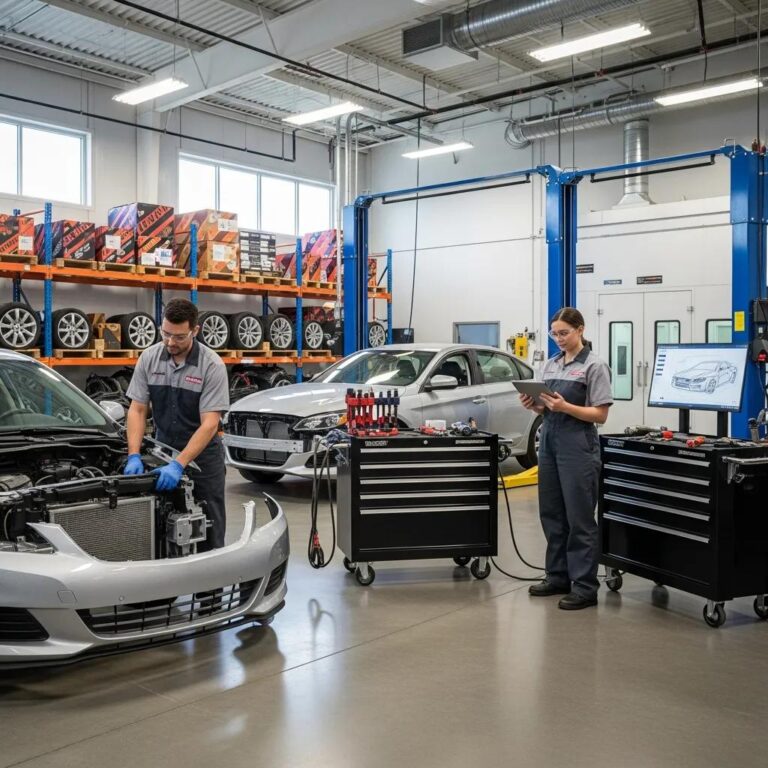
Major collision repair starts with a documented assessment of structural damage, mounting integrity, and nearby systems like suspension and ADAS sensors. From there we disassemble affected areas and perform targeted structural correction.
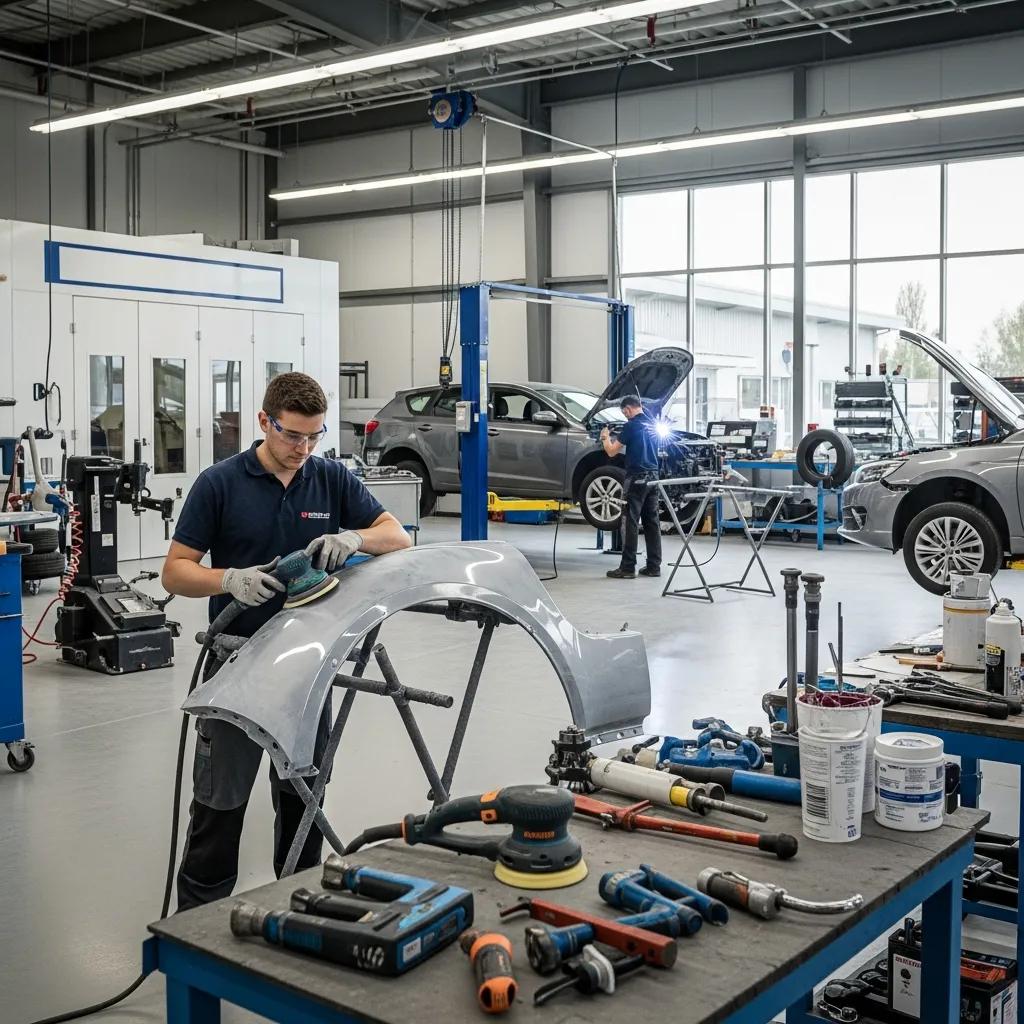
If the panel is repairable, technicians straighten metal, replace damaged brackets, and restore attachment points following OEM procedures. If replacement is required, manufacturer‑specified panels are aligned and installed, then welded or bonded to spec.
Refinishing uses computerized color matching and blending for seamless transitions, and any ADAS sensors are tested and recalibrated to factory tolerances so safety systems work as designed.
Aluminum and high‑strength steels need specialized tools and training to avoid weakening materials. Shops with the right certifications and processes deliver better outcomes and greater safety assurance.
How to Decide Between Repair and Replacement
Choose between repair and replacement based on safety, structural integrity, cost‑effectiveness, and long‑term durability. The goal is to restore mounting points and geometry — not just hide cosmetic damage.
Start by checking whether mounting brackets, inner fender rails, or wheel‑arch geometry are compromised — those affect crash performance and wheel alignment.
Repair is often appropriate for cosmetic dents, small creases, and limited corrosion when OEM procedures can return the panel to spec. Replacement is usually required for severe deformation, stretched metal, or damaged mounting areas.
Use the practical checklist and comparison below to help decide.
If you need a quick decision checklist for repair vs. replacement, use this guideline:
- If paint is intact, the dent is shallow, and mounting points are sound — choose repair (PDR or panel straightening).
- If metal is creased, stretched, or mounting points are distorted — choose replacement for safety and fit.
- If ADAS sensors or structural rails are affected — prioritize OEM replacement and professional ADAS calibration.
- If corrosion has penetrated the panel or spread significantly — replace the panel to prevent recurrence.
The checklist helps you decide quickly after inspection. The table below highlights the trade‑offs between repair and replacement.
Repair vs. replacement comparison for fender decisions:
| Option | Primary Consideration | Typical Outcome |
|---|---|---|
| Repair (PDR/straighten) | Cosmetic or minor structural damage where factory geometry can be restored | Preserves factory paint, lower cost, faster turnaround |
| Replacement (OEM panel) | Severe deformation, stretched metal, compromised brackets or rust‑through | Restores factory fit and structural integrity; higher cost |
| Section/patch repair | Localized metal loss or damage in non‑critical areas | Cost‑effective for limited damage but requires skilled workmanship |
This comparison shows when preserving the original finish is safe and when replacement is the responsible choice for safety and alignment — which affects value and warranty considerations.
What Influences the Decision: Cost, Safety, and Structure?
Key factors include how badly the metal is deformed, where the damage sits relative to mounting points, the panel material (steel vs. aluminum), and whether ADAS components need recalibration.
Cost calculations compare labor for metalwork and refinishing against parts and replacement labor. Aluminum and specialty materials raise both parts and labor due to specialized repair methods.
Structural integrity is checked by measuring panel geometry, mounting hole alignment, and weld/bond condition — damage outside repair tolerances means replacement to preserve crashworthiness.
Balancing these technical and cost factors helps owners choose the safest, most value‑preserving path. The next section explains how those choices affect resale value and warranties.
How Repair vs. Replacement Affects Vehicle Value and Warranty
Using OEM parts and following documented OEM procedures generally preserves manufacturer warranties and resale value better than non‑OEM alternatives — this matters especially for leased or luxury vehicles.
Replacing a panel with certified OEM parts and keeping clear repair records creates a consistent history that buyers and lease inspectors prefer. Aftermarket parts or undocumented repairs can raise questions at resale or lease return.
For warranty preservation, repairs done to OEM procedures and documented with calibration/inspection records support future claims and insurer confidence.
Careful documentation and OEM parts help protect vehicle value and the owner’s rights under manufacturer or lease terms.
Costs and Estimates for Professional Fender Repair
Fender repair costs vary widely based on vehicle class, material, damage severity, labor needs, and whether ADAS calibration is required. Typical ranges set expectations, but a precise price needs an inspection.
Main cost drivers are panel material (steel, aluminum, composite), OEM vs. aftermarket parts, structural alignment or sensor calibration, and paint blending complexity for visible panels.
Below is a quick cost summary, followed by sample ranges and tips for getting a transparent estimate.
TL;DR: Fender repair can range from about $150 for minor PDR to $3,000+ for complete OEM replacement with paint and ADAS calibration, depending on vehicle and damage.
Cost ranges by vehicle type and damage severity:
| Vehicle Type & Severity | Typical Price Range | Notes |
|---|---|---|
| Compact / Minor | $150 – $450 | PDR or small touch‑up; quick turnaround |
| SUV / Moderate | $500 – $1,200 | Section/patch, paint blending, possible alignment |
| Luxury / Major (OEM replacement) | $1,200 – $3,000+ | OEM panels, specialty materials, ADAS calibration |
These ranges show how vehicle complexity and materials affect price. Accurate estimates require photos, your VIN, and an in‑shop inspection. Prime Time Collision Center offers free, transparent estimates and can assist with direct insurance billing. If you’re in Glendale, Burbank, Pasadena, or Los Angeles, ask about our free estimate and 24/7 towing to speed vehicle recovery.
Which Factors Affect Fender Repair Pricing?
Pricing breaks down into three main areas: parts (OEM vs. aftermarket), labor (metalwork, welding, paint prep), and specialized services (aluminum work, ADAS calibration).
Aluminum or composite fenders require trained technicians and special equipment, which raises labor rates. Luxury brands often need OEM panels that cost more than common aftermarket options.
Labor time grows with damage complexity — structural straightening and sectioning add hours compared to PDR — while paint matching and blending across adjacent panels extend refinishing time.
Understanding these variables helps you anticipate estimates and talk with the shop about scope to avoid surprises. The next subsection explains how to request a clear estimate efficiently.
How to Get a Free, Transparent Fender Repair Estimate
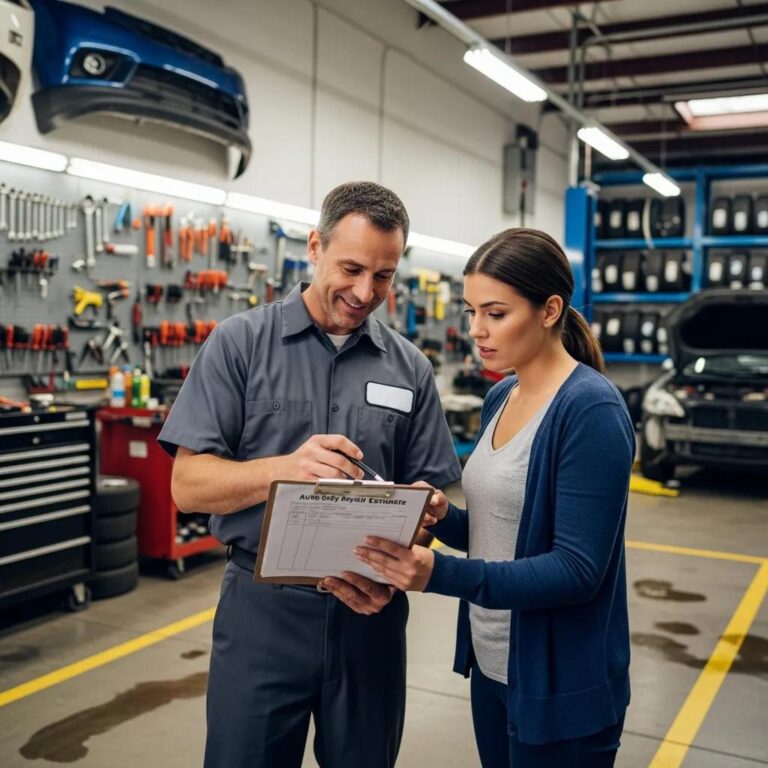
For an accurate estimate, send high‑resolution photos of the damage from several angles, your vehicle VIN, and a brief description of the incident. Many shops offer virtual estimates followed by an in‑shop inspection for final pricing.
A clear estimate process includes an initial photo review, in‑shop verification, a line‑item estimate showing parts/labor/paint/calibration, and a written timeline for repairs.
Prime Time Collision Center provides free estimates, transparent documentation, and direct insurance billing to reduce paperwork for customers. If your vehicle needs recovery, our free 24/7 towing can bring it in for inspection. VIN‑based parts sourcing and detailed documentation help ensure estimates match OEM procedures and reduce later surprises.
Why Choose OEM Certified Repairs and I‑CAR Platinum Technicians?
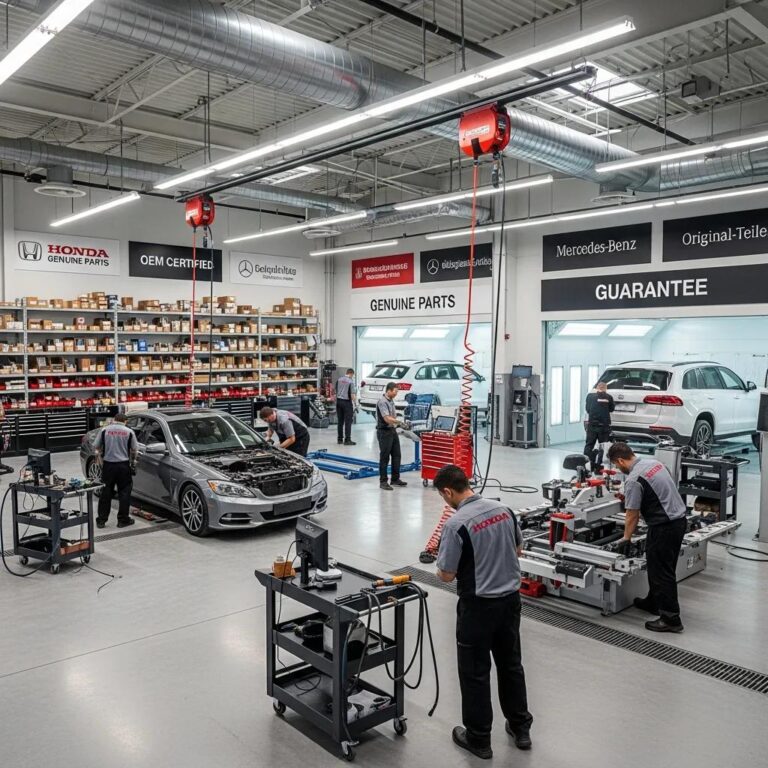
OEM‑certified repairs follow manufacturer procedures and use specified parts to maintain structural standards, safety, and resale integrity. I‑CAR Platinum certification shows a shop’s commitment to current, industry‑standard repair practices.
Shops that follow OEM methods use manufacturer tolerances, proper fasteners, and correct welding or bonding techniques so attachment points and crash performance meet original design intent.
I‑CAR Platinum signals ongoing training and proficiency with modern materials and ADAS systems, which reduces repair errors and improves long‑term safety.
The table below maps certifications to practical benefits for vehicle owners.
| Certification / Practice | Ensures | Benefit to Owner |
|---|---|---|
| OEM repair procedures | Manufacturer tolerances and parts | Maintains crashworthiness and resale value |
| I‑CAR Platinum technicians | Advanced training on materials and ADAS | Fewer repair errors; correct calibration |
| Lifetime warranty on repairs | Ongoing coverage for workmanship | Peace of mind and long‑term protection |
Choosing a shop that pairs OEM procedures with I‑CAR Platinum technicians and a documented warranty gives owners measurable advantages in safety and retained value. The next section defines OEM‑certified repair in practical terms.
What Is OEM‑Certified Fender Repair and Why It Matters
OEM‑certified repair means technicians follow manufacturer‑prescribed methods for panel removal and installation, use OEM or approved parts when specified, and document the process to preserve warranty and fitment.
This matters because modern vehicles have precise panel tolerances that affect crash energy management and alignment. Straying from OEM methods can compromise those systems. For owners, OEM‑certified repairs protect resale value, support warranty claims, and reduce the risk of future issues from improper welding, bonding, or paint work. That’s why some damage calls for replacement rather than aggressive metal manipulation.
How I‑CAR Platinum Certification Improves Repair Quality and Safety
I‑CAR Platinum is the industry’s highest recognized training level for collision repair organizations. It shows technicians receive continuing education on evolving materials, repair methods, and ADAS calibration.
The certification requires trained staff in estimating, non‑structural, structural, and refinish roles, so complex jobs — like aluminum welding or sensor recalibration — are handled by qualified personnel.
For owners, that means fewer reworks, correct structural repairs, and verified calibration of driver‑assist systems — improving safety and reducing long‑term costs.
I‑CAR Platinum is a reliable signal when choosing a repair provider.
The Fender Repair Process at Prime Time Collision Center
Our fender repair workflow starts with a documented damage assessment, diagnostic scans for ADAS, and a clear, line‑item estimate that lists parts, labor, paint, and calibration if needed.
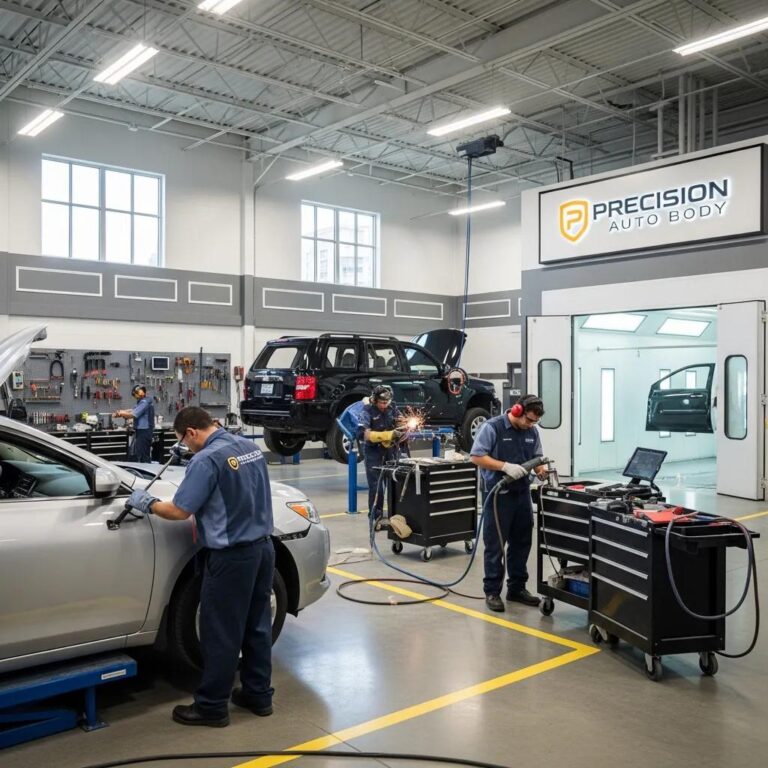
Prime Time Collision Center follows OEM‑quality procedures led by I‑CAR Platinum technicians to ensure correct disassembly, structural repair or replacement with the right parts, and paint matching to manufacturer standards.
We tag parts, test fitment, perform structural alignment checks, and complete paint refinishing with color‑matching tools before ADAS recalibration and a final QA inspection.
Initial Damage Assessment and ADAS Calibration
Assessment combines visual inspection with diagnostic scans to determine if ADAS components — cameras, radar, or proximity sensors — need recalibration after fender work. We also check mounting integrity and alignment.
Technicians scan vehicle systems, record pre‑repair fault codes, and document sensor positions so recalibration follows manufacturer procedures and uses the right calibration equipment.
Calibration timing depends on the system and work scope. During final QA we verify sensor function and confirm lane‑keeping, adaptive cruise, and collision systems operate within factory tolerances. Proper diagnostics and calibration protect occupant safety and keep driver assists reliable.
Disassembly, Structural Repair, and Paint Matching Steps
Disassembly begins with safe removal of affected panels and careful tagging of fasteners and components so reassembly is accurate. We then measure mounting points and structural rails to find any deviations.
Structural repair or replacement follows manufacturer‑approved straightening, sectioning, or OEM panel installation techniques with qualified welding or bonding for the material involved.
Paint matching uses spectrophotometers and blending processes to match color and gloss across adjacent panels, followed by clearcoat application and controlled curing to achieve a factory‑like finish.
Final steps include reassembly, a test drive, ADAS recalibration if required, and delivery with documented repair records.
How Prime Time Collision Center Helps with Insurance Claims
We help customers through the insurance process by preparing detailed estimates, communicating directly with adjusters, and offering direct billing where available to reduce your administrative work.
Our estimator documents damage with photos, VIN‑based parts sourcing, and line‑item labor descriptions so insurers can assess repair scope accurately and speed approvals.
You’ll get guidance on deductible handling and required paperwork, and our transparent estimates plus a lifetime warranty on repairs reduce back‑and‑forth with insurers. These services streamline timelines and help ensure repairs follow OEM procedures insurers prefer.
How Insurance Claim Assistance Simplifies Fender Repair
We act as your single point of contact for documentation, prepare estimates aligned with insurer expectations, and negotiate authorization for OEM parts or calibrated repairs when safety requires them.
We coordinate with adjusters, share repair timelines, and keep you updated on approval status to avoid surprises and speed authorization.
This liaison role reduces the time you spend with the insurer and ensures technical repair decisions — like ADAS calibration or OEM replacement — are backed by documented evidence. Clear records also help with future warranty or resale needs.
Common Insurance Processes and Direct Billing Options
Typical insurer steps include claim filing, an adjuster inspection or virtual appraisal, estimate review and approval, and repair authorization. Shops that offer direct billing can invoice the insurer for covered amounts after your deductible is applied.
Direct billing and written authorization agreements help customers avoid paying more than their deductible upfront and cut down on paperwork.
To speed claims, keep photos, accident reports, and VIN handy, and ask the repair shop for a line‑item estimate and parts‑source documentation. These steps reduce delays and improve alignment between insurer expectations and shop practices.
Frequently Asked Questions
1. What should I do immediately after a fender incident?
First, make sure everyone is safe and move the vehicle to a safe spot if you can. Take clear photos of the damage from several angles and collect information from any other parties involved. If anyone is injured, call emergency services. Then report the incident to your insurance company and save the photos and notes — they’ll speed up the claim and estimate process.
2. How can I tell if my fender damage is repairable?
Small dents, shallow creases, and surface scratches are often repairable with PDR or localized patching. If the metal is creased, stretched, or mounting points are damaged, replacement may be safer. A professional inspection is the best way to confirm structural integrity and make sure repairs meet OEM standards.
3. What is the role of ADAS in fender repair?
ADAS (Advanced Driver‑Assistance Systems) includes cameras, radar, and sensors that help with lane‑keeping, adaptive cruise, and collision warnings. If these components are moved or damaged during a fender incident, they must be tested and recalibrated after repair. Proper calibration is essential for these systems to work correctly and for overall vehicle safety.
4. How can I ensure my repair shop uses OEM parts?
Ask the shop about their parts‑sourcing and whether they follow OEM repair procedures. Request documentation that lists the parts to be used and any warranties. A reputable shop will be transparent and can show you the parts before installation. OEM certification or manufacturer partnerships are good signs they follow proper procedures.
5. What are the benefits of choosing I‑CAR Platinum certified technicians?
I‑CAR Platinum technicians receive advanced, ongoing training in modern repair methods, materials, and ADAS calibration. That training reduces repair errors and rework, improves structural repairs, and ensures safety systems are calibrated properly. In short: fewer surprises and better long‑term results.
6. How does the repair process differ for aluminum versus steel fenders?
Aluminum behaves differently than steel and requires special tools and techniques to avoid weakening the material. Welding and repair methods for aluminum need trained technicians and dedicated equipment, which can increase labor time and cost. Steel repairs can often be handled with more conventional methods.
7. What should I look for in a fender repair estimate?
Look for a detailed, line‑item estimate showing parts, labor, paint, and any calibration services. Confirm whether OEM parts will be used and ask for an estimated timeline and warranty information. Comparing estimates from a few reputable shops helps you judge pricing and service quality.
Conclusion
Professional fender repair and replacement protect your vehicle’s safety, structure, and resale value. Knowing repair options, costs, and the importance of OEM procedures helps you make informed choices that balance price and long‑term quality. When you choose OEM‑certified repairs, I‑CAR Platinum technicians, and documented warranties, you get repairs done to the standards your vehicle deserves. Contact Prime Time Collision Center today for a free estimate and see how our team makes the repair process straightforward and reliable.