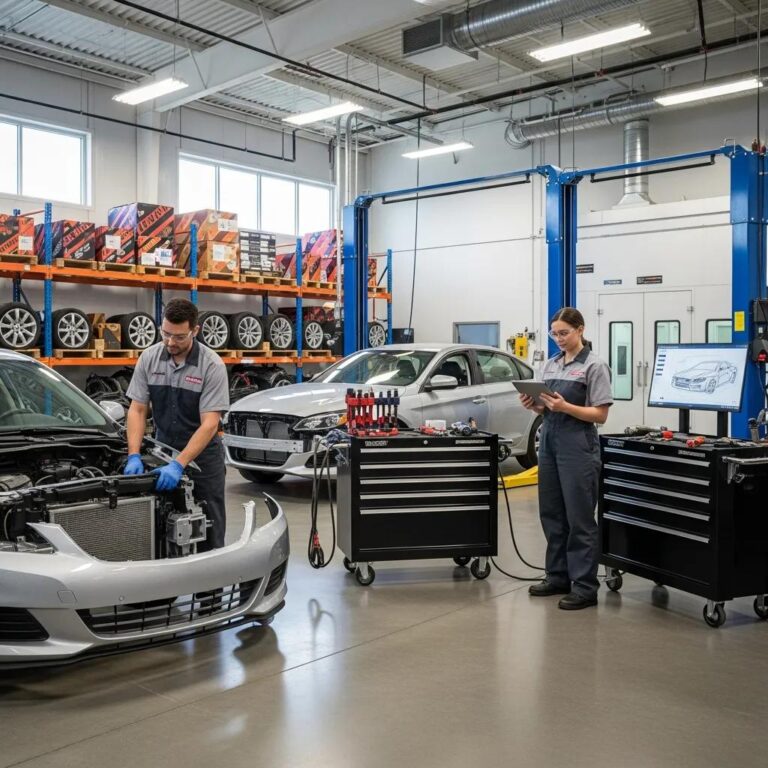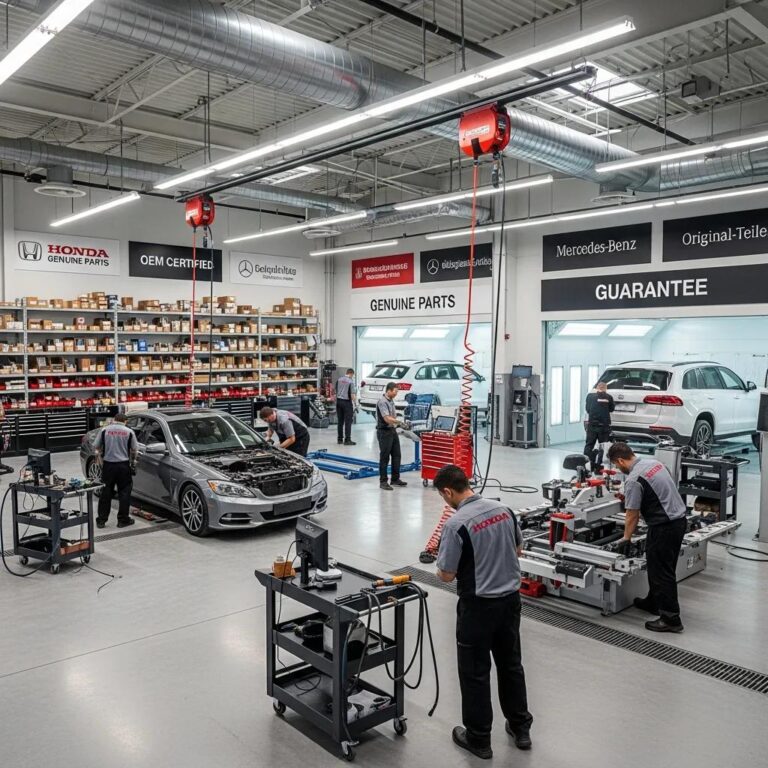
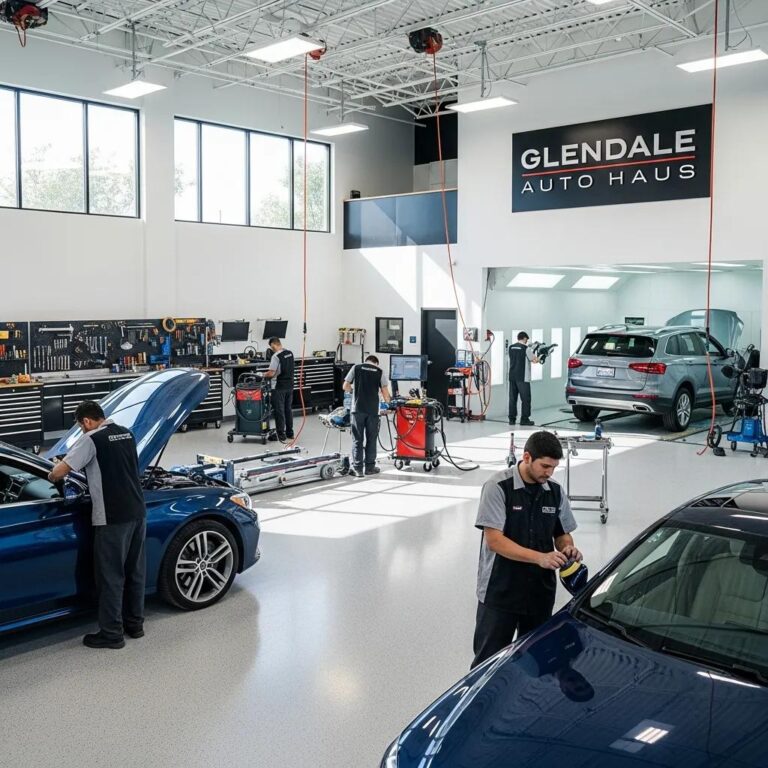
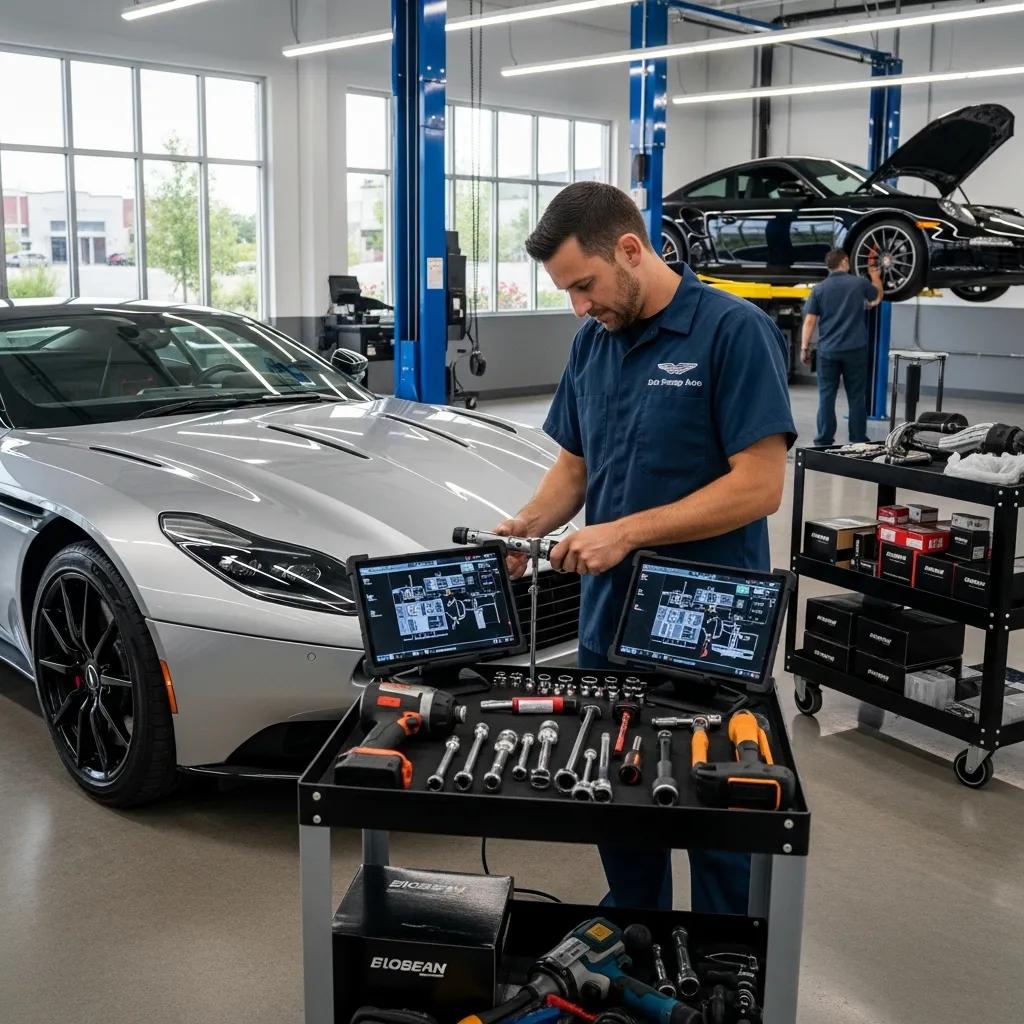
OEM-Certified Foreign Car Repair — Specialized Collision & Body Work for European and Luxury Vehicles
“OEM-certified” foreign car repair means the collision and bodywork are completed to the vehicle maker’s standards — using approved procedures, calibrated tools, and genuine parts so safety, fit and finish are restored correctly. Returning an import or luxury vehicle to OEM specs preserves crash performance, protects ADAS and electronic systems, and safeguards resale or lease value — all priorities for owners of European marques and high-end imports. This guide explains why OEM methods matter, how genuine parts and factory procedures protect safety and value, and what specialized workflows look like for aluminum, composites, and advanced driver-assistance systems. You’ll also find an overview of services luxury owners should expect — from paint matching and PDR to ADAS recalibration and aluminum structural repair — plus practical tips for handling insurance when manufacturer procedures are required. Finally, we highlight the shop-level cues to look for when choosing a repair partner in Glendale and nearby communities so you can make confident decisions after a collision.
Why Choose OEM Certified Repairs for Your Foreign Car?
OEM-certified repairs follow manufacturer repair procedures, use genuine parts, and rely on calibrated tooling to restore original safety and factory fit. That matters because modern foreign cars combine structural design, sensor networks, and material-specific joins that directly influence crash energy management and occupant protection. Choosing OEM methods lowers the risk of poor fitment, sensor misalignment, or incompatible materials that can undermine safety systems and reduce long-term value. If your priorities are safety, longevity, and resale, OEM-standard repairs are the right technical path to preserve factory intent and vehicle performance.
Foreign and luxury vehicles benefit from OEM procedures for three clear reasons:
- Safety systems often depend on specific parts and tolerances that only genuine components guarantee.
- Manufacturer procedures preserve crash behavior and reduce repair-related failure modes.
- OEM parts and documented processes help protect resale and lease-return value.
Those benefits are easiest to appreciate when you understand what OEM certification signals and how part compatibility maintains safety and value — topics we cover in the sections that follow.
What Does OEM Certified Mean for Foreign Car Body Repair?
In practice, OEM-certified foreign car repair means the shop follows documented manufacturer repair procedures, uses recommended tools, and sources genuine parts when the maker specifies them. Shops that meet this standard keep technician training records, use equipment calibrated to factory tolerances, and maintain documentation workflows that mirror factory repair manuals. Technically, repairs must match manufacturer welding methods, adhesives, and torque specs so structural and sensor systems function as designed. For example, a maker may require a specific aluminum welding technique or adhesive bonding for a rear quarter panel — following those instructions preserves structural integrity and crash performance.
Ways to verify a shop follows OEM standards include technician training records, use of OEM paint codes and parts, calibrated ADAS tools, and repair documentation that aligns with factory procedures. Spotting these cues helps you confirm repairs will meet manufacturer expectations and integrate properly with your vehicle’s safety systems.
How Do OEM Parts Preserve Vehicle Safety and Value?
OEM parts preserve safety and value because they match original material composition, fit tolerances, and mounting points that are part of the vehicle’s crash-energy management and system compatibility. Genuine components keep the precise interfaces for airbags, sensors, and structural members so the car performs the way it was engineered in a collision. Mechanically, the right part keeps load paths predictable under impact; electronically, it ensures sensor housings and wiring align correctly for ADAS and restraint systems to work.
Key ways OEM parts protect safety and value:
- Exact fit and material match preserve engineered crash behavior and occupant protection.
- Correct sensor interfaces prevent miscalibration or false readings in ADAS systems.
- Manufacturer parts support market value by documenting factory-equivalent repairs.
That’s why many owners and insurers insist on OEM parts for foreign and luxury vehicles: they matter for immediate safety and long-term ownership costs.
Expert European Car Collision Repair Services in Glendale, CA
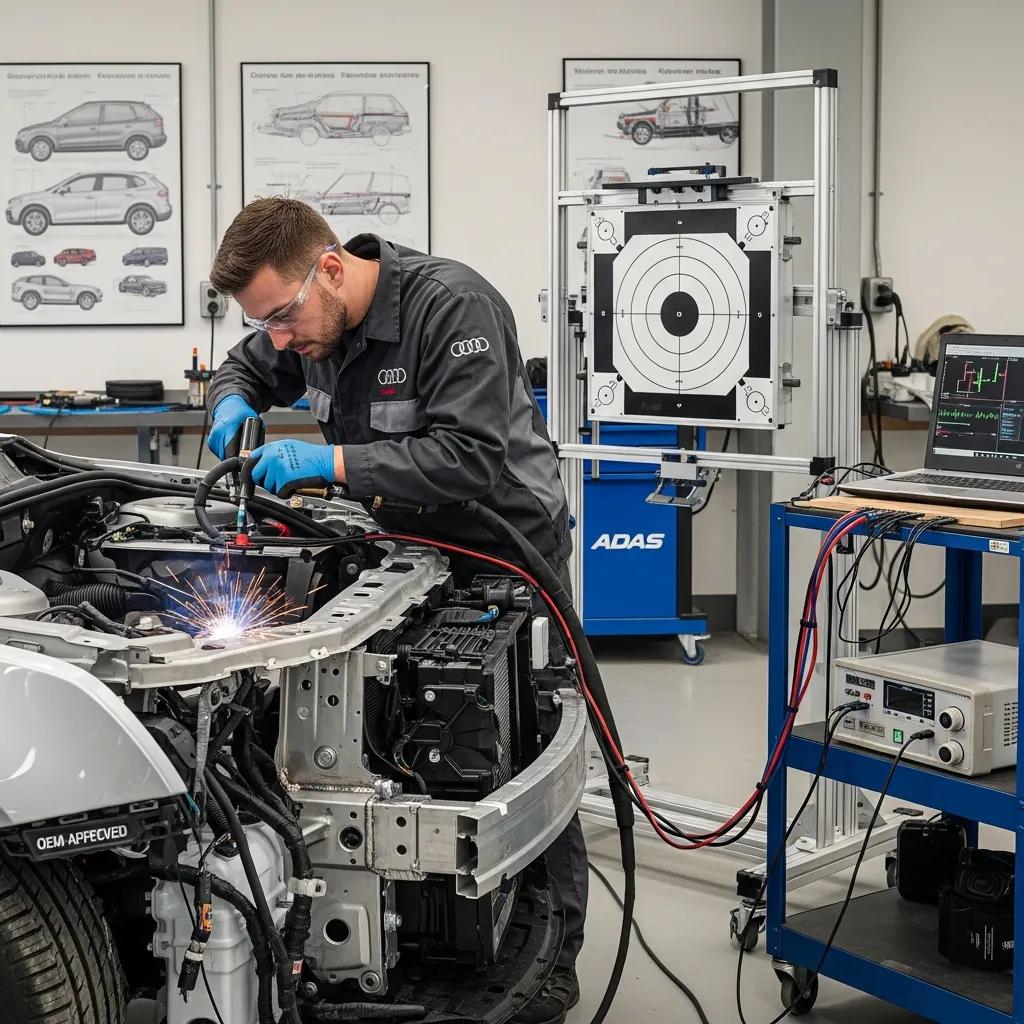
European cars frequently use lightweight alloys, complex assemblies, and dense electronics that require tailored techniques for safe, durable repairs. Many European marques include aluminum panels, high-strength steels, and bonded composites — materials that change repair choices compared with traditional steel-bodied cars. These differences call for specific tooling, welding or bonding methods, and corrosion-control strategies to keep structural integrity and avoid premature failures. At the same time, advanced driver-assistance systems and integrated electronics demand precise diagnostics and recalibration after any impact that alters sensor geometry or wiring.
Shops working on European vehicles should offer targeted services and workflows to meet these demands. Local owners should choose providers who can handle both the mechanical and electronic complexity of today’s imports. The next subsection explains the core technical reasons European cars need specialized care.
What Makes European Cars Require Specialized Collision Care?
European cars prioritize weight savings, tight tolerances, and integrated sensor suites — factors that change repair methods and sequencing. Aluminum and composite panels can’t be treated the same way as mild steel; technicians use OEM-approved aluminum welding, rivet-and-bond methods, or panel replacement to preserve integrity. Systems like electronic steering and ADAS often mount on chassis points that can move in a collision, so full diagnostics and factory-mode recalibration are required after body alignment or component replacement. A common example is a frontal corner impact that looks cosmetic but has shifted an ADAS radar mount — only manufacturer procedures and calibrated tools will reliably restore sensor alignment and safety function.
Because of these mechanical and electronic complexities, many repair workflows start with full-system diagnostics before disassembly so calibration needs are identified and scheduled into the repair plan.
Which European Brands Do We Specialize In?
Collision shops that focus on foreign cars typically gain deep experience with a core group of European brands and the repair profiles they present. Owners of BMW, Mercedes‑Benz, Audi, and Porsche often face similar material and calibration challenges — aluminum panels on some BMWs, precision structural and paint standards on Mercedes‑Benz, and performance chassis geometry on Porsche — all requiring factory-level attention. Shops specializing in these brands usually maintain parts channels for genuine components and train technicians on brand-specific repair sequences.
Typical brand-specific repair notes include:
- BMW: aluminum panels and ADAS sensor alignment requirements.
- Mercedes‑Benz: precision structural repairs and high-grade paint finishes.
- Audi/Porsche: composite components and performance chassis calibration.
Experience with these models indicates hands-on familiarity with manufacturer procedures rather than dealer-only certification, so ask shops for documented repair workflows and technician competencies when choosing a provider in Glendale and surrounding areas.
Comprehensive Luxury Auto Body Shop Services for Import Vehicles
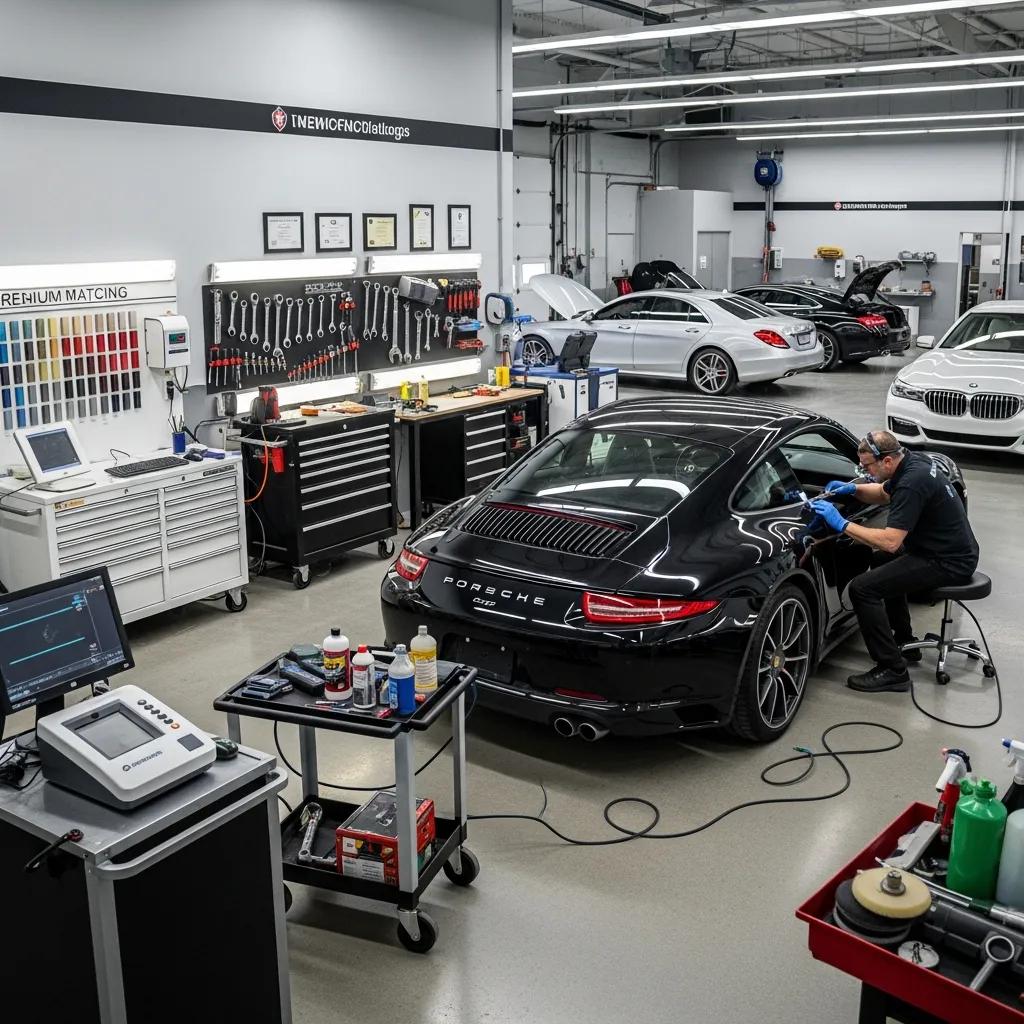
Luxury import vehicles need a full range of services, from cosmetic refinishing to structural repair and advanced electronics recalibration. Core offerings include OEM color-matched paint repair, paintless dent repair (PDR) for eligible panels, aluminum and composite structural work, frame straightening, ADAS diagnostics and recalibration, and EV/hybrid-safe procedures when applicable. Every service should include quality-control steps — finish inspection, ADAS verification, and clear documentation of parts and procedures — so the repaired vehicle meets factory expectations for appearance and function.
Below is a concise service summary explaining typical luxury import offerings and why they matter.
| Service | Technical Attribute | Why it matters |
|---|---|---|
| Paint Repair (OEM color match) | Uses manufacturer paint codes and blending | Delivers seamless finish and preserves appearance value |
| Paintless Dent Repair (PDR) | Removes minor dents without repainting | Preserves factory paint and reduces risk of mismatch |
| Aluminum Structural Repair | Specialized welding/bonding and corrosion control | Restores original strength and crash performance |
| ADAS Diagnostics & Recalibration | Calibrated tools and factory procedures | Ensures safety systems function after repair |
This matrix helps owners prioritize repairs that protect factory fit, finish, and safety. The following sections describe paint and dent workflows and the equipment that supports OEM-level results.
How Do We Handle Luxury Vehicle Paint and Dent Repairs?
High-quality paint repair starts with precise color identification using OEM paint codes and spectrophotometer-assisted matching, followed by controlled blending and manufacturer-specified clearcoat curing. When the paint film is intact, paintless dent repair (PDR) preserves the original finish by reshaping metal without repainting, which keeps factory coatings and shortens turnaround time. If full refinishing is required, technicians follow manufacturer sequencing: surface prep, approved primers, color application with blend panels, and oven or UV curing when specified to achieve factory gloss and durability. Final QA uses visual checks and gloss meters to confirm uniformity and shine.
Choosing between PDR and repaint depends on paint integrity and dent complexity: PDR fits small, unsupported dents without clearcoat damage; deeper creases or damaged clearcoat need controlled repaint and blending.
What Advanced Equipment and Techniques Ensure Quality Repairs?
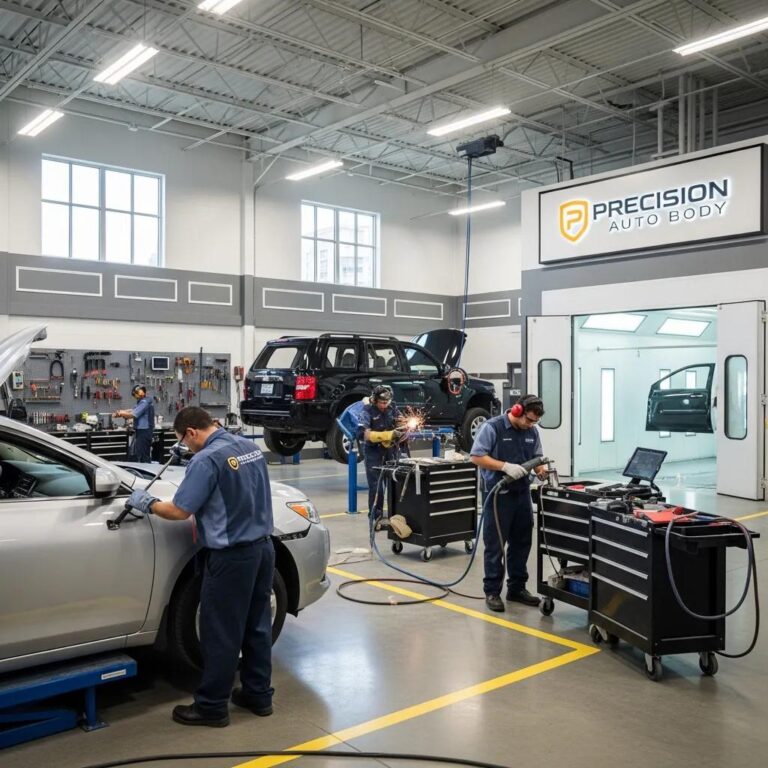
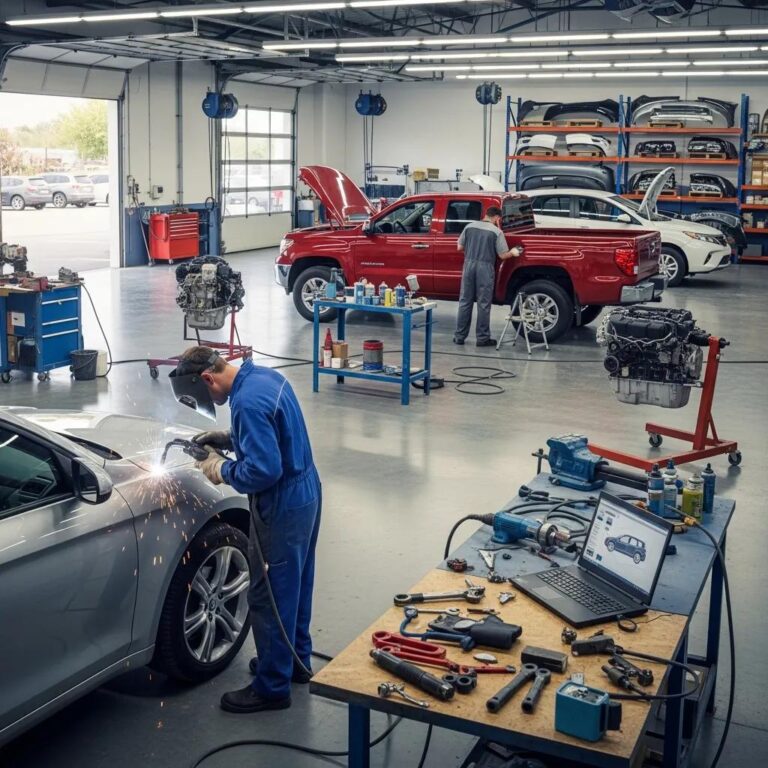
Factory-quality repairs depend on specialized equipment and techniques for foreign and luxury vehicles: calibrated ADAS stations, aluminum welding and bonding rigs, OEM-compatible frame racks, controlled paint booths with specified curing systems, and EV/hybrid-safe lifts and procedures. Each tool addresses a specific technical need — frame racks restore geometry to manufacturer specs, ADAS stations verify sensor positioning, and aluminum-specific welders or rivet-and-bond tools protect material properties. Equally important are trained technicians: ongoing manufacturer-aligned education ensures tools are used to factory intent. Below is a brief comparison of essential shop equipment and its role.
| Equipment | Application | Repair Impact |
|---|---|---|
| ADAS Calibration Station | Sensor alignment and software checks | Restores safety system accuracy |
| Aluminum Welding/Bonding Tools | Structural panel repair | Maintains original material properties |
| OEM Paint Booth & Curing | Color application and finish curing | Ensures correct gloss and durability |
| Frame Rack & Measuring System | Chassis alignment to factory specs | Restores geometric integrity and handling |
Using the right tools and techniques reduces the risk of hidden failures and supports a documented, factory-aligned repair process — an outcome that matters for insurer approvals and long-term vehicle performance.
Navigating Insurance Claims for Specialized Foreign Auto Body Repairs
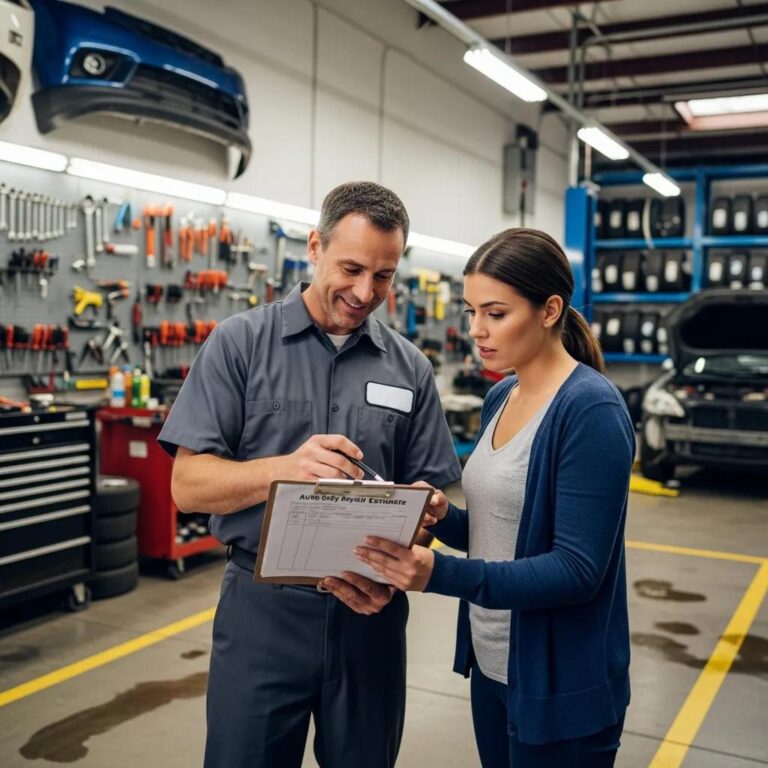
Insurance claims for foreign car repairs often require extra documentation when OEM parts, manufacturer procedures, or specialized labor are needed. Policyholders usually retain the right to choose their repair facility, and experienced import shops can document why OEM parts or procedures are essential for safety and value preservation. Clear initial documentation — photos, detailed damage notes, and an OEM-focused estimate — supports requests for genuine parts and factory-aligned repair sequences with insurers. A repair plan that flags ADAS sensors, aluminum work, or EV/hybrid safety steps makes it easier to explain scope and technical rationale to claims adjusters.
The table below summarizes typical insurer-assistance steps the shop provides and expected timelines so owners know what to expect during the claims process.
| Service Step | Typical Action | Typical Timeline |
|---|---|---|
| Free Estimate | Detailed OEM-aligned damage assessment | 24–72 hours initial response |
| Insurer Coordination | Submit documentation and negotiate parts/procedures | Varies by insurer; shop follows up proactively |
| Towing Assistance | 24/7 towing for safe transport to shop | Immediate or same-day recovery |
| Repair Authorization | Obtain insurer approval for OEM parts/procedures | Depends on documentation; shop supports appeals |
Structured documentation and timely communication shorten approvals and prevent scope disputes. The next section outlines the step-by-step support a specialized shop provides.
How Does Prime Time Collision Assist with Insurance Claims?
Prime Time Collision Center helps policyholders through a clear, documented claims process centered on OEM-equivalent repairs and insurer coordination. We provide a free initial estimate that lists OEM parts and manufacturer procedures, then submit detailed repair documentation to the insurer to justify the required parts and steps. If your vehicle needs recovery, 24/7 towing is available to bring it safely to our facility so temporary roadside fixes don’t make things worse. Our technicians work directly with adjusters, supplying photos, measurements, and technical explanations, and we pursue approvals or appeals when OEM parts or ADAS recalibration are required.
- Free Estimate: Comprehensive OEM-focused assessment with documented scope.
- Insurer Liaison: Submit supporting documentation and negotiate for genuine parts/procedures.
- Authorize Repair: Confirm approvals and schedule specialized technicians and tools.
- Post-Repair QA: Verify ADAS recalibration and deliver a documented final inspection.
Owners in Glendale and neighboring communities can request a free estimate to start the claims process; our coordination reduces administrative burden and helps ensure factory-level results.
What Should Foreign Car Owners Know About Their Insurance Rights?
Most owners have the right to choose their repair facility and to request OEM parts or manufacturer procedures, though policy language varies and some insurers may suggest aftermarket parts to reduce cost. To protect your rights, gather thorough documentation at the point of loss — photos, police reports when applicable, and maintenance records that show pre-loss condition — and request a written estimate that specifies OEM part needs. If an insurer initially denies OEM parts, you or your chosen shop can present technical justification, manufacturer repair procedures, and measurement data to support an appeal. Keeping a clear paper trail and working with a shop experienced in foreign car repairs increases the chance insurer approvals will align with safety and value preservation goals.
If disputes persist, escalate through the insurer’s appeal process with documented evidence; an OEM-savvy shop can prepare the technical package needed for reassessment.
The Prime Time Collision Center Difference: Certified Technicians and Quality Assurance
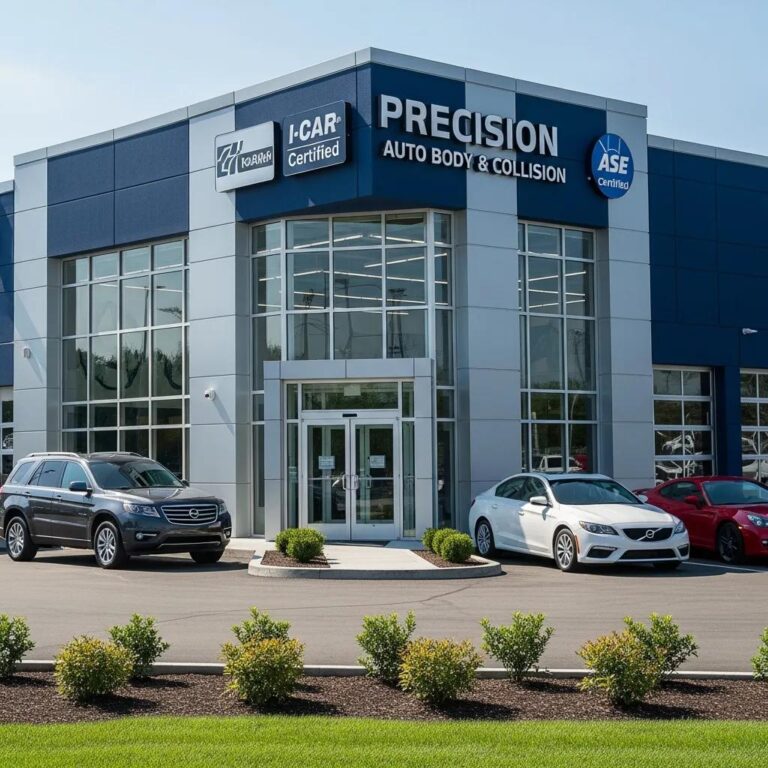
Prime Time Collision Center is a local specialist in certified auto body and collision repair for foreign and luxury vehicles. We emphasize factory-quality workflows, continual technician training, and hands-on support through the claims process. Our shop highlights I-CAR Platinum-trained technicians, assistance with all major insurers, free estimates, 24/7 towing, and lifetime workmanship warranty — practical commitments that help protect your vehicle and give you peace of mind. For owners in Glendale, Burbank, Pasadena, and Los Angeles seeking OEM-aligned repairs, these elements form the foundation of dependable, documented service focused on safety and appearance restoration.
Below is a quick comparison of certifications, what they mean, and why they matter for foreign car repair.
| Certification/Standard | Attribute | Why it matters |
|---|---|---|
| I-CAR Platinum | Technician training & ongoing education | Ensures skills for structural, ADAS, and materials-specific repairs |
| OEM Repair Procedures | Documented factory workflows | Preserves manufacturer crash and system performance |
| Lifetime Warranty | Coverage on workmanship | Provides long-term assurance after repair |
This comparison shows how certification and documented processes work together to protect vehicle safety and value. The following sections explain I-CAR Platinum and our QA checkpoints.
Why Is I-CAR Platinum Certification Crucial for Foreign Car Repairs?
I-CAR Platinum represents extensive training and ongoing education for collision repair professionals, covering structural repair, materials-specific techniques, and ADAS systems that modern foreign and luxury vehicles require. The certification shows technicians complete a curriculum aligned with current vehicle technologies and that the shop invests in continuous learning to match evolving manufacturer requirements. For foreign cars — where aluminum repair methods, bonded assemblies, and electronic sensor systems are common — I-CAR Platinum-trained staff are more likely to follow the precise sequencing and techniques necessary for safe, long-lasting repairs. In short, the certification translates to measurable competencies you can request as part of your repair plan.
Recognizing certification helps owners separate shops that offer surface-level cosmetic fixes from those prepared to address safety-critical systems with factory-oriented rigor.
How Do We Guarantee Factory-Quality Repairs and Customer Satisfaction?
Guaranteeing factory-quality repairs starts with a documented workflow from intake through final verification: initial diagnostics and an OEM-aligned estimate, approved parts sourcing, certified technician repairs, ADAS recalibration, and a formal final inspection with documented checks. At Prime Time Collision Center we follow these steps and include post-repair QA: test drives, ADAS function verification when required, and a customer walk-through that explains the work and warranty coverage. Clear documentation and photos support insurer communication and future value preservation. Sharing a final QA checklist with the owner shows repairs were completed to a measurable standard, not just a cosmetic baseline.
Key QA checkpoints we use to ensure factory-level results:
- Documented OEM repair plan and parts list.
- Certified technician execution and process logging.
- ADAS calibration and verification where required.
- Final finish inspection and customer handover with warranty details.
These checkpoints form the core of a repair workflow that prioritizes safety, function, and appearance — so owners of European and luxury vehicles can get back on the road with confidence.
Frequently Asked Questions
What are the benefits of using OEM parts over aftermarket parts for foreign cars?
OEM parts are made to the vehicle maker’s exact specifications, so they fit precisely and work with the car’s existing systems — critical for airbags, ADAS sensors, and structural components. Aftermarket parts can vary in fit and material, which risks compromised safety or system errors. OEM parts also help preserve resale value because they document a factory-equivalent repair that buyers and insurers recognize.
How can I identify a reputable shop for OEM certified repairs?
Look for shops with certifications like I-CAR Platinum, positive customer reviews, and clear documentation of repair processes. A reputable shop will use genuine OEM parts when required, show training records, and offer warranties on workmanship. Visiting the facility to check equipment and cleanliness can also reveal professionalism and attention to detail.
What should I do if my insurance company suggests using aftermarket parts?
You can request OEM parts, especially when safety or performance may be affected. Review your policy to understand parts-selection rights, gather supporting documentation (estimates from certified shops, photos, and technical notes), and present that to your insurer. If necessary, ask your repair shop to submit a technical justification or appeal on your behalf.
How does the repair process differ for luxury vehicles compared to standard vehicles?
Luxury vehicles use advanced materials and electronics — lightweight alloys, composites, and integrated ADAS — which require specialized techniques like aluminum welding and precise recalibration. Luxury models also demand stricter aesthetic standards, so color matching and finish control are more exacting. Shops need advanced tools and trained technicians to meet those standards.
What is the typical timeline for OEM certified repairs on foreign cars?
Timelines vary by damage and parts availability. An initial estimate and assessment typically take 24–72 hours. Minor cosmetic repairs can be completed in a few days; structural repairs or ADAS recalibration may extend the repair to a week or longer. Your shop will provide a more accurate timeline once the scope is confirmed.
Are there any specific maintenance tips for foreign cars after repairs?
After repairs, follow the manufacturer’s maintenance schedule and monitor the areas that were repaired. Keep records of all work and parts used — those documents help with resale and any future warranty claims. When possible, continue using OEM parts for future repairs, and consult your repair shop for model-specific recommendations.
Conclusion
Choosing OEM-certified repairs for your foreign car helps ensure safety, performance, and resale value are preserved through manufacturer-approved processes and genuine parts. That commitment to factory-level care extends the life of your vehicle and gives you confidence that it’s been restored correctly. For expert help and a free estimate, contact our team today — experience the difference certified care makes for your luxury vehicle.