
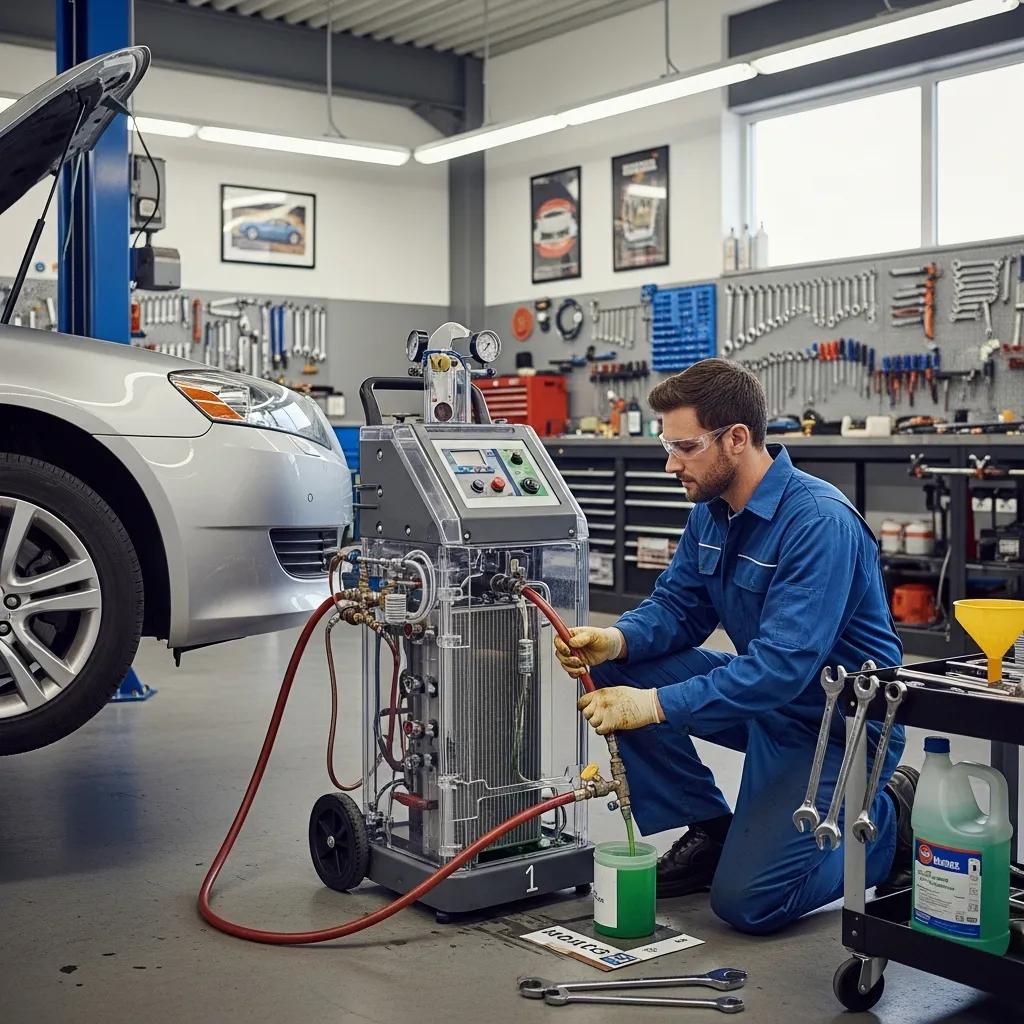
When and How to Flush Your Coolant System — Prime Time’s Guide to Protecting Engine Health
Flushing the coolant system is a controlled clean-out and refill of your vehicle’s cooling circuit. It removes old antifreeze, sludge, and contaminants so the coolant can move heat efficiently and protect metal parts from corrosion. In this guide we explain when to book a flush, how the service prevents overheating and corrosion, and what a professional, OEM‑aligned procedure looks like. If your car has been in an accident or has overheated recently, you’ll find clear signs to watch for, practical owner checks, and a step‑by‑step look at the professional process. We also compare DIY risks with the advantages of certified service and explain how to schedule a visit at Prime Time Collision Center.
Why Is a Coolant System Flush Essential for Your Vehicle?
A coolant flush matters because old or contaminated antifreeze stops doing its job. Sludge and mineral deposits block flow and reduce heat transfer. Corrosion can eat away at radiators, heater cores, and water pumps. When coolant circulation is impaired, engine temperatures climb and seals, gaskets, and fasteners experience extra stress — that’s when small problems become expensive repairs. Regular flushing restores coolant chemistry and the corrosion inhibitors that protect your cooling system components.
Put simply: flushing improves cooling performance, lowers the risk of overheating, and extends the life of parts like the radiator, water pump, heater core, and hoses. Below are the main ways a flush helps keep your engine safe and reliable.
A quick list of core benefits:
- Restores heat transfer: Clears sludge and deposits that block flow and reduce cooling efficiency.
- Replenishes corrosion protection: Replaces exhausted inhibitors that allow rust and scale to form.
- Protects moving parts: Removes debris that accelerates water pump and impeller wear.
Those benefits are why certified shops follow OEM protocols when they perform a flush — the goal is a complete, lasting repair, not just swapping fluid.
How Does a Coolant Flush Prevent Engine Overheating and Damage?
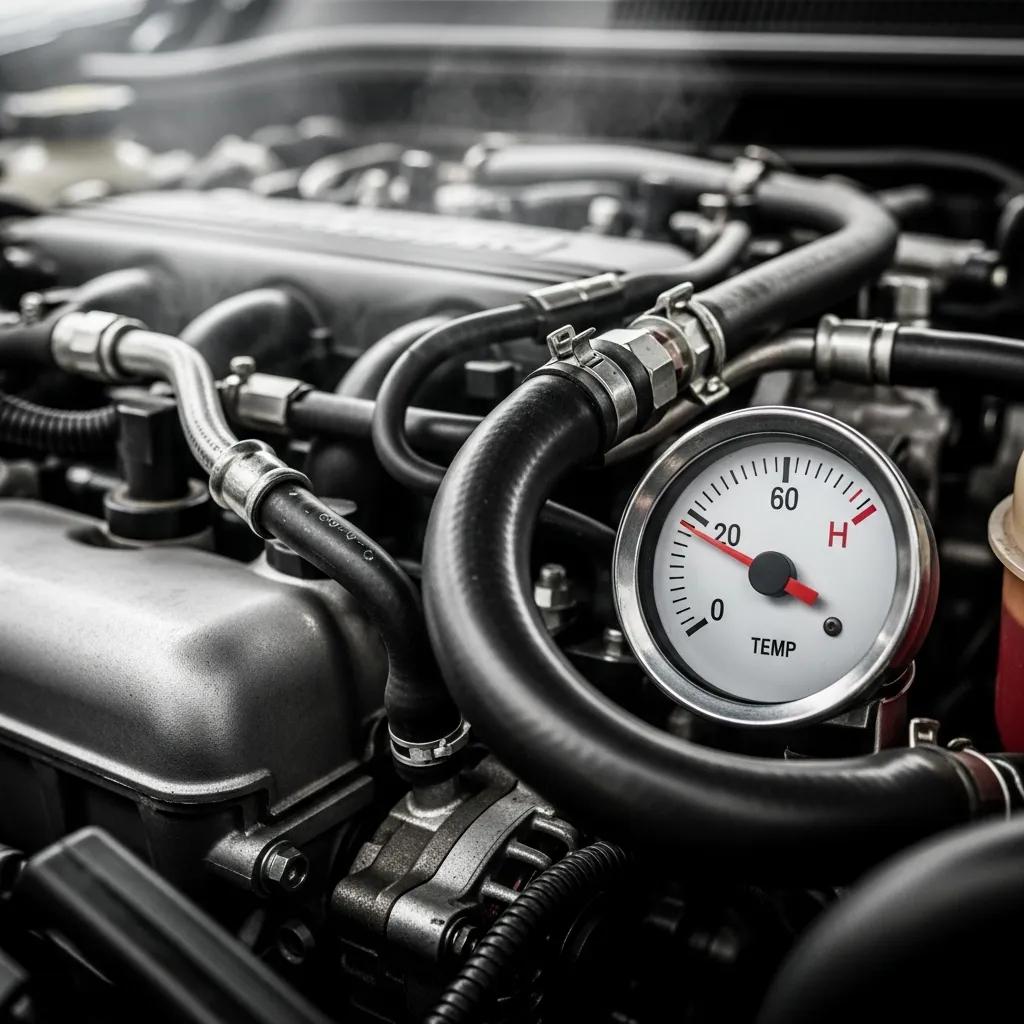
A flush restores clear coolant pathways and the chemical balance needed for efficient heat transfer from the engine to the radiator. Leftover deposits act like an insulator and can restrict flow through small passages, creating hot spots that stress gaskets and cylinder heads. Replacing contaminated fluid with the OEM‑specified antifreeze restores boiling/freezing protection and inhibitor levels, lowering the chance of thermal damage. This is especially important after collisions or overheating events, when debris and contaminants can speed up system decline.
After a proper flush, related parts like the thermostat and heater core can operate normally, reducing repeat overheating cycles and protecting seals and head gasket integrity.
What Role Does a Coolant Flush Play in Rust and Corrosion Prevention?
Coolant contains inhibitors that slow electrochemical corrosion. Over time those inhibitors break down, pH drifts, and the fluid can become acidic — that’s when rust, scale, and pinhole leaks appear in radiators and heater cores. A flush removes the spent fluid and captured rust particles, and refilling with manufacturer‑approved coolant restores the protective additives. During the service, technicians also inspect for early corrosion and recommend targeted repairs before a small issue becomes a failure.
Regular, OEM‑correct maintenance keeps joined metals, sacrificial anodes (if present), and rubber parts from being exposed to aggressive fluid that will shorten their life.
What Are the Key Signs Your Vehicle Needs a Coolant Flush?
Schedule a flush when you see evidence of contamination, poor inhibitor performance, or restricted flow. The most useful signs are repeated overheating, brown or sludgy coolant, unexplained drops in coolant level, a sweet smell in the cabin, and poor heater or defroster output. Catching these early lets you avoid costly outcomes like warped heads or seized pumps. The table below links common symptoms to what they likely mean and how urgently you should act.
Use this table to interpret symptoms and decide how quickly to get help.
| Symptom | What It Indicates | Recommended Action / Urgency |
|---|---|---|
| Engine running hot / overheating | Impaired heat transfer or low coolant level | Stop driving if severe; have the vehicle inspected or towed immediately if it keeps overheating |
| Brown or sludgy coolant | Contamination or rust buildup | Schedule a flush and diagnostic check within a few days |
| Visible coolant leaks | Hose, clamp, or radiator compromise | Repair leaks promptly to prevent overheating |
| Sweet chemical smell in cabin | Coolant leak into HVAC or engine bay | Inspect heater core and hoses soon—don’t ignore cabin odors |
| Poor heater performance | Blockage in heater core or low circulation | Diagnose heater core and circulation path within the week |
This quick-reference makes it easier to prioritize safety and schedule professional help.
Top five signs to watch for:
- Frequent overheating: Gauge climbs or warning lights come on during normal driving.
- Discolored or sludgy coolant: Fluid is brown, thick, or has visible particles in the reservoir.
- Visible leaks or low coolant: Puddles under the car or constant top-offs required.
- Sweet smell or steam in the cabin: Indicates possible heater core or HVAC leak.
- Inconsistent heater output: Weak or no heat from the heater points to circulation issues.
If you notice any of these, avoid long drives and get the cooling system checked right away — we’ll cover safe owner checks next.
How to Identify Engine Overheating and Coolant Contamination?
Start with simple, safe checks: watch the temperature gauge and warning lights, inspect the coolant reservoir only when the engine is cool, and note smells or steam. Healthy coolant is typically bright and translucent (color varies by chemistry). Brown, opaque, or gritty fluid signals contamination. If the gauge heads toward red or you see steam, stop in a safe place — continuing to drive risks head gasket damage. Call for a tow or arrange professional diagnostics rather than driving long distances.
Do not open the radiator cap while hot. Look for external leaks at hoses, clamps, and the radiator and write down what you see for the technician. Those notes speed up diagnosis during a full flush.
What Are Common Coolant System Issues Like Leaks and Heater Malfunctions?
Typical problems include failing hoses and clamps, radiator damage, blocked heater cores, and worn or leaking water pumps. Hoses can deteriorate and leak at clamp points, creating puddles and allowing air into the system. Radiators can corrode internally or suffer external damage that reduces flow. Heater core blockages show up as weak cabin heat or fogged windows; water pump problems often show as leaks near the pump or unusual noises. Fixing the underlying part is often needed in addition to a flush to fully restore cooling performance.
After accidents or severe overheating events, multiple components may be affected. A thorough diagnostic helps prioritize repairs and parts before the final flush and refill.
How Often Should You Flush Your Coolant? Manufacturer Recommendations and Best Practices
Flush intervals depend on coolant chemistry, the vehicle maker’s schedule, and how you drive. Conventional IAT coolants need service more often than long‑life OAT/HOAT formulas. Always check the owner’s manual first — OEMs specify the correct coolant type and service interval for warranty and long‑term reliability. Severe duty (towing, stop‑and‑go traffic, extreme heat), contamination, or post‑collision inspections can mean you need a flush earlier than the book interval. The table below gives a practical baseline while emphasizing OEM guidance.
Compare coolant types and suggested service ranges below.
| Coolant Type | Recommended Interval (miles/years) | Notes |
|---|---|---|
| IAT (Inorganic Acid Technology) | 30,000–50,000 miles or 2 years | Conventional coolant; shorter service life |
| OAT (Organic Acid Technology) / HOAT | 60,000–150,000 miles or 3–5 years | Long‑life coolants; confirm OEM compatibility |
| Conventional/Service‑Dependent | Varies by manufacturer | Follow the owner’s manual; get fluid analysis when unsure |
These ranges show why following manufacturer specs and your vehicle’s history matter when scheduling a flush.
What Are the Recommended Mileage and Time Intervals for Coolant Flushes?
Follow the vehicle’s service schedule and note the coolant type in use. Conventional coolants typically need attention every 2 years or 30k–50k miles; long‑life OAT/HOAT formulas can extend to 5 years or longer when the OEM allows. Still, overheating events, visible contamination, or collision repairs warrant earlier service, regardless of mileage. When in doubt, ask for a fluid analysis or professional diagnostic — that gives data to set the right interval.
Sticking to OEM guidance and documenting service helps protect warranty coverage and resale value, which matters for lease returns or insurance claims.
How Do Different Coolant Types Affect Flush Frequency?
Coolant chemistry determines how long inhibitors last and how often you need service. IAT breaks down sooner than OAT/HOAT. Mixing incompatible coolants reduces protection and speeds corrosion. Many manufacturers call for a specific OEM coolant — using the wrong fluid or mixing types can cause problems. If service history is unknown, technicians often recommend a conservative flush and refill with the correct OEM‑specified coolant to avoid chemical conflicts. Confirming coolant type keeps corrosion in check and maintains proper service intervals.
When unsure, let a technician confirm the fluid or check the owner’s manual to avoid costly mistakes.
What to Expect During the Professional Coolant Flush Process at Prime Time Collision Center
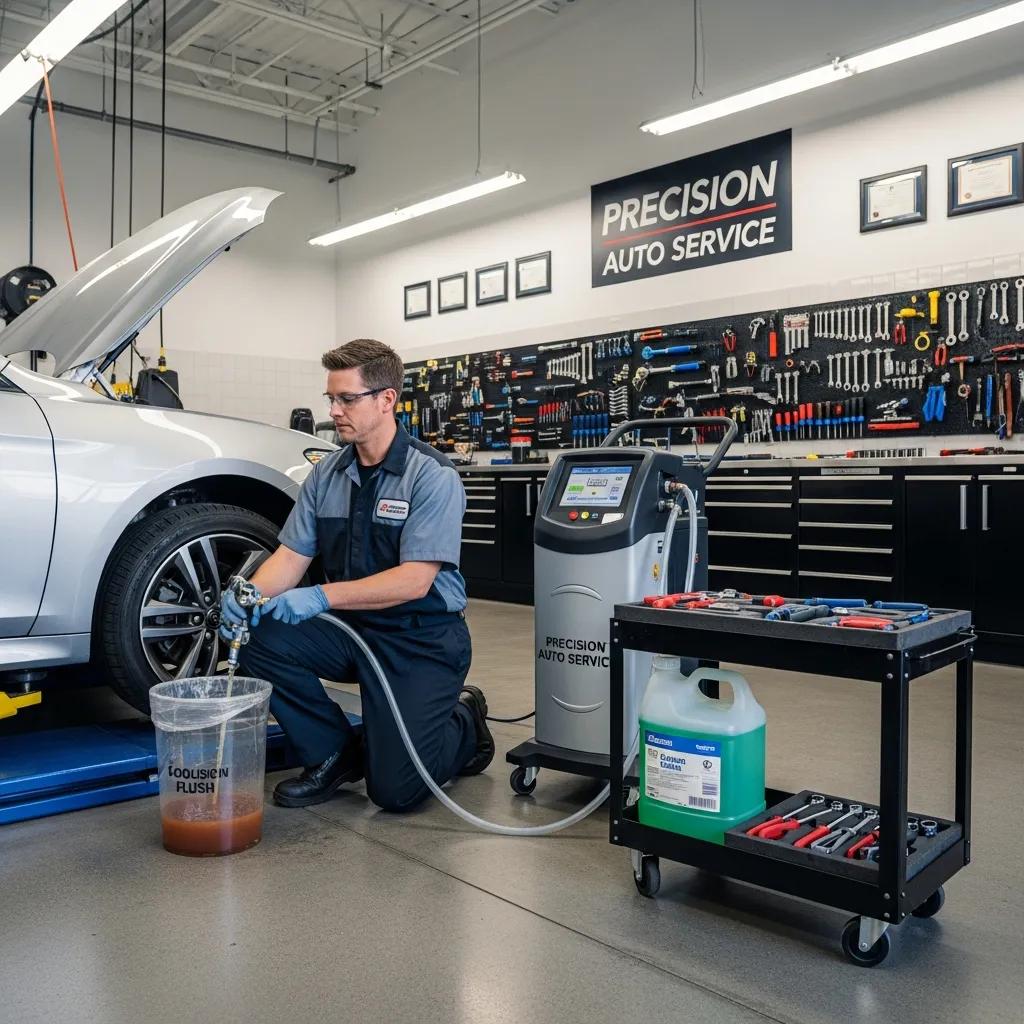
At Prime Time, a professional coolant flush starts with a full inspection and diagnostics to spot contamination, leaks, or damaged components. We perform an OEM‑compliant drain, a multi‑stage flush to remove deposits, refill with the manufacturer‑specified coolant, and run final pressure and performance checks. Technicians inspect related parts — hoses, clamps, thermostat, water pump, and heater core — so the work restores the whole system, not just the fluid. We collect used coolant for proper disposal and provide documentation listing the coolant type and services performed. For drivers in Glendale, Burbank, Pasadena, and Los Angeles, documented OEM procedures simplify insurance coordination and boost long‑term reliability.
Prime Time employs I‑CAR Platinum certified technicians and offers local conveniences like free estimates and 24/7 towing after collisions. That extra support matters when repairs and documentation are critical.
Here’s the typical OEM‑compliant flush sequence we follow:
- Initial inspection and diagnostics: Check coolant condition, find leaks, and pressure‑test the system.
- Drain old coolant: Remove fluid safely and contain it for proper disposal.
- Multi‑stage flush: Use rinses or approved agents to clear deposits and particulates.
- Refill with OEM‑specified coolant: Restore inhibitor balance with manufacturer‑approved fluid.
- Post‑flush checks: Pressure test, run to operating temperature, and verify heater and gauge performance.
How Do I‑CAR Certified Technicians Perform an OEM‑Compliant Coolant Flush?
I‑CAR certification means our techs follow factory repair procedures and document each step. That includes verifying system integrity, draining old fluid, flushing passages, refilling with the correct antifreeze, and validating pressure and temperature. Following OEM torque specs and sequence protocols where required protects seals and supports warranty coverage. This structured approach reduces the risk of trapped air, incompatible fluid mixes, or incomplete flushing that can happen in informal procedures.
Clear documentation also helps when cooling system work is part of a collision repair claim — it creates transparency between mechanical and body repairs.
How Is Used Coolant Properly Disposed of to Protect the Environment?
Used coolant is hazardous and must be stored, transported, and disposed of according to local regulations. We collect drained coolant in dedicated containers, keep it separate from other wastes, and send it to licensed recyclers or disposal facilities. Proper handling prevents toxic glycol and additives from contaminating soil and water and protects wildlife. Verifying that your service provider follows regulated disposal practices is an easy way to reduce environmental risk when replacing coolant.
Ask your shop how they handle used coolant — responsible disposal is part of professional service.
Why Choose Professional Coolant Flush Service Over DIY?
Professional service lowers the risks common with DIY attempts: incomplete flushing, trapped air pockets, mixing incompatible fluids, and improper disposal. Many DIY jobs skip pressure testing and miss slow leaks or damaged parts that only show up under operating conditions. A trained technician runs diagnostics, follows OEM procedures, uses the right coolant, and documents the work — all of which protect warranty and resale value. Over time, professional service prevents costly failures that make DIY savings a false economy.
If you’ve been in a collision or suspect hidden damage, professional service also eases insurance coordination and avoids mistakes that could complicate repairs.
Quick comparison of DIY risks versus professional benefits:
- DIY: Incomplete flushing: Leftover deposits reduce heat transfer and can remain hidden.
- DIY: Mixing coolant types: Incompatible chemistry accelerates corrosion and shortens protection life.
- DIY: Improper disposal: Environmental and legal risks if fluid is discarded incorrectly.
- Professional: OEM‑compliant procedures: Certified techs follow factory steps and validate results.
- Professional: Documentation and insurance support: Paperwork helps claims and resale value.
What Are the Risks of DIY Coolant Flushes Compared to Expert Service?
DIY flushes can leave sediment, air pockets, or mixed coolants that undermine system performance and lead to overheating or corrosion. Without pressure testing, you may miss slow leaks or weakened hoses that fail once the engine is hot. Improper capture and disposal of used fluid can create environmental hazards and regulatory exposure. Certified technicians reduce these risks by running full diagnostics, using OEM coolant, and handling waste per regulations.
If you’re unsure about coolant type, contamination level, or hidden damage, prioritize a professional assessment to avoid making a small problem worse.
How Does Professional Service Provide Long‑Term Savings and Engine Protection?
Professional service prevents expensive downstream repairs — head gaskets, radiator replacement, or water pump failure — by restoring proper coolant chemistry and confirming component health before returning the vehicle to service. A correct flush removes debris that accelerates wear and leaves documentation useful for warranty, lease returns, or resale. For collision repairs, OEM‑aligned maintenance supports insurance claims and proves that preventive work was completed to factory standards. The result is measurable cost avoidance and preserved engine reliability.
Think of certified coolant maintenance as an investment in avoiding larger repair bills and keeping your vehicle dependable.
How Much Does a Coolant Flush Cost and How to Schedule Your Service?
Cost varies with vehicle complexity, required coolant type, contamination level, and whether parts like the radiator, hoses, or water pump need replacement. These factors affect labor, equipment, and disposal fees. Instead of a fixed price, we recommend requesting a written estimate that separates labor, parts, and any additional repairs. The table below explains common cost drivers so you know what influences the final price.
How different factors affect pricing:
| Cost Factor | How It Influences Price | Typical Notes |
|---|---|---|
| Vehicle complexity | Increases labor and diagnostic time | Luxury or high‑performance engines often require more work |
| Coolant type | May require OEM‑approved fluid | Long‑life coolants can cost more but last longer |
| Extent of contamination | Requires extra flushing cycles or component replacement | Heavily contaminated systems may need parts replaced |
| Additional repairs | Adds parts and labor (hoses, radiator, pump) | Repairs are billed separately from a standard flush |
What Factors Influence the Cost of a Coolant System Flush?
Price depends on the make and model, the coolant specification, whether multiple flush cycles or parts are needed, and hazardous‑waste handling fees. Diagnostic time to locate leaks or heater‑core blockages adds billable hours; replacement parts increase material costs. Ask for a detailed estimate that itemizes diagnostics, labor, fluids, and recommended repairs so you can compare options. Clear estimates reduce surprises and help you weigh DIY savings against the value of certified, documented service.
Knowing these cost drivers helps you decide between immediate safety and deferred maintenance, especially when repairs tie into collision work or warranty needs.
How Can You Schedule a Coolant Flush Appointment at Prime Time Collision Center?
To schedule, use the Prime Time Collision Center contact page or our Google Business Profile for directions and booking. We serve Glendale, Burbank, Pasadena, and greater Los Angeles and work with major insurers. Request an OEM‑spec coolant and a documented service report to protect warranty and resale or lease‑return requirements. Mention your symptoms or any post‑accident concerns when you request an estimate so we can allocate proper diagnostic time and tell you if a simple flush will do or if additional repairs are likely.
Providing clear symptoms up front helps us give a more accurate estimate and get you back on the road sooner.
What Factors Influence the Cost of a Coolant System Flush? (List Summary)
Key pricing influencers to prepare questions for your estimate:
- Vehicle complexity and labor time: More complex engines take longer to service.
- Type of coolant required: OEM‑specified or long‑life coolants affect fluid cost.
- Condition of the system: Contamination or damaged components adds parts and labor.
- Disposal and environmental handling: Proper hazardous‑waste handling is included in professional service.
How Can You Schedule a Coolant Flush Appointment at Prime Time Collision Center? (Closing Transition)
Booking with a certified shop that documents OEM‑spec work and assists with insurance makes both routine maintenance and post‑collision restoration easier. That helps protect your engine and maintain ownership value.
Frequently Asked Questions
1. What are the potential consequences of neglecting a coolant flush?
Skipping a flush can lead to overheating, corrosion, and eventual engine damage. Degraded coolant transfers heat less effectively, which raises operating temperatures and can warp components or damage gaskets. Deposits can clog passages and shorten the life of the radiator and water pump. Routine flushing prevents these failure modes.
2. Can I perform a coolant flush myself, and what are the risks?
Yes, a DIY flush is possible, but it carries risks. Incomplete flushing can leave sludge that reduces cooling efficiency. Mixing coolant types can cause chemical incompatibility and speed corrosion. DIY work often misses slow leaks or damaged components that only show up under pressure. Professional service gives you diagnostics, OEM‑correct fluid, and documented results.
3. How can I tell if my coolant is still effective?
Visually inspect the coolant for color and clarity — healthy fluid is bright and translucent. Brown, opaque, or gritty fluid indicates contamination. You can also check pH with test strips; a significant drop suggests inhibitors have degraded. Any signs of rust, sludge, or a sweet smell mean it’s time for a professional look.
4. What should I do if I notice a coolant leak?
If you find a leak, stop driving to avoid overheating. Inspect hoses, clamps, and the radiator area for visible signs. Document what you see and schedule a professional inspection as soon as possible. Technicians will identify the source and recommend repairs before performing a flush.
5. Are there any specific driving conditions that require more frequent coolant flushes?
Yes. Severe duty — towing, frequent stop‑and‑go traffic, extreme temperatures — can accelerate coolant degradation. Overheating events or collisions also warrant earlier inspection and likely service. Regular monitoring under these conditions helps keep the system reliable.
6. What is the environmental impact of improper coolant disposal?
Improper disposal can harm soil and water. Used coolant contains glycol and additives that are toxic to wildlife and contaminate ecosystems. Professional shops follow strict disposal rules to prevent environmental damage. Choosing a certified shop ensures used coolant is handled responsibly.
7. How can I maintain my cooling system between flushes?
Check coolant level regularly, inspect for leaks, and watch the temperature gauge while driving. Make sure the reservoir is at the proper level and that the fluid looks clear. Address overheating immediately and schedule routine inspections with a professional to catch issues early and extend the time between flushes.
Conclusion
Regular coolant flushes are a simple way to protect engine health, prevent overheating, and extend the life of key cooling components. Knowing the warning signs and choosing professional, OEM‑aligned service helps you avoid costly repairs and keeps your vehicle dependable. Don’t wait for a breakdown — contact Prime Time Collision Center to schedule a coolant flush and get a documented, certified service that gives you peace of mind.