



How to Check and Maintain Power Steering Fluid for Safe, Smooth Steering
Power steering fluid is the hydraulic oil that transfers force and lubricates the moving parts inside your steering system. It helps you turn the wheel with less effort and protects the pump, rack, hoses, and seals from premature wear. Checking and maintaining this fluid is a quick safety step that keeps steering responsive and lowers the chance of sudden failures—especially after a collision or rough-road event, when leaks and contamination are more likely. This guide covers what power steering fluid does, how to find and read the reservoir dipstick, how to assess fluid color and smell, and when to top off, flush, or bring your vehicle in for professional service. You’ll get step-by-step inspection instructions, a symptom checklist for common issues (whining, stiff steering, leaks), and clear criteria for when a flush or repair is needed. If you’ve been in an accident or are preparing a car for sale or lease return, routine fluid checks belong on your post-incident safety list. Prime Time Collision Center can inspect the steering system, recommend OEM‑correct repairs, and handle fluid replacement. Read on for practical, vehicle-safe steps and the warning signs that call for a professional diagnostic.
What power steering fluid is — and why it matters
Power steering fluid is a purpose-made hydraulic oil that transmits pressure, lubricates internal parts, helps cool components, and protects the system against corrosion. As the working medium in the power steering circuit, the fluid creates hydraulic pressure that multiplies your steering input to the rack or gearbox, cutting down on the physical effort needed while keeping steering precise. Without clean, correctly specified fluid, the pump and rack wear faster, steering response degrades, and the chance of component failure increases—any of which can affect vehicle safety. That’s why routine checks of level, color, odor, and contamination should be part of regular vehicle maintenance.
The fluid performs three main jobs that affect safety and the life of steering parts: delivering hydraulic pressure, lubricating moving parts, and carrying away heat while protecting metal surfaces. Keeping the fluid in good condition reduces corrosion and particle buildup that cause noisy operation and sloppy steering feel. Below you’ll find the step-by-step routine to locate the reservoir, read dipstick marks, and assess fluid condition so you can perform an accurate check at home or before scheduling service.
Power steering fluid’s primary roles:
- Hydraulic pressure delivery: Moves force from the pump to the steering rack to reduce steering effort and keep control precise.
- Lubrication: Reduces friction between internal parts to limit wear on the pump, rack, and valves.
- Cooling and corrosion protection: Removes heat from the pump and helps prevent rust inside metal components that can cause leaks.
These functions show why keeping the correct fluid at the right condition is central to safe steering. The next section gives a short, practical checklist for checking power steering fluid.
How to check your power steering fluid level and condition
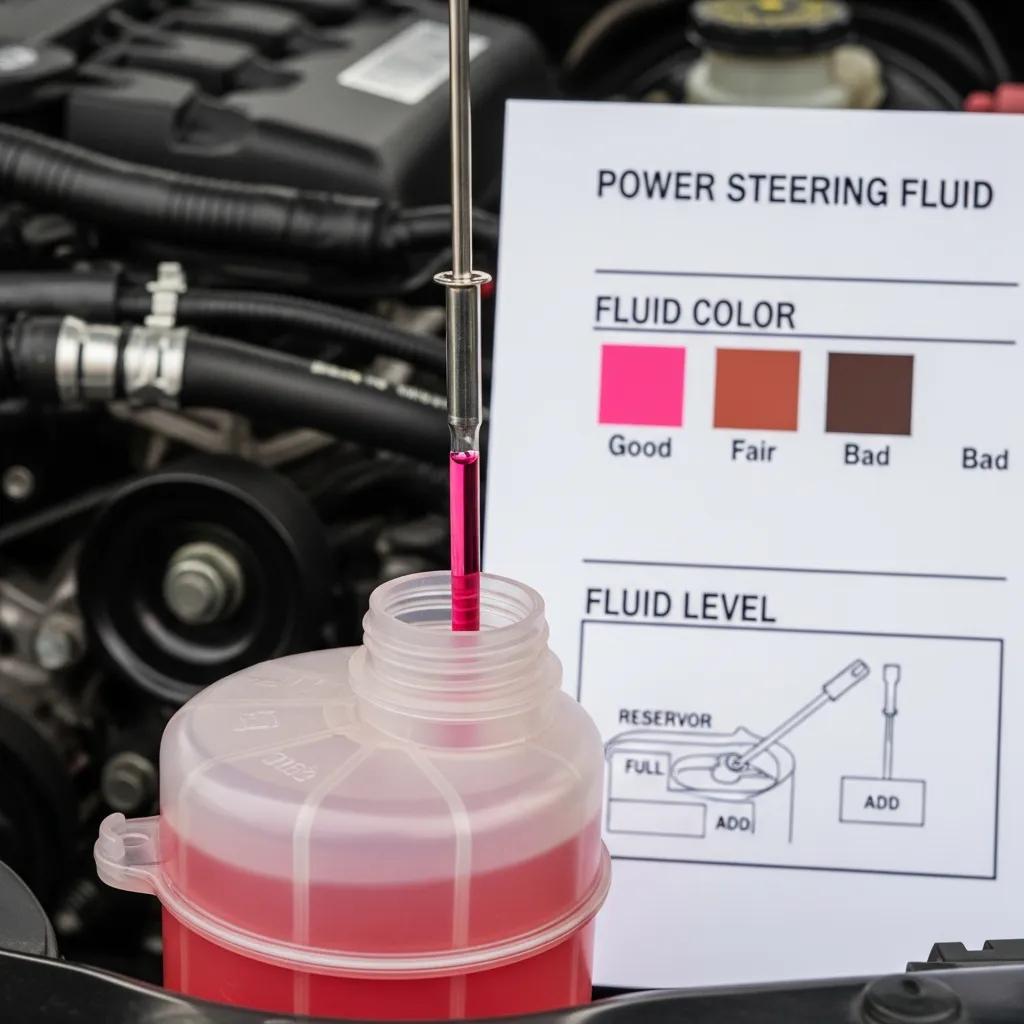
Checking the power steering fluid is straightforward: locate the reservoir, read the dipstick correctly (cold vs. hot), and inspect the fluid’s color, smell, and foam. Start by parking on level ground and centering the steering wheel. If your owner’s manual calls for a warm measurement, run the engine until it reaches operating temperature before you shut it off. Remove the reservoir cap and use the dipstick or sight marks to compare the level against the MIN/MAX or COLD/HOT indicators. Healthy fluid is usually translucent amber or pink; dark, cloudy, or burnt-smelling fluid points to contamination or heat damage. If the level is low, top off with the OEM‑specified fluid. If the fluid is dark, foamy, or contains particles, schedule a professional flush and diagnostic to find leaks or worn components.
Follow this numbered checklist for a correct fluid check:
- Park on level ground and center the steering wheel; consult the owner’s manual for vehicle-specific guidance.
- Warm the engine if the manual specifies hot measurements, then shut the engine and remove the reservoir cap carefully.
- Use the dipstick or sight glass to read the level against the MIN/HOT or COLD/MAX markings and note the reading.
- Inspect fluid color and odor: light amber or pink indicates healthy fluid; dark brown, black, or a burnt smell indicates contamination.
- Look for foam or particles and check around hoses and fittings for visible leaks; document any abnormalities and plan next steps.
Quick precautions and interpretation tips:
- If the dipstick reads near MIN, top off slowly and recheck — do not overfill.
- If fluid is discolored, foamy, or smells burned, avoid long drives and schedule professional service.
- If you find puddles under the vehicle, treat the leak as high priority and arrange immediate inspection.
Use the dipstick-reading guide below to decide what action to take based on cold and hot readings and to standardize checks at home or during inspections.
| Dipstick Reading | Condition | Recommended Action |
|---|---|---|
| Cold — Above COLD/MAX | Normal | Monitor at next service interval |
| Cold — Between MIN and COLD | Low | Top off with OEM‑specified fluid and recheck for leaks |
| Hot — At or near HOT/MAX | Normal (hot) | No action unless symptoms are present |
| Hot — Below MIN (hot) | Low — leak likely | Schedule diagnostic; inspect hoses and seals |
That table helps you interpret cold versus hot measurements and choose the right next step. After you confirm level and condition, the next section compares fluid types and explains when a top-off is enough versus when a full flush is needed.
Where to find the power steering fluid reservoir
Reservoir location varies by make and model. Common spots include near the firewall on the driver side, mounted on the power steering pump, or as a separate translucent container near the front of the engine bay. Always check the owner’s manual first so you’re using the correct reservoir and fluid—misidentifying the reservoir can contaminate the system or lead to the wrong topping fluid. Look for a labeled cap or a reservoir with a dipstick in the cap; translucent containers let you check level without removing the cap. Work carefully around hot components and belts—inspect after the engine cools unless the manual specifies a warm check—and use gloves to avoid contact with dirty fluid.
Finding the reservoir quickly reduces inspection time and lowers the risk of introducing contaminants. Once located, read the dipstick and interpret the marks to make a confident maintenance decision.
How to use the dipstick for an accurate reading
Accurate dipstick readings depend on whether your vehicle uses cold or hot reference marks and on following a consistent routine. Start with the engine condition the manual recommends (cold or warm), remove the cap, wipe the dipstick clean, reinsert it fully, then withdraw and read the fluid level against the MIN/HOT or COLD/MAX markings. Check color and smell as part of the same step—clear amber is healthy; dark brown, black, or a burnt odor points to oxidation or contamination and usually means a flush is needed. Avoid overfilling; excess fluid can aerate, creating foam that harms hydraulic pressure and steering performance.
If the dipstick shows low level and you don’t see an obvious leak, top off with the OEM‑specified fluid and recheck. If the level drops again quickly or the fluid is contaminated, schedule a professional diagnostic to locate leaks, test the pump, and perform a controlled flush. Those steps restore correct hydraulic pressure and reduce long-term component damage.
Types of power steering fluid and when to change them
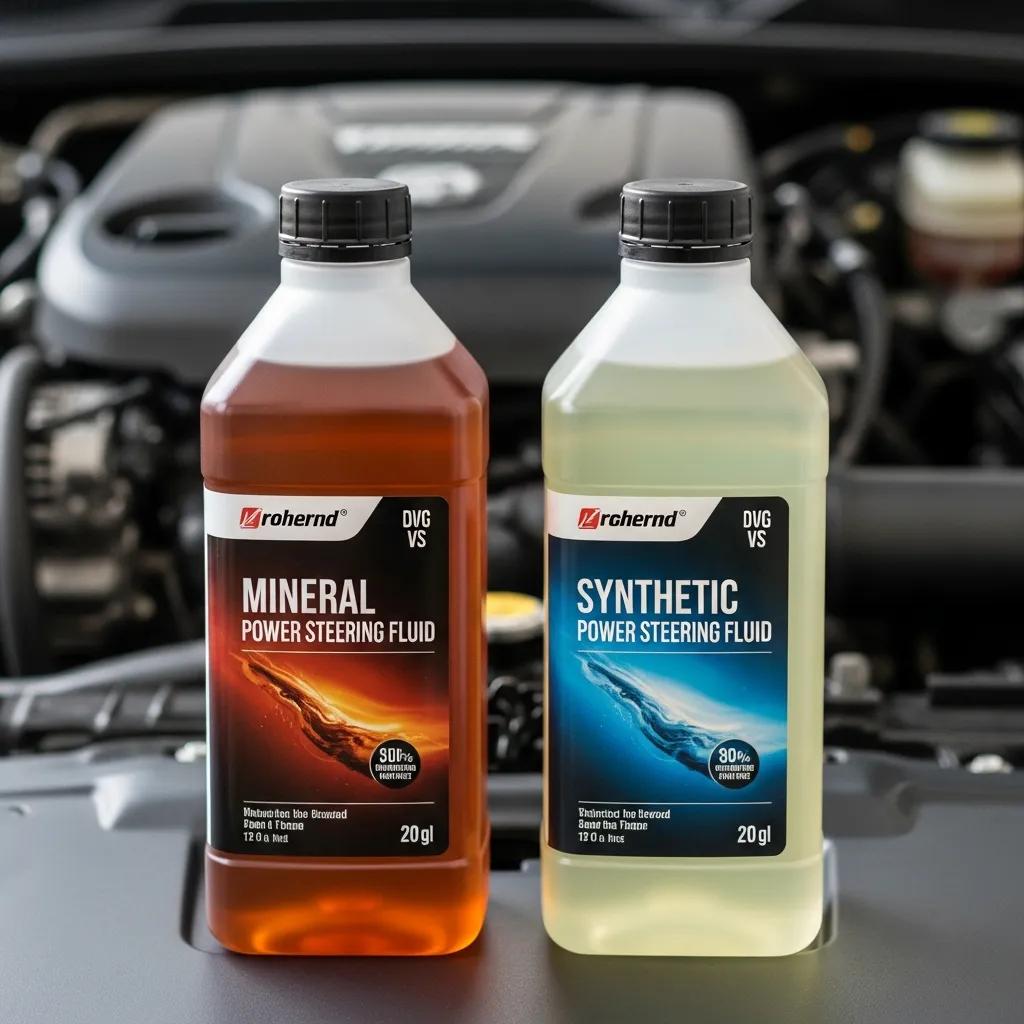
Power steering fluids generally fall into two groups: mineral-based and synthetic formulations. They differ in viscosity, thermal stability, and OEM compatibility. Mineral-based fluids are traditional and often less expensive, and some older systems specify them. Synthetic fluids offer better thermal stability, resist oxidation, and usually last longer between changes. Always follow the OEM specification—using the wrong fluid can change viscosity with temperature, affect steering feel, and damage seals or the pump. Industry trends favor synthetic formulations for durability and extreme-temperature performance, but your owner’s manual is the final authority on the correct fluid type for your vehicle.
Use the table below to compare common fluid types, their traits, and typical service intervals to simplify selection and planning.
| Fluid Type | Characteristic | Typical Recommendation |
|---|---|---|
| Mineral-based | Cost-effective; often used in older OEM systems | Change interval: commonly 2–3 years or per OEM guidance |
| Synthetic (hydraulic-grade) | Better thermal stability and resistance to oxidation | Change interval: commonly 3–5 years depending on use |
| OEM-specific formulations | Blends designed to meet manufacturer specifications | Follow the vehicle manufacturer interval exactly |
This comparison shows why OEM compliance matters and how synthetic fluids can extend service life. The next section explains performance and compatibility differences in more detail.
Mineral-based vs. synthetic power steering fluids
Mineral-based fluids are refined oils with additive packages that provide basic lubrication and corrosion protection, but they tend to oxidize faster and may need more frequent changes than synthetic blends. Synthetic power steering fluids use more stable base oils and tailored additives to resist thermal breakdown, reduce foaming, and hold consistent viscosity across temperature ranges—improving steering feel and easing pump stress. Synthetic options usually cost more up front, but their longer life and reduced wear can offset that over time. Always confirm compatibility: some systems require a specific fluid or OEM formulation because seal materials and pressure tolerances vary. A mismatched fluid can harm seals or change steering behavior.
Knowing these differences helps you decide when a professional flush is necessary—especially if you notice contamination or persistent noise. Prime Time Collision Center follows OEM recommendations and can advise on the correct fluid type and flush schedule for your vehicle to keep steering performance OEM‑compliant.
How often should you change or flush power steering fluid?
Change intervals vary by vehicle and fluid type, but typical ranges fall between every 30,000 and 60,000 miles or roughly every 2–5 years, depending on driving conditions, fluid chemistry, and manufacturer guidance. Heavy towing, frequent stop-and-go driving, or high under-hood temperatures shorten fluid life and move the interval toward the lower end; synthetic fluids with higher thermal stability can often go longer under normal use. Immediate service is recommended if you find dark or gritty fluid, persistent whining, foaming, or visible leaks—these issues usually call for a professional flush and diagnostic rather than a simple top-off. For most owners, combining regular visual checks with the owner’s manual interval gives the best balance of safety and cost.
When the system’s history is unknown or contamination is present, a professional flush removes oxidized oil and debris and protects the pump, rack, hoses, and seals from ongoing damage. The next section covers the common symptoms that signal it’s time for that intervention.
Common signs of low or contaminated power steering fluid
Low or contaminated fluid produces clear symptoms you can spot before a full failure: whining or groaning from the pump, increased steering effort or stiffness, jerky or imprecise steering inputs, and visible fluid leaks under the vehicle. These symptoms stem from reduced hydraulic pressure, air in the system (foam), or particle-driven wear on the pump and rack. If left unchecked, the extra stress accelerates failure of components like hoses, seals, the pump, and the steering rack—raising repair costs and risking unsafe handling. Catching and acting on these signs early—whether by topping off, flushing, or repairing—keeps the vehicle predictable and safe in emergency maneuvers.
Use the symptom-to-action table below to prioritize responses based on severity and likely cause.
| Symptom | Likely Cause | Recommended Action |
|---|---|---|
| Whining noise when turning | Low fluid level or air in the system | Check level; top off if low; have system serviced if noise continues |
| Stiff or heavy steering | Low pressure, pump wear, or contamination | Inspect level; if normal, schedule a diagnostic |
| Foamy or milky fluid | Air entrainment or water contamination | Avoid long trips; schedule a professional flush |
| Visible puddle or drips | Hose or seal leak | Stop driving if leak is large; arrange leak detection and repair |
This table links common symptoms to practical next steps and highlights when a professional diagnosis is the right choice. The following section gives quick checks you can do for symptoms like whining or stiff steering before visiting a shop.
How to spot whining noises and stiff steering
A whining or high-pitched groan that gets louder during slow turns usually points to low fluid, aeration, or a failing pump; the tone is smoother and higher in frequency than grinding or knocking. Steering that feels heavy or slow to respond suggests reduced hydraulic assist—caused by low pressure, a slipping pump, or a blockage in the steering circuit—and is a more urgent safety concern because assist loss affects control. Quick checks include verifying the fluid level and condition, looking for leaks under the vehicle, and noting whether the issue is constant or intermittent. If the level and appearance look normal but symptoms continue, the problem likely needs mechanical diagnosis. These quick steps help you narrow down fluid-related causes before scheduling professional diagnostics.
Addressing whining and stiffness promptly reduces the risk of pump seizure or rack damage and prepares you for the next topic: why leaks happen and how they affect steering.
What causes fluid leaks and how they affect steering
Leaks usually come from aged hoses, failed seals, loose fittings, or damaged reservoir and pump connections. Over time heat and wear make rubber hoses and O‑rings harden and crack, creating leak points. Small leaks slowly lower fluid level and let air into the system, which causes foaming, lowers hydraulic pressure, increases pump wear, and produces an unpredictable steering feel. Large leaks can quickly leave the vehicle without adequate assist and create immediate safety hazards. Early leak detection—checking for drips, wet spots on hoses or fittings, and falling reservoir levels—lets you make focused repairs and avoid more costly pump or rack replacement. If you see puddles or rapid level loss, schedule professional leak detection and repair right away to restore hydraulic integrity and steering safety.
After locating leaks, technicians can replace failing hoses or seals, refill with the correct OEM fluid, and perform a controlled flush if needed to clear contamination. If you notice leak signs or worsening performance, contact a qualified repair provider for inspection and repair.
How Prime Time Collision Center can help with steering fluid and repairs
Prime Time Collision Center offers complete inspection, diagnostic testing, fluid service, leak repair, and OEM‑consistent repairs to restore steering safety and performance. Our technicians inspect the whole steering system—reservoir condition, hose integrity, pump and rack operation, and nearby components—to pinpoint leaks or mechanical problems. For contaminated fluid or unknown service history, we perform a controlled flush and refill with OEM‑recommended fluids to avoid seal incompatibility and preserve steering characteristics. We also help coordinate insurance for collision-related steering damage and deliver OEM-quality repairs by I‑CAR Platinum certified technicians to protect safety and vehicle value.
Our service flow is inspection → diagnosis → repair or flush → verification, so every step has a clear outcome and repaired systems meet manufacturer expectations. If you’d rather have a professional handle the work than top off the fluid yourself, schedule an inspection with our team to confirm whether a top-off is sufficient or if deeper repairs and leak detection are needed.
Diagnostics and fluid services offered by Prime Time
Prime Time provides comprehensive diagnostics that start with visual and pressure-based checks to find leaks, isolate pump noise sources, and test steering rack function. Our process includes hose inspections, torque checks on fittings, and system pressure readings when applicable. For fluid maintenance, we offer controlled flushes to remove oxidized oil and particles, followed by refills using OEM-recommended fluids to protect seals and performance. When repairs are required, technicians replace faulty hoses, seals, or pump parts and verify system integrity through road testing and re-inspection. We also assist with paperwork and insurance communications for collision-related repairs, guiding customers through claims while focusing on safe, OEM-accurate results.
Why choose Prime Time’s I‑CAR Platinum technicians for OEM repairs?
I‑CAR Platinum certification reflects advanced technician training and a commitment to industry best practices that align with OEM repair methods and safety standards. Choosing a shop with this credential lowers the risk of improper procedures that could damage steering geometry, sensor calibration, or structural integrity after collision repairs. Prime Time prioritizes OEM parts and documented repair workflows to protect vehicle safety, resale value, and insurance compliance when steering components or nearby structures are affected. That training and process discipline lead to better outcomes and give vehicle owners confidence in post-repair handling and verification.
If your steering shows leaks, noise, or poor response—especially after an accident—ask for an OEM-focused inspection from technicians who combine thorough diagnostics with insurance support to return your vehicle to safe, manufacturer-intended operation.
Frequently Asked Questions
1. What signs mean I should check my power steering fluid more often?
Check the fluid more frequently if you hear whining or groaning when turning, feel steering that’s stiff or sluggish, see fluid spots under the car, or notice the fluid looks dark or foamy. Any of these signs suggest low or contaminated fluid and mean you should inspect level and condition sooner rather than later.
2. Can I use any fluid in my power steering system?
No. Always use the fluid specified by your vehicle manufacturer. The wrong fluid can reduce lubrication, speed wear, and damage seals or the pump. Consult your owner’s manual for the correct OEM specification before topping off or refilling.
3. How do I know if my power steering fluid is contaminated?
Contaminated fluid usually changes color and smell. Healthy fluid is clear amber or pink. Dark brown or black fluid, a burnt odor, visible particles, or foaming are signs of contamination. If you see those, plan a professional flush and system check.
4. What should I do if I suspect a power steering fluid leak?
If you suspect a leak, check the reservoir level and top off with the recommended fluid if needed. Inspect under the car for puddles or wet spots near hoses and fittings. If you find a leak or the level keeps falling, schedule a professional inspection right away to locate and repair the source.
5. Is it safe to drive with low power steering fluid?
Driving with low fluid is unsafe. Insufficient fluid increases steering effort, reduces control, and risks component failure. If you experience heavy steering or hear whining, stop and check the fluid. Top off as needed and get the system checked if symptoms continue.
6. How can I keep my power steering fluid healthy for longer?
Check fluid level and condition regularly, follow the manufacturer’s recommended fluid type and change intervals (often 30,000–60,000 miles), and address leaks quickly. Avoid extreme under-hood heat and heavy loads where possible. Keeping the system clean and fixing leaks promptly helps prolong fluid and component life.
7. What benefits come from using synthetic power steering fluid?
Synthetic fluids offer better thermal stability, resist oxidation, and hold consistent viscosity across a wide temperature range. That improves steering feel, reduces pump stress, and often extends service intervals. Though pricier up front, synthetic fluids can lower long-term maintenance and wear.
Conclusion
Regularly checking and maintaining your power steering fluid helps keep your vehicle safe and responsive. Recognizing the signs of low or contaminated fluid lets you avoid costly repairs and extends the life of steering components. For professional, OEM‑compliant service, schedule an inspection with Prime Time Collision Center. Taking this simple step today keeps your steering system working the way it should.