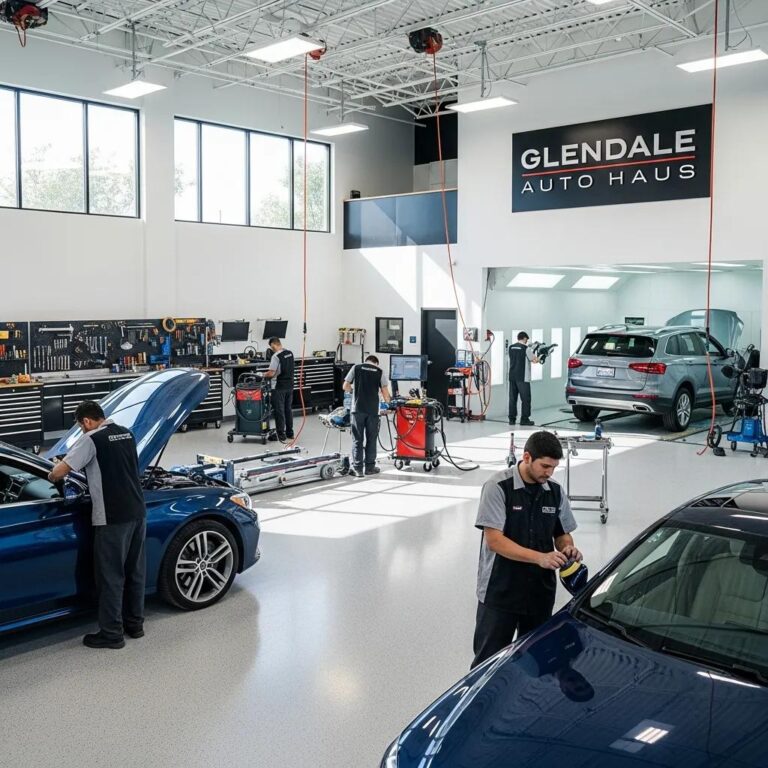
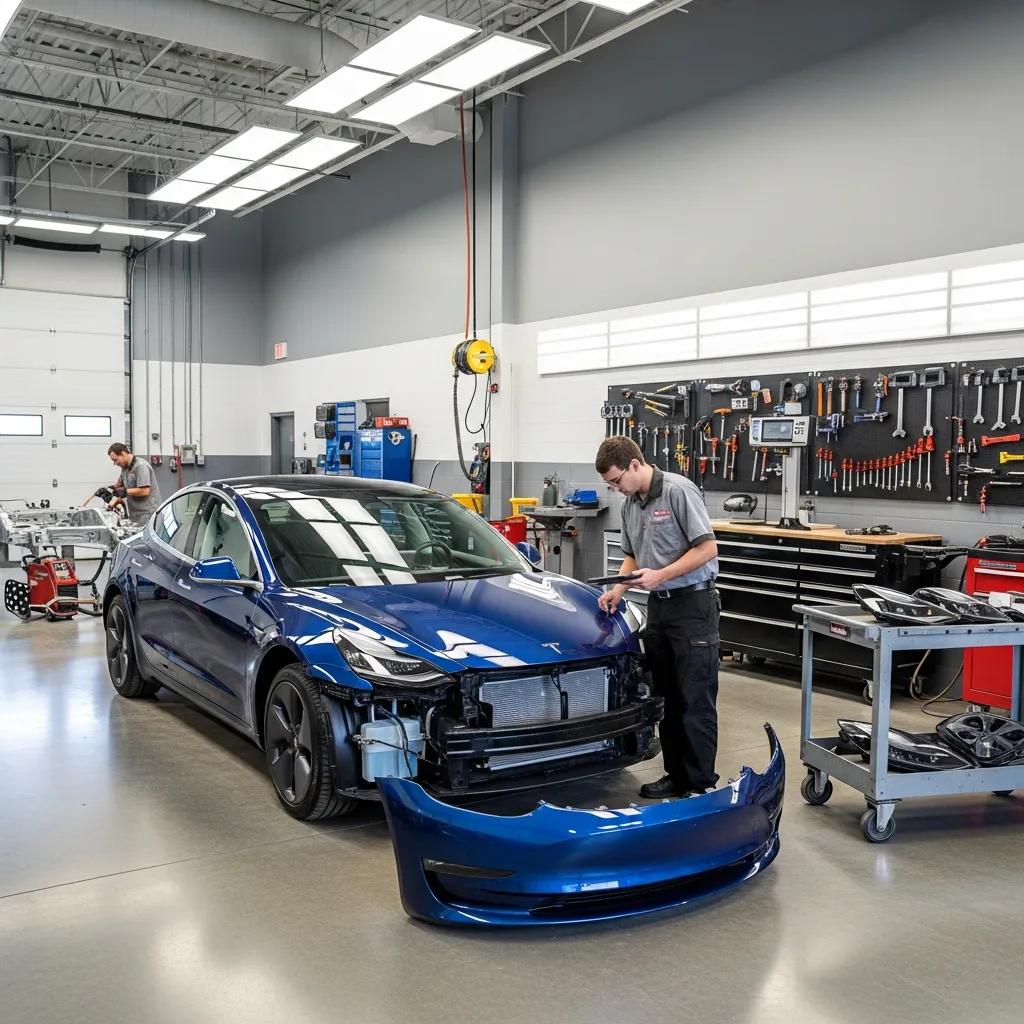
Tesla Model 3 Certified Body Shop — OEM-Grade Collision Repairs & Expert Service in Glendale
After a collision, Model 3 owners need repairs done to Tesla’s standards — work that protects safety systems, the vehicle’s structure, and your warranty. This page walks you through how certified body shops handle those specialized repairs: why OEM-aligned procedures matter for aluminum structures and high-voltage systems, how a certified repair moves from towing through final ADAS checks, and which services — from aluminum joining to battery enclosure inspection — are essential for a safe outcome. Our focus is practical: we define each repair step, explain how it preserves safety, and give actionable tips for working with insurers and choosing the right shop. Tactical search phrases like Model 3 body shop, Tesla collision Model 3, aluminum repair, ADAS calibration, and OEM certified Tesla repair Glendale are used so you can find and evaluate qualified providers in greater Los Angeles.
Why Choose Prime Time Collision Center for Your Tesla Model 3 Body Repair?
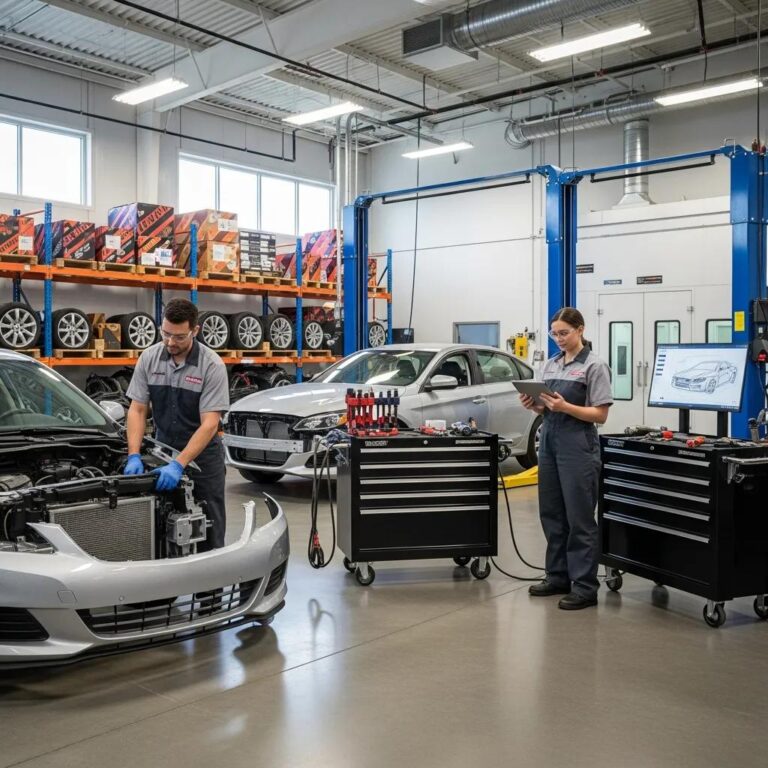
Tesla Model 3 repairs call for specific training, aluminum-capable equipment, and strict adherence to OEM procedures to keep crash performance and active safety systems intact. Correctly repairing the Model 3’s aluminum structure and high-voltage components lowers long-term risk, helps protect factory warranty coverage, and ensures ADAS features work as designed. When comparing shops, look for documented I-CAR training, aluminum welding and bonding capability, calibrated frame equipment, and a clear ADAS recalibration and battery inspection process. Those elements together restore safety and vehicle value after a collision.
Prime Time Collision Center presents a local, safety-first option for Model 3 owners: I-CAR Platinum technicians, direct coordination with major insurers, and a lifetime warranty on repairs. Serving Glendale and the greater Los Angeles area, we combine technical capability with hands-on customer support to reduce downtime and ease claims handling for your Tesla.
Key advantages for Model 3 owners:
- I-CAR Platinum-trained technicians with EV- and aluminum-specific coursework relevant to the Model 3.
- OEM-aligned procedures, documented work, and aluminum-capable equipment to protect structural integrity.
- Insurance coordination and a lifetime repair warranty to give confidence in long-term safety.
These differentiators help owners prioritize safety and warranty preservation when choosing a Model 3 body shop and lead into a detailed view of the repair process below.
What Makes Our I-CAR Platinum Certified Technicians Specialized in Tesla Repairs?
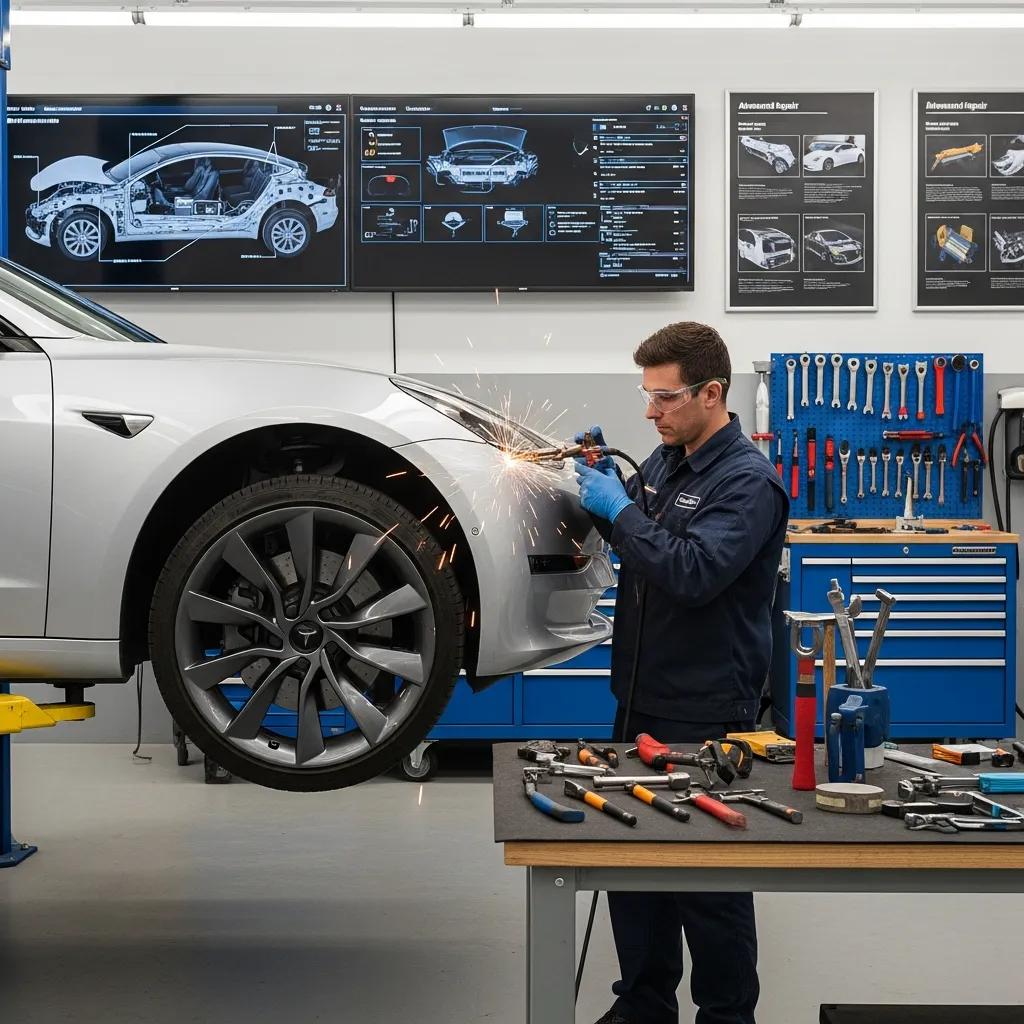
I-CAR Platinum means our technicians have completed role‑specific collision training across structural, non-structural, ADAS, and EV safety topics. That includes safe battery isolation, aluminum joining techniques, and sensor handling — all skills that reduce risk during disassembly and recalibration on a Model 3. In the shop, I-CAR-trained staff follow OEM diagnostic sequences, use aluminum-specific welding/bonding stations, and record verification steps to show the vehicle meets safety tolerances before release. Cross-training across body, mechanical, and calibration tasks improves coordination and limits rework on complex Tesla repairs.
That training bridges technician competence and manufacturer-prescribed procedures, which directly impacts warranty and safety outcomes.
How Does Our OEM Certified Repair Ensure Tesla Model 3 Safety and Warranty?
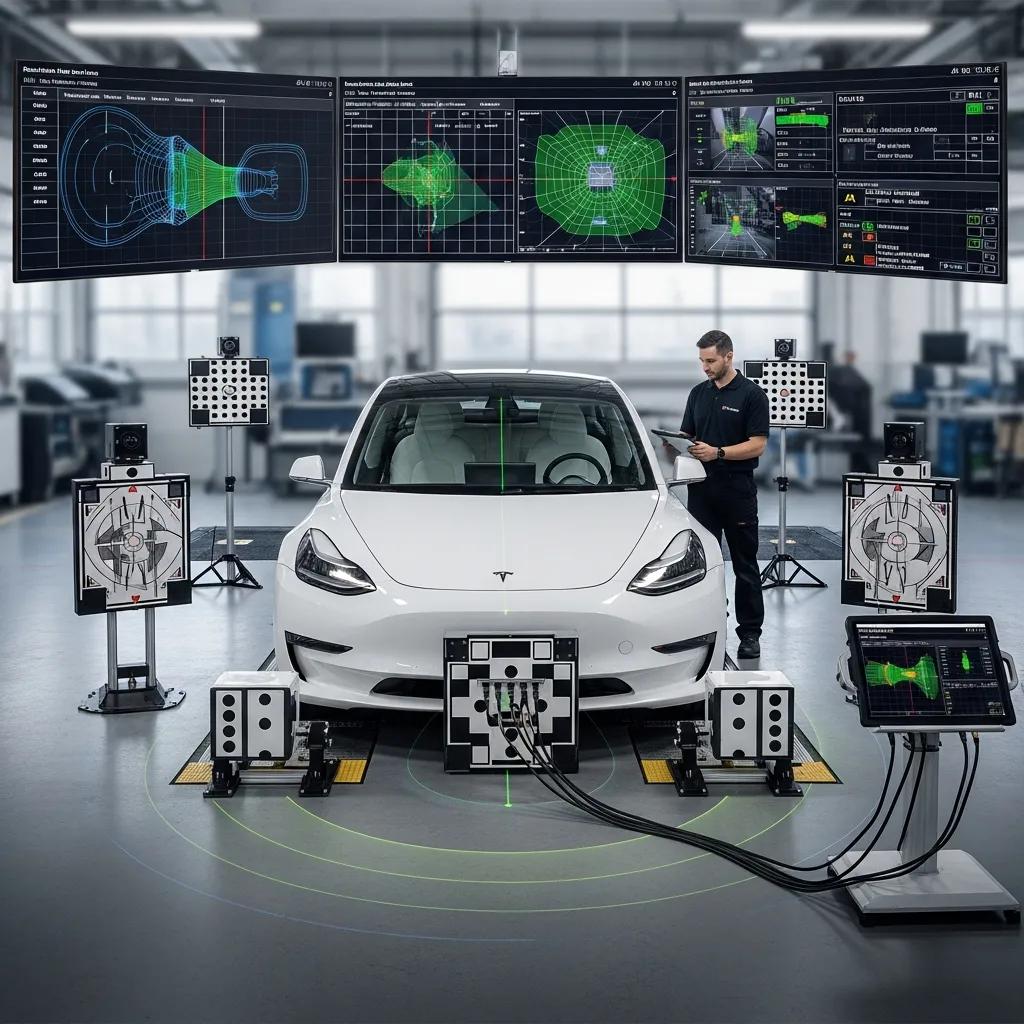
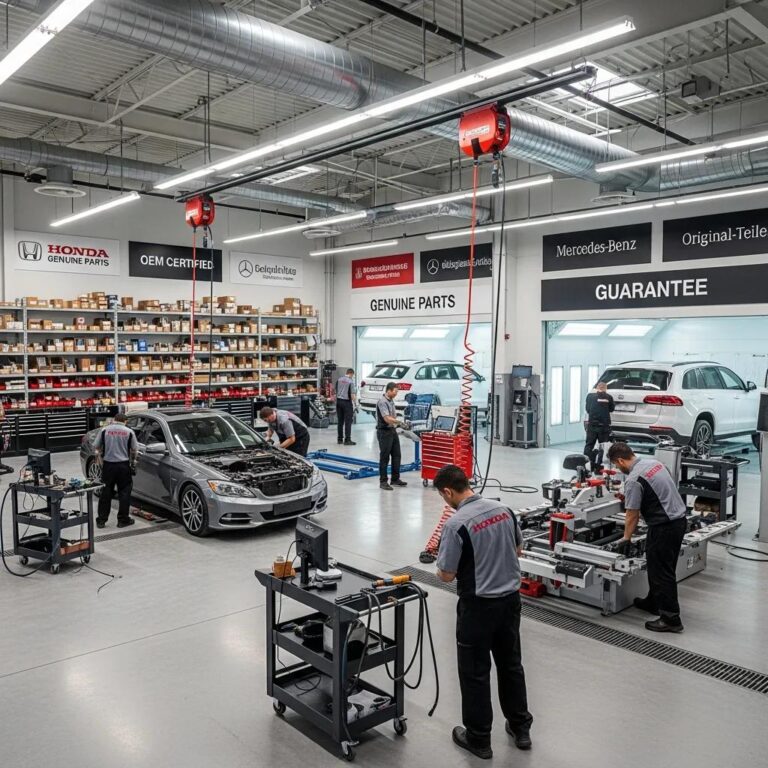
OEM-aligned repair means following manufacturer repair sequences, using specified tools and fasteners, and documenting each step so the repair history supports warranty and safety claims. For the Model 3, that includes observing torque specs, using approved aluminum joining or replacement methods, and performing ADAS recalibration with OEM diagnostic guidance. Ask your shop for repair documentation, parts sourcing details, and calibration records — those items confirm OEM alignment and help preserve warranty rights. Insisting on these practices lowers the risk of latent failures or sensor misalignment that could compromise safety after a collision.
That emphasis on OEM alignment explains why our repair process uses careful teardown, precise measurement, controlled joining or replacement, and multi-stage quality control to return your Model 3 to factory-safe condition.
What Is the Step-by-Step Tesla Model 3 Collision Repair Process at Prime Time?
A transparent workflow clarifies timing, safety checks, and decision points from arrival to delivery. Typical Model 3 repairs at our shop follow a clear sequence: towing and intake triage, estimate and insurer coordination, disassembly and structural assessment, aluminum repair or replacement, paint and finish restoration, ADAS calibration and battery enclosure checks, then final quality control and documentation. Each stage validates safety-critical elements and creates a complete repair record for you and your insurer.
Detailed steps in the Model 3 collision repair process:
- Towing & Intake: We triage the vehicle for high-voltage safety, photograph damage, and move the car to a battery-safe bay for inspection and documentation.
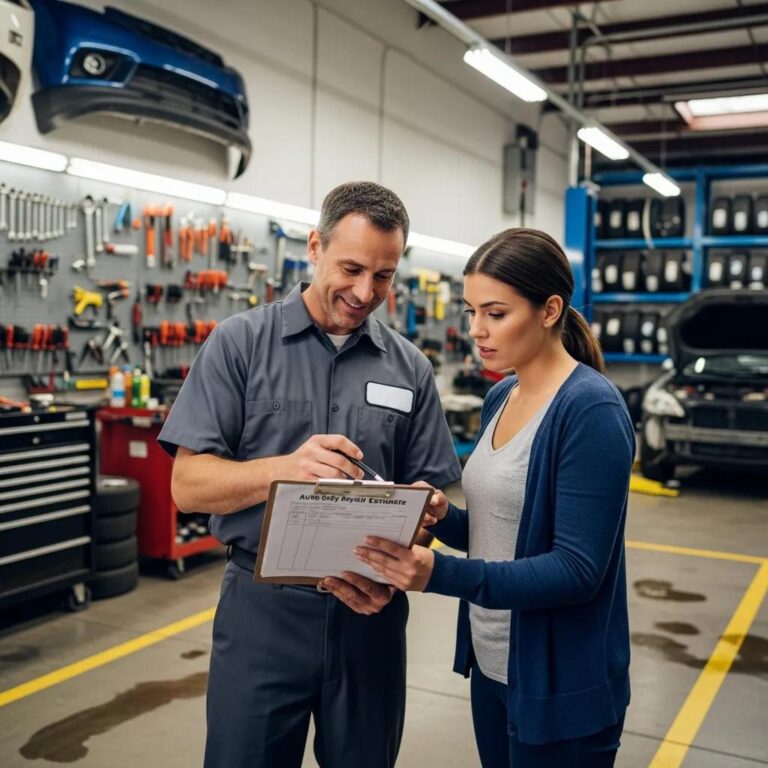
- Estimate & Approval: Technicians prepare an OEM-aligned plan that lists parts, aluminum labor, and ADAS calibration needs; we coordinate with the insurer to justify required procedures.
- Disassembly & Assessment: Controlled disassembly and dimensional checks reveal hidden damage; frame measurements determine straightening or replacement needs.
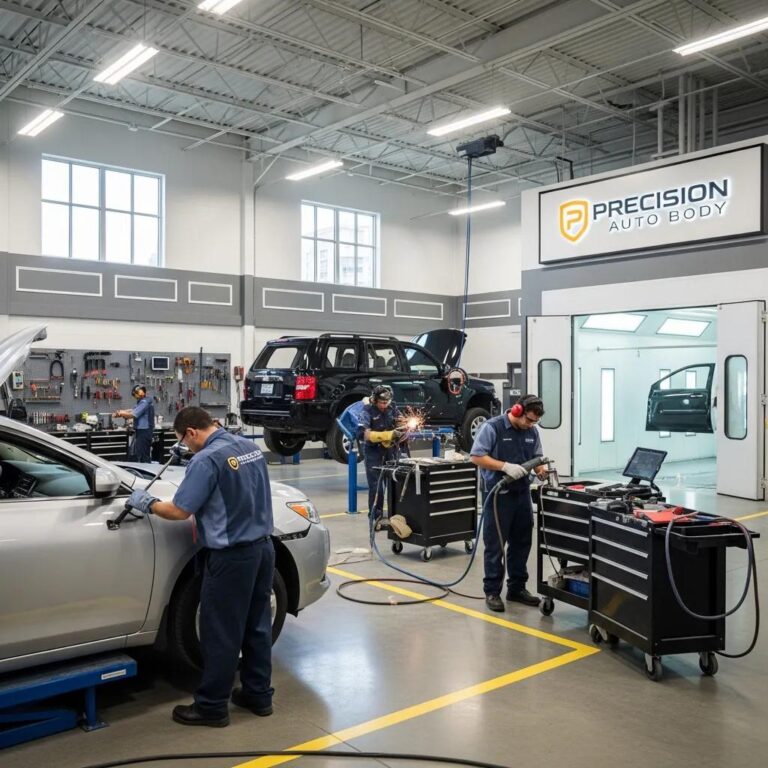
- Structural & Aluminum Repair: Aluminum panels are repaired or replaced using heat-controlled joining or approved replacement methods and calibrated frame equipment.
- Paint & Finish: Factory color matching, blending, and controlled booth painting restore appearance and corrosion protection.
- ADAS Calibration & Battery Inspection: Sensors are calibrated (static and/or dynamic), and the battery enclosure is inspected for structural and electrical safety.
- Final QC & Documentation: Road testing, sensor verification, and a complete repair file finalize the handover to the owner.
We also assist with towing coordination, insurer communication, and delivery logistics so the claims process is as smooth as possible. Our priority is OEM-quality, safety-first repairs while helping you navigate every practical step of a claim and repair.
How Do We Handle Towing, Estimates, and Quality Control for Tesla Repairs?
Towing a Model 3 requires protocols to protect the high-voltage system and chassis; we work with flatbed carriers trained for EV handling and will advise what documents to bring at intake. During intake, technicians document visible and hidden damage using a checklist that includes battery enclosure inspection, ADAS sensor alignment checks, and photographic records for the estimate. Estimates emphasize OEM procedures and include time for aluminum work, frame measurement, and ADAS calibration so adjusters understand the full scope. Our multi-stage quality control includes structural verification on calibrated frame racks, finish inspection under controlled lighting, ADAS validation, and dynamic road testing before release.
You should expect a detailed estimate, staged approvals if additional damage is found, and a final QC report that lists calibration and safety milestones — all to minimize surprises and provide verifiable repair records for you and your insurer.
What Specialized Equipment Is Used for Aluminum and Structural Repairs?
Aluminum and structural repairs rely on tools built for non-ferrous work: aluminum welding and bonding stations with heat control, calibrated frame racks with EV fixtures, non-ferrous hand tools, and ADAS calibration rigs for static and dynamic processes. Diagnostic interfaces and battery-safe workstations let technicians isolate high-voltage systems before cutting, joining, or torqueing structural parts. Laser mapping and measurement systems validate chassis tolerances to OEM specs, reducing misalignment risks that affect handling or sensor geometry.
Using correct equipment limits thermal distortion, ensures joint strength, preserves crashworthiness, and keeps sensor reference points accurate. Proper tooling also reduces rework and helps deliver documented verification faster.
Which Specialized Tesla Model 3 Body Repair Services Do We Offer?
Our Model 3 services focus on structural integrity, aluminum bodywork, ADAS recalibration, factory-accurate paint, and battery enclosure safety — each addressing components that affect occupant protection or vehicle operation. These services combine material-specific techniques, precision measurement, and documented verification to return your vehicle to pre-loss safety and performance standards. Use the quick comparison table below to match your damage to likely repair steps and timeframes.
The table lists common repairs, typical damage patterns, and a concise outline of repair steps and estimated timeframes to help set expectations.
| Service | Common Damage Types | Typical Repair Steps & Timeframe |
|---|---|---|
| Aluminum body repair | Dented door panels, crumpled fenders | Non-destructive straightening or replacement; heat-managed joining; 3–7 days |
| Structural/frame repair | Offset measurements, subframe damage | Frame measurement and alignment on calibrated rack, possible module replacement; 4–10 days |
| ADAS calibration | Misaligned cameras, radar errors | Static or dynamic calibration with OEM targets and road validation; 1–2 days |
| Paint & finish restoration | Scratches, blended panels | Color match, blending, controlled booth painting and cure; 2–5 days |
| Battery enclosure inspection | Crush near pack, intrusion | Visual and instrument checks, isolation, module-level assessment; timeline varies |
These estimates give a starting point for planning; actual time depends on parts availability and the extent of structural work.
How Is Aluminum Body Repair Performed to Maintain Structural Integrity?
Aluminum repair prioritizes non-destructive methods when they meet OEM strength and dimensional standards; when replacement is required, we follow controlled procedures to preserve crash behavior. Technicians use heat-managed joining, aluminum-compatible welding or rivet-bond processes, and corrosion-control measures to limit thermal spread and protect adjacent structure. Decision criteria for repair versus replacement include panel thickness, crease severity, and whether structural loads were affected. When we replace panels, we confirm fit, fastener specs, and alignment to OEM tolerances. Post-repair checks verify panel geometry and sensor mounting points to protect appearance and safety system performance.
You’ll receive documented records explaining methods used and why replacement was chosen when repair could not meet OEM strength or dimensional requirements — an important part of resale and warranty transparency.
What Does Structural & Frame Repair and ADAS Calibration Involve?
Structural repair starts with precise chassis measurement using laser fixtures and OEM reference points; corrective work uses calibrated frame racks and controlled pulling to restore geometry. We check tolerances against manufacturer specs so suspension and crash structures behave predictably. ADAS recalibration comes after structural alignment because sensor positions and mounting planes change with body geometry. We perform static calibrations with OEM targets and dynamic calibrations on the road or test track to confirm system performance. Final validation includes road testing, sensor reports, and diagnostic logs confirming ADAS readiness.
Frame alignment and ADAS recalibration must work together — without both, driver-assist features can give false warnings or fail to engage, so coordinated procedures are essential for Model 3 safety.
How Do We Achieve Tesla Factory-Quality Paint and Finish Restoration?
Factory-quality finish combines precise color matching, multi-stage paint systems, and environmental controls in our booth. We identify the correct Tesla color code, blend paint across adjacent panels when needed, and use controlled bake and curing protocols to match gloss and texture. Final QA includes gloss meters, panel-gap checks, and visual inspection under standardized lighting to spot orange-peel or blend lines. Surface prep and corrosion protection are applied so the repair lasts, not just looks good initially.
This finish work preserves vehicle value and appearance while complementing the structural and electronic repairs that restore safe driving performance.
Why Is Battery Enclosure Inspection Critical for Tesla Model 3 Safety?
Battery enclosure inspection verifies there’s no structural breach, coolant leak, or electrical damage to the high-voltage pack after a collision. Inspections include visual checks for intrusion, electrical continuity tests, and coolant and wiring assessments for thermal management integrity. If pack deformation or penetration is found, module-level assessment and controlled service steps are required — and those can affect repair timelines. Proper inspection and isolation procedures reduce the risk of latent electrical faults or thermal runaway from unseen pack damage.
Because the battery pack is critical to safety and performance, inspection results are part of the final QC package for every Model 3 repair.
How Do Tesla Model 3 Certifications and Standards Impact Your Repair?
Certifications translate shop capability into owner assurances that repairs meet safety expectations. I-CAR Platinum training, adherence to OEM procedures, and documented calibration practices show a shop has invested in the systems and training to repair EVs safely. For Model 3 owners, these standards affect liability, warranty, and long-term performance — certified processes lower the chance of sensor miscalibration or structural weakness lingering after repair. The table below explains common certifications and why they matter.
The following table explains certification names, what they mean for repairs, and owner-level implications so you can prioritize shop qualifications.
| Certification/Standard | What It Means | Why It Matters for Tesla Owners |
|---|---|---|
| I-CAR Platinum | Role-specific, technician-level collision training | Shows trained staff for aluminum, ADAS, and EV safety procedures |
| OEM-aligned procedures | Following manufacturer repair sequences and documentation | Helps preserve warranty and ensures safety-critical steps are recorded |
| ADAS calibration standards | Use of calibrated rigs and OEM calibration targets | Restores sensor performance and reduces false alerts |
| Battery safety protocols | Verified isolation and inspection processes | Reduces risk of electrical faults and improves repair transparency |
Use this comparison to prioritize shops that demonstrate both technician training and documented procedures — increasing the chance of a safe, warranty-preserving repair.
What Is the Importance of I-CAR Platinum Certification for Tesla Repairs?
I-CAR Platinum reflects a deep investment in technician training across body, structural, and safety systems relevant to EVs. For Model 3 repairs, it confirms technicians know aluminum behavior, high-voltage safety basics, and ADAS procedures — skills we use every day when disassembling, measuring, and rebuilding sensor mounts and body structures. Owners benefit because trained technicians are less likely to introduce repair-induced faults and more likely to document steps that support warranty claims. Choosing a shop with certified staff reduces uncertainty and helps justify OEM repair scopes to insurers.
Next, we explain how OEM procedures align with Tesla’s specific safety requirements and what documentation you should expect.
How Do OEM Repair Procedures Align with Tesla’s Safety Requirements?
Following OEM procedures means executing torque sequences, fastener specs, diagnostic resets, and calibration orders in the precise sequence the manufacturer specifies. For the Model 3, that includes isolating high-voltage systems before structural work, following replacement-versus-repair criteria for aluminum parts, and running calibrations with OEM targets and diagnostic tools. Proper documentation of these steps gives you a verifiable repair history to support warranty and safety audits. When shops align workflows to OEM expectations, the repaired vehicle is much closer to factory safety performance.
Ask for procedure summaries and calibration certificates as part of your final paperwork to confirm those practices were followed.
How Can Tesla Model 3 Owners Navigate Insurance Claims for Collision Repairs?
Getting an EV repaired through insurance requires clear documentation and proactive shop-adjuster communication to justify specialized scope like aluminum work and ADAS calibration. Insurers may question parts sourcing, calibration time, or aluminum-specific labor, so provide photos, the shop’s OEM repair plan, and any certification evidence to speed approvals. The practical steps are: file the claim, present documentation, schedule an estimate, and approve scope before major repairs begin. Early, clear communication reduces delays and unexpected out-of-pocket costs.
The checklist below clarifies who handles each step and what you should do to keep the claim moving efficiently.
| Claim Step | Who Does It | Owner Action / Expected Outcome |
|---|---|---|
| File claim | Owner / Insurer | Send photos and incident details; expect a claim number and adjuster assignment |
| Estimate & OEM justification | Repair shop | Shop submits a detailed OEM-aligned estimate and photos to the adjuster for approval |
| Parts ordering | Shop / Insurer | Shop orders OEM or approved parts; owner is notified of lead times |
| Approval & repairs | Insurer & Shop | Repairs begin after scope approval; owner receives a projected timeline |
| Final QA & documentation | Shop | Shop delivers calibration reports and final QC for owner and insurer records |
Use this checklist to track progress and know when to request documentation or escalate discrepancies for timely resolution.
What Is the Process for Filing and Managing Tesla Model 3 Insurance Claims?
Start by documenting the scene and vehicle damage with photos and notes, then contact your insurer for a claim number. Bring that documentation to the repair shop so the estimator can build an OEM-aligned plan that justifies aluminum work, ADAS calibration, and battery inspection to the adjuster. Expect the adjuster to review the estimate and possibly request supplemental inspections; clear shop documentation and I-CAR or OEM-alignment evidence help speed approvals. Timelines vary with parts lead time and structural scope, so request interim updates and staged approvals if hidden damage appears.
Being proactive with documentation and choosing a shop experienced in insurer communication reduces approval delays and supports a smoother repair timeline.
How Does Prime Time Collision Center Assist with Insurance Adjusters and Estimates?
Prime Time Collision Center prepares detailed, OEM-aligned estimates that itemize aluminum repair methods, ADAS calibration needs, and battery enclosure checks so insurers see the full justification for the scope. We communicate directly with adjusters, supply technician credentials and calibration documentation, and work with all major insurance companies. With a lifetime warranty on repairs, we aim to reduce friction during negotiations and follow-up. Our hands-on support helps prevent scope reductions that could compromise safety or require future corrective work.
Owners benefit from this direct adjuster support because it aligns technical repair requirements with insurer expectations and reduces the chance of disputes.
Frequently Asked Questions
What should I look for when choosing a body shop for my Tesla Model 3?
Prioritize shops with I-CAR Platinum certification and proven Tesla experience. Ask about documented training in aluminum repair and ADAS calibration, and verify equipment like aluminum welding stations and calibrated frame racks. Customer reviews and before/after photos help confirm workmanship and reliability.
How can I ensure my Tesla Model 3 repairs are covered by warranty?
Choose a shop that follows OEM repair procedures and requests OEM parts when required. Ask for documentation of the repair process, parts used, and calibration records — those support future warranty claims. Keep copies of all invoices and calibration certificates for your records.
What are the risks of using a non-certified shop for Tesla repairs?
Non-certified shops may lack the training and tools needed for aluminum repairs and ADAS calibration. Improper methods can compromise safety systems, cause sensor misalignment, or void warranty coverage. For safety and long-term value, use a shop with the right certifications and documented procedures.
How does the repair process differ for structural damage versus cosmetic damage?
Structural repairs require precise measurement and alignment on calibrated frame racks and may involve module replacement — they take longer and need specialized equipment. Cosmetic repairs (dents, scratches) focus on surface restoration like painting and panel replacement and are typically quicker. The extent of hidden damage drives timeline and cost.
What is the importance of ADAS calibration after a collision?
ADAS calibration ensures cameras, radar, and other sensors report correctly. Without recalibration after repairs, driver-assist features may give false warnings or fail to operate properly. A certified shop will perform required static and/or dynamic calibrations and provide documentation of the results.
Can I choose aftermarket parts for my Tesla Model 3 repairs?
You can request aftermarket parts, but for structural or ADAS-critical components we recommend genuine Tesla parts for fit, safety, and performance. Aftermarket parts may be acceptable for non-safety trim, but always get documentation of parts used and confirm insurer approval to avoid surprises at delivery.
How Much Does Tesla Model 3 Collision Repair Cost and How Long Does It Take?
Costs vary widely. Minor bumper and panel work is less expensive, while structural damage, battery work, and ADAS calibration increase cost and time. Simple exterior repairs might take a few days; structural or battery-related repairs can take weeks depending on parts availability and scope. Factors that affect price and duration include the extent of aluminum structural damage, module replacements, ADAS complexity, and OEM part lead times. Request a detailed, OEM-aligned estimate that lists parts, aluminum labor, and calibration time for an accurate quote.
Accurate pricing requires inspection — get a documented estimate that itemizes OEM procedures to avoid scope creep or surprise charges.
Can Any Body Shop Repair a Tesla Model 3 or Is Certification Required?
Not every shop is equipped or trained to meet Model 3 OEM standards. Necessary capabilities include aluminum-specific tools, calibrated frame equipment, ADAS calibration rigs, and technicians trained in EV and aluminum repair. Ask prospective shops to show I-CAR credentials, aluminum welding proficiency, and ADAS experience, plus documentation of their calibration procedures. A verification checklist (training, equipment, calibration records) helps you choose a shop committed to OEM-grade outcomes.
Asking focused questions helps you filter providers and select a repair partner that prioritizes safety and factory-level results.
Are Genuine Tesla Parts Used in All Repairs?
Parts policies vary. Genuine Tesla parts are preferred for structural and ADAS-critical components because they preserve fit, function, and safety. Some non-safety trim may accept approved aftermarket or remanufactured items, but always require documentation of parts used in the estimate and final invoice. Request OEM parts in writing if you want them and confirm with your insurer whether OEM options are covered. Clear parts transparency supports warranty and resale value.
If you’re ready to proceed, Prime Time Collision Center offers a free estimate or appointment; we emphasize OEM-certified, safety-first repairs and assist with claims coordination to keep delays to a minimum.
Prime Time Collision Center is your local option for owners who want OEM procedures, documented ADAS work, and thorough battery inspection — contact us to schedule an inspection and estimate.
Conclusion
Choosing a certified body shop for your Tesla Model 3 ensures repairs are done to the standards that protect safety and preserve warranty. With focused training in aluminum repair and ADAS calibration, Prime Time Collision Center is a trusted local partner for Model 3 owners. By prioritizing OEM-aligned procedures and complete documentation, you can confidently navigate repairs and insurance claims. Contact us to request a free estimate and see the difference professional, safety-first care makes for your Tesla.