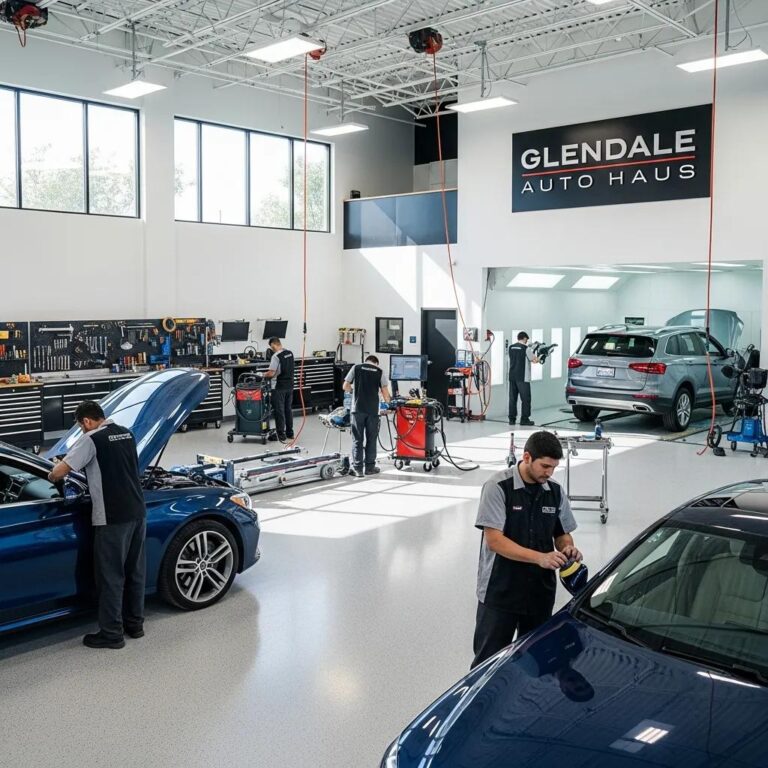

Paintless Dent Repair vs. Traditional Methods — A Practical Comparison & Benefits Guide
Paintless Dent Repair (PDR) and traditional dent repair both aim to return vehicle panels to their original condition, but they do it in very different ways and for different kinds of damage. PDR restores metal from behind the panel to keep the factory finish intact; traditional repairs use fillers, sanding, and repainting to fix deeper or paint-damaged areas. This guide walks you through how each method works, which dents are right for PDR, when conventional bodywork is the safer choice, and how insurers commonly handle each approach. You’ll get practical rules of thumb for door dings, hail damage, and creases, side-by-side comparisons of time, cost, and paint impact, and an explanation of why OEM-quality repairs and I-CAR Platinum training matter when choosing a shop in Glendale and nearby communities. We also cover how a local provider can help with estimates and insurance claims.
What is Paintless Dent Repair and How Does It Work?
Paintless Dent Repair (PDR) is a minimally invasive technique that reshapes dented metal from behind the panel so the original paint and finish stay intact. Technicians use pressure, slim metal rods, glue pullers, and bright reflection lights to slowly coax the metal back to its factory contours — no sanding, filler, or repainting needed. Because PDR preserves the factory coatings and surface texture, it reduces the chance of color mismatch and helps maintain resale value. PDR works best when the paint surface is continuous and free of cracks or flaking, so checking paint condition is the first step in any evaluation. Knowing PDR’s limits makes it easier to decide which dents can be fixed this way and which need more involved repair.
Which Types of Dents Are Suitable for PDR?
PDR excels on shallow dents where the paint hasn’t cracked and the metal hasn’t been permanently creased. Common examples are parking lot door dings, small hail dents on hoods and roofs, and minor shallow creases that haven’t broken the paint. The main deciding factors are dent size (smaller is better), paint condition (no cracking), and panel access (interior trim or seams must allow tool placement). When those three checks pass, PDR often delivers a nearly invisible repair in a fraction of the time and cost of conventional bodywork. If paint is damaged or access is blocked, traditional methods are usually required.
What Tools and Techniques Are Used in Paintless Dent Repair?
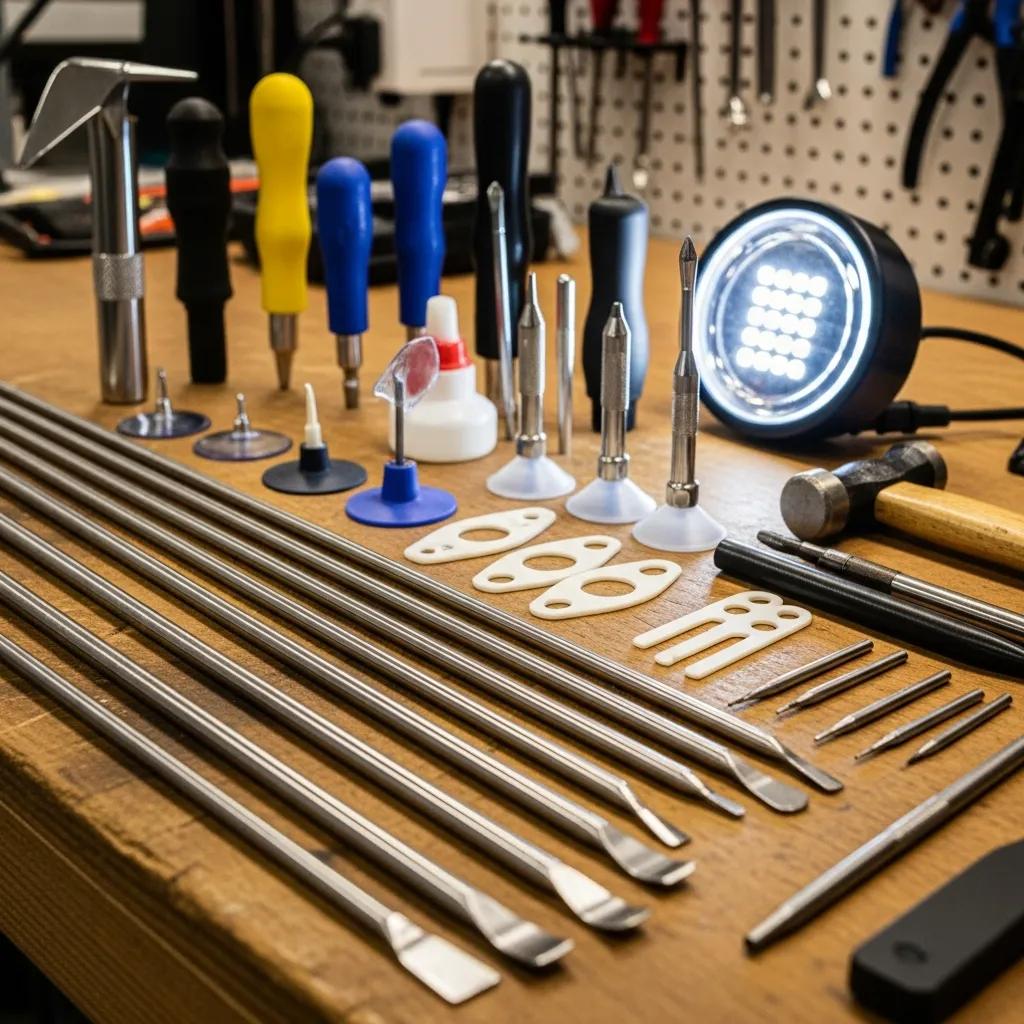
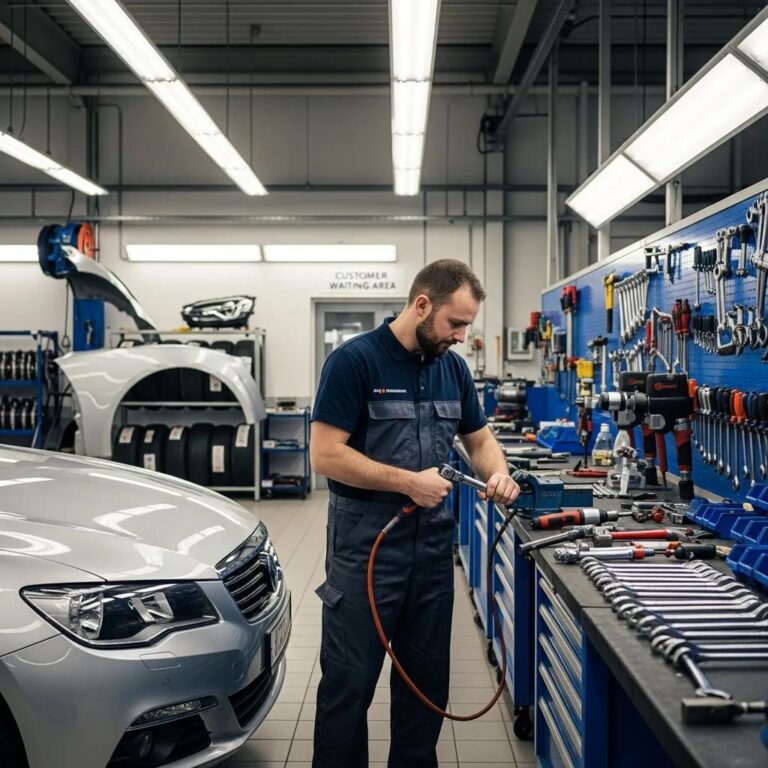
PDR techs use a precise toolkit: long polished rods, glue tabs and pullers, metal picks, knockdown tools, and LED reflection boards to read surface distortions. Reflection lights reveal highs and lows so the technician can concentrate pressure exactly where it’s needed; glue pulling helps when rear access isn’t possible. More than tools, outcome depends on skill — experienced technicians understand metal memory, stretch limits, and how to avoid stressing the paint. Correct technique minimizes micro-fractures and helps preserve OEM finishes, which is why OEM standards and certifications matter when you pick a shop.
When Should You Choose Traditional Dent Repair Over PDR?
Traditional dent repair is the right choice when paint is cracked or flaking, creases are deep or sharp, metal is torn, or structural components are affected — situations where the metal won’t spring back to its original shape. Conventional methods (panel replacement, body filler, primer, and repainting) rebuild the surface and restore fit and safety when metal geometry or warranty requirements demand it. Traditional repair is also preferred in complex areas—inner supports, collars, or mounting points—or when exact OEM parts and color blending are necessary to meet factory tolerances. The decision comes down to paint condition, crease depth, panel access, and vehicle value.
What Damage Types Require Traditional Repair?
Typical cases for traditional repair include deep, sharp creases that permanently deform metal, cracked or flaking paint, punctures, torn panels, and any damage that affects structural members or attachment points. Those problems usually can’t be fixed by pushing metal back into place and instead need replacement parts, filler, and repainting to restore surface continuity and safety. Areas tied to crash performance—rails, crumple zones, mounts—should always be repaired to OEM specs to preserve safety and warranty. For high-value or newer vehicles where exact color match and fit matter, traditional repair delivers the controlled finish OEMs expect.
How Does the Traditional Dent Repair Process Work?
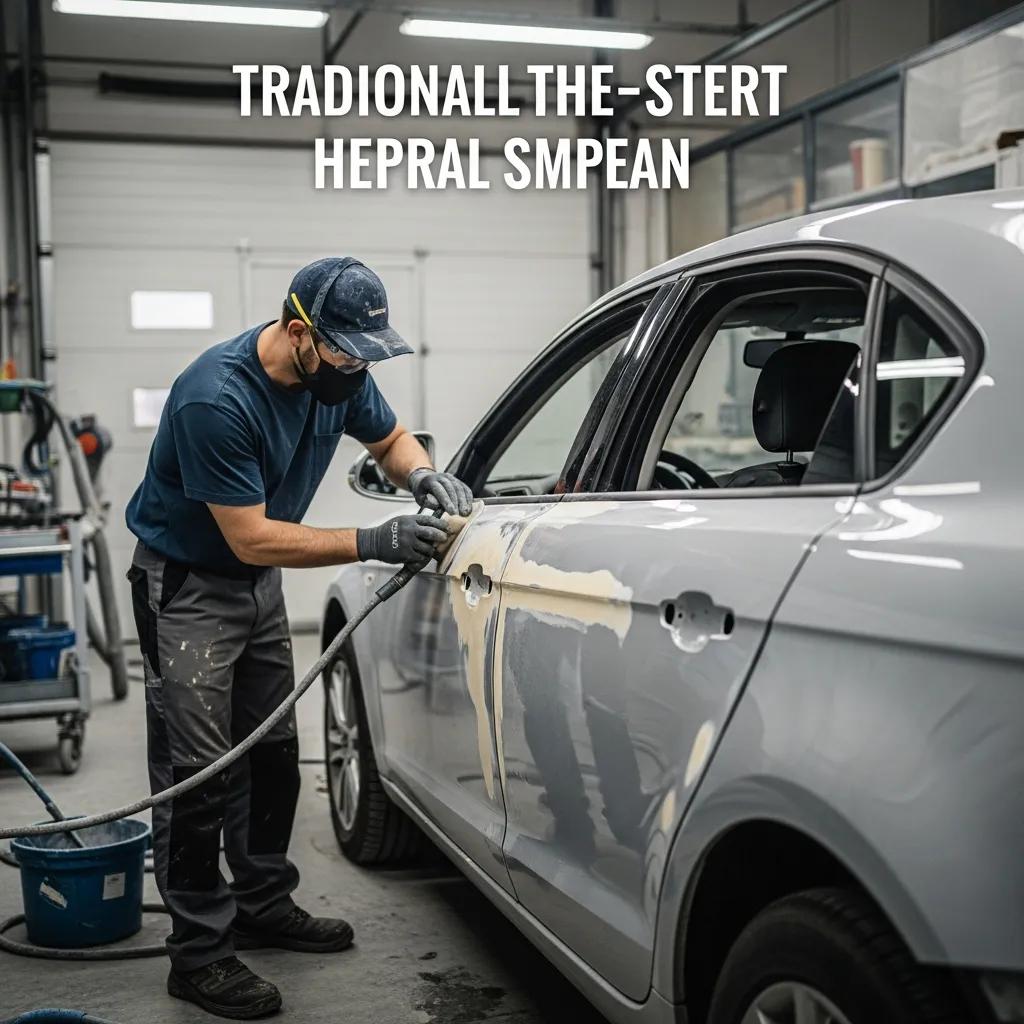
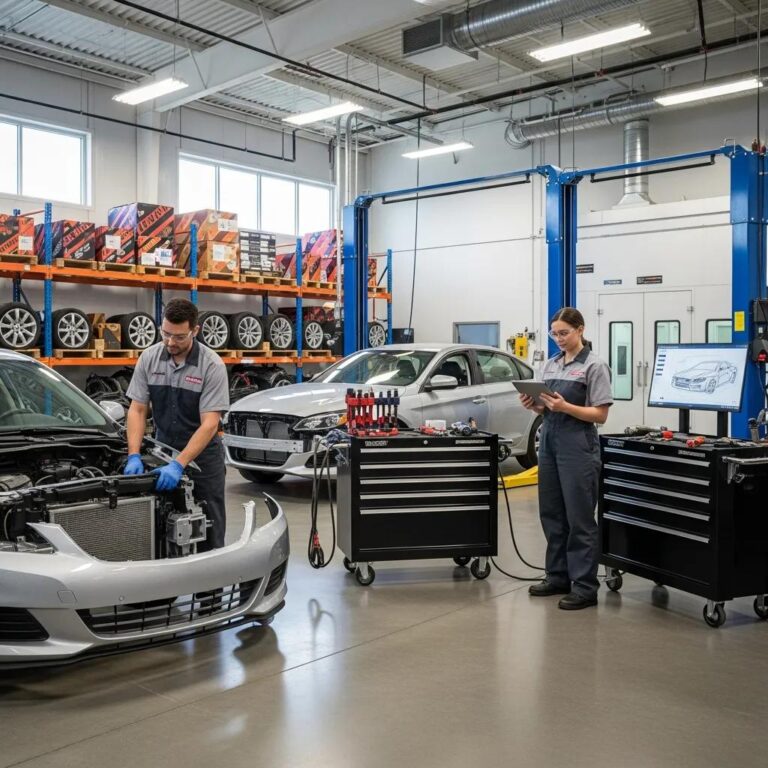
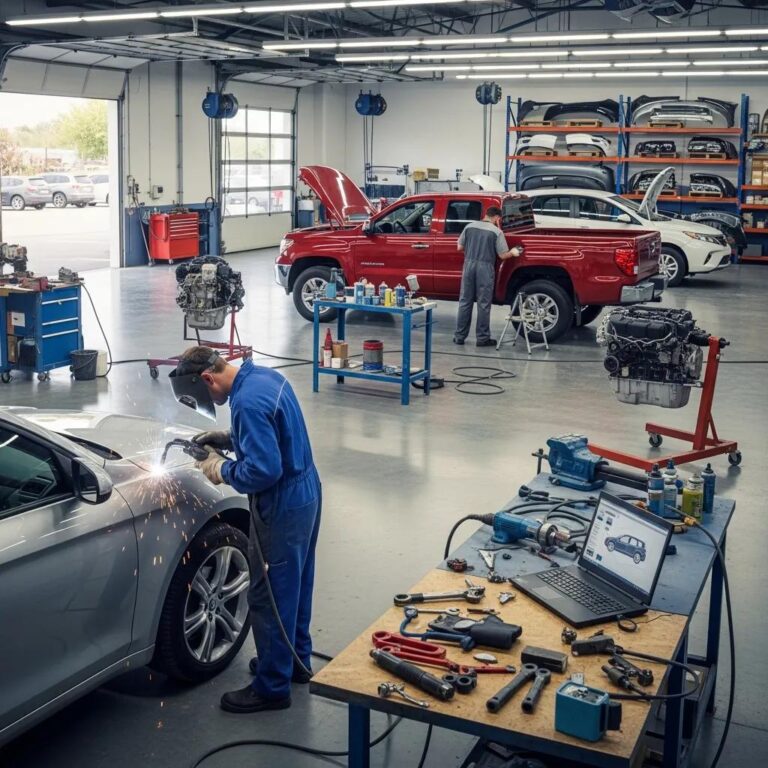
Conventional repair follows clear steps: assess the damage, remove parts or prepare the panel, apply filler to rebuild contours, sand and prime, match and apply paint, then blend and polish for final appearance. Turnaround depends on parts availability and paint cure cycles — jobs can take several days to a couple of weeks when matched painting and multi-panel blending are required. Major cost drivers are labor, paint and materials, and whether OEM replacement panels are needed. When done to manufacturer standards, traditional repair restores appearance and preserves resale value despite altering the original finish.
What Are the Key Benefits of Paintless Dent Repair Compared to Traditional Methods?
When damage meets its limits, PDR offers clear advantages: faster turnaround, lower cost, preservation of the factory paint, and a smaller environmental footprint by avoiding fillers and solvent-based paints. PDR jobs often finish in hours instead of days, reduce the need for parts or panel replacement, and avoid introducing non-factory materials that can change color or texture. Keeping the original paint helps maintain vehicle value and reduces visible repair history — a major benefit for door dings, hail damage, and shallow dents where paint integrity and panel access check out. Below we compare cost, time, and paint impact so you can weigh the options quickly.
Intro to comparison table: The table below summarizes how PDR and traditional repair stack up across cost, time, paint impact, typical uses, and common insurer handling to make trade-offs easier for owners.
| Repair Method | Typical Cost Range | Typical Timeframe | Paint Impact | Suitability |
|---|---|---|---|---|
| Paintless Dent Repair (PDR) | Lower cost (often a fraction of conventional repair) | Hours to a day | Preserves original paint; no repainting | Small to medium shallow dents, door dings, hail |
| Traditional Dent Repair | Higher cost (parts, paint, labor drive price) | Days to weeks | Requires sanding, filler, repainting | Deep creases, paint damage, torn panels, structural |
| Panel Replacement (Conventional) | Highest cost (parts + labor) | Days to weeks | New panel painted and blended | Severe damage, structural compromise, irreparable panels |
How Does PDR Save Cost and Time Compared to Conventional Repair?
PDR cuts time because it skips part replacement, filler work, and extensive painting — all of which add labor and cure time. Typical PDR jobs finish in 1–4 hours; traditional repairs can take several days to more than a week because of parts, prep, painting, and curing. Cost savings often fall in the 30–70% range versus conventional repair, depending on dent complexity and local labor rates — but only when PDR is feasible. Faster turnaround also lowers rental or downtime costs and usually streamlines insurance workflows that prefer efficient, quality-preserving repairs.
Does PDR Preserve Original Paint and Vehicle Value?
Yes — because PDR avoids sanding and repainting, it preserves the factory clear coat and color layers, keeping original texture and finish. That reduces the risk of color mismatch, blend lines, and the reduced resale appeal that can come with repainted panels. For owners focused on warranty, corrosion protection, or keeping a like-new finish, PDR is often the best option when it’s appropriate. If paint is cracked or flaking, though, traditional repair with OEM-compliant materials may be necessary to meet warranty or safety requirements.
Intro to EAV table: The table below breaks down specific benefits of PDR versus traditional repair in time, cost, and paint impact to help you make a quick decision.
| Feature | PDR (Attribute) | Traditional Repair (Attribute) |
|---|---|---|
| Time to Repair | 1–4 hours typical | Several days to weeks |
| Typical Cost Impact | 30–70% less when applicable | Higher due to parts & paint |
| Paint Integrity | Original OEM paint preserved | Requires repainting and blending |
| Environmental Impact | Minimal solvents/waste | Uses filler, primers, and paints |
What Are the Disadvantages and Limitations of Traditional Dent Repair?
Traditional repair is thorough but comes with trade-offs: longer downtime, higher costs for materials and labor, potential paint-matching challenges, and environmental impacts from solvents and fillers. Repainting changes the original finish, increasing the chance of subtle color shifts or visible blend lines, especially on older or weathered paint. Larger repairs often require part replacement and more disassembly, which raises invoices and administrative steps for warranty or insurance. If preserving the factory finish and minimizing disruption are priorities, PDR is preferable when it’s an option.
What Are the Potential Paint Matching and Quality Issues?
Matching factory paint is tricky because factory coatings age and environmental exposure change color and sheen over time. Even high-quality aftermarket paints can show slight hue shifts, clear-coat depth differences, or visible blend lines if blending isn’t done precisely. Using OEM color recipes, top-quality base coats, and professional blending reduces those risks, but the only way to guarantee a perfect match is to leave the original paint in place — which is what PDR does. That’s why shops with OEM repair experience and I-CAR-aligned practices are valuable for reducing visible repair traces.
How Do Repair Time and Costs Compare to PDR?
Traditional repairs require more technician hours for disassembly, filler application, sanding, priming, painting, and curing, which raises both time and cost versus PDR. Cost components include labor, paint and materials, parts or panels, and any additional corrosion or structural work required. Turnaround often spans several days to over a week, particularly when parts must be ordered or multi-panel blending is necessary. Those factors make PDR attractive where feasible, but when damage severity or paint failure demands conventional work, the investment restores fit, finish, and structural integrity in ways PDR cannot.
How Do Insurance Claims Work for Paintless Dent Repair and Traditional Methods?
Insurers weigh damage severity, repair suitability, and cost-effectiveness against your policy and the vehicle’s value. Both PDR and traditional repairs can be covered depending on the loss. For small dents and hail damage, many insurers now approve PDR because it restores the car to pre-loss condition quickly and cost-effectively, which shortens the claim cycle and lowers claim costs. Typical documentation includes photos, a written estimate, and sometimes an adjuster’s inspection; clear notes about intact paint and panel access help justify PDR. A local OEM-focused shop can help document the claim, prepare estimates, and coordinate with your adjuster.
Intro to insurance EAV table: The table below clarifies how insurers commonly handle each repair type and what documentation they usually want to see.
| Repair Type | Typical Insurance Coverage | Common Documentation Needed |
|---|---|---|
| PDR | Often covered when damage is eligible and cost-effective | Photos, PDR estimate, paint condition notes |
| Traditional Repair | Covered when structural or paint damage exists | Photos, detailed estimate, parts list, adjuster review |
| Mixed Approach | Covered when multiple panels or methods required | Combination of the above with repair plan |
How Does Prime Time Collision Center Assist with Insurance Claims?
Prime Time Collision Center helps by providing free estimates, communicating directly with insurance adjusters, and documenting damage to show whether PDR or traditional repair is the right solution. Our assessments highlight paint condition, panel access, and repair feasibility so insurers can make faster, informed decisions — often cutting claim cycle time. We also offer 24/7 towing and advocate for OEM-quality repairs when safety or warranty considerations require them. By managing estimate submission, adjuster liaison, and repair planning, we reduce the paperwork and help you get the best repair route for value and safety.
Does Insurance Typically Cover PDR and Traditional Repairs?
Yes — both PDR and traditional repairs are generally covered when the damage and your policy terms align. Approval depends on deductibles, total-loss thresholds, and insurer policies, but many carriers favor PDR for eligible dents because it’s cost-effective and preserves the vehicle’s condition. Insurers evaluate whether PDR will restore the vehicle to its pre-loss state; if so, they’ll often approve it. Severity of damage, paint condition, and vehicle age all factor into the decision, so providing clear photos and professional estimates helps support the preferred method.
Why Choose Prime Time Collision Center for OEM Certified Dent Repairs in Glendale, CA?
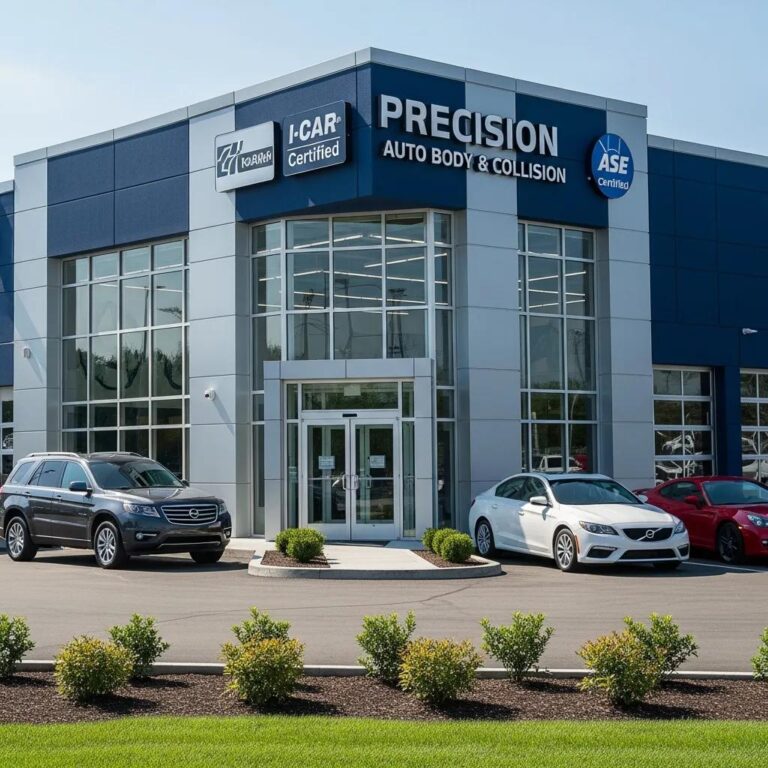
Prime Time Collision Center is a local collision repair shop focused on OEM-quality work, honest communication, and clean insurance workflows for Glendale and surrounding areas. Our technicians hold I-CAR Platinum certification and follow manufacturer repair procedures, advocating for OEM-compliant parts and processes when safety or warranty needs demand them. We serve Glendale, Burbank, Pasadena, and Los Angeles, offer free estimates, work with all major insurers, and provide 24/7 towing to simplify logistics after an incident. Choosing a local, OEM-focused shop means repair decisions — whether PDR or conventional — are made by trained technicians and supported with the documentation and quality controls that protect your vehicle’s value.
What Is the Importance of I-CAR Platinum Certification and OEM Standards?
I-CAR Platinum certification reflects advanced, ongoing technician training across collision repair areas and alignment with manufacturer repair guidelines. Certified technicians understand modern materials, structural behavior, and safety systems, reducing the risk of improper repairs that could affect crash performance or warranties. Applying OEM standards ensures correct part fitment, corrosion protection, and paint procedures, preserving factory tolerances and appearance. For vehicle owners, working with I-CAR-trained techs brings confidence that repair choices — PDR or traditional — prioritize safety and long-term value.
How Does Local Expertise Enhance Repair Quality and Customer Experience?
Local expertise speeds logistics and improves communication: proximity lets us provide faster free estimates, quicker towing, and more frequent in-person updates during repairs, which reduces inconvenience. Familiarity with regional adjuster practices and dealer relationships helps us advocate for OEM-compliant repairs and smoother claim resolution. Our local reputation and repeat customers keep us accountable for quality and service, delivering clearer expectations and faster turnaround. For drivers in Glendale and nearby cities, that local knowledge makes dent repairs — whether PDR or traditional — easier and more transparent.
- Prime Time Collision Center provides free estimates and coordinates with insurers to determine whether PDR or traditional repair is the best choice.
- Our team includes I-CAR Platinum Certified technicians who follow OEM standards to protect safety and vehicle value.
- Free estimates, 24/7 towing, and service across the Glendale area simplify the repair process and reduce downtime for owners.
For fast help with a dent or collision claim, Prime Time Collision Center accepts damage reports and sets up free estimates and 24/7 towing for drivers in Glendale, Burbank, Pasadena, and Los Angeles. Our insurance coordination and I-CAR-trained technicians will recommend PDR when it’s suitable and perform OEM-compliant traditional repairs when needed, preserving safety and value. If you’re unsure whether PDR will work for your vehicle, request a free estimate so a trained technician can document paint condition and panel access and recommend the optimal repair path.
Frequently Asked Questions
What are the environmental benefits of Paintless Dent Repair (PDR)?
PDR is greener because it eliminates fillers, primers, and solvent-based paints used in conventional repair. By keeping the original paint and avoiding repainting, PDR reduces chemical use and waste, lowering the repair’s environmental footprint. For eco-minded owners, choosing PDR when possible is a practical way to maintain a vehicle while reducing pollution and material waste.
Can PDR be performed on all types of vehicles?
PDR is versatile but not universal. It works best on vehicles with metal panels that haven’t been badly damaged. Cars with extensive plastic components, complex contours, or significant structural damage may need traditional repair. Paint condition and panel access also affect feasibility. A quick professional inspection will confirm whether PDR is appropriate for your vehicle.
How can I determine if my dent is suitable for PDR?
Check three things: dent size, paint condition, and access to the panel. Small-to-medium dents with intact paint and rear access are ideal candidates. If the paint is cracked or you can’t reach the back of the panel, PDR may not be possible — a trained technician can give a definitive evaluation.
What should I expect during the PDR process?
A technician will assess the damage, then use specialized tools to access the backside of the dent and gently massage the metal back into shape. Most PDR jobs take a few hours, depending on complexity. Because the original finish stays in place, there’s no paint matching or curing time. The tech will inspect the result to ensure a smooth restoration before you leave.
Are there any risks associated with PDR?
PDR is generally safe, but risks increase if the technician lacks experience. Poor technique can cause paint micro-fractures or worsen the dent. Using PDR on unsuitable damage — deep creases or cracked paint — can lead to unsatisfactory results. To minimize risk, choose a reputable shop with certified technicians who specialize in PDR.
How does insurance typically handle PDR claims?
Insurers often approve PDR for eligible claims because it’s cost-effective and restores vehicles to their pre-loss condition. When filing a claim, provide clear photos and a written estimate from a qualified technician. An adjuster may inspect the damage, but if PDR is appropriate, approval is usually straightforward and speeds up the claim process.
Conclusion
Choosing between Paintless Dent Repair and traditional methods affects repair cost, time, and finish. When feasible, PDR is faster, more affordable, and preserves the original paint — which helps resale value. Traditional repair is necessary when paint or structure is compromised. If you want expert guidance and a free estimate, contact Prime Time Collision Center — we’ll evaluate your damage and recommend the right repair path for safety, value, and appearance.