
Comprehensive vs. Collision Coverage: What Each Policy Covers and How Claims Work
Knowing the difference between comprehensive and collision coverage can save you time, money, and a lot of frustration after your vehicle is damaged. This guide breaks down what each policy covers, common scenarios that trigger claims, how the claim moves from your insurer to the repair shop, and practical rules of thumb for drivers in Glendale and greater Los Angeles. You’ll get clear definitions, everyday examples, typical deductible and premium trade-offs, plus a step‑by‑step checklist for filing a claim and getting factory-quality repairs. We also compare the two coverages side‑by‑side, provide quick-reference answers, and explain why OEM repairs and I‑CAR Platinum technicians matter for safety and warranty outcomes. By the end, you’ll have a simple decision checklist and a realistic view of what to expect when coordinating repairs with your insurer and a local collision center.
What Is Comprehensive Coverage and What Does It Protect?

Comprehensive coverage pays to repair or replace your vehicle for damage from events other than collisions with other vehicles or objects. Typical examples include theft, vandalism, fire, weather events, broken glass, and hitting an animal. After you file a claim, the insurer assesses damage, subtracts your deductible, and pays up to the vehicle’s actual cash value — which limits your out‑of‑pocket exposure. Knowing what comprehensive covers helps you prioritize simple prevention (like covered parking) and sets expectations for how insurers and shops handle inspections and repair timelines.
Comprehensive is often called “non‑collision” coverage because it covers damage that happens when your car is not colliding with something else. Here are the most common events covered:
- Theft and vandalism: Repairing or replacing stolen parts or vandalized panels.
- Natural disasters and weather: Hail, flood, fire, and storm damage.
- Animal strikes and glass breakage: Windshield or window damage and collisions with animals.
These examples show why comprehensive is usually the policy you turn to for parked‑vehicle incidents and weather‑related loss — the next section explains typical repair paths insurers follow.
Which Non-Collision Events Are Covered by Comprehensive Insurance?
Comprehensive claims tend to follow predictable repair patterns. For hail, insurers document dent patterns and decide whether paintless dent repair or panel replacement is needed. Vandalism or theft claims may take longer if parts must come from a dealer. Glass claims are often fast‑tracked because windshield shops can replace or repair quickly; some policies even treat glass differently for deductibles. Because insurer rules and policy wording vary, early documentation — photos and a police report when required — speeds adjuster decisions and helps shops get repairs underway sooner.
Understanding these common repair patterns prepares you for how local shops and services will assist with your claim.
How Does Comprehensive Coverage Apply to Local Drivers in Glendale and Surrounding Areas?
In Glendale, Burbank, Pasadena and other Los Angeles neighborhoods, comprehensive claims often stem from vehicle break‑ins, occasional severe storms, and animal strikes on suburban roads. Local collision centers usually work directly with insurers to deliver timely estimates and prioritize glass or hail repairs so you can get back on the road. A nearby shop that offers free estimates and towing reduces logistics for drivers and shortens the time between filing a claim and starting repairs. Shops familiar with insurer workflows — including digital estimate submissions and adjuster coordination — generally speed approval and scheduling.
Local context matters: quick documentation and a nearby repair partner make comprehensive claims less disruptive, and they lead naturally into the coverage that handles crash repairs.
What Is Collision Coverage and When Is It Needed?
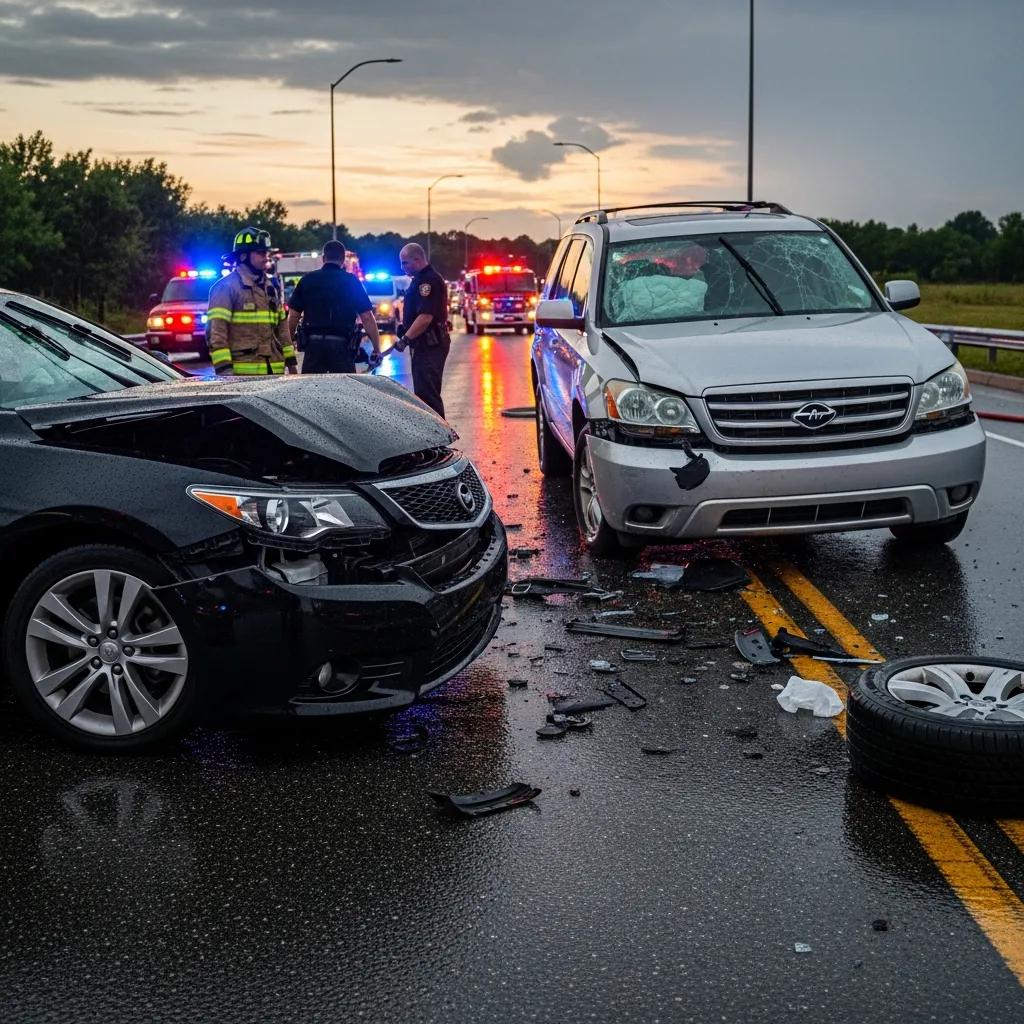
Collision coverage pays for damage to your vehicle when it hits — or is hit by — another vehicle or object. That includes single‑vehicle accidents like hitting a guardrail, rolling over, or striking a pole. After you pay your deductible, collision helps cover repair or replacement costs, protecting drivability and structural integrity. Collision is also commonly required on financed or leased vehicles so lenders’ interests are protected until the loan or lease ends. For most drivers, collision reduces large out‑of‑pocket repair bills and ensures repairs are coordinated with certified shops and insurers.
Because collision applies to crash scenarios, here are the typical accident types that trigger collision claims.
Collision coverage typically applies to the following accident types:
- Vehicle‑to‑vehicle crashes: Collisions with other cars, trucks, or motorcycles.
- Single‑vehicle accidents: Hitting trees, poles, curbs, or rollovers.
- Pothole and road hazard damage: Suspension, wheel, or body damage from roadway impacts.
Collision claims focus on crash‑related repairs; the next section covers common damage types and what to expect from inspections and repairs.
What Types of Accidents and Damages Does Collision Insurance Cover?
Collision covers a wide range of crash scenarios: multi‑car pileups, single‑vehicle impacts with fixed objects, and rollovers. Repairs can include bumper and panel replacement, frame straightening, suspension work, and more. When airbags deploy or structural parts are damaged, shops and insurers often perform teardown inspections and advanced diagnostics to find hidden damage. Pothole or curb strikes may center on wheels, tires, and suspension components rather than body panels, but the claims process — deductible, adjuster review, then insurer payment — stays the same. Expect possible supplemental estimates and necessary ADAS recalibration if sensors or cameras were affected.
Hidden damage checks are important after collisions; the following section explains how local repair shops in Los Angeles work with insurers to get vehicles repaired right.
How Collision Coverage Supports Repairs After Accidents in Los Angeles and Nearby Cities
In the Los Angeles area, a typical collision workflow connects you, your insurer, and a local repair shop: report the accident, arrange towing if needed, document damage, get an estimate, and schedule repairs. Shops that work with all major insurers and offer free estimates can collect repair plans, communicate with adjusters, and advise on OEM parts versus aftermarket options. Traffic and parts supply chains in the region can affect timelines, so repair centers with OEM parts relationships and trained technicians often reduce delays. Clear communication among drivers, insurers, and shops helps restore vehicles to pre‑accident condition faster.
With that coordination in mind, here’s a direct comparison of comprehensive and collision to help you decide what you need.
What Are the Key Differences Between Comprehensive and Collision Coverage?
Both comprehensive and collision protect your vehicle from physical damage, but they apply to different events, follow different claim workflows, and can affect deductibles and premiums differently. Collision covers crash‑related events; comprehensive covers non‑collision perils like theft, vandalism, and weather. Deductible choices and claim frequency influence premiums for each policy, so it’s useful to match coverage to your vehicle’s value, how you use it, and any lender or lease requirements.
Below is a concise comparison that highlights the main differences and common examples.
| Coverage Type | Primary Covered Events | Typical Scenario | Insurance Claim Example |
|---|---|---|---|
| Comprehensive | Theft, vandalism, weather, animal strikes, fire, glass | Parked car damaged by hail or broken into | Owner files a claim for hail dents; insurer approves paintless dent repair after inspection |
| Collision | Vehicle‑to‑vehicle crashes, hitting objects, rollovers, pothole impacts | Driver hits a pole while avoiding an obstacle | Owner files a collision claim; deductible is applied and insurer pays for panel replacement |
| Overlap/Notes | Both cover physical damage under different circumstances | A deer strike while driving is generally covered by comprehensive | Document timing and any police report to determine which coverage applies |
Next, we look at typical deductible ranges and how they affect premiums and out‑of‑pocket costs.
| Coverage Type | Common Deductible Range | Example Impact |
|---|---|---|
| Comprehensive | $100 – $1,000 | Lower deductibles reduce immediate costs but raise your annual premium slightly |
| Collision | $250 – $1,000 | Higher deductibles lower premiums but increase what you pay after an accident |
| Decision Factor | Deductible choice vs. vehicle value | On older cars, a high deductible can make collision coverage uneconomical compared with vehicle worth |
Compare deductible mechanics to your car’s current market value and your tolerance for out‑of‑pocket expense to decide whether to keep one or both coverages.
Do You Need Both Comprehensive and Collision Coverage for Your Vehicle?
Maybe. It depends on your vehicle’s value, whether it’s financed or leased, and how much risk you’re comfortable taking. Lenders and lessors generally require both coverages until the loan or lease is satisfied. For older cars with low market value, the cost of collision (and sometimes comprehensive) may outweigh likely repair costs — in those cases, drivers often choose liability‑only coverage and self‑insure physical damage. If you frequently park on the street in high‑theft areas, commute long distances, or live where severe weather is common, both coverages are often worth keeping.
Use a simple cost‑benefit check — vehicle value, loan status, parking conditions, and deductible tolerance — to decide what makes sense for you.
When Are Both Coverages Required or Recommended?
Lenders and lessors usually require both comprehensive and collision to protect their financial interest. Both coverages are recommended for newer or high‑value vehicles where repair or replacement costs would be substantial. Drivers exposed to higher risks — overnight street parking in higher‑crime areas, frequent highway driving, or regular exposure to severe weather — will also benefit from keeping both policies. Review any contractual obligations and your local risk profile when making the call.
That advice leads into a short checklist to help you pick the right levels of coverage.
How to Decide Which Coverage Fits Your Driving Needs and Risks
To choose coverage, weigh these factors: is your vehicle financed or leased; what would it cost to repair or replace today; where and how you park and drive; and how much you can comfortably pay as a deductible. A quick checklist: confirm loan/lease requirements, estimate replacement cost, evaluate parking and commute exposure, and compare annual premium changes to expected claim frequency. If replacing your car would be a financial strain after paying a deductible, both coverages are usually worth it. If your car’s value is low, a higher deductible or dropping physical damage coverage may be the smarter option.
With coverage decided, here’s what actually happens after a claim is filed — step by step.
How Does the Auto Insurance Claim Process Work After an Accident?
Filing a claim generally follows the same steps: report the incident to your insurer, document damage, secure the vehicle or arrange towing, get an estimate, coordinate an adjuster inspection, authorize repairs, and complete final quality checks before vehicle return. The main players are you (the policyholder), the insurer’s adjuster, the repair facility, and sometimes towing or glass vendors. Clear photos and police reports speed the process. The goal is to return the vehicle to pre‑loss condition while respecting warranty and OEM requirements, including any ADAS recalibration that affected sensors or cameras.
Here’s a straightforward, numbered workflow you can expect.
- Report the incident: Contact your insurer quickly and share basic details and photos.
- Document damage: Take clear photos, collect witness or police reports, and note time and place.
- Arrange towing or secure the vehicle: If the car isn’t safe to drive, have it towed to a shop or safe storage.
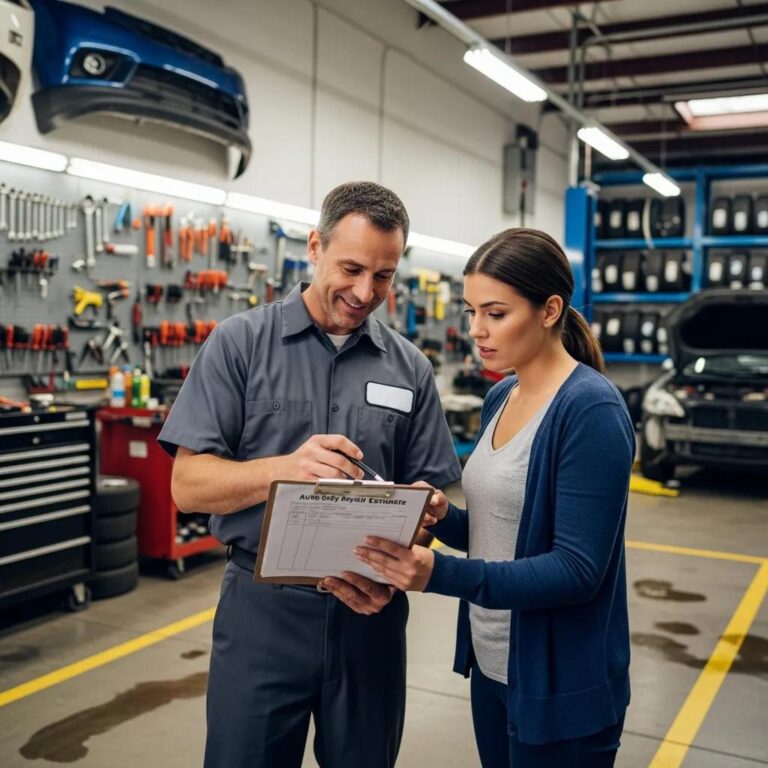
- Get an estimate: Obtain a written repair estimate from a qualified facility for the adjuster to review.
- Adjuster inspection: An insurer adjuster assesses damage and approves the repair scope or requests supplements.
- Authorize repairs: Once approved, the shop begins repairs using OEM or approved replacement parts.
- Quality check and delivery: The shop completes inspections, performs any ADAS recalibration, and returns the vehicle.
What Are the Steps from Reporting to Repair Completion at Prime Time Collision Center?
When you bring a claim to Prime Time Collision Center, we follow a clear workflow that lines up with insurer expectations and keeps hassle to a minimum. We document the damage, provide a free estimate, coordinate with your insurer and their adjuster, and accept towed vehicles so repairs can start quickly. Our technicians run diagnostics, handle structural or panel repairs with OEM‑quality parts when appropriate, and perform any required ADAS recalibration before final quality checks and vehicle release. We keep you updated and work with insurers on supplements or parts approvals so you always know the status of your car.
Our approach reduces administrative burden for you. Below are the specific services we offer to simplify claims and repairs.
How Does Prime Time Collision Assist with Insurance Claims and Free Estimates?
Prime Time Collision Center offers hands‑on services to make claims and repairs less stressful while protecting factory‑quality outcomes. We provide free damage estimates to clearly document repair scope, coordinate directly with insurance adjusters to speed approvals, and arrange towing when needed to bring vehicles into our shop safely. With I‑CAR Platinum technicians and experience with all major insurers, we follow OEM repair processes and maintain clear communication to protect safety and warranties. Those practical services cut down the logistics and keep repair timelines moving.
Now let’s look at why OEM‑certified repairs matter for long‑term safety and value.
Why Choose OEM Certified Repairs for Comprehensive and Collision Claims?
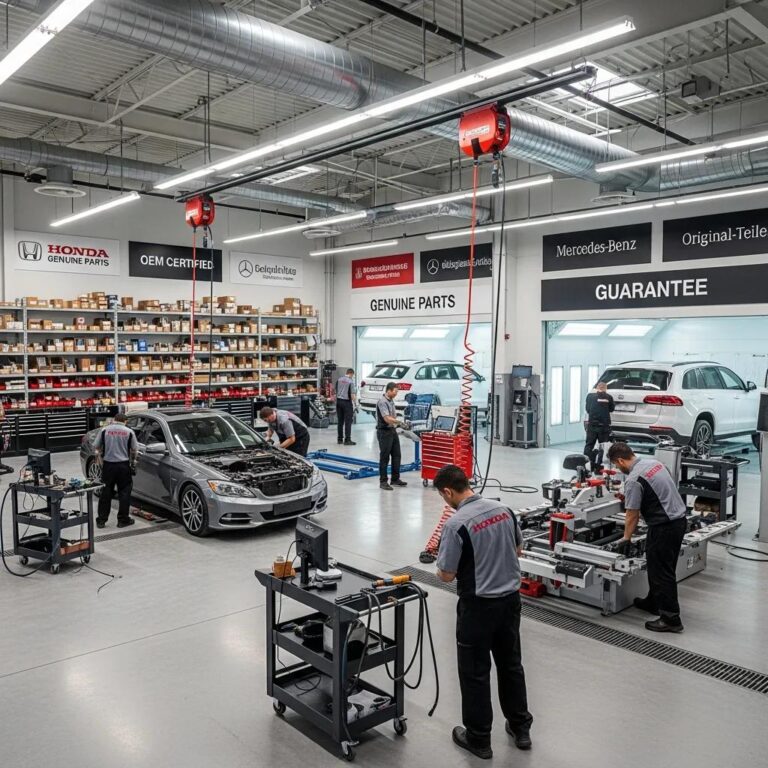
OEM‑certified repairs focus on returning a vehicle to manufacturer standards: using original or approved parts, following factory repair procedures, and performing required calibrations for safety systems. Those practices affect structural integrity, occupant protection, and warranty preservation. Technicians with certifications like I‑CAR Platinum receive advanced training on manufacturer procedures and complex systems, which reduces the chance of missed damage or incorrect repairs. Choosing OEM‑aligned repairs supports proper ADAS recalibration, keeps resale value intact, and meets insurer and manufacturer expectations for safe, long‑lasting repairs.
The table below compares key repair attributes and the benefits of OEM‑certified approaches versus non‑OEM alternatives.
| Repair Attribute | Action/Standard | Benefit/Impact |
|---|---|---|
| Parts Selection | Use OEM parts or manufacturer‑approved equivalents | Preserves fit, finish and designed safety performance |
| Procedure Compliance | Follow factory repair procedures and torque specs | Maintains structural integrity and crashworthiness |
| ADAS Calibration | Perform manufacturer‑recommended sensor recalibration | Restores active safety features and driver‑assist systems |
| Warranty Preservation | Document OEM processes and parts for warranty evidence | Helps maintain manufacturer warranty coverage |
Those differences matter. The next table highlights how OEM‑certified repairs affect safety, warranty, and resale value.
| Repair Entity | Attribute | Benefit/Impact |
|---|---|---|
| OEM‑Certified Repair | Safety | Restores engineered crash performance and occupant protection |
| OEM‑Certified Repair | Warranty | Reduces the risk of warranty disputes and preserves coverage |
| OEM‑Certified Repair | Resale Value | Maintains vehicle provenance and resale appeal |
Training and certification matter for real results. The next section explains I‑CAR Platinum and what it signals about a repair shop’s capabilities.
How Do I-CAR Platinum Certified Technicians Ensure Factory-Quality Repairs?
I‑CAR Platinum certification shows a shop’s commitment to ongoing technician training across collision repair disciplines. Platinum shops document training hours and demonstrate technical competence across makes and models, which leads to more accurate damage assessments and strict adherence to factory repair sequences. That competency lowers rework risk, supports thorough checks for hidden damage, and aligns shop practices with insurer and manufacturer expectations for safe repairs. For vehicle owners, I‑CAR Platinum is a practical signal that technicians are prepared to handle structural work and advanced electronics correctly.
Knowing what training standards mean helps explain the safety and warranty advantages of OEM repairs.
What Are the Benefits of OEM Certified Repairs for Vehicle Safety and Warranty?
OEM‑certified repairs restore manufacturer‑specified crash protection, ensure ADAS and sensors work properly through correct calibration, and reduce the chance of future issues caused by incorrect repair methods. Using manufacturer‑approved parts and documented procedures supports warranty claims and helps preserve vehicle value when it’s time to sell or trade. These outcomes lower long‑term ownership risk and give you more confidence that your vehicle performs close to original specifications after both comprehensive and collision claims.
To summarize the practical takeaways, follow these simple steps after comparing coverages and choosing a repair provider.
- Choose coverage based on vehicle value and obligations: If your car is financed or leased, keep both comprehensive and collision.
- Document and report promptly: Photos and police reports speed claims.
- Select repair providers with OEM focus and certifications: That preserves safety and warranty.
Frequently Asked Questions
1. What factors should I consider when choosing between comprehensive and collision coverage?
Consider your vehicle’s current value, whether it’s financed or leased, and how much risk you can take on. If the vehicle is financed or leased, both coverages are usually required. For older cars, liability‑only coverage may make financial sense. Also weigh driving habits and parking — frequent street parking in higher‑theft areas or long commutes increase the value of both policies.
2. How do deductibles affect my auto insurance premiums?
Your deductible choice affects premiums: higher deductibles generally lower your annual premium because you accept more upfront risk, while lower deductibles raise premiums since the insurer pays more on a claim. Pick a deductible you can comfortably pay if a loss occurs.
3. Are there any specific exclusions in comprehensive or collision coverage?
Yes. Comprehensive won’t cover collision damage, and collision won’t cover non‑collision events like theft or weather. Both policies typically exclude intentional acts, racing, or damage while driving under the influence. Always read your policy for exact exclusions and ask your agent about any unclear items.
4. How can I expedite the claims process after an accident?
Report the incident quickly, provide clear photos and any police reports, and get a written estimate from a qualified shop. Stay in regular contact with your adjuster and the repair facility. Organized documentation and timely communication help approvals and repairs move faster.
5. What should I look for in a repair shop for comprehensive and collision claims?
Look for shops that follow OEM procedures, employ I‑CAR Platinum technicians, offer free estimates, and have experience working with major insurers. Good communication, transparent timelines, and documented repair processes are key to preserving safety and warranty coverage.
6. How does the location of my vehicle impact my insurance coverage needs?
Location affects risk. Urban areas with higher theft or vandalism rates increase the value of comprehensive coverage. Areas prone to storms may also make comprehensive more important. Consider local crime and weather patterns when choosing coverages.
7. Can I switch my coverage types after purchasing a policy?
Yes — most insurers let you change coverages as your needs change (for example, if you sell the car or change driving habits). Keep in mind adjustments can affect your premium, so check with your agent before making changes.
Conclusion
Understanding the difference between comprehensive and collision coverage helps you protect your vehicle and your wallet. Match your coverage to vehicle value, contractual obligations, and local risks, document incidents promptly, and choose shops that follow OEM standards to preserve safety and warranty. If you’re unsure which route to take, a quick review of your car’s value and your personal risk tolerance will point you in the right direction — and a trusted local repair partner can help every step of the way.