
Advanced Frame Straightening & Repair — Expert Solutions to Restore Your Vehicle’s Structure and Safety
Frame straightening is the precise process of finding, correcting, and returning a vehicle’s structural geometry to factory specifications after a collision. Our goal is simple: protect the people who ride in the car and preserve how the vehicle drives and performs. Below we walk through how precision chassis alignment, computerized frame measuring systems, and OEM-aligned repair methods work together to restore crashworthiness and handling. Many drivers and fleet managers assume frame damage is only cosmetic — but even small departures in chassis rails, crossmembers, or suspension mounts can harm steering, confuse ADAS systems, and reduce resale value.
What is advanced frame repair and why OEM certification matters
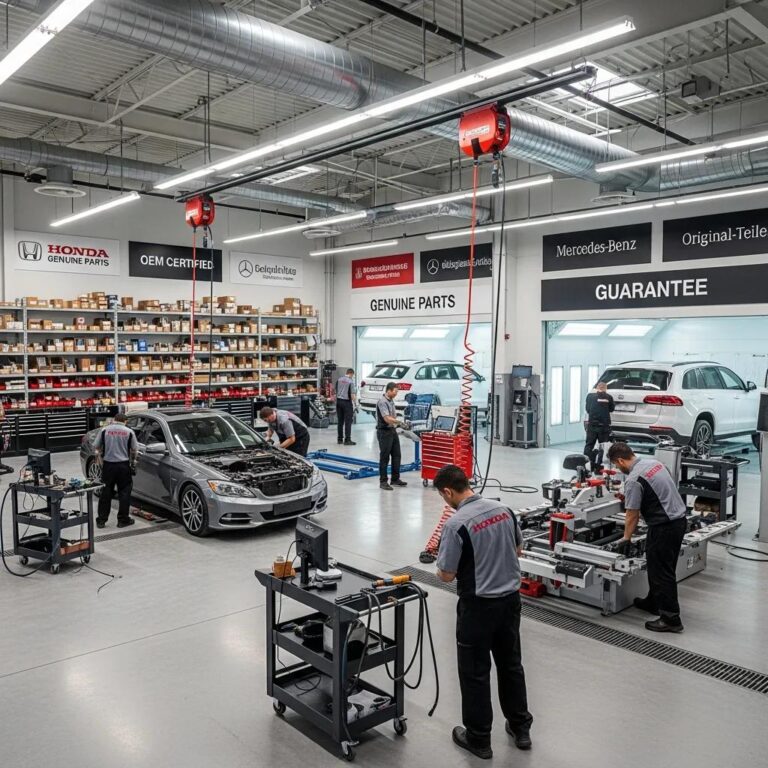
Advanced frame repair is a measurement-driven restoration that corrects bends and offsets in a unibody or full-frame using documented manufacturer procedures. We map the vehicle’s reference points against factory tolerances with computerized measuring systems, then apply staged hydraulic pulling, section replacement, and approved weld/bond methods to restore designed load paths. OEM certification means the repair follows the manufacturer’s steps, uses specified parts and fasteners, and includes required calibration — all of which preserve crash energy management and help protect warranty coverage. Knowing the difference between cosmetic bodywork and certified structural repair helps owners make decisions that protect safety systems and long-term value.
At Prime Time Collision Center we align our workflow to OEM standards and keep technicians current with I-CAR Platinum training. That combination lets us follow manufacturer repair directives and documented calibration steps so customers get factory-quality repairs that maintain safety and resale value. This commitment to certified processes is the foundation for the diagnostic work used to find hidden structural damage.
How advanced frame straightening restores structural integrity
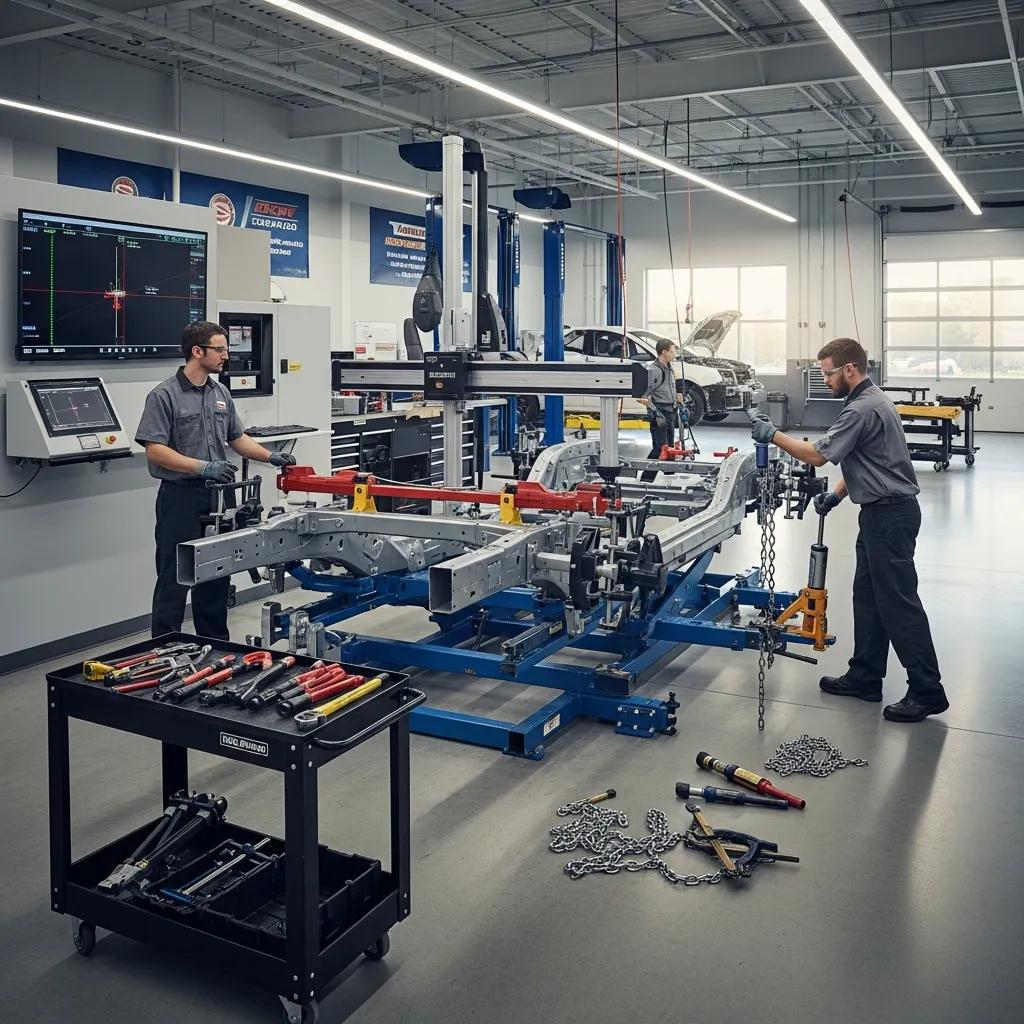
The process begins with precise measurements of the chassis relative to the manufacturer’s reference points. Computerized frame measuring systems capture three-dimensional deviations in millimeters so technicians can target pulls and replacements on affected areas like frame rails, crossmembers, and suspension mounts. Controlled hydraulic pulling applies measured force through towers and fixtures to correct misalignment without over-stressing welds, and subsequent welding or bonded repairs restore metallurgical continuity and load paths. Final verification includes laser alignment and a road test to confirm steering geometry and handling match OEM specifications.
Because repairs start from hard measurements rather than guesswork, this approach avoids ad hoc fixes that can introduce weak spots or uneven load distribution — and it highlights the safety and warranty advantages of OEM-certified work.
What safety and warranty advantages do OEM-certified repairs provide?
OEM-certified repairs deliver clear benefits: they ensure documented procedures are followed, help preserve warranty conditions, and support accurate ADAS recalibration so active safety systems work as intended. Using OEM parts and specified torque and weld requirements preserves the vehicle’s designed energy-management paths and reduces the risk of altered crash behavior. Certified documentation also builds resale confidence and gives insurers or buyers proof that repairs met factory standards. When ADAS sensor mounting points and geometry are restored, calibration can return lane-keep, adaptive cruise, and collision-mitigation systems to their intended performance — directly improving occupant safety.
Those safety and warranty advantages explain when frame repair is necessary and why accurate diagnosis matters.
How to recognize and diagnose collision frame damage
Diagnosing frame damage starts with a systematic check for visible clues and driving symptoms, then moves to computerized measurement to find hidden deviations. Visual indicators — panel gaps, misaligned doors, creased rails — are often the first clues. Driving signs like steering pull, uneven tire wear, or vibrations point to suspension or chassis misalignment. Modern diagnostics use 3D measuring arrays and manufacturer reference data to quantify deviations in millimeters and create a repair plan that guides pulling, section replacement, and ADAS recalibration as needed. If you suspect structural issues, avoid extended driving and get a professional assessment that includes computerized measurement and a documented repair recommendation.
Use the quick checklist below to identify potential frame damage and decide your next step.
- Common signs to watch for after a collision:
Panel misfit and gaps: Doors, hood, or trunk gaps that differ from factory fit often mean body geometry has shifted.
Steering pull or off-center wheel: Persistent pull or a steering wheel that sits off-center after an alignment can indicate chassis deviation.
Uneven tire wear or vibration: Rapid or asymmetric tire wear and unexplained vibrations point to suspension or frame misalignment.
Those visible and driving clues lead naturally to targeted diagnostics using computerized tools to reveal hidden damage.
Common signs and symptoms of a bent or damaged frame
Look for misaligned panels (doors, hood, trunk), consistent steering pull, premature or uneven tire wear, and gaps or creases along chassis rails and weld seams. Each symptom maps to likely issues: misfit doors can mean shifted hinge or A-pillar locations, steering pull often reflects asymmetric steering geometry or a subframe offset, and uneven tire wear usually ties to camber/toe changes from damaged suspension mounts or crossmembers. Spotting any of these signs should trigger a measured inspection — small deviations can compound into reduced crashworthiness and ADAS misalignment. Early detection lets technicians run a computerized evaluation and stop safety degradation before it worsens.
Translating those clues into precise corrective work requires the specialized measuring equipment described below.
How computerized measuring systems find hidden frame damage
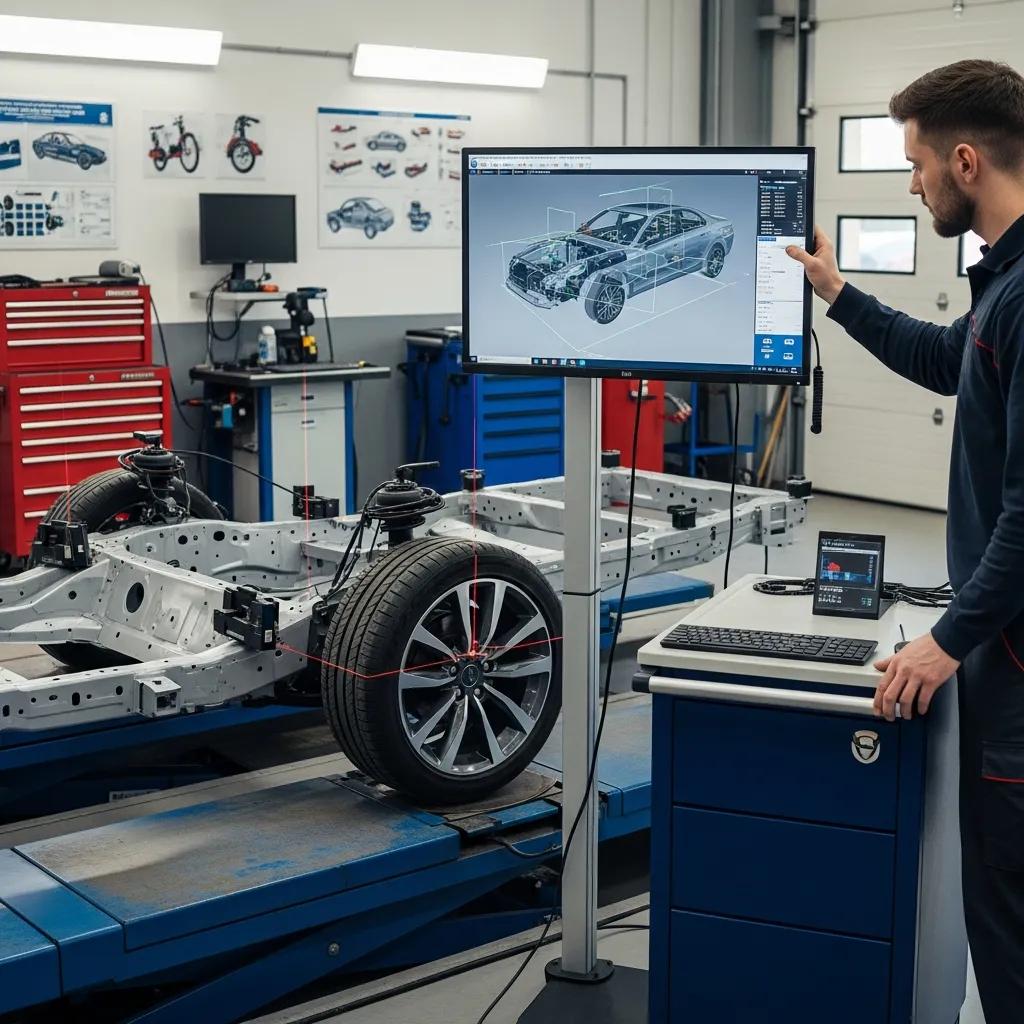
Computerized measuring systems create a three-dimensional map of the vehicle’s reference points and compare those coordinates to manufacturer tolerances stored in OEM data. Using fixed towers, wheel clamps, and laser or photogrammetry sensors, these systems record precise positions of chassis rails, suspension mounts, crossmembers, and body reference points. Software then calculates deviations and generates a report technicians use to plan pulls or replacements.
Tolerances are typically measured in millimeters — even small offsets can change load paths or sensor alignment.
The deviation report also provides traceable documentation for insurers and shows that corrective work returned the vehicle to spec after repairs.
Once deviations are documented, repair teams proceed with a controlled pulling and straightening sequence tailored to the measured discrepancies.
Prime Time Collision’s step-by-step approach to advanced frame straightening
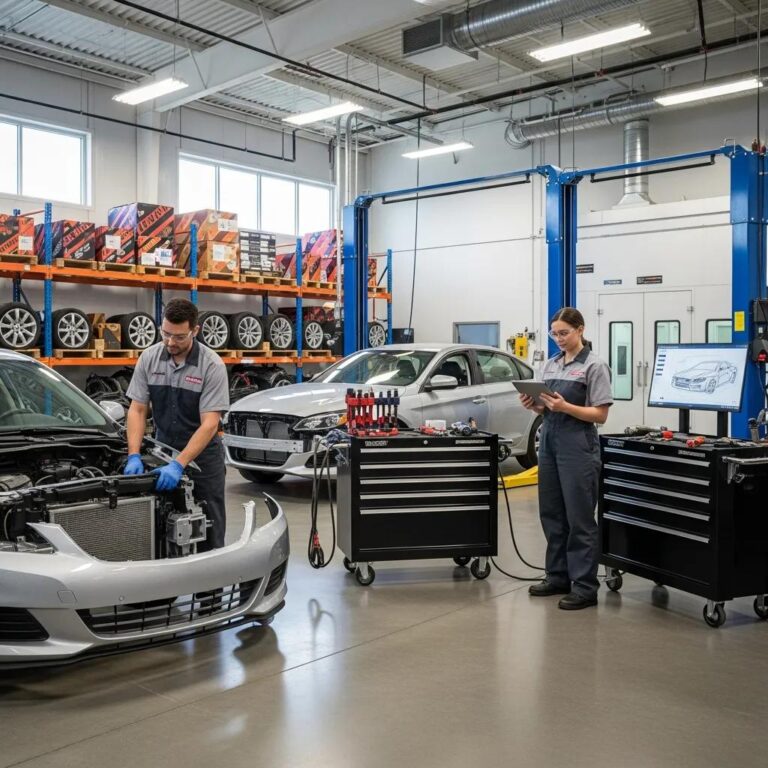
Our process follows a repeatable sequence: assessment and measurement, structural repair planning, controlled pulling and replacement, welding and bonding to OEM standards, precision chassis alignment, ADAS calibration, and final QA with documentation. We start with a visual inspection and computerized frame measurement to set a baseline. The repair plan spells out targeted actions — hydraulic pulls, subframe alignment, or component replacement — using manufacturer procedures. Controlled pulling and approved welding restore geometry; laser alignment and ADAS recalibration confirm steering, suspension, and sensor accuracy before test driving and final documentation.
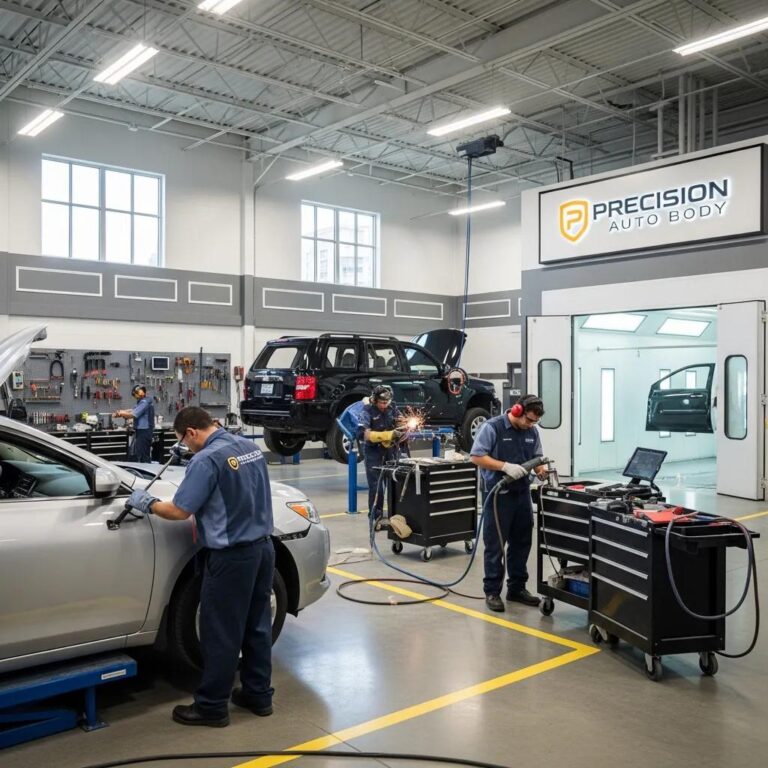
Prime Time Collision Center performs these steps in a shop equipped for OEM-quality structural work and staffed with I-CAR Platinum technicians. We include documented measurements, controlled hydraulic tower pulling, and ADAS calibration as part of our factory-aligned workflow. Our services also include free 24/7 towing and estimates plus a lifetime warranty on repairs to support you through the full repair lifecycle.
Introductory table: a concise checklist that links each repair phase to the equipment used and the intended outcome.
| Process Step | Equipment/Tool | Purpose / Outcome |
|---|---|---|
| Assessment & Measurement | Computerized frame measuring system (3D array) | Identify deviations and create a precise repair plan |
| Pulling & Straightening | Hydraulic pulling tower and fixtures | Restore chassis geometry and align factory reference points |
| Structural Repair | Welding equipment, OEM parts | Repair or replace rails, crossmembers, and mounts |
| Alignment & Calibration | Laser alignment, ADAS calibration tools | Restore steering geometry and sensor function |
| Final QA & Documentation | Road test, measurement verification | Confirm factory tolerances and provide repair records |
This checklist shows how each step contributes to a verified, OEM-aligned restoration and helps owners understand the evidence-based approach we use.
How hydraulic pulling and laser alignment deliver precision chassis alignment
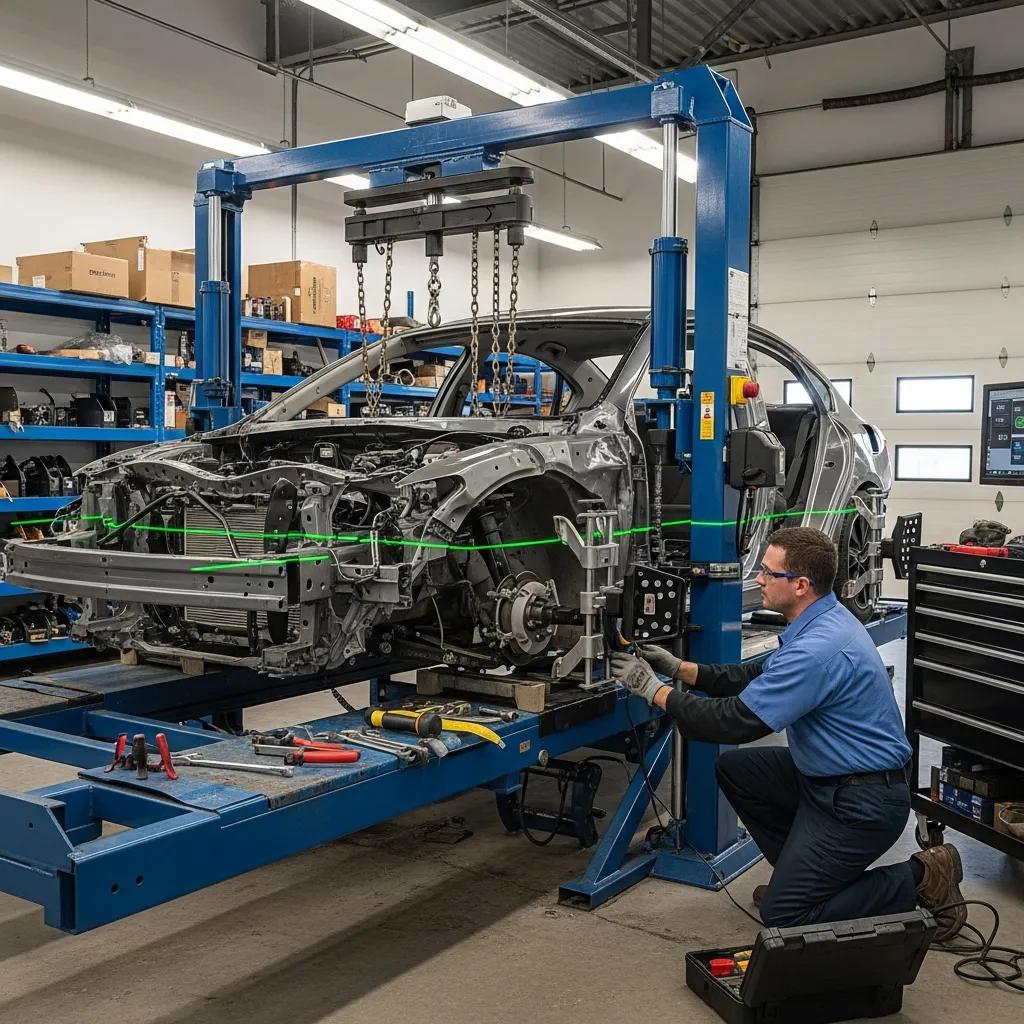
Hydraulic towers and laser alignment systems are complementary: hydraulic equipment applies staged, measured force to move chassis rails and components back toward manufacturer reference geometry, while laser alignment verifies the corrected positions against OEM tolerances with millimeter accuracy. Controlled pulling uses fixtures and anchor points to route force through intended load paths and monitors tension to avoid over-stressing metal. After mechanical correction, laser systems check longitudinal and lateral reference points, suspension geometry, and wheel alignment; any remaining deviation triggers targeted pulls or component replacement. The blend of calibrated force and precise measurement ensures restored geometry supports correct suspension behavior and predictable crash energy management.
Accurate pulling and alignment set the baseline required for ADAS recalibration and final quality assurance, all performed by trained technicians.
The role of I-CAR Platinum certified technicians
I-CAR Platinum certified technicians bring structured expertise across measurement, structural repair, welding, and sensor calibration. That training ensures each repair step follows validated procedures and QA checkpoints. Platinum certification reflects ongoing education in industry standards, so our techs can interpret manufacturer repair directives, use correct weld or bond methods, and perform ADAS calibration to factory requirements. Technicians document measurements, prepare repair plans, and execute staged pulls while checking weld integrity and fastener specs to reduce the chance of repair-related weaknesses. Their work continues into post-repair validation — laser alignment checks, road verification, and producing documentation that supports warranties and insurance claims.
This certification-backed competence improves technical results and builds customer confidence in structural repairs.
How OEM-certified frame repair protects your vehicle’s value and safety
OEM-certified frame repair protects value and safety by ensuring work follows manufacturer standards, preserving crashworthiness, enabling accurate ADAS recalibration, and maintaining documentation that matters for resale and insurer decisions. Manufacturer procedures dictate how energy should be absorbed and routed during a collision; following those steps preserves the vehicle’s intended behavior. Using OEM parts and documented processes keeps the repair history transparent, which supports resale value and reduces liability. Accurate ADAS calibration tied to restored geometry restores active safety function, directly improving occupant protection in future incidents. For owners, clear documentation that repairs met OEM standards translates into measurable long-term benefits.
The comparison below highlights differences between OEM-certified and non-certified approaches across warranty, ADAS, and resale impacts.
| Repair Approach | Warranty / Resale Impact | ADAS & Crashworthiness |
|---|---|---|
| OEM-certified repair | Preserves warranty claims and supports resale confidence | Ensures recalibration and restores designed crash performance |
| Non-certified repair | May risk warranty disputes and reduce resale value | Calibration may be incomplete; crash behavior can be altered |
| Partial repair without measurement | Limited documentation; unpredictable resale effects | Hidden deviations risk sensor misalignment and compromised safety |
This comparison shows why following manufacturer procedures delivers measurable safety and value benefits, and why calibration belongs in the repair plan.
Why following manufacturer guidelines is critical
Manufacturer guidelines define engineered load paths, bonding and welding protocols, torque values, and replacement criteria that preserve crash energy management and structural performance. Those procedures and reference dimensions come from engineering analysis — deviating from them can change how a vehicle behaves in a future crash. Correct torque and weld specs ensure joint strength and fatigue resistance, and using specified fasteners and parts prevents unsafe substitutions. Following manufacturer steps also produces traceable documentation for insurers and future owners, supporting warranty claims and resale transparency.
Adhering to these guidelines reduces liability and improves the likelihood that a repaired vehicle performs as designed in subsequent collisions.
How OEM certification impacts ADAS calibration and crashworthiness
OEM certification matters for ADAS because sensors, cameras, and radar depend on precise mounting points and vehicle geometry. Calibration procedures require accurate reference coordinates; if the chassis geometry is off, sensor inputs will remain unreliable no matter the calibration attempt. Certified workflows require measurement verification and documented calibration steps so systems like lane-keeping, AEB, and adaptive cruise have the correct physical baseline. The result is restored active safety function and crashworthiness consistent with factory design.
Because safety is at stake, ADAS recalibration is an essential part of certified structural repair.
How Prime Time Collision helps with insurance claims for frame damage
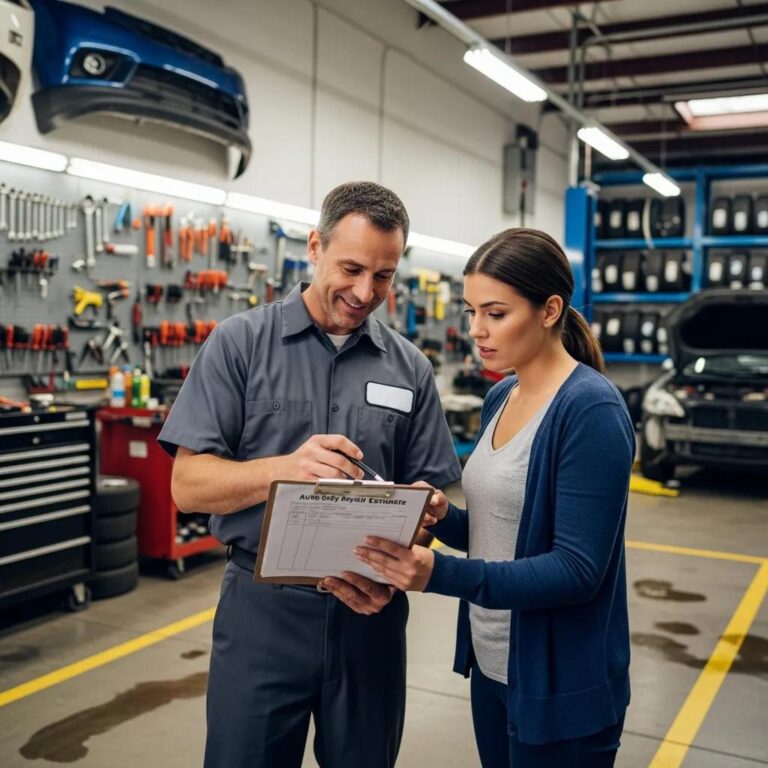
Prime Time Collision supports customers through the insurance claim process by documenting measurements, preparing detailed OEM-aligned repair plans, coordinating with adjusters, and offering free estimates plus 24/7 towing to simplify logistics. We collect computerized measurement reports and photo evidence to substantiate structural damage, produce itemized repair plans that reference manufacturer procedures, and work directly with insurers to speed authorization. Free estimates help you understand scope early, and towing removes the burden of moving a damaged vehicle. Our lifetime warranty on repairs adds further assurance that structural work is backed long-term.
Here’s a concise three-step overview of how we help you navigate claims efficiently.
- Assessment & Documentation: We perform computerized measurements and produce a detailed repair plan with photos and deviation reports to share with your insurer.
- Adjuster Coordination: We communicate with the insurance adjuster, explain OEM repair needs, and request authorization for certified procedures.
- Repair & Certification: We execute repairs to manufacturer standards, perform ADAS calibration, complete QA, and deliver warranty documentation.
This hands-on assistance reduces friction and helps ensure repairs proceed under verified, OEM-compliant methods.
What to expect from the insurance claim process for frame repairs
The claim process usually starts with reporting the incident, getting an estimate, arranging an adjuster inspection, agreeing on a repair plan, and then authorizing the work. Timelines vary, but clear documentation of structural deviations speeds approval. Start by contacting your insurer to open a claim, then have a professional shop provide a computerized measurement report that quantifies hidden damage. An adjuster will review the evidence and work with the repairer to approve OEM procedures and parts; detailed measurement and repair documentation reduces disputes and helps ensure correct repairs are authorized.
Because insurance coordination can be tricky, the shop’s role in preparing clear, OEM-aligned documentation is essential to secure proper repair authorization.
How Prime Time supports estimates, adjusters, and repair authorization
We offer free estimates, towing when needed, and computerized measurement reports for adjusters. Our team communicates directly with insurance representatives to secure authorization consistent with OEM requirements. We prepare repair plans that reference manufacturer procedures and parts, document ADAS recalibration needs, and present evidence to justify structural work. Our lifetime warranty and I-CAR Platinum technician expertise add weight during claim negotiations. You’ll get step-by-step guidance from estimate through QA, which reduces administrative burden and improves transparency.
That support helps speed claim resolution and gets customers back to safe driving faster.
Why choose Prime Time Collision Center for advanced frame straightening?
When you need advanced frame straightening, prioritize certified training, documented OEM alignment capability, advanced measuring systems, and customer-focused services like towing, free estimates, and warranty protection. Prime Time Collision Center offers I-CAR Platinum certified technicians, factory-quality OEM repairs, a lifetime warranty on repairs, free 24/7 towing and estimates, and hands-on insurance support — all designed to reduce risk and preserve vehicle safety and value. For drivers in Glendale, Burbank, Pasadena, and Los Angeles, choosing a shop that documents measurements and follows manufacturer repair directives is a critical step toward a safe, verifiable repair outcome.
Here are the core advantages we offer to customers deciding on structural repair providers.
- Core advantages offered:
I-CAR Platinum Certified Technicians: Technicians trained on manufacturer procedures and evolving repair standards.
Factory-quality OEM repairs: We follow OEM-guided procedures and use specified parts to maintain crashworthiness.
Lifetime warranty on repairs: Long-term protection backed by our shop.
Free 24/7 towing and estimates: Immediate help after a collision, day or night.
Insurance support across providers: We work with adjusters and supply documentation to secure proper repair authorization.
Those trust signals help owners make informed choices and align repair expectations with manufacturer standards.
What our certified technicians and advanced equipment offer
Our technicians pair ongoing I-CAR Platinum training with hands-on use of computerized measuring systems, hydraulic pulling towers, laser alignment tools, and ADAS calibration equipment to deliver a documented, OEM-aligned repair workflow. That combination reduces uncertainty by producing measurable pre- and post-repair geometry, ensuring pulls and replacements stay within tolerances.
Technicians follow manufacturer welding, bonding, and torque procedures, then validate results with calibration and road verification. The result is a verifiable chain of custody from damage assessment through final QA.
How warranties and customer feedback build trust
Lifetime warranties and documented repair records lower perceived risk by assuring owners that structural repairs are backed long-term and done to verifiable standards. Positive customer feedback reinforces reliability and process transparency. While individual testimonials aren’t reproduced here, aggregated reviews and warranty commitments act as social proof and reduce hesitation when choosing a collision repair provider. Providing repair documentation — computerized measurement reports, ADAS calibration certificates, and warranty paperwork — lets owners and future buyers confirm the rigor and completeness of structural repairs.
| Repair Feature | What It Shows | Customer Benefit |
|---|---|---|
| Computerized measurement reports | Quantified pre/post geometry | Transparent proof the structure was corrected |
| ADAS calibration certificate | Restored sensor function | Confirmed active safety performance |
| Lifetime warranty | Ongoing repair assurance | Reduced long-term repair risk |
This table summarizes how tangible repair artifacts translate into customer confidence and measurable safety and resale benefits.
Frequently Asked Questions
What should I do if I suspect my vehicle has frame damage?
If you suspect frame damage, act quickly. Watch for misaligned panels, steering pull, or uneven tire wear. If you see these signs, avoid driving and get a professional assessment. A certified collision shop can perform computerized measurements to uncover hidden damage. Early detection prevents further problems and helps restore your vehicle’s safety and performance more effectively.
How long does the advanced frame straightening process typically take?
Timelines vary with damage severity and parts availability, but advanced frame straightening typically takes from a few days up to a couple of weeks. Complexity of repairs, OEM part lead times, and shop workload affect the schedule. A reputable center will provide a detailed estimate and timeline after inspection so you know what to expect.
Are there risks with non-certified frame repairs?
Yes. Non-certified repairs may not follow manufacturer specs, which can compromise structural integrity and safety systems. Improper repairs can void warranties and reduce resale value. To protect safety and value, choose a certified provider that documents work and follows OEM procedures.
What types of vehicles benefit most from advanced frame straightening?
Advanced frame straightening benefits many vehicle types: passenger cars, trucks, SUVs, and fleet vehicles — especially those involved in significant collisions. Cars with ADAS require precise frame alignment so sensors and cameras perform correctly. Any vehicle showing signs of frame damage should be evaluated for advanced straightening to restore safety and performance.
How can I ensure ADAS is properly calibrated after frame repairs?
Choose a repair shop experienced in OEM-certified repairs and ADAS calibration. The shop should use manufacturer procedures and diagnostic tools to verify sensors and cameras are aligned to specs. After straightening, technicians should perform a full calibration and a road verification to confirm systems work correctly. Request documentation of the calibration for your records.
Why is documentation important in the frame repair process?
Documentation provides a verifiable record of the work performed — measurements, parts used, and calibration steps taken. It supports warranty claims, improves resale transparency, and helps resolve disputes with insurers or buyers. A reputable shop will give you detailed documentation so you can confirm repairs were done to OEM standards.
Conclusion
Advanced frame straightening is essential to restore safety and performance after a collision. Choosing an OEM-certified shop like Prime Time Collision Center means expert technicians, precise measurements, and clear documentation that protect occupants and preserve vehicle value. If you suspect structural damage, schedule an assessment — we’ll walk you through the options, document the work, and get you back on the road with confidence.