
Audi A4 Certified Body & Collision Repair — Glendale, CA
If your Audi A4 has been in a collision, you deserve straightforward guidance on returning the car to its original safety, performance, and appearance. This guide walks you through modern Audi A4 collision repair: how aluminum and mixed-material structures are handled, when paintless dent removal is appropriate, how ADAS sensors are recalibrated and verified, and what to expect during the insurance and repair process. You’ll learn the differences between aluminum and steel repair methods, the role of OEM and OEM-equivalent parts, how static and dynamic ADAS calibrations work, and how to pick a repair partner that follows factory procedures. We use terms owners search for — like Audi A4 repair, A4 collision repair, A4 body shop, ADAS recalibration, and genuine parts — so you can find clear, actionable information.
Why Choose Prime Time Collision Center for Audi A4 Repairs?
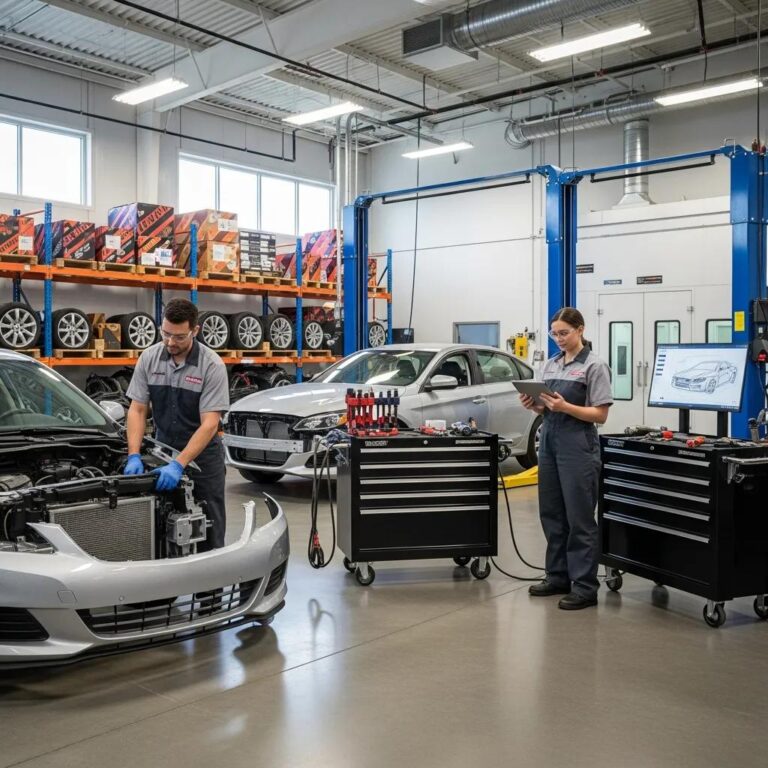
Repairing an Audi A4 requires technicians trained to follow OEM procedures, use precision measurement tools, and restore crash structures to factory specifications. Choosing a shop that puts factory-quality repairs first reduces the chance of misaligned panels, weakened crash performance, or improperly functioning ADAS features. For Audi A4 owners, a team trained to OEM standards, a disciplined parts policy, and documented calibration and testing produce predictable safety and fit-and-finish after a repair. At Prime Time Collision Center we emphasize I‑CAR Platinum training, factory-level procedures, free estimates, 24/7 towing, and smooth insurance coordination to make the repair process easier for local drivers.
Our approach pairs technical rigor with customer-focused service so your repair stays transparent and properly documented. The next section explains the certifications and what they allow technicians to perform on luxury vehicles like the A4.
The core benefits for Audi A4 owners include:
- I‑CAR Platinum technician training for complex aluminum and electronics repairs.
- Clear, documented commitment to factory procedures and proper parts sourcing.
- Support services — free estimates, towing, and insurance coordination — to reduce paperwork and delays.
Those benefits translate directly into the technical credentials that show a shop can safely handle Audi A4 collision work to OEM standards.
What Certifications Ensure Expert Audi A4 Collision Repair?
I‑CAR Platinum is an industry-recognized benchmark for collision repair training covering modern materials, electronics, and structural sequencing. It shows technicians complete ongoing education for complex repairs — precisely what matters on an Audi A4 with its mix of aluminum and steel and integrated safety systems. Certification indicates the shop invests in continuous training and follows repair steps aligned with OEM guidance. For owners, that means technicians know when to use specialized fixtures, approved welding or bonding methods, and how to preserve crash-energy management systems.
Knowing which certifications a shop holds helps you evaluate repair quality. The next section describes how parts sourcing supports those certified processes.
How Do We Guarantee Use of Genuine Audi A4 OEM Body Parts?
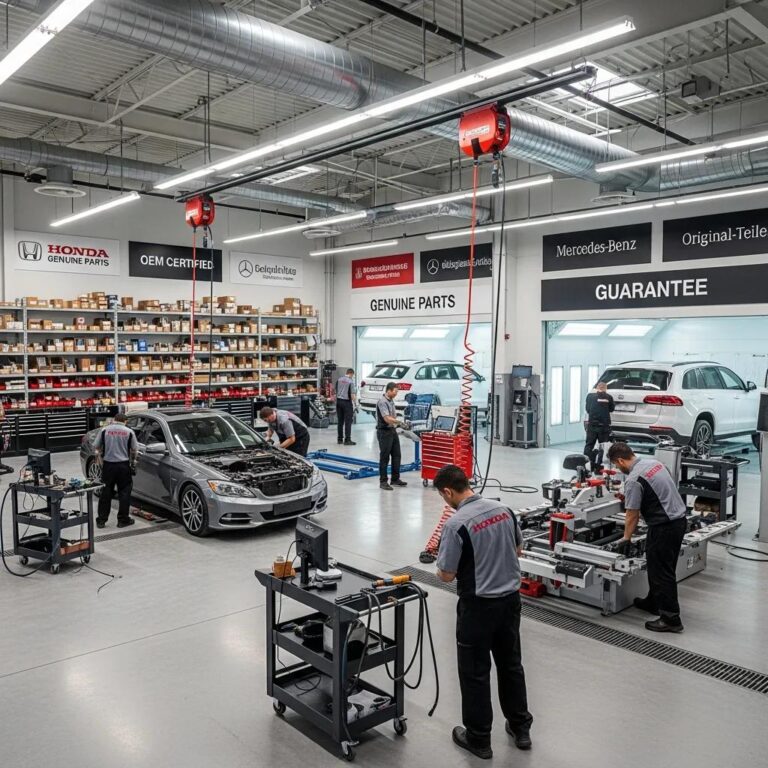
Using genuine Audi parts or proper OEM-equivalents preserves fit, finish, and crashworthiness. We start with a clear parts-sourcing policy and document part origins on the repair estimate. Genuine Audi components keep factory tolerances for items that affect sensor placement and airbag timing — like bumpers, aluminum hoods, and rails. When OEM parts are required by insurers or owners, we document and explain any substitutions so resale value and structural performance are protected. Detailed parts lists in estimates and repair records make it easier for insurers to approve factory-spec components and help owners understand the parts choices made for safety and longevity.
A transparent parts policy leads naturally into a breakdown of the specialized services offered for Audi A4 repairs.
What Specialized Collision Services Are Available for Audi A4?
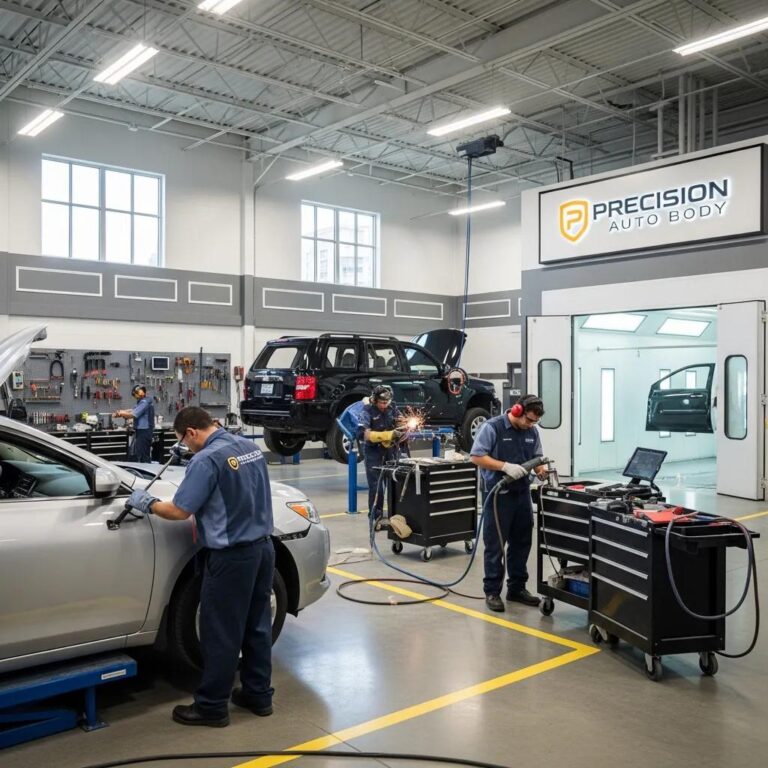
Repairs for the Audi A4 often combine structural work, cosmetic refinishing, and electronics service based on the car’s mixed materials and advanced driver-assist systems. Core services include aluminum‑specific structural repair, laser-frame measurement and straightening, bumper and headlight replacement with verified alignment, paintless dent removal when appropriate, and precision color matching for metallic or pearlescent finishes. These tasks require specific tooling and calibrated processes to protect crash performance and appearance. Expect itemized estimates separating parts, labor, and calibration work so you can see what’s being done and why.
Different repair needs follow distinct workflows and outcomes:
| Service | Typical Damage | Expected Outcome / Process |
|---|---|---|
| Front bumper replacement | Impact cracks, misalignment, sensor damage | Remove sensors, fit OEM or approved part, calibrate sensors, verify panel gaps |
| Aluminum hood repair or replacement | Dents, creases, buckling | Use aluminum-approved fixtures and welding/bonding; verify structural dimensions |
| ADAS sensor servicing | Miscalibrated camera/radar, occupant detection faults | Scan system, recalibrate (static or dynamic as required), perform test-drive verification and document results |
| Paintless dent removal (PDR) | Small dents without paint damage | Massage panel back to shape to preserve OEM finish and clearcoat |
| Headlight/taillight replacement | Lens cracks, moisture intrusion | Install OEM or OE-equivalent assembly; align beams and sensor references |
This table shows how a specific issue typically maps to a repair process and the expected results. Next we cover structural repairs for the A4’s aluminum and steel components.
How Is Structural Damage Repaired on Audi A4 Aluminum and Steel Components?
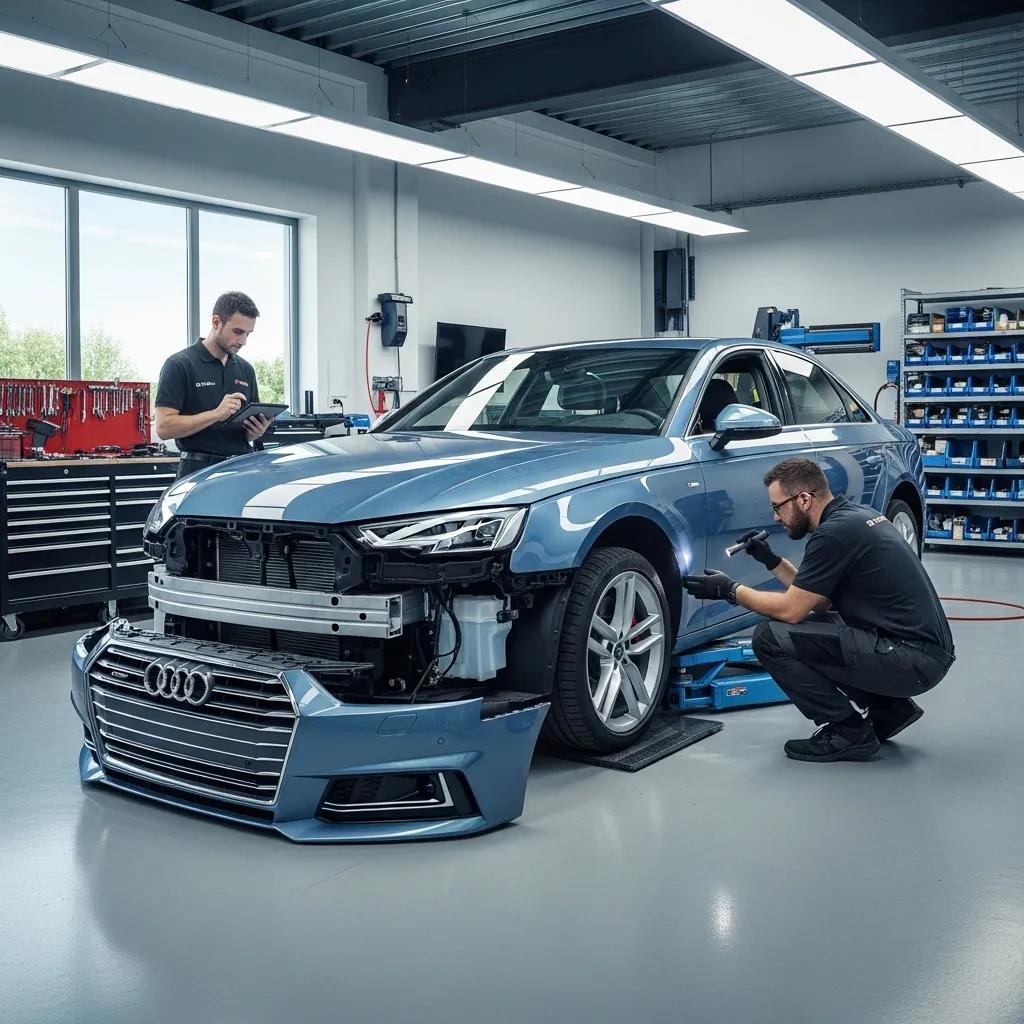
Structural repair starts with a precise damage assessment and measurements against factory reference dimensions using laser frame-measuring systems. Aluminum parts need different handling — aluminum-approved welding, rivet‑bonding, and specialized fixtures — rather than conventional steel MIG welding, to avoid weakening the material. For steel sections, controlled straightening and weld-repair restore original geometry while preserving crumple zones. Each step is verified with measurement records, and we apply corrosion protection and seam-sealing where required to restore long-term durability and crashworthiness.
Getting the structure right is a prerequisite for accurate sensor alignment and for high-quality paintwork, which we discuss next.
What Are the Options for Audi A4 Paintless Dent Removal and Paint Matching?
Paintless dent removal (PDR) is ideal for small dents where the paint remains intact — it preserves the factory finish and avoids repainting that can shift color depth. PDR technicians use precision tools to gently reshape panels from behind while protecting the OEM clearcoat and metallic flakes. When paint is necessary, computerized color-matching systems analyze spectral values to recreate complex Audi metallic and pearlescent finishes, and technicians blend clearcoat across adjacent panels to hide seams. A final quality-control check measures gloss, texture, and color variance before we return the car to you.
After cosmetic work, any disturbed ADAS sensors must be recalibrated. The next section explains when and how calibration is performed and verified.
How Is ADAS Calibration Handled After Audi A4 Collision Repairs?
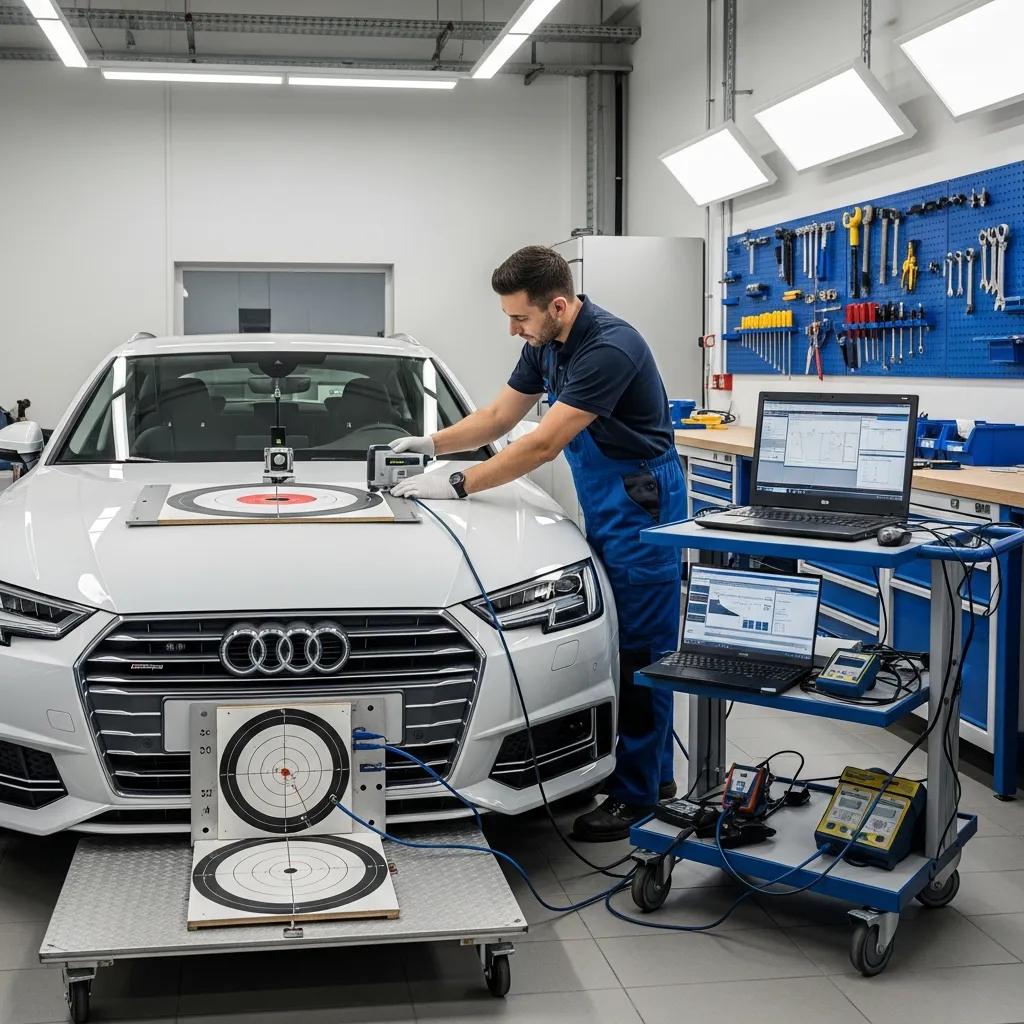
ADAS recalibration restores proper alignment for cameras, radar, and ultrasonic sensors so driver assistance systems work as designed. Calibration is required when sensors are moved or replaced, or when structural or suspension changes alter reference geometry. Depending on the sensor, calibration can be static (using targets in a controlled bay) or dynamic (road-based procedures). Proper calibration returns lane-keep assist, adaptive cruise, automatic emergency braking, and parking assists to expected performance and reduces safety risk after repair. Below is a quick equipment-to-outcome guide showing common components, calibration methods, and what technicians verify.
Accurate ADAS work combines diagnostics with documentation insurers and owners can review; common procedures include:
| Component | Calibration Method / Tool | Safety Outcome / Verification |
|---|---|---|
| Front camera | Static target plate with OEM scan tool | Restored lane-detection accuracy; documented calibration report |
| Radar module | Static alignment or dynamic road test using OEM tool | Corrected distance/time-to-collision readings; verified adaptive cruise behavior |
| Ultrasonic sensors | Software reset and static verification | Reliable parking assist and obstacle detection; diagnostic codes cleared |
| Roof/side sensors | Vehicle-specific calibration rigs | Accurate blind-spot and cross-traffic alerts; test-drive confirmation |
This guide shows how each sensor type ties to tools and verification steps. The next section explains why recalibration matters for safety.
Why Is Audi A4 ADAS Sensor Recalibration Critical Post-Repair?
Uncalibrated ADAS sensors can cause false warnings, delayed braking responses, or incorrect steering interventions — issues that directly affect safety and system reliability. For example, a misaligned front camera can shift lane-centering behavior or miss lane markers, while radar misalignment can change stopping-distance calculations used by automatic braking. Recalibration restores sensor geometry so vehicle control units read and act on inputs correctly. Technicians run functional tests and road verification to confirm real-world performance, and they document calibration for insurance records and future service history.
Restoring ADAS performance requires the right tools and documented procedures, which we detail next.
What Advanced Equipment Does Prime Time Use for Audi A4 ADAS Calibration?
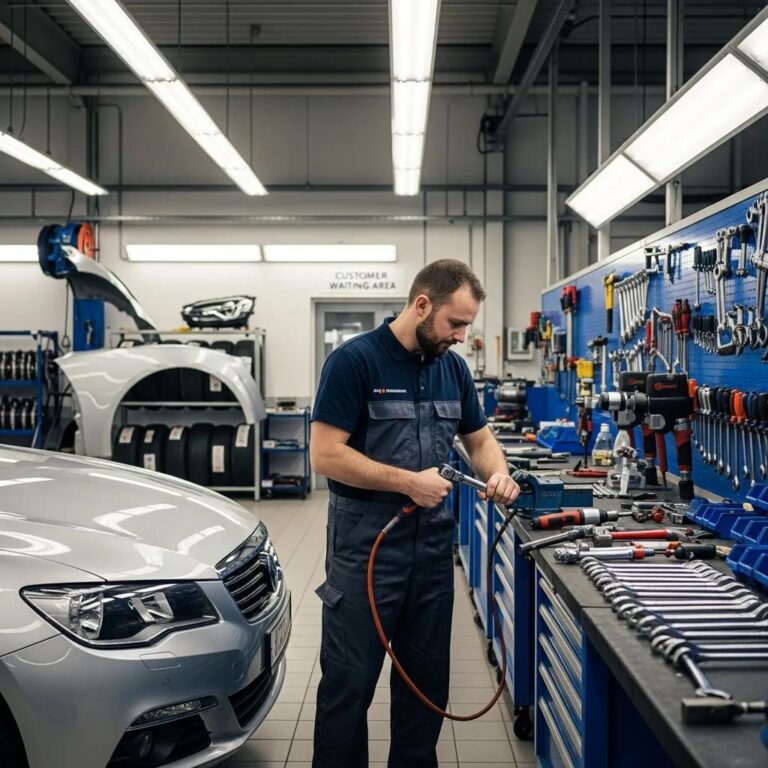
Professional calibration combines OEM-level scan tools, calibrated static targets or validated equivalent rigs, and dynamic test protocols that mirror real driving conditions. Shops following OEM guidance use vehicle-specific software, manufacturer calibration targets (or validated substitutes), and verification drives to confirm sensor behavior. Equipment includes laser-based wheel alignment to check suspension geometry and OEM diagnostic modules to clear codes and log calibration events. We document software versions and calibration parameters so owners and insurers have a transparent record of the work performed.
With calibration tools covered, the next section explains how we help with insurance claims and what to expect from the claim workflow.
How Does Prime Time Collision Assist with Audi A4 Insurance Claims?
Insurance is often the most stressful part after a collision. A clear, step-by-step process reduces uncertainty and speeds repairs. Typical steps are: document the damage, get a free line-item estimate, submit the estimate to the insurer, obtain authorization, and complete repairs with final quality checks and calibration documentation. Prime Time provides free, detailed estimates that list parts, labor, and ADAS work, acts as a liaison with carriers during the adjustment, and handles direct communications to help secure authorizations. The table below maps each claim step to what we do and the benefit to you.
Here’s a concise mapping of claim steps, provider actions, and customer benefits.
| Step | Provider Action | Customer Benefit |
|---|---|---|
| Estimate & documentation | Provide a free, detailed line-item estimate | Transparent cost breakdown with ADAS recalibration included |
| Adjuster coordination | Communicate directly with the insurer’s adjuster | Faster approvals and fewer delays for you |
| Authorization & scheduling | Book repairs and order required parts | Shorter wait times and predictable timelines |
| Repair verification | Deliver calibration reports and QA checks | Documented safety verification for you and your insurer |
This process shows how shop involvement reduces friction in the claims cycle. The next section explains which insurers we work with and how those partnerships help your claim.
Which Insurance Companies Does Prime Time Work With for Audi A4 Repairs?
Prime Time Collision Center works with all major insurers and approaches coordination with a focus on documenting OEM procedures, parts needs, and ADAS calibration requirements. We communicate directly with adjusters, provide thorough estimates to justify OEM or OEM-equivalent parts, and explain when specific calibration or structural procedures are needed for safety. That means we can submit supporting documentation that clarifies technical repair choices and reduces back-and-forth about parts or calibration items — helping you get timely approvals.
What Is the Process for Getting a Free Audi A4 Collision Repair Estimate?
Requesting a free estimate starts with a damage description and photos or an in-person inspection to capture panel and sensor issues. We produce a line-item estimate listing parts, labor, paint, and ADAS calibration tasks; bring your insurance information and any lease or warranty documents. Estimates are typically returned same day or the next business day; parts ordering and scheduling depend on availability and insurer authorization. Once you approve the estimate, we complete repairs, document ADAS calibration and structural measurements, and deliver final verification to both you and your insurer.
Clear procedures like these reduce surprises and help owners plan for authorization and repair timelines.
What Makes Prime Time Collision Center the Best Choice for Audi A4 Owners?
Choosing a repair partner for an Audi A4 means balancing technical capability with customer service: documented structural repairs, precise ADAS recalibration, accurate paint matching, and clear communication during the claim. Prime Time centers its work on OEM-quality standards and technician training while offering conveniences for local owners in Glendale, Burbank, Pasadena, and Los Angeles. Those conveniences cut downtime, support lease-return requirements, and help maintain a repair history that protects resale value. Below are customer-focused services and how they support the repair experience.
Owners value convenience and transparency when managing repairs:
- 24/7 towing availability — prompt recovery to a trusted repair bay after an incident.
- Free estimates and insurance coordination — reduces paperwork and helps speed approvals.
- Online booking and status updates — keeps you informed without extra phone calls.
These services complement technical repair quality and reflect our emphasis on OEM procedures and clear communication.
How Do Customer Testimonials Reflect Audi A4 Repair Satisfaction?
Customer feedback tends to focus on three consistent themes: clear communication about the repair scope, attention to fit-and-finish that matches factory standards, and timely completion with documented safety checks. Rather than cherry-picking individual quotes, look for these themes across a shop’s reviews to confirm whether real-world experiences match technical promises. Reviews that mention documented ADAS calibration, measurement reports, or detailed parts lists are especially useful for Audi A4 owners who want assurance repairs preserved safety and value.
Review trends like these help prospective customers decide where to entrust their Audi A4. The next section lists practical services that reduce friction during repairs.
What Convenient Services Support Audi A4 Owners During Repairs?
Prime Time helps owners with services that simplify logistics and documentation: 24/7 towing for immediate recovery, online booking and regular status updates for transparency during the repair cycle, and help coordinating rentals, shuttles, or loaner vehicles when available. We also assist with lease-return documentation and provide repair records that detail parts origins and ADAS calibration for future inspections. These conveniences shorten downtime and reduce administrative work so you can focus on getting back on the road safely.
Practical service features paired with documented OEM procedures give Audi A4 owners both convenience and confidence.
Frequently Asked Questions
What should I do immediately after an accident involving my Audi A4?
First, make sure everyone is safe and, if necessary, call emergency services. Move to a safe spot if you can. Take photos of the damage, the scene, and any other vehicles involved. Exchange contact and insurance information with other parties, then report the incident to your insurer. Finally, contact a certified collision shop like Prime Time Collision Center for a professional damage assessment and next steps.
How long does it typically take to repair an Audi A4 after a collision?
Repair time varies with damage severity. Small jobs like paintless dent removal can take a few days; structural repairs and ADAS recalibration can stretch to several weeks. Factors include parts availability, repair complexity, and shop workload. We provide estimated timelines during the assessment so you can plan accordingly.
Will my insurance cover all the repair costs for my Audi A4?
Coverage depends on your policy and the accident circumstances. Comprehensive and collision policies often cover repairs, but deductibles and limits may apply. Review your policy and discuss with your adjuster. We can provide a detailed estimate to clarify costs and help you and your insurer understand what’s covered and any out-of-pocket expenses.
What are the benefits of using OEM parts for my Audi A4 repairs?
OEM parts meet the manufacturer’s specs for fit, finish, and performance — important for safety, structural integrity, and resale value. Using genuine parts helps avoid compatibility issues and preserves the vehicle’s original behavior. We prioritize OEM parts to restore your Audi A4 both functionally and aesthetically.
How can I ensure my Audi A4’s ADAS features are properly calibrated after repairs?
Choose a shop experienced with ADAS that uses OEM-level tools and follows manufacturer procedures. Proper shops perform static and dynamic calibrations as required and provide documentation of the process. Ask for calibration reports and test-drive verification to confirm that your vehicle’s safety features are restored to manufacturer standards.
What should I look for in a collision repair shop for my Audi A4?
Look for I‑CAR Platinum technicians, clear parts policies, and shops that follow OEM repair guidelines. Read customer reviews that highlight transparency, communication, and timely service. Prime Time Collision Center offers these credentials plus conveniences like free estimates and insurance coordination, making us a reliable option for Audi A4 owners.
Conclusion
When you choose Prime Time Collision Center for your Audi A4, you get technicians trained to OEM standards, documented structural repairs, precise ADAS recalibration, and a parts policy that protects safety and resale value. We streamline insurance communication and offer practical services to reduce downtime and stress. Contact us today to schedule a free estimate and see firsthand how factory-quality repairs and clear communication make the difference.