Auto Body Repair in Pasadena: Expert Services Near You
Auto Body Repair in Pasadena — OEM‑Certified Collision Experts Near You
When you need dependable auto body repair in Pasadena, understanding OEM‑certified collision work matters. It protects your safety, preserves warranties, and helps maintain resale value. This guide explains how modern collision repair restores structural integrity, preserves electronic systems like ADAS, and relies on genuine parts plus calibrated processes to return vehicles to pre‑accident condition. Whether you’re searching for collision repair Pasadena CA, frame straightening, or EV body repair, you’ll find practical guidance on repair steps, the difference between cosmetic and structural fixes, insurance coordination, and realistic timelines.
Why Choose Prime Time Collision Center for Auto Body Repair in Pasadena?
Pick a collision shop based on clear trust signals: certified technicians, OEM repair workflows, warranty coverage, and smooth insurance coordination. Our I‑CAR Platinum training means technicians follow current manufacturer procedures and understand modern vehicle structures, which reduces variability and helps keep occupants safe. Free estimates, 24/7 towing, and repair warranties remove uncertainty and get you back on the road faster. Here are the primary reasons local drivers choose a certified shop in Pasadena.
- I‑CAR Platinum–certified technicians who follow manufacturer‑recommended repair methods.
- Direct coordination with major insurance carriers to minimize approval delays.
- Free 24/7 towing and complimentary estimates to simplify the first steps after a collision.
These trust markers explain why certified shops are preferred locally. Below we’ll look closer at our community reputation and the qualifications behind our repairs.
What Makes Our Pasadena Body Shop Trusted by Local Drivers?
Local drivers want consistent results, clear timelines, and confidence that repairs protect safety systems and vehicle value. Prime Time Collision Center follows OEM‑quality workflows and backs our work with warranties across Pasadena, Burbank, Glendale, and Los Angeles. Free estimates and around‑the‑clock towing ease the immediate stress after an accident. We support claims with documented procedures and post‑repair inspections so buyers and insurers can verify the repair history. Clear updates about timelines, parts sourcing, and calibration steps keep owners informed at every stage.
How Do I‑CAR Platinum Certifications Ensure Quality Repairs?
I‑CAR Platinum shows a shop‑level commitment to ongoing technician training for structural, electronic, and high‑strength material repairs. That means our technicians complete manufacturer courses and stay current with evolving repair sequences. Practically, this reduces repair variability, ensures ADAS recalibration needs are identified up front, and enforces correct fastening and structural repair tolerances that preserve crashworthiness. For vehicles with advanced driver assistance, our teams locate sensors before disassembly and plan calibration so those systems return to spec after repairs.
What Comprehensive Collision Repair Services Are Available in Pasadena?
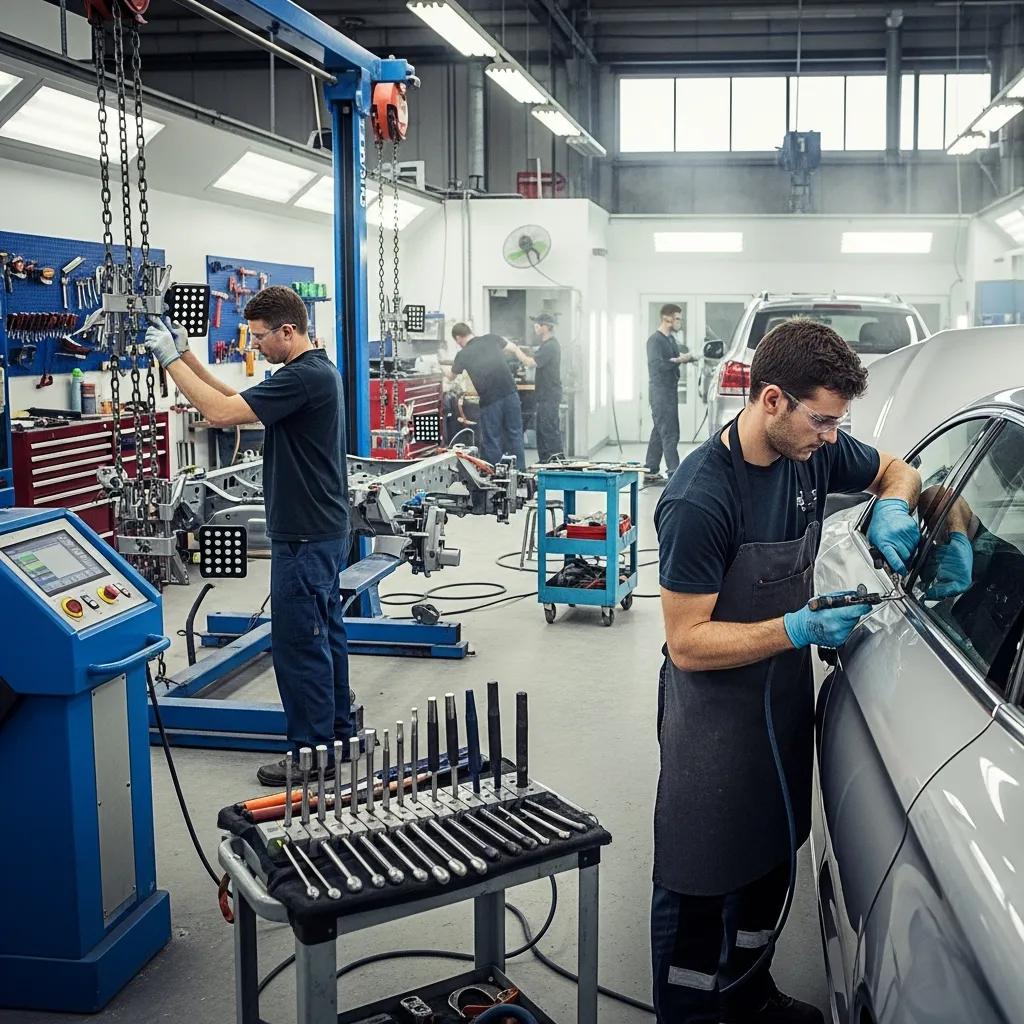
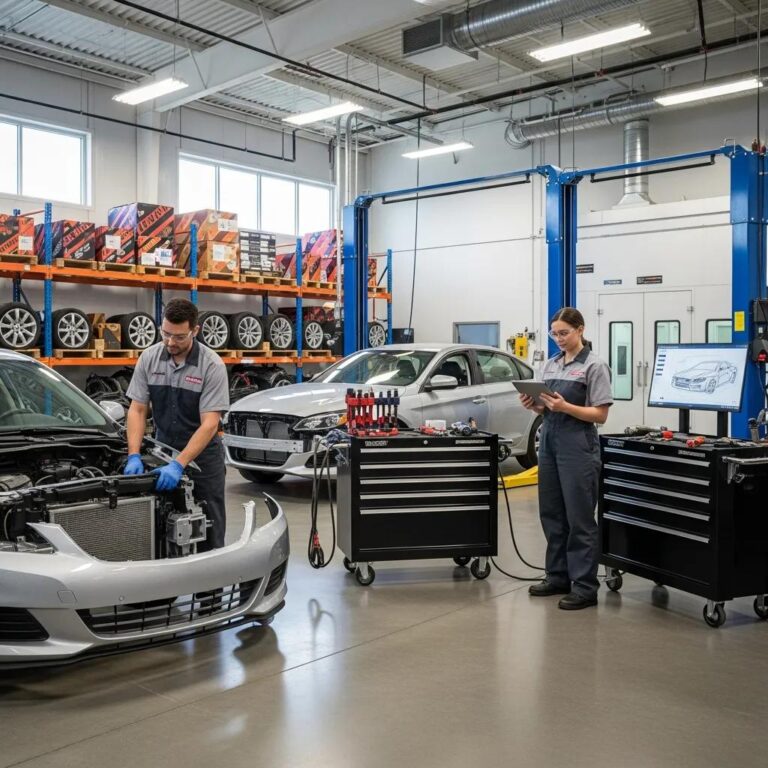
In Pasadena, collision repair ranges from small dent removal to full structural and electronic system restoration. Common services include paintless dent repair, frame straightening, bumper and fender repair, paint refinishing and color matching, auto glass replacement, ADAS calibration, and EV body work. The right path depends on whether damage is cosmetic or structural and whether safety electronics were affected. Use the list below to quickly identify likely repair options for your vehicle.
- Paintless dent repair — fixes minor dents without repainting, keeping the factory finish intact.
- Frame straightening — restores structural alignment with measured pulls and verified tolerances.
- ADAS calibration — realigns cameras, radar, and sensors so driver‑assist systems work correctly.
To make choices easier, the table below summarizes what each service fixes and the typical timeline or complexity for Pasadena repairs.
| Service | What it fixes | Typical timeline / complexity |
|---|---|---|
| Paintless dent repair | Small door and panel dents when the paint is not damaged | 1 day; low complexity when paint is intact |
| Frame straightening | Structural misalignment after torsional or collision damage | 1–4 days; requires precision measurement and tooling |
| Paint refinishing & color matching | Scratches, repainted panels, or full refinishes | 2–5 days; multi‑stage paint and curing time |
| ADAS calibration | Cameras, radar, and ultrasonic sensor alignment | 1–2 days; includes diagnostic and static/dynamic calibration |
| EV body repair | High‑voltage components and battery‑adjacent structures | 2–6 days; follows safety protocols and diagnostic checks |
That overview helps owners decide next steps. After identifying needed services, it’s useful to understand the step‑by‑step repair workflow that restores safety and function.
How Does Our Pasadena Collision Repair Process Restore Vehicle Safety?
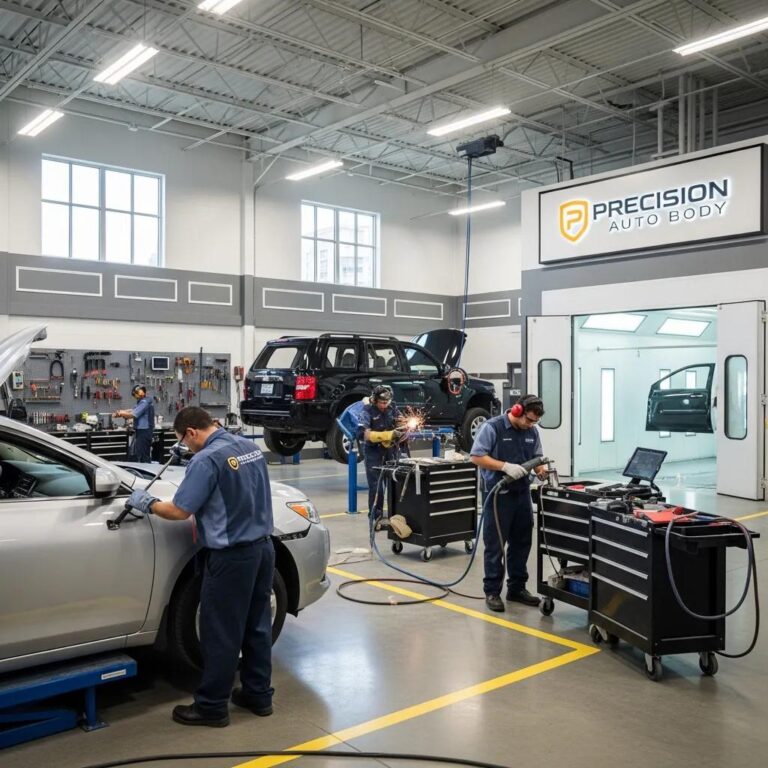
Our safety‑first repair process starts with a detailed estimate and diagnostic inspection to spot structural issues, airbag deployment, and ADAS faults. We document the damage with photos, disassemble where needed to uncover hidden issues, and measure frame geometry against manufacturer specs. After structural repairs, we install genuine or OEM‑equivalent parts, then move to paint and finishing while preserving corrosion protection. The final phase includes ADAS calibration, system testing, and a quality assurance inspection to confirm everything meets safety and performance standards. We document each step so owners and insurers have a clear, auditable repair history.
Which Types of Damage Do We Repair: Frame, Dent, and Paint?
How damage is classified determines the repair method. Light dents or paint scuffs may be eligible for paintless dent repair (PDR). Deeper impacts or structural damage require disassembly and measured frame straightening. Frame repairs restore geometry within manufacturer tolerances so crash energy management remains effective. Dent and bumper repairs focus on fit, appearance, and alignment. Paint work demands precise color matching and layering to retain UV protection and corrosion resistance — modern color‑matching systems help deliver consistent results across panels. Timelines vary: cosmetic jobs usually close faster, while structural repairs need staged inspections and documentation.
Why Is OEM Certified Collision Repair Important for Pasadena Vehicle Owners?
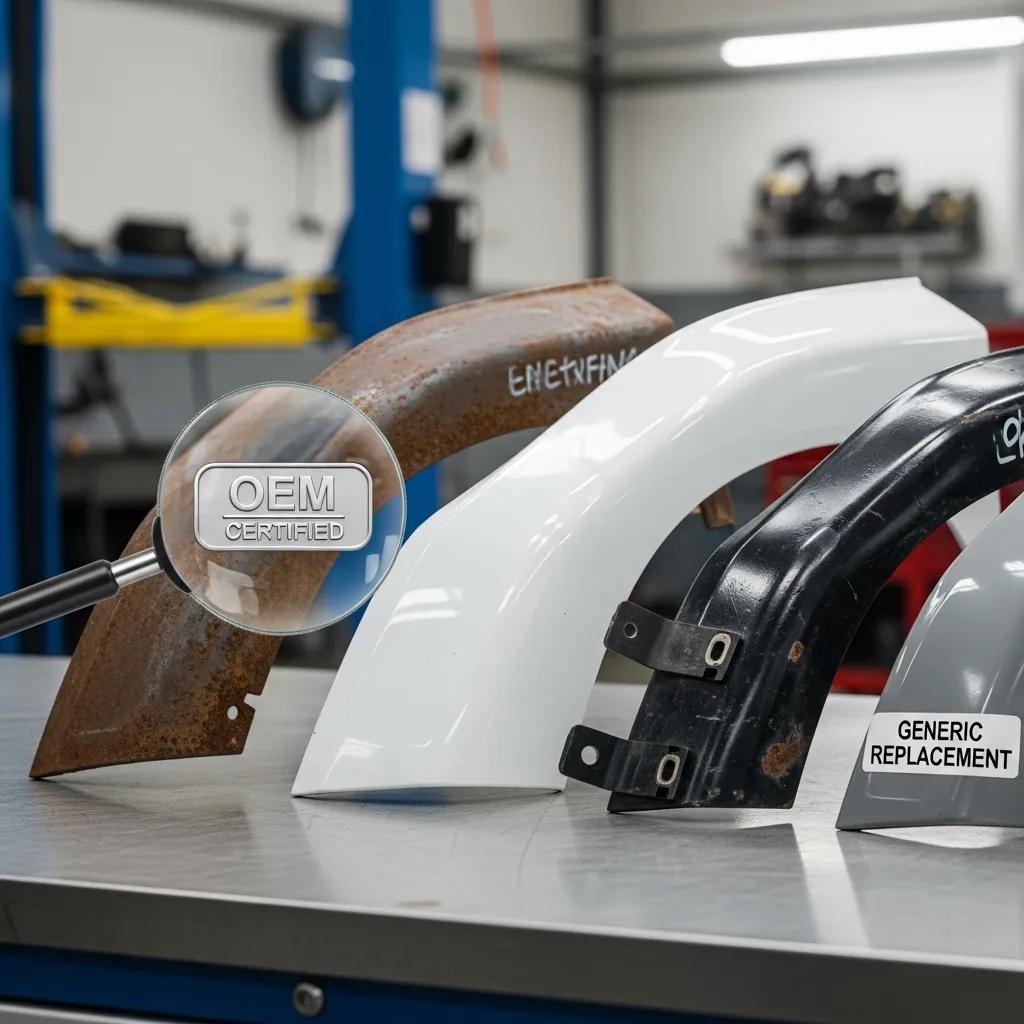
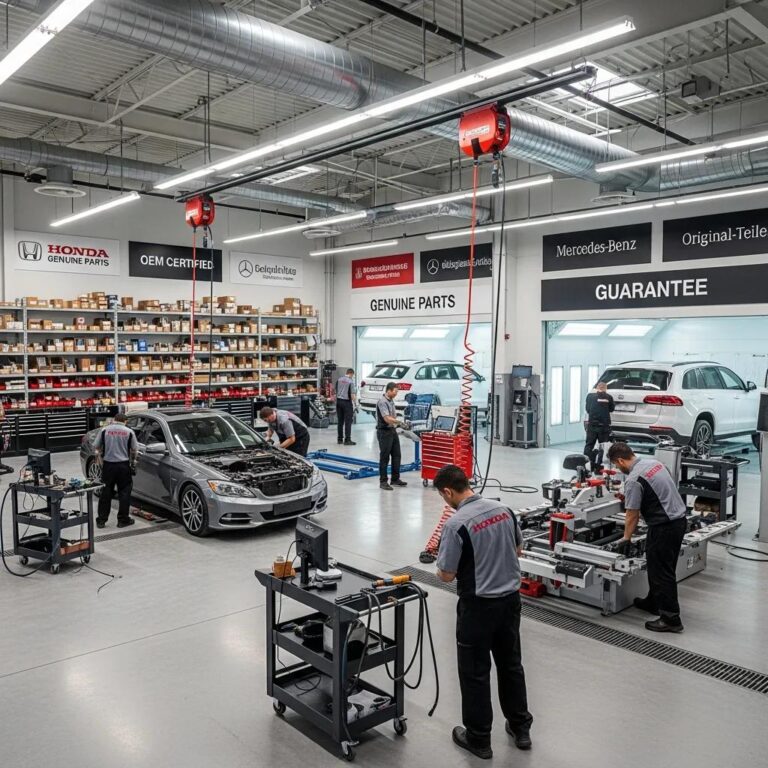
OEM‑certified collision repair means following manufacturer procedures, using specified parts, and meeting calibration and test criteria that protect safety systems and vehicle value. Certification helps prevent post‑repair problems with sensors and restraint systems and produces documentation showing repairs followed manufacturer guidance — important for warranty and resale. The table below contrasts OEM parts with aftermarket options across key attributes to help you decide.
OEM vs aftermarket parts comparison for repair decision‑making:
| Attribute | OEM parts | Aftermarket parts |
|---|---|---|
| Fit and compatibility | Exact fit to manufacturer tolerances | Variable fit, sometimes requiring adjustments |
| Safety‑critical integrity | Designed to match original crash performance | Materials or fastenings may differ |
| Warranty alignment | Supports manufacturer repair protocols | Can complicate warranty claims |
| Resale and vehicle history | Preserves documented OEM repair history | May lower buyer confidence without clear records |
This comparison explains why many owners opt for OEM‑certified repairs. Below are the practical benefits of using genuine parts.
What Are the Benefits of Using Genuine OEM Parts in Repairs?
Genuine OEM parts are made to original specifications and fit precisely with structural members and sensor systems. That precise fit reduces the need for workarounds, helps maintain corrosion barriers, and ensures energy‑absorbing components perform as designed in future collisions. OEM parts also simplify ADAS recalibration because mounting points and sensor housings align with factory tolerances, lowering calibration risk. Using OEM components keeps a clearer repair record — important for warranty documentation and resale value. These advantages show how OEM processes affect safety and long‑term ownership costs.
How Does OEM Certification Protect My Car’s Warranty and Resale Value?
Repairs that follow OEM certification protocols create documented evidence the work matched manufacturer procedures. That documentation can prevent disputes over warranty coverage for related components after repair. Insurers and future buyers prefer consistent repair records showing OEM parts and certified workflows, since those records suggest the vehicle will continue to perform to factory standards. For lease returns, OEM‑aligned repairs often meet lessor expectations and reduce unexpected charges. Keeping thorough records of certified repairs helps preserve resale value and simplifies later interactions with insurers or dealers.
OEMs continually refine product quality and warranty processes; certified repairs extend those improvements to vehicle owners through documented, manufacturer‑aligned work.
OEM Warranty Cost Reduction & Aftermarket Quality
Improving product quality and lowering warranty costs are key goals for OEMs and their aftermarket operations. Automotive suppliers analyze warranty claims to find root causes, then adjust designs and processes to reduce future failures. Accurate warranty data and early defect detection help suppliers implement corrective actions that protect customers and reduce long‑term costs.
Data driven degradation of automotive sensors and effect analysis, S Fleck, 2021
How Does Prime Time Collision Center Assist with Insurance Claims in Pasadena?
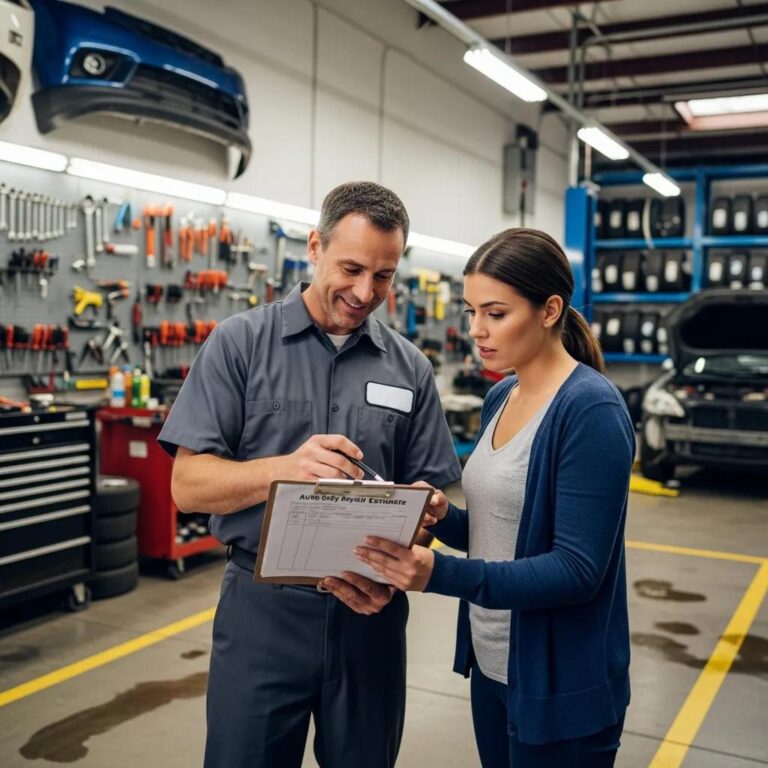
Insurance claims can feel overwhelming after an accident. We work with all major insurers to coordinate estimates, paperwork, and approvals, and we offer free estimates and 24/7 towing to ease the first steps. We handle documentation and communicate directly with your adjuster to clarify repair scope and parts choices, reducing the back‑and‑forth that delays repairs. Below is a simple outline of the typical claim workflow and how we support you at each stage.
- Report the incident and secure safety; gather photos and policy information.
- Get a free estimate and damage assessment at our shop or after a tow.
- We submit the estimate and supporting documentation to your insurer for approval.
- Once approved, we schedule repairs and coordinate parts and labor.
- We complete calibration, QA inspection, and final paperwork for vehicle release.
The list above sets clear expectations. The table below maps each claim step to what we do and what you should expect.
| Claim Step | What the shop does | Customer action / expected timeframe |
|---|---|---|
| Incident intake | Provides a free estimate and documents damage | Give policy info and photos; same day to 48 hours |
| Estimate submission | Delivers an itemized estimate to the insurer | Authorize claim submission; 1–3 days for initial review |
| Approval coordination | Clarifies scope and parts sourcing with the carrier | Watch for approval notices; timing varies by insurer |
| Repair scheduling | Orders parts and schedules the repair work | Receive timeline and updates; repairs typically take 2–10 days depending on scope |
| Final QA & release | Completes ADAS calibration and final inspection | Pickup after notification; warranty paperwork provided |
Coordinated steps like these reduce friction in the claim process and keep repairs moving. Next we’ll cover insurer relationships and what you can prepare ahead of time.
Which Insurance Companies Do We Work With for Hassle‑Free Claims?
We work directly with major national insurers and local carriers to streamline claims and reduce paperwork for vehicle owners. Familiarity with insurer practices helps us get faster approvals for standard repairs and makes it easier to document complex structural or ADAS work. When available, we can bill insurers directly and help you gather the items most carriers request — photos, police reports, and policy details — so the claim moves quickly.
What Is the Step‑by‑Step Insurance Claim Process for Pasadena Customers?
After ensuring safety and exchanging information, start with a free estimate from our shop to open a claim file. We submit a detailed, itemized estimate plus photos and diagnostics to the insurer and follow up for any clarifications or supplemental damage found during disassembly. Once the carrier approves scope and parts are ordered, we complete repairs with scheduled QA and ADAS calibration milestones, keeping you updated. We document completed work and provide warranty details at pickup so you leave with a clear record for future coverage or resale.
What Should I Do After a Car Accident in Pasadena?
Your first steps after a collision protect people and preserve the record used for repairs and claims. Make sure everyone is safe and call emergency services if needed. Photograph the scene, the vehicle positions, and all damage, and collect contact and insurance details from other parties. File a police report when required and notify your insurer to begin a claim. If the car isn’t drivable, arrange our free 24/7 tow and get a complimentary estimate to start the repair process and preserve evidence for an accurate assessment. The checklist below follows the most important actions in order.
- Ensure safety and call emergency services if anyone is injured.
- Document the scene with photos, collect witness statements, and note conditions.
- Exchange insurance and contact details with other drivers.
- File a police report if required and notify your insurer promptly.
- Arrange towing if needed and request a free estimate to begin repairs.
Following this checklist protects your legal and insurance interests and moves your vehicle into the repair workflow. Here’s how we guide you through that journey.
How Can Prime Time Collision Center Guide Me Through the Repair Journey?
From your first call or tow intake, we give a clear timeline: estimate review, parts sourcing, repair milestones, and calibration checkpoints. You’ll get intake confirmation, mid‑repair updates at key stages (structural work, paint, calibration), and a final QA review with documentation. Our warranty and a single point of contact make post‑repair concerns easy to handle. Timelines vary by scope, but regular updates help manage expectations and keep trust strong through the repair process.
What Are the Safety and Warranty Considerations Post‑Accident?
Post‑repair safety checks include verifying structural alignment, airbag system integrity, and ADAS function through static and dynamic testing when appropriate. Warranty coverage depends on documented use of OEM parts and certified procedures; repairs that follow manufacturer guidance and include clear records reduce the risk of future disputes. Keep your repair records, ask for calibration certificates when ADAS was involved, and return to us promptly if you notice any driving abnormalities — early inspection ensures warranty coverage and continued occupant safety.
How Do We Handle Specialized Repairs for Luxury and Electric Vehicles in Pasadena?
Luxury and electric vehicles need manufacturer‑specific procedures, specialized tooling, and trained technicians to protect finish quality, electronics, and high‑voltage systems. Luxury repairs often require multi‑stage paint processes, tight trim tolerances, and OEM components to preserve appearance and value. EV repairs add high‑voltage isolation steps, battery handling protocols, and careful work near battery‑adjacent structures. ADAS calibration is commonly part of both luxury and EV repairs; accurate calibration uses dedicated diagnostics and verification to restore sensor‑based safety features. Key technical considerations are below.
- Luxury repairs need precise paint matching, manufacturer finish specs, and special tooling for aluminum or composite panels.
- EV repairs follow high‑voltage isolation procedures and battery safety protocols with trained technicians.
- ADAS recalibration is validated with both static setups and dynamic testing to confirm sensor performance.
These requirements lead into the specific needs of luxury vehicle work.
What Are the Unique Needs of Luxury Vehicle Body Repair?
Luxury vehicles demand flawless exterior finishes, exact panel fitment, and preservation of branded interior trim and electronics. Multi‑stage paint systems and specialty clearcoats require calibrated application to match factory gloss and depth. Aluminum or composite structures often need dedicated tooling and manufacturer procedures. Interior trim and electronic interfaces must meet original assembly tolerances — deviations can affect perceived value and function. That’s why OEM parts and certified workflows are especially important for luxury repairs.
How Is EV and ADAS Calibration Managed at Our Pasadena Shop?
We handle EV and ADAS work with strict safety protocols for high‑voltage systems, including battery isolation and validated diagnostics carried out by trained technicians. Calibration blends manufacturer software, static target setups, and dynamic road tests to ensure cameras, radar, and ultrasonic sensors meet alignment tolerances. We record calibration parameters and test results so you have verifiable proof that advanced systems were restored to manufacturer specs. This thorough approach lowers the risk of post‑repair issues and supports warranty claims and long‑term reliability.
Because advanced sensors can degrade subtly over time, precise calibration and documented testing are essential to preserving vehicle safety and performance.
Automotive Sensor Degradation & ADAS Performance
Modern vehicles rely on multimodal sensors and AI‑driven perception, but those systems can degrade over a vehicle’s life due to environmental exposure and wear. That degradation can affect AI processing and sensor fusion, increasing risk if not detected and managed. Raising awareness of sensor degradation helps manufacturers and repairers improve design, maintenance, and calibration strategies.
Improvement product design quality to reduce warranty cost in aftermarket sales for OEM’s customer, NH Abdul Hamid, 2025
Frequently Asked Questions
What should I look for when choosing an auto body repair shop?
Look for technician certifications (like I‑CAR Platinum), clear customer reviews, written warranties, and experience with your vehicle type. Choose a shop that explains estimates, parts choices, and insurance coordination so you can make informed decisions. Good communication about timelines and what parts will be used helps you feel confident your vehicle will be restored safely.
How long does the auto body repair process typically take?
Repair time depends on the damage and services required. Simple jobs like paintless dent removal can finish in a day. Structural repairs, parts lead times, and ADAS calibration can extend work to several days or more. Ask the shop for a projected timeline and regular updates so you know what to expect.
Are there any specific maintenance tips after my vehicle is repaired?
After repairs, avoid washing the vehicle for at least 30 days if possible to allow paint to fully cure. Inspect repaired areas periodically for peeling or misalignment, and keep records of all work. If ADAS was recalibrated, watch for any unusual alerts or behavior and bring the car back for re‑inspection if needed.
What are the common signs that my vehicle needs body repair?
Look for visible dents, scratches, paint damage, or misaligned panels and doors that don’t close properly. Unusual noises, rattles, or changes in driving behavior can signal structural problems. If airbags deployed or ADAS features act up, get a professional assessment promptly.
How can I ensure my insurance claim process goes smoothly?
Document the scene with photos and witness statements, report the incident to your insurer quickly, and choose a shop that works with your carrier. Keep copies of estimates, police reports, and correspondence. Being organized and proactive speeds approvals and reduces repair delays.
What should I do if I notice issues after my vehicle has been repaired?
Contact the repair shop right away if you notice noises, misalignment, or problems with safety systems. Reputable shops stand behind their work with warranties and will inspect and correct issues. Early reporting helps ensure fixes are covered and keeps your vehicle safe.
Conclusion
Choosing OEM‑certified collision repair in Pasadena means your vehicle is restored to its original safety and performance standards, protecting value and peace of mind. With experienced technicians and a commitment to quality, Prime Time Collision Center provides reliable repairs, clear communication, and warranty support. Don’t leave your vehicle’s future to chance — contact Prime Time Collision Center for a free estimate and let us get you back to safe driving.