

Stay Safer and More Confident on the Road: How Lane Keeping Assist (LKA) Works — and Why Proper ADAS Calibration Matters
Lane Keeping Assist (LKA) is an active safety feature that detects when a vehicle drifts out of its lane and gently steers it back toward center. By reducing unintended lane departures, LKA lowers the chance of sideswipe and run-off-road crashes.
This guide shows how LKA functions inside the broader Advanced Driver Assistance Systems (ADAS) network, the real benefits drivers notice day to day, and why you should have ADAS calibration performed after a collision to keep systems reliable.
You’ll get a clear look at the core hardware — cameras, radar sensors, ECUs — and common driving situations where LKA eases fatigue and improves confidence on freeways and in stop-and-go traffic.
We’ll compare LKA with lane departure warning and lane centering assist, point out typical malfunction signs, and provide a practical checklist for post-accident inspections.
Finally, the article explains what to expect from OEM-certified calibration, why I‑CAR Platinum training matters, and how local repair centers work with insurers and support customers after a crash.
Throughout, we use key terms like lane keeping assist, LKA system, lane departure warning, ADAS calibration, and radar sensor calibration after accident to keep this useful and discoverable — while staying focused on clear, actionable advice.
Read on for straightforward technical explanations, diagnostic cues you can watch for, and step-by-step next steps if you suspect a sensor is out of alignment.
What is Lane Keeping Assist and How Does It Enhance Driver Safety?
Lane Keeping Assist (LKA) watches lane markings and steps in with steering inputs when the vehicle begins to drift without the driver signaling. It combines camera images, radar data, and vehicle-motion signals to map lane geometry, decide when intervention is needed, and apply steering torque to nudge the car back to center. That fast detection-to-action loop smooths out sudden corrections and improves lateral control — especially at highway speeds where lane departures are most dangerous. Knowing how the system works also clarifies why sensor alignment and calibration are important after anything that shifts sensor mounts or changes windshield geometry. The next section breaks down the sensor types and how they work together.
How Does the LKA System Use Sensors and Cameras to Prevent Lane Departure?
Most LKA setups rely on a forward-facing camera near the windshield, supported by radar or ultrasonic sensors plus vehicle dynamics inputs that feed into an ECU. The camera reads lane paint, road edges, and reflectors; radar measures distance and angle to nearby objects; then the ECU fuses those signals to decide when steering help is needed.
When the system detects drift and the turn signal isn’t in use, it will apply a small steering torque or corrective input and typically alert the driver visually or through haptic feedback. If you notice flickering lane icons, repeated false alerts, or uneven steering nudges, those are signs to have the sensors inspected and possibly recalibrated.
Understanding this sensor mix helps explain how LKA fits into the full ADAS architecture.
What Role Does LKA Play Within Advanced Driver Assistance Systems?
LKA is one module inside ADAS that works alongside adaptive cruise control (ACC), lane departure warning (LDW), and lane centering assist to form layered responses for lane keeping. LDW warns you, LKA actively corrects when needed, and lane centering can hold the vehicle in the lane during steady highway driving while ACC manages speed and spacing.
All of these features depend on coordinated data from shared sensors and ECUs, so consistent diagnostic checks and calibration are essential to keep steering torque, speed control, and sensor fusion working together. When systems are properly calibrated, drivers get smoother longitudinal and lateral coordination, which lowers workload and makes vehicle behavior more predictable. The next section covers the driver benefits you can expect from this integration.
What Are the Key Benefits of Lane Keeping Assist Systems for Drivers?
Lane Keeping Assist delivers three practical benefits for everyday driving: it cuts crash risk through active intervention, eases driver fatigue on long trips, and boosts confidence in busy or poorly marked driving conditions.
By stepping in to prevent unintentional lane departures, LKA reduces the chance of side collisions and road-edge incidents — a real, measurable safety improvement.
On long highway stretches the system handles many tiny steering corrections for you, which lowers physical strain and perceived fatigue.
And when lanes are narrow, traffic is heavy, or you’re on unfamiliar roads, LKA provides predictable assistance that helps drivers feel more in control — while still requiring full attention and hands-on driving.
Together, these advantages make LKA a key part of modern vehicle safety packages.
| LKA Feature | How It Helps | Driver Outcome |
|---|---|---|
| Active Steering Correction | Applies small steering inputs to stop lane drift | Fewer lane-departure collisions |
| Lane Detection & Alerts | Notifies you before leaving your lane | Greater situational awareness |
| Integration with ACC/Lane Centering | Coordinates speed and lateral control | Reduced workload on long drives |
| Haptic/Visual Feedback | Confirms system actions to the driver | Clearer understanding of what the system is doing |
This table shows how specific LKA capabilities translate into safety and comfort gains. The sections below look closer at fatigue reduction and confidence benefits.
How Does LKA Reduce Driver Fatigue on Long Journeys?
LKA helps reduce fatigue by taking over many of the small steering corrections drivers normally make to stay centered in a lane. That means less upper-body strain and a lower mental load on long freeway trips when lane markings are clear. But LKA isn’t a substitute for rest — drivers must stay engaged and be ready to take full control when road conditions, signage, or complex maneuvers exceed the system’s limits. Recognizing when the system disengages or issues warnings prevents complacency and keeps you safer on long drives.
In What Ways Does LKA Increase Driving Confidence and Control?
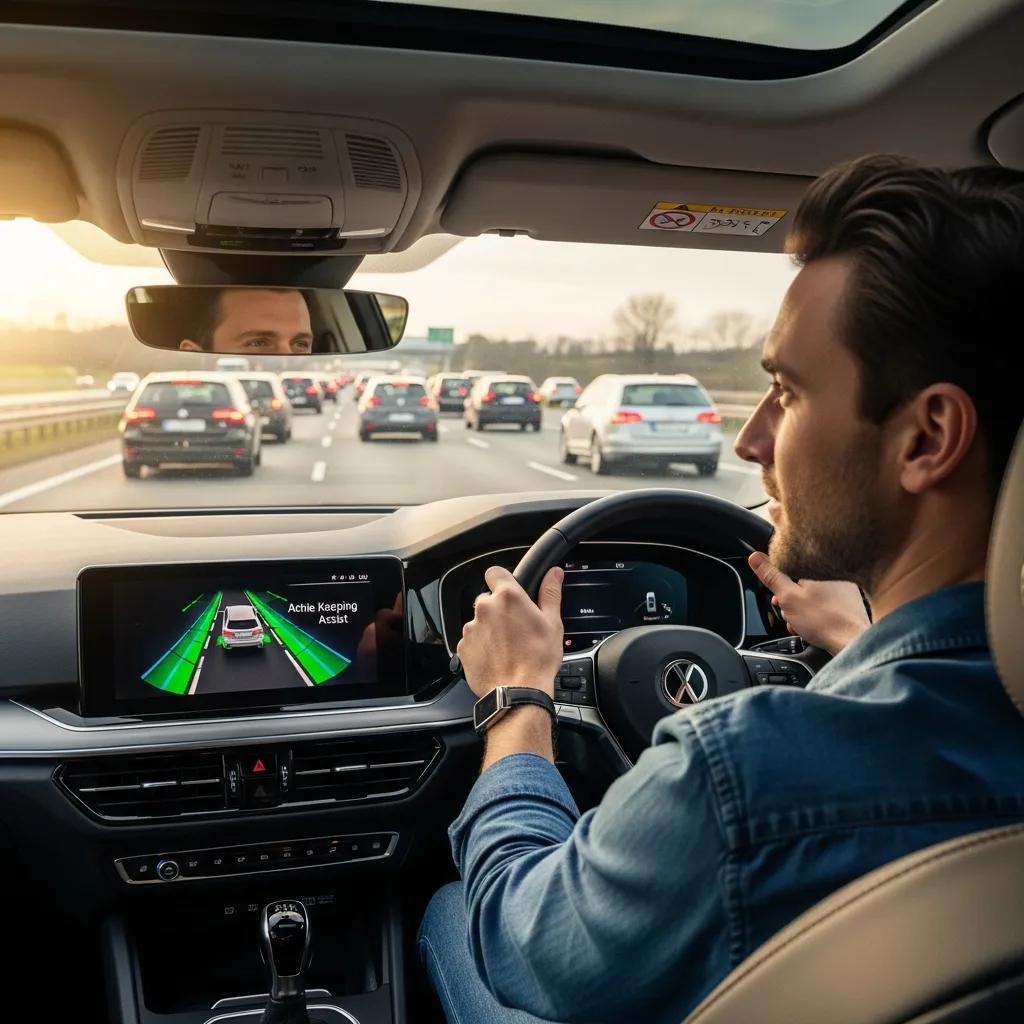
LKA gives drivers predictable, gentle corrections when a vehicle starts to drift, which is especially helpful in dense traffic, tight lanes, or low-visibility conditions. Clear alerts, consistent steering inputs, and coordination with speed control make vehicle behavior easier to understand and anticipate. That predictability lets drivers focus more on scanning the road and planning maneuvers instead of constant micro-adjustments. Still, confidence should be matched with knowledge: know the system’s boundaries and be prepared to override or disengage assistance when you need full manual control. With that in mind, the next section compares LKA to related lane systems.
How Do Lane Keeping Assist, Lane Departure Warning, and Lane Centering Assist Differ?
LDW, LKA, and lane centering sit on a spectrum from passive alerting to active continuous control. LDW provides warnings — audible, visual, or haptic — when lane drift occurs and relies on the driver to correct. LKA takes the next step by applying steering torque when a driver doesn’t react. Lane centering offers continuous lateral control during steady conditions like highway cruising and often works with ACC for combined longitudinal and lateral automation. Because these systems share sensors and ECUs, their effectiveness depends on accurate calibration and healthy sensors. The subsections that follow contrast passive versus active responses and explain how the features work together.
What Are the Functional Differences Between Passive Warnings and Active Steering Assistance?
Passive warnings tell the driver about a problem but expect a manual correction; active systems like LKA physically alter the vehicle’s path by applying steering torque or braking inputs. Passive systems are simpler and sometimes more tolerant of noisy sensor data, but they depend on a timely human response. Active systems reduce that reliance on human reflexes and can prevent incidents when a driver is distracted or delayed in responding. Both approaches require driver understanding: passive systems need prompt action, and active systems require attentiveness to prompts and readiness to override. Knowing these differences helps drivers use ADAS features safely and effectively.
How Do These Systems Complement Each Other for Enhanced Road Safety?
Together, LDW, LKA, and lane centering build layered defenses: early alerts prompt driver attention, LKA can step in if the alert is missed, and lane centering maintains steady behavior on long trips while ACC manages speed. These cooperative actions depend on seamless data sharing between sensors and ECUs, so accurate static and dynamic calibration is critical to keep responses predictable. Understanding how the systems work together helps drivers trust them appropriately and explains why calibration after an impact is an essential safety step.
Why Is OEM Certified ADAS Calibration Crucial After a Vehicle Accident?
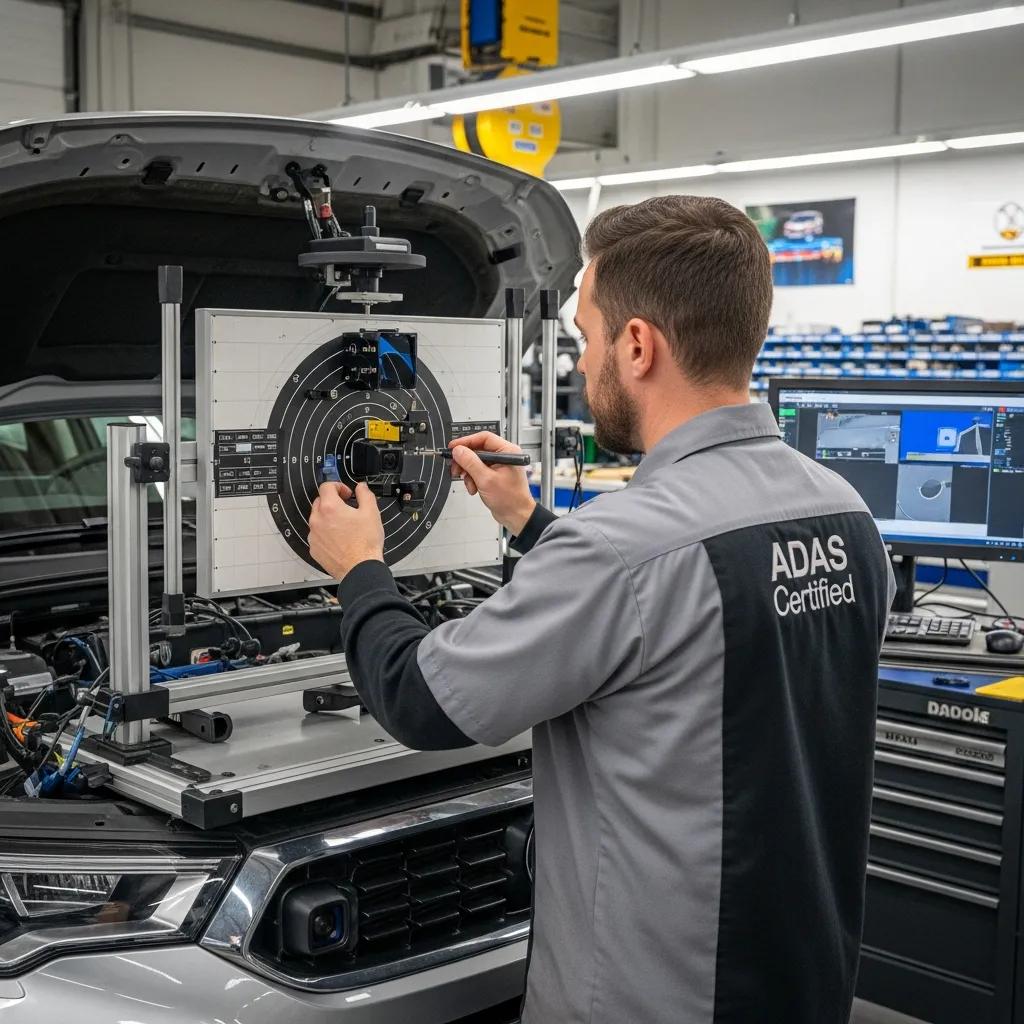
OEM-certified ADAS calibration is necessary after collisions, windshield replacements, suspension work, or even small impacts because tiny misalignments can cause incorrect lane detection, false alerts, or failed interventions. Calibration restores the precise geometric and software relationships between cameras, radar sensors, ECUs, and vehicle control systems so sensor-fusion algorithms read the scene correctly. Following manufacturer-specific static and dynamic procedures ensures calibration falls within OEM tolerances and that safety systems behave as designed. Skipping proper calibration risks LKA errors, inconsistent lane centering, and degraded performance of other ADAS features. The table below maps common damage to the calibration actions typically required.
Note: Minor impacts, windshield replacements, and suspension adjustments commonly require calibration. The table links damage types to practical calibration notes.
| Component Affected | Damage Type | Calibration Required / Notes |
|---|---|---|
| Windshield-mounted camera | Windshield replacement or crack | Yes — static and/or dynamic alignment needed to restore the camera’s view |
| Radar sensor | Front or rear bumper impact | Yes — sensor aiming and software checks required |
| Suspension/steering | Damaged control arm or misaligned wheels | Yes — affects vehicle reference points used by LKA |
| Sensor housing | Displaced mounts or cracked housings | Yes — mechanical repair followed by recalibration |
Use this checklist to help drivers and claims adjusters decide when ADAS calibration is necessary. The next section explains how even minor collisions can impact sensor performance.
How Can Minor Collisions Affect LKA Sensors and Cameras?
Even small impacts can move sensor mounts, change windshield angles, crack housings, or jostle ECU mounting points — all of which alter a camera’s field of view or a radar’s aim. Symptoms can be subtle: intermittent lane detection, unexpected alerts, or steering corrections that feel off-center. Because sensor fusion depends on exact alignment, what looks cosmetic outside can create safety-critical problems inside. If you notice unexpected warnings, odd steering nudges, or loss of lane-mark detection, report those signs promptly so a technician can inspect and, if needed, recalibrate the system.
What Are the Benefits of I-CAR Platinum Certified Technicians Performing ADAS Calibration?
I‑CAR Platinum certified technicians complete advanced training in collision repair and ADAS technology and are trained to follow OEM repair and calibration procedures. That certification signals a deep understanding of how structural repairs, sensor systems, and calibration sequences interact, which reduces the risk of installation errors or undocumented shortcuts. For vehicle owners and insurers, working with certified technicians improves confidence that calibration meets manufacturer standards and that diagnostic records back up the repair. Certified techs also use OEM tools and documented workflows to verify ADAS operation after calibration, restoring intended safety performance and minimizing post-repair faults. The section below shows how a local shop applies these practices for customers.
Why Choose Prime Time Collision Center for Lane Keeping Assist and ADAS Repairs in Glendale, CA?
Prime Time Collision Center provides factory-quality collision repairs, I‑CAR Platinum certified technicians, documented ADAS calibration workflows, insurance coordination, and customer services designed to get ADAS systems back to working order after an accident. We follow OEM-equivalent repair steps and use diagnostic calibration tools for both static and dynamic procedures. Practical customer benefits include free estimates, 24/7 towing, and a lifetime warranty on our workmanship — all aimed at reducing repair friction for vehicle owners. Serving Glendale, Burbank, Pasadena and the greater Los Angeles area, we work with major insurers and schedule calibration appointments that include post-repair verification testing. If you’re searching for certified ADAS repair near me, Prime Time Collision Center is a local choice focused on restoring safety systems to OEM standards.
| Service | Certification / Tool | Customer Benefit |
|---|---|---|
| Collision repair & OEM parts | I-CAR Platinum; OEM procedures | Factory-quality restoration |
| ADAS static & dynamic calibration | Diagnostic calibration tools | Accurate sensor alignment and verification |
| Insurance coordination & estimates | Works with major insurers; free estimates | Less claims friction; smoother repair process |
| Towing & warranty | 24/7 towing; lifetime warranty | Immediate support and long-term peace of mind |
This summary shows how we combine technical capability with customer-focused services. The sections below outline our repair workflow and common insurance and warranty questions drivers ask.
How Does Prime Time Collision Center Ensure Factory-Quality Repairs and OEM Standards?
Our process starts with a documented assessment and diagnostic scan to identify damaged sensors or misalignment. We complete mechanical repairs using OEM or approved parts, perform static calibration to set sensor geometry, follow with dynamic calibration and road tests, and finish with QA verification of ADAS performance. I‑CAR Platinum certification means our technicians are trained on current OEM calibration protocols, and our facility uses the appropriate diagnostic tools and documentation for every step. This structured workflow reduces the chance of improper recalibration and helps ensure sensors and ECUs communicate correctly after repair. Customers receive repair documentation that supports insurance claims and confirms we followed OEM processes.
What Insurance and Warranty Benefits Are Offered for ADAS Repairs?
Prime Time Collision Center works with all major insurers to help process collision repairs and ADAS calibration, starting with a free estimate that documents the repairs and calibration tasks for the adjuster. Coverage for ADAS calibration depends on your policy and the nature of the damage, but our documentation and communication with insurers often smooth the approval process. We also back our work with a lifetime warranty on workmanship, including collision repairs and calibration tasks performed by our certified technicians, providing ongoing assurance of repair quality. If you’re unsure about coverage or warranty details, schedule an estimate and inspection to get a clear, documented next step.
What Are Common Questions About Lane Keeping Assist Systems and ADAS Calibration?
Drivers frequently ask whether insurance covers ADAS calibration, how long calibration takes, and what signs mean a system needs inspection. Clear answers help set expectations during the post-collision process. Below we cover timing, coverage patterns, and symptom recognition based on current industry practice as of 06/2024.
The list below outlines common signs that ADAS inspection is warranted after an incident.
- Unexpected Warnings: Dashboard shows lane detection or sensor fault icons after a collision.
- Inconsistent Corrections: Steering nudges or lane corrections feel off-center or sporadic.
- Windshield Work: You’ve had a windshield replaced or the area near the camera was damaged.
- Suspension/Alignment Issues: The car pulls to one side or tires show uneven wear after an impact.
If you notice any of these signs, prioritize an inspection to determine whether calibration or repair is required. The next sections answer insurance and timing questions in more detail.
Does Insurance Typically Cover ADAS Calibration Costs?
Insurance coverage for ADAS calibration varies by policy and the nature of the damage, but in many collision claims insurers will cover required mechanical repairs and associated calibration when the damage is a covered loss. Clear documentation that calibration is needed for safety and OEM compliance helps when discussing coverage with an adjuster. Prime Time Collision Center helps by preparing detailed repair estimates and diagnostic reports to present to insurers, which often speeds approval for calibration work. If coverage is uncertain, getting a documented estimate and diagnostic findings gives you the information to discuss with your insurer.
How Long Does the ADAS Calibration Process Take After Collision Repair?
Calibration timeframes vary: a straightforward static calibration can often be completed in a few hours, while dynamic calibrations that require road testing can take a half- to a full-day. Complex repairs that include sensor replacement and parts procurement can extend the timeline to multiple days. Vehicle model, damage extent, parts availability, and insurer approval all affect scheduling. Ask the repair facility for an estimated window based on the initial diagnostic so you can plan alternate transportation if needed.
- Quick Static Calibration: Often 2–4 hours for camera alignment checks and target-based procedures.
- Dynamic Calibration: Can take a half- to full-day including road testing and verification.
- Complex Repairs: Sensor replacement plus calibration may extend to multiple days depending on parts and insurer processing.
These ranges help you plan while ensuring calibration quality isn’t rushed.
Frequently Asked Questions
What should I do if my Lane Keeping Assist system malfunctions?
If your Lane Keeping Assist (LKA) seems to malfunction, first check the dashboard for warning lights or messages. Common signs are inconsistent steering corrections, flickering lane icons, or failure to respond to lane drift. If you see any of these, have the system inspected and recalibrated by a qualified technician. Prompt attention protects your vehicle’s safety systems and keeps you safer on the road.
How often should I have my ADAS calibrated?
Have your ADAS calibrated after any event that could affect sensor alignment — collisions, windshield replacements, suspension work, or similar repairs. It’s also a good idea to have the system checked if you notice performance changes or warning indicators. Follow your vehicle’s owner manual and the advice of certified technicians for model-specific recommendations.
Can I perform ADAS calibration myself?
ADAS calibration requires specialized equipment and manufacturer-specific procedures, so it’s not a DIY job. Proper calibration demands precise adjustments to sensors and cameras to meet OEM tolerances. Attempting calibration without the right tools and training risks incorrect settings and reduced safety performance. Have I‑CAR certified technicians or authorized service centers perform the work to ensure accurate results.
What are the potential risks of not calibrating ADAS after an accident?
Skipping ADAS calibration after an accident can lead to incorrect lane detection, false alerts, or failures to intervene in lane departures — all of which increase crash risk. Misaligned sensors may misread the environment, and insurance claims can be complicated if repairs and calibration weren’t documented. Prioritize proper calibration after incidents that may affect sensor alignment to protect safety and maintain system reliability.
How does weather affect the performance of Lane Keeping Assist systems?
Adverse weather — rain, snow, fog, or ice — can obscure lane markings and reduce camera and sensor effectiveness. Road conditions like potholes or debris also interfere with lane detection. In poor weather, LKA performance may be limited, so remain attentive and ready to take full control. Always adjust your driving to the conditions and rely on ADAS as a support, not a replacement for safe driving practices.
What is the difference between static and dynamic calibration?
Static calibration is performed with the vehicle stationary using alignment targets or fixtures to set sensor angles and positions. It’s typically faster and used for straightforward adjustments. Dynamic calibration requires driving the vehicle under specified conditions to verify sensor performance in real-world scenarios and is more comprehensive. Both methods are important — the correct approach depends on the vehicle and the damage being addressed.
Conclusion
Lane Keeping Assist systems play a meaningful role in reducing lane-departure crashes, lowering driver fatigue, and improving confidence on longer trips. To keep these systems reliable, OEM-certified ADAS calibration is essential after collisions, windshield work, or repairs that affect sensor alignment. If you want your vehicle’s safety features to work as intended, schedule an inspection and calibration with a certified repair facility — including Prime Time Collision Center — so your LKA and other ADAS systems perform at their best.