Beverly Hills Auto Body Repair: Luxury Vehicle Specialists
Beverly Hills Luxury Auto Body Repair — OEM‑Certified Specialists for High‑End Vehicle Restoration
If your luxury car has been damaged, OEM‑standard repairs protect safety systems, preserve factory warranty, and limit resale loss. This guide explains what an OEM certified body shop does for high‑end vehicles, why advanced materials and ADAS require specialty workflows, and how Beverly Hills owners can handle insurance and lease‑return inspections without sacrificing manufacturer protections. You’ll learn how certified technicians approach structural repairs, precision paint matching, and ADAS calibration for brands such as BMW, Mercedes‑Benz, Tesla, and Porsche, plus straightforward steps to manage claims and post‑accident timing. Below we cover the trust signals and certifications owners should look for, brand‑specific OEM services, insurance workflows, specialized repair capabilities, a post‑accident checklist, and how a reputable center reduces friction for luxury owners.
Why Prime Time Collision Is the Smart Choice for Beverly Hills Luxury Auto Body Repair
OEM‑level luxury collision repair begins with the right people, processes, and shop tooling that match manufacturer requirements. Restoring a high‑end vehicle means technicians must understand structural tolerances, sensor networks, and finish standards so repaired systems perform as intended—protecting passengers and resale value. Following OEM parts, documented procedures, and repeatable QA lowers the chance of long‑term mechanical or electrical problems after repair. The next section breaks down technician credentials and why they matter, before we show specific shop trust signals to verify.
Discerning luxury owners want tangible proof of capability before choosing a Beverly Hills body shop. Prime Time Collision Center provides the practical trust signals that matter to owners and insurers: I‑CAR Platinum technicians, repair documentation tied to OEM procedures, a lifetime warranty on qualifying repairs, and free 24/7 towing plus hands‑on insurance claim support to reduce owner stress. Together, these offerings show how trained technicians, parts accountability, and customer service work as a single, certified workflow to protect value and safety for high‑end cars.
Key trust signals to confirm when selecting a luxury auto body provider:
- I‑CAR Platinum certified technicians and ongoing manufacturer‑specific training.
- Commitment to OEM parts and documented repair procedures to preserve safety and warranty.
- Lifetime warranty on qualifying repairs along with insurance claim assistance.
- 24/7 towing and proactive, responsive communication to ease post‑accident logistics.
These elements link technician expertise to parts traceability and documented QA checks. Next, we explain what I‑CAR Platinum certification means on the shop floor.
How I‑CAR Platinum Certified Technicians Deliver Superior Luxury Repairs
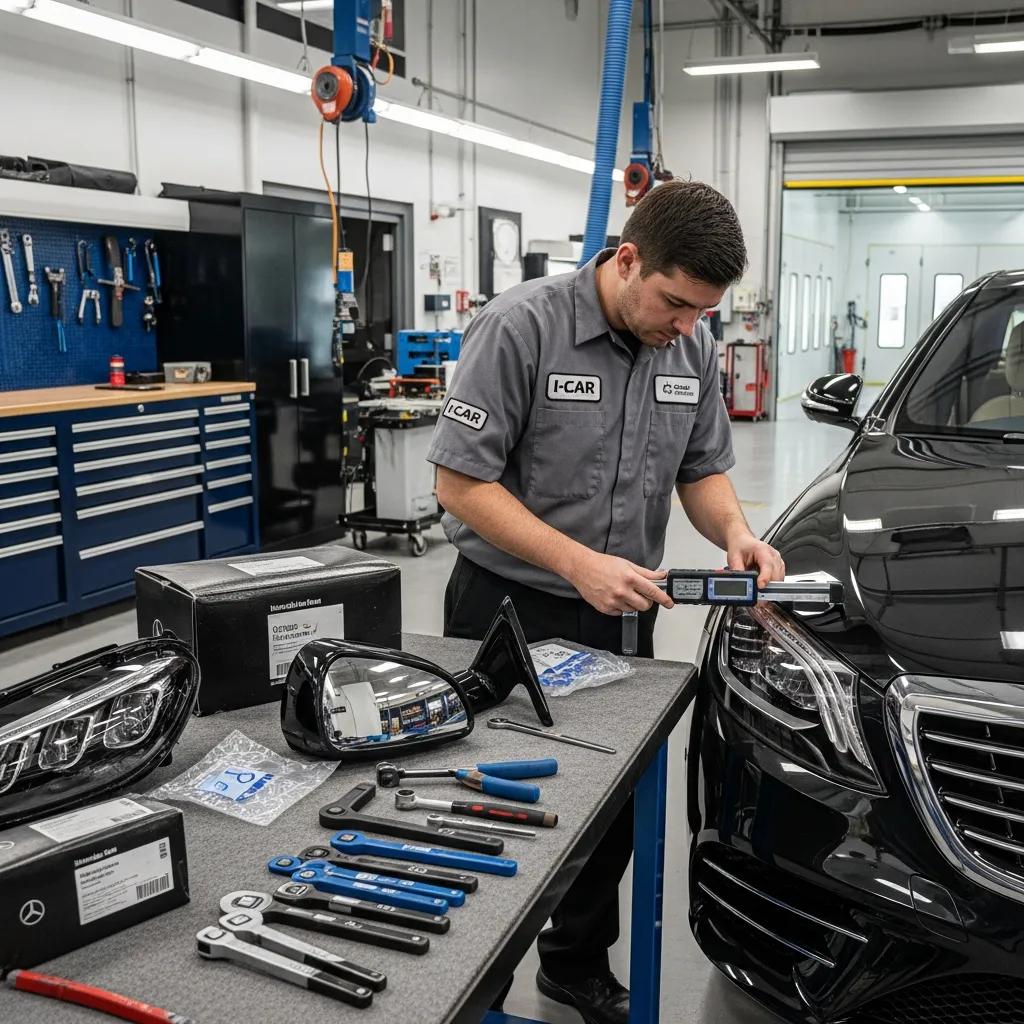
I‑CAR Platinum denotes a high training standard: technicians complete a curriculum covering collision fundamentals, manufacturer procedures, and advanced systems like ADAS. Platinum‑level techs run diagnostics, perform structural alignment, and reassemble systems to manufacturer intent—steps that directly protect occupant safety. On luxury cars this includes frame bench alignment, precision welds or bonded repairs for aluminum and composites, and final ADAS recalibration. Those repeatable, verifiable actions reduce the chance of latent defects and support warranty and resale claims.
Those competencies lead into why OEM certification and strict adherence to manufacturer procedures are essential for preserving safety systems and vehicle value. The section below explains how OEM alignment affects warranty and resale outcomes.
Why OEM Certification Matters for Luxury Collision Repair
OEM certification and following manufacturer repair procedures ensure the repair sequence, part selection, and calibration steps meet the vehicle maker’s safety and performance standards. Using genuine OEM parts and factory tolerances protects airbag deployment, crash energy management, and ADAS sensor accuracy—systems central to modern luxury vehicles. For owners, OEM alignment helps preserve factory warranties and reduces insurer disputes over non‑OEM parts or undocumented repair methods. Industry guidance and insurer policies increasingly treat documented OEM procedures as the benchmark for acceptable repairs, which supports higher resale value and safer returns to service after a collision.
Because manufacturers require different tools, parts sources, and documented steps, the next section compares OEM expectations for BMW, Mercedes‑Benz, Tesla, and Porsche so owners know what to expect from a certified repair program.
Which OEM Certified Collision Repair Services Are Available for Luxury Vehicles in Beverly Hills?
OEM‑certified collision repair for luxury vehicles includes several core capabilities: digital diagnostics, structural/frame repairs to factory tolerances, OEM parts procurement, precision paint and finish matching, plus ADAS sensor calibration and verification. These steps restore the vehicle to manufacturer specifications for safety and appearance and are executed using documented, auditable OEM procedures. Owners should expect each stage—diagnostics, parts selection, structural restoration, paint refinishing, and ADAS calibration—to follow OEM checklists and include post‑repair verification testing. The table below outlines brand‑specific considerations to help owners choose the proper repair pathway.
| Brand | Certification Status | OEM Parts | Special Equipment |
|---|---|---|---|
| BMW | Manufacturer procedures required for structural and ADAS work | Genuine BMW parts or OEM equivalents | BMW diagnostic and calibration tools |
| Mercedes‑Benz | Alignment with Mercedes repair guides for safety systems | Manufacturer‑specified components | Star diagnostic and ADAS calibration systems |
| Tesla | Repair protocols for electric powertrain and sensor networks | OEM battery and body components | Tesla‑approved diagnostic access and electrical safety tools |
| Porsche | Structural and finish standards for performance models | Genuine parts and documented fitment | High‑precision frame fixtures and paint blending systems |
Each brand brings unique tooling and procedural needs; following OEM guidelines lowers long‑term risk to safety and value. Prime Time Collision Center aligns with OEM procedures and works with insurers to preserve manufacturer‑level outcomes, helping owners through approvals and parts sourcing.
Those brand requirements translate into material‑specific challenges—especially with aluminum and carbon fiber—and the next subsection focuses on repair methods and quality controls for those materials.
Benefits of BMW, Mercedes‑Benz, Tesla, and Porsche Certified Repairs
Brand‑specific certified repairs follow manufacturer requirements for safety systems, warranty continuity, and documented service history—factors that protect resale value. BMW and Mercedes‑Benz repairs emphasize structural tolerances and ADAS recalibration; Tesla work requires strict high‑voltage safety and software checks; Porsche repairs often need exacting chassis alignment for handling. Certified work delivers documented steps, trained workflows, and parts traceability to minimize insurer disputes and preserve factory features.
These distinctions lead into how shops handle advanced materials like aluminum and carbon fiber, which affect both cosmetic finish and structural integrity.
How Prime Time Handles Advanced Materials Like Aluminum and Carbon Fiber
Repairs to aluminum and carbon fiber parts require dedicated tooling, controlled bonding or welding, and inspection methods that confirm structural integrity. Aluminum work uses specific welding or rivet‑bonding procedures and corrosion protection steps; carbon‑fiber repair often means section replacement, resin curing, and non‑destructive inspection to verify restored stiffness. Improper repairs can compromise crash energy management and long‑term durability, so shops must follow documented, manufacturer‑approved methods. Quality checks include dimensional verification on frame benches, adhesive and bond inspection, and final torque and fitment verification.
Understanding these material workflows leads directly into how owners should handle insurance claims; the next section maps typical insurer interactions and the shop’s support role.
How Prime Time Collision Supports Luxury Vehicle Owners with Insurance Claims in Beverly Hills
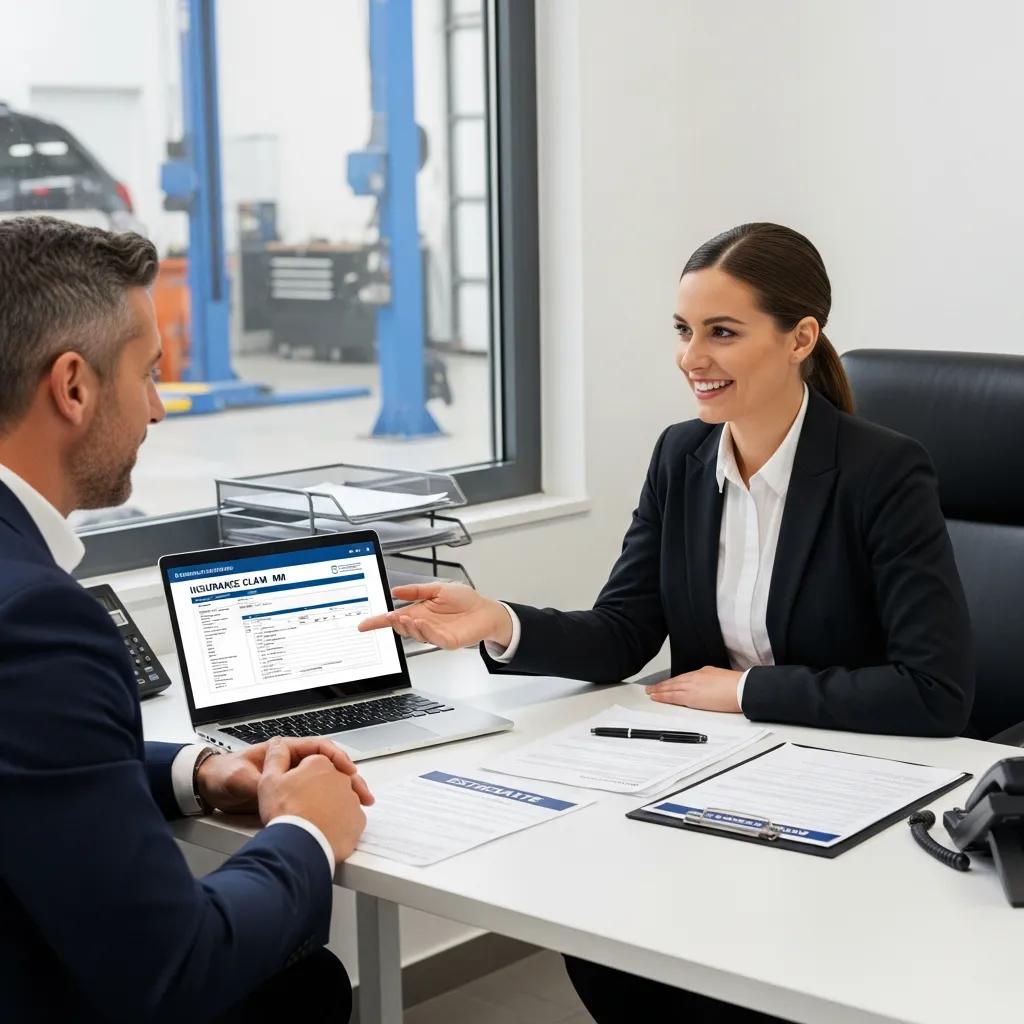
Handling insurance claims for luxury vehicles requires clear documentation, an OEM‑aware repair plan, and open communication between owner, insurer, and repair facility so manufacturer‑aligned work is approved. The process starts with documenting damage, moves through an OEM‑based estimate and insurer review, and ends with authorized repairs and verification that systems function correctly. Transparent estimates, detailed parts selection, and documented calibration steps reduce insurer pushback and speed approval for OEM parts and procedures. The workflow table below clarifies owner responsibilities and how a qualified shop supports each stage.
| Phase | Owner Action | Repair Shop Action |
|---|---|---|
| Report & Document | Take photos, collect incident details, notify insurer | Inspect vehicle, document damage, preserve evidence |
| Estimate & Authorization | Provide insurer with shop estimate and OEM part requests | Prepare OEM‑based estimate, submit documentation to insurer |
| Repair & Calibration | Approve repair plan and any required authorizations | Perform OEM repairs, ADAS calibration, and QA testing |
| Final QA & Billing | Review repair records and accept delivery | Provide documented repair log and warranty information |
This clear workflow helps owners protect OEM repair options and shows how a shop can advocate during approvals. Prime Time Collision Center offers estimate support, insurance claim assistance, and free 24/7 towing to simplify the process and keep the repair focused on OEM outcomes.
Practical, actionable steps owners should follow when handling luxury vehicle insurance claims:
- Document the scene and damage: Photograph all angles and record witness/incident details for insurer records.
- Notify your insurer promptly: Early reporting preserves coverage options and starts the claims process.
- Choose an OEM‑aware repair facility: Request an OEM‑based estimate to avoid aftermarket substitutions.
- Authorize documented repairs: Approve factory‑specified procedures and any required calibrations.
- Review the final repair log: Confirm ADAS calibration and part traceability are recorded.
Following these steps keeps the repair transparent and helps owners prepare for lease‑return inspections or future resale.
What Is the Process for Navigating Luxury Vehicle Insurance Claims?
The claims path for high‑value vehicles typically follows: initial notification, documented inspection, OEM‑based estimating, insurer review and authorization, repair execution, and post‑repair verification. Owners should insist on documented OEM parts requests and calibration steps during estimate review so insurers authorize manufacturer‑consistent procedures. Shops that act as claim advocates submit supporting documentation—diagnostic reports, OEM procedure references, and calibration certificates—to reduce denials and maintain repair traceability. This approach shortens timelines and lowers the risk of substandard repairs.
Next, we explain how coverage decisions can affect OEM‑standard repairs and what to do if OEM parts are initially denied.
How Does Insurance Coverage Affect OEM Certified Repairs?
Some insurance policies and adjuster practices favor lower‑cost aftermarket parts or repair discounts, which can conflict with an owner’s desire for OEM parts. Owners can push for OEM parts by requesting documented manufacturer procedures and by having a qualified repair shop provide a detailed OEM estimate and safety rationale for genuine parts and factory calibrations. If an insurer initially denies OEM parts, a documented appeal citing safety‑critical systems (airbags, ADAS, structural components) often changes the outcome. Preparing audit‑ready documentation increases the chance of approval for OEM‑standard repairs and reduces long‑term safety and value risks.
This insurance overview leads into the specific high‑end services and how they’re performed on luxury vehicles.
What Specialized High‑End Auto Body Services Does Prime Time Offer in Beverly Hills?
For luxury cars, specialized services include paintless dent repair (PDR), precision color matching and blending, ADAS calibration and verification, structural frame bench alignment, and dedicated aluminum and carbon‑fiber repairs. These services restore both structural integrity and the flawless finishes prestige owners expect. Proper sequencing—diagnostics, structural repair, filler‑free finish where possible, and sensor calibration—ensures safety systems and high‑gloss finishes are returned to manufacturer intent. The table below compares common specialized services, when they’re needed, the benefit, and typical turnaround times.
| Service | When It’s Needed | Benefit | Typical Turnaround |
|---|---|---|---|
| Paintless Dent Repair (PDR) | Minor door or panel dents without paint damage | Preserves factory finish and avoids repainting | 1–3 days |
| ADAS Calibration | After bumper, windshield, or sensor replacement | Restores sensor accuracy for safety systems | Same day to 2 days |
| Aluminum & Carbon Fiber Repair | Damage to lightweight structural panels | Restores structural integrity and crash performance | 3–10 days depending on parts |
Choosing the correct specialized service preserves safety, finish, and resale value while setting realistic timelines. The next sections explain PDR and precision color matching in plain terms.
How Are Paintless Dent Repair and Precision Color Matching Performed on Luxury Cars?
Paintless dent repair removes shallow dents by carefully massaging the metal back into shape without refinishing, preserving the factory paint and clearcoat—an important advantage for high‑value finishes. Precision color matching starts with spectrophotometer readings to identify pigment and effect levels, then technicians blend and feather adjacent panels so repairs are seamless under multiple lighting conditions. Luxury paints often use multi‑stage basecoats and effect layers, so blending into surrounding panels and checking under varied light prevents visible mismatch. These techniques minimize repair evidence and help retain higher resale value by conserving factory paint where possible.
These cosmetic processes tie directly into ADAS and structural work, which must be completed and verified after body repairs to ensure full functional restoration.
Why ADAS Calibration and Structural Repairs Matter for Luxury Vehicles
Proper ADAS calibration ensures radar, lidar, camera, and ultrasonic sensors operate within manufacturer tolerances—critical for adaptive cruise, lane‑keeping, and collision mitigation features. Structural repairs to OEM tolerances restore designed crumple zones and load paths that protect occupants in future collisions. Skipping calibration or deviating from structural specs can degrade system performance or create regulatory issues. Post‑repair verification usually includes road tests, sensor alignment checks, and diagnostic scans to confirm systems respond to manufacturer parameters.
With systems and finishes restored, owners can focus on post‑accident next steps and lease‑return planning, covered in the next section.
How Can Beverly Hills Luxury Vehicle Owners Prepare for Post‑Accident Repairs and Lease‑Return Inspections?
After an incident, prioritize safety, thorough documentation, and choosing an OEM‑aware repair path to protect insurance options and lease status. Preparing for lease‑return inspections means early assessment of cosmetic versus structural damage, weighing repair costs against lease penalties, and scheduling work to meet inspection deadlines. Timely repairs with documented OEM procedures and parts traceability reduce lease‑end penalties. The checklist below summarizes immediate actions to protect safety and value.
After an accident, use this checklist to manage the process effectively:
- Ensure safety and medical needs first, then move the vehicle to a safe location if possible.
- Document the scene with photos and notes, capturing all damage areas and context.
- Contact your insurer and an OEM‑aware repair shop for assessment and towing if needed.
- Avoid DIY fixes that hide damage, which can complicate future inspections or claims.
- Request an OEM‑based estimate and repair plan to protect warranty and resale value.
What Steps Should I Take Immediately After a Luxury Vehicle Accident?
First, ensure everyone’s safety and call emergency services if needed. Then document the scene thoroughly with photos, collect witness information, and note collision details for the insurer and repair facility. Request secure towing to a qualified repair shop rather than attempting temporary fixes—improper stabilization can hide damage. Finally, notify your insurer promptly and ask for an OEM‑aware estimate so you keep options open for factory parts and documented repairs.
This immediate guidance leads into how professional shops help with lease‑return remediation and inspection readiness.
How Prime Time Helps with Lease‑Return Inspection and Repair Services
For lease returns, a shop can provide an itemized assessment of excess wear—dents, paint imperfections, and mechanical blemishes—paired with targeted, cost‑effective remediation that prioritizes OEM methods when necessary. Prime Time Collision Center prepares OEM‑based estimates and recommends focused repairs to reduce potential lease charges while documenting all work for the inspector. Quick cosmetic fixes like PDR or precision blending often resolve small fees; larger structural repairs follow documented OEM procedures to ensure safety and compliance. Timely repairs and inspection‑ready documentation help owners meet lease deadlines and minimize end‑of‑lease liabilities.
That practical remediation and documentation leads to the final consideration: evaluating trust and warranty when choosing a prestige car body shop.
Why Trust Prime Time Collision Center for Your Beverly Hills Prestige Car Body Shop Needs?
Trust is built on transparent workflows, documented OEM adherence, verifiable QA, and reliable post‑repair support. A lifetime warranty on qualifying repairs adds assurance that parts and workmanship are supported, while QA steps—alignment checks, calibration certificates, and parts traceability—provide audit‑ready proof of correct procedures. Owners consistently cite communication, precision, and manufacturer compliance as key experience factors. Below are the top considerations when selecting a partner for high‑end collision restoration.
Three factors to weigh when choosing a luxury vehicle repair partner:
- Documentation and traceability: Request repair logs, part provenance, and calibration reports.
- Technician qualifications: Verify I‑CAR Platinum and manufacturer‑specific training where applicable.
- Warranty and post‑repair support: Confirm clear warranty terms and an easy follow‑up process.
What Do Luxury Vehicle Owners Say About Their Repair Experiences?
Owners who insist on OEM‑standard repairs report higher satisfaction when repairs include clear documentation, timely ADAS calibration records, and restored finish quality—without compromising factory paint or structural standards. Reviews often highlight strong communication during claims and repairs, adherence to manufacturer sequences, and confidence that genuine parts were used. Those patterns help other owners choose facilities that prioritize transparency and OEM compliance.
How Prime Time’s Lifetime Warranty and Customer Care Make a Difference
A lifetime warranty reassures owners that approved parts and workmanship are covered for as long as they own the vehicle under the warranty terms. Strong customer care typically includes documented follow‑up inspections, quick responses to warranty requests, and clear instructions for submitting any issues. Prime Time pairs its lifetime warranty with insurance claim help, 24/7 towing, and full repair documentation to create a coordinated experience for high‑end vehicle owners. For Beverly Hills owners seeking OEM‑standard restoration and lasting confidence, documented manufacturer procedures plus ongoing warranty coverage reduce ownership risk and protect vehicle integrity.
- Schedule an OEM‑based estimate with a certified facility to start the process.
- Request documented repair procedures and calibration reports as part of final delivery.
- Use provided warranty and support channels if follow‑up service is needed after repair.
These clear steps help luxury owners move from assessment to authorized OEM‑standard repair with confidence.
Frequently Asked Questions
What should I look for in a luxury auto body repair shop?
Look for I‑CAR Platinum certification and manufacturer‑specific training, which show technicians have advanced collision repair expertise. Make sure the shop commits to OEM parts and documented repair procedures to protect safety and warranty. A lifetime warranty on qualifying repairs signals long‑term confidence, and customer reviews offer insight into communication and service quality.
How can I ensure my luxury vehicle retains its value after repairs?
Choose an OEM‑aware shop that uses genuine parts and follows manufacturer repair procedures. Keep thorough records of repairs and calibrations—this verifiable service history helps resale value. Ensure ADAS systems are calibrated post‑repair, and maintain regular service to preserve condition and performance.
What are the common challenges faced during luxury vehicle repairs?
Challenges include sourcing genuine OEM parts, which can take longer and cost more than aftermarket options; repairing advanced materials like aluminum and carbon fiber, which need specialty techniques; and ensuring ADAS calibration, which requires precise tools and verification. Navigating insurer preferences for lower‑cost parts can also complicate OEM repairs.
How does Prime Time Collision assist with post‑repair follow‑up?
Prime Time provides documented inspections and warranty support after repairs. You’ll receive a detailed repair log showing work performed, parts used, and calibration results—documentation that helps preserve warranty coverage and confirms systems function as intended. The team is available to address follow‑up questions and warranty requests.
What steps should I take if my insurance denies OEM parts?
If an insurer denies OEM parts, review your policy and collect documentation from your repair shop explaining why OEM parts are necessary for safety and performance. Present this material to your insurer and, if needed, file a formal appeal citing safety‑critical systems. A qualified repair facility can help advocate and supply the technical documentation required.
How can I prepare for a lease return inspection after repairs?
Assess the vehicle early for cosmetic and structural issues, then schedule repairs with an OEM‑aware shop. Document all work and get a detailed report to present at inspection time. Minor cosmetic fixes like PDR or precision blending often reduce lease charges; timely, documented repairs help minimize end‑of‑lease penalties.
Conclusion
Choosing an OEM‑certified body shop ensures your luxury vehicle is returned to factory safety and performance standards—protecting its value and integrity. With certified technicians, documented procedures, and focused QA, you can trust your car is in expert hands. Schedule an OEM‑based estimate with Prime Time Collision Center today and get the reassurance that comes with manufacturer‑level repairs and ongoing support.