
BMW 3 Series Body Repair Specialists — Certified Collision Repair & Expert Service in Glendale
If your BMW 3 Series was involved in a collision, you want a certified team that restores factory safety, fit and finish — locally in Glendale. This page walks through how BMW 3 Series repairs differ from generic bodywork, which systems need factory-aligned attention, and practical steps owners can take to preserve safety, performance and resale value. You’ll find clear guidance on structural and aluminum repairs, ADAS recalibration, paint matching, insurance claim handling, and lease-return preparation for 3 Series models. The recommendations below reflect industry best practices for luxury-vehicle collision repair and explain why returning a BMW to BMW tolerances protects safety, warranty and long-term value. Throughout, we focus on practical technical detail and how Prime Time Collision Center supports owners who want OEM-quality results.
Why trust Prime Time Collision Center with your BMW 3 Series?
A BMW 3 Series needs precise collision repair — its structure, aluminum components and driver‑assist systems directly affect occupant protection and vehicle dynamics. A specialist repairer uses the correct measuring systems, calibrated equipment and BMW‑approved procedures so repairs restore factory geometry and function. Technicians trained for modern materials and ADAS systems reduce the risk of misaligned frames, improper joins or sensor errors that can compromise handling and safety. When choosing a shop, look for certifications, verified parts sourcing and an ability to advocate with insurers — that separates OEM-quality repairs from quick, low-cost shortcuts.
At Prime Time Collision Center we prioritize technician training, OEM adherence and clear insurance communication so repairs are safe and well documented. Our I‑CAR Platinum team follows OEM-level procedures and records parts sourcing and calibration work to help maintain factory standards and resale value. For many owners, that documented process matters as much as the final appearance — it’s what preserves long‑term safety. Below we explain the I‑CAR Platinum skills our technicians bring to BMW 3 Series repairs and why they matter.
What skills do our I-CAR Platinum technicians bring?
I‑CAR Platinum indicates advanced training across structural repair, plastics and aluminum work, plus modern electronics — all critical for BMW 3 Series work. Our technicians read BMW repair manuals, perform precise frame measurements and follow aluminum‑specific joining and bonding techniques. Their skill set includes structural alignment, controlled riveting and adhesive procedures for aluminum door skins, and diagnostics for high‑voltage or hybrid systems when applicable. For example, when repairing a bent front subframe a technician will use OEM reference points on a computerized measuring system to restore steering geometry and crash performance to factory tolerances.
That mix of hands‑on experience and formal training reduces the chance of residual issues that can affect safety or handling. Knowing these capabilities helps you judge whether a shop can properly restore a 330i, M3 or any 3 Series variant. Next, we explain how genuine BMW parts and clear documentation support those technician processes and protect warranty and resale value.
How we guarantee OEM‑level repairs with genuine BMW parts
OEM‑quality repairs start with sourcing genuine BMW parts and documenting each repair step to match factory specifications and tolerances. We order OEM panels and assemblies when required, verify part numbers against BMW documentation and record disassembly, repair and reassembly steps to create a transparent repair history. Using genuine components preserves crash behavior, fit and finish, and factory mounting points — and it simplifies future diagnostics. When procedures require sensor replacement and recalibration, we use OEM parts and include calibration reports to show compliance.
Choosing genuine parts also protects resale value: buyers and lessors expect factory parts and documented repairs on a luxury vehicle. Our OEM‑first approach complements technician expertise and helps ensure structural and electronic repairs meet BMW standards. Below is the full range of collision services we provide for the BMW 3 Series and how each maps to typical timeframes and OEM requirements.
Comprehensive BMW 3 Series collision services we offer
Repairing a BMW 3 Series can involve many disciplines — structural and aluminum work, ADAS diagnostics and calibration, paint and finish restoration, dent repair and insurance claim support. Each service requires specific equipment and workflows: structural alignment uses computerized benches, aluminum work requires manufacturer‑approved joining methods, and ADAS calibration needs both static and dynamic tools. Understanding these differences helps owners set realistic timelines and see why some repairs require OEM parts and procedures.
Common BMW 3 Series services we provide include:
- Structural repair and frame alignment using OEM reference points and computerized measurement systems.
- Aluminum body‑panel repair or replacement following manufacturer‑approved joining methods.
- ADAS diagnostics and calibration for camera, radar and ultrasonic sensors after repair or replacement.
- Paint matching and factory‑grade refinishing with spectrophotometer‑assisted color formulation.
- Dent removal, scratch repair and cosmetic blending consistent with OEM clearcoat processes.
The table below compares core service types, typical timeframes and OEM requirements to help you plan repairs.
| Service Type | Typical Timeframe | OEM Requirement / Note |
|---|---|---|
| Structural repair & alignment | 1–5 days depending on damage severity | Requires OEM measurement specs and documented alignment |
| Aluminum panel repair/replacement | 1–3 days per panel | Aluminum‑specific procedures and OEM parts often required |
| ADAS diagnostics & calibration | 1–2 days including testing | Calibration tools and documented calibration reports required |
| Paint matching & refinishing | 1–4 days | Spectrophotometer color match and OEM‑compliant clearcoat |
| Dent & scratch repair (PDR/paint) | 1 day–3 days | PDR when paint intact; replacement if paint or fitment compromised |
This comparison helps you set expectations for timeline and when OEM procedures are likely. The next section explains structural and aluminum repair specifics, including measurement and joining techniques.
How we handle structural and aluminum body repairs
Structural and aluminum repairs need specialized equipment and strict adherence to manufacturer methods to restore crashworthiness and alignment. We start with computerized structural measurements to find deviations from factory reference points, then follow controlled procedures — pulling, welding, riveting or replacing components — while monitoring torsional and fitment specs. Aluminum repairs use thermal and mechanical joining methods approved by BMW; we avoid techniques that can weaken the material or change crash behavior. For example, an aluminum door skin beyond repair is replaced with an OEM panel and attached using the correct factory method to preserve crash performance and corrosion protection.
Documenting each repair step and holding to OEM tolerances reduces late‑stage fitment issues and preserves factory handling. Those structural precautions often lead into required ADAS work after repairs, which we cover next.
What ADAS calibration services do we provide?
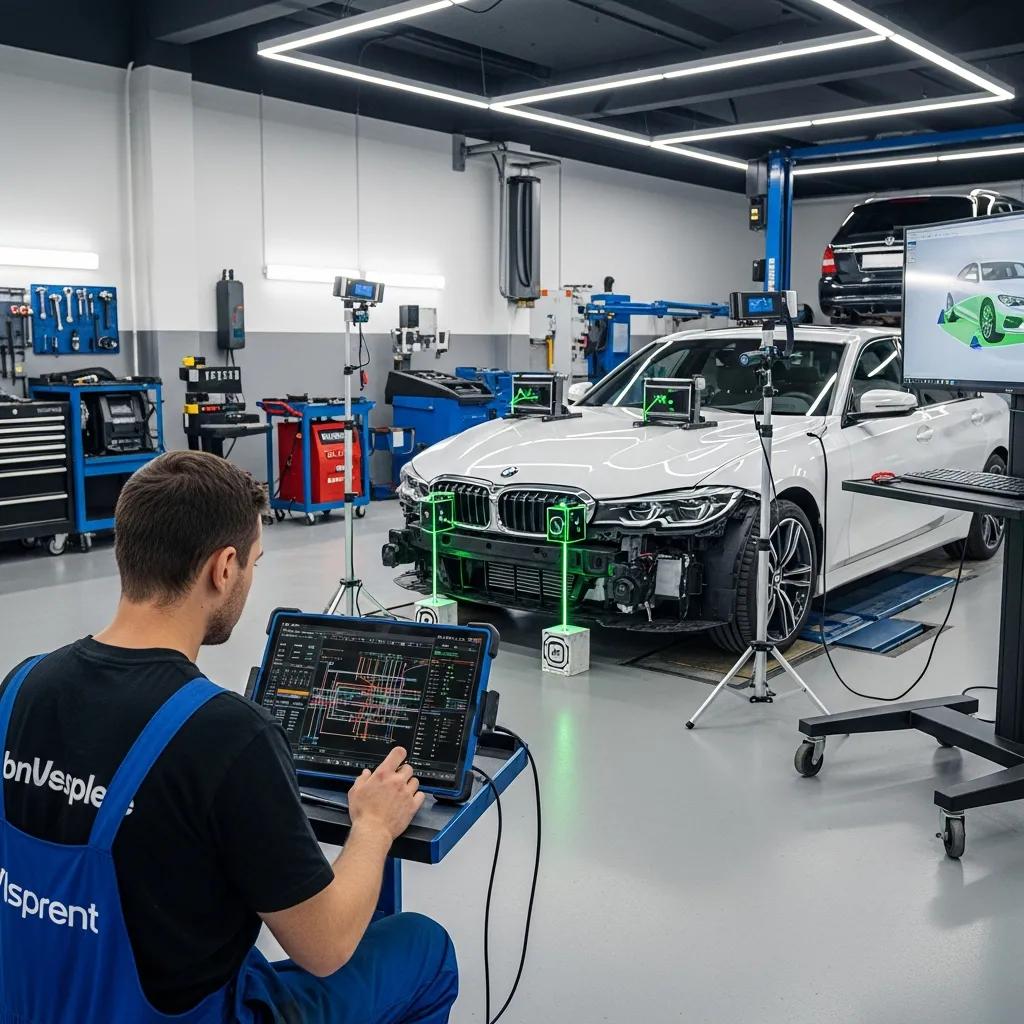
Our ADAS calibration services make sure cameras, radar and ultrasonic sensors operate within BMW‑specified tolerances after repair. The process starts with a full diagnostic scan to identify stored faults, followed by alignment checks and either static or dynamic calibration using OEM procedures and targets. We calibrate front cameras, windshield‑mounted sensors, radar modules and parking sensors, then validate results with road tests or manufacturer‑recommended checks. Pre‑ and post‑calibration readings are documented to provide traceable evidence of system restoration.
Proper ADAS recalibration reduces false alerts, improves system reliability and is often required by insurers and OEM warranty policies. After ADAS work, the next section explains how we support owners through the insurance claims process.
How Prime Time Collision Center supports BMW 3 Series insurance claims
We prepare thorough estimates and work directly with insurers to advocate for OEM parts and certified repair procedures, which helps streamline approvals and limit delays. Our estimates include OEM procedure references, diagnostic and calibration tasks, and we follow up with adjusters when insurers suggest aftermarket parts or incomplete procedures. Clear documentation and technician notes help justify OEM components to protect safety and warranty, while regular updates keep owners informed about timelines and next steps.
Prime Time Collision Center is a local Glendale collision shop focused on OEM‑quality repairs, insurance coordination and customer trust. That focus gives owners who prefer documented OEM repairs a clear path forward. Below is a practical outline of the typical claims workflow you can expect.
- Estimate and documentation: We complete a detailed OEM‑aligned estimate including structural measurements, parts lists and required calibrations.
- Insurer communication and approval: We submit documentation and follow up with the insurer to advocate for needed OEM parts and procedures.
- Repair execution and validation: After approval, technicians perform OEM procedures, calibrations and final QA; documentation is provided to you and the insurer.
This process reduces surprises and ensures OEM‑recommended work is visible to all parties. The table below summarizes typical insurer interactions and how we respond to support clear claims outcomes.
| Interaction Point | Shop Attribute | Typical Outcome |
|---|---|---|
| Insurance estimate review | Detailed OEM line‑item documentation | Faster understanding of required OEM procedures |
| Parts advocacy | Documented OEM necessity and repair procedure citations | Higher likelihood of OEM part approval |
| Calibration & QA evidence | Post‑repair calibration logs and test reports | Clear validation for insurer and owner |
Clear documentation of OEM needs and calibration results strengthens insurer negotiations and speeds claim resolution. Next, we cover lease‑return considerations for 3 Series owners who want to minimize end‑of‑lease charges.
How we work with major insurance companies
We follow a structured, traceable process when interacting with major insurers to keep repairs moving and protect your interests. First, we prepare a comprehensive estimate that lists OEM parts, structural measurements and required calibrations so the scope is clear. Next, we submit supporting documentation and engage with the adjuster to explain why OEM procedures matter for safety and warranty preservation. Finally, we track approvals and timelines, updating you and coordinating repair scheduling to minimize downtime. Providing accident reports and claim numbers up front speeds the process — we handle the technical justification and follow‑up.
Proactive coordination reduces back‑and‑forth and helps prevent insurer‑led compromises on parts or procedures. The next section explains tactics we use to advocate for OEM parts when needed.
How we advocate for OEM parts and certified repairs in claims
Our advocacy starts with clear documentation: we submit BMW repair procedure citations, part numbers and recorded measurement data with every estimate. Technicians outline calibration needs and explain the safety implications when aftermarket parts or shortcut procedures would change crash behavior or sensor performance. If an insurer pushes back, we provide evidence‑based rebuttals — before/after measurements and calibration records — to substantiate the need for OEM parts and factory procedures.
This documentation‑forward approach increases the chance insurers approve OEM parts and certified repairs while keeping you informed about options and potential warranty or resale impacts. With claims workflows explained, we next cover lease‑return strategies to help you avoid penalties.
Lease‑return repairs: what BMW 3 Series owners should know
Lease inspections typically focus on paint chips, dents, wheel curb rash and interior wear — addressing these items before inspection can help avoid large fees. Prioritize repairs that affect appearance or structural integrity, document the vehicle’s pre‑repair condition with photos and keep detailed invoices showing OEM parts and procedures where applicable. Timing matters: schedule work well ahead of lease return so paint can cure and any follow‑ups can be completed. Knowing the lessor’s wear‑and‑use thresholds helps you decide whether to repair items or negotiate charges.
Proactive lease prep reduces surprises and eases the handback process. Below we outline how a shop like ours structures lease‑prep work and timelines to minimize penalties.
How we help avoid lease penalties with targeted body repairs
Our lease‑prep workflow begins with a pre‑inspection and photo documentation to identify items likely to incur charges. We prioritize repairs — paint chips, curb rash and dents — then provide a timeline for parts, paint matching and curing so work finishes before the official inspection. When paint is intact we recommend PDR; when fitment or finish is compromised we advise OEM panel replacement. After repairs we supply an itemized report and photos you can show the lessor if questions arise.
This documented approach not only helps avoid penalties but ensures repairs meet OEM‑adjacent standards when necessary. Here’s a concise checklist for common lease‑return issues on the BMW 3 Series.
- Paint chips and stone chips: Touch‑ups or refinishing to prevent corrosion and restore appearance.
- Wheel curb rash: Wheel repair or replacement to restore finish and value.
- Dents and scratches: PDR or panel repair depending on paint condition and fitment.
- Interior wear: Address upholstery or trim issues when feasible to reduce penalties.
Key lease‑end guidelines for BMW 3 Series vehicles
Leasing companies typically allow minor, non‑structural wear but charge for damage that affects appearance or safety. Acceptable damage usually excludes deep gouges, missing parts, major dents or paint that exposes bare metal; lessors often specify maximum sizes and counts for chips or dents. Get the lessor’s wear‑and‑use standards early and use a pre‑inspection to identify repair needs. Decide whether damage affects structural integrity or can be corrected with PDR and touch‑up that preserves factory finish.
Knowing these thresholds helps you concentrate on repairs that avoid the biggest penalties. With lease concerns covered, next we explain our paint and finish restoration best practices for BMW 3 Series vehicles.
How we restore paint and finish to factory quality on a BMW 3 Series
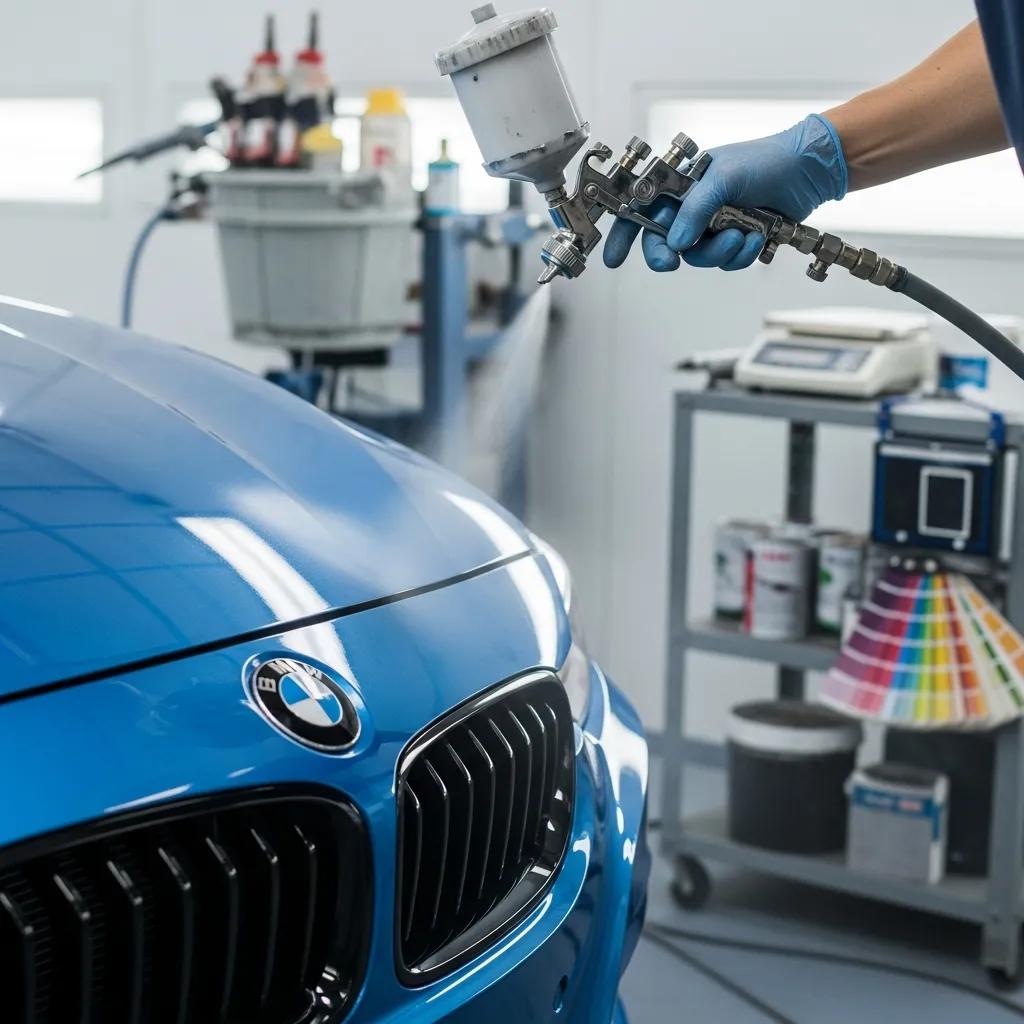
Restoring a BMW 3 Series finish to factory quality combines computerized color matching, controlled application environments and OEM‑grade materials to replicate original gloss, texture and clearcoat durability. We use spectrophotometers to determine exact basecoat formulas, mix precisely and control temperature and humidity in the paint booth to match metallic orientation and texture. Clearcoat application and curing follow OEM guidance to achieve factory hardness and gloss retention. Final polishing, leveling and quality checks ensure the repaired panel blends seamlessly with surrounding surfaces.
| Paint Method | Attribute | Expected Outcome |
|---|---|---|
| Spectrophotometer‑assisted basecoat | Color match accuracy | Delta E within factory tolerance; seamless blend |
| OEM clearcoat application | Durability & gloss | Factory‑level hardness and UV resistance |
| Blending & polish finishing | Visual integration | Minimal visible transition between panels |
| PDR‑compatible touch‑up | Paint integrity preservation | Preserves factory coating when paint not broken |
These practices reduce visible blending lines and help the repaired area age consistently with the factory finish. The following section compares common paint methods and expected outcomes for 3 Series refinishing.
Techniques we use for accurate color matching and clearcoat finish
Accurate color matching starts with a spectrophotometer reading of the damaged area to capture basecoat and metallic orientation. That data informs a precise mixing formula. Controlled booth temperature, humidity and application technique are then used to reproduce the factory paint flow and metallic alignment. After basecoat application we apply OEM‑grade clearcoat to specified film thickness, allow proper curing, then sand and polish to achieve the correct gloss. Final QA includes visual checks under varied lighting and gloss measurements to confirm a factory‑like finish.
These layered steps ensure an immediate visual match and long‑term color stability, which leads into how we decide between dent removal and panel replacement while preserving OEM standards.
How we remove dents and scratches while preserving OEM standards
Choosing between paintless dent repair (PDR) and panel replacement depends on whether the paint film is intact and whether fitment or structure is compromised. PDR is ideal when paint is unbroken and the metal can be reshaped without fillers — it preserves factory coatings and minimizes refinishing. When paint is cracked, panels distorted or alignment altered, OEM replacement and refinishing are necessary to restore structural tolerances and finish. We use filler sparingly, only within OEM tolerances, and follow BMW prep and priming specs before repainting.
This decision framework protects factory finishes and crash performance while delivering seamless visual results. With paint and dent repair practices explained, the final section covers how to request a free estimate and schedule BMW 3 Series repairs.
How to get a free estimate and schedule your BMW 3 Series repair
Requesting a free estimate starts with documenting the damage and choosing a shop that provides transparent, OEM‑aligned estimates and insurer coordination. Be ready to share photos, claim numbers and any inspection reports; we offer an initial digital or in‑person inspection to identify structural, ADAS and cosmetic needs. An itemized estimate that lists OEM part needs and calibration tasks helps you plan repair duration and interactions with insurers. Clear communication about expected repair steps and deliverables reduces surprises through the process.
- Initial contact & documentation: Send photos and claim details or book an in‑person intake for a free estimate.
- Detailed inspection & estimate: Technicians assess structural, electrical and cosmetic damage and prepare an OEM‑focused estimate.
- Insurer submission & approval: We submit documented estimates and follow up with the insurer as needed.
- Repair scheduling & execution: Once approved, repairs proceed with documented OEM procedures, calibrations and final QA.
How to book an appointment at our Glendale collision center
Booking is simple: provide vehicle details, photos of the damage and your claim information if available, and we’ll schedule an in‑person inspection or virtual estimate. The intake includes a short checklist of items to bring — insurance claim numbers and photos — and an explanation of average response times for estimates and approvals. During scheduling we review OEM part lead times and give a preliminary repair timeline so you can plan alternate transportation if needed. Thorough intake helps ensure the estimate captures structural, ADAS and cosmetic needs accurately.
This structured booking and intake process reduces delays and prepares both you and our technicians for a smooth repair workflow. The next section outlines what to expect during your free BMW 3 Series repair estimate.
What to expect during your free BMW 3 Series repair estimate
A comprehensive estimate includes a visual inspection, structural measurement when required and a diagnostic scan for ADAS or electronic fault codes, all documented in an itemized report. Technicians photograph damage, note required OEM parts and calibration tasks, and give an estimated timeline for parts and repair stages. You’ll receive a clear explanation of whether PDR, panel replacement, structural repair or ADAS calibration is needed and how each choice affects time and cost. The estimate also describes our insurer communication process and the documentation you’ll receive after repairs are complete.
Understanding the scope and documentation included with a free estimate helps you make informed choices about OEM‑quality repairs for your BMW 3 Series.
Frequently Asked Questions
Why choose OEM parts for BMW 3 Series repairs?
OEM (Original Equipment Manufacturer) parts match the specifications BMW designed for your vehicle. That preserves safety, performance and resale value, and reduces the risk of future fitment or function issues. OEM parts also help maintain warranty coverage when required, so they’re often the best long‑term choice for luxury vehicles.
How can I make sure my BMW 3 Series repairs are covered by insurance?
Document the damage thoroughly and report the accident to your insurer right away. Choose a shop experienced with OEM repairs and familiar with your carrier’s processes, and provide your claim number and any inspection reports. A knowledgeable shop can advocate for necessary OEM parts and procedures and submit the documentation insurers need for approval.
What should I do if my insurer recommends aftermarket parts?
If your insurer suggests aftermarket parts, talk to your adjuster and share documentation from your repair shop that explains why OEM parts are required for safety or calibration. If needed, ask to escalate to a claims supervisor. Shops like Prime Time Collision Center will help by providing technical citations and measurement data to support OEM part requests.
How does repairing a luxury vehicle like the BMW 3 Series differ from standard cars?
Luxury vehicles use advanced materials and technologies that require specialized techniques and equipment. Aluminum bodywork needs manufacturer‑approved joining methods, ADAS systems require precise calibration, and finish standards are higher, calling for precise color matching and refinishing. Repairs must address both structure and technology to return the vehicle to factory condition.
What are common signs my BMW 3 Series needs collision repair?
Look for visible dents, scratches or paint damage, misaligned panels, warning lights tied to driver‑assist systems, or changes in handling. Even after a minor collision, a certified inspection is wise — unseen structural or sensor issues can affect safety and performance.
How should I prepare my BMW 3 Series for a lease return inspection?
Address cosmetic issues like paint chips, dents and curb rash well before the inspection. Photograph the vehicle’s condition and keep repair invoices that show OEM parts and procedures when applicable. Schedule repairs early to allow for curing and adjustments, and check the lessor’s wear‑and‑use standards so you can prioritize the most impactful repairs.
Conclusion
When you choose Prime Time Collision Center for your BMW 3 Series repair, you get a local team focused on returning your car to factory standards — safety, performance and finish. Our I‑CAR Platinum technicians use OEM parts, documented procedures and clear communication with insurers so repairs meet BMW tolerances and protect resale value. Contact us to schedule a free estimate and see the difference expert, OEM‑focused collision repair makes.