Bumper Repair vs Replacement: Which Option Is Right
Bumper Repair vs Replacement: How to Pick the Right Fix for Your Vehicle
After a light collision you’ll usually face one question: can we repair the bumper, or does it need to be replaced? The choice matters for safety, cost and how the car looks down the road. This guide walks you through the difference between repairing and replacing a bumper, explains common repair methods (like plastic welding and paintless dent repair), and points out when safety systems or ADAS sensors make replacement the right call. You’ll learn how technicians judge repairability, typical cost ranges, how insurance and deductibles factor in, and what inspections reveal about hidden damage. Use the checklists and step-by-step advice here to feel confident when you talk to your technician or your insurer after a fender-bender.
What Are the Key Differences Between Bumper Repair and Replacement?
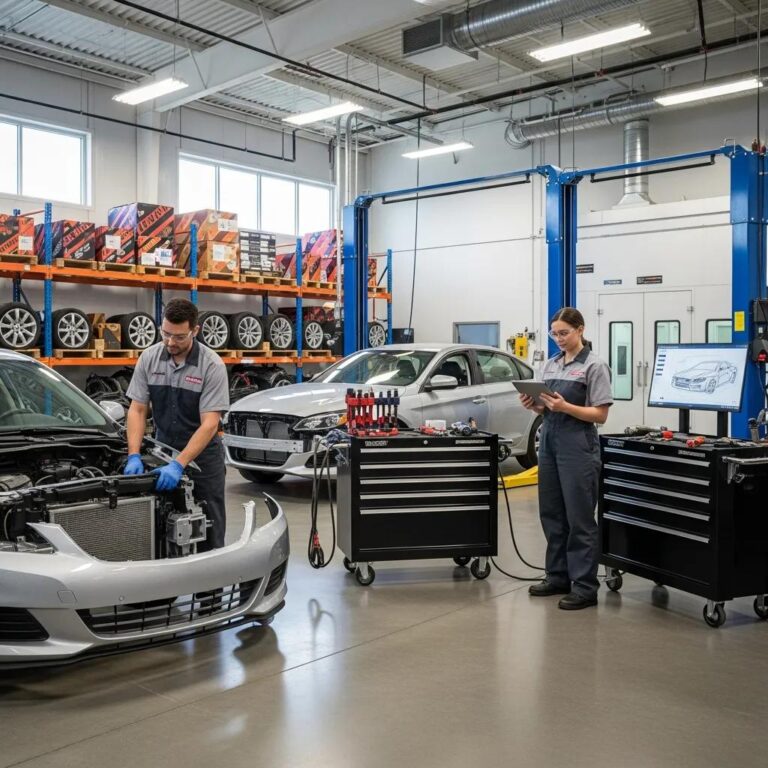
Repair means restoring the bumper cover and nearby components when the damage is mostly cosmetic or limited to non-structural parts. Replacement means installing a new bumper cover and, when needed, changing impact absorbers, crash bars or sensor modules because the crash integrity has been affected. Repairs usually save time and money and can keep the factory paint and fit when the structure and mounts are sound. Replacement is the safer choice when mounting points, reinforcements or sensors are compromised and the vehicle needs to meet OEM safety standards. The right path depends on the severity of visible and hidden damage, the condition of ADAS sensors, and how long you expect the repair to hold up. Knowing these differences will help you decide what to ask your technician or insurer.
In short: repair is a good option for surface and localized damage; replace when structure, mounts or safety systems are affected.
Which Types of Bumper Damage Can Be Repaired?
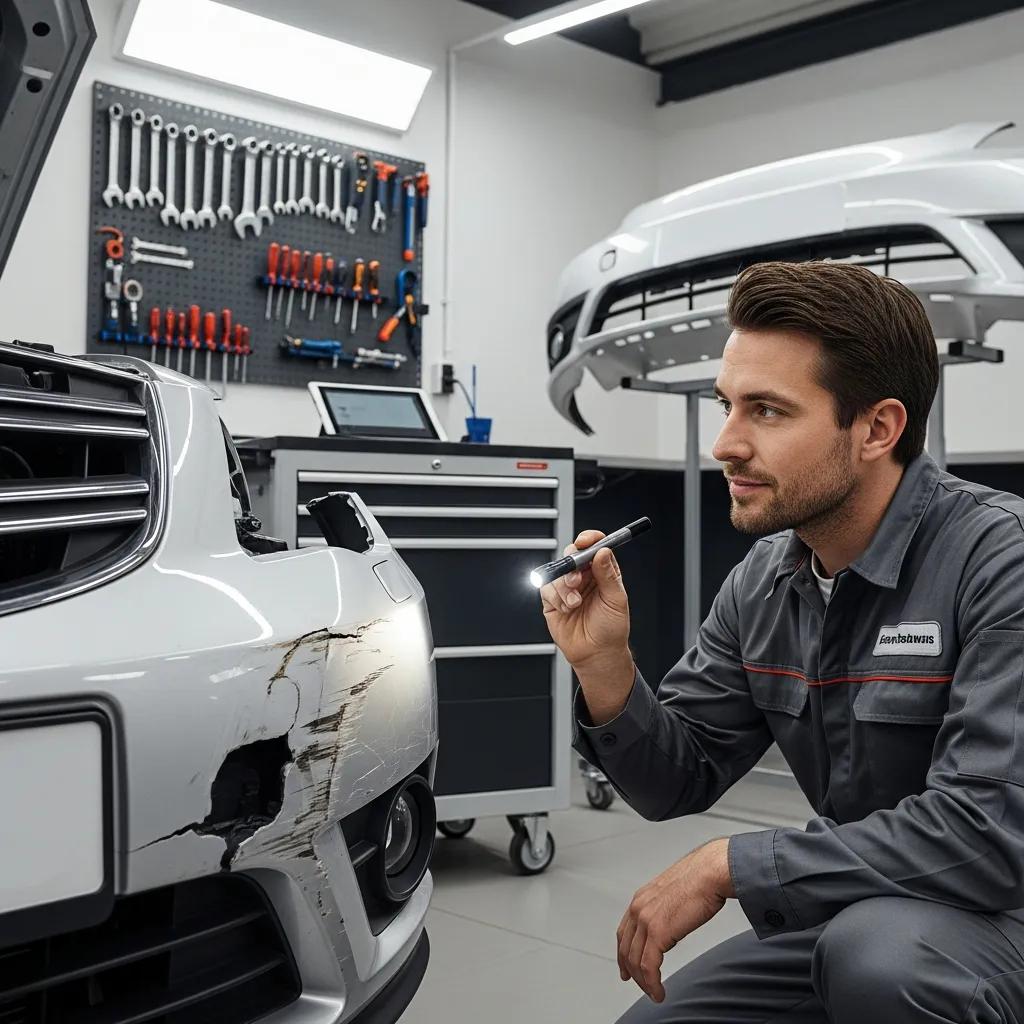
Many bumpers can be repaired if the underlying support and mounting points are intact and the sensors weren’t harmed. Typical repairable issues include surface scratches, shallow scuffs, small dents, localized cracks in the bumper cover, and small paint chips. Technicians will use methods like buffing, filler and paint blending, plastic welding for minor cracks, or paintless dent repair (PDR) when the paint is intact and the backside is accessible. To determine repairability they inspect attachment points, panel gaps and alignment, and they look for stress cracks or hidden damage to crash bars and absorbers. If you see deep fractures, widespread material crazing, or distorted mounts or sensors, replacement is usually the safer choice.
Use this quick checklist to get a sense of whether repair is possible before you get an estimate.
- Surface scratches or scuffs limited to the bumper cover — usually repairable.
- Small dents with no paint break — may be fixed with paintless dent repair if accessible.
- Localized cracks that don’t reach mounts — often repairable with plastic welding and filler.
If those conditions don’t apply, keep reading: the next section explains when replacement is needed for safety and structural reasons.
When Is Bumper Replacement Necessary for Safety and Integrity?
Replace the bumper when structural components are damaged — for example, the crash bar, impact absorber, mounting points, or internal reinforcements. Signs that replacement is needed include complete separations, large fractures that run into mounting areas, bent or broken crash bars, or deformation that prevents proper attachment. Replacement is also the right move when ADAS sensors, radar units or camera mounts are cracked or misaligned, because these systems depend on precise placement to work correctly. Significant front– or rear-impact forces that shift substructure geometry typically mean replacement plus a full integrity inspection is required to restore the vehicle’s designed crash performance.
Choosing replacement in these cases avoids fixes that could leave the vehicle less protective in a future collision.
What Are the Most Effective Plastic Bumper Repair Techniques?
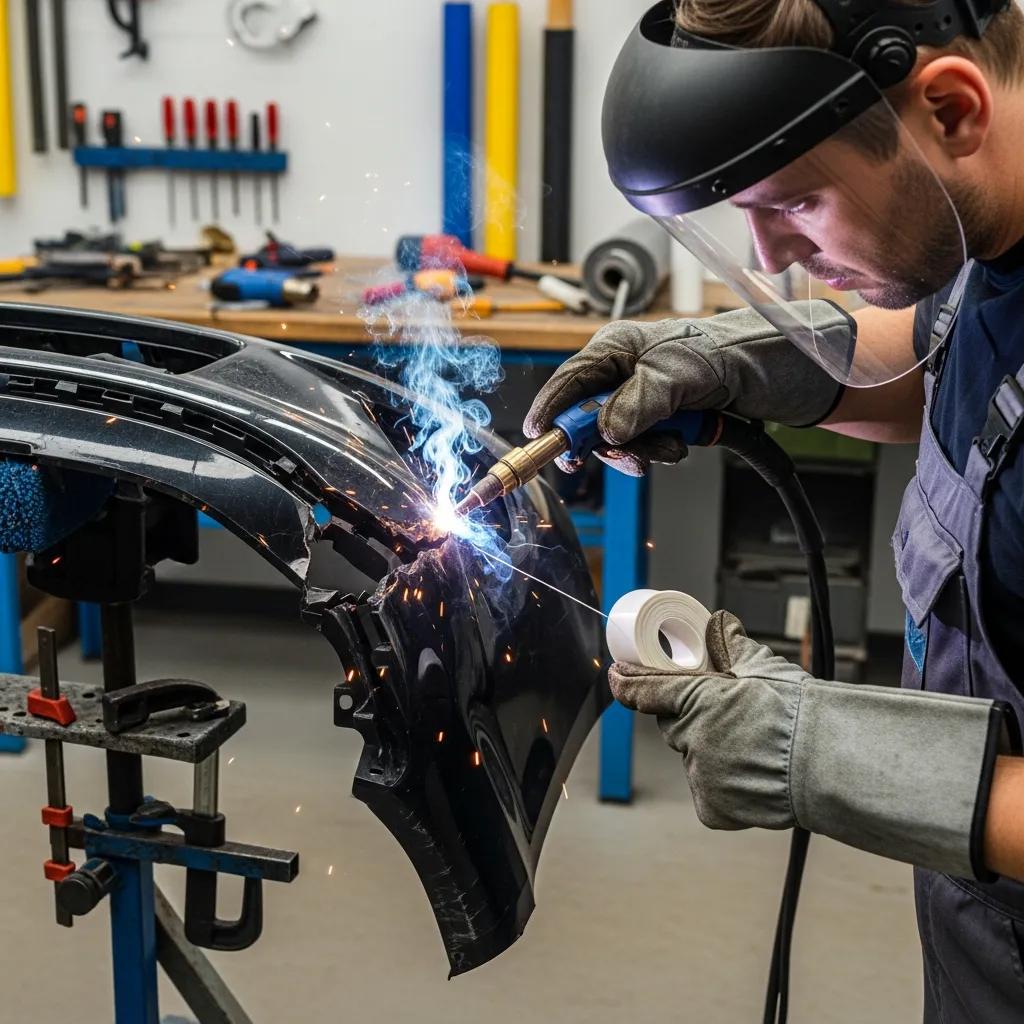
When a repair is appropriate, specific techniques restore fit, strength and finish while keeping costs down. Common methods include plastic welding to fuse cracks, paintless dent repair (PDR) for shallow dents with intact paint, and fill-and-paint for gouges or scuffs that need resurfacing and color matching. Each approach has its trade-offs: plastic welding rebuilds structural continuity, PDR keeps the original paint and is fast, and professional fill-and-paint gives a seamless color match but takes longer for prep and drying. Technicians choose the least-invasive method that preserves OEM fit and finish while respecting the vehicle’s safety systems.
Research shows that when refinishing follows proper procedures, active safety performance can be preserved — which is why we prioritize correct repair methods.
Bumper Refinishing & Active Safety Performance
A 2021 case study found that, when refinishing follows appropriate repair standards, a refinished bumper can deliver active safety performance comparable to an OEM bumper. In short, correct procedures matter for safety as well as appearance.
Knowing how plastic welding works helps you understand when it’s the right option and what a quality repair should include.
How Does Plastic Welding Restore Minor Bumper Damage?
Plastic welding repairs cracks by fusing compatible plastics along the damaged seam and rebuilding the original shape with heat and filler material. The technician cleans and prepares the area, aligns the crack, applies controlled heat and filler rod to fuse the pieces, then grinds and shapes the repair before blending paint to match the factory finish. When performed with the right materials and skill, plastic welding restores strength and prevents cracks from growing, making it a durable solution for many localized fractures. Proper training and the correct welding supplies are essential to meet both safety and cosmetic expectations.
Next, paintless dent repair offers a minimally invasive option for shallow deformations when paint is intact.
What Is Paintless Dent Repair and When Is It Used?
Paintless dent repair (PDR) fixes shallow dents without sanding or repainting by accessing the backside of the bumper and gently massaging the panel back to shape. PDR works best when the paint hasn’t cracked, the plastic hasn’t stretched, and technicians can reach the area behind the dent. Benefits include lower cost, faster turnaround and preserving the factory paint. PDR isn’t suitable when there are cracks, heavy paint damage, or deep creases — in those cases plastic welding or fill-and-paint are better choices. Skilled technicians can often return the cosmetic appearance quickly with PDR; when it’s not possible, they’ll recommend the next best repair approach.
With the repair method chosen, cost usually becomes the deciding factor — the section below compares expenses and warranties for repair versus replacement.
How Do Costs Compare Between Bumper Repair and Replacement?
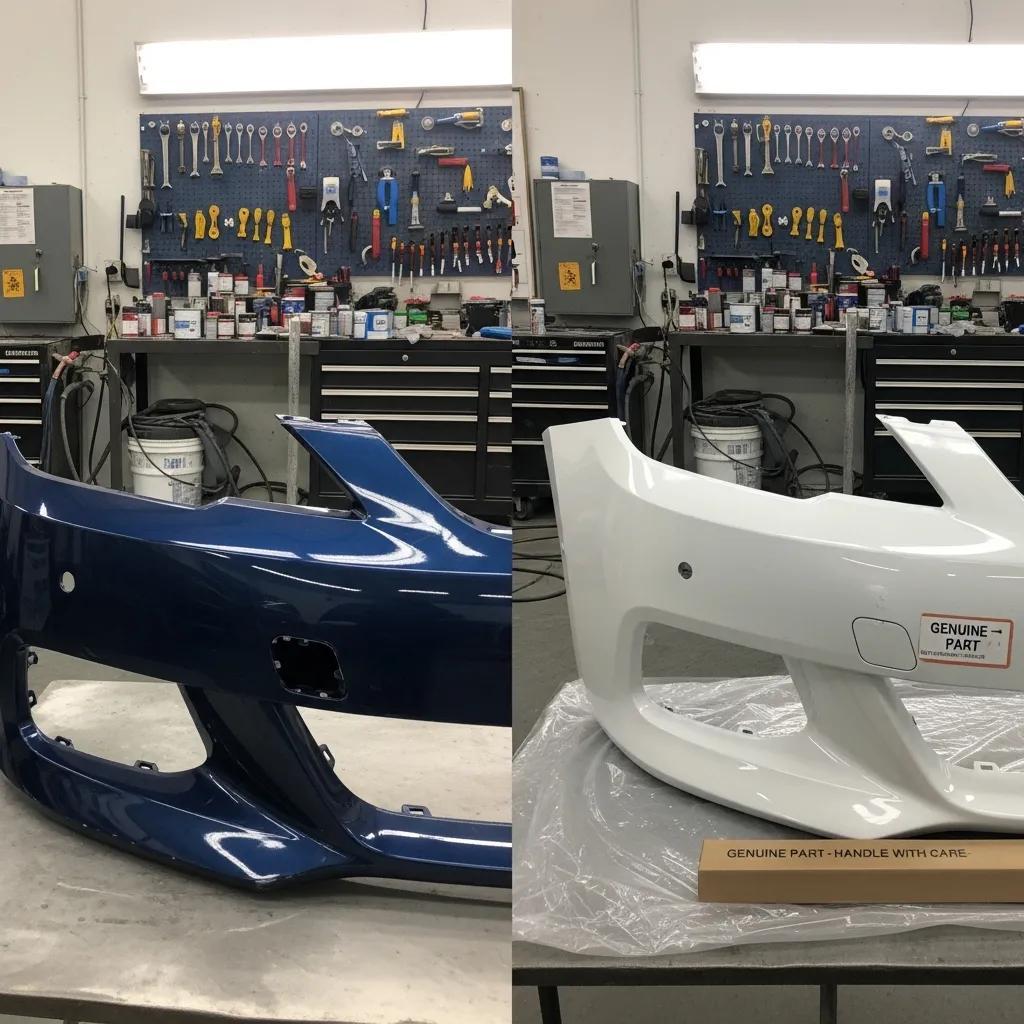
Costs vary based on damage severity, parts (OEM vs aftermarket), paint blending, ADAS sensor work, and local labor rates. Minor repairs — buffing, small fill-and-paint jobs or PDR — usually cost much less and finish sooner. OEM replacement, which includes part ordering, sensor work and calibration, has higher parts and labor costs and a longer turnaround. Other cost drivers are paint blending across adjacent panels, ADAS recalibration, and whether insurance covers the work or you pay the deductible. Understanding these factors helps you estimate out-of-pocket expense and pick the most cost-effective, safe solution for your vehicle.
Below is a quick comparison to illustrate typical cost and impact differences between repair and replacement.
This table compares typical outcomes, warranty expectations, and time to complete for repair versus replacement.
| Option | Typical Cost Range | Time to Complete | Safety/Integrity Impact | Typical Warranty |
|---|---|---|---|---|
| Minor Repair (PDR, buffing, plastic welding) | $150 – $800 | Same day to 3 days | Restores appearance; structural integrity dependent on damage | Often shop warranty on labor/paint |
| Fill-and-Paint Repair | $300 – $1,200 | 1-5 days | Good cosmetic result; limited if underlying mounts affected | Common shop warranty on paint/finish |
| OEM Bumper Replacement | $800 – $2,500+ | 2-7 days | Restores factory fit and crash performance; may require calibration | Manufacturer/OEM-compatible shop warranty |
| Replacement with ADAS work | $1,200 – $3,500+ | 3-10 days | Includes sensor recalibration for safety systems | Warranty may include calibration services |
This table shows repairs are usually less expensive and faster, while replacement is the safer choice when safety-critical parts or sensors are involved.
What Is the Typical Cost of Minor Bumper Repairs?
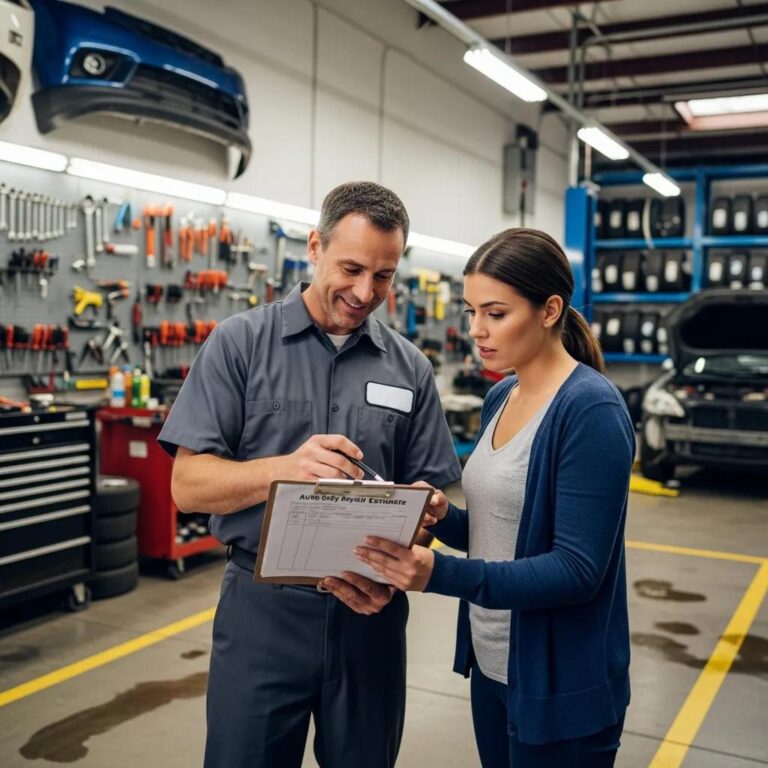
Minor repairs typically fall in a wide but conservative range reflecting materials, paint labor and technician time. PDR and simple buff-and-polish jobs are at the low end; plastic welding plus refinishing sits higher. Cost depends on how much area needs repainting, whether color matching and blending into adjacent panels is required, any welding materials used, and local labor rates. Because estimates vary, get a free written estimate so you can compare options and confirm warranty and expected outcomes. A written estimate is also useful when you coordinate with your insurance adjuster.
Getting a detailed estimate makes comparing repair versus replacement easier and helps you decide what makes sense financially and for safety.
How Much Does OEM Bumper Replacement Usually Cost?
OEM replacement is typically pricier because OEM parts match original fit, safety tolerances and finish, and often include sensors, brackets and crash-energy parts that need careful installation. Extra costs appear when ADAS sensors must be transferred or replaced and recalibrated, when multi-stage paint systems are required for a color match, and when labor includes removing and reinstalling nearby components. OEM parts help keep crashworthiness and sensor performance aligned with manufacturer standards, but they do represent the higher end of the price spectrum. Ask for a transparent estimate listing OEM part prices, labor hours and any calibration charges so you can compare true replacement costs.
When Should You Replace Your Car Bumper Instead of Repairing It?
Replace the bumper when damage affects crash-energy management, mounting geometry or ADAS sensor alignment — conditions that repairs can’t reliably restore to OEM specs. Examples include compromised crash bars, bent or broken mounting brackets, large fractures extending into attachment areas, or cracked/mispositioned sensor housings. Vehicle value, model-specific repairability and manufacturer repair procedures also play a role: on many modern cars, keeping ADAS performance and OEM alignment often means replacement is the safer long-term choice. Evaluating these structural and system-level issues helps you prioritize safety over a quick cosmetic fix.
Use the decision table below as a quick guide to whether to repair or replace.
| Damage Type | Indicator | Action Recommended |
|---|---|---|
| Surface scuff or scratch | Paint intact; no deformation | Repair (buff, fill, paint) |
| Small crack in cover only | Crack limited to cover; mounts intact | Repair (plastic welding or patch) |
| Large fracture into mount area | Distorted or broken mounting points | Replace bumper assembly |
| Damaged crash bar/absorber | Bent, creased, or separated energy absorber | Replace and inspect substructure |
| ADAS sensor housing damage | Misaligned sensor or cracked housing | Replace and recalibrate sensors |
When mounts, absorbers or sensors are affected, replacement is the safer action. The sections below explain how technicians spot hidden structural problems and why sensors matter in the decision.
How Does Structural Damage Influence Replacement Decisions?
Hidden structural damage — like shifted mounting points, bent reinforcement bars or damaged absorbers — can be missed by a surface-only check but will reduce crashworthiness if left unaddressed. Technicians find these issues by removing the bumper cover for a visual inspection, measuring alignment tolerances, and checking the support elements for deformation. If substructure components are bent or fractured, replacement is usually required to restore the vehicle’s designed energy management. Make sure any estimate that only quotes surface work includes a deeper inspection to rule out hidden damage; safety should drive the final decision.
Finding structural issues naturally brings up the role of modern safety systems and why precise sensor work matters.
What Role Do Advanced Safety Features Play in Replacement?
Advanced driver-assistance systems (ADAS) rely on precisely mounted sensors — radar, ultrasonic parking sensors and cameras — many of which are integrated into the bumper assembly. Even a small misalignment can reduce system performance or trigger false warnings. Replacement may be necessary when sensor housings are damaged or mounting points shift, since recalibration or OEM-level replacement restores the factory-specified geometry these systems require. Certified technicians follow manufacturer procedures for sensor transfer, replacement and recalibration to keep systems accurate. Skipping proper recalibration after significant bumper work can compromise features like automatic emergency braking or adaptive cruise control, so for vehicles with ADAS, follow OEM protocols for repair or replacement.
The complexity of ADAS is another reason precise recalibration and validation are critical after bumper work.
ADAS Sensor Recalibration for Bumper Repair Safety
Industry experts emphasize that proper sensor recalibration, detailed safety validation and documentation are essential after repairs. I-CAR highlights how many different marketing names mask similar underlying systems, underscoring the need for careful calibration to restore functionality.
With safety and sensors in mind, the next section covers how insurance influences whether a bumper gets repaired or replaced.
How Does Insurance Affect Bumper Repair and Replacement Choices?
Your insurer, policy details and the adjuster’s assessment often determine whether a dented bumper is repaired or replaced. Carriers look at repair cost, part selection (OEM vs aftermarket) and safety concerns when authorizing work. Filing a claim usually brings an adjuster review where estimates, photos and technician notes on structural or sensor damage guide the recommendation. Insurers may approve repair for purely cosmetic issues but require replacement when safety systems are at risk. Deductibles, policy limits and potential premium impacts also factor into the owner’s choice to file. Working with a shop that provides free estimates and communicates directly with insurers can simplify approvals and help resolve disagreements about repairability.
Because vehicle design and repair costs are changing, consumers and insurers face ongoing challenges in managing collision expenses.
Reducing Vehicle Repair Costs & Insurance Impact
A review of industry trends shows vehicle design and materials are evolving rapidly, which contributes to rising collision repair costs. The paper discusses design and insurability strategies to keep repair and insurance costs under control while maintaining safety and performance.
Follow these steps when you need to file a bumper damage insurance claim — they’ll help speed the process and reduce confusion.
- Take clear photos of the damage from several angles and record incident details.
- Report the claim to your insurer and ask about required documentation and your deductible.
- Get a written estimate from a reputable collision shop and provide it to the insurer for review.
- Coordinate the adjuster’s inspection and share any technician findings about structural or sensor issues.
- Once approved, schedule the work and confirm the shop documents warranty terms, part choices and any sensor calibration performed.
Following these steps minimizes delays and aligns repair decisions with insurer requirements. The next section covers how deductible and coverage choices affect out-of-pocket costs.
What Is the Process for Filing a Bumper Damage Insurance Claim?
Start by documenting the scene and the damage, then contact your insurer and ask how to proceed. Obtain a free written estimate from a trusted collision shop and submit it to your insurer; the adjuster will review the estimate and photos and may inspect the vehicle in person. If the insurer approves the work, coordinate scheduling with the shop and confirm coverage details, deductible amounts and whether OEM parts or ADAS recalibration are covered. Shops that help with claims often talk directly to adjusters to speed approvals. Keep copies of all estimates, emails and repair orders so you have a clear record if questions come up.
Good communication between the shop, you and the insurer prevents surprises when you pick up the vehicle.
How Do Deductibles and Coverage Impact Repair vs Replacement?
Your deductible determines immediate out-of-pocket cost and can make small repairs preferable to filing a claim if the repair cost is near or below the deductible. Larger replacement costs are often worth claiming because safety-related components can be expensive. Policies differ on part approvals — some favor aftermarket parts, others require OEM parts for certain repairs — so read your policy or ask your agent about OEM coverage and ADAS calibration. Insurers also weigh total-loss thresholds: if repair costs approach a large percentage of vehicle value, they may choose replacement or salvage. A shop that provides detailed, itemized estimates and helps with insurance paperwork can clarify how your deductible and coverage influence the recommended option.
Next, we explain why choosing a certified local shop matters for quality, OEM compliance and warranty protection.
Why Choose Prime Time Collision Center for OEM Certified Bumper Repairs and Replacements?
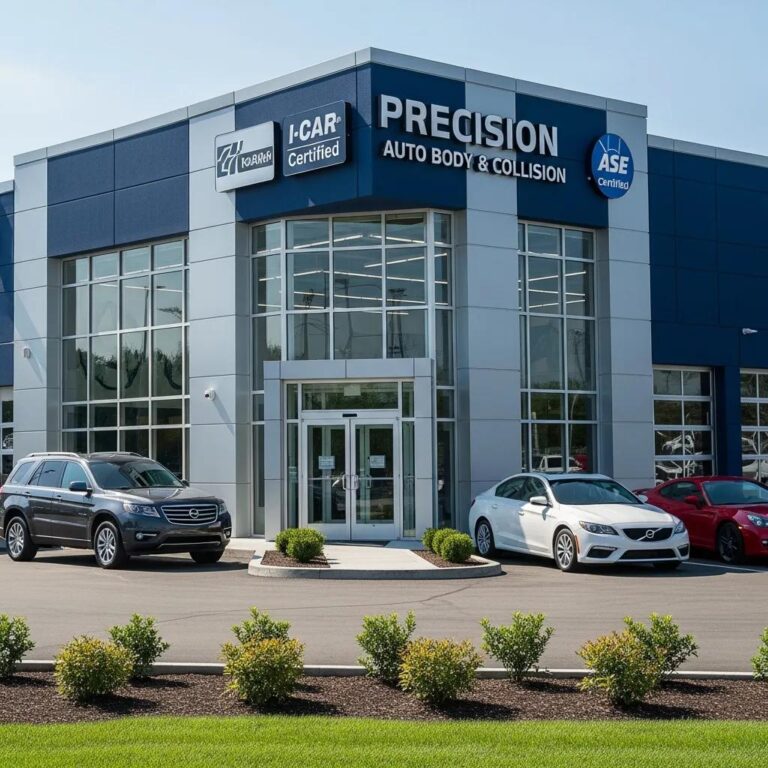
Prime Time Collision Center is a local auto body and collision repair shop serving Glendale, Burbank, Pasadena and Los Angeles. We focus on OEM-quality repairs, clear insurance handling and building trust with every customer. That matters when you’re deciding between repair and replacement — especially on modern cars with ADAS sensors and precise mounting needs. Our shop features I-CAR Platinum certified technicians, a lifetime warranty on repairs, free estimates, 24/7 towing and hands-on insurance claim assistance. Working with a facility that follows manufacturer-aligned procedures and coordinates directly with insurers reduces risk and makes the repair process easier for you.
Here are the core credentials and benefits we bring to bumper work.
- OEM-certified repairs to preserve manufacturer safety and fit standards.
- I-CAR Platinum technicians trained for complex repairs and ADAS procedures.
- Free estimates and insurance claim assistance to streamline approvals and scheduling.
- Lifetime warranty on repairs plus 24/7 towing for convenience and confidence.
These services help you prioritize OEM-quality outcomes while minimizing hassle. To schedule or request an estimate, contact Prime Time Collision Center by phone or visit our Glendale facility.
What Benefits Do I-CAR Platinum Certified Technicians Provide?
I-CAR Platinum certification shows advanced training in collision repair, including manufacturer-recommended methods to restore fit, finish and safety systems after a crash. Technicians with this credential follow up-to-date repair protocols — essential for plastic welding, sensor transfers and ADAS recalibration. Using I-CAR trained staff reduces the risk of improper repairs that could affect crash performance or sensor accuracy, and it gives vehicle owners a measurable credential when choosing a shop. A shop with this level of training helps ensure whichever option you choose — repair or replacement — is executed to recognized industry standards.
I-CAR Platinum technicians typically deliver more reliable outcomes for both cosmetic and safety-sensitive bumper work.
How Does the Lifetime Warranty Ensure Repair Quality and Safety?
Our lifetime warranty on repairs is a promise that workmanship and materials are backed by the shop long after you drive away. Warranty terms vary, so confirm the scope with the shop, but offering a lifetime repair warranty signals confidence in repair methods, parts selection and quality control. If you’re worried about long-term fit, paint durability or recurring cracks, a solid warranty paired with OEM repair practices gives you added peace of mind. To confirm coverage details or schedule a free estimate, contact Prime Time Collision Center at our Glendale location or call the number on our site.
This final note is meant to help you make a safe, cost-effective choice — schedule a professional assessment so a technician can recommend the best path forward for your vehicle.
Frequently Asked Questions
1. What should I consider when deciding between bumper repair and replacement?
Think about the extent of the damage, safety implications and cost. If the damage is mostly cosmetic, a repair is often appropriate. If structural parts or ADAS sensors are affected, replacement may be necessary. Also factor in your budget and whether insurance will cover the work. A qualified technician can inspect the vehicle and recommend the safest, most cost-effective option.
2. How can I find a reputable auto body shop for bumper repairs?
Ask friends and family for recommendations and read online reviews. Look for shops with certifications like I-CAR Platinum, warranties on their work and free estimates. Make sure the shop has experience with your vehicle make and model, especially if it has ADAS features. Visiting the shop in person helps you judge professionalism and see whether the facility looks organized and well-equipped.
3. Are aftermarket parts a good option for bumper replacement?
Aftermarket parts can save money, but quality and fit vary by manufacturer. Some aftermarket parts meet or exceed OEM standards; others do not. If safety and sensor performance are priorities, OEM parts are usually the safer choice. Ask the shop for brand recommendations and weigh cost versus long-term reliability.
4. How long does a typical bumper repair or replacement take?
Repair time depends on the damage. Minor repairs like PDR or buffing can be done in a few hours to a day. Full bumper replacement — especially when sensors need recalibration — can take several days. Ask the repair shop for an estimated timeline when you get your initial assessment so you can plan accordingly.
5. What are the risks of delaying bumper repairs?
Delaying repairs can let minor issues become major ones and raise the overall cost. Cosmetic damage can hide structural problems that worsen over time, and damaged bumpers may not protect occupants properly in a future crash. Delays can also complicate insurance claims, since insurers may question why repairs were postponed. It’s best to have damage inspected soon after an incident.
6. How do I know if my bumper damage is covered by insurance?
Review your policy for collision and comprehensive coverage, then contact your insurer to discuss your claim. Document the damage with photos and get a written estimate from a certified shop — insurers typically require that information. Your agent can explain deductible amounts, coverage limits and whether OEM parts or ADAS recalibration are included.
7. What should I ask my technician before proceeding with repairs?
Ask about the technician’s experience with similar damage and the repair methods they recommend. Request a detailed estimate with parts and labor listed, ask whether they’ll use OEM or aftermarket parts, and confirm warranty terms. If your car has ADAS, ask about sensor testing and recalibration. Clear answers will help you make an informed decision that prioritizes safety and quality.
Conclusion
Choosing repair or replacement is about more than looks — it’s about safety and long-term value. Know what’s repairable, when replacement is necessary, and how insurance and warranties affect your options. For peace of mind and OEM-quality results, schedule a professional assessment with a certified collision shop. We’re here to help you get back on the road safely.