Your Local Burbank Car Accident Guide: Steps, Repairs, and Insurance Help
This guide puts Burbank-specific next steps, repair options, and insurance know-how in one place so you can get safe, OEM-quality collision repairs and back on the road with confidence. You’ll find practical instructions for locating trusted collision shops, judging shop reliability, moving through the body-shop process, filing and documenting insurance claims, and tapping local support after a crash. The focus is on clear, actionable steps — what to do at the scene, how to photograph and log damage, how shops and insurers typically interact, and how to protect vehicle safety, lease terms, and resale value. We include checklists, comparison points, and sample questions to use with adjusters, estimators, and technicians. Wherever possible we call out Burbank context so local drivers know how to protect safety, preserve value, and keep the repair and claims process transparent.
Where to Find Trusted Burbank Collision Repair Services?
Start with clear, practical criteria: written repair procedures, transparent, itemized estimates, and a documented commitment to OEM-quality parts and processes when required. Those elements reduce long-term safety and resale risks by ensuring structural work and safety systems are restored to manufacturer standards. Begin by checking verified local listings and recent customer reviews, then confirm written warranties and itemized estimates that list parts, labor, and any calibration work. Ask direct questions about parts sourcing, paint-match standards, and post-repair safety checks to tell shops focused on long-term safety apart from those cutting corners. The next section breaks these reliability criteria into specific checks so you can evaluate shops efficiently.
What Makes a Burbank Collision Repair Shop Reliable?
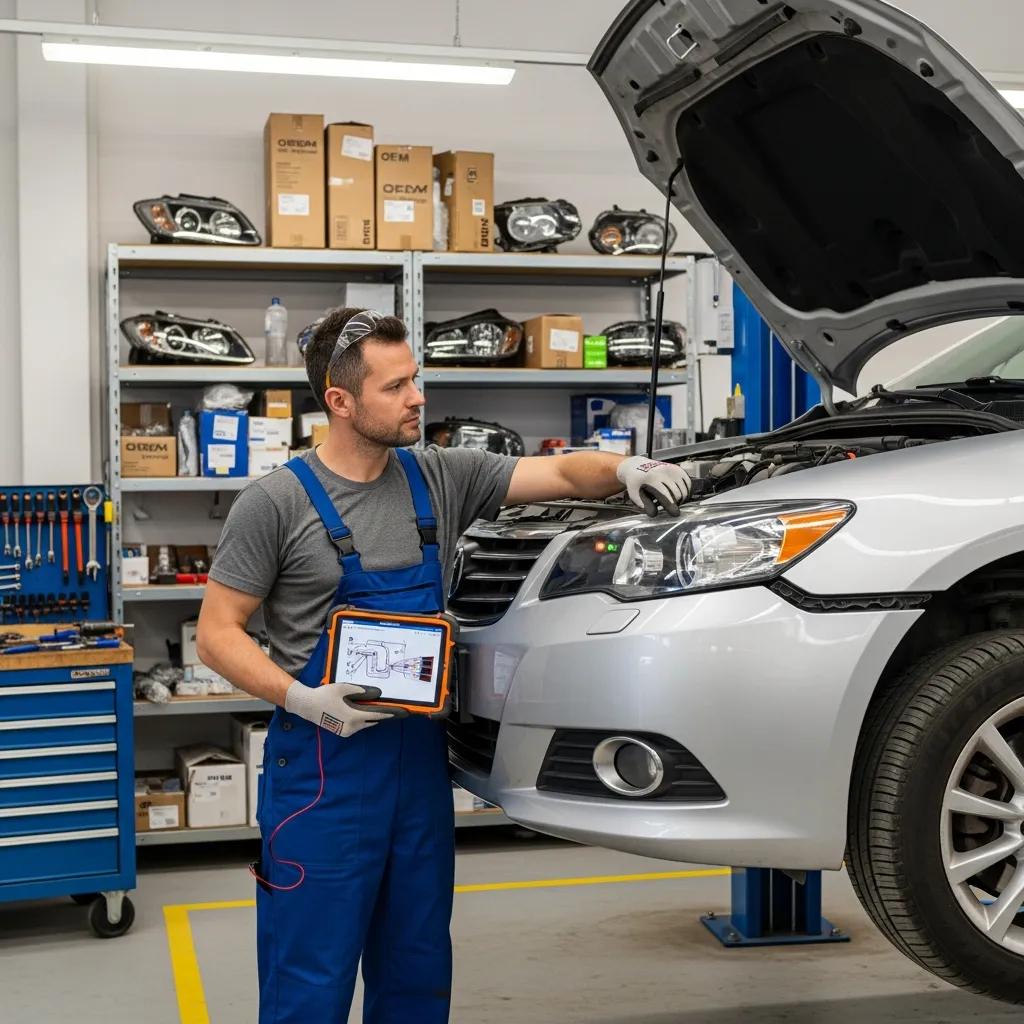
A dependable shop shows process transparency, trained technicians, and consistent use of the right parts and procedures to restore safety systems and alignment. Look for manufacturer or industry training credentials and ask whether technicians perform ADAS recalibration and electronic diagnostics after structural work. Written warranties and documented repair procedures indicate a shop stands behind its work, and defined paint-matching and corrosion-prevention steps show attention to long-term finish and fit. These checks set realistic expectations for safety and resale, and they make comparing estimates straightforward when you’re choosing where to repair your vehicle.
- Look for clear warranties, written procedures, certified technicians, and open parts-sourcing policies.
- Choose shops that explain ADAS recalibration, frame-straightening verification, and final safety inspections.
- A shop that provides itemized estimates and communicates with your insurer shows professional process control.
Next, we’ll explain how to confirm OEM compatibility and why OEM-quality repairs matter for safety and lease or resale outcomes.
How to Choose an OEM Certified Auto Repair in Burbank?
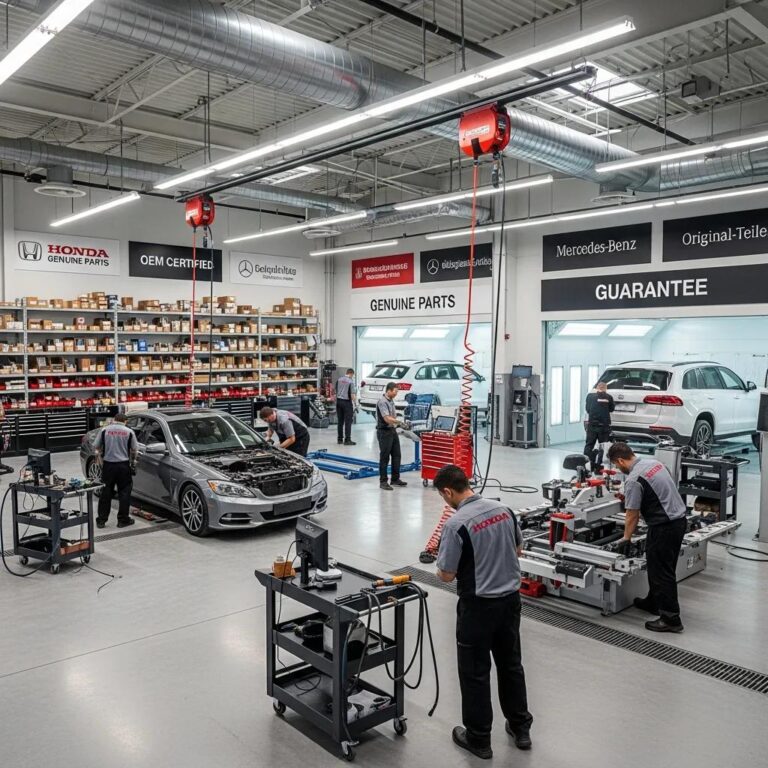
Choosing an OEM-quality shop means confirming repairs and replacement parts match manufacturer expectations for structure, safety systems, and finish. Ask shops how they verify parts compatibility and whether they follow manufacturer repair procedures and calibration steps for airbags, sensors, and ADAS features. Request documentation that shows part origin (OEM-quality or specified equivalent) and ask how they verify paint color and finish to avoid blending or corrosion problems later. If you plan to lease or sell the vehicle, written proof of OEM-quality work helps preserve warranty and resale value — so favor shops that provide process descriptions and warranty terms in writing. Asking for specific procedure names or training references helps you pick a shop aligned with manufacturer standards and long-term safety.
How to Navigate Car Accident Body Shops in Burbank?
Getting through the body-shop process smoothly means knowing what services shops offer, reading estimates closely, and spotting red flags. A clear workflow starts with a diagnostic estimate, moves through structural and cosmetic repairs, and finishes with system recalibration and a documented safety check. When you compare shops, insist on itemized parts and labor, explicit notes on ADAS calibration, and written warranty terms; avoid vague lump-sum estimates that skip parts origin or calibration details.
The table below highlights the differences between an OEM-focused approach and a non-certified approach so you can weigh safety, warranty, parts, insurer interaction, and cost before deciding.
| Repair Approach | Safety & Process | Typical Warranty | Parts Sourcing |
|---|---|---|---|
| OEM-quality repair | Manufacturer procedures, ADAS calibration, structural verification | Written warranty on repairs | OEM-quality parts or manufacturer-specified equivalents |
| Non-certified repair | Basic cosmetic/mechanical fixes, limited system calibration | Limited or no written warranty | Aftermarket parts—fit and finish can vary |
Different repair approaches affect safety outcomes and how insurers respond — keep those trade-offs in mind when you choose a shop.
What Services Do Burbank Car Accident Body Shops Offer?
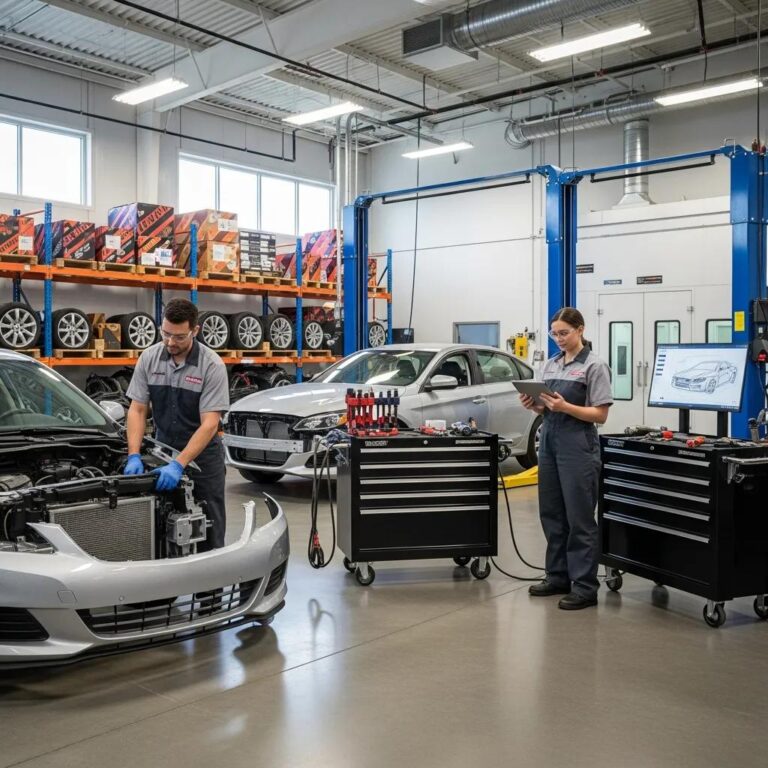
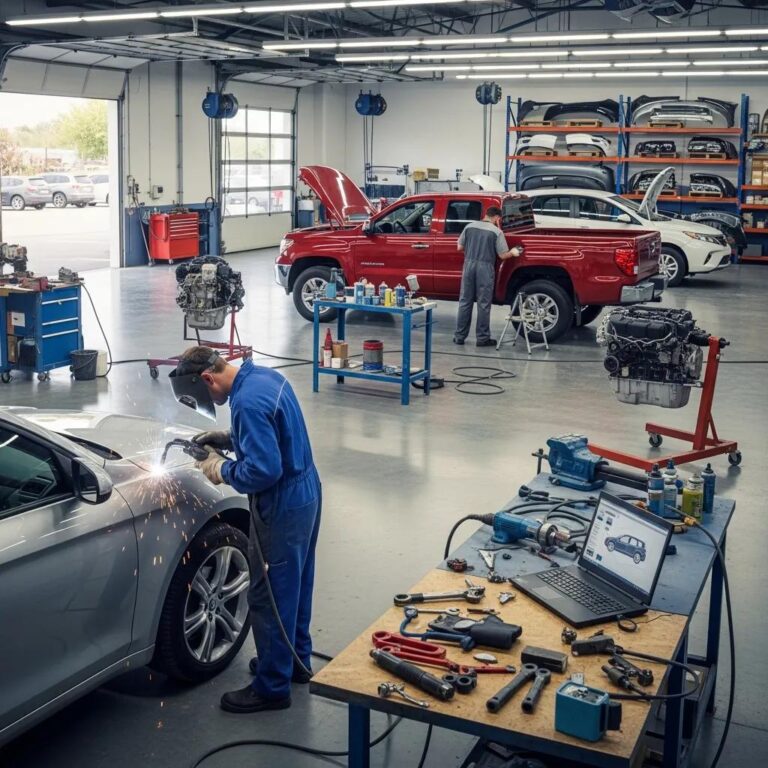
Most shops provide a chain of services starting with towing coordination and an initial estimate and continuing through structural repair, paint, diagnostics, and final safety checks. Diagnostics use computerized measurement and scanning to find hidden damage; structural/frame repair restores chassis geometry and mount points; paint and finish work focuses on corrosion protection and color match; electronic work and ADAS recalibration realign sensors and safety systems. Shops often help coordinate rental cars and perform post-repair road tests to verify system function. Knowing each service lets you require specific tasks in the estimate so safety-critical items aren’t skipped.
- Common post-accident services: towing coordination, computerized estimates, frame straightening, paint matching, and ADAS calibration.
- Ask that the estimate explicitly lists electronic diagnostics and any required sensor recalibration.
- Confirm whether the shop coordinates rental car arrangements or provides paperwork your insurer needs for rental coverage.
Understanding these services prepares you to compare quality and cost when selecting a repair provider.
How to Assess Quality and Pricing at Burbank Body Shops?
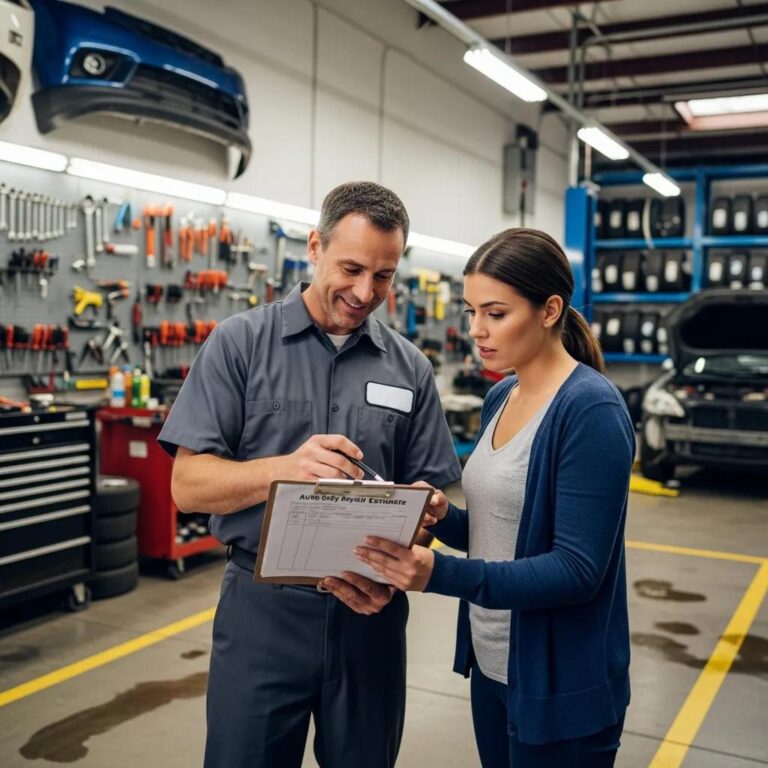
Compare estimates line-by-line and make sure parts, labor, and calibration tasks are itemized and explained. A good estimate names part types (OEM-quality vs. aftermarket), lists labor hours with task descriptions, and includes expected timelines for calibration or inspections. Be wary of unusually low estimates that omit ADAS calibration, structural measurement, or corrosion protection — those shortcuts can create safety or resale problems later. The table below highlights estimate attributes to review so you can make a confident choice.
Estimate attributes to review before authorizing repairs:
| Estimate Element | What to Look For | Typical Impact |
|---|---|---|
| Parts description | OEM-quality specified or clearly identified equivalent | Affects fit, safety, and resale |
| Labor breakdown | Itemized tasks and hours | Transparency in scope and cost |
| Calibration tasks | ADAS, airbag sensors, electronic diagnostics | Essential for safety systems |
| Warranty | Written coverage details | Protection against post-repair defects |
Use these checks to ask targeted questions — and consider an independent estimate if anything looks incomplete. Next we’ll walk through typical insurance-claim steps and how shops usually work with insurers.
What Are the Steps for Burbank Auto Insurance Claims Help?
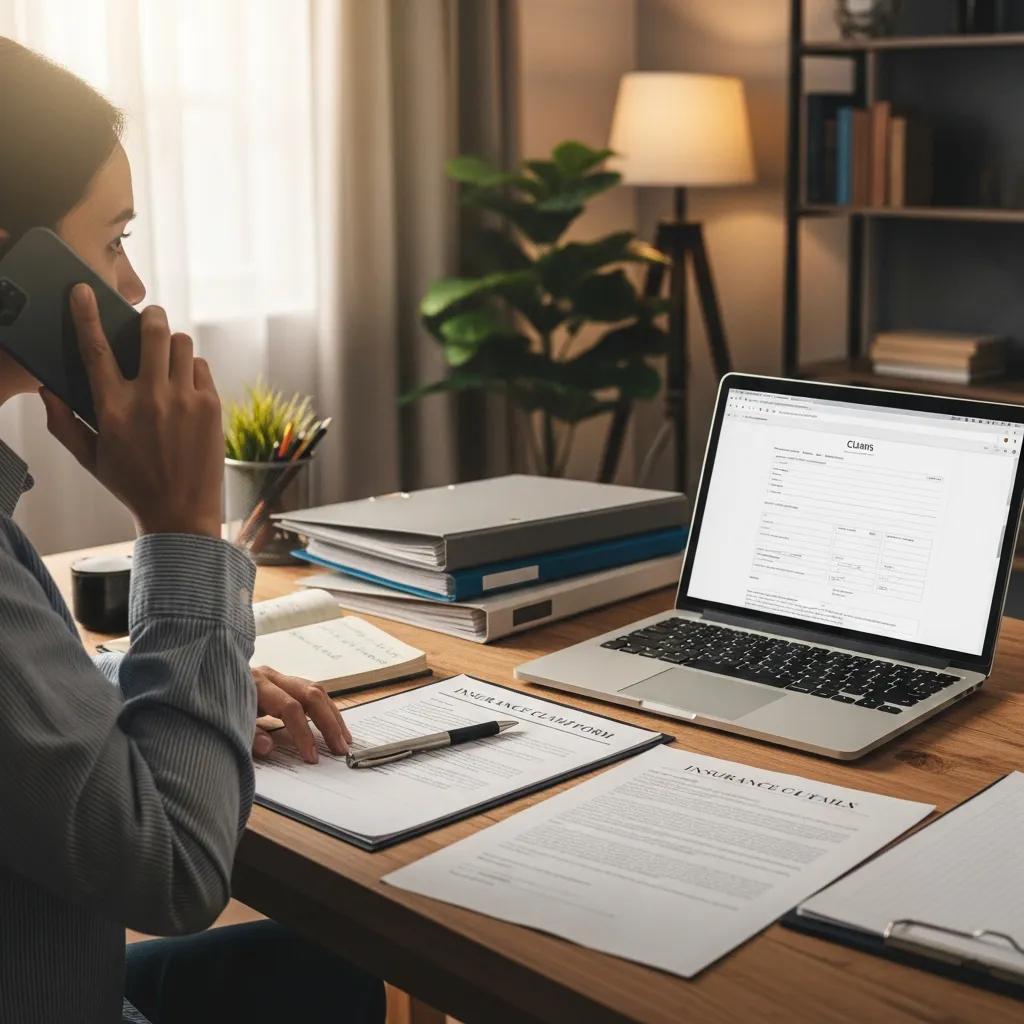
Filing a claim after a Burbank accident usually follows a predictable flow: notify your insurer, document the incident, get an estimate, and coordinate repairs while keeping evidence and communication records. An adjuster will review damage and estimates; ask your shop to provide a detailed, photo-backed estimate to support requests for OEM-quality repairs. Keep copies of all documents, photos, and conversation notes (date, time, name, summary) in case of disagreements. The table below summarizes key claim steps, the documents insurers commonly request, and typical timelines so you know what to expect.
Claims steps, documents, and timelines for quick reference:
| Claim Step | Required Documents | Typical Timeline / Action |
|---|---|---|
| Notify insurer | Accident details, policy number, photos | Initial acknowledgement within 24–72 hours |
| Adjuster review | Police report, estimates, photos | Adjuster inspection within days to a week |
| Estimate submission | Itemized shop estimate, VIN, ownership proof | Review and authorization period varies by insurer |
| Repair authorization | Signed repair orders, payment arrangements | Repairs scheduled after approval; timing depends on parts availability |
Knowing these stages helps you coordinate with both the shop and your insurer. The section below gives a concise, prioritized sequence for filing a claim quickly and effectively.
How to File an Auto Insurance Claim After a Burbank Accident?
After you’re safe and any medical needs are addressed, follow these steps: notify your insurer, document the scene, and get a written estimate from a trusted shop to share with the adjuster. Have your VIN, policy details, and photographs handy when you call. If possible, obtain an itemized written estimate that lists parts, labor, calibration, and warranty. Record every call (date, time, name, summary) and ask the insurer for a written decision on coverage. If the insurer’s estimate overlooks ADAS calibration or OEM parts you need, ask how to submit an independent estimate or request approval for a shop that performs OEM-quality procedures.
- Notify your insurer and provide basic accident details and photos.
- Secure an itemized estimate from a shop that documents parts and calibration needs.
- Share the estimate with the adjuster and request confirmation of covered items and timelines.
- Keep written records of all communications and request final written approval before repairs begin.
These steps focus the claims process and prepare you to insist on necessary repairs. The next section lists the documents you’ll need to support your claim.
What Documents Are Needed for Burbank Insurance Claims?
Build a strong claim file with clear photos, official reports, and detailed repair paperwork: scene and vehicle photos, the police report if available, witness contact information, VIN and ownership proof, and written estimates or receipts. Photograph wide angles for context and close-ups of each damaged area, and capture the odometer and VIN for verification. The police report provides an official record insurers often require, and witness statements can strengthen liability claims. Keep all repair orders, parts invoices, and calibration certificates after repairs to prove that safety systems were restored and to protect future warranty or resale questions.
- Essential items: photos, police report, witness info, VIN/ownership, itemized estimates, and repair receipts.
- Organize files by date and use a clear naming system (e.g., 20250122_damage_front.jpg) to simplify sharing with insurers.
- Request written calibration and safety-check documents from the shop and keep them with repair invoices.
Keeping these records handy supports warranty claims and preserves evidence if follow-up disputes arise. Next we cover immediate actions to take at the scene and how to document damage effectively.
How to Use the Post-Accident Vehicle Guide in Burbank?
This post-accident guide helps you prioritize safety, preserve evidence, and gather clear documentation right after a collision so insurers and repair shops can act on accurate information. At the scene, your main goals are to secure medical safety, document vehicle positions and damage thoroughly, and exchange information while leaving vehicle evidence intact when possible. Strong photos and short videos — wide shots, close-ups, VIN captures, and time-stamped walkthroughs — speed claims and help shops spot hidden damage. The next subsection gives a short immediate-action checklist you can use in the minutes after a crash.
What Immediate Actions Should You Take After a Burbank Car Accident?
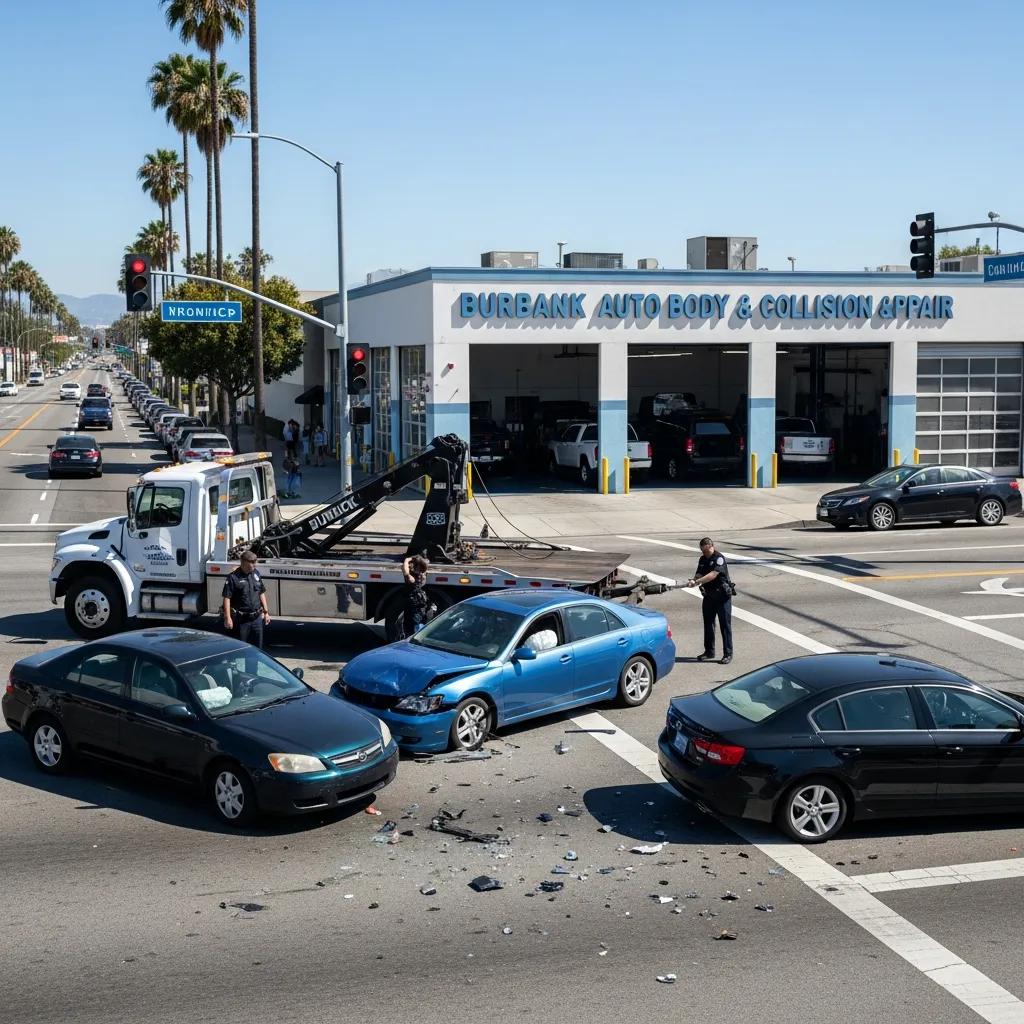
Always put safety first: check for injuries and call emergency services if needed, then move to a safe spot when it’s practical and legal. Exchange driver and insurance information, collect witness contacts, and photograph vehicle positions before moving them. Take wide-angle photos showing road context and close-ups of damage. Contact your insurer to start the claim and ask for a police report at the scene to establish an official record. Preserve loose parts in a bag, don’t wash the vehicle, and ask towing services to deliver the car to a shop you trust or a location agreed with your insurer.
- Ensure everyone’s safety and call emergency services if required.
- Photograph vehicle positions and all damage from multiple angles.
- Exchange information, collect witness names, and request a police report.
- Notify your insurer and arrange towing to a chosen repair facility.
Following these steps helps capture essential evidence and leads to the documentation practices described next for repair and claims support.
How to Document Vehicle Damage for Repair and Insurance?
Good damage documentation combines consistent photography, short video walkthroughs, and organized file naming so shops and adjusters can evaluate visible and potential hidden damage.
Take wide shots showing vehicle orientation, medium shots of each corner and impact zone, close-ups of damaged panels, and clear photos of the VIN, license plate, odometer, and interior damage. Record short videos describing visible problems and time-stamp them when possible; annotate images to point out suspected structural or sensor areas. Keep all files in one folder and use a naming convention like YYYYMMDD_location_damage.jpg, then share the folder with your insurer and the repair shop using their preferred secure upload method.
- Photo checklist: wide context, each damaged panel, VIN and odometer, interior and sensor locations.
- Use short annotated videos to explain damage progression and any unusual sounds or functional issues.
- Keep original files and give copies to your insurer and the repair shop to support transparent planning.
Organized evidence helps produce accurate estimates and lowers the risk that critical repairs, such as ADAS calibration, are missed.
Where to Access Additional Support and Resources After a Burbank Car Accident?
After you secure immediate safety and start an insurance claim, local medical, legal, and community resources can support recovery and help resolve claims in Burbank. Urgent care and specialists can document injuries and provide records insurers need, while experienced auto-accident attorneys advise on liability and valuation when disputes come up. Community victim-assistance groups and counseling services offer emotional and practical help navigating claims and recovery logistics. The subsection below outlines the typical organizations that assist accident victims and how they complement the repair and claims process.
What Local Organizations Provide Assistance to Accident Victims?
Local resources often include victim assistance programs, transportation or rental support, and counseling referrals to help with non-vehicle needs after a crash. Victim services guide you through reporting steps and can connect you with counseling, while transportation assistance or rental coordination from insurers or shops keeps you mobile during repairs. Community legal aid and referral services can point you to attorneys who handle auto-accident claims for an affordable initial consult. When you reach out, bring your police report, insurance information, and any medical paperwork to speed help.
- Typical supports: victim counseling, rental car coordination, and legal referral services.
- Bring core documents (police report, insurance details, estimates) when seeking help to speed intake.
- Use local directories and community hotlines to find programs tailored to post-accident needs.
These local supports stabilize recovery and add documentation for complex claims. The next section explains how to find qualified legal and medical help in Burbank.
How to Find Legal and Medical Support in Burbank?
Look for medical providers and attorneys with direct experience in auto-accident cases and clear credentials: for medical care, prefer clinicians who document injuries and produce detailed records; for attorneys, favor those who handle auto-accident claims and know local courts and insurer practices. Ask medical providers if they routinely create reports formatted for insurer review. Ask attorneys about their consultation process, fee arrangements, and what documents to bring. Be cautious of providers or lawyers who demand large upfront payments without a written plan or who discourage independent repair estimates. Keep medical visit notes and invoices to build a clear timeline supporting injury-related claims.
- Choose medical providers who document injuries clearly and provide comprehensive reports for claims.
- Ask attorneys about their auto-accident experience and the specific documentation they’ll need.
- Avoid professionals who pressure you to sign without a clear, written engagement agreement.
With these tips you’ll complete your resource checklist and return focus to the main task: picking a repair shop and managing claims with clear records and informed questions.
Prime Time Collision is a local Burbank auto body and collision repair shop that focuses on OEM-quality repairs, clear insurance communication, and customer trust. We’re one example of a local provider that documents repair processes and keeps insurers informed. If you want a repair partner that prioritizes OEM procedures and transparent, written estimates, choose a shop that lays out its repair workflow, calibration steps, and warranty terms in writing before you authorize work. A repair facility that coordinates with insurers and documents each step protects safety and helps you get back on the road more smoothly after a Burbank accident.
This guide walked through how to find reliable shops, what services to expect, how to file and document claims, immediate post-accident actions, and where to find local support — all meant to help you preserve safety, vehicle value, and transparent claim outcomes.
Frequently Asked Questions
What should I do immediately after a car accident in Burbank?
First, make sure everyone is safe and call emergency services if necessary. Move to a safe location if it’s legal and practical, then exchange contact and insurance information with other drivers and any witnesses. Take thorough photos of the scene and damage, note vehicle positions, and ask for a police report—this creates an official record that insurers often require. Notify your insurance company as soon as you can to start the claims process.
How can I ensure my vehicle is repaired to OEM standards?
Choose a collision shop that is certified and that documents its use of OEM-quality parts and manufacturer repair methods. Ask the shop to explain its repair processes and calibration steps, and request proof of part origin and written warranty terms. A reputable shop will give you an itemized estimate detailing parts, labor, and any calibration work so you can confirm the vehicle’s safety and integrity are maintained.
What are the common red flags to watch for when choosing a body shop?
Watch out for vague estimates that lack itemized parts and labor, shops that won’t provide written warranties, and places that pressure you into quick decisions. Be cautious if a shop intends to use aftermarket parts without your consent or won’t explain its repair procedures. Look for shops with positive reviews, certifications, and a transparent process to ensure quality work.
How can I document vehicle damage effectively for insurance claims?
Use a consistent approach: take wide-angle shots for context, medium shots of each corner, and close-ups of specific damage areas. Photograph the VIN, license plate, and odometer. Record a short video walkthrough describing visible damage and any symptoms. Organize files in a single folder with clear names and share them with your insurer and repair shop through their recommended upload method to support accurate estimates.
What types of local support services are available after a car accident?
Burbank residents can access medical care, legal aid, counseling, and victim-assistance programs after a crash. Urgent care and specialists can document injuries for claims, while attorneys with auto-accident experience can advise on liability and compensation. Community organizations often provide emotional support and practical help, and insurers or shops can assist with rental coordination to maintain mobility during repairs.
How do I choose the right attorney for my auto accident case?
Look for an attorney with a track record in auto-accident cases and familiarity with local courts and insurer practices. Ask about their case approach, fees, and what documentation they’ll need. Be wary of lawyers who require large upfront fees without a clear plan or who discourage getting independent repair estimates. A trustworthy attorney will explain next steps and keep you informed throughout the process.
Conclusion
Knowing the right steps after a Burbank accident helps you make smart choices about repairs and insurance. Prioritize OEM-quality work, gather clear documentation, and ask the right questions — that approach protects your vehicle’s safety and value and smooths the claims process. When you’re ready, review our recommended local repair shops and resources, or reach out to our team for help coordinating repairs and claims. We’re here to make the process clearer and get you safely back on the road.