Burbank Collision Center: Expert Auto Body & OEM‑Certified Collision Repair Near You
A collision is disorienting — and the right local support can turn a stressful claim into a smooth repair. This guide walks you through the first steps to take after an accident in Burbank, explains why OEM‑certified repairs protect safety and resale value, and shows how to handle insurance and repair logistics nearby. You’ll find a short, numbered on‑scene checklist, clear signs of repair quality (like I‑CAR Platinum training and genuine OEM parts), and practical tips on claims and timelines. Our goal is to give you easy, actionable steps so you can stay safe, document damage correctly, and pick a collision center that follows factory procedures. We also point to common repairs, emergency resources, and how to get a free estimate from a local shop when you need one.
What Should You Do Immediately After a Car Accident in Burbank?
Right after a crash, put safety first, document the scene, and protect your ability to file a clean insurance claim. If the car is drivable, move to a safe spot, check everyone for injuries, and call 911 if medical help or a police report is needed. Take photos of every vehicle, visible damage, skid marks and the surroundings; get names, phone numbers and insurance details from other drivers. Don’t rush to make temporary repairs that could affect an insurer’s assessment, and notify your insurance company promptly to open a claim.
- Confirm everyone’s safety and call 911 if anyone is hurt or the damage is significant.
- If it’s safe, move vehicles out of traffic, photograph the scene, and exchange insurance information.
- Record witness contact details and file a police report when required.
- Tell your insurer about the accident and avoid authorizing repairs before getting an estimate.
- If the vehicle isn’t drivable, contact local collision support for towing and a free estimate.
Following these steps protects people and preserves the evidence insurers need. Once you’ve documented the scene and reported the crash, decide whether to request a tow or bring the vehicle to a shop — we cover that next.
How to Ensure Safety and Contact Authorities After an Accident
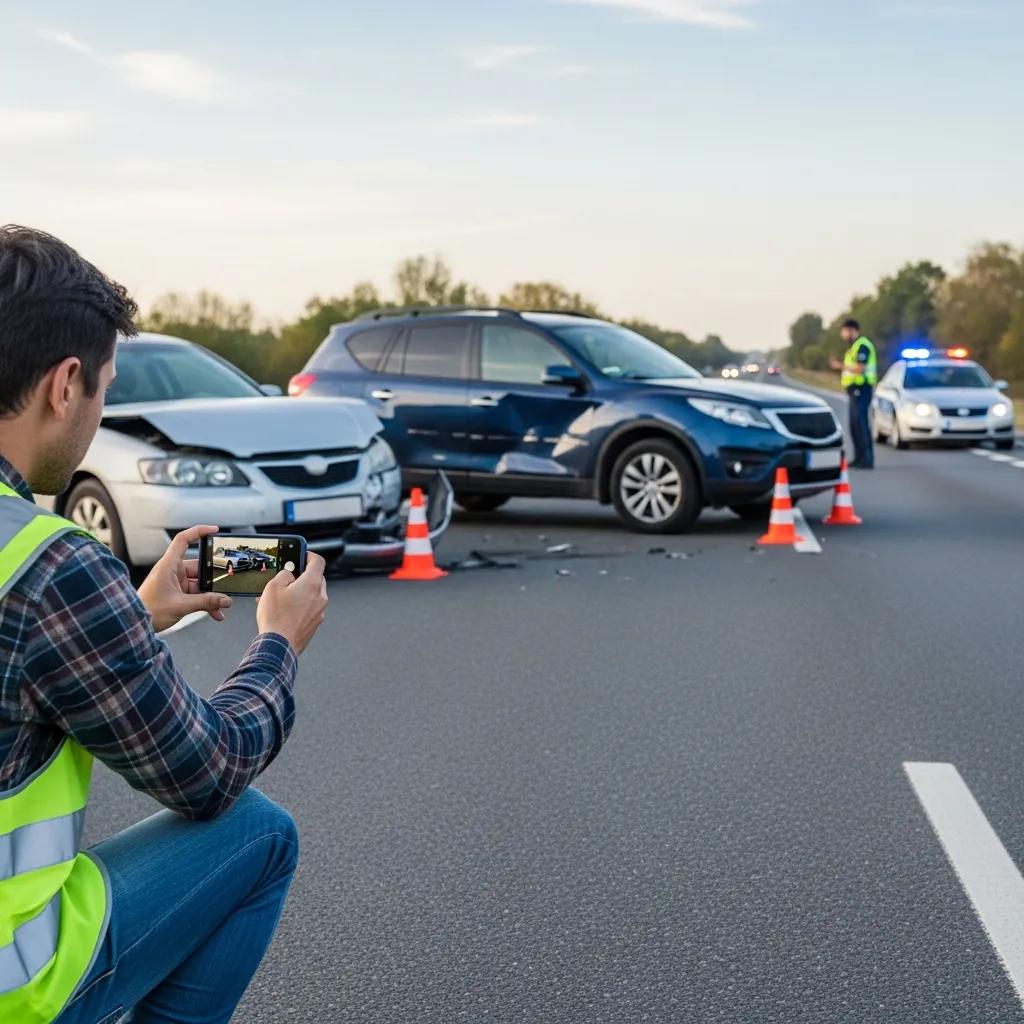
Start by checking for injuries and hazards like leaking fluids or oncoming traffic, then call the appropriate emergency responders. For minor fender‑benders in low‑traffic areas, move the car to a safe shoulder and use hazard lights or cones if you have them. For serious collisions or injuries, leave vehicles where they are for investigators. A police report is usually necessary for injuries, major damage, or disputes about fault, and it helps insurers verify the incident. When you speak with others at the scene, stick to the facts and avoid admitting fault. Note environmental details — traffic signals, road conditions, weather — and take clear photos from multiple angles.
Calm, methodical documentation reduces later disputes and speeds up claims. Detailed notes and photos create a reliable record that makes scheduling repairs and talking with your insurer much easier.
When and How to Call Prime Time Collision Center for 24/7 Towing and Support
If your vehicle is disabled or unsafe, call for professional towing and shop support to protect the car for a claim and get it to a certified repair facility. Prime Time Collision Center provides 24/7 towing guidance and can advise whether a tow is required and what information to prepare — vehicle make/model, exact location, visible damage, and the insurer’s claim number if one exists. When you contact the shop, confirm they’ll provide a free estimate on intake. The initial intake typically includes a visual assessment and documentation the shop will use when coordinating with your insurer.
Getting your vehicle to a certified collision center quickly helps avoid further damage and ensures accurate estimates. Once the car arrives, the shop will inspect it and move forward with repair authorization and scheduling, which we explain in the insurance and repair sections below.
Why Choose Prime Time Collision Center for OEM Certified Collision Repair in Burbank?
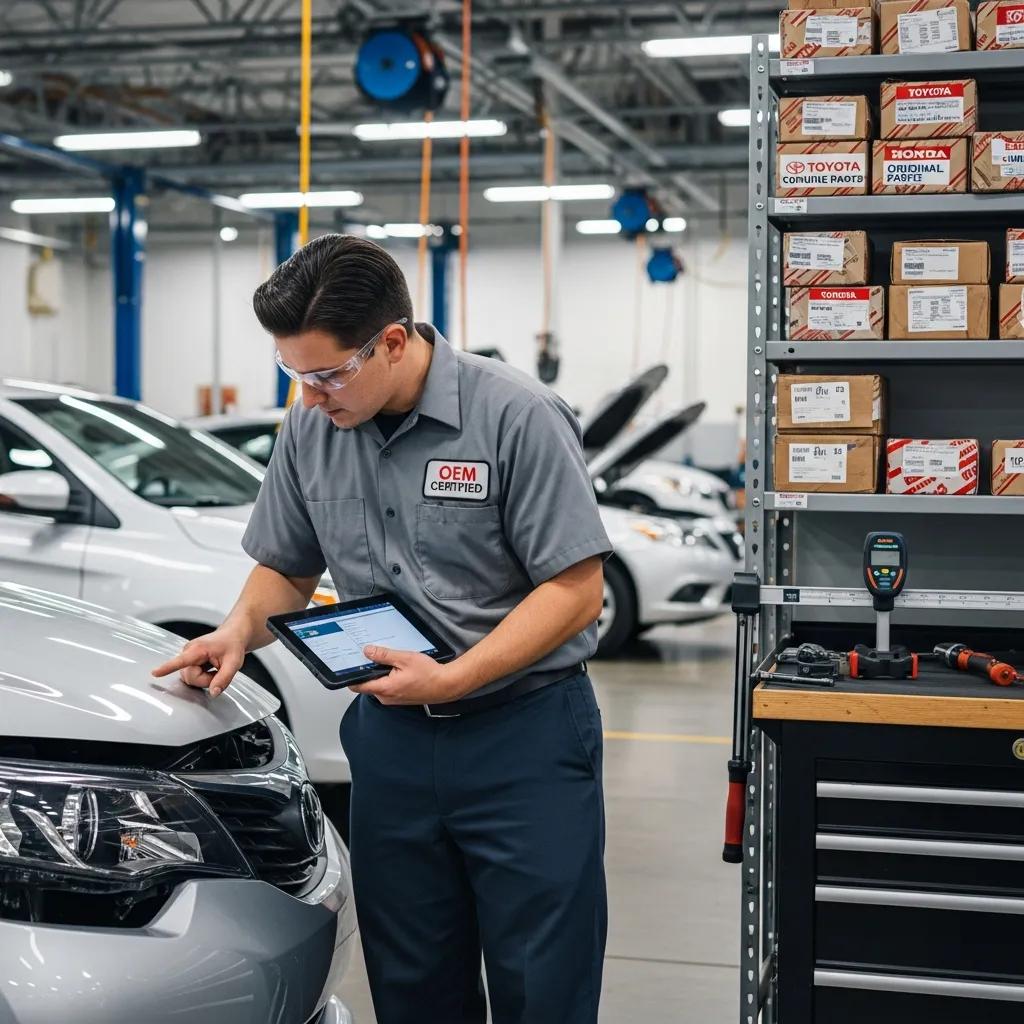
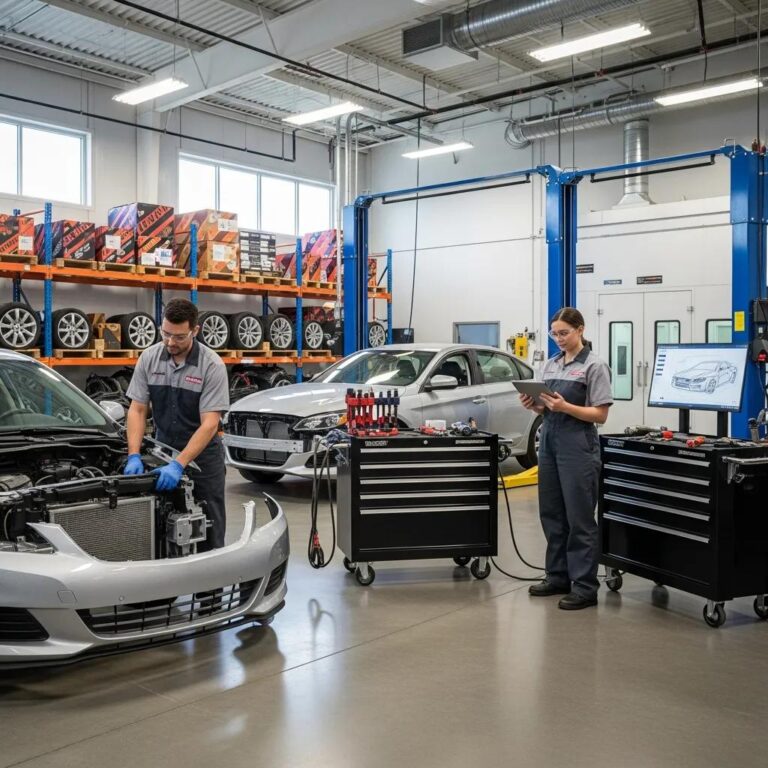
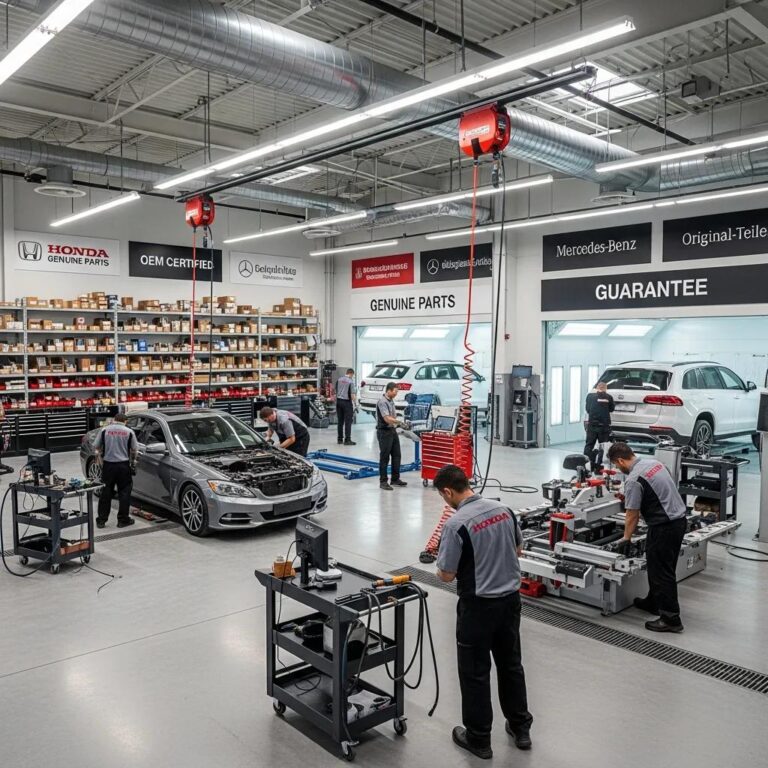
OEM‑certified collision repair follows manufacturer procedures, uses recommended parts and performs required system calibrations to restore a vehicle to factory safety and performance standards. Prime Time Collision Center focuses on factory‑quality repairs by certified technicians, following procedures that preserve structural integrity, use proper parts, and recalibrate ADAS when needed. Choosing OEM‑level repair helps maintain occupant safety systems, protects resale value, and aligns with insurer and manufacturer expectations for returning a vehicle to pre‑accident condition. When comparing shops, look for explicit training credentials and the right diagnostic equipment — these signal the ability to repair modern vehicles correctly.
Key trust signals include technician certifications, use of OEM parts, and written repair procedures that reference manufacturer guidelines. The quick comparison below explains what those signals mean and why they matter for repair quality and safety.
| Certification / Attribute | What It Represents | Why It Matters |
|---|---|---|
| I‑CAR Platinum | Advanced technician training and ongoing education | Shows technicians are kept current on modern repair methods and safety systems |
| OEM parts usage | Replacement parts that meet manufacturer specifications | Helps preserve fit, finish, and factory‑designed safety features |
| Diagnostic & calibration equipment | Tools for computerized inspections and ADAS recalibration | Restores driver‑assistance systems and critical safety functions |
These factors work together to improve repair accuracy and vehicle safety. If you want factory‑quality results, confirming these attributes reduces the chance of improper repairs and protects long‑term vehicle value.
What Does I-CAR Platinum Certification Mean for Your Vehicle Repair?
I‑CAR Platinum is a recognized benchmark for technician training and continuing education in collision repair. Technicians at this level complete core and specialty courses covering structural repair, welding, electronics and safety‑system calibration. That training helps reduce missed damage and ensures repairs meet manufacturer tolerances. For vehicle owners, I‑CAR Platinum means more accurate diagnostics, documented training, and greater confidence that the shop follows current industry standards recognized by insurers and manufacturers.
Knowing a shop’s training credentials naturally leads to questions about specific OEM or factory affiliations — details we cover next so you can verify model‑specific capabilities and parts sourcing.
Which OEM Certifications Does Prime Time Collision Center Hold?
Prime Time Collision Center emphasizes factory‑quality repairs and certified technicians while avoiding unverified claims about specific manufacturer certifications. If you need confirmation for a particular make, ask for documentation during your estimate — reputable shops will share training records and equipment details on request. This transparency is especially important for owners of luxury or high‑tech vehicles who want assurance that procedures and parts match manufacturer requirements. Requesting verification at intake helps protect your vehicle’s safety systems and resale value.
Reviewing the shop’s documented procedures and asking about parts sources before you authorize work creates clarity and prevents surprises during insurance coordination and repair execution.
How Does Prime Time Collision Center Simplify Insurance Claims for Burbank Drivers?
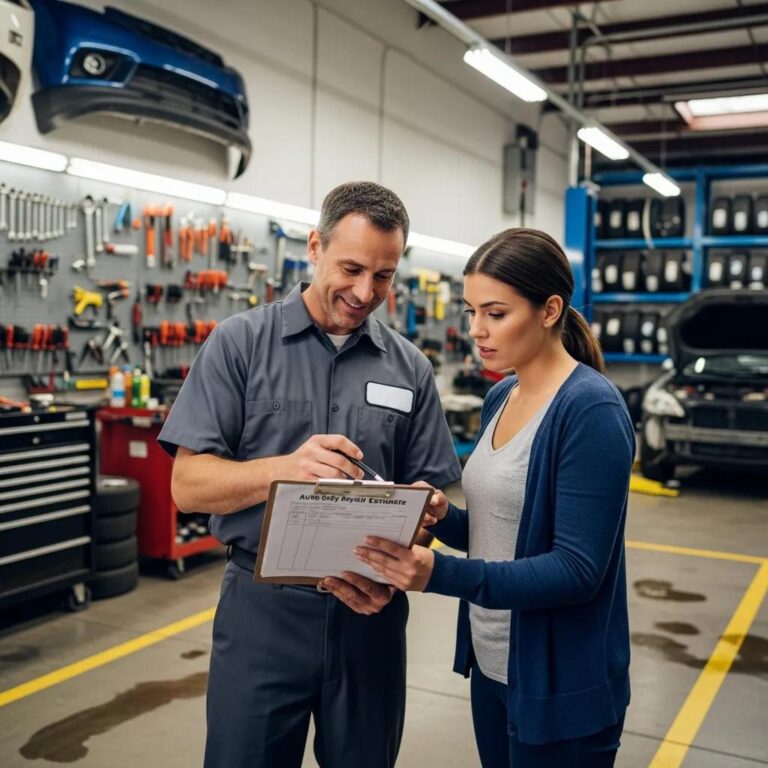
A good collision center reduces friction in the claims process by preparing detailed estimates, communicating with insurers, and supplying documentation that supports necessary repairs. Prime Time Collision Center works with major insurance companies and offers free estimates so drivers understand damage scope and repair options before committing. The shop typically produces computerized estimates, documents safety‑system diagnostics, and submits supplemental information to ensure the full repair scope is recognized. Bringing thorough scene evidence and taking your vehicle to a certified shop speeds up insurer appraisals and lowers the chance of missed repairs.
| Party | Action | Support Provided |
|---|---|---|
| Driver | Report the incident and collect documentation | Provide photos, police report details, and witness contacts |
| Shop | Prepare a computerized estimate and supporting documentation | Submit estimates and repair plans to the insurer; explain required procedures |
| Insurer | Review the claim and authorize repairs | Coordinate inspections, approvals and payments with the shop |
When driver, shop, and insurer work together, authorizations move faster and surprises are fewer. The next section explains how the shop’s insurer relationships affect timelines and expectations.
Does Prime Time Collision Center Work with All Major Insurance Companies?
Yes — Prime Time Collision Center works with all major insurers and routinely exchanges estimates, documentation and supplement requests to secure timely authorizations. Those working relationships streamline communication and let the shop handle administrative steps like submitting computerized estimates and clarifying repair procedures. For customers, that means fewer calls and clearer timelines, though you’ll still need to report the claim to your insurer and follow any carrier‑specific steps. During intake, confirm that the shop will coordinate directly with your insurer and send the estimate on your behalf.
Understanding the shop’s insurer interactions helps you set realistic expectations about the claims process and repair timeline.
What Is the Step-by-Step Process for Insurance Claim Assistance?
A defined workflow keeps repairs moving and owners informed from estimate to delivery. Typical steps are: an initial visual assessment with a computerized estimate; submission of the estimate and photos to the insurer; insurer review and any requested inspections or supplements; repair authorization and execution; and a final quality check with documentation of safety‑system tests. Throughout, the shop updates the owner, addresses supplemental needs, and documents results so insurers clearly understand why specific repairs and parts are required.
Sticking to a documented process minimizes disputes and helps return your vehicle to safe, manufacturer‑aligned condition — which we cover more in the services section below.
What Comprehensive Auto Body and Collision Repair Services Are Available in Burbank?
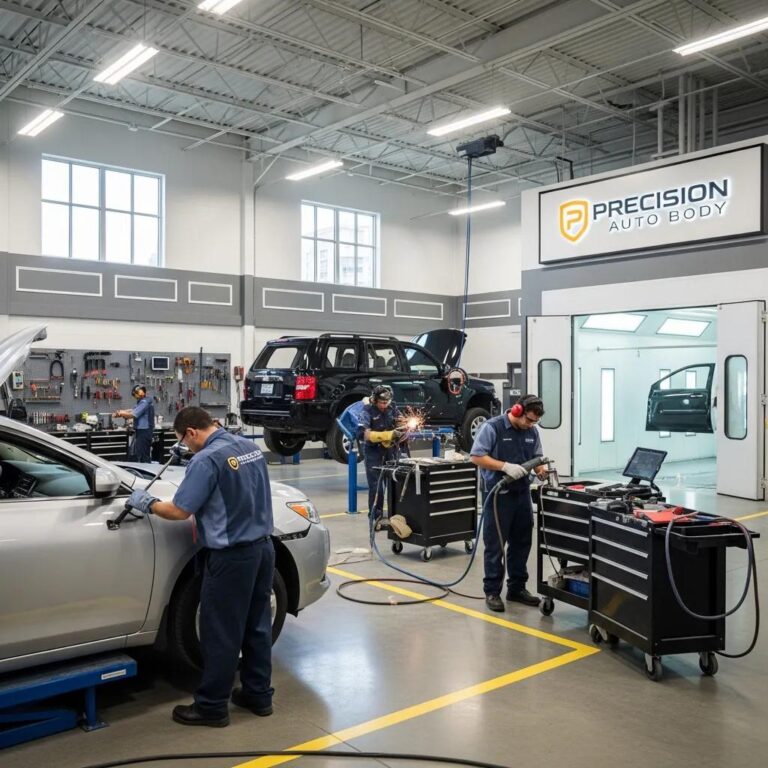
Collision shops offer services ranging from quick cosmetic fixes to full structural restoration. Typical offerings include paintless dent repair (PDR) for minor creases, precision auto painting and color matching for repainted panels, frame straightening and structural repair for major impacts, glass repair or replacement, and ADAS (advanced driver‑assistance system) calibration for modern safety features. Each service targets different damage types and delivers different benefits: PDR preserves factory paint and is fast for small dents, while precision painting restores finish and corrosion protection after panel repair or replacement.
- Services cover both minor and major damage with professional options matched to repair needs.
- Each repair includes quality checks and documentation to support claims and safety verification.
- Choosing a repair path balances time, cost, and long‑term vehicle integrity.
| Service | Typical Repair Scenario | Expected Outcome / Benefit |
|---|---|---|
| Paintless Dent Repair | Small dents where the paint remains intact | Maintains OEM finish and is cost‑effective |
| Frame Straightening | Structural damage from moderate to severe collisions | Restores alignment and vehicle safety geometry |
| Precision Auto Painting | Painted or replaced panels after collision | Color‑matched finish and restored corrosion protection |
This overview helps you choose the right service based on damage and desired result. The next subsections explain minor versus major repairs and techniques like PDR and precision painting in more detail.
Which Collision Repair Services Does Prime Time Offer for Minor and Major Damage?
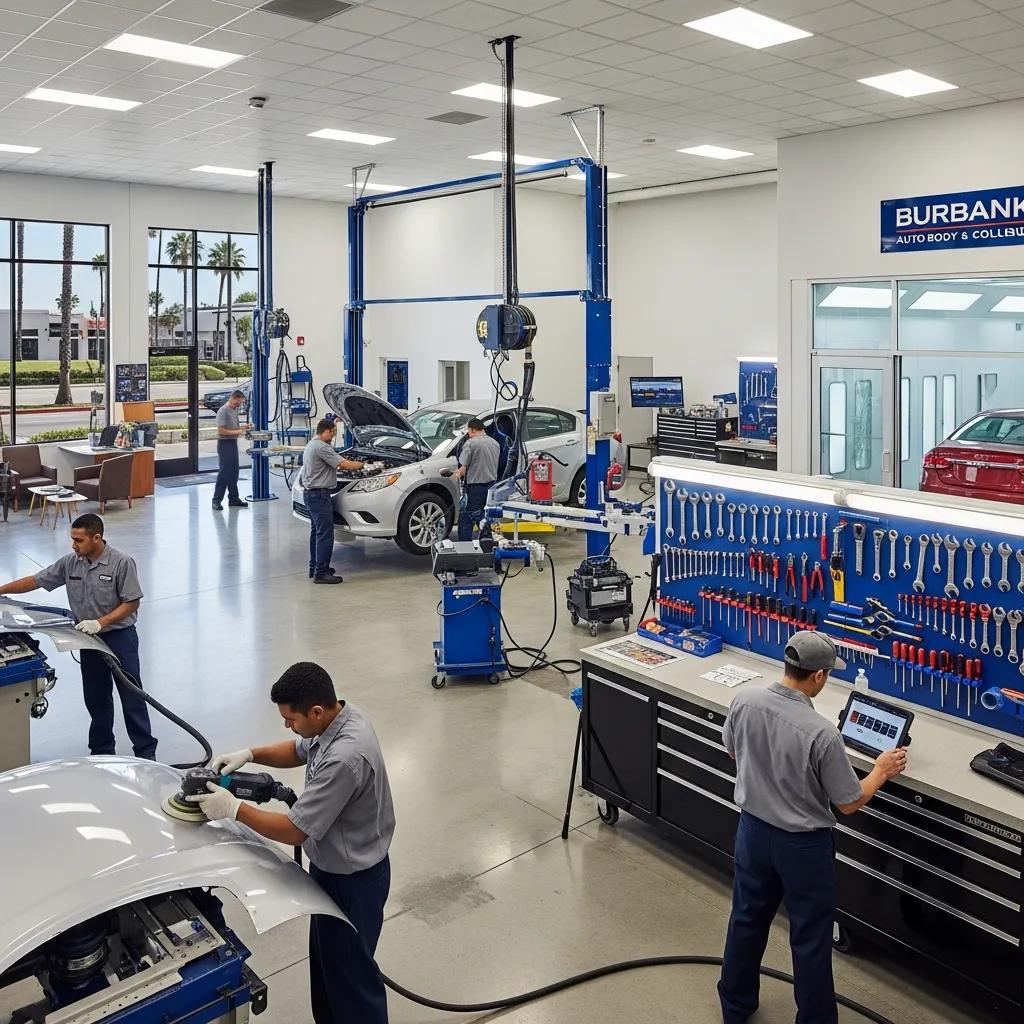
For minor damage such as bumper scuffs and small dents, we offer paintless dent repair and targeted panel work that preserve factory paint and finish. Major damage affecting structural components or requiring panel replacement includes frame straightening, precise alignment, and ADAS recalibration so sensors and safety systems perform correctly after repair. Timelines vary: minor cosmetic work can take a few days, while structural repairs and complex calibrations may take a week or more depending on parts availability and insurer approvals. Quality control always includes visual inspections, measurement checks, and functional safety tests before we release the vehicle.
Knowing repair scope and expected timelines helps you arrange transportation or rentals while repairs are underway. The following section explains specific restoration techniques and when each is appropriate.
How Do Paintless Dent Repair and Precision Auto Painting Enhance Your Vehicle?
Paintless dent repair (PDR) uses specialized tools to reshape dents from behind panels and is ideal when the paint surface is undamaged — it’s faster and preserves the original finish. Precision auto painting is necessary when paint is chipped, panels are replaced, or color matching is required; modern paint systems and color‑matching technology blend new paint with existing surfaces for a seamless look and restored corrosion protection. PDR saves time and cost while keeping factory coatings intact; precision painting restores appearance, protection and value using OEM‑grade materials. The right method depends on damage extent, paint condition and your priorities for durability and finish.
Choosing the correct repair technique restores both appearance and protective function, helping maintain long‑term value and safety — points that local reviews and shop accessibility often reinforce.
How Does Prime Time Collision Center Serve the Burbank Community with Excellence?
Local collision centers build trust through reliable repairs, transparent estimates and clear communication during stressful moments. Prime Time Collision Center emphasizes certified technicians, factory‑quality repairs and free estimates so Burbank drivers can make informed choices that prioritize safety and vehicle integrity. Community‑focused service includes help with towing, insurance coordination and open communication throughout the repair process so owners feel supported and informed. For many customers, consistent documentation and technician expertise are the clearest signs of a shop that values community trust and long‑term relationships.
When checking local reputation and reviews, look for recurring themes like clear communication, thorough documentation and dependable repair quality — those patterns tend to match shops that put long‑term service first.
What Do Burbank Customers Say About Their Collision Repair Experience?
Verified customer feedback often highlights a few consistent points: responsiveness to questions, clear and accurate estimates, thorough repairs, and professional service at intake and delivery. While you should review individual testimonials on official platforms, common praise for reputable shops focuses on timely updates, the accuracy of initial estimates and confidence that safety systems were addressed properly. Reading published reviews on a shop’s business profile helps you confirm those patterns and set realistic expectations for your own repair experience.
Positive review themes usually match shops that document repairs carefully and follow certified procedures — helpful when you need clarity during insurer interactions and final inspection.
Where Is Prime Time Collision Center Located and How to Get Directions?
Prime Time Collision Center serves Burbank and nearby communities. Our Google Business Profile lists the current address and directions for scheduling an appointment or drop‑off. Before you go, confirm appointment availability and whether a free estimate will be provided at intake so you can bring claim details and vehicle records. If you need public transit or drop‑off options, call ahead to ask about vehicle holding procedures and expected intake times. Checking the business profile and calling first helps ensure a smooth arrival and a timely visual estimate.
Confirming logistics and estimate availability before you travel reduces wait time and keeps the repair process moving from intake to authorization.
Frequently Asked Questions
What should I look for when choosing a collision repair shop?
Prioritize certifications, technician training and the shop’s policy on parts. Look for I‑CAR Platinum or similar credentials, ask whether the shop uses OEM parts, and confirm any warranty on repairs. Check experience with your vehicle make and read recent customer reviews to gauge reliability and service quality. Those factors together give you the best chance of a safe, lasting repair.
How long does the collision repair process typically take?
Repair time depends on damage severity and the work required. Minor jobs like PDR may take a few days; structural repairs, parts replacement and ADAS calibration can take a week or longer. Parts availability and insurance approvals also affect timing. Ask the shop for an estimated timeline during the intake so you can plan transportation and rentals if needed.
Will my insurance cover the cost of collision repairs?
Most policies cover collision repairs, but coverage varies by policy and deductible. Review your insurance details and talk with your agent to understand what’s included. A certified collision center can help by providing detailed estimates and documentation to support the claim. Keep accident photos, police reports and repair estimates to streamline the process.
What is the difference between OEM and aftermarket parts?
OEM (Original Equipment Manufacturer) parts are made to the vehicle maker’s specifications; aftermarket parts come from third‑party suppliers and can vary in fit and quality. While aftermarket parts can be less costly, OEM parts are usually recommended to preserve safety, performance and resale value. Discuss options with your repair advisor so you can weigh cost against long‑term value.
How can I ensure my vehicle’s safety systems are properly calibrated after repairs?
Choose a collision center that follows OEM procedures and has the right diagnostic and calibration equipment for ADAS. Ask the shop to explain their calibration process and whether they document tests and results. A reputable shop will perform and record functional checks before returning the vehicle to you.
What should I do if I have additional questions during the repair process?
If questions arise, contact the collision center — a good shop keeps open lines of communication and provides regular updates. Ask about progress, unexpected issues, or changes to the completion date. Clear, timely communication helps you stay confident in the work being done.
Can I get a rental car while my vehicle is being repaired?
Many shops help arrange rental cars, especially when your insurance includes rental coverage. Check your policy for rental benefits and ask the shop about rental partners or recommendations when you drop off the vehicle. That lets you secure transportation without delaying repairs.
Conclusion
Choosing Prime Time Collision Center means trusting a shop that emphasizes OEM‑quality repairs, certified technicians and transparent communication. We aim to make the repair process as clear and stress‑free as possible so you can get back on the road safely. Contact us for a free estimate and let us show you how we restore vehicles to factory standards with care and professionalism.