

Car Loan vs. Lease — Which Fits Your Budget and Lifestyle? A Practical Guide to Financing Your Next Vehicle
Deciding whether to buy or lease affects your monthly payment, long‑term equity, and how an accident can hit your wallet. A car loan means you’re buying the vehicle — your monthly payments cover principal and interest and build ownership over time. A lease is a fixed-term agreement where your payments cover expected depreciation and use, not ownership. This guide walks through how each option works, what drives monthly costs, how accidents and total-loss claims play out, the role of GAP insurance, and why OEM-certified repairs matter for financed or leased cars. You’ll find simple formulas, example calculations, lease-return expectations, and clear decision points tied to mileage, budget, and risk appetite. We weave in practical terms like car loan vs lease, GAP insurance, residual value, and OEM-certified repairs so you can compare options and plan for post-accident outcomes.
What Are the Key Differences Between Car Loans and Leases?
The main differences are ownership, what drives payments, and what happens at the end of the term. Loans transfer ownership to you and base payments on the principal, APR, and term. Leases give you temporary use and base payments on MSRP, residual value, depreciation, and the money factor — and they usually put limits on mileage and acceptable wear. Knowing these structural differences helps explain why loans make sense for long-term owners who want equity, while leases appeal to drivers who want lower monthly payments and frequent vehicle updates. Below we break down how loans work, when leasing helps, and what to expect after a collision.
Loans center on the amount borrowed, the annual percentage rate, and the repayment term. As you pay down principal you build equity; if the car’s resale value exceeds the remaining loan balance you have positive equity to put toward your next vehicle. Loan holders are responsible for repairs after accidents and must keep making payments unless an insurer totals the car and GAP insurance covers any shortfall. Maintenance and depreciation also shape resale value, so understanding how loans create equity helps you plan insurance and repair choices to protect that value.
Leases focus on the vehicle’s expected depreciation during the contract, not the full purchase price, which usually gives lower monthly payments and little or no equity buildup. Leases set a residual value at term end and commonly include mileage caps and wear-and-tear rules; exceeding them or returning unrepaired damage will likely trigger fees. Leasing can be a good fit if you want predictable monthly costs and regular access to newer models, but because you don’t own the car, repair standards and lessor approvals tend to be stricter. Knowing lease math — residual value, capitalized cost, and money factor — helps you decide if the lower monthly payment is worth the limits.
Quick comparison: the most important contrasts at a glance.
- Ownership & Equity: Loans build ownership over time; leases do not create consumer equity.
- Payment Drivers: Loan payments come from principal and interest; lease payments reflect depreciation and fees.
- Usage Limits: Loans don’t cap mileage; leases do and enforce wear-and-tear standards.
How Do Car Loans Work and What Are Their Benefits?
With a car loan you finance the purchase price minus any down payment. Your lender gets monthly payments that include principal and interest for a fixed term. As principal falls you gain equity you can use for a trade-in or sale — that equity is a key benefit of buying. Loans often mean higher monthly payments than leases for the same car in the short term, but they remove mileage limits and can lower total cost if you keep the vehicle past the loan term. After an accident you’re responsible for repairs and must continue payments unless the insurer totals the car and GAP insurance covers the remaining balance, so it’s important to know your loan balance versus the car’s actual cash value.
Example: financing a $30,000 vehicle with a $3,000 down payment at 4.5% APR over 60 months will produce higher monthly payments than a similar lease — but you’ll own the car when the loan ends. Buyers who keep cars long term often see a lower total cost of ownership. Next, we explain lease mechanics and why depreciation and residuals dominate lease math.
What Does Leasing a Car Involve and What Are Its Advantages?
Leasing means you pay for the car’s expected depreciation during the lease, plus taxes, fees, and a money factor (the lease version of interest). The lessor sets a residual value — the estimated worth at lease end — and your payment is the difference between the capitalized cost and that residual, spread over the term. Good lease deals depend on an accurate residual. Leasing’s upside is lower upfront and monthly costs and easier access to new models. Downsides include mileage limits, potential lease-end penalties for excess wear or unrepaired damage, and often stricter repair requirements, including OEM parts or certified repairs to protect residual value.
If you drive within the mileage allowance and like changing cars every few years, leasing can be cost-effective. But because lessors protect residual value, repair quality and documentation matter at return. The next section compares monthly costs for buying versus leasing with numeric examples.
How Do Monthly Payments and Costs Compare Between Buying and Leasing?

Loan payments are shaped by APR, loan term, and down payment. Lease payments are driven by depreciation (capitalized cost minus residual), the money factor, and fees. Buyers’ total cost of ownership includes maintenance, insurance, and long-term depreciation risk. Lessees need to budget for lease-end charges, mileage overages, and strict wear-and-tear rules. A higher residual lowers lease payments; a lower APR lowers loan payments — small shifts in these numbers can meaningfully change monthly costs. The table below lays out the primary drivers so you can compare what feeds monthly payments and overall expense.
Compare the core payment drivers for loans and leases and how they move your monthly obligation.
| Financing Option | Primary Cost Driver | Typical Impact on Monthly Payment |
|---|---|---|
| Loan | APR and loan term | Higher APR increases interest; longer term lowers monthly payment but raises total interest paid |
| Lease | Residual value | A higher residual reduces depreciation and lowers your monthly payment |
| Loan | Down payment | A larger down payment reduces the financed amount and lowers the monthly payment |
| Lease | Money factor and fees | Higher money factor or extra fees increase monthly cost and amounts due at signing |
This table explains why leasing the same model often costs less per month but may cost more if you lease repeatedly over years. Below are the main levers you can use to lower loan payments.
- Interest Rate: A lower APR cuts the interest portion and total cost.
- Loan Term: Longer terms lower monthly payments but raise total interest paid.
- Down Payment / Trade-In: More cash down reduces the financed amount and monthly obligation.
What Factors Influence Monthly Payments for Car Loans?
Your loan payment is driven by the financed principal, APR, and loan term — how those three interact sets the monthly principal-plus-interest amount. Your credit score strongly influences the APR you’re offered, so improving credit or increasing your down payment will lower the monthly cost. Shorter terms raise monthly payments but reduce total interest. Don’t forget insurance and maintenance when budgeting. After an accident you must keep paying the loan while claims and repairs proceed unless the insurer’s ACV payout and GAP insurance change the picture. Knowing these variables helps you choose terms that balance monthly affordability and lifetime cost.
Practical tip: dropping your APR by 1% or increasing your down payment by a few thousand dollars can shave tens of dollars off your monthly payment — often enough to matter for monthly budgeting. Next we compare how lease payments are built.
How Are Lease Payments Calculated and What Should You Expect?
Lease payments start with the capitalized cost minus the residual value, divided across the lease term, plus the rent charge (money factor × the sum of capitalized cost and residual) and applicable taxes and fees. The money factor converts to an APR-like interest component; the lessor sets the residual, and that percentage is the biggest influence on your payment. Expect lower monthly payments than buying the same car, but watch for lease-end charges for excess mileage, heavy wear, or unrepaired damage — those can add up. Ask for the residual percentage and money factor up front so you can compute and compare offers.
Quick checklist before you sign a lease:
- Confirm the residual value and money factor.
- Check the mileage allowance and the per-mile overage fee.
- Read wear-and-tear standards and any required repair approval process.
What Are the Financial Implications of Accidents on Financed and Leased Vehicles?
An accident changes who pays and what happens next depending on whether the car is financed, leased, or owned free and clear. Insurers pay actual cash value (ACV), but lenders and lessors have financial interests and repair requirements. For financed vehicles, the insurer’s ACV goes toward the lender’s balance; if ACV is less than the loan balance, you owe the difference unless GAP insurance covers it. For leased vehicles, the lessor usually requires approval for repairs and may insist on OEM parts or certified repairs to protect residual value — unresolved damage can lead to lease-end charges. The table below outlines typical post-accident outcomes for financed versus leased cars so you know who pays what and when.
Post-accident responsibilities and typical financial outcomes for financed and leased vehicles.
| Vehicle Type | Post-Accident Responsibility | Typical Financial Outcome |
|---|---|---|
| Financed vehicle | Owner/lender interest; insurer pays ACV to lender | Owner may owe the difference if loan balance > ACV; GAP insurance can cover the shortfall |
| Leased vehicle | Lessor approval for repairs; insurer pays ACV to lessor/lender | Lessor may require OEM repairs; lessee may face lease-end charges or early termination fees |
| Both | Documentation and approved estimates required | Clear estimates and certified repairs reduce disputes and protect residual or equity |
This comparison shows why repair quality and documentation matter after collisions and how insurance payouts interact with lender or lessor interests. Below we walk through real‑world examples and how a certified shop helps speed claims.
After an accident, owners with outstanding loans usually must keep paying while settlement and repairs proceed, which can create short-term cash-flow pressure. The insurer pays ACV to the lender or owner depending on lien status; if ACV is lower than the outstanding balance you’re on the hook for the gap unless you have GAP insurance. Fixing the vehicle can preserve equity when repair costs are reasonable compared with ACV. Your choices should be guided by repair estimates and expected resale value.
Lease agreements often require lessor authorization for repairs and may demand OEM parts or certified repair methods to maintain warranty and residual expectations. If repairs don’t meet the lessor’s standards, you may face lease-end penalties or diminished-value charges. That’s why working with an approved repair shop and keeping thorough documentation is critical. Next we explain how GAP insurance fills shortfalls for both financed and leased vehicles and when it’s worth buying.
How Does an Accident Affect Your Car Loan and Equity?
If your financed car is damaged or totaled, the insurer’s ACV payout typically goes to the lender if there’s a lien. Your remaining loan balance minus the ACV determines any out-of-pocket amount. If the car depreciated faster than your loan amortized, you could owe money — which is why GAP insurance is useful for many buyers. Repairing the car can protect resale value and preserve equity if the repair brings the vehicle back to market standards. Timely estimates and quality repairs help avoid disputes with insurers and improve equity outcomes.
Example: if your loan balance is $18,000 and the insurer’s ACV is $15,000, you’d owe $3,000 without GAP insurance. Deciding whether to repair or replace depends on accurate estimates and resale expectations. Next we cover lease-end penalties and lessee responsibilities after accidents.
What Are Lease-End Penalties and Repair Requirements After an Accident?
Common lease-end penalties include charges for excessive wear, unrepaired damage, and mileage overages. Lessors often require documented, approved repairs — sometimes specifying OEM parts or certified procedures — to accept returns without extra fees. To avoid surprise bills, get insurer-approved estimates and use repair facilities that coordinate with your lessor. Documented OEM-certified repairs and clear communication with the lessor reduce the chance of disputed charges and protect the vehicle’s residual value. Keep detailed records to cut down financial surprises when your lease ends.
How Can GAP Insurance Protect You in Car Loan and Lease Situations?

GAP insurance covers the gap between the insurer’s ACV payout and the remaining loan or lease payoff when a vehicle is totaled or stolen and not recovered. It’s most useful when you have a small down payment, a long loan term, or a vehicle that depreciates quickly — situations where the loan or lease balance can exceed ACV. Typically the primary insurer pays ACV first, then GAP addresses any remaining payoff after you provide documentation. Fast, accurate estimates and repair records make claims smoother. Below are common situations where GAP is worth considering.
- New cars with steep early depreciation: GAP can protect you in the first years.
- Low down payment or long loan terms: Greater chance the loan balance will exceed ACV.
- Leases with payoff clauses: GAP can prevent lessee liability if the vehicle is totaled.
GAP can prevent unexpected debts after a total-loss claim. The next section defines GAP and explains where to buy it.
What Is GAP Insurance and When Is It Necessary?
Guaranteed Asset Protection (GAP) pays the difference between the insurer’s ACV payout and your loan or lease payoff when the vehicle is totaled or stolen. It’s most useful when your loan or lease balance could exceed the car’s ACV — for example, new cars that lose value fast, low down payments, or long terms that slow equity build-up. You can buy GAP from dealers, lenders, or private insurers; compare prices and coverage to decide if the premium is worth the protection for your situation.
Next we describe the GAP claim flow and the documentation that helps get you paid.
How Does GAP Insurance Work for Financed and Leased Vehicles?
After the primary insurer pays ACV, the lender or lessor receives that payout. If a payoff amount remains, eligible GAP coverage can be filed to cover the difference; you’ll need documentation of the payoff and vehicle status. For financed cars, GAP covers the shortfall between ACV and the outstanding loan. For leased cars, GAP can cover lease payoff differences that might otherwise fall to the lessee. Timely estimates, repair records, and coordination with your lender or lessor speed the process. Certified repair documentation can also help with diminished-value negotiations or repair acceptance.
Documents that typically speed a GAP claim:
- Insurer’s ACV payout statement.
- Lender or lessor payoff amount.
- Relevant repair estimates or total-loss determination documents.
Keeping these items organized reduces disputes and shortens claim timelines.
Why Are OEM Certified Repairs Important for Maintaining Vehicle Value?
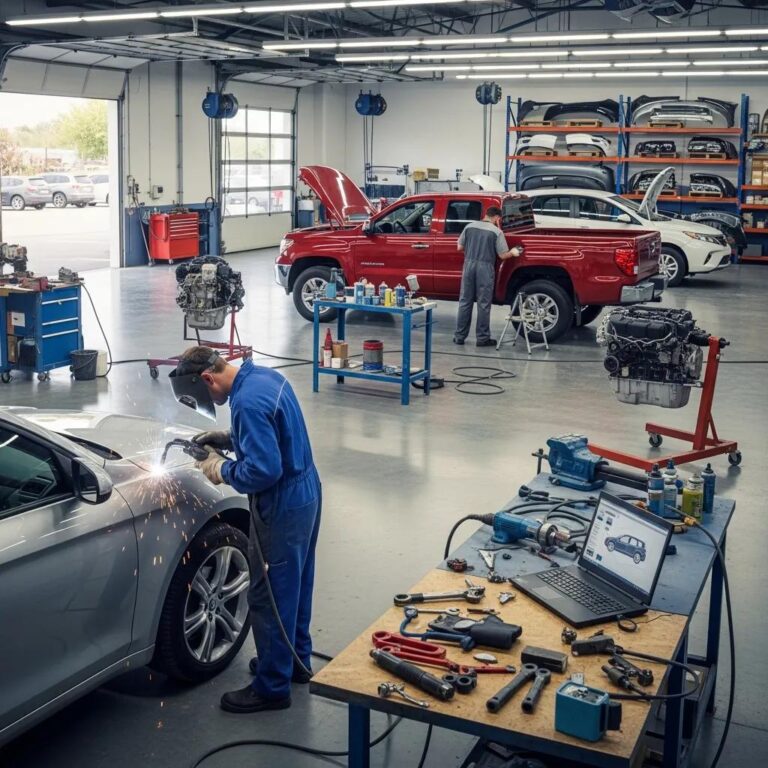
OEM-certified repairs use manufacturer-approved parts and repair methods to restore factory tolerances, structure, and safety systems. That conservation of fit and function supports residual value and resale appeal. Certified repairs also lower the chance of disputes with insurers and lessors because they follow factory standards — something lessors often require to accept repairs or avoid lease-end charges. A record of OEM-certified work creates verifiable documentation that helps defend diminished-value claims and usually leads to better financial outcomes after accidents. The table below compares repair approaches and their typical impacts on value and warranty.
How repair quality maps to residual value and acceptance.
| Repair Approach | Certification / Process | Impact on Value and Acceptance |
|---|---|---|
| OEM-certified repair | I-CAR or manufacturer-approved methods | Preserves residual value and simplifies insurer/lessor acceptance |
| Aftermarket repair | Variable parts and processes | May cost less upfront but carries higher risk of disputes and diminished value |
| Paintless dent repair | Non‑invasive method for minor damage | Maintains finish without replacing parts; suitable depending on damage type |
Choosing certified repairs lowers the risk of lease-end penalties and supports stronger resale claims, which makes them a strategic option for financed and leased vehicles. Below we explain how OEM repairs protect residual value and the role a certified provider plays.
How Do OEM Repairs Preserve Residual Value in Leased Cars?
OEM repairs restore factory fit, finish, and safety standards — the things lessors check at lease return. Repairs that meet OEM tolerances keep the vehicle marketable and reduce diminished-value claims. When repairs are documented with certified processes and parts, you have evidence to contest unfair lease-end charges. Coordinating repairs with your insurer and lessor raises the odds the work will be accepted and that the residual value reflects a properly repaired vehicle.
For financed cars, documented OEM work also helps preserve resale value by showing buyers the car was repaired to factory standards, which can support a stronger sale price and protect equity. Next, we outline the role of a certified repair center in this process.
What Role Does Prime Time Collision Center Play in Certified Repairs?
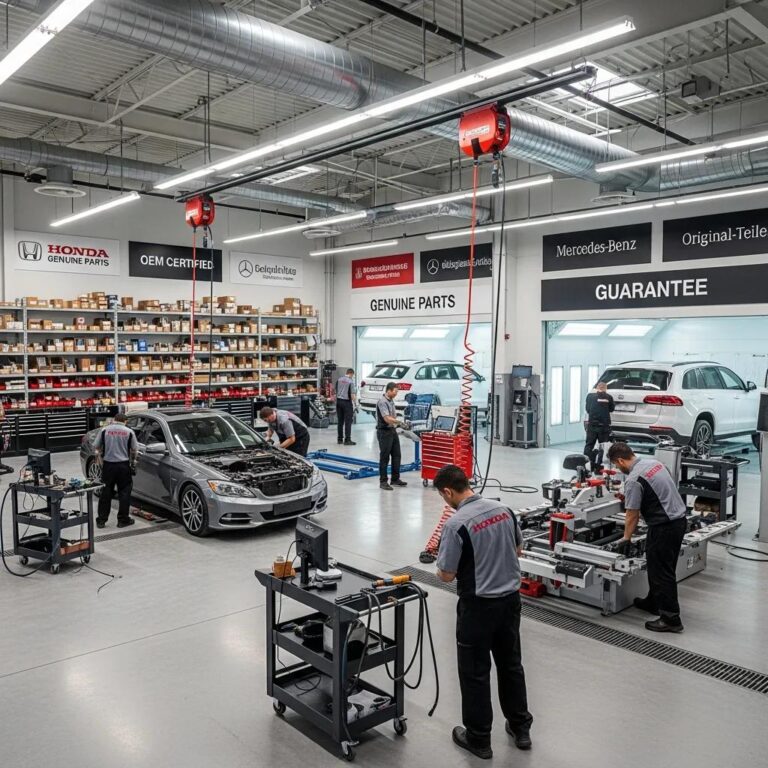
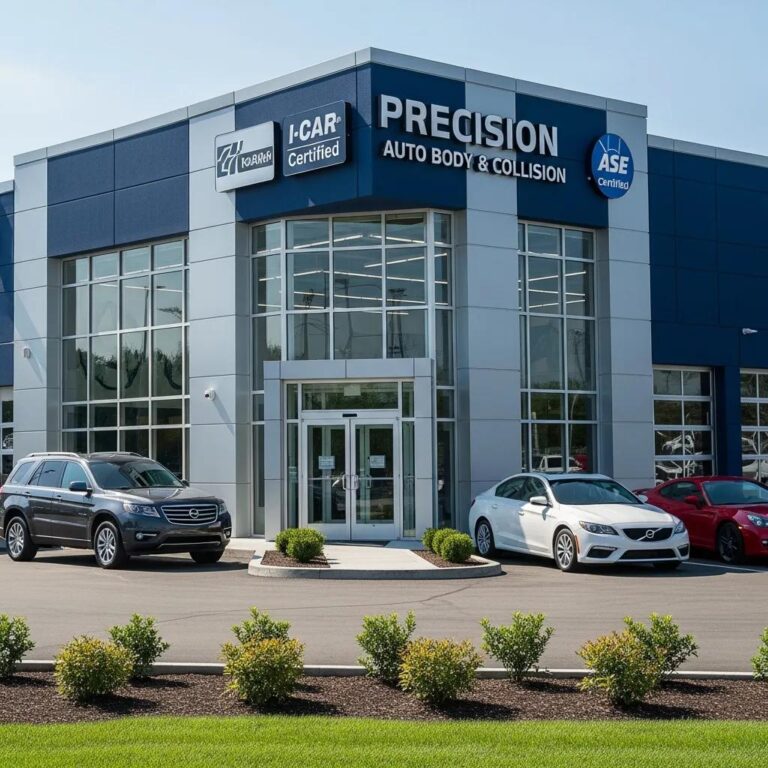
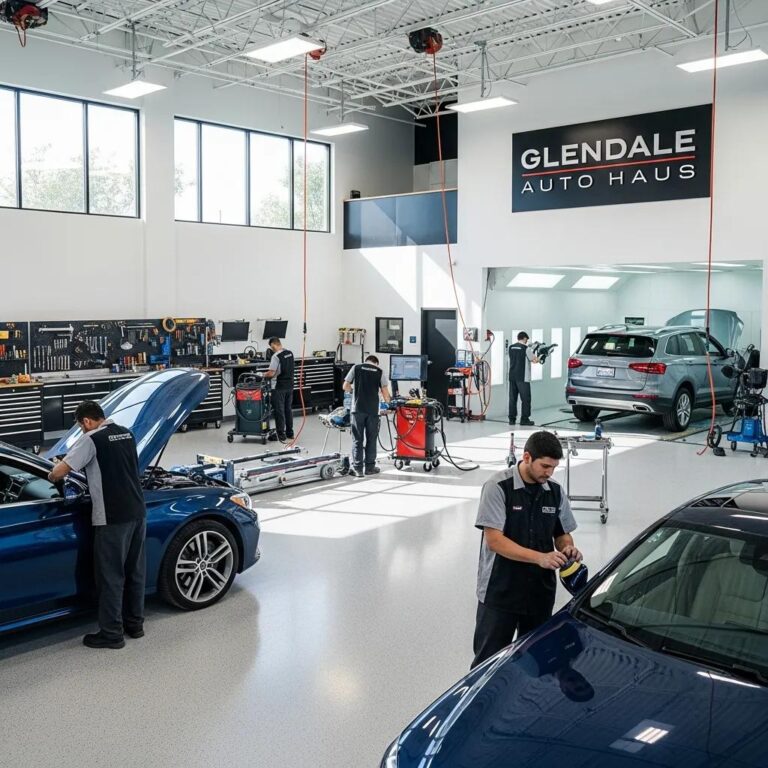
Prime Time Collision Center is an I-CAR Platinum certified collision repair shop in Glendale, CA. We focus on OEM-quality repairs and clear insurance coordination to help drivers protect vehicle value and navigate claims after accidents. We work with all major insurers, provide free estimates, and offer 24/7 towing to make logistics easier and speed documentation and approvals. We also walk customers through the repair and claims process, explain certification and warranty details, and aim to reduce disputes so residual value and equity are protected. If you need OEM-certified repairs that support your loan or lease outcome, Prime Time Collision Center acts as a local partner you can rely on.
Certification, insurer coordination, and clear communication together help protect equity and residual value. The next section gives a decision framework to help you pick lease or loan based on your goals.
How Should You Decide Between Leasing and Buying Based on Your Financial Goals?
Choose by weighing ownership goals, annual mileage, monthly budget, and how much risk you’ll accept after an accident. If you want long-term ownership, unlimited miles, and equity, a loan is usually the better choice. If you prefer lower monthly payments, regular vehicle turnover, and predictable short-term costs, a lease may suit you. Think about accident risk: leases often require OEM-certified repairs to avoid penalties, and financed buyers should consider GAP insurance or enough equity to avoid out-of-pocket losses after a total loss. Use the checklist and calculator guidance below to model options and factor in realistic repair estimates.
Decision checklist before you run the numbers:
- Do you want to own the vehicle and be free to sell or trade it?
- How many miles do you drive each year compared with typical lease allowances?
- Can you handle higher monthly payments in exchange for building equity?
These answers inform the calculator inputs described next and tell you when to consult a certified repair shop for repair-cost estimates.
What Are the Pros and Cons of Leasing vs. Buying a Vehicle?
Leasing pros: lower monthly payments and easier access to newer models. Leasing cons: mileage limits, no equity, and stricter repair rules that can lead to lease-end charges. Buying pros: equity accumulation, no contract mileage caps, and control over repairs and resale timing. Buying cons: higher monthly payments and responsibility for long-term maintenance and depreciation. After an accident, buyers may keep the repaired car and preserve equity, while lessees must meet lessor repair standards to protect residual value and avoid fees. Use these trade-offs to decide if short-term affordability or long-term ownership fits your goals.
Quick accident-related trade-offs:
- Buyers: Responsible for repairs but keep any equity gained after fixing damage.
- Lessees: Must meet lessor repair standards to avoid end-of-lease penalties.
- Both: Good insurance, appropriate GAP coverage, and OEM-certified repairs reduce financial exposure.
How Can a Lease vs. Buy Car Calculator Help You Make an Informed Choice?
A lease vs. buy calculator models price, down payment, term, APR or money factor, residual value, and mileage to compare monthly payments and total cost over the ownership horizon you choose. Include accident and repair risk — estimated maintenance, insurance premiums, and whether you’ll buy GAP — because realistic repair costs can change the result. Recommended inputs: vehicle price or capitalized cost, down payment, term length, APR or money factor, residual percentage, annual mileage, and estimated annual repair/insurance costs. For the most accurate results, get a certified repair shop’s estimate for likely damage scenarios and use that data in the calculator.
If you’re close to deciding, get a free estimate from a certified repair center and let us coordinate with your insurer — that gives your calculator real repair-cost inputs and improves your final decision. This step ties back to protecting value through certified repairs.
Frequently Asked Questions
1. What are the tax implications of leasing versus buying a car?
When you lease, many states tax the monthly payment rather than the full purchase price, which can lower upfront costs. Buying typically requires sales tax on the entire purchase price at sale. There can also be different business tax rules for leased vehicles. Tax rules vary by state and situation, so check with a tax professional for advice that matches your circumstances.
2. Can I negotiate the terms of a lease or loan?
Yes — both are negotiable. On a lease you can negotiate the capitalized cost (vehicle price), money factor (interest), and sometimes the residual. For loans you can shop interest rates, loan terms, and down payment. Do your research, know your credit score, and read the fine print before signing.
3. What happens if I exceed the mileage limit on a lease?
If you go over the mileage allowance, you’ll usually pay a per-mile fee at lease end — often between about $0.10 and $0.25 per mile. Those charges add up, so estimate your annual mileage carefully before signing. Some leases let you buy extra miles up front at a lower rate.
4. How does my credit score affect my financing options?
Your credit score matters: higher scores generally qualify you for lower APRs and better lease rates, which lowers monthly payments and total cost. Lower scores can mean higher rates or denied financing. Check your credit report and improve your score before applying to get the best offers.
5. Are there any benefits to paying off a car loan early?
Paying off a loan early can save interest and free you from monthly payments sooner, which is helpful if you plan to keep the car long term. But check for prepayment penalties in your loan agreement. If there’s no penalty, early payoff is often a smart move.
6. What should I consider when deciding on GAP insurance?
Think about depreciation rate, your down payment, and loan or lease length. GAP is most useful when you could owe more than the car’s ACV — early years on new cars, low down payments, or long loans. Compare cost versus potential exposure to decide if GAP is worth it for you.
7. How can I ensure I get the best deal on a lease or loan?
Shop multiple lenders and dealers, compare offers, and negotiate terms like price, interest rate, and down payment. Maintain a good credit score, time your purchase around promotions or year-end deals, and read all terms carefully. Getting preapproved financing also strengthens your negotiating position.
Conclusion
Choosing between a car loan and a lease comes down to your budget, driving habits, and long-term priorities. Loans build equity and remove mileage limits; leases lower monthly costs but add limits and stricter repair standards. Evaluate your mileage, monthly budget, and tolerance for repair and total-loss risk. Use the checklists and calculator inputs here, and if you’ve been in an accident get a certified repair estimate to feed realistic costs into your decision. When you need OEM-certified repairs or help with claims, Prime Time Collision Center is here to guide you through the process and protect your vehicle’s value.