Car Paint Repair and Color Matching: Professional Techniques
Car Paint Repair & Color Matching — How We Deliver an OEM-Quality Finish
Car paint repair and precise color matching restore your vehicle’s look, protect it from corrosion, and help preserve resale value. This guide explains how professional refinish work happens — the tools, standards, and techniques technicians use to make repairs blend seamlessly. You’ll learn how spectrophotometer-assisted matching decodes OEM paint formulas, how multi-coat systems are applied for long-term durability, and which blending methods produce invisible repairs. We’ll also cover why OEM procedures and I-CAR Platinum training matter for safety and lasting value, plus what to expect from insurers and warranties. By the end you’ll have clear timelines, aftercare tips, and an understanding of how certified shops manage claims and guarantees so you can evaluate repair options confidently.
Why Prime Time Collision Center Is the Trusted Choice for Paint Repair
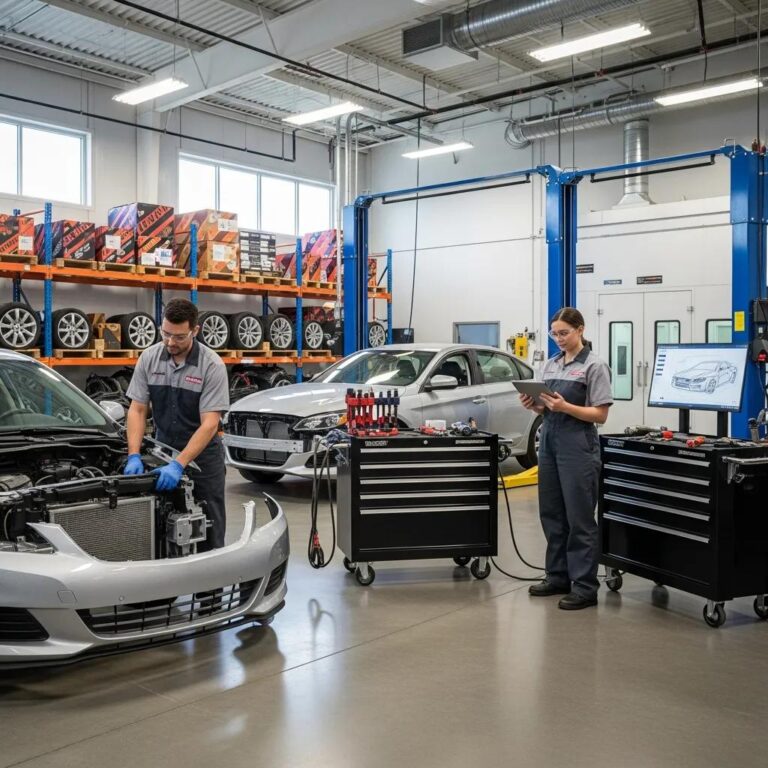
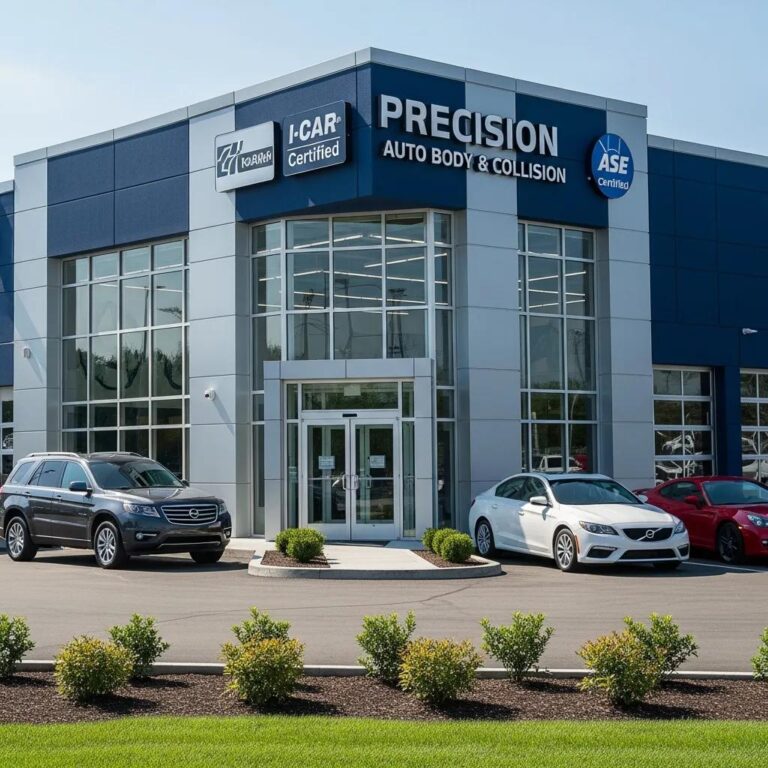
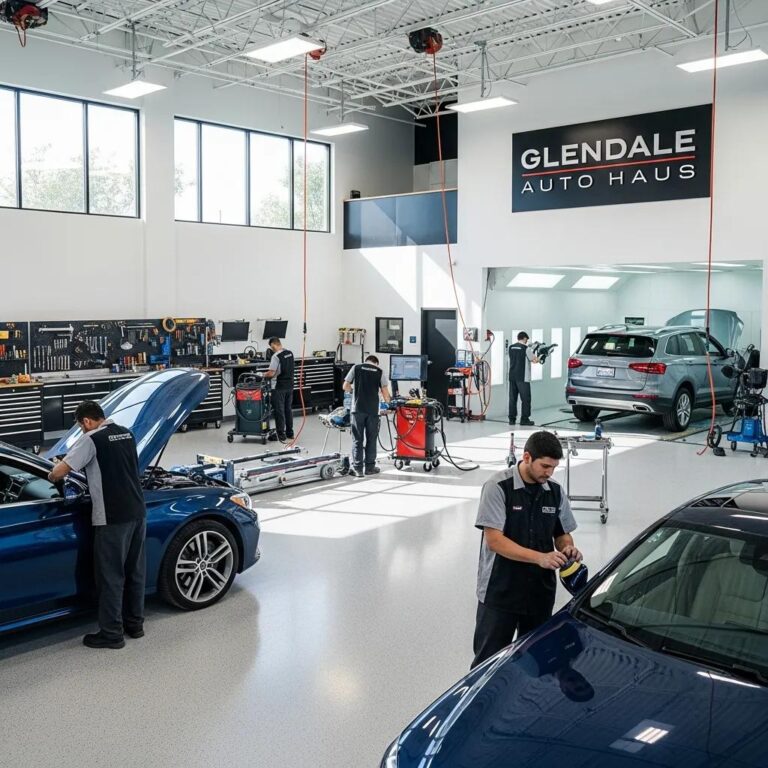
Great paint repair starts with trained technicians, repeatable processes, and a controlled work environment. Prime Time Collision Center brings those elements together to deliver OEM-quality refinishing and accurate color matches. Our I-CAR Platinum training keeps technicians current on repair sequences and paint-system interactions, while years of local service help us anticipate common regional issues like sun fade and environmental buildup. Customer-focused options — free estimates, insurer coordination, 24/7 towing, and a lifetime warranty — reduce friction and make the repair experience straightforward. These operational choices tie technical skill to real customer outcomes by aligning our workflow with insurer requirements and quality checks.
We back our work with verifiable credentials and hands-on practices designed to protect finish integrity and vehicle value. Knowing how certification and local experience translate into measurable results helps owners ask smarter questions about materials, matching methods, and post-repair care. The sections that follow walk through the tools and procedures that create a flawless finish, beginning with spectrophotometer-assisted matching and OEM code workflows.
- Key advantages of certified refinishing at a professional shop:Certified technicians follow OEM-aligned procedures for consistent, defensible repairs.We assist with insurance claims to reduce administrative delays for you.Warranty coverage and a controlled shop environment protect the final result.
These benefits show how technical capability and customer-focused service work together to preserve appearance and long-term vehicle condition.
How I-CAR Platinum Certified Technicians Deliver Better Paint Results
I-CAR Platinum certification means technicians complete specialized training in collision repair, refinishing sequences, and safety-critical procedures — and that training directly improves paint outcomes. Certified techs follow OEM repair sequences (correct panel prep, primer selection, and compatible paint systems), reducing problems like poor adhesion or color irregularities. Practical advantages include consistent mixing, validated cure times, and documented quality checks that catch mismatches before delivery. These practices help ensure repairs meet manufacturer standards and remain warranty-defensible.
Proper training also lowers the risk of repair-related corrosion or finish breakdown that can occur when shortcuts are taken. From certification we move to how local experience further sharpens matching decisions for vehicles in our area.
Why 15+ Years of Local Glendale Experience Matters
Local experience gives a shop insight into regional fade patterns, the vehicle makes commonly seen in the area, and trusted suppliers for OEM-grade materials — all of which speed diagnosis and improve match accuracy. Our familiarity with Glendale-area adjusters and insurer workflows helps approvals move faster and reduces repair cycle time. Having seen many similar paint failures lets technicians choose corrective approaches that minimize rework. That local track record supports consistent outcomes for returning customers and more efficient parts sourcing and scheduling.
The practical result: more accurate estimates and fewer surprises during repair. That leads into how technology augments technician judgment to achieve precise color matches.
How Advanced Spectrophotometers Produce Precise Color Matches

A spectrophotometer measures color by capturing hue, saturation, brightness, and metallic or pearlescent properties, turning what the eye sees into reproducible formulas. The device scans the existing finish, analyzes spectral data, and suggests an OEM or manufacturer-linked formula for computerized mixing. Because metallic and pearl finishes reflect light directionally, the spectral profile helps technicians anticipate flake orientation and other factors that affect perceived color. Paired with technician experience, the tool cuts down on trial-and-error and improves first-pass accuracy for both solid and effect finishes.
The matching workflow usually follows a practical sequence that balances automation with hands-on verification:
- Scan a representative panel to capture spectral data and flake orientation.
- Decode the scan into an OEM-linked formula or manufacturer system recommendation.
- Prepare a custom mix using computerized dispensers and make manual tint adjustments if needed.
- Spray-out test panels under controlled lighting and refine the mix until spectrophotometer data and visual checks align.
This stepwise approach pairs objective metrics with manual validation to handle faded or weathered panels that no longer match original formulas exactly.
Intro to the EAV table: The table below maps the instruments and accuracy metrics commonly used during spectrophotometer-assisted matching so you can see the tools and performance indicators technicians rely on.
| Tool | Measured Attribute | Typical Value/Use |
|---|---|---|
| Spectrophotometer | Spectral reflectance (hue, chroma, gloss) | High accuracy for solids; directs formula selection |
| Computerized Dispenser | Mixing precision | 1%–2% repeatability to reproduce OEM formulas |
| Spray-out Card | Visual verification under source lights | Shows appearance and flake orientation |
| Cross-lighting Booth | Angle-dependent inspection | Reveals metallic/pearl effects |
The table shows how instruments and visual checks combine to produce a reliable match, and where technicians add manual adjustments for weathered finishes.
How OEM Paint Codes and Formulas Affect Color Accuracy
OEM paint codes identify a vehicle’s factory finish and link it to a base formula and tint set; technicians use these codes as the starting point for mixes. Pulling the correct OEM formula by code reduces variability because it references the original pigment mix, binder, and recommended clear coats. Computerized mixers dispense those formulas precisely, while experienced techs make fine adjustments for in-service fade, substrate effects, or prior repairs. When codes are missing or the paint has been altered, spectral scanning and spray-out testing replace code reliance to recreate the closest visual match.
Mapping codes to formulas and validating with spray-out cards creates a feedback loop — if the initial mix diverges visually, techs tweak tint concentrations and re-evaluate under cross-lighting until the match is verified. From formula provenance we step into how multi-coat systems are layered for durability.
How Multi-Layer Paint Systems Are Applied for Durable Results
Multi-layer systems — primer, basecoat (color), and clear coat — each serve a purpose: adhesion and corrosion protection, color and effect, and gloss/protection. Proper sequence, film thickness control, and cure profiles are essential to avoid adhesion failure, solvent popping, or flat gloss. Technicians measure wet-film thickness, allow recommended flash and cure times between coats, and choose primer and clear formulations that are compatible with the basecoat. These practices preserve the finish appearance and protect the metal underneath.
Layering decisions also affect resale value and long-term performance: the right primer prevents corrosion creep at seams, and a high-quality clear coat maintains gloss and UV resistance. With materials and sequence set, technicians use blending techniques to integrate new paint into existing panels.
Professional Blending Techniques That Create Seamless Finishes

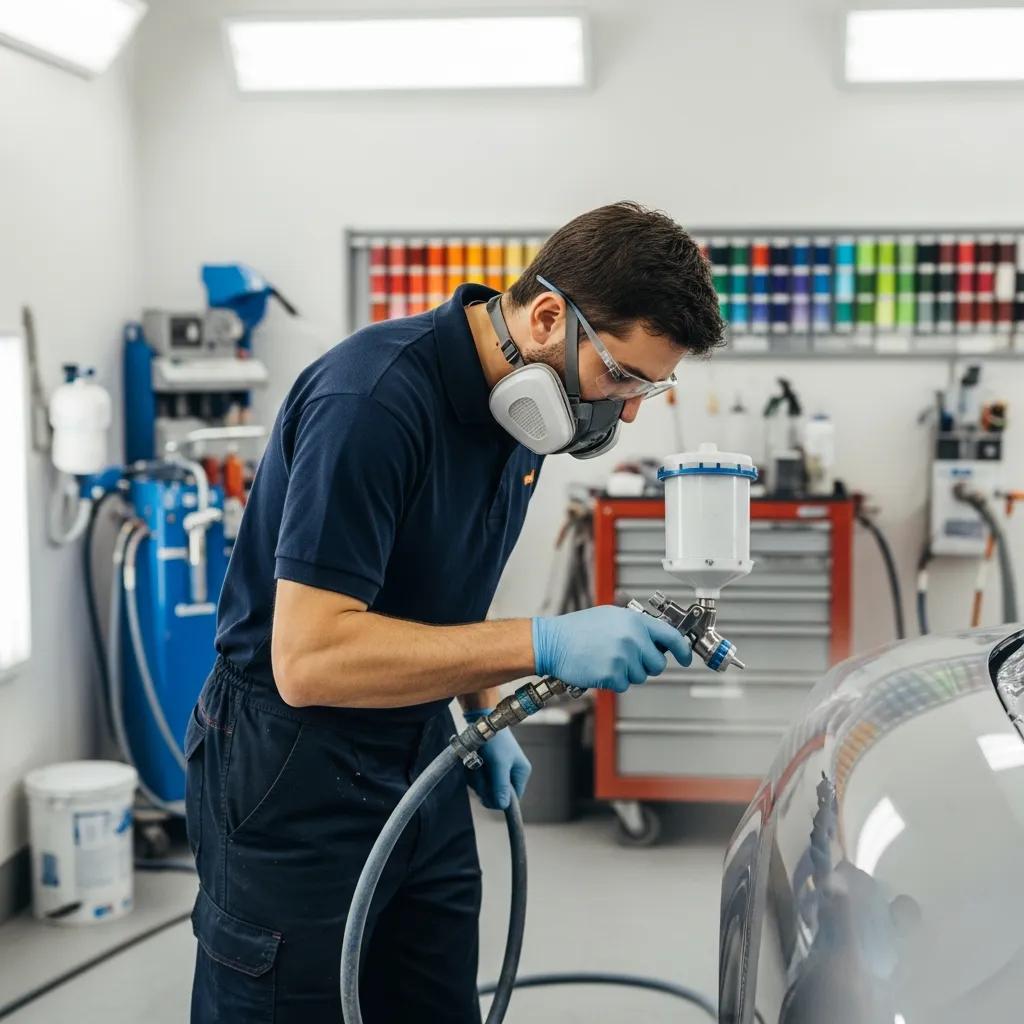
Paint blending brings new color into neighboring panels so repairs look indistinguishable from the original finish — matching color, gloss, and effect orientation. Common methods include feathering into adjacent panels, panel-edge blending, and full-panel blending for complex metallic or pearlescent finishes. Controlled spray patterns, consistent overlap, and careful edge prep reduce hard lines or visible transitions, while spray-out cards and cross-lighting confirm the result. Because metallic and pearl systems are sensitive to flake orientation and film thickness, blending requires measurement tools and practiced hands.
A practical process technicians follow to create invisible blends:
- Prepare and clean the repair area, removing contaminants and ensuring good adhesion.
- Apply primer and sand to a smooth, feathered edge to minimize abrupt thickness changes.
- Spray color in graduated passes, feathering into adjoining panels and controlling film build.
- Apply clear coat after proper flash time, then cure and perform final polish for uniform gloss.
Careful prep and layered application reduce visible seams; next we review the verification methods used during blending.
Intro to the EAV table: Below is a concise comparison of blending approaches, when they’re used, and how technicians verify success so owners can understand why a given technique is chosen.
| Blending Approach | When Used | Verification Method |
|---|---|---|
| Feathering | Small scratches and minor panel spots | Spray-out card + visual cross-light |
| Panel-edge Blending | Localized panel repairs | Edge inspection + gloss meter |
| Full-panel Blend | Complex metallic/pearl effects | Multiple spray-outs + angle lighting |
How Feathering and Spray-Out Card Testing Work
Feathering smooths the transition between new and existing paint by gradually reducing film build to create an imperceptible edge. Technicians sand primer to a feathered profile and spray color in graduated passes to match thickness and effect. Spray-out cards are sprayed with the candidate mix and reviewed under the same lighting used for the vehicle; they reveal how metallic flakes orient and whether the formula needs tint tweaks. Multiple spray-outs may be required to test different film builds and viewing angles, and final approval comes after checking under cross-lighting and natural light. These checks reduce the chance of visible differences once the clear coat is applied.
Validating before the final clear coat prevents costly rework and helps guarantee a finish that meets aesthetic and warranty standards.
Why Controlled Paint Booths Are Essential
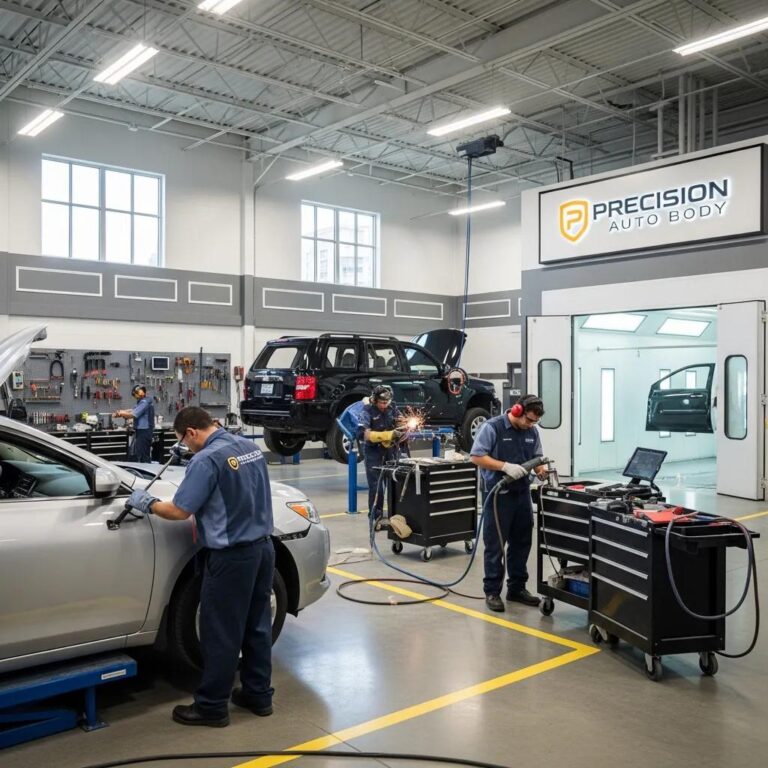
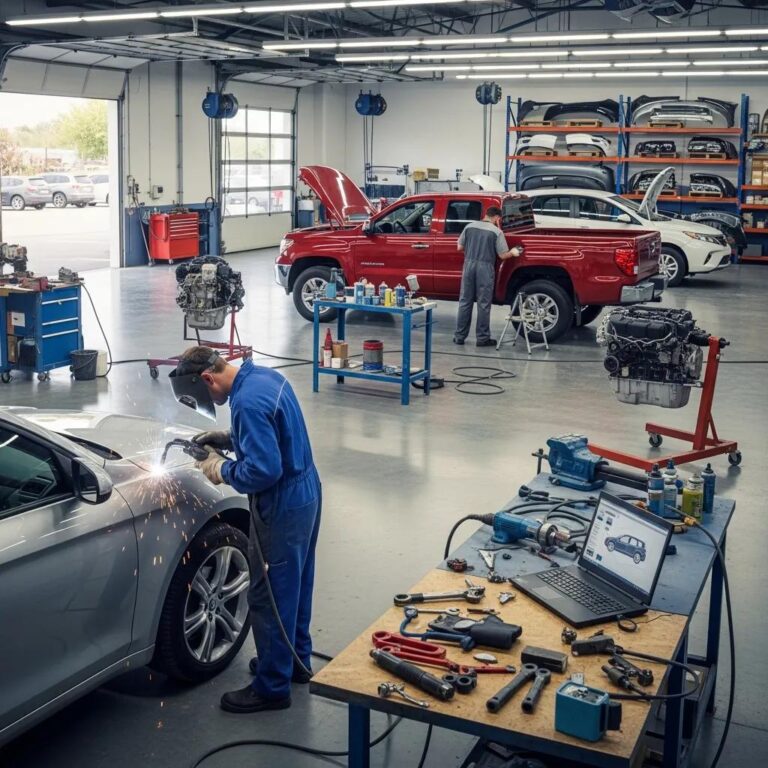
A controlled paint booth holds temperature, humidity, and airflow steady while filtering airborne particles — preventing defects like dust inclusions, orange peel, and solvent pop. Stable environmental conditions yield predictable drying and curing for both waterborne and solvent systems, and low particulate counts improve gloss and clarity in the final clear coat. Modern booths let technicians stage spray-outs and inspections under calibrated lighting, which improves color verification. Without these controls, even a perfectly matched mix can show defects after curing, so quality shops prioritize booth maintenance and monitoring.
Environmental control also supports long-term durability: proper curing and particle-free application preserve gloss and reduce adhesion failures.
Why OEM-Certified Paint Repairs Matter for Value and Safety
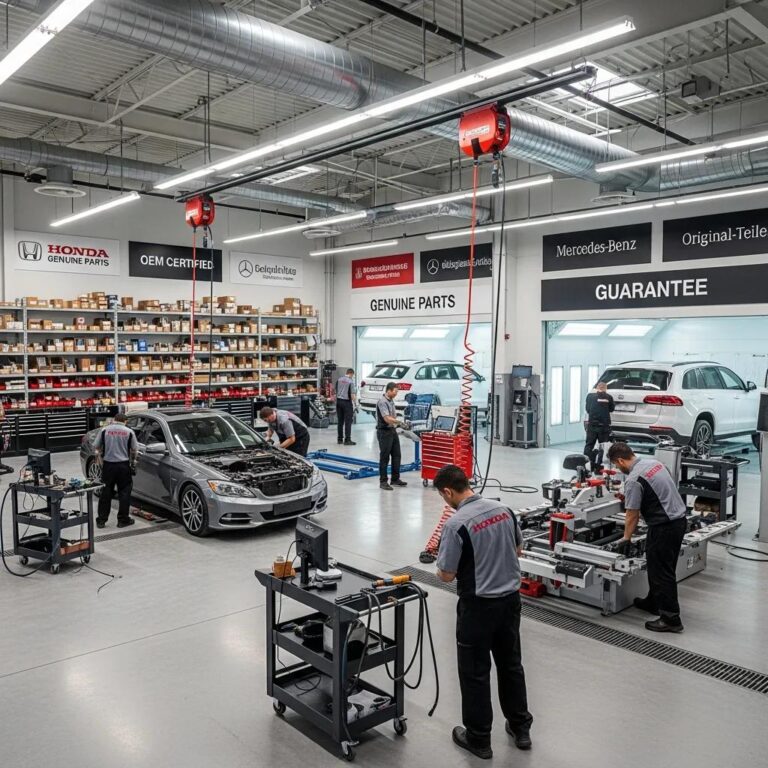
OEM-certified repairs follow manufacturer procedures for materials, fastening, and refinishing — protecting structural integrity, corrosion protection, and a documented repair history important to resale value. Using OEM-approved materials and documented processes lowers the risk of accelerated wear or hidden damage that could cause future issues. For buyers and insurers, OEM-level repair records demonstrate that safety systems and factory tolerances were respected. Those outcomes extend beyond looks to the vehicle’s function and lifecycle performance.
How OEM Standards Protect Durability and Resale Value
OEM standards specify primers, adhesives, and paint chemistries engineered to work together to resist corrosion, UV degradation, and mechanical wear. Following those materials and procedures prevents premature finish failure. Clear documentation of methods and materials creates an auditable trail for buyers and insurers that supports market value. Evidence of factory-equivalent repairs reduces disputes in claims or resale discussions and helps keep the vehicle’s documented condition intact. In short, correct materials and processes extend the life of the repair and preserve value over time.
Adhering to OEM standards also affects warranty transferability and owner confidence, which ties to the safety benefits of certified teams.
Safety Benefits of I-CAR Platinum Certified Repairs
I-CAR Platinum training ensures technicians understand how bodywork and refinishing interact with safety systems and structural components, reducing the chance that a cosmetic repair inadvertently compromises crash performance. Certified technicians follow sequences that preserve sensor calibration, structural adhesives, and corrosion barriers essential to occupant protection. Avoiding shortcuts in materials or processes helps prevent hidden damage that could impair safety systems. This training gives owners greater confidence that cosmetic repairs haven’t compromised the vehicle’s engineered protections.
Knowing these safety benefits helps owners prioritize certified repair paths after a collision.
How Prime Time Collision Center Supports Customers with Insurance and Warranty
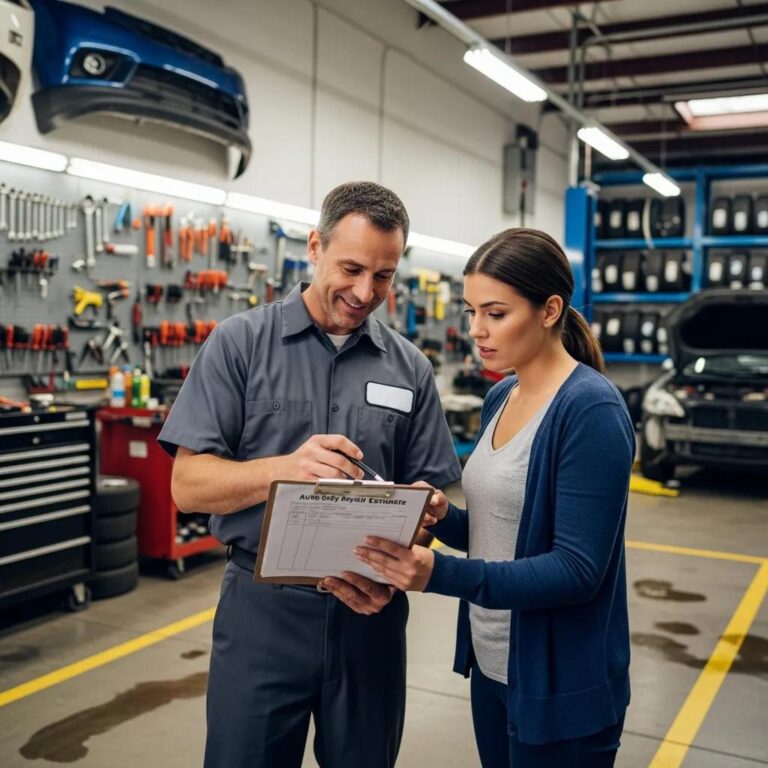
We offer a structured customer workflow that reduces friction during claims and protects repair quality with warranty coverage. The process starts with a free estimate and damage assessment, followed by insurer coordination to authorize OEM-level materials and procedures. During repairs we communicate progress and quality checkpoints, and upon completion we provide a lifetime warranty on paint and workmanship for as long as you own the vehicle. Working with all major insurers and providing towing and estimate services helps streamline timelines and reduce administrative burdens for customers.
The table below clarifies customer-facing offers and what each includes so owners know what to expect before authorizing work.
| Offer | What It Includes | Customer Benefit |
|---|---|---|
| Free Estimate | Damage assessment and initial color evaluation | Quick cost and time outlook |
| Insurance Coordination | Claim communication and authorization assistance | Reduced administrative burden |
| Lifetime Warranty | Paint and workmanship for the duration of ownership | Long-term protection of your repair investment |
How Our Insurance Claim Assistance Works
After a free estimate and documented damage assessment, we submit recommended repairs and OEM material requests to your insurer for authorization, then schedule work once approvals and parts are available. During repairs we provide status updates and document quality checks for insurer review if needed; final inspection confirms match and finish before handoff. Timelines depend on parts lead times and insurer response — proactive communication typically shortens delays. Bring vehicle documents and photos to speed authorization, and confirm warranty and payment terms at estimate time.
Clear communication and documented processes reduce surprises and keep the repair on track with both your expectations and insurer requirements.
What the Lifetime Warranty Covers
Our lifetime warranty covers paint and workmanship for as long as you own the vehicle, addressing defects in application and materials under normal use. Common exclusions include damage from new collisions, misuse, or improper aftercare; customers should review the formal warranty for specifics. To make a claim, present the repair documentation and warranty reference so we can assess and remedy covered issues. This warranty protects your investment in an OEM-aligned repair and gives confidence in long-term finish performance.
Knowing warranty scope and claim steps helps customers maintain coverage and get timely remediation if problems arise.
Common Questions About Paint Repair and Color Matching
Owners often ask about repair timelines, aftercare (washing and waxing), and how insurance affects the process. Clear, direct answers set realistic expectations before authorization. Repair duration varies with damage size, parts availability, and curing times, while proper aftercare supports long-term durability. This FAQ-style section gives straightforward guidance to help you plan and care for your vehicle after repair.
Typical timeline and care considerations are summarized below:
- Minor scratch or touch-up: Usually completed within a day or two, depending on curing and scheduling.
- Full panel repaint: Often requires several days, including prep and controlled curing.
- Multi-panel or structural-related refinish: May take a week or more because of parts and insurer approvals.
These ranges account for common variables and help owners coordinate with their repair shop and insurer.
How Long Does a Paint Repair Typically Take?
A small touch-up or localized repair can often be finished within 24–48 hours when parts are available and curing times are short. A full panel or multi-panel repaint usually takes several days to allow proper prep and curing. If parts ordering or insurer approval is required, timelines extend and we’ll provide a projected completion date at estimate. Controlled curing in a paint booth and final polishing add time but are essential for a durable, high-gloss finish. Clear milestone communication helps owners plan transportation and pick-up.
Understanding these typical durations can inform rental decisions and expectations for pickup once repairs are complete.
When Can I Wash or Wax My Vehicle After a Paint Job?
Wait at least 7–14 days before a full wash to allow solvent evaporation and initial cure, and delay waxing or polishing for about 30 days so the clear coat fully hardens. During the initial cure period, spot cleaning with pH-neutral soap and soft microfiber towels is fine. Avoid aggressive washing methods and high-pressure nozzles for the first few weeks to prevent disturbing the new finish. Following these timelines preserves gloss and adhesion and reduces the risk of water spotting or premature wear.
These care steps protect the repair during its most vulnerable stage and help preserve long-term appearance.
(818) 396-4997 is available for scheduling a free estimate and discussing OEM-aligned paint repair options and warranty details with a certified team at Prime Time Collision Center. Our staff can explain repair scope, insurer coordination, and expected timelines based on your vehicle’s finish and damage.
Frequently Asked Questions
What should I consider when choosing a car paint repair shop?
Choose a shop with clear certifications, trained technicians, and solid customer reviews. Look for I-CAR Platinum certification — it shows technicians have specialized training in collision repair and refinishing. Ask about the shop’s warranty, the materials they use, and experience with your vehicle make. A reputable shop will communicate the repair process and timeline clearly so you feel confident in their work.
How can I maintain my car’s paint after a repair?
Avoid washing or waxing for at least 7–14 days so the paint can cure. After that, use pH-neutral soap and soft microfiber towels for gentle cleaning. Inspect the paint regularly and address chips or damage quickly to prevent spread. Consider applying a quality wax or sealant after the initial curing period to protect against UV and contaminants.
What are the signs that my car needs paint repair?
Look for visible scratches, chips, dents, peeling, or fading paint. Rust on exposed metal or a dull, lifeless finish also indicate the need for attention. Regular inspections catch issues early and help preserve appearance and value.
How does weather affect car paint and repairs?
Weather affects paint performance and curing. Extreme temperatures, humidity, and UV exposure can cause fading, cracking, or peeling over time, and moisture promotes rust if paint is compromised. When scheduling repairs, know that high humidity or cold can impact curing — professional shops use controlled environments to minimize these effects and ensure a reliable finish.
What is the difference between OEM and aftermarket paint?
OEM (Original Equipment Manufacturer) paint is formulated to match the vehicle’s factory color and finish, offering better color accuracy and durability. Aftermarket paint can vary in quality and may not match factory specifications. For repairs that protect resale value and appearance, OEM paint is usually recommended.
Can I perform my own paint touch-ups, and how?
You can do minor touch-ups, but use the correct technique. Clean the area thoroughly, use the OEM color code to find matching paint, and apply thin layers, letting each dry before adding more. Use a fine applicator for precision and finish with a clear coat for protection. For larger or complex damage, professional repair is the better choice for a seamless result.
What should I do if my paint repair doesn’t match the original color?
If the repair doesn’t match, contact the shop promptly. A reputable shop will stand behind their work and address mismatches under warranty. They may re-check the match with spectrophotometer technology or adjust the mix until the color aligns. Prompt resolution helps maintain your vehicle’s appearance and value.
Conclusion
Professional paint repair and accurate color matching keep your vehicle looking its best and help protect resale value. With certified technicians, proven processes, and advanced tools, you can expect repairs done to OEM-quality standards. Ready to restore your finish? Schedule a free estimate with our team and see the difference quality repairs make for your car’s appearance and longevity.