Downtown Glendale Collision Repair — Expert Auto Body & Certified Accident Repair
Auto accidents are stressful. You’re suddenly juggling safety, medical needs, insurance paperwork, and repair decisions. This guide walks you through what to do right after a collision in Downtown Glendale, explains how certified repairs protect your vehicle’s safety and resale value, and lays out the repair steps our local shop follows — from estimate to final inspection. You’ll get practical tips for documenting the scene, understand why technician certifications and OEM-aligned procedures matter, and see typical timelines so you know what to expect. We also point to local resources for towing, emergency help, and free estimates so you can move from incident to repair with confidence.
What Should You Do Immediately After a Car Accident in Glendale?
Right after a crash, focus on three things: keep people safe, document what happened, and preserve evidence for medical care and insurance. Check yourself and any passengers, call emergency services for injuries or hazards, and move to a safe spot if it’s safe to do so. Use your phone to capture photos of vehicle positions, damage, road conditions and any witnesses. Exchange contact and insurance information, get a police report when needed, and notify your insurer promptly. These actions protect everyone and make the claims and repair process smoother.
- Prioritize safety — call 911 immediately for injuries or dangerous conditions.
- If the cars are driveable, move them to a safe place; if not, stay buckled and safe until responders arrive.
- Take clear photos of each vehicle, license plates, the scene, and any visible injuries.
- Swap names, phone numbers, insurance details, and driver’s license information with other drivers.
- Report the crash to your insurer and get a police report number if one is filed.
Following these five steps preserves evidence and lets you transition quickly to repairs and claims. The next section explains how a local collision shop can help with towing and the initial damage intake.
Step-by-Step Guide for Drivers After a Collision
Good documentation reduces confusion and speeds up claims and repairs. Start with wide shots that show vehicle locations, then take close-ups of all damage, dashboard warning lights, and contributing factors like skid marks or weather. Write brief notes about the timeline, what you remember, and any witness comments — those notes are useful when filing reports. Keep medical receipts and treatment notes if you receive care, since insurers will want them when settling claims.
These simple habits help shops estimate repairs more accurately and order the right parts sooner.
How Prime Time Collision Center Assists with 24/7 Towing and Insurance Claims
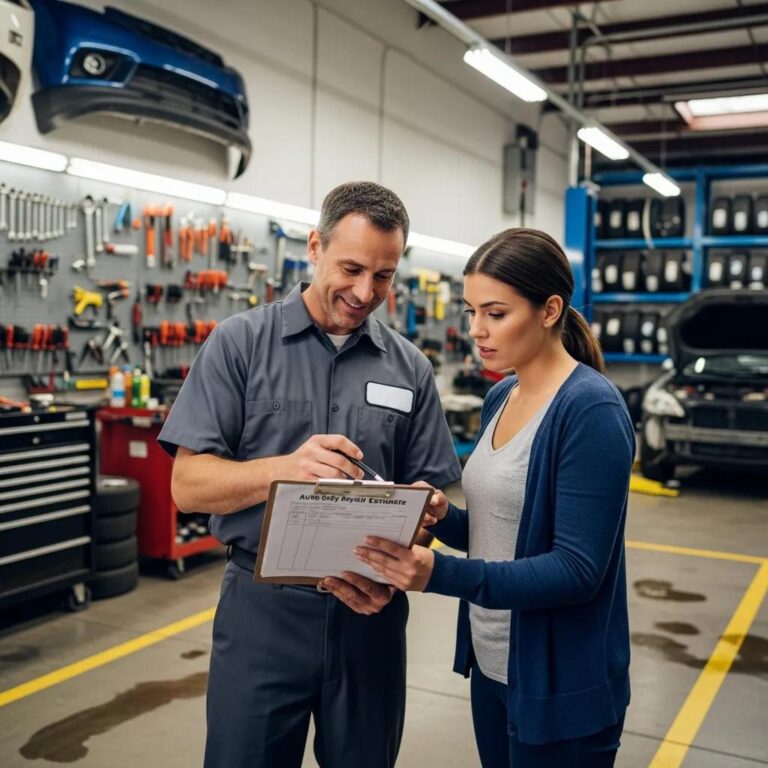
When you need help right away, Prime Time Collision Center offers 24/7 towing and free estimates to get your repair process started. At our Glendale location we perform an initial intake with photos, a preliminary estimate, and guidance on preserving evidence for insurers. Early involvement from the shop helps us identify any manufacturer-required steps — like ADAS checks or specific part needs — that affect cost and timing. Call us to arrange towing or a free assessment so we can begin repair planning and insurance documentation without delay.
Quick towing and intake cut down on idle time for the vehicle and let us start parts ordering and scheduling sooner, which usually shortens overall repair time.
How Does Prime Time Collision Center Ensure Certified Auto Repair in Glendale?
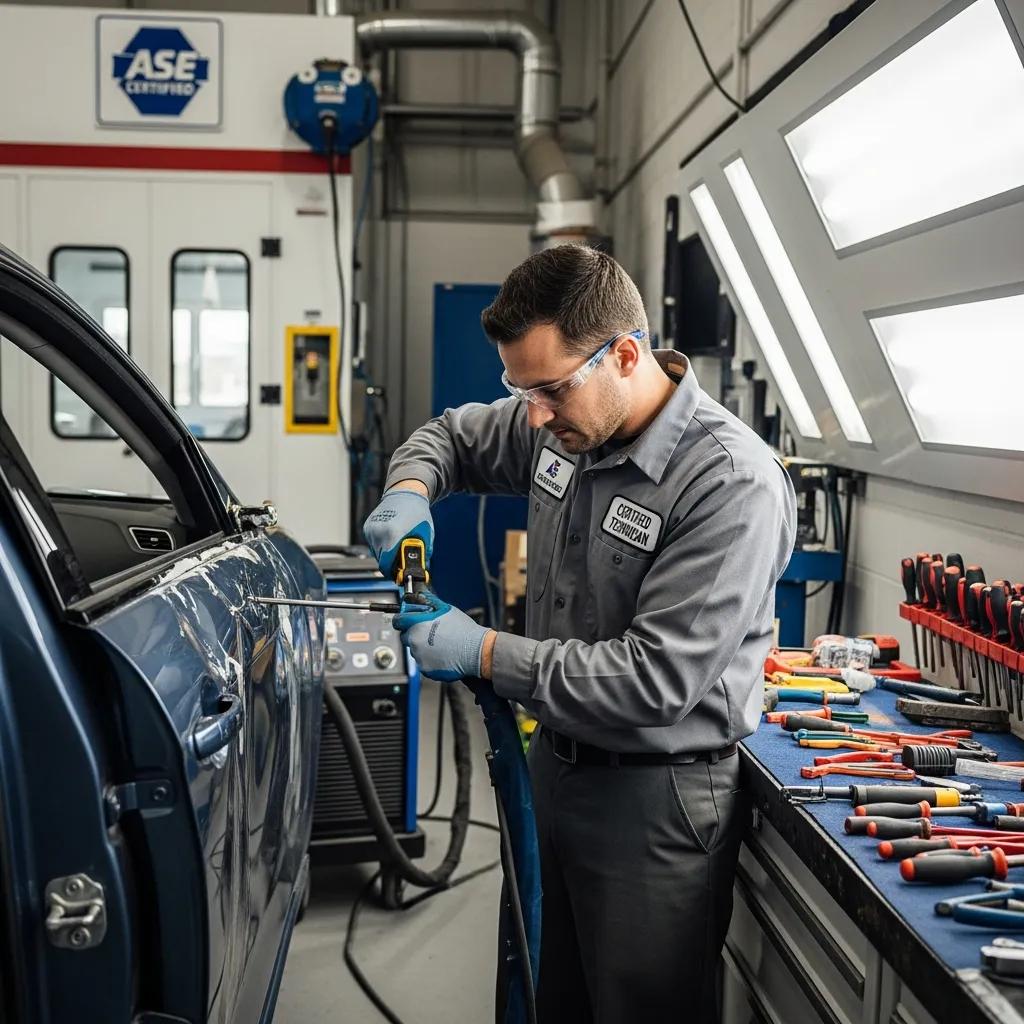
Certified repair means our technicians follow industry training, use the right equipment, and work to OEM-aligned procedures so your vehicle meets manufacturer safety and performance expectations. I‑CAR Platinum indicates advanced, role-based training across structural, non-structural, refinishing, and mechanical disciplines. Factory-quality repairs rely on correct parts, calibrated tools, and documented steps for structural work and ADAS systems so crashworthiness and sensor function are preserved. That mix of certification, process, and calibration lowers the chance of hidden issues and helps protect resale value.
- I‑CAR training makes sure technicians follow recognized repair standards.
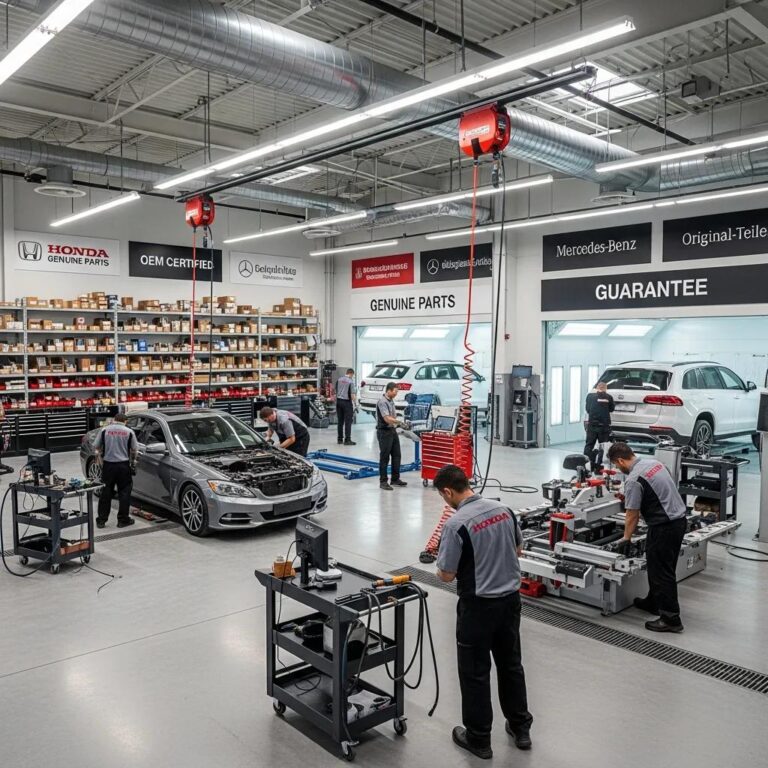
- OEM alignment means documented procedures and, when needed, genuine parts or approved equivalents.
- ADAS calibration and final inspections verify systems like lane-keep, automatic braking, and collision alerts.
- Certified workflows reduce variability and support insurer approvals.
Adhering to certification and OEM principles creates a clear chain of care that both insurers and future buyers can trust.
Understanding I-CAR Platinum Certified Technicians and Their Role
I‑CAR Platinum shows our techs have completed extensive, role-based training that covers modern vehicle materials, structural techniques, refinishing, and mechanical systems. Today’s cars use mixed metals and composites and rely on sensors that demand precise procedures. Ongoing education keeps technicians current as vehicle designs change, reducing the risk of improper repairs. For you, that training means documented steps, consistent quality, and clearer communication about what needs to be fixed and how long it will take.
Technician certification is a practical quality control that works alongside accurate equipment and OEM procedures.
What OEM Certified Repairs Mean for Your Vehicle’s Safety and Quality
OEM-aligned repairs follow manufacturer instructions for part fit, structural restoration, and system recalibration, favoring genuine parts or approved equivalents where fit and safety matter. Airbags, crumple zones, and ADAS sensors are engineered to tight tolerances — shortcuts or incorrect parts can change how these systems behave in a crash. OEM procedures include steps for disassembly, torque specs, and calibration sequences so safety systems work as intended after repair. Following those procedures helps preserve safety, warranty considerations when applicable, and long-term value.
Knowing what OEM alignment involves helps you compare estimates and ask specific questions about parts, calibrations, and final checks.
What Is the Comprehensive Collision Repair Process at Our Glendale Auto Body Shop?
A complete collision repair process starts with intake and damage assessment, moves through structural and cosmetic repair, and finishes with calibration and a multi‑point final inspection to confirm safety and appearance. Our workflow sets clear expectations with timelines and checkpoints where you receive updates and insurers can review progress. Typical stages include initial estimate and documentation, insurer approval and parts procurement, structural/frame repair and straightening, mechanical and electrical work, refinishing and paint matching, ADAS calibration, and a final quality inspection with a road test when appropriate. Tight stage management reduces rework and aligns results with factory specifications.
The numbered list below outlines usual timelines and responsibilities so you know what to expect from estimate to delivery.
- Initial damage assessment and written estimate: usually 1–3 days depending on complexity.
- Insurance review and approvals: timeline varies—prompt documentation helps speed this step.
- Disassembly and structural repair: duration depends on frame work and parts availability.
- Paint, refinishing, ADAS calibration, and final inspection: final quality checks confirm safety and fit.
Keeping the process structured helps prevent surprises during repairs; the table that follows compares stages, typical durations, and what you should expect.
Different repair stages drive distinct customer expectations and timelines.
| Repair Stage | Typical Duration | What It Includes |
|---|---|---|
| Initial Assessment & Estimate | 1–3 days | Visual inspection, diagnostic photos, written estimate and documentation for your insurer |
| Structural/Frame Repair | 2–7 days | Frame measurement, straightening, welding or component replacement as required |
| Paint & Refinishing | 2–5 days | Color matching, coatings, curing, and finish inspection |
| ADAS Calibration & Final QA | 1–3 days | Sensor recalibration, system testing, multi-point inspection, and road test |
This overview shows how repair complexity affects timing and why an early, accurate assessment helps get you back on the road faster.
From Damage Assessment to Final Quality Inspection: Repair Stages Explained
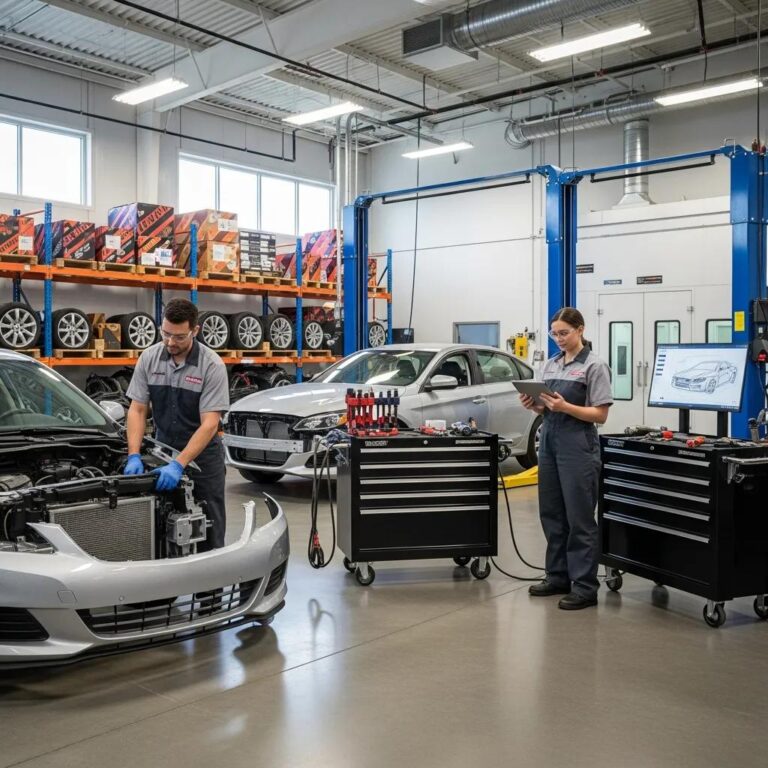
Damage assessment sets the repair scope by uncovering visible and hidden issues; technicians use photos, partial disassembly, and measurement tools to map affected components and system interactions. Structural repair restores frame geometry and alignment using calibrated measuring benches and pull systems to meet manufacturer tolerances. Reassembly and refinishing include paint matching, corrosion protection, and controlled curing to achieve a factory-quality finish. Finally, ADAS calibration and a thorough multi‑point inspection confirm that safety systems, wiring and mechanical assemblies function together before release.
We provide a documented final inspection report so you and your insurer have clear proof that required procedures and calibrations were completed.
Advanced Technology and Equipment Used for Precision Repairs
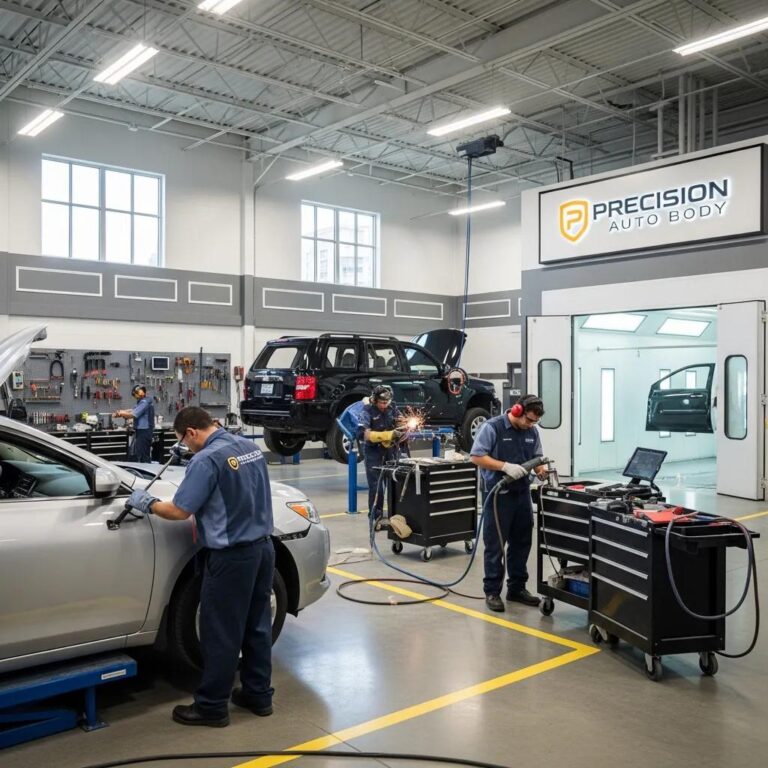
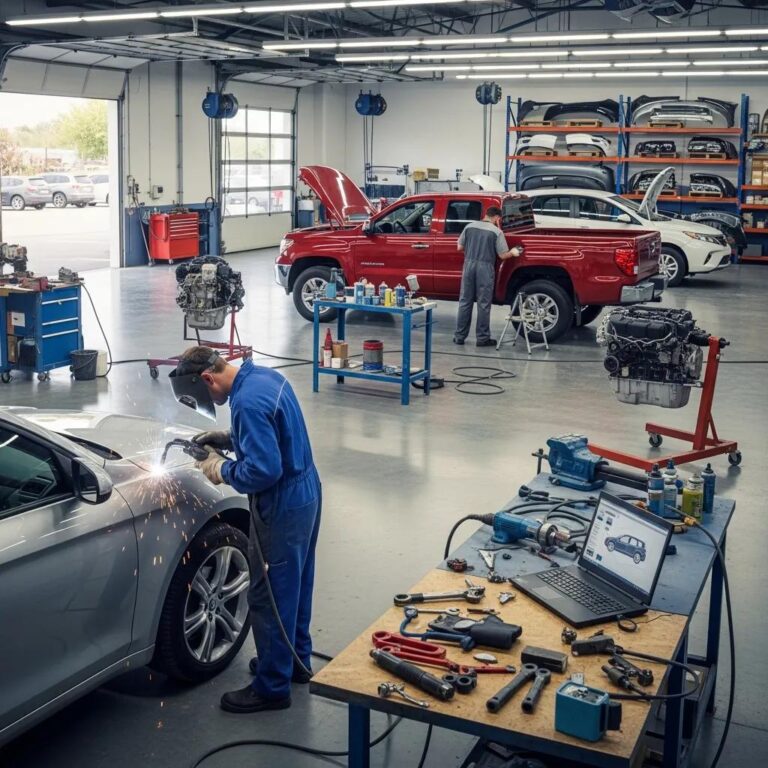
Modern collision repair depends on calibrated tools and controlled environments: frame benches, computerized measuring systems, downdraft paint booths, and ADAS calibration rigs are all part of our toolkit. These systems help restore alignment to manufacturer specs, apply coatings consistently, and recalibrate sensors that affect braking and steering safety features. Technology reduces human error and creates verifiable records useful for insurer reviews or future ownership transfers.
Accurate equipment plus certified training ensures repairs meet both cosmetic and structural standards.
Which Specialized Services Does Prime Time Collision Offer for Glendale Dent Removal and More?
We offer a range of specialized services for everything from small dings to structural damage. Paintless Dent Repair (PDR) works when paint is intact and gives a fast, cost-effective cosmetic fix. Bumper repair or replacement is recommended when deformation, cracks, or sensor damage affect safety features. Frame straightening restores alignment and structural integrity, while professional painting and color matching return the finish and protect against corrosion. The right choice depends on damage location, vehicle construction, and whether safety systems are involved.
- Paintless Dent Repair (PDR): ideal when the paint is undamaged and the metal can be reshaped.
- Bumper Repair/Replacement: replace when supports or sensors are compromised.
- Frame Straightening: required for any chassis or suspension misalignment.
- Auto Painting & Color Match: factory-grade finish with matched layers and clear coat.
These options balance cost, turnaround time, and safety so you can choose the repair path that best preserves your vehicle.
Before the comparison below, remember each service targets different conditions and owner priorities.
| Service | When Recommended | Expected Outcome |
|---|---|---|
| Paintless Dent Repair (PDR) | Small panels with intact paint | Quick cosmetic repair without repainting |
| Bumper Repair/Replacement | Contoured damage or sensor involvement | Restores impact energy management and sensor alignment |
| Frame Straightening | Misaligned chassis or suspension geometry | Returns manufacturer alignment for safe handling |
| Auto Painting & Color Match | Repaired or replaced panels | Factory-quality finish with matched color layers and clear coat |
This comparison helps you pick the right repair approach based on the type of damage and safety needs.
Paintless Dent Repair and Bumper Repair Services
Paintless Dent Repair preserves the original factory paint by gently massaging dents from behind the panel; it’s often faster and less costly than traditional bodywork when applicable. PDR suits door dings, small creases, and minor hail damage where the paint surface is undamaged. Bumper repair can include plastic welding, reinforcement replacement, or sensor recalibration when impact affects energy-absorbing structures or proximity sensors. Insurance handling differs: PDR can be more economical and sometimes avoids higher costs, while bumper replacement usually requires parts ordering and more documentation.
Choosing PDR versus traditional repair depends on paint condition, panel access, and whether sensors or structural parts are involved.
Frame Straightening and Auto Painting Solutions
Frame straightening uses computerized measurement and hydraulic systems to restore chassis dimensions to manufacturer tolerances; precise measurement ensures suspension geometry and panels align correctly. Auto painting uses color-code matching, multi-stage base and clear coats, and controlled curing to recreate the original finish and protect repaired areas from corrosion. Post-paint checks include adhesion testing, finish inspection under varied light, and measured cure times to avoid premature handling.
Careful frame work and paint processes together restore both structural safety and visual integrity.
How Does Prime Time Collision Support Insurance Claims for Car Accident Repairs in Glendale?
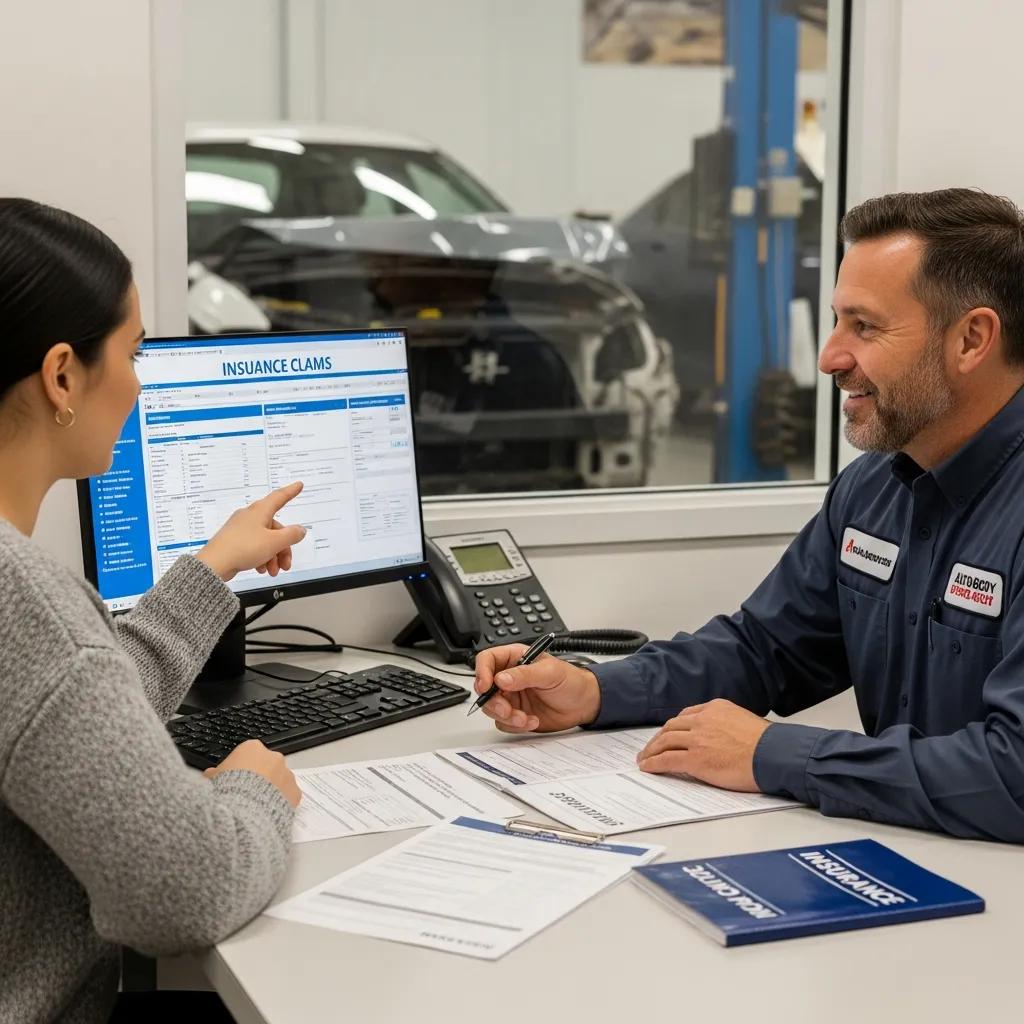
Insurance claims move faster with clear documentation, timely communication, and a shop that coordinates the process. We prepare detailed estimates, provide supplemental damage reports after teardown, and supply photographic records insurers need for approvals. Prime Time Collision Center works with all major insurance companies, submits supplemental documentation when hidden damage appears, and advocates for factory-quality repairs. Proactive paperwork and follow-up shorten approval times and help us schedule parts and technicians efficiently.
The table below outlines key insurance coordination steps, who handles them, and the customer benefits.
| Insurance Step | Who Handles It | Benefit to Customer |
|---|---|---|
| Initial Estimate Submission | Repair shop prepares and sends | Faster insurer review and initial authorization |
| Supplemental Estimates | Shop documents hidden damage after disassembly | Ensures full scope is covered and reduces rework |
| DRP Coordination | Shop liaises with insurer if applicable | Simplified approvals and streamlined billing |
| Final Approval & Billing | Shop finalizes invoice with insurer | Clear settlement and fewer surprise costs |
Efficient coordination with insurers reduces the time your vehicle waits for approvals or parts.
Working with All Major Insurance Companies for Seamless Claims
We submit estimates, provide teardown photos and detailed technician notes, and follow up to answer insurer questions about parts or procedures. Detailed documentation reduces back-and-forth and helps carriers validate necessary repairs faster. If additional paperwork is requested, we can supply itemized supplemental estimates or repair plans referencing OEM procedures and calibration needs. Keeping you updated on insurer responses and timeline changes keeps the process transparent.
Proactive documentation and clear communication are the quickest way from estimate to repair authorization and vehicle return.
Direct Repair Program and Customer Guidance Through the Process
Direct Repair Programs (DRPs) are insurer-preferred networks that simplify administrative steps, often offering faster approvals and billing. DRP participation is administrative — repair quality should still follow OEM procedures — so ask the shop for documented evidence of OEM steps and final inspections. When directed to a DRP shop, request details on warranties, which calibrations were performed, and whether genuine parts or OEM-specified equivalents were used. Prime Time Collision Center participates in insurer workflows while emphasizing documented, factory-quality repairs to protect safety and resale value.
| Claim Action | Who Does It | Benefit |
|---|---|---|
| Submit estimate | Shop | Faster insurer review |
| Provide teardown photos | Shop | Clarifies hidden damage |
| Approve repairs | Insurer/Customer | Authorization to proceed |
| Final invoicing | Shop/Insurer | Streamlined settlement |
Why Choose Prime Time Collision Center for Your Glendale Collision Repair Needs?
Pick a repair provider based on certified training, transparent processes, and real service offerings that reduce uncertainty. Prime Time Collision Center follows OEM-aligned repair practices, staffs technicians with advanced training, and documents each step to support insurer coordination and restore vehicle safety. We serve Glendale and nearby communities and offer conveniences like free estimates and 24/7 towing to help you move from accident to repair planning quickly. Before approving work, verify required calibrations, request a documented final inspection, and confirm warranty coverage for the repairs.
A shop with certified technicians, clear procedures, and convenient intake options helps you minimize downtime and protect your vehicle’s long-term safety.
Customer Testimonials and Proven Trust with 5-Star Reviews
Online reviews and local listings are useful for checking responsiveness, communication, and repair quality. Look for recurring themes: consistent communication during repairs, accurate estimates, and whether calibrations and final inspections were done and documented. Ask the shop to point you to public review profiles or to show completed repair photos and inspection reports. Those verification steps turn general praise into specific assurances about workmanship and service.
Patterns in reviews are a more reliable indicator of likely experience than any single comment.
Warranty Coverage and Commitment to Factory-Quality Repairs
Written warranties and repair guarantees are important because they define remedies if a problem recurs. Ask for written warranty details before you approve work so you understand scope and any documentation needed for future claims. Prime Time Collision Center stands behind factory-quality repairs and provides warranty information consistent with shop policies; keep repair invoices, calibration reports, and warranty paperwork safe for future reference. When warranty claims arise, documented inspection and repair records help validate coverage and determine remedies.
Clear warranty terms plus certified procedures give you real assurance that repairs met the proper standards.
Frequently Asked Questions
What types of insurance claims can Prime Time Collision Center assist with?
We handle a wide range of insurance claims related to auto accidents, including comprehensive, collision, and liability claims. Prime Time Collision Center works with all major insurers to prepare and submit necessary documentation — initial estimates, supplemental reports and photos — to help speed approvals and get your vehicle back on the road sooner.
How can I ensure my vehicle receives OEM-certified repairs?
Ask the shop about certification and OEM procedures. Prime Time Collision Center emphasizes genuine parts where needed and follows manufacturer specifications. Request proof of technician certifications such as I‑CAR Platinum and ask for documentation of key steps like calibrations and the final inspection. Those records confirm repairs meet safety and quality standards.
What should I do if my insurance company disputes the repair estimate?
If an insurer disputes an estimate, stay in communication with both the carrier and the repair shop. We can provide detailed photos, assessments, and supplemental estimates that document hidden damage found during teardown. Open dialogue among all parties usually resolves disputes and ensures the vehicle gets the necessary repairs without unnecessary delays.
How long does the collision repair process typically take?
Repair time varies by damage severity and parts availability. Typical stages include initial assessment (1–3 days), insurance approval (varies), structural repairs (2–7 days), and refinishing (2–5 days). ADAS calibration and final inspections can add 1–3 days. Prime Time Collision Center keeps you informed at each stage and updates you when timelines change.
What are the benefits of choosing paintless dent repair (PDR)?
PDR is fast and cost-effective when paint is intact. It preserves the factory finish and is often quicker than traditional bodywork, which helps maintain resale value and shortens turnaround time. PDR is a great option for small dings, creases, and hail damage when applicable.
Can I get a free estimate for my collision repair needs?
Yes. Prime Time Collision Center provides free estimates. Our initial assessment identifies visible damage and gives a preliminary cost range. We’ll document the damage and walk you through repair options so you can make informed decisions about repairs and your insurance claim.
Conclusion
Choosing Prime Time Collision Center means certified, OEM-aligned repairs that prioritize your vehicle’s safety and long-term value. We focus on clear processes and thorough documentation to simplify insurance claims and get you back on the road with confidence. With free estimates and 24/7 towing available, we aim to make the repair journey as straightforward as possible. Contact us today to discuss your repair needs and learn how we’ll restore your vehicle to its best condition.