



Electric Vehicle Charging Basics: Types, Speeds, and What Owners Need to Know
Charging an electric vehicle means moving electricity from an outside source into the car’s battery. Knowing the differences between charging levels is key to safe, efficient ownership. In this guide we explain how Level 1, Level 2, and DC fast charging compare by voltage, typical power, and real-world miles-per-hour. We’ll also cover common connectors, sensible charging habits that protect battery life, and what to do if a collision damages the charge port or wiring. You’ll get clear numbers, practical examples, and next steps so you can plan daily charging or longer trips with confidence. We also use helpful keywords like EV charging guide, Level 1 charging, DC fast charging, CCS connector, and home EV charger installation so this serves as a useful reference for owners and planners.
What Are the Main Types of EV Charging and Their Characteristics?
Most EV charging falls into three easy-to-understand categories: Level 1 (120V AC) for slow, everyday top-ups; Level 2 (240V AC) for faster home and workplace charging; and DC Fast Charging (DCFC) for quick public recharges that feed high-voltage DC straight to the battery. They differ by voltage, typical kilowatt output, and whether the conversion from AC to DC happens in the vehicle or at the station — and those differences determine how fast you’ll add miles and where each charger makes the most sense. Understanding these trade-offs helps you match charging habits to your commute and trip plans while limiting stress on the battery. Below is a compact comparison that highlights voltage, power, and typical use cases to make the choice clearer.
| Charger Type | Voltage / Power | Typical Miles Added per Hour | Common Use Case |
|---|---|---|---|
| Level 1 | 120V AC, ~1–2 kW | ~2–5 miles/hour | Home overnight for low-mileage drivers |
| Level 2 | 240V AC, ~3.3–11 kW (up to 19.2 kW residential) | ~10–60 miles/hour | Home upgrades, workplace charging |
| DC Fast Charging (DCFC) | 50–350+ kW DC | ~100+ miles in 20–30 minutes (varies) | Road trips and quick public top-ups |
The quick takeaway: AC charging uses the car’s onboard charger to convert power, while DCFC supplies high-voltage DC from the station for much faster fills. Knowing where each option fits makes planning daily use and trips straightforward.
How Does Level 1 Charging Work and When Is It Suitable?
Level 1 uses a standard 120V household outlet and relies entirely on the vehicle’s onboard charger to turn AC into DC. That limits how much power it can deliver, but it’s the most convenient option — typically around 2–5 miles of range per hour. Level 1 is ideal for short daily commutes, plug-in hybrids, or overnight top-ups when the car sits for many hours. Installation cost is usually zero beyond the cable that comes with the vehicle, so it’s an accessible baseline for many households. If the onboard charger or charge port was damaged in a collision, Level 1 charging may be unreliable or unsafe — always inspect ports and wiring before depending on slow home charging again.
What Are the Benefits of Level 2 Charging for Daily EV Use?
Level 2 runs at 240V AC and delivers much more power than Level 1 — commonly 3.3–11 kW for residential units and higher for commercial chargers. That translates into real convenience: many EVs can be fully recharged overnight, and typical gains are 20–60 miles per hour depending on vehicle acceptance and charger output. Installation needs a dedicated 240V circuit and usually a licensed electrician, but the faster turnaround and readiness for daily driving often justify the cost. For most households and workplaces, Level 2 hits the sweet spot between speed, cost, and convenience.
How Does DC Fast Charging Differ from Other EV Charging Levels?
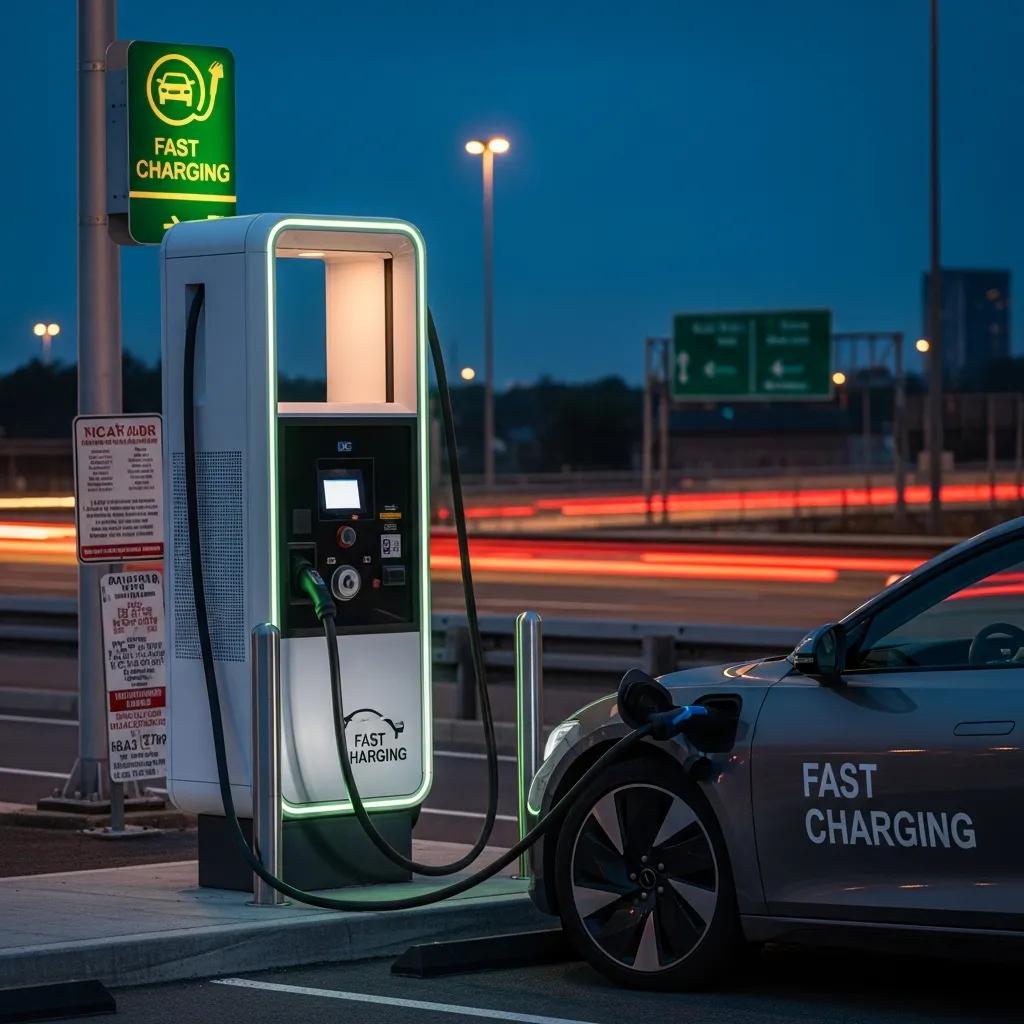
DC Fast Charging (DCFC) is different because the station supplies high-voltage direct current directly to the battery, bypassing the vehicle’s onboard AC-to-DC converter. That station-side conversion allows much higher power — typically from 50 kW up to 350+ kW — so DCFC can add a large amount of range in minutes instead of hours. Real-world charging rates depend on the battery’s state-of-charge and the car’s thermal management; charging tapers as the pack approaches full to protect cell chemistry. Use DCFC mainly for trip recovery and long-distance travel, not for everyday top-ups, since frequent high-rate charging can raise battery temperature and accelerate long-term wear. The next section puts typical DCFC speeds into practical time examples to help you plan stops.
What Is DC Fast Charging and How Quickly Can It Charge Your EV?
DC fast chargers cover a wide power range — common stations are 50 kW or 150 kW, while some networks offer 250–350 kW. How much range you gain depends on the vehicle’s acceptance rate and battery size. For many modern EVs, a 50 kW charger can add roughly 60–80 miles in 30 minutes; a 150 kW station might add 150+ miles in 30 minutes on compatible cars; and ultra-high-power 250–350 kW chargers are even faster for cars built to take that power. Remember the charge curve: charging is fastest at low-to-mid state-of-charge and slows near 80–90% to manage heat and protect cells. When planning stops, aim for short high-power bursts for quick range recovery and longer sessions only if you need to top to 100%.
What Safety Considerations Are Important with DC Fast Charging?
High-power DC charging puts thermal and electrical stress on batteries and connectors, so follow station instructions and treat equipment with care. Make sure connectors look clean and undamaged, avoid charging if your vehicle shows fault indicators or overheating, and dock the connector securely to reduce arcing risk. After an accident, have high-voltage systems and charge ports professionally inspected before using DCFC — hidden wiring or pack damage under high current can create hazards. Observing these precautions protects both battery health and personal safety while you use fast-charging networks.
Which EV Charging Connectors Are Common and How Do They Affect Compatibility?
Connectors determine whether a vehicle can physically and electrically use a station. The main types you’ll see today are J1772 for AC Level 1/2 in North America, CCS (Combined Charging System) for AC+DC fast charging on many plug-in models, CHAdeMO for some older DC setups, and NACS which is rapidly gaining ground. Connector choice affects charging speed, adapter options, and how you plan stops across regions. Knowing your vehicle’s port and the adapters available prevents surprises at public chargers and helps you pick the right home equipment. The table below summarizes regional adoption and compatibility so you can match connectors to common EVs.
| Connector | Region / Use | Compatibility (EV types) | Notes |
|---|---|---|---|
| J1772 | North America AC Level 1/2 | Most non-Tesla EVs for AC charging | Standard for Level 1/2 AC charging |
| CCS (Combo) | NA / EU DC & AC | Many contemporary BEVs for DC fast charging | Combined AC/DC port with two DC pins |
| CHAdeMO | Japan / older use | Some older models and adapters | Legacy DC fast-charging standard |
| NACS | North America (growing) | Certain manufacturer ecosystems | Increasing adoption; adapters exist |
What Are the Differences Between CCS, CHAdeMO, J1772, and NACS Connectors?
CCS combines a J1772-style AC inlet with two additional DC pins so the same port supports Level 2 AC and high-power DC — that’s why it’s common on newer EVs. CHAdeMO is an older, DC-only standard from Japan still used by some legacy models, and adapters can help bridge to newer networks. J1772 is the North American standard for AC Level 1 and Level 2 charging and fits most non-proprietary chargers. NACS is a newer connector gaining traction in North America; as its adoption grows, check compatibility or plan for adapters when using public chargers.
How to Identify Your EV’s Charging Port and Compatible Connectors?
Start with the owner’s manual and the labeling on the vehicle’s port to learn what standards your car supports. Use charging maps and network apps to filter stations by connector type and power level. A quick visual check of port shape and pin layout confirms what the manual says, and manufacturer specs list the maximum AC and DC acceptance rates that limit charge speed. If your port or wiring looks damaged after a collision — frayed wires, loose fittings, or obvious deformation — don’t charge. Arrange a professional inspection, because compatibility problems can signal safety risks. Checking connector type and port condition before you travel avoids detours and keeps charging safe.
What Are the Advantages and Challenges of Home Versus Public EV Charging?
Home charging gives you convenience and predictable cost: plug in overnight and start the day topped up. Public charging provides higher power and faster fills for trips, but availability, payment systems, and connector mismatches can complicate things. Choosing between home Level 1, home Level 2, or leaning on public DCFC depends on installation costs, desired speed, daily driving needs, and local infrastructure. Building charging into your routine reduces range anxiety and helps battery health, while knowing station reliability and connector types smooths long-distance plans. The table below compares typical power levels, pros, and cons to help decide where to invest in equipment or rely on public stations.
| Charging Location | Typical Power (kW) | Pros | Cons |
|---|---|---|---|
| Home (Level 1) | ~1–2 kW | No installation cost; convenient | Slow; may be insufficient for high mileage |
| Home (Level 2) | ~3.3–11+ kW | Faster overnight charging; controlled cost | Installation and electrical upgrade needed |
| Public (AC/DC) | 7–350+ kW | Rapid fill-ups; travel support | May be costly; availability varies |
For most owners, a Level 2 home setup plus occasional public DCFC use strikes the best balance between convenience and range for everyday life and road trips.
What Should You Know About Installing a Home Level 2 Charger?

Installing a Level 2 charger at home usually means checking your electrical panel capacity, getting any required permits, and hiring a licensed electrician to add a dedicated 240V circuit and properly rated unit. Look for chargers with safety features like ground-fault protection, and consider networked models for software updates and load management. If your car was in a collision that might have affected the charge port or wiring, get a professional inspection before relying on home charging — connectors and high-voltage circuits must be confirmed safe. If you need local help after an accident, Prime Time Collision Center offers free estimates and works with insurance; our I-CAR Platinum Certified Technicians can inspect EV charging ports and related body damage.
Before you install, review local code and confirm your installer has EV experience to avoid costly rework and ensure safe, reliable operation.
How to Find and Use Public Charging Stations Effectively?
Start with reputable mapping apps and network tools to find stations by connector type, power level, and real-time availability, then plan stops that match the charging windows you need. Practice good station etiquette: move your vehicle when charging finishes, report damaged or unsafe equipment, and carry the payment methods or network credentials required. If a station looks damaged or a connector feels loose, skip it and report the issue to protect your vehicle’s port. Planning around charge curves and station speed cuts downtime and keeps trips on schedule.
With the right apps, gear, and a backup plan, public charging makes road travel practical and minimizes surprises on longer trips.
How Can Understanding EV Charging Basics Help Protect Your Vehicle’s Battery and Safety?
Knowing the basics of charging affects battery life and safety because charging rate, thermal management, and frequent high-power sessions all influence long-term cell degradation and system reliability. Smart habits — using Level 2 for daily charging, saving DCFC for occasional fast top-ups, and avoiding long periods at very high state-of-charge when possible — help maintain capacity and reduce thermal stress. After a collision, components like the charge port, high-voltage wiring, onboard charger, and battery pack need targeted diagnostics; cosmetic repairs can miss electrical damage that leads to unsafe charging. Prioritize certified, OEM-quality diagnostics and repairs for high-voltage systems. Prime Time Collision Center follows OEM repair standards, works with major insurers, and employs I-CAR Platinum Certified Technicians who can assess charging-system damage and coordinate claims.
Understanding how charging behavior ties to repair needs helps owners decide when to change charging habits and when to seek professional help after an impact.
Why Is Proper Charging Important for Battery Health and Longevity?
Proper charging respects the battery’s charge curve and thermal limits by avoiding extreme states-of-charge and excessive high-rate sessions that speed up chemical degradation and capacity loss. A simple guideline is to use DC fast charging sparingly and keep routine charging inside a sensible target window — for many drivers that means avoiding daily full charges unless necessary. Ambient temperature and preconditioning can also influence how quickly and safely the battery accepts energy. Following these common-sense patterns helps preserve range over time and reduces the chance of premature battery replacement.
How Can Accidents Affect Your EV’s Charging System and What Repairs Are Needed?
Collisions can damage external ports, cable retention clips, wiring harnesses, onboard chargers, and even high-voltage modules inside the vehicle — issues that aren’t always obvious at first glance. Proper post-accident repair requires high-voltage diagnostics, insulated tools, and OEM procedures to confirm connectors, seals, and electrical pathways are safe for charging and that no hidden faults could cause arcing or failure. Insurance claims for EV repairs often need documentation of diagnostics and OEM-aligned repair plans; shops that work with major insurers and hold I-CAR Platinum standards are better equipped to follow manufacturer expectations. If you suspect charging-system damage, seek a specialist who can run high-voltage checks, test onboard charger and port continuity, and validate the battery management system before you charge again.
A certified, professional approach reduces risk and restores safe charging after collision-related damage.
Frequently Asked Questions
What is the average cost of installing a Level 2 home charger?
Installation costs vary with site complexity, local labor rates, and the charger model you choose. On average, expect total costs between $500 and $2,000, which typically cover the charger and any needed electrical upgrades. Get quotes from licensed electricians and check local permit requirements to ensure a safe, code-compliant installation.
How can I maximize the efficiency of my EV charging?
Charge during off-peak hours when rates are lower, use a Level 2 charger for daily needs, and keep your battery roughly between 20% and 80% for routine use to reduce wear. Limit frequent DC fast charging, which generates more heat, and keep charger and vehicle software up to date for best performance.
What should I do if my EV won’t charge?
Start with the basics: confirm the charger is plugged in and the outlet is working, and look for error messages on the car or charger. Inspect the charging port for debris or visible damage. Try resetting the charger if it has that function, and consult the owner’s manual for model-specific steps. If the issue persists, contact a qualified technician for diagnosis and repair.
Are there any environmental benefits to using EV chargers?
Yes. EVs produce zero tailpipe emissions, and charging from renewable electricity significantly lowers lifecycle greenhouse gas emissions compared with gasoline or diesel vehicles. As grids add more renewables, the carbon footprint of charging drops further. Charging during periods of high renewable generation boosts those environmental benefits.
How do I find charging stations while traveling?
Use apps and websites like PlugShare, ChargePoint, and EVgo to find chargers, check connector types, and see real-time availability. Many in-car navigation systems also route you to nearby stations based on location and battery level. Filter results by charging speed and network compatibility to match your needs.
What are the implications of using adapters for EV charging?
Adapters add flexibility by letting you connect to different station types, but you must ensure the adapter is compatible with both the vehicle and station to avoid damage. Adapters can also limit charging speed and introduce resistance. Only use certified adapters and follow manufacturer guidance to stay safe.
How can I ensure my EV charging station is safe to use?
Regularly inspect chargers and cables for wear or fraying, keep the vehicle’s charging port clean, and follow manufacturer maintenance instructions. Avoid using chargers that emit unusual smells, sounds, or heat. If your vehicle was in an accident, have the charging system inspected by a qualified technician before resuming use.
Conclusion
Knowing the differences between Level 1, Level 2, and DC fast charging helps you choose the right approach for daily use and trips while protecting battery life. Use Level 2 for everyday convenience, reserve DCFC for longer trips, and keep an eye on connector compatibility and post-accident safety. If you need help with inspections, repairs, or insurance coordination after a collision, Prime Time Collision Center offers OEM-focused repairs and certified technicians to get you back on the road safely. Take the next step toward smarter, safer EV ownership today.