
Smart Used-Car Buying: A Practical, Step-by-Step Guide to Making Confident Choices
Buying a used car the smart way combines clear research, a consistent inspection routine, and a realistic budget so you avoid surprise costs and safety problems. This guide walks you through setting a true total-cost budget, checking model reliability and local market value, spotting hidden damage, reading vehicle history reports, and weighing financing and warranty options—so you can negotiate from a position of knowledge and reduce risk. Smart buying helps you avoid undisclosed repairs and structural issues and teaches you to spot red flags like odometer rollback, salvage titles, or shoddy collision work before you sign. Throughout, you’ll find checklists, quick answers, comparison tables, and local inspection tips based on current best practices for 2024. Keep reading for step-by-step inspection guidance, how to read history reports, and when to get a professional pre-purchase check to protect your investment.
How Do I Set a Realistic Budget for Buying a Used Car?

A realistic budget covers more than the sale price—the sticker is only part of the cost. Build your budget by estimating one-time out-the-door fees (tax, registration, immediate repairs), recurring ownership costs (insurance, maintenance, fuel), and a small emergency repair reserve for likely post-purchase needs. A clear forecast reduces surprises and gives you leverage when inspections reveal repairs. Below is a short, prioritized checklist of the budget items every buyer should include.
When you map out your budget, treat these five line items as the minimum to cover immediate and near-term costs:
- Purchase price plus taxes and registration: the negotiated sale amount and required fees.
- Insurance adjustment: the expected change in annual premium based on vehicle class and driver history.
- Immediate repairs and safety work: brakes, tires, fluids, lights, and small mechanical fixes.
- Scheduled maintenance for 12–36 months: oil, belts, filters, brake service and other expected wear items.
- Emergency repair reserve: a contingency fund for unexpected collision-related or drivetrain repairs.
Once you list these items, turn the estimates into a simple example budget for your target car class. That makes it easier to compare affordability across options and supports negotiation if inspection finds issues.
Sample ownership cost examples before the EAV table: the table below shows typical purchase and yearly ownership costs for three common vehicle classes so you can see how non-purchase expenses change your total expectations.
| Vehicle Class | Typical Purchase Price (example) | Annual Maintenance & Insurance (estimate) |
|---|---|---|
| Compact Sedan | $8,000–$12,000 | $1,200–$1,800 |
| Midsize Sedan | $12,000–$18,000 | $1,500–$2,200 |
| Luxury SUV | $25,000–$40,000 | $2,500–$4,000 |
This example shows higher purchase prices usually come with higher maintenance and insurance. Fold likely repair risk—such as prior collision history—into your emergency reserve before you make an offer.
What Costs Should I Consider Beyond the Purchase Price?
Beyond the sale price, ongoing costs and one-time expenses can add up quickly and should be forecasted before you commit. Insurance varies by model and history—vehicles with salvage or multiple-owner records can carry higher premiums, and prior collision claims may limit coverage. Common immediate post-purchase repairs include brake pads, tires, alignment, fluid changes, and worn suspension parts—items often visible during a pre-purchase inspection and useful for negotiating price. Documenting expected near-term maintenance and repair costs gives you a realistic ownership picture and helps you compare offers objectively.
How Can I Plan for Maintenance and Potential Repairs?
Start with a one- to three-year maintenance forecast focused on routine items and likely wear components, and include a modest emergency fund for unexpected repairs. Use the vehicle’s age, mileage, and known model repair patterns to estimate timing for items like timing belts, brake jobs, and transmission service; if the car has a collision-repair history, expect a slightly higher chance of follow-up work. Cars with documented OEM repairs or factory service records typically cost less over time because proper repairs preserve longevity; non-OEM parts or undocumented structural work increase uncertainty. Finally, use realistic repair estimates as bargaining leverage—sellers often agree to price concessions or repairs when shown clear cost projections.
What Are the Key Steps in Researching Used Car Models and Market Value?
Researching models and market value means combining valuation tools with reliability data and local market signals to form a fair offer. Start with national valuation guides for baseline retail and trade-in values, then cross-check local private-party listings to reflect Glendale and L.A. market conditions. Review reliability ratings and common repair histories to anticipate ownership costs and favor models with parts availability and dealer support. Pull this data into a target price range and a firm walk-away price—this keeps negotiations disciplined and avoids impulse buys that ignore long-term costs.
Use multiple sources together rather than relying on one. The list below explains how each fits into your research workflow and what to expect from them.
- Manufacturer and trade guides for baseline retail and certified pre-owned values.
- Consumer Reports and reliability trackers for long-term ownership trends and common failures.
- Local listings (private-party, dealer, online marketplaces) for current pricing in your area.
After you gather values and reliability indicators, compare the model’s typical repair costs to your budget and favor cars with good parts availability and simpler mechanical designs to lower ownership complexity and repair risk.
Which Reliable Sources Help Evaluate Used Car Prices and Reviews?
Use a mix of national valuation tools, editorial reviews, and local listings to evaluate price and real-world condition. Valuation guides give trade-in and suggested retail ranges, editorial reviews explain driving traits and known problem areas, and local listings reveal current asking prices that affect negotiation in Glendale and nearby markets. When several sources converge on a range, you can feel confident offering near the lower end if the inspection shows issues. Bring printouts or screenshots of your research to negotiations to support your offer with objective evidence.
What Are the Most Dependable Used Car Models to Consider?
Dependable used cars tend to share proven engines, wide parts availability, and conservative engineering that prioritizes reliability over complexity. Look for compact and midsize sedans with high owner satisfaction and SUVs with simple drivetrains—these usually cost less to maintain and hold value better. Certified pre-owned programs add value through inspection and limited warranty coverage, but they come at a premium you should weigh against inspection results. Favor models with active owner communities and aftermarket support to simplify repairs and reduce downtime.
What Should I Look For During a Thorough Used Car Inspection?
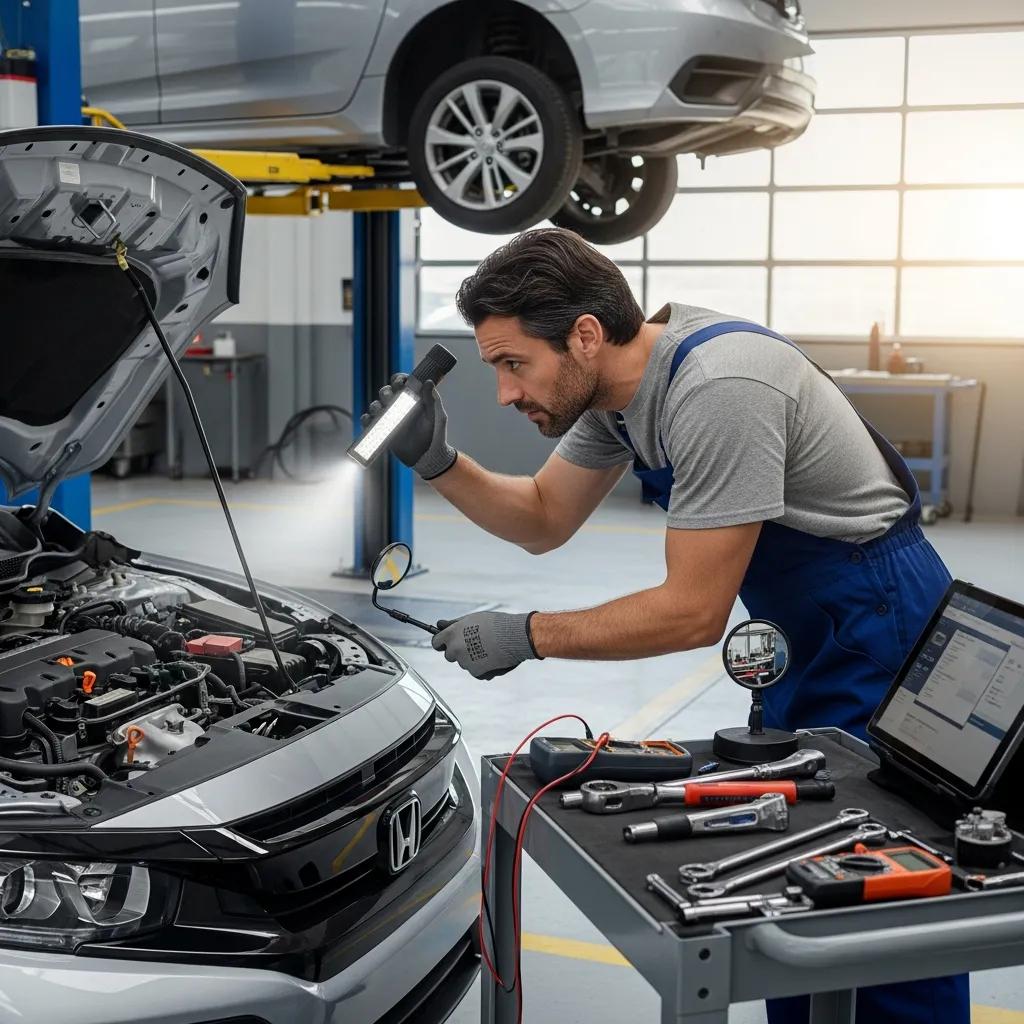
A thorough inspection blends visual checks, functional tests, and a strategic test drive to reveal past collisions, poor repairs, and mechanical wear. Inspectors look for paint match and panel gaps to spot structural repair, interior warning lights and odd smells that suggest neglect, and engine-bay signs like fluid condition or leaks. Many defects are subtle—overspray in seams, uneven undercoating, or non-factory hardware—that require comparing corresponding panels and systems. Below is an actionable checklist you can use during a viewing and test drive to identify common red flags and decide if a professional pre-purchase inspection is needed.
Start your hands-on inspection with this short checklist to cover the most important areas quickly:
- Exterior: Check panel gaps, paint consistency, lights, windshield, and tire condition.
- Interior: Verify electronics, check for unusual odors, and inspect airbag and seatbelt condition.
- Under-hood: Look for leaks, corroded connectors, discolored fluids, and loose components.
- Test drive: Note pulling, noises over bumps, transmission shifts, and brake feel.
After this quick check, move on to deeper signs of structural repair and confirm whether documented repairs used OEM parts; these findings will tell you whether to request a formal structural inspection before buying.
Intro to inspection indicator comparison table: the table below helps non-technical buyers match visible signs to likely causes so you can spot red flags without specialist tools.
| Component Checked | Visible Signs | Likely Meaning |
|---|---|---|
| Paint/Body | Mismatched paint, irregular gaps, overspray | Prior panel replacement or low-quality repaint |
| Frame/Undercarriage | New welds, inconsistent undercoating, bent mounts | Possible structural repair or frame damage |
| Hardware/Trim | Different fasteners, missing clips, uneven holes | Non-factory replacements or rushed repairs |
This table shows that mismatched finishes and inconsistent assembly often point to collision repairs—these findings should trigger a detailed structural inspection by a certified technician before you finalize a purchase.
How Can I Identify Signs of Previous Accident Damage and Poor Repairs?
Finding prior accident damage means comparing paired panels, inspecting welds and undercoating, and spotting non-factory hardware that signals replacements. Mismatched paint tones, overspray near seals, and uneven panel gaps suggest bodywork that may or may not include proper structural repair. Performance cues—like the car pulling to one side, uneven tire wear, or suspension noises—can indicate unresolved alignment or frame problems that affect safety. If you see visual or performance red flags, insist on a professional frame and structural inspection—cosmetic fixes can hide compromised crash performance.
What Are the Essential Exterior, Interior, and Engine Checks?
Follow a consistent order during the viewing and test drive so you don’t miss key items: start with exterior and glass, move to interior electronics and safety systems, inspect the engine bay, then finish with a controlled test drive. Watch for replaced or cracked airbags, dashboard warnings, inconsistent door and hood fit, and oil or coolant leaks under the vehicle—each affects cost and safety. On the test drive, assess shift smoothness, braking, steering feedback, and abnormal noises under load—these dynamic checks often reveal drivetrain or suspension issues not visible at rest. Photograph and note every discrepancy so you can reference specific issues in negotiations or repair requests.
(Expert Insight) Our technicians at Prime Time Collision Center specialize in spotting substandard collision repairs and hidden structural issues that many buyers miss. We combine trained visual inspection with diagnostics to find mismatched panels, non-OEM repair practices, and frame misalignment—information that clarifies repair quality and safety. If visual inspection raises concerns, schedule a pre-purchase inspection to get documented findings you can use to negotiate or walk away. Call or email the shop to arrange a certified assessment for Glendale-area buyers.
How Do Vehicle History Reports Help Me Buy a Used Car Smartly?
Vehicle history reports summarize title, accident, registration, and service events to give buyers a quick risk snapshot that complements a hands-on inspection. Major providers report accidents and title brands, recorded odometer readings, and service entries—these can reveal repeated claims, salvage or rebuilt titles, and gaps in maintenance that suggest neglect. History reports are limited to reported events and won’t show unreported damage or poor repairs, so always combine them with a physical inspection. Below are the three report items to prioritize when judging risk.
- Accident records and severity: how many events and whether structural components were affected.
- Title brands: salvage, rebuilt, or clean—these materially affect value and insurability.
- Odometer readings and service history: gaps or inconsistencies that suggest rollback or neglect.
Use report findings to focus your physical inspection and set negotiation expectations; a major accident or salvage title should trigger a professional structural inspection before any purchase decision.
Intro to vehicle history EAV table: the table below breaks down common report items and what each entry typically indicates for buyers evaluating a car’s risk profile.
| Report Item | What to Check | What It May Mean |
|---|---|---|
| Accident report | Number of events, severity notes | Minor fender repair vs. major structural damage |
| Title brand | Salvage, rebuilt, clean | Salvage/rebuilt usually affects safety, resale, and insurance |
| Odometer readings | Consistent mileage history | Gaps or rollbacks suggest potential odometer fraud |
This table emphasizes that a clean report lowers initial risk, but entries like salvage brands or mileage gaps require professional follow-up to confirm roadworthiness and fair value.
What Critical Information Do Carfax and AutoCheck Reports Provide?
Carfax and AutoCheck show overlapping details—reported accidents, title history, maintenance records, and mileage—but neither guarantees absence of unreported damage. Use these reports to corroborate seller claims and to flag cars that need further inspection or price adjustment. Red flags include salvage or rebuilt titles, repeated accident claims, and lengthy service gaps that suggest the vehicle may have been out of service or poorly maintained. When a report raises concerns, pair it with a hands-on inspection and, if necessary, a lift inspection for the frame and undercarriage.
How Can I Interpret Accident History and Salvage Titles?
Salvage and rebuilt titles mean a vehicle was declared a total loss or heavily damaged; the distinction matters because rebuilt vehicles may be roadworthy but can still have hidden structural compromises. A practical rule: minor cosmetic repairs in an accident report are usually acceptable if repaired with OEM parts and professional techniques, while vehicles with salvage brands or frame-repair evidence should get a full structural evaluation and are often best avoided unless a documented, high-quality repair history exists. Always ask for repair invoices and confirm whether OEM parts and certified procedures were used; if documentation is incomplete, require a licensed shop to perform a structural assessment before you buy.
Why Is a Professional Pre-Purchase Inspection Important?
Yes—paying for a professional pre-purchase inspection is generally worth it. Trained technicians can find hidden damage, quantify repair needs, and run diagnostic scans that reveal electronic or structural problems a DIY check can miss. Shops perform lift inspections, structural measurements, and computer diagnostics that detect misalignment, bent subframes, and airbag faults—issues that affect safety and future repair costs. The inspection fee often pays for itself by preventing expensive surprises or by giving you solid evidence to negotiate a lower price. The list below summarizes technical inspections only a shop can reliably perform.
Professional inspection items that justify the service include:
- Lift inspection for undercarriage, welds, and suspension geometry verification.
- Structural/frame measurement to detect misalignment and repair quality.
- Diagnostic scans for airbag systems, module faults, and hidden electrical issues.
For Glendale-area buyers, shops with I-CAR-trained technicians add extra trust because that training follows industry and OEM repair standards; the next subsection explains what I-CAR Platinum certification means.
(Call-to-action) Prime Time Collision Center provides pre-purchase inspections performed by I-CAR Platinum certified technicians who focus on collision repairs and structural integrity. Our team uses OEM-aligned assessment methods and diagnostic tools to check undercarriage condition, frame alignment, and repair quality. Glendale buyers can call or email to schedule a documented pre-purchase inspection and receive a written report to support negotiation or decision-making.
What Benefits Do I-CAR Platinum Certified Technicians Offer?
I-CAR Platinum certification means a technician has completed advanced training in modern collision repair and stays current with OEM procedures and best practices. Certified techs are more likely to spot improper structural repairs, non-OEM part swaps, and hidden damage that affects crash performance and reliability. For buyers, that expertise delivers clearer safety guidance, realistic repair estimates, and confirmation whether repairs meet factory guidelines. Choosing a certified technician for a pre-purchase inspection reduces uncertainty and creates stronger documentation for negotiating or planning post-purchase work.
How Can Local Glendale, CA Inspections Protect My Investment?
Local inspections give you accessible follow-up care and continuity for future repairs, and they connect you with a shop familiar with regional climate and market factors that affect vehicles in Glendale and greater Los Angeles. A nearby shop can perform a timely lift inspection, handle follow-up corrective work, and be a reliable contact for warranty or repair questions—making ownership simpler. Scheduling an inspection with a local collision center also reduces the hassle of moving a questionable vehicle far from home and ensures recommended repairs are done by technicians familiar with OEM practices. Glendale buyers should call or email the local shop to arrange a thorough, certified inspection.
What Financing and Warranty Options Should I Consider When Buying a Used Car?
Financing and warranty decisions change your total ownership cost and risk exposure. Pick a loan term and warranty that match your budget and risk tolerance. Start by getting pre-approved so you have a clear budget and can compare APRs, fees, and total out-the-door costs across lenders. Shorter terms reduce total interest but raise monthly payments; longer terms lower monthly payments but increase interest and the risk of negative equity. For warranties, compare dealer plans, certified pre-owned coverage, and third-party policies and align coverage with inspection findings—if inspection flags likely expensive repairs, prioritize plans that cover those systems. Use the loan checklist below when comparing offers.
- Total cost (principal + interest + fees) instead of focusing on monthly payment alone.
- APR and whether the rate is fixed or variable over the loan term.
- Prepayment penalties, balloon payments, and dealer add-on fees.
Match any warranty purchase to inspection findings and the vehicle’s risk profile; don’t pay for coverage that duplicates documented pre-existing issues, and record all pre-existing conditions to avoid future claim denials.
How Do I Choose the Best Used Car Loan and Understand Terms?
Choosing the best loan starts with pre-approval from multiple lenders so you can compare APRs and terms. Pick the offer that minimizes total cost while fitting your monthly budget and ownership horizon. Check the total finance charge, watch for origination fees or required add-ons, and prefer fixed-rate terms if you want predictable payments. Match loan length to how long you expect to keep the car—short ownership plans usually justify shorter loans to avoid negative equity. Always get the finance agreement in writing and confirm the out-the-door amount includes taxes, title, and registration so there are no surprises at signing.
What Types of Used Car Warranties Are Available and Worth Considering?
Used-car warranties range from limited dealer plans to manufacturer CPO coverage and third-party contracts. Their value depends on vehicle age, inspection findings, and your comfort with repair risk. Dealer or third-party plans may cover powertrain or broader failures, but exclusions and claim processes vary—CPO programs generally provide the most comprehensive, factory-backed coverage at a premium. If inspection suggests potentially costly repairs, prioritize warranties covering those systems and document pre-existing conditions to avoid claim disputes. When comparing plans, focus on coverage limits, deductible amounts, transferability, and the provider’s track record for honoring claims.
This guide gives you practical steps to budget, research, inspect, interpret history reports, and evaluate financing and warranties so you can buy a used car with more confidence and fewer surprises. If you want a professional pre-purchase inspection or a post-purchase repair partner that emphasizes OEM-quality work and certified technicians, contact the local collision center by phone or email to schedule an inspection and get a written report to protect your investment.
Frequently Asked Questions
What should I do if I find issues during a used car inspection?
Document everything with photos and notes, then use that evidence to negotiate a lower price or request repairs before closing. If problems are serious, be prepared to walk away. You can also hire a professional pre-purchase inspection for a detailed assessment—the resulting report is strong leverage in negotiations.
How can I verify the accuracy of a vehicle’s mileage?
Check the vehicle history report for recorded odometer readings and look for gaps or inconsistencies. Compare interior and exterior wear to the reported mileage—excessive wear can suggest higher mileage. Ask the seller for service records that confirm mileage; if doubts remain, get a professional inspection to assess condition relative to reported use.
What are the benefits of buying a certified pre-owned vehicle?
CPO vehicles go through manufacturer or dealer inspections and reconditioning and usually include extended, factory-backed warranties. They often have lower mileage and cleaner histories than non-certified cars, which can reduce short-term repair risk and support resale value—at a higher purchase price you should weigh against inspection results.
How can I negotiate the price of a used car effectively?
Do your homework on market value using valuation guides and local listings, document any inspection issues, present clear evidence, and set a firm maximum price you’ll pay. Be prepared to walk away and build rapport with the seller—often a calm, fact-based approach produces the best outcome.
What should I do if the seller refuses to provide a vehicle history report?
Treat a refusal as a red flag. You can buy a report yourself from Carfax or AutoCheck using the VIN. If the seller won’t cooperate or provide documentation, consider walking away to avoid hidden problems.
Are there specific times of year that are better for buying a used car?
Yes. Late in the year—especially December—dealerships often discount inventory to meet annual goals. End-of-month and holiday sales events can also yield better deals. Off-peak seasons like winter often mean lower demand and improved bargaining power.
What financing options should I avoid when buying a used car?
Avoid loans with very high interest rates (subprime) and terms with hidden fees, balloon payments, or steep prepayment penalties. Also be cautious about dealership financing if their terms look worse than banks or credit unions—compare multiple lenders to find the best overall cost.
Conclusion
Buying a used car smartly puts you in control—budget realistically, inspect methodically, and choose financing and warranties that match the vehicle’s condition. With the right preparation and a professional pre-purchase inspection when needed, you can reduce risk and drive away with confidence. Ready to take the next step? Schedule an inspection or reach out to our shop to get a documented assessment and protect your purchase.