Fall Car Maintenance Guide: Essential Checklist & Seasonal Vehicle Care Tips
As temperatures drop and roads get wetter in late autumn, a few quick checks can prevent breakdowns, protect lease or resale value, and keep you safer on shorter, darker commutes. This guide lays out practical, prioritized fall checks for tires, battery, fluids, lights, brakes, and emergency readiness so you can avoid costly repairs and keep your car performing its best. Prime Time Collision Center serves Glendale and the greater Los Angeles area with OEM-quality repairs, I-CAR Platinum Certified Technicians, insurance-claim assistance, free estimates, and 24/7 towing support — a local partner for professional inspections after collisions or when DIY checks reveal issues. Below you’ll find a fall maintenance checklist, step-by-step procedures, measurable thresholds (PSI, voltage, tread depth, fluid condition), and clear signs for when to call in a pro. Read on for focused tips on tire pressure in cold weather, winterizing your battery, fluid checks, and lease-return prep to keep your vehicle reliable through the season.
Why fall maintenance matters for safety and performance
Fall inspections matter because cooler temps, wet leaves and reduced daylight put extra strain on everyday vehicle systems. When ambient temperatures drop, tire pressure falls, battery capacity declines, fluid viscosity changes, and stopping distances increase on slick surfaces — all of which reduce safety and handling. Getting ahead with simple autumn checks catches small problems before they turn into roadside emergencies, helps preserve lease return condition, and lowers long-term repair bills by addressing wear early. Safety data and vehicle-service guidelines show that preventative checks cut the risk of breakdowns and accidents, especially during seasonal transitions drivers often underestimate.
A short, focused fall checklist helps you prioritize the quickest, highest-impact checks before winter arrives. The list below targets the items that make the biggest difference to safety and reliability this season.
- Check tire pressure and tread depth to maintain traction on wet roads.
- Test battery voltage and inspect terminals for corrosion or loose cables.
- Verify engine oil level, coolant concentration, brake fluid condition, and washer fluid with a seasonal formula.
These simple steps improve safety and fuel economy while cutting the chance of avoidable repairs. Understanding how seasonal changes affect vehicle systems prepares you for the detailed checks and local examples that follow.
How cooler temperatures and fall weather affect your car
Cooler weather changes how fluids flow, how materials contract, and how electrical systems perform — and those changes have measurable effects. Tire pressure usually drops about 1–2 PSI for every 10°F decrease, shrinking the contact patch and reducing traction. Batteries can lose roughly 20–30% of usable capacity as temperatures approach freezing, which leads to slow cranking and electrical glitches. Engine oil and transmission fluid thicken in colder weather, which can affect lubrication and shifting, while brake systems suffer when moisture lowers fluid boiling point and braking performance.
Local microclimates across Glendale, Burbank and Pasadena — with cool nights and morning moisture — make these issues more common in fall, so regular checks before your commute are smart. Knowing the why behind these effects explains why focused checks — tire gauges, battery voltage tests, and fluid inspections — offer the most reliable preventative value.
What you gain from a proactive autumn inspection
A proactive fall inspection delivers clear benefits: better safety, fewer surprise repairs, smoother lease returns, and less chance of being stranded during colder months. Catching worn tires, weak batteries or contaminated brake fluid early prevents chains of failure that can become expensive repairs or insurance claims. That’s especially important for leased or high-value vehicles where OEM-quality service preserves value and warranty standing. Research links routine maintenance to fewer roadside failures and emergency calls during seasonal shifts.
A documented inspection also helps with insurance claims after a collision by recording pre-existing conditions and confirming post-repair OEM standards. If you want professional peace of mind, schedule a comprehensive autumn inspection — it provides safety verification and a record for lease or warranty needs. Next, we cover tire prep steps that deliver the largest safety gains for fall driving.
Preparing your tires for fall driving

Tire condition has the biggest immediate effect on control and stopping distance on wet, leaf-covered roads, so it should be at the top of your fall checklist. Start with an accurate pressure check when the tires are cold, confirm tread depth meets seasonal minima, and inspect sidewalls for cuts or bulges that indicate structural damage. Set PSI to the manufacturer’s recommendation for load and temperature, consider rotating tires to even wear, and get a professional alignment after impacts or uneven wear. These steps reduce hydroplaning risk and preserve fuel economy and handling through autumn.
To help decide what to do for daily drivers, luxury cars and leased vehicles, the table below summarizes recommended PSI ranges, tread minima and service intervals for common vehicle classes.
Different vehicle classes have slightly different tire pressure and tread needs for safe fall driving.
| Vehicle Class | Recommended PSI Range | Recommended Tread Depth | Service Interval (Rotate/Replace) |
|---|---|---|---|
| Daily Driver | 30–35 PSI (cold) | Minimum 3/32″ | Rotate every 5,000–7,500 miles; replace if <3/32″ |
| Luxury Vehicle | Follow manufacturer spec (typically 32–38 PSI) | Minimum 4/32″–5/32″ | Rotate every 5,000 miles; alignment after hard impacts |
| Leased Vehicle | Follow placard or 32–36 PSI | Maintain >4/32″ for lease return | Rotate per schedule; document service for lease compliance |
Keeping tires in good shape lowers stopping distances and improves traction on wet leaves and slick streets. Regular checks with a pressure gauge and occasional professional inspections for rotation and alignment keep your car ready for autumn roads.
- Measure tire pressure cold: Use a calibrated gauge and compare to the vehicle placard.
- Check tread depth: Use a quarter or tread gauge; replace if below the recommended minima.
- Inspect for damage: Look for bulges, cuts, or uneven wear that suggest alignment or suspension issues.
- Rotate or replace: Rotate every 5k–7.5k miles and replace tires showing significant wear or age.
Follow these steps as a simple, reliable routine for autumn vehicle care. If you see persistent low PSI, rapid tread wear, or structural tire damage, it’s time to visit a professional.
Prime Time Collision Center performs OEM-quality tire inspections, alignment checks and rotation recommendations, and can document condition for lease return inspections or insurance claims. Our I-CAR Platinum Certified Technicians assess sidewall integrity and tread wear after impacts and advise on replacement timing. For drivers in Glendale, Burbank and Pasadena who notice uneven wear or collision damage, scheduling an inspection helps ensure repairs meet manufacturer standards and keep your vehicle safe.
Recommended tire pressure and tread depth for fall
Use the manufacturer-specified cold PSI as your baseline, and consider the upper end of the range on cool mornings since PSI drops with temperature. For most daily drivers, target 30–35 PSI (cold); luxury models should follow the placard and may benefit from the higher end of their range. Tread depth matters for wet traction — replace tires at or near 3/32″ for fall conditions, and for leased or luxury vehicles maintain 4/32″–5/32″ to protect value.
Do a DIY tread check with a quarter or a small gauge and look for uneven wear that could indicate alignment or suspension problems. Uneven wear reduces water evacuation and increases failure risk, so get a professional inspection if you find differences across tires. Keeping an eye on PSI and tread depth directly improves braking distances and autumn safety.
When to rotate or replace tires in fall
Rotate tires on a regular schedule — typically every 5,000–7,500 miles — to distribute wear and extend overall tire life, which is important before the wet season. Replace tires once tread reaches the fall threshold (around 3/32″) or sooner if you spot uneven wear, sidewall damage, bulging or vibrations that suggest internal issues. Rotation helps delay replacement, while replacement is necessary when tread can’t evacuate water safely.
Alignment and balancing are important after fender benders or if the steering pulls; post-accident checks restore geometry and prevent uneven wear. If rotation or replacement reveals suspension or alignment problems, follow up with a professional alignment service. When collision history is involved, use specialists who can verify OEM-certified repairs.
Prime Time Collision Center handles post-accident alignment checks, tire inspections and rotations to bring wheels and suspension back to OEM standards. We document services for insurance claims and lease records and advise on replacement timing to avoid weather-related traction loss. If you experience vibration, uneven wear or collision damage, a professional evaluation protects safety and tire life.
Battery care for cold-weather reliability
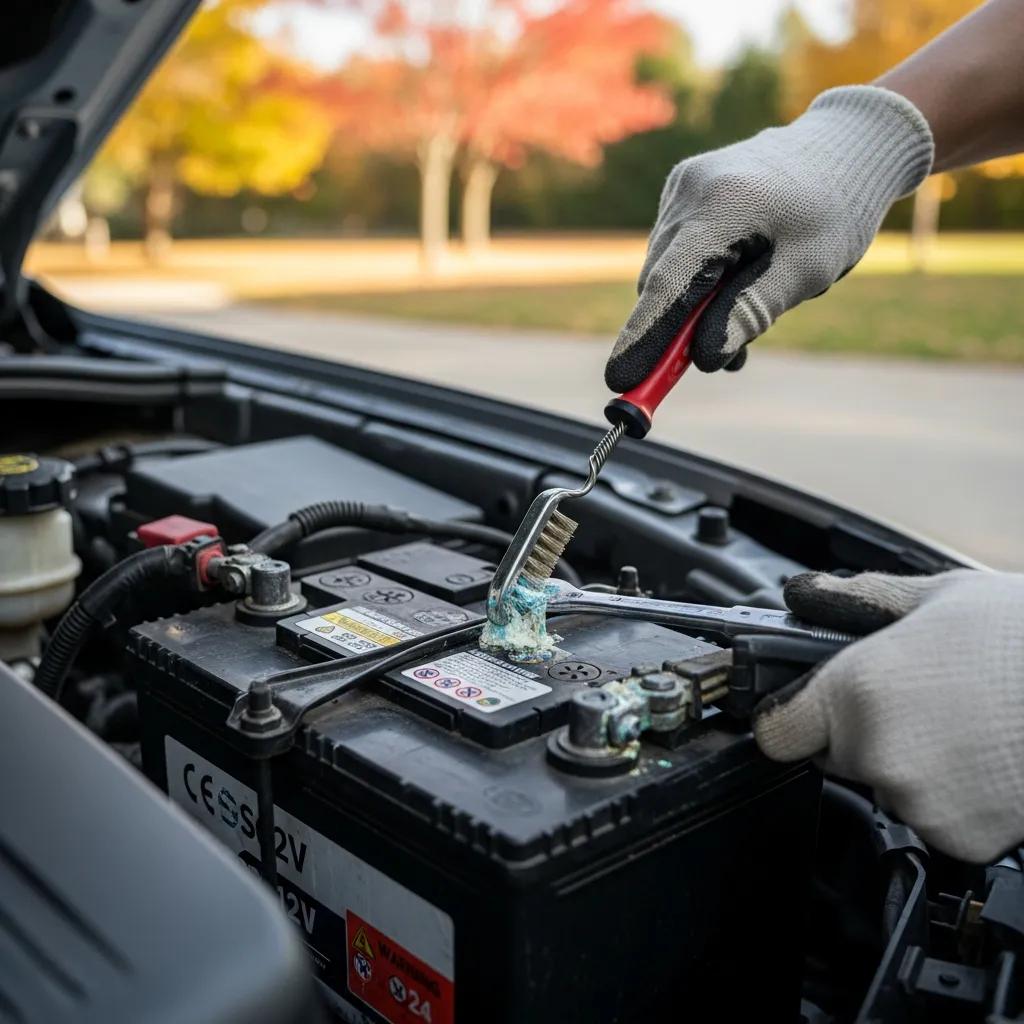
Battery health becomes a top priority in fall because cold slows the chemical reactions that produce current, making starts and electronics more vulnerable. A battery that reads low or shows terminal corrosion is more likely to fail on cool mornings or after long idle periods — especially if recent collision damage affected the electrical system. Basic fall battery care includes a visual terminal and cable inspection, a resting-voltage check, and professional load testing when readings are borderline. These steps help avoid the inconvenience of a no-start when temperatures drop.
Simple voltage thresholds and tests give clear actions for replacement or professional evaluation. The table below summarizes common tests, what they measure, and the threshold values to guide DIY and pro decisions.
| Test | What It Measures | Recommended Threshold / Action |
|---|---|---|
| Resting Voltage | Battery open-circuit voltage after sitting | >12.6V = good; 12.4–12.6V = marginal; <12.4V = charge or test |
| CCA / State-of-Charge | Cold Cranking Amps and capacity under load | If CCA below manufacturer spec or capacity <70% → consider replacement |
| Terminal Corrosion Check | Physical corrosion and connection resistance | Clean terminals if corrosion present; replace cables if pitted or loose |
Routine testing and clean terminals reduce the chance of battery failure in fall — important for drivers who rely on consistent starts and electrical performance. Clean connections and confirmed CCA keep starting power reliable on cold mornings and help avoid slow-crank surprises.
- Visual inspection: Check for swelling, cracks, or acid residue around terminals.
- Measure resting voltage: Use a multimeter and compare to the thresholds above.
- Inspect terminals: Remove corrosion with a baking soda solution and protect with terminal grease.
- Schedule load testing: If voltage is marginal or symptoms appear, request professional battery load testing.
Use this layered approach: DIY checks first, then professional diagnostics if readings are borderline or problems persist. If the vehicle has recent collision damage that might affect the charging system, a professional inspection is the safest choice.
Prime Time Collision Center provides professional battery diagnostics and load testing as part of our autumn inspections, and our technicians can diagnose post-accident electrical issues that compromise starting reliability. With OEM-quality checks and insurance-claim documentation, we’ll recommend replacements when capacity falls below safe thresholds. If you notice slow-cranking, dimming lights, or recent collision damage, schedule professional testing to avoid being stranded in cooler weather.
How cold weather affects battery performance
Cold temperatures slow the electrochemical reactions inside lead-acid batteries, reducing available current and lowering cold cranking amps (CCA). Around freezing, capacity can drop by roughly 20–30% depending on age and state of charge, which shows up as slow cranking, dim startup lights, or electronics resetting. Older batteries are especially vulnerable, and marginal batteries often reveal themselves on a cold morning.
For that reason, fall is a smart time to evaluate battery health before temperatures fall further, especially for cars parked outside overnight or driven infrequently. Finding CCA or voltage shortfalls early lets you replace a battery proactively instead of calling for a jump-start.
How to test and maintain your battery for fall
Begin with a safe visual check: confirm a secure hold-down, clean terminals and no swelling or leaks. Measure resting voltage with the vehicle off for several hours — above 12.6V is healthy, 12.4–12.6V is marginal and merits further testing, and below 12.4V needs charging and evaluation. If slow-crank symptoms persist, ask for a professional load test to check CCA under simulated starting conditions and determine replacement needs.
Clean terminals with a baking soda solution and apply dielectric grease to slow corrosion and improve connection resistance. If the alternator or charging system was damaged in a collision or shows faults, professional diagnostics are essential because charging problems can kill even a new battery. Our simple approach — check, test, act — helps winterize your car’s electrical reliability.
Prime Time Collision Center conducts full battery and charging-system diagnostics, documents results for insurance claims, and recommends OEM-specified replacements when capacity is unsafe. Our I-CAR Platinum Certified Technicians perform battery load testing and can repair alternator or starter issues after collisions. When you notice slow-crank symptoms or have recent impact damage, professional testing prevents unexpected failures in colder months.
Which fluids to check and replace for autumn
Fluids are core to fall maintenance because viscosity, freeze point and contamination affect engine protection, cooling, braking and visibility. Key fluids to inspect include engine oil (level and viscosity), coolant/antifreeze (concentration and freeze protection), brake fluid (moisture content), transmission fluid (color/odor and level), and windshield washer fluid (winter-rated formula). Checking these fluids avoids temperature-related damage, keeps brakes performing, and ensures clear visibility during fall storms.
The table below lists recommended actions and usual intervals for each essential fluid to guide your autumn maintenance choices.
| Fluid | Recommended Action | Typical Interval / Note |
|---|---|---|
| Engine Oil | Check level & viscosity; change if due | Follow manufacturer interval; consider slightly lower-viscosity winter-grade if recommended |
| Coolant/Antifreeze | Test concentration; top or flush as needed | Check freeze point and corrosion inhibitors annually or after overheating |
| Brake Fluid | Test for moisture; perform brake fluid exchange if contaminated | Replace every 2 years or per service history; urgent if moisture high |
| Transmission Fluid | Inspect color/odor and level; service if burnt/contaminated | Service per schedule; inspect after towing or collision |
| Windshield Washer | Top-up with winter/water-repellant formula | Top-up before rainy season; use freeze-resistant fluid for cooler nights |
Keeping fluids within spec helps systems operate safely as temperatures and road conditions change.
- Engine oil keeps parts lubricated as viscosity shifts with temperature; the correct grade supports cold starts and wear protection.
- Coolant prevents freezing and helps control engine temperature; the right antifreeze mix protects against corrosion and overheating.
- Brake fluid absorbs moisture over time and loses performance; regular testing and exchange keep braking consistent in wet conditions.
Fresh, correct fluids protect performance and safety and reduce the chance of repairs tied to neglect. If you suspect contamination, leaks or have recent collision repairs, a professional inspection ensures the right fluids and OEM-standard service.
Prime Time Collision Center performs coolant checks, brake fluid exchanges and transmission inspections using OEM-quality parts and documents service for insurance claims. We also advise on winter washer solutions and oil grades suited to local temperatures. If tests reveal contamination or you’ve had a fall fender bender, schedule service to restore system integrity.
Why engine oil, coolant and brake fluid checks matter in fall
Engine oil viscosity affects startup lubrication and wear protection as temperatures drop; the correct grade reduces friction at cold starts and preserves engine life. Coolant concentration sets freeze point and corrosion protection — an incorrect mix risks freezing in cold spots or allows overheating and cavitation. Brake fluid is hygroscopic and absorbs moisture, lowering its boiling point and increasing the risk of fade under heavy or repeated braking in wet conditions. Testing and changing these three fluids protect the most critical systems as fall weather arrives.
Look for oil sludge, discolored coolant or dark, burnt-smelling brake fluid as early warnings of system stress. Addressing these signs quickly lowers the chance of breakdowns and costly repairs later in the season.
How to inspect and top up transmission and washer fluids
Checking transmission fluid usually requires a warm-engine level check and an inspection of color and odor — healthy fluid is pink/red and clear; dark or burnt-smelling fluid indicates degradation and needs service. Windshield washer fluid should be topped with a winter-rated or water-repellant formulation to keep visibility during rain and prevent freezing on chilly nights, helping wipers clear leaves and grime. Filling washer fluid is an easy DIY task, but transmission issues often need shop diagnostics because modern transmissions can require checks on a lift or follow specific procedures.
Keep a spare bottle of winter washer fluid in the trunk and refill before long wet drives. For transmission concerns — slipping, delayed engagement or odd noises — document symptoms and get professional diagnostics. After collisions, transmission lines or seals may be compromised, so post-accident inspection helps prevent fluid loss and internal damage. Regular fluid care supports reliable shifting and clear visibility through autumn commutes.
Prime Time Collision Center offers transmission inspections and safe fluid top-ups, along with advice on winter washer formulas for the rainy and leaf seasons. We document fluid condition for insurance claims and use OEM-recommended fluids when contamination or damage is found. If you notice slipping or unusual transmission behavior after towing or an impact, schedule a professional check to prevent further damage.
Visibility: wiper blades and headlights for safer fall driving
Visibility systems are critical in fall because shorter daylight and wet roads increase the need for effective wipers and well-aimed headlights. Replace blades that streak, chatter or tear, and choose fall/winter-rated blades for better contact during rain and when clearing leaves. Clean headlight lenses and check alignment and bulb output to reduce glare and improve stopping visibility at dusk and dawn. Restoring clouded lenses and correcting aim can significantly improve illumination on low-light commutes. These simple steps reduce accident risk by improving what you can see and how well you’re seen.
Start with this quick visibility checklist before heavy rain hits:
- Inspect wiper blades: Look for cracks, splits and reduced contact.
- Top up washer fluid: Use a water-repellant winter formula to help clearing.
- Clean and inspect headlights: Remove haze and test alignment and bulb output.
Checking these items keeps visibility high when leaves and rain reduce contrast and light levels. Effective wipers and correctly aimed headlights give you more time to react and lower the chance of collisions during short daylight periods.
Prime Time Collision Center provides headlight alignment and restoration when DIY cleaning won’t do, and we recommend repairs if post-accident misalignment affects beam aim. Our technicians also evaluate electronic headlight systems and document repairs for insurance purposes. For drivers in Glendale and surrounding areas, a professional visibility check before the rainy season adds confidence for night driving.
When to replace wiper blades for fall performance
Replace wiper blades every 6–12 months or sooner if you notice streaking, skipping or audible chatter — signs that rubber contact has deteriorated. Fall rain and leaf debris speed blade wear, and old rubber smears the glass and reduces visibility at speed. Choose fall or winter-rated blades that stay flexible in cooler temperatures and keep even pressure across the windshield.
Do a quick test: run the wipers on wet glass and watch for streaks or missed spots; replace blades and clean wiper arms if needed. If the wiper linkage or motor still moves unevenly after new blades, have a technician check for mechanical issues affecting performance.
How to clean and align headlights for better fall visibility
Clean headlight lenses with mild soap, a plastic-safe cleaner and a soft cloth to remove surface grime and improve light output. For deeper haze, a headlight restoration kit or professional polishing restores clarity. Beam alignment matters for on-road illumination and to reduce glare for other drivers — a misaligned beam cuts forward visibility and raises accident risk in low light. Check aim using a flat surface and wall at the manufacturer’s distances or ask a pro for alignment if you notice uneven illumination or after collision damage.
When restoration or realignment is needed, professional polishing and aim adjustment restore OEM-level performance and can be documented for insurance. Properly aligned, clear headlights improve night-time contrast and reduce driver fatigue during longer autumn commutes.
Prime Time Collision Center offers headlight restoration and alignment to return beams to correct aim and clarity after wear or collision, and our technicians verify output to boost visibility and safety. If your lighting is dim or uneven, professional restoration ensures correct beam pattern and helps prevent visibility-related incidents on wet, leaf-covered roads.
Brakes, heating and emergency preparedness for fall
Brakes, the heating/defrost system and a purpose-built emergency kit are essential for safe autumn driving because wet roads and cooler weather increase stopping distances and exposure risk during breakdowns. Inspect pads and rotors for wear, test brake fluid for moisture contamination, and confirm the heater and defroster work to keep windows clear and the cabin comfortable. Your emergency kit should include items for wet-cold waits and visibility problems so you can stay safe and visible until help arrives.
Keep these fall-focused items in your trunk and review them each season:
- Blanket or emergency thermal blanket for cool-weather waits.
- Flashlight with fresh batteries and a reflective vest for roadside visibility.
- Jumper cables, basic tools, and a portable tire inflator or sealant for quick repairs.
- Water-repellent outerwear, non-perishable snacks, and a phone charger or power bank.
This kit reduces roadside vulnerability and supports basic self-rescue until professional help arrives. Preparedness works hand-in-hand with preventative maintenance to limit the consequences when issues arise.
Prime Time Collision Center recommends pairing preventive inspections with a stocked emergency kit and offers 24/7 towing for drivers who need immediate support after breakdowns or collisions. Our team can inspect brakes and heating components as part of an autumn check and provide documented service records for insurance or lease purposes. If you notice brake fade, heater failure or post-accident vulnerability, professional service and reliable towing are vital fall safety measures.
How to inspect brake pads, rotors and fluid before winter
Look through the wheel openings to visually check pad thickness — many pads have wear indicators and should be replaced when lining thickness approaches about 3mm or when squeal indicators sound. Rotors should be free of heavy scoring, cracking or warping that causes vibration during braking; pulsing or steering-wheel shake while stopping points to rotor problems. Test brake fluid for moisture or darkening, since hygroscopic fluid lowers boiling point and can cause fade — exchange the fluid if moisture or contamination is detected.
DIY checks can spot obvious wear, but because brakes are safety-critical, unclear results or post-collision concerns should lead to a professional inspection. Documenting brake condition before the wet season helps safety and supports any later insurance claims. Regular maintenance keeps braking performance predictable and preserves stopping distances on slick autumn roads.
Why heating readiness and an emergency kit matter
A working heater and defroster keep windows clear and occupants comfortable, preventing fogged glass that can obscure vision. A clean cabin air filter improves defogging and air quality — useful after long drives or in areas with seasonal pollen and leaf debris. An emergency kit addresses the higher chance of roadside waits in cool, wet conditions by providing warmth, visibility tools and basic repair items to reduce exposure risk.
Being prepared reduces panic and expands options during an unexpected stop or a minor collision, protecting vehicle occupants and other road users. Pairing HVAC checks with a stocked kit gives practical resilience for autumn trips. When incidents happen, inspection records and professional assistance reduce the chance of prolonged roadside exposure.
Prime Time Collision Center inspects heating and defroster systems, replaces cabin air filters, and advises on emergency kit essentials tailored to local driving. We document repairs, support insurance claims and provide towing when needed. If your heater underperforms or collision damage affects HVAC ducts or blower motors, fix it before colder weather to ensure cabin comfort and safety.
Brake inspection details — pads, rotors and fluid
For a thorough check, lift the vehicle or view through the wheel to measure pad thickness; replace pads when thin or when metallic wear indicators engage. Inspect rotor surfaces for scoring and measure runout if you feel vibration — blueing or heat spots indicate thermal damage that may require machining or replacement. Test brake fluid visually and with a moisture strip — dark or moisture-laden fluid should be exchanged to restore boiling point and prevent fade.
If you find uneven pad wear, unusual noises or a spongy pedal, get a professional brake inspection and possible fluid exchange. Brake systems benefit from expert diagnostics that measure pad thickness, rotor condition and fluid moisture content. Proper fall brake care keeps stopping performance consistent as road conditions change.
Heating system checks and emergency kit essentials
Confirm the heater and defroster clear condensation quickly to keep sightlines open and occupants comfortable during chilly delays. A targeted fall emergency kit should include a thermal blanket, flashlight, reflective gear, jumper cables, tire repair tools, a basic first-aid kit and a charged power bank for communication. These items help you manage short delays safely until towing or roadside assistance arrives.
Combining HVAC readiness with an emergency kit reduces both safety risk and stress when minor issues turn into roadside events. For drivers who want professional verification and documentation, a shop inspection plus a stocked kit is a strong preparedness strategy that complements routine maintenance.
Prime Time Collision Center offers comprehensive fall readiness inspections — brake and heating checks, cabin filter replacement and emergency kit recommendations. We deliver OEM-quality repairs and 24/7 towing for drivers in Glendale, Burbank and Pasadena, and we document services for insurance or lease needs. If you need a fall maintenance appointment or emergency towing, contact Prime Time Collision Center to schedule an inspection and get season-ready peace of mind.
Frequently Asked Questions
What should I include in my emergency kit for fall driving?
Your fall emergency kit should cover warmth, visibility and basic repairs: a thermal blanket, flashlight with fresh batteries, reflective vest, jumper cables, basic tools, and a portable tire inflator or sealant. Add non-perishable snacks, water-repellent outerwear and a phone charger or power bank so you can stay connected and comfortable while waiting for help.
How often should I check my vehicle’s fluids during fall?
Check key fluids at least once a month in fall as temperatures drop: engine oil, coolant, brake fluid, transmission fluid and windshield washer fluid. Regular checks catch freezes, overheating risks or reduced braking performance early. If you see unusual color, smell or low levels, schedule a professional inspection or fluid service.
What are the signs that my battery needs to be replaced?
Signs your battery may need replacement include slow cranking at startup, dim headlights, dashboard electrical issues, resting voltage below 12.4 volts, corrosion at terminals or a swollen battery case. If you notice these symptoms, have the battery tested to avoid being stranded on a cold morning.
How can I improve my vehicle’s visibility during fall?
Improve visibility by replacing worn wiper blades, cleaning headlights and checking their alignment, and using a winter-rated windshield washer fluid to clear rain and leaf debris. Regularly inspect these systems so you have clear sightlines during shorter daylight and bad weather.
What should I do if my brakes feel spongy or unresponsive?
Address spongy or unresponsive brakes immediately — it could indicate low brake fluid, a leak or worn pads. Check fluid level and inspect pads and rotors for wear. If you hear unusual noises, feel vibrations, or the pedal is soft, seek professional service right away to ensure the braking system is safe.
How can I prepare my vehicle for winter after fall maintenance?
After fall maintenance, prepare for winter by confirming tires, battery, fluids and brakes are in good shape. Consider winter tires if you expect snow or ice, verify the heating system and defroster, and keep your emergency kit stocked. Routine maintenance and preparedness are the best ways to stay safe in winter conditions.
Conclusion
Taking a few focused steps now will keep your vehicle safer and more reliable through fall’s changing conditions. Follow this checklist, address any red flags, and schedule an autumn inspection with Prime Time Collision Center if you need professional help. Stay safe on the road and enjoy greater peace of mind this season.