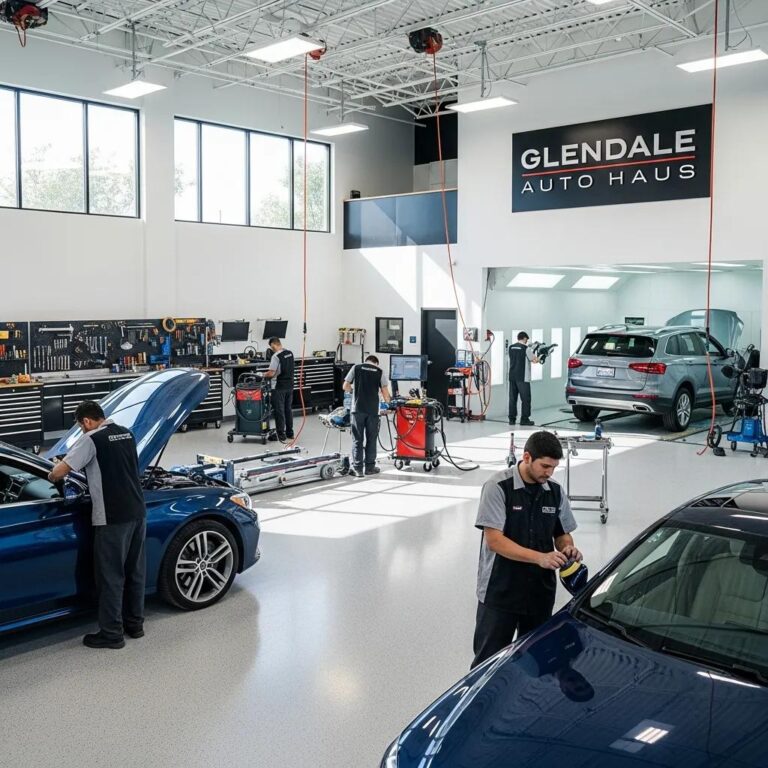

Free Auto Repair Estimates in Burbank, CA — Clear, Accurate Quotes with OEM-Quality Repairs
At Prime Time Collision Center we offer free, no‑obligation repair estimates for drivers in Burbank. Whether you upload photos or bring your car in, we’ll give you a clear, accurate quote and explain what’s required to get your vehicle back to factory condition. This page walks you through how our estimates work, why OEM‑level assessments matter for safety and warranty, and how to submit photos or schedule an in‑person inspection. Many drivers worry about hidden damage, ADAS recalibration, or how insurance will handle repairs — a professional estimate identifies structural issues, parts needs, and calibration requirements so you can plan with confidence. Read on for why precision matters, the step‑by‑step estimate process (online and in‑person), how OEM standards affect safety and resale value, typical Burbank cost ranges, and tips for working with your insurer. We’ll also include photography tips, what technicians check during inspections, and how to use your estimate when filing a claim or comparing shops.
Why Choose Prime Time Collision Center for Your Free Auto Repair Estimate in Burbank?
A good estimate does more than list prices — it defines the repair scope, required parts, and labor steps to restore your vehicle safely after a collision. Accurate assessments reduce the chance of missed structural or safety‑system repairs and help align expectations with insurance reviews and warranty rules. For Burbank drivers, a professional estimate will also flag whether OEM parts or ADAS calibration are needed — items that affect both safety and resale value. Knowing why an estimate matters makes it easier to compare shops and choose the repair path that’s right for you and your insurer.
Prime Time Collision Center provides free, no‑obligation estimates to drivers across the greater Los Angeles area, including Burbank. Our technicians use industry‑standard diagnostics and follow factory‑quality procedures. We employ I‑CAR Platinum‑level technicians who know how to spot both obvious and hidden damage and prepare the documentation insurance adjusters need. When a shop documents OEM procedures in its estimate, it helps preserve warranties and ensures safety systems are restored correctly.
What do you get with our free, no‑obligation estimate?
Free estimates give you a clear picture of repair scope and cost without committing you to any work. A detailed quote separates parts, labor, paint, and calibration so you and your insurer see exactly what drives the total. Estimates also highlight hidden or progressive damage — like frame distortion or internal mechanical issues — that a quick visual check could miss. Getting a solid estimate early helps you decide whether to involve your insurer, schedule repairs right away, or seek a second opinion, and it reduces surprises when the final invoice arrives.
Key benefits you can expect from a professional estimate:
- Transparent cost breakdown: parts, labor, paint, and calibration listed separately.
- Hidden‑damage detection: structural and mechanical issues identified during inspection.
- Insurance‑ready documentation: estimates formatted to support adjuster review and approvals.
With those benefits in mind, here’s how our estimate process works and how to request one.
How do our certified technicians deliver accurate damage assessments?
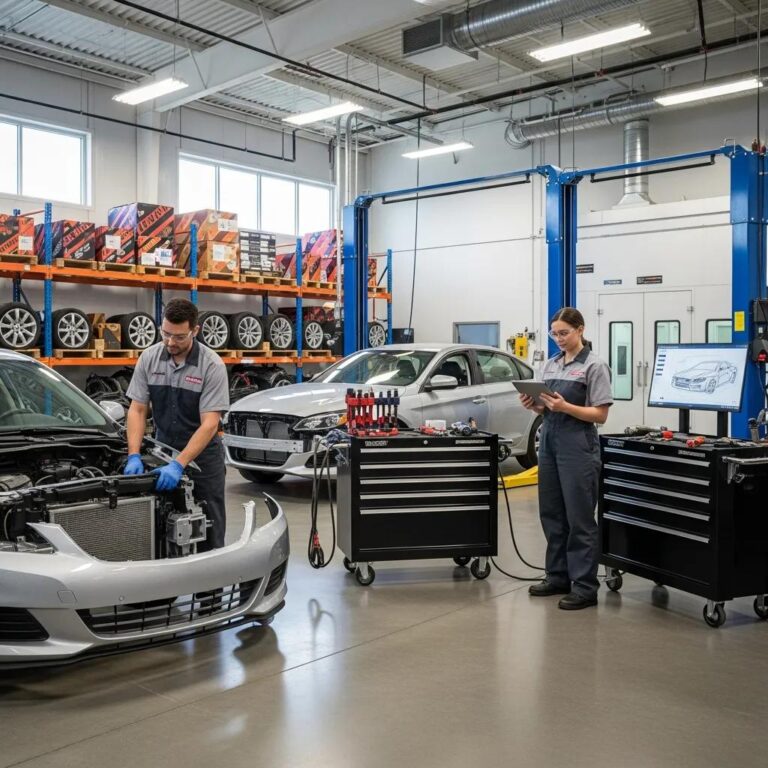
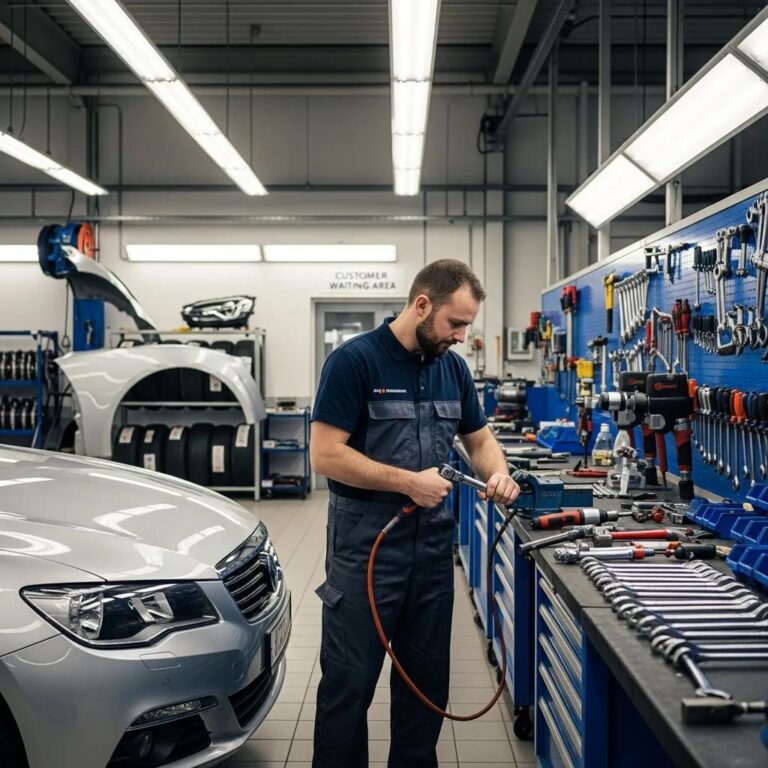
Our technicians follow standardized procedures, use diagnostic tools, and reference manufacturer guidance to turn visible damage into a reliable repair plan. I‑CAR Platinum training means our team receives advanced instruction on modern vehicle materials and systems, helping them detect damage that affects safety and handling. Technicians perform a layered inspection — exterior, structural/frame, mechanical, and electronic systems — and use tools that reveal alignment problems, hidden cracks, or sensor misalignments. This method ensures estimates reflect required OEM procedures and any ADAS or EV‑specific work needed to restore safe operation.
The way our technicians document inspections ties directly to insurance and repair outcomes: the estimate becomes the roadmap for approved work and parts sourcing. Detailed notes and diagnostic readouts support conversations with adjusters and reduce disputes over required repairs. A thorough assessment shortens repair cycles and helps restore manufacturer‑specified performance — especially important on vehicles with sensor‑driven safety systems.
How Does the Auto Repair Estimate Process Work in Burbank?
A good estimate process turns a vehicle’s condition into a clear, itemized repair plan that both owners and insurers can act on. It usually starts with a request — by phone, photo submission, or online form — then moves to an initial review and, if needed, a full in‑person inspection. Each step reduces uncertainty by adding diagnostic data, measurements, and parts identification. The result is a written estimate listing parts (OEM or approved alternatives), labor hours, paint, and any calibration needs. Understanding these steps helps Burbank drivers know what to prepare and when to expect follow‑up from the shop or insurer.
Here’s a simple workflow for a collision estimate:
- Request an estimate: submit photos and vehicle details or call to schedule an inspection.
- Initial assessment: a photo review gives a preliminary range or confirms the need for an in‑person check.
- In‑person inspection: certified technicians perform a layered inspection and diagnostic scans to uncover hidden damage.
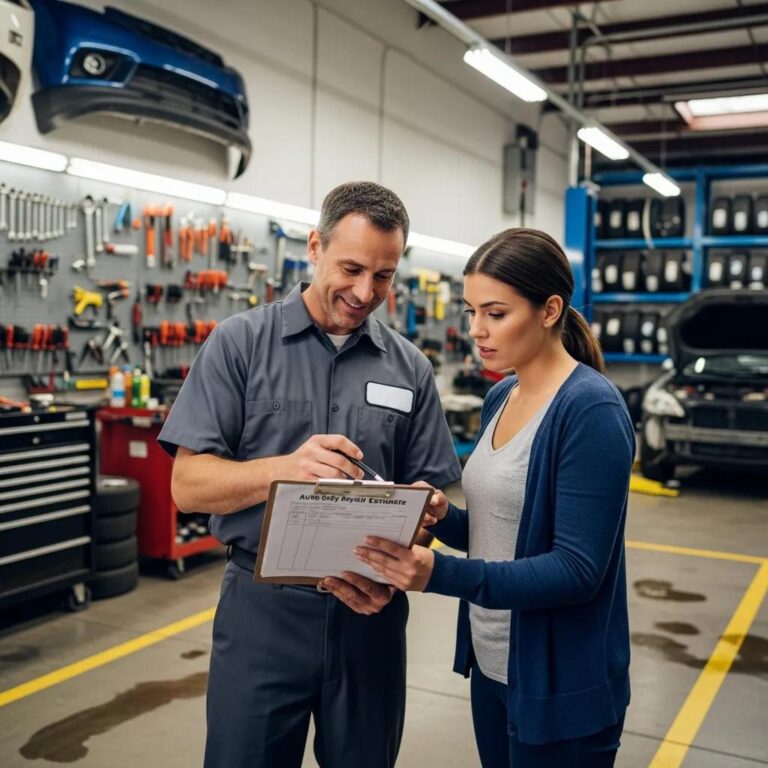
- Written quote and next steps: we prepare a detailed estimate, share it with you and your insurer, and schedule repairs once approved.
That step‑by‑step flow prepares you for the online submission and the hands‑on inspection described below.
How do you request an online auto repair estimate?
Start with clear documentation: good photos, basic vehicle info, and a short description of the damage. For better remote accuracy, photograph the whole vehicle, several angles of each damaged area, and close‑ups of any misalignment, buckling, or sensor locations. Include year, make, model and the VIN when possible to speed parts identification. We’ll reply with a preliminary assessment and let you know if an in‑person inspection is required for a final, insurance‑ready estimate. Remote estimates are useful for triage and gauging urgency, but they’ll note any potential hidden structural or mechanical issues that only a hands‑on inspection can reveal.
Good photo submissions and clear details reduce follow‑up questions and shorten turnaround time, increasing the chance the initial estimate closely matches the final repair scope.
How is the in‑person vehicle inspection conducted for collision estimates?
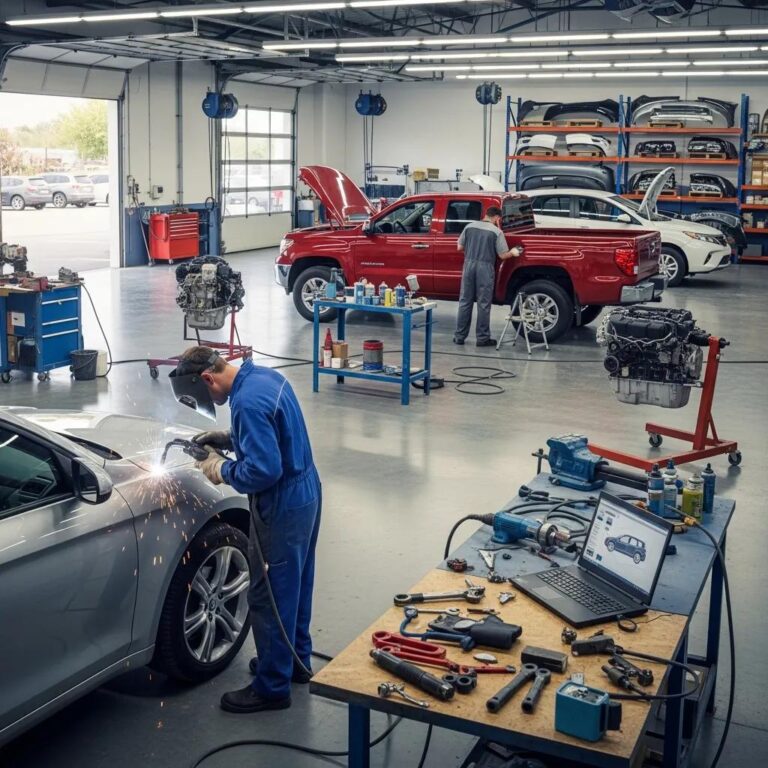
An in‑person inspection evaluates exterior, underbody, structural, and electronic components to build a complete repair plan. Technicians begin with a visual exterior survey — panel gaps, paint damage, and bumper fit — then check the frame and suspension for structural issues. Diagnostic scans and ADAS checks identify sensor faults or calibration needs, while mechanical checks confirm drivability. We document findings with photos and diagnostic readouts, then compile those details into the estimate and walk through them with you for transparency.
Hands‑on inspections often uncover items that affect cost and safety — for example, a bent subframe or damaged sensor mount — and those discoveries guide parts sourcing and scheduling. The documented results become part of the insurance submission and repair authorization process.
Why OEM‑Certified Auto Repair Estimates Matter in Burbank
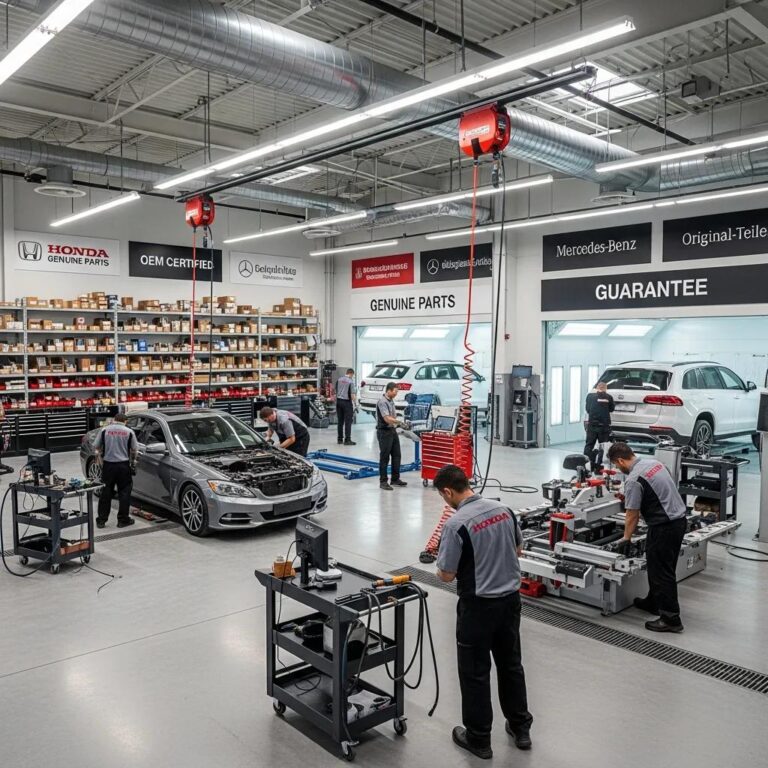
OEM‑aligned repair estimates follow manufacturer procedures, specify the correct parts, and ensure proper reassembly — all of which protect occupant safety and a vehicle’s integrity. When an estimate accounts for OEM repair paths it includes torque specs, structural joining methods, and sensor recalibration steps important for modern cars. Estimates that ignore OEM considerations can understate repair complexity and risk safety or warranty issues. For Burbank drivers, choosing an estimate that prioritizes OEM procedures helps preserve resale value and ensures systems work as intended after repairs.
To show how certifications and OEM practices translate to customer outcomes, the table below compares common certifications and what they ensure.
The following table explains key certifications and processes and the practical benefits they provide:
| Certification / Process | What It Ensures | Benefit / Outcome |
|---|---|---|
| I‑CAR Platinum technician training | Advanced collision repair knowledge and ongoing education | More accurate damage assessment and safer repairs |
| OEM repair procedures adherence | Use of manufacturer repair steps and torque/fit specifications | Preserves structural integrity and system performance |
| ADAS diagnostic and calibration | Proper sensor alignment and software calibration | Restores safety‑system accuracy after repairs |
This comparison shows that trained technicians and OEM‑aligned processes lower safety risk and help preserve warranties — which brings us to the certifications the shop holds.
Why are OEM‑certified repairs important for safety and warranty coverage?
OEM‑specified repairs follow manufacturer procedures that maintain proper assembly, crash energy management, and safety‑system function. For cars with ADAS, OEM calibration ensures cameras and sensors are aligned so lane‑keeping and automatic braking perform as designed. Using OEM parts or verified equivalents helps protect warranty terms and documents proper repairs for future resale. Prioritizing OEM methods in an estimate reduces the chance of post‑repair issues and aligns with insurer and manufacturer expectations.
Keeping these standards requires trained technicians and the right diagnostic equipment — so certification and equipment access matter when you’re comparing estimates.
Which certifications does Prime Time Collision Center hold for OEM‑quality repairs?
Prime Time Collision Center employs I‑CAR Platinum‑certified technicians, a credential that reflects advanced training in collision repair, materials, and safety systems. I‑CAR Platinum means our techs complete required coursework and continuing education relevant to modern vehicle structures and systems, which supports accurate estimates and safe repair practices. While we highlight factory‑quality repairs and certified technicians, specific OEM shop certifications were not verified in the available information; if an OEM affiliation is important to you, ask us for details. Choosing a shop with I‑CAR‑trained technicians increases confidence that your estimate will capture OEM procedures and any ADAS calibration needs.
That certification context leads into how we help with insurance claims and what to expect during the claims process.
How Can Prime Time Collision Center Help with Your Insurance Claim in Burbank?
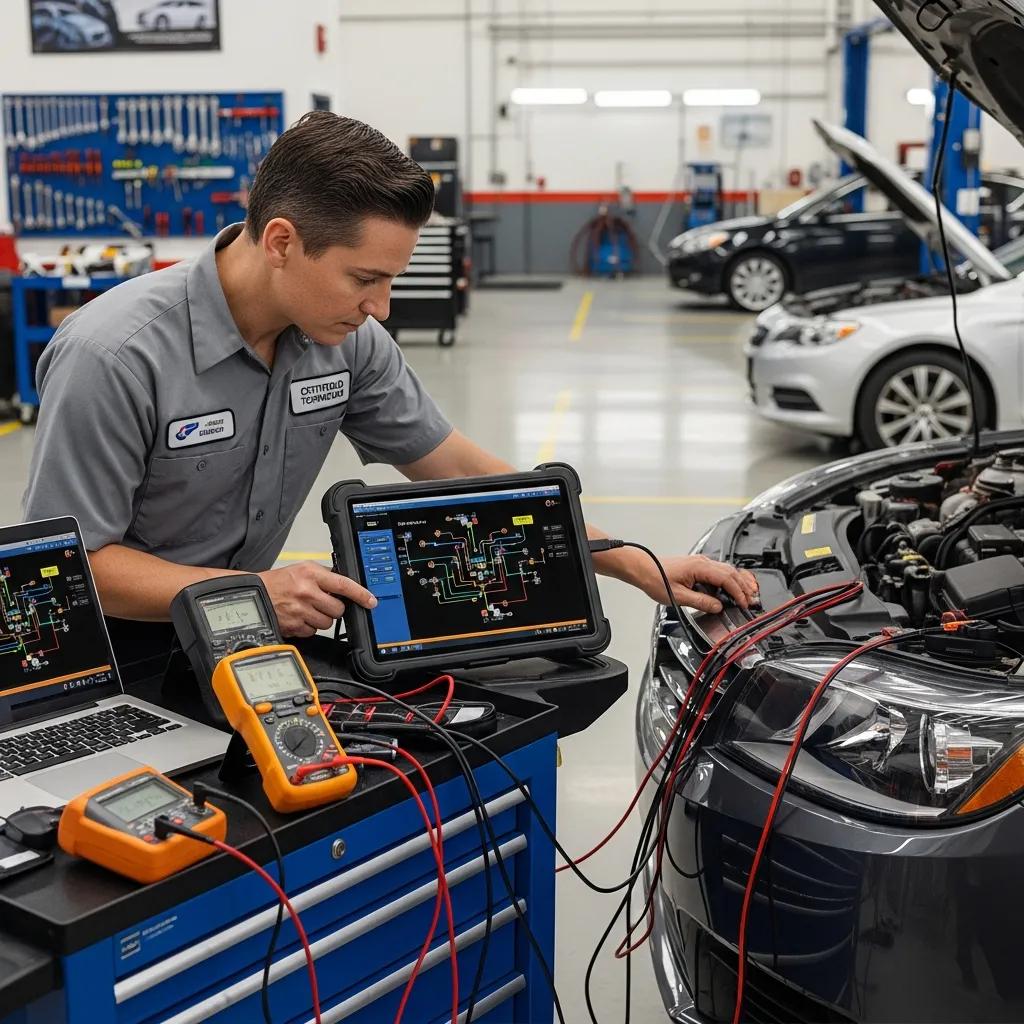
An accurate repair estimate is the foundation of an insurance claim — it lists required parts, labor, and calibration needs for the adjuster to review. Shops that help with claims submit the estimate, clarify technical items for adjusters, and advocate for OEM procedures when necessary. That hands‑on support reduces delays and misunderstandings between owners and insurers and helps ensure approved repairs match the documented safety and reassembly requirements. Knowing how we interact with your insurer helps you anticipate timelines and required documents.
Prime Time Collision Center works with all major insurance companies and helps customers through the claim process by sharing detailed estimates, communicating with adjusters, and explaining warranty coverage on completed repairs. We provide inspection documentation, photos, and diagnostic reports to support approvals. This collaborative approach streamlines approvals, keeps timelines predictable, and protects your interests throughout the repair.
| Insurance Step | Who Does It | Expected Outcome / Tip |
|---|---|---|
| Initial estimate submission | Vehicle owner / repair shop | Establishes repair scope for adjuster review; include photos and diagnostics |
| Claim filing and documentation | Vehicle owner with shop support | Triggers insurer review; timely documentation speeds approval |
| Adjuster review and questions | Insurance adjuster with shop explanations | Clarifies necessity of OEM procedures and calibration |
| Approval and repair authorization | Insurer (often coordinated by shop) | Repairs begin once scope and parts are authorized |
This timeline shows where shop involvement smooths the process and prepares the claim for quicker approval.
What happens during the insurance claim process for auto repair estimates?
Typically, the owner files a claim and submits the shop’s estimate for adjuster review. The adjuster checks parts, labor hours, and any specialized work like ADAS calibration and may coordinate with the shop to clarify technical items. After approval, the insurer authorizes repairs or issues payment instructions; the shop schedules the work and orders parts, prioritizing OEM‑specified components when appropriate. Timely, well‑documented estimates and inspection reports help minimize rework and disputes by making the rationale for repairs clear.
Proactive documentation — photos, diagnostic readouts, and clear descriptions — reduces back‑and‑forth and supports claims that fully cover needed repairs.
Which major insurance companies do we work with for hassle‑free claims?
We work with all major insurance carriers and regularly coordinate with adjusters to facilitate approvals and answer technical questions. That experience means you can bring your estimate to us and expect the shop to communicate directly with the carrier about parts sourcing, OEM procedures, and warranty concerns. To prepare for an appointment, bring your claim number, photos of the damage, and any relevant service records. Our insurer experience helps guide you through next steps and clarifies deductible or coverage questions during the claim.
These insurer relationships reduce administrative friction and speed authorizations — especially valuable for drivers who need timely repairs to restore safety and vehicle function.
What Are Typical Costs and Key Factors for Auto Body Repair Estimates in Burbank?
Repair costs vary because they depend on parts, labor, vehicle technology, and damage severity — a small bumper repaint is very different from structural frame work or ADAS sensor replacement. Key cost drivers include whether OEM parts are required, shop labor rates, the extent of structural repairs, and the need for ADAS calibration or EV‑specific procedures. Local market factors in Burbank and the greater Los Angeles area also affect parts availability and scheduling. Understanding typical cost ranges helps drivers set realistic expectations, but remember each estimate is case‑specific and based on inspection findings.
| Repair Type | Cost Range (example) | Key Factors |
|---|---|---|
| Bumper repair / replacement | $500–$1,800 | Extent of damage, OEM vs aftermarket bumper, paint blending |
| Dent removal (minor) | $100–$800 | Location, size, paint condition, accessibility |
| Paint repair / panel repaint | $300–$2,000 | Panel size, color matching, blending with adjacent panels |
| Structural/frame repair | $1,000–$5,000+ | Degree of frame damage, alignment, parts and labor intensity |
This comparison shows how repair type and vehicle details affect price and why a detailed estimate is essential before approving work.
How do repair types and vehicle technology influence pricing?
Advanced systems, luxury trim, and EV components raise repair complexity and parts costs, which increases estimate totals. Vehicles with ADAS need sensor inspection and calibration after impact, adding diagnostic and calibration labor. EVs may require battery or high‑voltage system checks. Structural repairs need precision equipment and alignment verification, which adds specialized labor and parts expenses. Because of these technology influences, an accurate estimate must include electronic diagnostics, calibration time, and any OEM‑required procedures to fully restore system performance.
Understanding these factors helps you interpret estimates and discuss OEM parts versus alternatives with the estimator.
What should you know about deductibles and coverage in Burbank auto repairs?
Your deductible is the amount you pay before insurance covers repair costs; your out‑of‑pocket total is the approved estimate minus your deductible, subject to your policy limits. Some insurers may challenge specific line items — like OEM part requests or calibration labor — so a well‑documented estimate that justifies those items is important. Verify coverage details with your insurer and provide the shop’s estimate for adjuster review so you know what will be paid. Being proactive about deductible expectations and insurer authorizations reduces surprises at pickup and helps align repairs with both safety needs and financial responsibility.
Clear communication between owner, shop, and insurer over these financial items helps finalize approvals and schedule repairs efficiently.
Where Can Burbank Drivers Find Trusted Auto Body Repair Services and Customer Reviews?
Trusted shops combine certified technicians, transparent estimates, and documented warranties to give vehicle owners confidence in safety and value. Local proof points — such as verified customer reviews and example estimates — help prospective clients evaluate shops. For Burbank drivers, proximity and a shop’s willingness to coordinate with insurers and document OEM procedures are practical signs of trustworthiness. Knowing where to look for verified feedback and what to ask at an estimate appointment improves your ability to choose a shop that puts safety and clear communication first.
What do local customers say about Prime Time Collision Center’s estimate accuracy?
Verified reviews commonly mention clear communication, accurate initial estimates, and satisfactory repair outcomes when a shop follows certified procedures. We encourage you to check verified review sources to see how customers describe estimate clarity, technician professionalism, and repair timeliness. Look for themes like transparency, responsiveness during the claim process, and adherence to safety repairs. Comparing multiple reviews and asking the shop for documented inspection examples can provide extra assurance before you authorize work.
How does our Burbank location serve the community with quality collision repairs?
Prime Time Collision Center serves Burbank and surrounding communities — including Glendale, Pasadena, and Studio City — offering free estimates and repairs focused on factory‑quality results. We emphasize I‑CAR Platinum‑trained technicians and work with all major insurance companies to support claims and warranty‑backed repairs. For Burbank drivers, that means you can request a free estimate, submit documentation for a claim, and rely on certified techs to plan ADAS calibration and OEM‑aligned repairs when needed. To get started, schedule an in‑shop estimate or a photo‑based review so we can document the damage, prepare an insurance‑ready estimate, and advise on next steps.
Practical tips to prepare for your visit:
- Bring clear photos of the damage and vehicle details to speed the preliminary assessment.
- Have your insurance claim number ready if you’ve already filed with your carrier.
- Ask the estimator about ADAS checks and any calibration fees that may apply.
These simple steps help us deliver a more accurate estimate and speed approvals for the repairs you need.
Frequently Asked Questions
What should I do if my vehicle has hidden damage after a collision?
If you suspect hidden damage, bring the vehicle in for a professional inspection. Our certified technicians use diagnostic tools to uncover issues that aren’t visible during a quick look. We perform structural and mechanical checks and document any hidden damage so all necessary repairs are identified and addressed — protecting your vehicle’s safety and performance.
How long does the auto repair estimate process typically take?
Timing varies with damage complexity and the request method. An online/photo estimate can often be provided within hours to a day if the photos and details are clear. An in‑person inspection typically takes a few hours for a full assessment. In most cases you can expect a comprehensive, insurance‑ready estimate within a couple of days after your initial request.
Can I use aftermarket parts instead of OEM parts for repairs?
You can choose aftermarket parts, but understand the tradeoffs. Aftermarket parts may cost less but can differ in fit, finish, or performance compared with OEM parts. OEM parts follow manufacturer specs and help protect safety and warranties. Talk with your estimator about options so you can decide what best fits your budget and safety priorities.
What happens if my insurance claim is denied?
If a claim is denied, review the denial to understand why. Common reasons include missing documentation or estimate discrepancies. You can appeal with additional evidence — detailed estimates, photos, and diagnostic reports from the repair shop. Prime Time Collision Center can help clarify technical items for your insurer, which may improve the chances of overturning a denial.
How can I prepare for my in‑person inspection appointment?
Bring your insurance claim number, any prior repair records, and clear photos of the damage. Arriving with this information helps technicians assess the vehicle faster. Also be ready to point out any specific concerns you have. Good preparation results in a more accurate estimate and a smoother repair process.
What should I expect after receiving my auto repair estimate?
Review the estimate to understand the repair scope, parts needed, and costs. The estimate will usually break down labor, parts, paint, and any calibration work. If you have questions, contact the shop for clarification. Once you approve the estimate, we’ll coordinate with your insurer and schedule the repairs to restore your vehicle safely.
Conclusion
Requesting a free estimate from Prime Time Collision Center gives Burbank drivers clear, professional guidance on repair costs and necessary procedures so safety and vehicle value are protected. With I‑CAR‑trained technicians documenting repairs to OEM standards and helping with insurance coordination, you can make informed decisions and move forward with confidence. Don’t leave repairs to guesswork — request your free estimate today and get the peace of mind that comes with professional, OEM‑quality collision repairs.