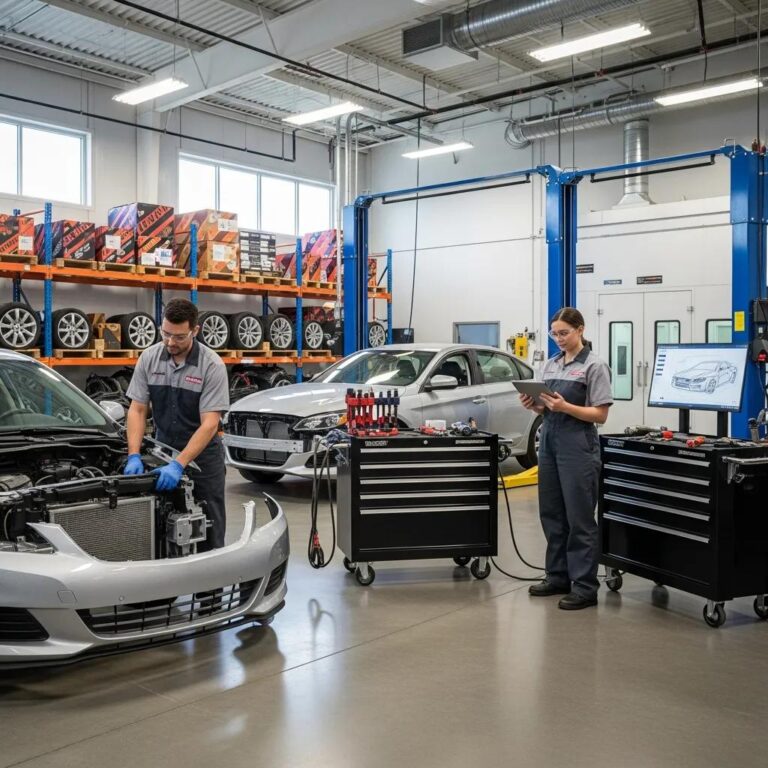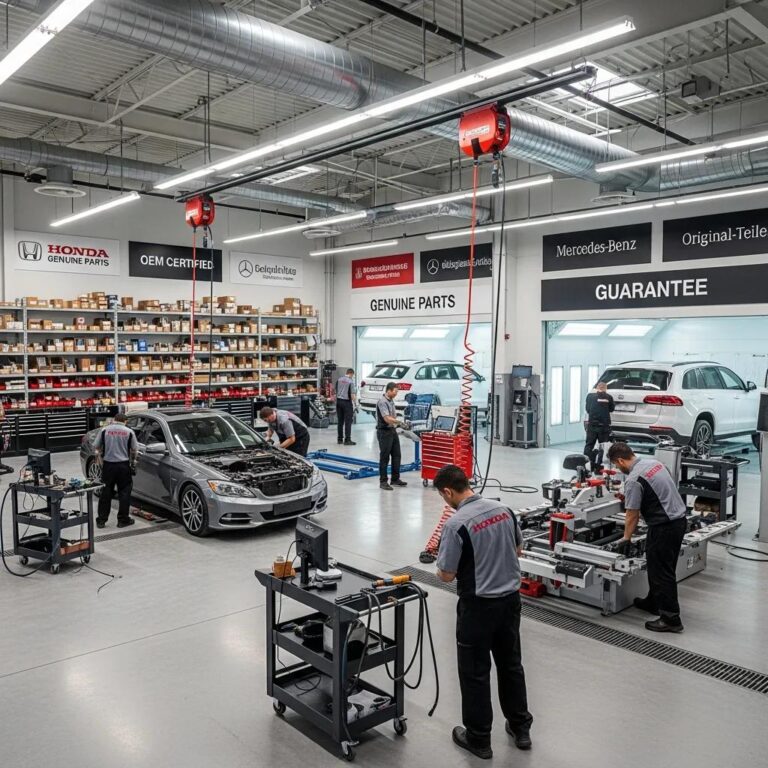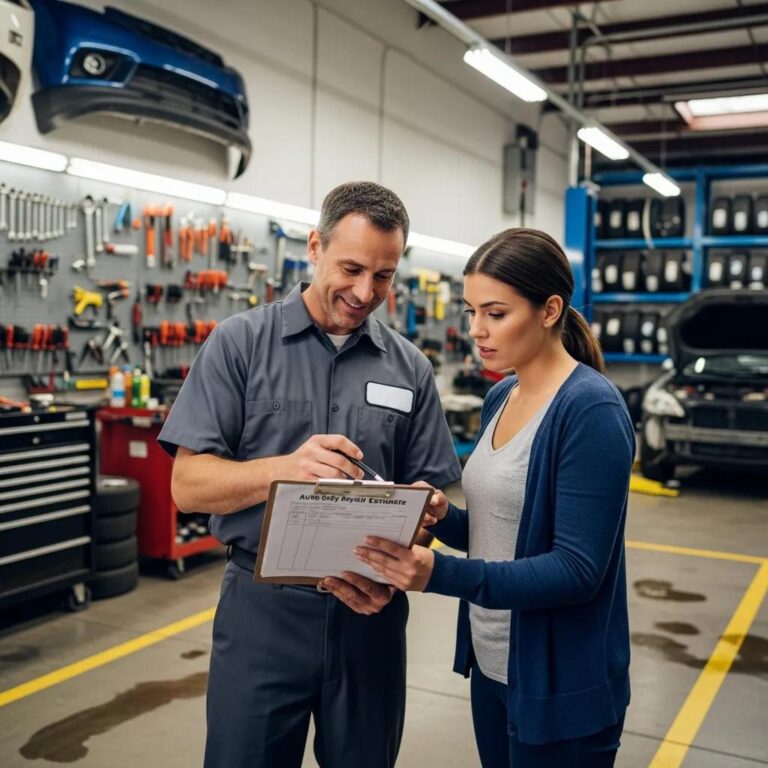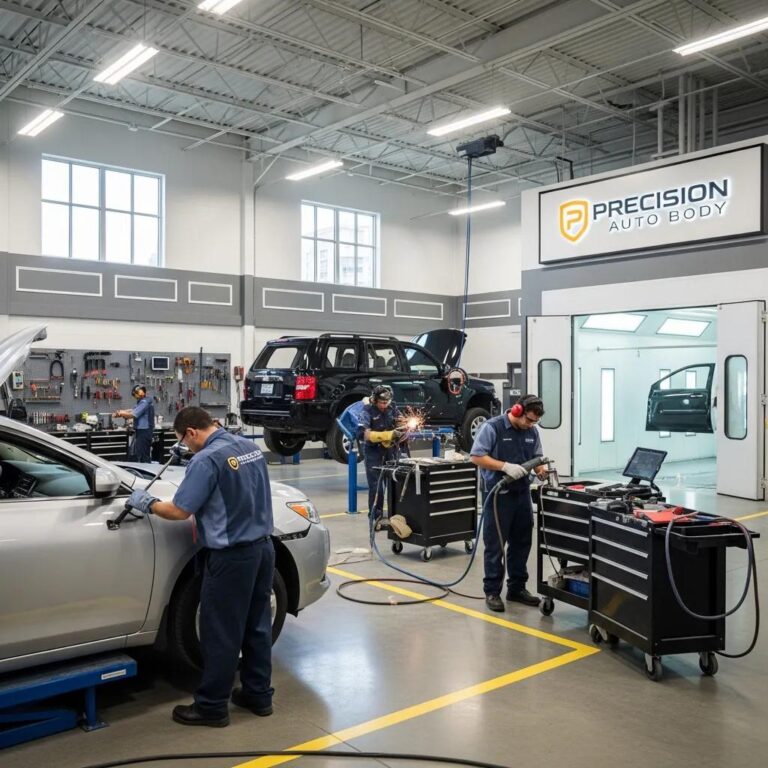
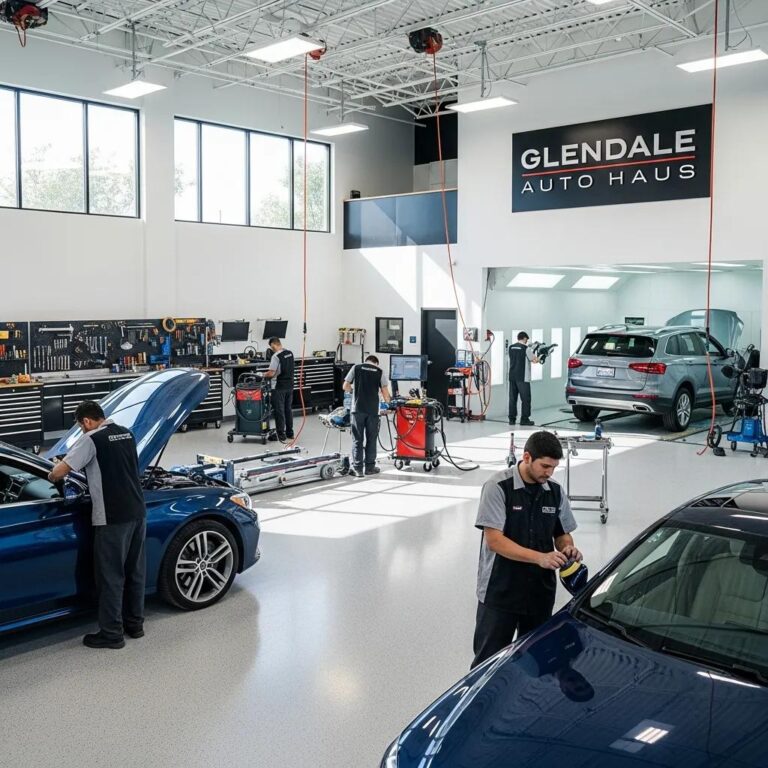
How to Choose the Best Auto Body Shop: Expert Tips
How to Choose the Right Auto Body Shop: Practical Guidance on Certified Repairs & Insurance Claims
After an accident, the repair choices you make affect your vehicle’s safety, resale value, and how smoothly your insurance claim proceeds. This guide walks you through the things that matter most when picking a body shop: the certifications to prioritize, why OEM-aligned repairs matter for structure and electronics, how to handle the claims process, and what shop capabilities to require for modern cars. We move from verifying I‑CAR and OEM credentials to checking for ADAS calibration rigs and paint‑matching systems, and finish with a practical checklist you can use when vetting local providers. Focus on the basics — trained technicians, written procedures, parts policies, and warranties — and you’ll protect both your safety and your wallet while working with insurers and repair timelines.
Seeing how manufacturers, insurers, and repair shops interact helps you make smarter decisions after a collision.
Key Stakeholders in Automotive Aftermarket & Body Shops
The automotive aftermarket includes many players: vehicle manufacturers, parts suppliers, equipment makers, distributors and retailers, e-commerce platforms, intermediaries such as insurers and leasing companies, fleets, repair and service garages, and body shops — all supported by data and information services that keep the system running.
Automotive Aftermarket: Introduction to a Global Business, 1918
Which Certifications Matter When Choosing an Auto Body Shop?
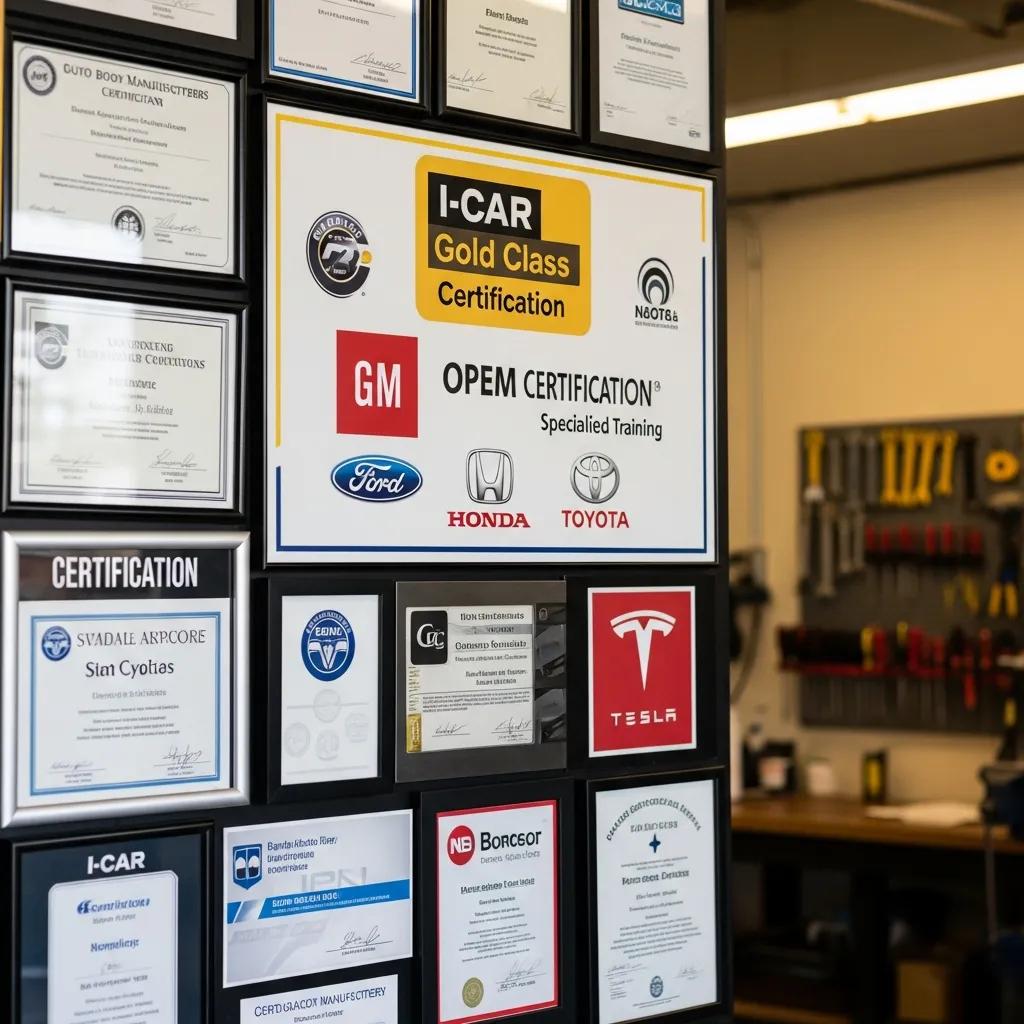
Certifications are useful, objective signals that a shop invests in training, tooling, and manufacturer-aligned procedures. Certified facilities are more likely to follow standardized workflows, use appropriate equipment, and reduce repair risk — especially on modern vehicles with ADAS and complex structures. Verifying certifications helps you avoid shops that cut corners with untrained labor or mismatched parts, and it increases the chance your insurer will accept the recommended repairs. Below are the most relevant credentials and what they mean for safety and quality.
Relevant certifications and what they represent:
- I‑CAR Platinum — shows a facility-wide training program for technicians and management focused on collision repair standards and manufacturer procedures.
- OEM certification — means the shop follows a vehicle maker’s approved repair methods, tooling, and parts channels to preserve factory tolerances.
- ASE and similar credentials — demonstrate individual technician competence in mechanical and diagnostic areas that support safe repairs.
The table below summarizes how these certifications differ and what each one guarantees in practice.
| Certification Type | Training / Scope | What It Guarantees |
|---|---|---|
| I-CAR Platinum | Facility-wide training with documented technician coursework | Technicians trained on collision repair best practices and modern vehicle systems |
| OEM Certification | Manufacturer-approved facility standards and procedures | Repairs follow factory methods and use approved parts for fit and warranty alignment |
| ASE (Automotive Service Excellence) | Individual technician certifications in diagnostics and repair | Shows competence in systems repair and diagnostics relevant to post-collision work |
These credentials lower uncertainty after a crash and give you a baseline to judge shop claims. Next, we’ll look closer at one common accreditation.
What Is I‑CAR Platinum and Why It Matters
I‑CAR Platinum is a shop-level accreditation showing ongoing training for technicians, estimators, and managers in collision repair standards and new vehicle technologies. Its curriculum covers structural repair, welding, adhesives, and ADAS topics, so a Platinum shop is more likely to invest in continuous learning than to rely on one-off courses. For owners, that training translates into repairs by technicians who understand how safety systems interact with bodywork and sensors — reducing the risk of alignment or calibration mistakes. To confirm a shop’s I‑CAR status, ask to see proof, request technician training records when available, and look for consistent training mentions in customer reviews. Understanding I‑CAR prepares you to check OEM alignment next, which focuses on manufacturer-specific procedures.
How OEM‑Certified Repairs Protect Safety and Value
OEM-certified repairs follow the vehicle manufacturer’s procedures and use parts that match factory specifications. That alignment preserves crashworthiness, sensor function, and resale value. Using OEM methods and parts helps keep fitment tolerances, material properties, and sensor interfaces consistent with the original design — lowering the chance of corrosion, misfit panels, or ADAS problems. Insurers are also more likely to accept OEM-aligned repairs when the goal is restoring the car to its pre-accident condition. To verify OEM capability, ask whether the shop follows manufacturer repair procedures, uses documented torque and structural specs, and has access to OEM parts channels.
How to Handle Insurance Claims with Confidence

Knowing the claims workflow helps you keep control while insurers and adjusters do their part. A clear process reduces delays: document the accident, file the claim, pick your repair shop, get a written estimate, and authorize repairs after the insurer and shop agree on scope. Remember your rights — including the right to choose your repair facility — and keep written records of estimates and conversations to avoid disputes. The table below lists common customer rights, what they mean, and actions you can take to protect your position.
Studies show the claims experience strongly affects customer satisfaction and loyalty — so a smooth process matters.
Automotive Insurance Claims: Impact on Customer Loyalty
A study examined how the claims experience after an accident affected customers’ attitudes toward insurers and their loyalty. Using consumer surveys and follow-up questionnaires, the research found that factors like whether a replacement car was provided and its quality strongly influenced customer loyalty. The study also identified several areas where the claims experience could be improved for both customers and insurers.
How the automotive insurance claims experience affects customer retention, 2004
Before the table: this reference clarifies what to expect and which actions preserve your options.
| Right | What It Means | Action |
|---|---|---|
| Right to choose repair shop | You may select the facility that repairs your vehicle | Tell your insurer in writing and give them the shop’s estimate |
| Coverage for reasonable repairs | Insurer should pay to return the vehicle to pre-accident condition | Get a detailed written estimate and document pre-accident condition |
| Written estimates and records | Estimates and approvals create a paper trail for disputes | Save all estimates, photos, and communications with the insurer and shop |
The short process below expands those steps into a practical sequence.
The step-by-step process to manage a claim:
- Report the accident promptly and note the claim number and adjuster contact details.
- Choose your repair shop and notify the insurer in writing to preserve your selection.
- Get a detailed, written estimate from the shop listing parts, labor, and required calibrations.
- Work with the adjuster to agree the scope; document approvals before work starts.
- Inspect finished repairs with the shop present and request proof of post-repair testing for ADAS and structural work.
After a collision, many customers prefer shops that help with the claims paperwork and communication. Prime Time Collision Center assists by offering free estimates, coordinating with major insurers, and providing 24/7 towing when a vehicle needs immediate recovery. Those services streamline early steps — getting an estimate, documenting damage for the adjuster, and transporting a disabled vehicle — so you can focus on decisions instead of logistics. Prioritize shops that actively reduce administrative friction and help prevent delays or disputes.
What Are Your Rights When Choosing a Repair Shop?
You generally have the right to pick the repair shop that works on your vehicle, even if your insurer suggests a preferred facility. Choosing your shop does not automatically void coverage. The insurer should pay for reasonable repairs needed to return the vehicle to its pre-accident condition, provided the repairs are documented and priced fairly. To protect this right, get written estimates, take photos of the damage, and provide police reports or incident paperwork to support your claim. If you disagree on scope or cost, an independent estimate and a clear paper trail give you leverage to negotiate or escalate.
Simple steps protect your choice: document everything, keep written estimates, and notify the insurer in writing — then pick a shop that prioritizes certified, safe repairs. That leads naturally to evaluating a shop’s equipment and parts policies, covered next.
How Prime Time Collision Center Helps with Insurance Claims
Prime Time Collision Center coordinates with major insurance companies to share estimates and documentation, reducing the back-and-forth that can slow authorization. Free estimates give insurers the written scope they need, and 24/7 towing gets a disabled vehicle into the shop for inspection quickly. Acting as a single point of contact for documentation, adjuster conversations, and scheduling minimizes administrative friction and can shorten the time from claim filing to completed repairs. That assistance reduces uncertainty and preserves evidence for insurer approvals and warranty records.
What Delivers Top‑Quality Auto Body Repairs?
Quality repairs combine certified technicians, correct parts, precision equipment, and documented quality checks to restore visible damage and hidden structure. True quality means following OEM procedures when required, performing ADAS recalibration correctly, and completing verifiable inspections after structural work. The checklist below highlights core criteria to evaluate, including parts policy and post-repair warranty expectations.
An occupational analysis of auto body mechanics outlines the wide range of duties and skills needed to perform comprehensive repairs.
Essential Duties and Capabilities of Auto Body Repair Shops
Occupational analyses summarize the many duties performed by auto body mechanics: running a body shop, refinishing, repairing and patching damage, cooling system work, frame and suspension repair, panel removal and replacement, fiberglass repairs, electrical system maintenance, and more — all requiring a mix of technical skill and process control.
An Analysis of the Auto Body Repair Occupation., 1975
This list captures essential quality checks:
- Require OEM parts for safety‑critical components and documented OEM procedures for structural repairs.
- Confirm technician certifications and ongoing training for modern vehicle systems.
- Verify the shop has ADAS calibration equipment, frame racks, and modern paint booths for controlled refinishing.
Parts selection matters as much as technician skill. The table below compares OEM and aftermarket parts on key attributes to help you weigh trade-offs.
| Part Type | Fit and Specification | Safety Impact | Warranty / Cost |
|---|---|---|---|
| OEM Parts | Match factory tolerances and materials | Lower risk of sensor or structural mismatches | Supported by manufacturer-aligned procedures; generally higher cost |
| Aftermarket Parts | Varies by supplier; fit may need adjustment | Potential for alignment or sensor compatibility issues | Lower upfront cost but warranty coverage varies |
Why OEM Parts Matter
OEM parts are built to the vehicle’s original specifications, so they retain the intended fit, material properties, and sensor interfaces. That precision reduces the risk of misaligned panels, paint adhesion problems, or ADAS sensor offsets that can compromise safety or require further calibration. Aftermarket parts can cut immediate cost, but their variable fit and materials may create long-term issues or affect future insurance and resale value. Ask for OEM parts on safety‑critical components (airbags, sensors, structural elements), and put that preference in writing on the estimate to preserve your option.
In practice, balance cost and long-term risk by deciding which parts must be OEM and where quality aftermarket alternatives are acceptable. The next section explains the equipment shops should have to support those choices.
What Advanced Equipment and Techniques Should a Shop Use?
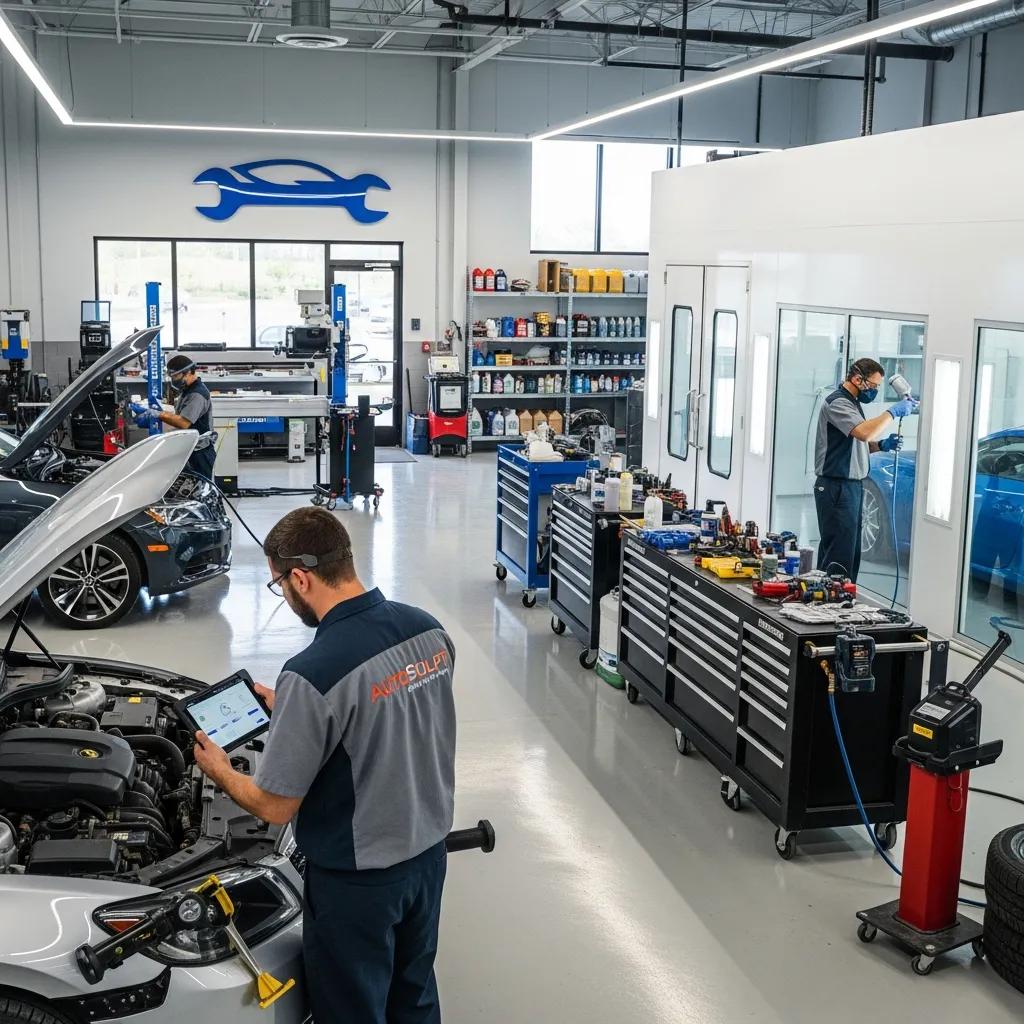
Reliable repairs rely on tools and processes that restore factory tolerances and active safety functions: computerized frame racks, calibrated ADAS alignment rigs, and climate‑controlled paint booths with color‑matching systems. Frame alignment tools return structural dimensions to spec, while ADAS calibration equipment restores sensor alignment for lane-keep, automatic braking, and collision-avoidance systems. Modern paint booths and spectrophotometric color matching reduce visible differences and protect finish longevity. When a shop documents calibration and inspection records, you can be more confident repairs addressed both visible damage and hidden system integrity.
That documentation — calibration logs, inspection checklists, and test drive reports — is part of how you evaluate reputation and reviews, which we cover next.
How to Find a Reputable Auto Body Shop You Can Trust
Vet shops by checking certifications, equipment, warranties, and customer feedback to separate reliable providers from those focused only on price. Read reviews across platforms, note how the shop responds to complaints, and look for repeated themes like punctuality, clear communication, and honoring warranties. Use the checklist below to compare finalists and prepare questions for a site visit or call.
Checklist intro: Use these steps to evaluate shops efficiently.
- Ask for written proof of certifications and inquire about continuing education for technicians.
- Request a sample written estimate that shows parts policy and ADAS calibration line items.
- Confirm documented warranty terms and a clear process for handling post‑repair concerns.
Prioritizing these items lowers the risk of subpar repairs and surprise costs.
Online reviews are valuable when you look for patterns rather than single ratings; the section below explains how to read them.
How to Evaluate Online Reviews and Testimonials
Look for patterns: repeated praise or complaints about timeliness, paint quality, communication, or warranty follow-through. Check the date and context — a single old scheduling complaint is less relevant than multiple recent reports of poor post-repair service. Pay attention to whether the shop responds to negative reviews with solutions; that often indicates a process for resolving issues. Cross‑check reviews on several platforms and give more weight to detailed, documented experiences than to brief, unverified ratings.
Use those insights to form focused questions for the shop; the next section lists the best questions to ask and benchmarks to expect.
Questions to Ask Before Choosing a Body Shop
Ask direct questions that reveal capability, parts policy, warranties, and how the shop handles claims. Try: “Do you use OEM parts for safety‑critical systems, and will that be shown on the estimate?”; “Which certifications do your technicians hold — can you show training records?”; and “What warranty do you offer and how do warranty claims get handled?” Shops that prioritize quality should provide written policies, sample documentation, and clear escalation paths for disputes.
These questions make differences tangible and help you choose a facility that meets both technical and service expectations. Next, we explain why Prime Time Collision Center is a local option worth considering.
Why Choose Prime Time Collision Center for Your Repairs?
Prime Time Collision Center combines certified technicians, OEM‑aligned repair practices, insurance claim support, and local service offerings that match the selection criteria above. The shop highlights I‑CAR Platinum‑trained staff and OEM repair procedures, addressing both technical competence and manufacturer alignment. Prime Time also simplifies claims and logistics with free estimates, coordination with insurers, 24/7 towing, and repair warranties — all of which reduce administrative burden and preserve repair documentation. These services offer a local option for drivers in Glendale, Burbank, Pasadena, and Los Angeles who want certified repairs and clear communication.
Local service highlights to consider:
- Established insurance relationships and local estimators to speed authorizations.
- On-site ADAS calibration and structural repair capabilities for modern vehicles.
- Documented warranties and post-repair checks to give you recourse and peace of mind.
These advantages show how a local, certified shop can reduce friction and risk during repairs; the following subsections explain local experience and warranty details.
How 15+ Years of Local Experience Helps
Years in the community bring practical benefits: strong relationships with insurers and parts vendors, familiarity with regional traffic and vehicle use, and smoother coordination for towing and appointments. Those relationships can speed approvals and access to specialty parts, and local reputation motivates faster, higher-quality service and warranty responsiveness. Choosing a shop with deep local ties often means clearer communication, quicker scheduling, and a stronger incentive to resolve post‑repair issues promptly.
Experience also means the shop has handled common local repair scenarios before, which supports accurate estimates and realistic timelines.
What Warranties and Satisfaction Guarantees Are Offered?
Prime Time Collision Center provides warranties on repairs and emphasizes customer satisfaction as part of its service model. When a shop offers warranties, ask for the written scope — which components and workmanship are covered — and the process for making a claim. Clear warranty documentation and a defined dispute resolution path make it easier to get remedies if repairs don’t meet expectations.
If you’re ready to move forward, request a written estimate and warranty terms before authorizing work to preserve your choices and maintain a record for insurers or future resale needs.
Frequently Asked Questions
What should I consider when evaluating the reputation of an auto body shop?
Check customer reviews, certifications, and how the shop responds to feedback. Look for consistent themes (quality, timeliness, communication) across multiple platforms and note whether the shop resolves complaints. A reputable shop will show a pattern of follow-through and customer care.
How can I ensure my vehicle receives quality repairs after an accident?
Choose a shop with certified technicians, a clear parts policy favoring OEM for safety items, and the right equipment for modern repairs (ADAS calibration, computerized frame alignment). Ask for a detailed written estimate and proof of post‑repair inspections or calibrations.
What are the risks of choosing an unverified auto body shop?
Unverified shops may use incorrect parts or methods, risking misalignments, sensor problems, or structural issues. Insurance claims can be denied if repairs don’t meet industry standards, which may leave you paying more later. Always verify certifications and shop practices.
How can I prepare for discussions with my insurance company about repairs?
Gather the accident report, photos of the damage, and written estimates. Know your right to choose a repair facility and what “reasonable repairs” means under your policy. Keep organized records of all communications to make negotiations smoother.
What role do warranties play in auto body repairs?
Warranties protect you by ensuring the shop will address covered issues with parts or workmanship after the repair. Ask for the warranty’s written terms — duration, coverage, and how to file a claim — before authorizing work.
What should I ask when visiting an auto body shop?
Ask about certifications, technician training records, the shop’s parts policy (OEM vs. aftermarket), warranty details, and how they document calibrations or inspections. Request a sample written estimate showing line items for parts, labor, and calibrations.
What should I do if I’m unhappy with repair work?
First, talk to the shop and document the problems. Review your warranty and request a formal inspection or repair correction. If the shop won’t cooperate, get a second opinion from another certified facility and — if needed — involve your insurer or a consumer protection agency.
Conclusion
Choosing the right auto body shop protects your vehicle’s safety, value, and the smooth handling of insurance claims. Prioritize certified technicians, OEM parts for safety items, and a transparent claims process. Before you authorize work, get a written estimate and clear warranty terms from a trusted provider. Take the next step today — request an estimate and make sure your vehicle gets the quality repairs it deserves.