Choosing the Right Auto Body Shop in Los Angeles — Your Certified Collision Repair Checklist
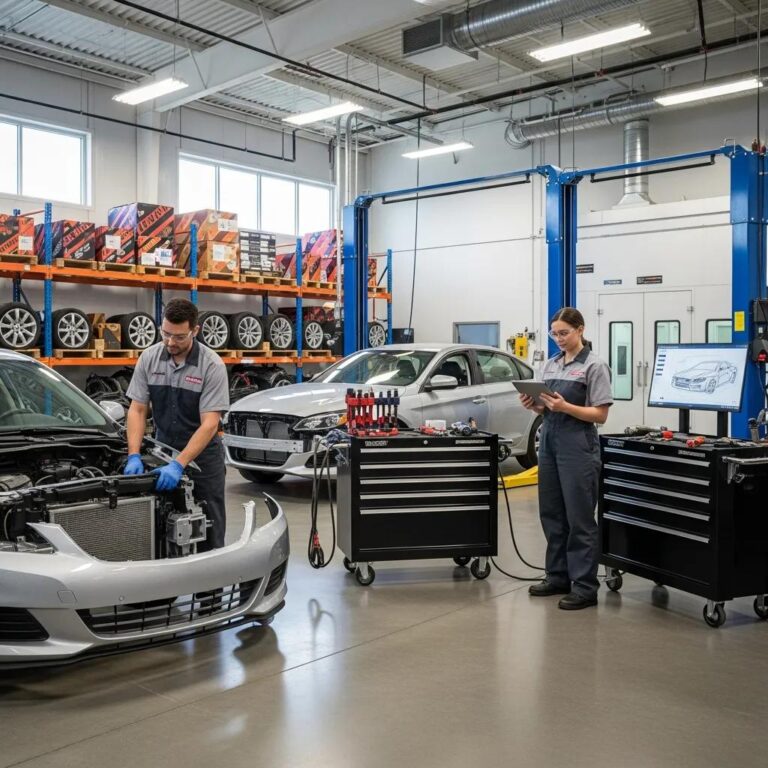
After a collision, the shop you pick matters for both safety and resale value. Certified collision repair shops follow manufacturer procedures, use calibrated equipment, and keep detailed records so structural and electronic systems are restored correctly. This guide walks you through the certifications that count, why OEM parts and ADAS calibration are non-negotiable, how to handle insurance and Direct Repair Programs (DRP), and what to do at the scene to preserve your claim. You’ll learn to evaluate I-CAR, ASE, and manufacturer-specific credentials, compare OEM versus aftermarket parts, ask the right questions of insurers and shops, and use a practical checklist to verify repair quality and warranty coverage. Sections map to the checklist: certifications, parts, insurance navigation, shop quality, immediate post-accident steps, and a local certified repair option in Glendale that serves Los Angeles drivers.
What Certifications Should You Look for in a Los Angeles Auto Body Shop?
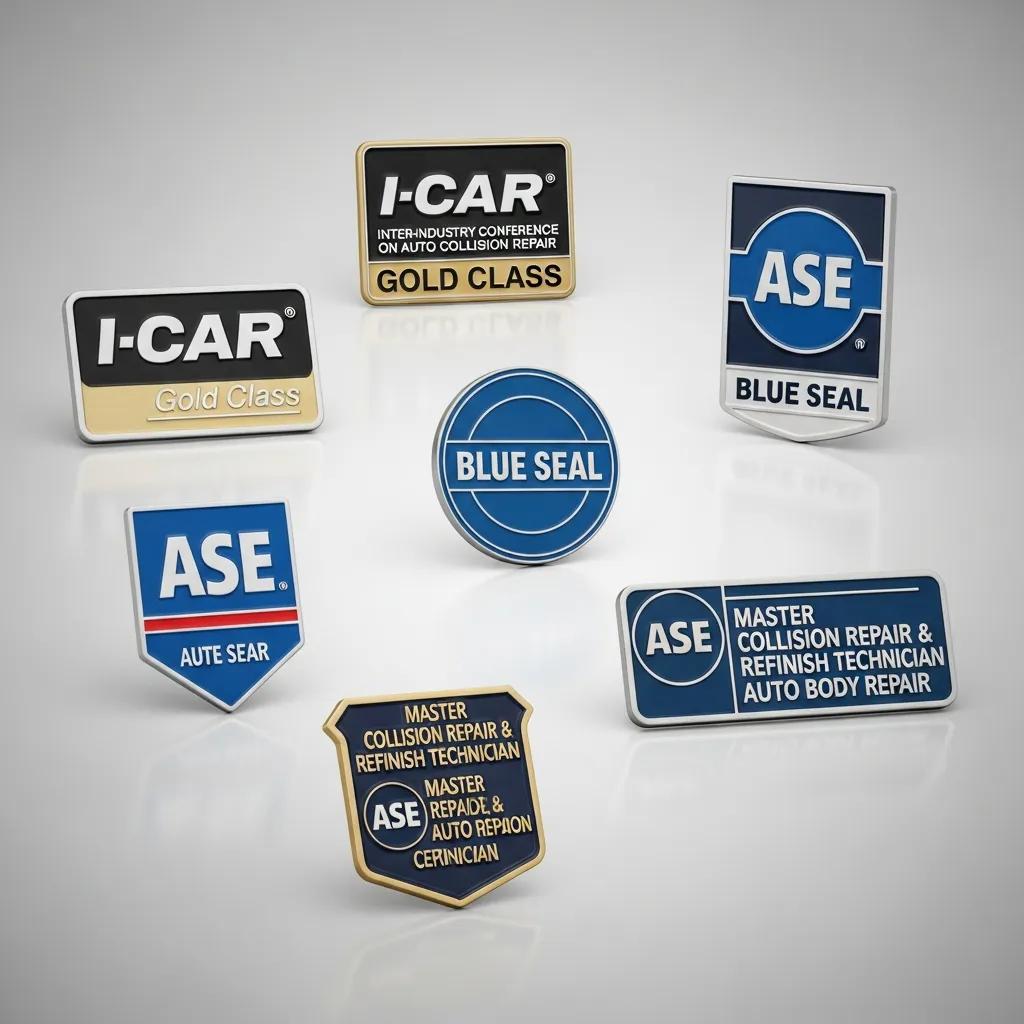
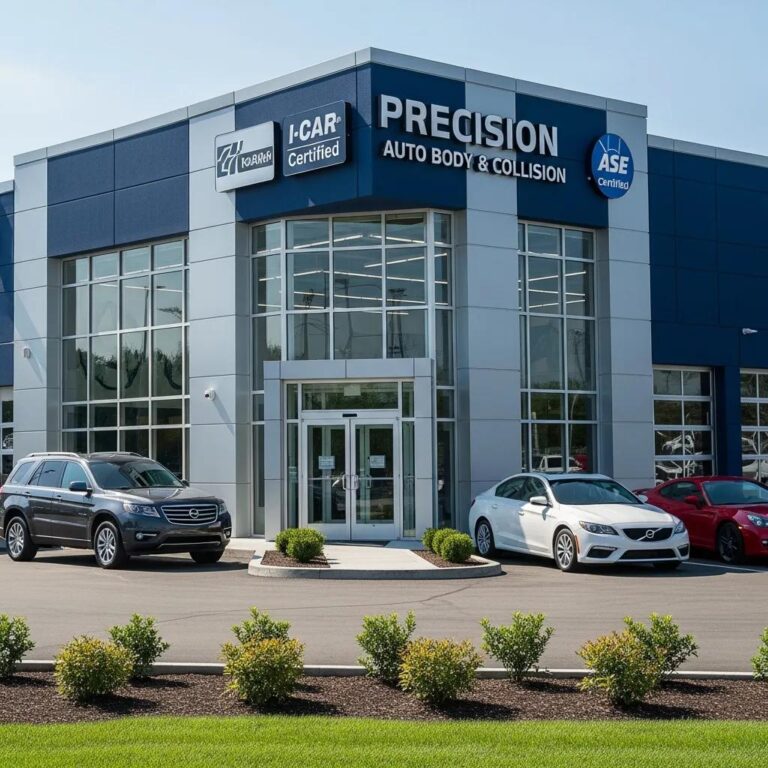
Certifications are clear signals a shop and its technicians meet industry training and process standards. A certified facility shows that technicians receive collision-specific training (I-CAR), mechanics pass standardized testing (ASE), and manufacturer programs ensure brand-specific procedures and calibrations. Together, these credentials help preserve safety systems, structural integrity, and warranty alignment on modern vehicles. Use the short list below to quickly compare shops before you decide.
Top certifications to look for:
- I-CAR (Inter-Industry Conference on Auto Collision Repair): Confirms collision-focused training and ADAS competency.
- ASE (Automotive Service Excellence): Verifies mechanical and diagnostic skills for technicians.
- Manufacturer-specific certifications: Ensures the shop follows OEM repair procedures for particular brands.
These credentials work together: I-CAR covers collision techniques and ADAS knowledge, ASE validates mechanical skills, and manufacturer programs ensure brand-specific tolerances and tooling. That combination directly affects repair outcomes and correct sensor recalibration.
Different certifications serve different roles in repair quality:
| Certification | What it certifies | Why it matters |
|---|---|---|
| I-CAR Platinum | Collision repair training and technician development | Keeps technicians current on ADAS, materials, and structural repair |
| ASE | Mechanical and diagnostic competence | Ensures accurate diagnostics and component repairs |
| Manufacturer-specific certification | Brand-aligned repair processes and tooling | Guarantees adherence to OEM procedures and parts use |
This table makes it easy to match credentials to repair responsibilities. The sections that follow contrast I-CAR with OEM programs and explain how ASE and manufacturer-specific certifications complement each other.
Why Are I-CAR and OEM Certifications Essential for Quality Repairs?
I-CAR and OEM certifications address different but complementary risks. I-CAR ensures technicians receive continuous training on collision hazards, materials, and ADAS systems. OEM certifications require shops to follow manufacturer repair sequences, use approved tools, and source the correct parts. When a shop combines I-CAR-trained staff with OEM-aligned processes, repairs are more likely to restore crashworthiness and sensor accuracy, reducing the chance of misaligned structure or improperly calibrated electronics.
Training that emphasizes ADAS is crucial — these systems are proven to reduce collisions and change how repairs must be performed.
ADAS Cost-Benefit for Collision Safety
Study outlining how ADAS technologies lower collision frequency and the economic trade-offs of sensor integration. Evidence shows improved safety where ADAS is present.
A brief of the economics of ADAS for full-size light duty pickup trucks: Relating effectiveness to cost, F Fish, 2021
How Do ASE and Manufacturer-Specific Certifications Impact Repair Standards?
ASE certification proves a technician’s mechanical and diagnostic knowledge through standardized testing and experience requirements — essential for accurate engine, suspension, and electronic repairs that follow structural work. Manufacturer-specific programs add requirements like proprietary tooling, software access, and prescribed repair sequences for certain models (including EVs and luxury vehicles). Together, ASE and OEM training provide a robust base: diagnostics and mechanical skill from ASE, plus brand-specific procedures and calibrations from the manufacturer.
Why Is Using OEM Certified Parts Crucial for Your Vehicle’s Safety and Value?
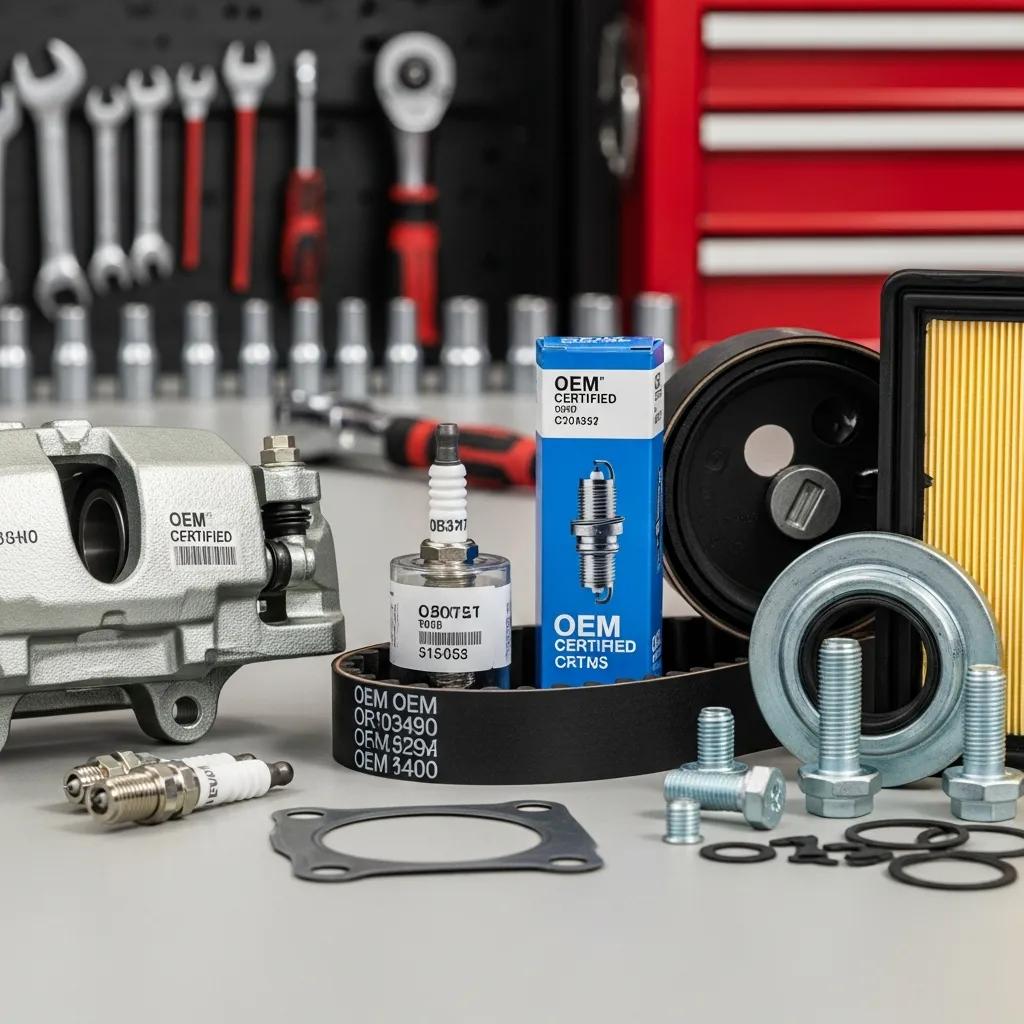
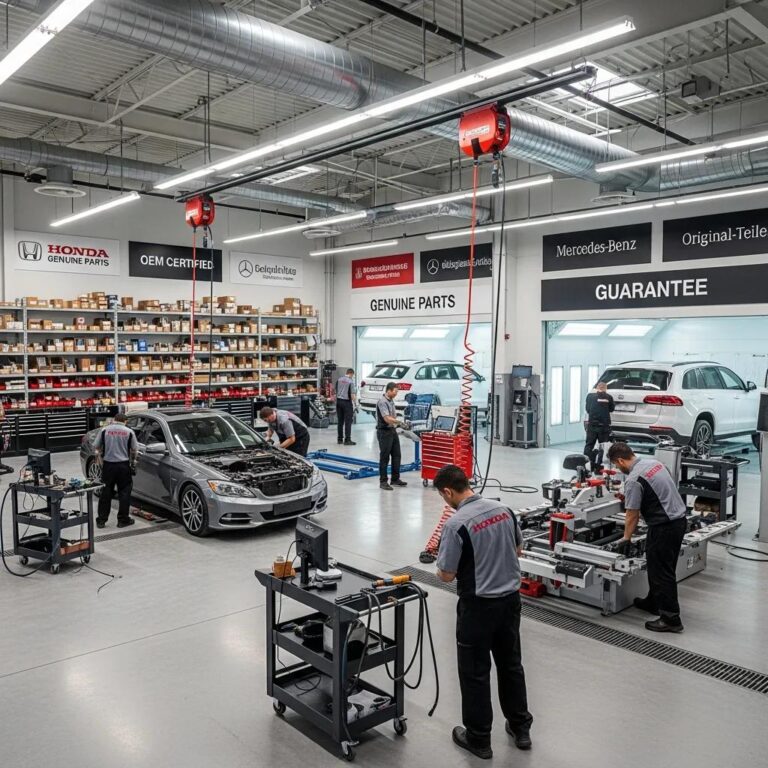
OEM certified parts are built to the vehicle maker’s specs and designed to integrate correctly with safety systems and structural elements. That fit and material consistency affect crash performance, long-term durability, and resale value. When deciding parts, prioritize safety and warranty implications over short-term savings — incorrect fit or material differences can create hidden costs down the road. Below are the main advantages of OEM parts, presented for quick comparison.
Component integrity matters — research into crashworthiness and advanced materials reinforces the importance of using the right parts.
Automotive Crashworthiness & Composite Parts
Analysis of composite materials and their role in automotive crashworthiness, including failure modes and design considerations for lightweight structures.
Advanced composite materials for automotive applications: Structural integrity and crashworthiness, A Elmarakbi, 2013
Benefits of OEM parts:
- Safety compatibility: Designed to match tested crash and restraint behavior.
- Exact fit and finish: Reduces gaps, misalignment, and paint issues.
- Warranty preservation: Supports manufacturer warranty processes and reduces disputes.
- Resale value: Keeps your vehicle aligned with factory specifications buyers expect.
That’s why many repair standards and manufacturer guidelines favor OEM components. Some reputable shops will explain when an aftermarket part is acceptable and document the reason — transparency like this matters when insurers influence parts choices.
Research highlights the trade-offs consumers face when insurers steer repairs through DRPs or favor aftermarket parts.
Auto Repair Insurance: DRPs & Aftermarket Parts
Discussion of issues created by insurers’ use of Direct Repair Programs and aftermarket parts, including effects on competition and consumer choice.
Consumer Choice in Auto Repair: The Politics and Economics of Automobile Insurance Repair Practices, LS Powell
Prime Time note: Prime Time Collision Center prioritizes OEM-certified repairs and backs its work with a lifetime warranty — a commitment to factory standards and long-term peace of mind for vehicle owners.
What Are the Benefits of OEM Parts Compared to Aftermarket Alternatives?
OEM parts match the manufacturer’s design for fit, material, and sensor integration, so safety systems behave as intended after a repair. Aftermarket parts can vary in tolerance and finish, sometimes requiring extra adjustments that affect alignment or paint. This is especially important for bumper sensors, radar modules, and mounting points. OEM components typically mean fewer post-repair issues and clearer warranty conversations with insurers.
How Do OEM Parts Preserve Your Factory Warranty and Vehicle Integrity?
Using OEM parts and following manufacturer repair procedures keeps systems within factory tolerances and makes warranty interactions smoother. Consumer laws let you choose your repair shop, but documenting OEM-standard work and parts helps if warranty issues arise later. For EVs and advanced models, OEM parts and specified calibration steps may be required for some warranty coverage, so insist on documented compliance and have it recorded on the repair order for an auditable trail.
How to Navigate Insurance Claims When Choosing an Insurance-Approved Body Shop in Los Angeles?
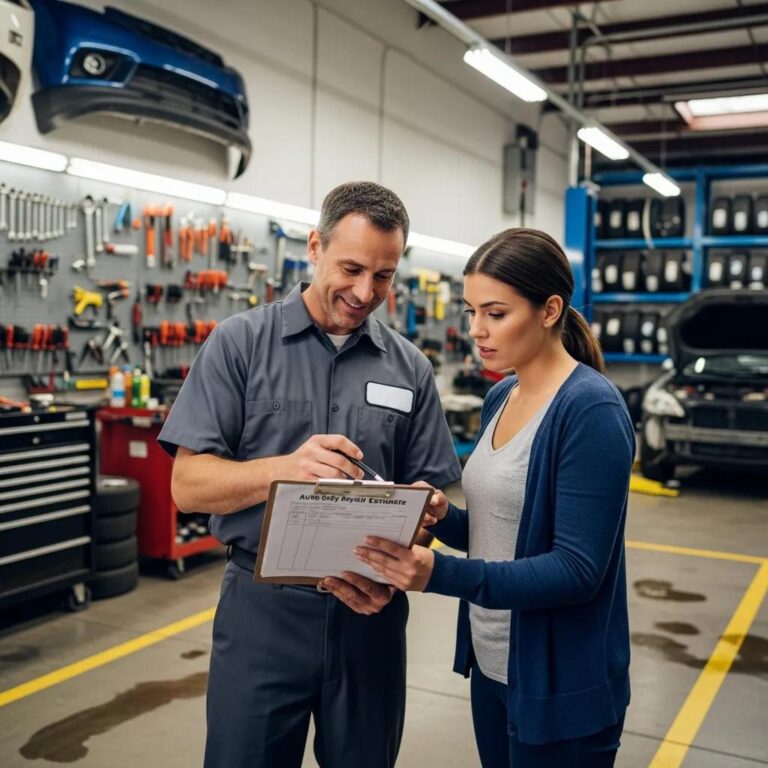
Handling an insurance claim means knowing your rights, understanding Direct Repair Programs (DRP), and deciding which communications the shop will handle for you. In California you have the right to choose your repair shop — balance insurer suggestions with evidence of certifications, an OEM parts policy, and a documented warranty. Start by asking clear questions of both insurer and shop about parts, ADAS recalibration, written warranty, and who will authorize work. The table below outlines typical claim steps, who usually does them, and why they matter.
Insurance claim process steps:
| Step | Who does it | Why it matters |
|---|---|---|
| Report claim to insurer | Vehicle owner | Begins coverage and generates a claim number |
| Obtain initial estimate | Shop or insurer appraiser | Defines scope and baseline cost for repairs |
| Choose repair shop | Vehicle owner | Ensures certified repair and OEM parts policy |
| Authorization & repair coordination | Repair shop with insurer | Speeds approvals and reduces delays |
Use this table to guide conversations and confirm responsibilities. The list below gives specific questions to ask your shop and insurer so you can protect your vehicle’s safety and your claim.
What Questions Should You Ask About Insurance Handling and Direct Repair Programs?
Before you sign off on repairs, ask targeted questions that clarify who will coordinate with the insurer and how parts and warranty will be managed. These queries protect your interests and limit surprises.
Key questions to ask:
- Who will handle communication with my insurance company during the claim?
- Will OEM parts be used, and is that written into the estimate?
- Does the shop participate in any Direct Repair Programs with my insurer?
- Is there a written warranty on parts and labor, and what does it cover?
- Will ADAS sensors and cameras be calibrated, and how is calibration verified?
- Can the shop provide technician certifications or I-CAR/ASE documentation?
- What is the expected repair timeline and how are change orders handled?
- Will before-and-after photos and repair records be provided for my files?
These questions let you compare shops on transparency and technical capability. A good shop will coordinate estimates and approvals on your behalf while keeping you informed every step of the way.
How Does Prime Time Collision Center Assist with Seamless Insurance Claims?
At Prime Time Collision Center we work directly with major insurers to streamline authorizations and minimize delays — while protecting your right to choose the shop that will repair your vehicle. We offer free estimates, coordinate paperwork with insurers, and explain parts and warranty options so repairs start promptly and follow OEM procedures. Our goal is to shorten claim timelines without sacrificing the technical standards needed for safe, high-quality repairs.
What Key Factors Define the Best Auto Body Shop in Los Angeles?
The best shop pairs technical capability — certified technicians, calibrated equipment, and documented quality-control — with clear communication, solid warranty terms, and a verifiable reputation. Look for a training matrix, tooling for frame and ADAS calibration, and a formal inspection and test-drive protocol. Also confirm warranty details (what’s covered and how to claim it), responsiveness, and the shop’s willingness to provide written estimates and change-order records. Below is a short checklist to use when evaluating shops.
Evaluation checklist for choosing a shop:
- Certifications and training proof: Ask to see I-CAR, ASE, or manufacturer credentials.
- Parts policy: Get OEM vs aftermarket usage in writing and note warranty effects.
- QC and documentation: Request before/after photos, inspection checklists, and calibration records.
These items help confirm that a shop’s stated procedures produce measurable results. The subsections that follow explain how to read repair-quality signals and why transparent timelines and communication matter.
How Do Repair Quality, Warranty, and Customer Reviews Influence Your Choice?
Repair quality is best judged by documentation: checklists, before-and-after photos, and calibration records are stronger evidence than marketing claims. Confirm what the warranty actually covers (parts vs labor) and how warranty claims are handled. Read consistent customer feedback for patterns in communication and timeline reliability. Ask for specific examples or documentation during your evaluation to move from claims to verifiable practices that protect safety and resale value.
Why Is Transparent Communication and Repair Timeline Important?
Clear communication reduces surprises. Know part lead times, calibration needs, and how change orders will be approved. A written timeline helps you plan for rentals or alternate transportation and coordinate insurance for temporary coverage. Ask for regular status updates and documented change orders so cost and scope stay controlled. Shops that communicate consistently tend to have better customer outcomes and fewer disputes, and they provide the documentation you’ll need for warranty or resale questions.
What Immediate Steps Should You Take After an Accident Before Selecting a Body Shop?
Right after an accident, prioritize safety, document the scene thoroughly, and collect the information insurers and shops will need for accurate estimates. Move to a safe location if possible, seek medical attention if necessary, then photograph damage from multiple angles and capture the VIN and odometer. Report the incident to your insurer and get a claim number, and gather at least two estimates — one from a shop you trust and one from an insurer-recommended facility to compare scope and parts choices. The checklist below puts those actions in order.
Steps to follow after an accident:
- Ensure everyone is safe and call emergency services if anyone is hurt.
- Photograph the scene: wide shots, close-ups of damage, VIN, license plate, and interior.
- Exchange contact and insurance information and collect witness statements if available.
- File a police report if required and get a copy or report number for your claim.
- Report the claim to your insurer and note the claim number for reference.
- Obtain written estimates and ask each shop about parts policy, certifications, and timeline.
Following these steps gives insurers and repair shops a solid record, improves estimate accuracy, and reduces the chance of unexpected scope changes. After the immediate steps, consider free estimate services and towing as needed to move the vehicle to a certified shop.
Prime Time note: Drivers in the Los Angeles area can request free estimates and 24/7 towing from Prime Time Collision Center when available — a quick way to get repairs started and reduce downtime.
How to Secure the Scene and Document Vehicle Damage Effectively?
Prioritize safety first: move to a safe location if possible and address any medical needs. Then document everything: take photos of the whole vehicle and close-ups of damaged parts, capture the VIN and odometer, and include context shots of road conditions and signs. Record names, contact details, insurance info, and vehicle descriptions for all parties, and note time and GPS location if you can. Keep receipts for medical care or towing and store all documents with your claim records.
What Information Should You Gather for Insurance and Repair Estimates?
Gathering complete documentation speeds up accurate estimates. Bring your insurance policy number, claim number, vehicle registration, recent service history, and photos from the scene. Include the VIN, odometer reading, and any prior repair records that could affect scope or safety systems. If available, provide a police report number and witness contacts. This information helps shops create thorough scopes that account for ADAS and structural work, which improves quote comparability.
Why Choose Prime Time Collision Center for Certified Collision Repair in Los Angeles?
Prime Time Collision Center serves the Los Angeles area with I-CAR Platinum technicians, OEM-certified repairs, a lifetime warranty on repairs, and coordination with all major insurance companies. We offer free estimates and 24/7 towing when available. Those trust signals show our focus on documented technician training, manufacturer-aligned procedures, and customer support during the claims process. Our Glendale location emphasizes OEM standards and clear insurer communication to reduce delays and preserve vehicle safety and value — giving drivers a predictable, documented repair path.
What Makes Our I-CAR Platinum Certified Technicians Stand Out?
I-CAR Platinum certification means technicians complete a structured training program across multiple repair disciplines and maintain current education on ADAS, structural techniques, and materials. Certified techs follow documented repair steps, are tested on tasks like sensor recalibration and alignment, and use checklists and verification steps that lower the risk of missed procedures. That training, combined with shop-level processes, delivers consistent repairs and traceable records for vehicle owners.
How Do Our Lifetime Warranty and OEM Repair Standards Provide Peace of Mind?
Our lifetime warranty covers parts and labor for qualifying repairs and reduces long-term uncertainty after a collision. When paired with OEM repair standards, the warranty reflects a commitment to factory-aligned procedures and parts selection that aim to minimize follow-up issues. To redeem warranty service, present your repair documents and warranty terms; shops with clear processes make claims and follow-up straightforward. Together, OEM standards and a lifetime warranty help protect vehicle safety, performance, and resale value.
Frequently Asked Questions
What should I do immediately after an accident?
Make sure everyone is safe and call emergency services if needed. Take photos of the scene, the damage, the VIN, and the license plate. Exchange contact and insurance details with other parties, and file a police report if required. Finally, report the incident to your insurance company and get a claim number to begin the claims process.
How can I ensure the auto body shop I choose is reputable?
Check for certifications like I-CAR and ASE, read customer reviews, and ask for documentation of repair processes such as before-and-after photos and calibration records. A reputable shop will be transparent about parts policy, warranties, and communication during the repair.
What are the potential risks of using aftermarket parts?
Aftermarket parts can vary in fit and material quality, which may affect safety systems and alignment. They can complicate warranty claims and reduce resale value if they don’t match manufacturer specifications. When safety systems or sensors are involved, OEM parts are usually the safer choice.
How does the insurance claims process work with auto body shops?
You start by filing a claim with your insurer to get a claim number. A shop or insurer appraiser will prepare an estimate. You have the right to choose your repair shop; the shop then coordinates with the insurer for authorization and repairs. Clear communication between you, the shop, and your insurer speeds the process.
What should I look for in a warranty from an auto body shop?
Confirm what the warranty covers (parts and/or labor), its duration, and the claims process. Transferable warranties can add resale value. Ensure the warranty aligns with OEM standards and that the shop provides clear instructions for making a claim.
How can I prepare for my visit to an auto body shop?
Bring your insurance policy number, claim number, vehicle registration, and photos from the accident. Prepare questions about certifications, parts policy, ADAS calibration, and warranty terms. Being organized helps you get an accurate estimate and clear expectations.
What role do certifications play in the quality of repairs?
Certifications verify that technicians and shops follow industry standards and have up-to-date training. I-CAR and ASE show technicians know current repair techniques and safety protocols. Manufacturer certifications ensure repairs follow brand-specific procedures, which is important for safety and warranty compliance.
Conclusion
Choosing the right auto body shop in Los Angeles protects your vehicle’s safety and resale value. Prioritize certified technicians, OEM parts, and transparent communication to reduce risk and stress during repairs. If you’d like expert help, contact Prime Time Collision Center for a free estimate and to learn how we handle certified repairs from start to finish.