
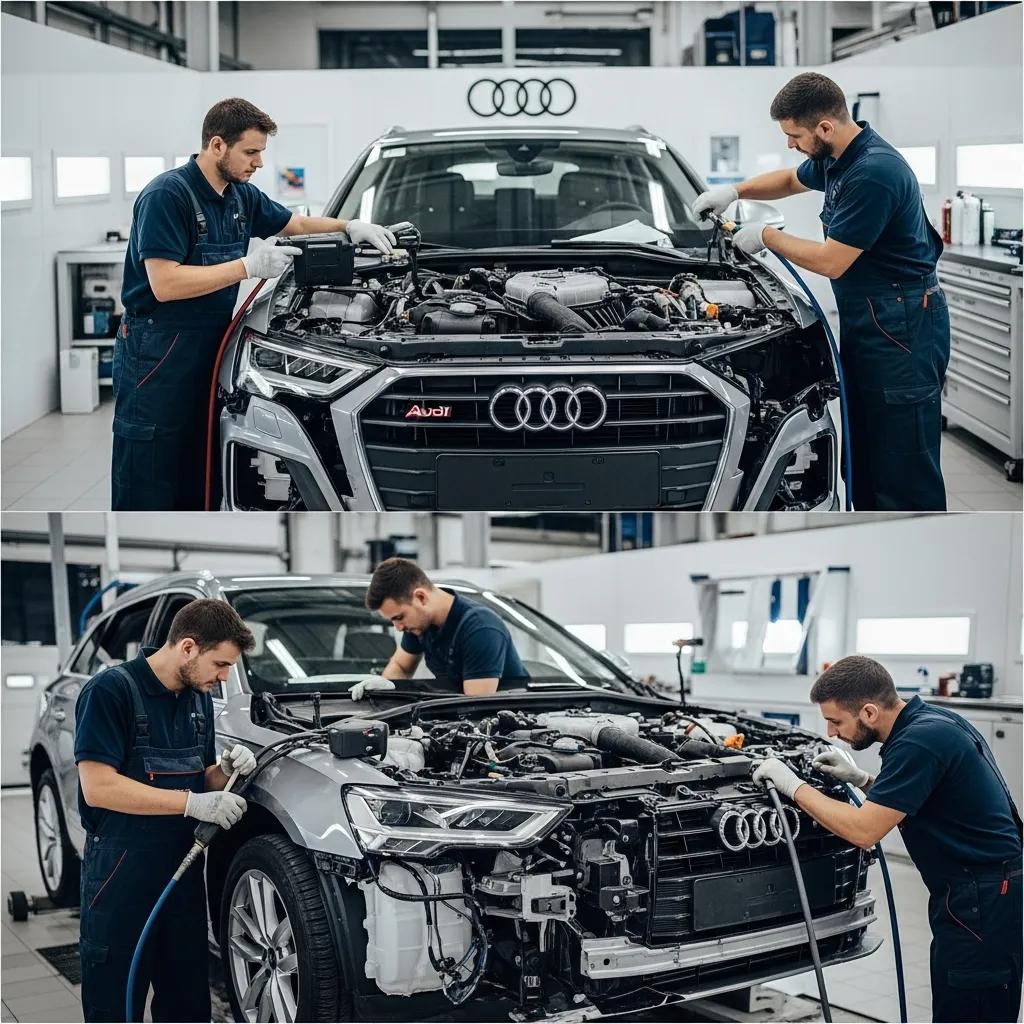
Audi Certified Collision Repair in Los Angeles: Expert Body Shop Services for Your Audi
If your Audi was in an accident, timely certified repairs protect safety, warranty and resale value. Prime Time Collision Center is a local, experienced option that helps Audi owners restore factory standards. This guide explains how Audi certified collision repair differs from routine bodywork, how ADAS systems and aluminum construction change repair steps, and what to expect when dealing with insurance or lease-return concerns. You’ll get clear, practical information on the safety and warranty benefits of factory-authorized procedures, the ADAS calibration workflow, and why genuine Audi OEM parts and precision paint matching matter for fit and finish. We also cover aluminum repair requirements, color matching, insurance coordination, realistic timelines, and the specific services our Glendale shop offers Audi drivers across Los Angeles, Pasadena, Burbank and nearby communities. Throughout, we use terms like Audi OEM parts, ADAS calibration, aluminum body repair, and Audi certified collision repair Los Angeles to help you find the guidance you need.
Why Choose an Audi Certified Body Shop in Los Angeles?
An Audi certified body shop follows factory repair methods, uses approved or genuine Audi parts when required, and documents procedures that protect structure and safety systems. Certified shops equip trained technicians with tools for ADAS calibration and aluminum repair so crash performance and driver-assist features work as intended. Choosing a certified provider lowers the risk of improper repairs, helps keep warranty coverage intact, and improves outcomes for resale or lease return. Below are the main benefits owners see when they prioritize certified collision repair.
Audi-certified repair delivers clear benefits for safety, warranty and value:
- Restored safety: Factory procedures and precise structural alignment preserve crashworthiness and occupant protection.
- Warranty compliance: Certified, documented repairs are easier to verify for warranty and insurer records.
- Resale and lease protection: OEM-quality work and traceable part history reduce disputes at resale or lease return.
- Specialized equipment: ADAS calibration tools and aluminum-specific tooling help systems function as designed.
Picking a certified facility is the first step; understanding what certification means in practice helps you evaluate repair options. Prime Time Collision Center emphasizes OEM-quality repairs and serves Audi owners across Glendale, Burbank, Pasadena and Los Angeles as a local resource for certified work.
What Are the Benefits of Audi Factory Authorized Repairs?
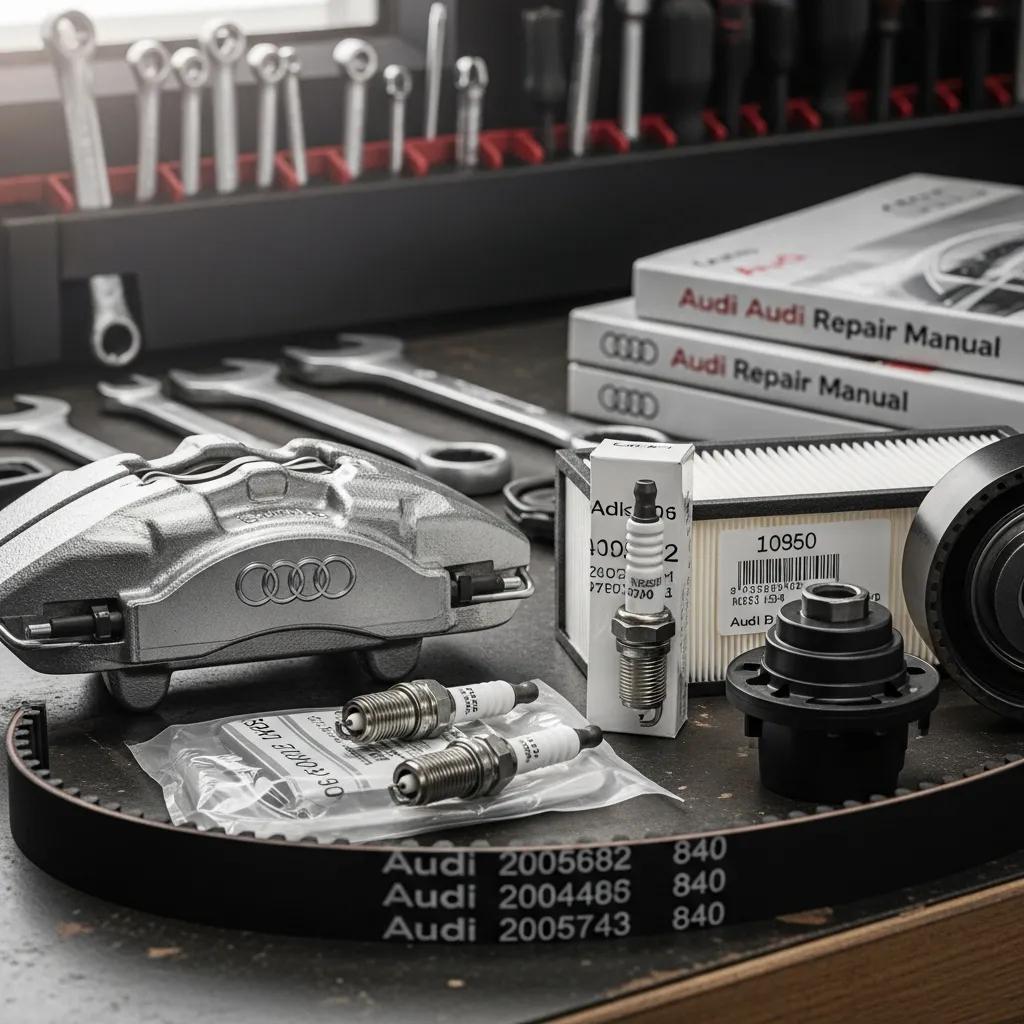
Factory-authorized repairs aim to return the vehicle to its original engineering specifications using approved procedures and, when needed, genuine Audi parts. That matters because modern Audis rely on integrated safety systems and precisely engineered structures — parts must fit and perform exactly as designed for occupant protection and ADAS functionality. Factory-authorized work also creates clearer documentation for warranty and insurance records, giving you a defensible repair history for resale or lease return. In practice, owners notice fewer fit-and-finish problems, more consistent paint matching, and reliable sensor and safety-system operation after certified repairs. These concrete benefits make it easier to choose the right shop when filing a claim.
How Does Certification Impact Vehicle Safety and Warranty?
Certification shows a commitment to training, processes and tooling that match manufacturer standards, and it directly affects documented safety outcomes and warranty interactions. When technicians follow certified repair sequences — verified structural straightening, approved joining methods and calibrated ADAS systems — vehicles return to tested performance envelopes, lowering risk to occupants. From a warranty standpoint, certification supplies clear records insurers and manufacturers can review, simplifying approval for OEM parts or factory procedures. For example, documented calibration and OEM component installation demonstrate that radar and camera-based ADAS were restored correctly, supporting ongoing warranty coverage and owner confidence.
Comprehensive Audi Collision Repair Services at Prime Time Collision Center
Complete Audi collision repair includes damage assessment, structural work, component replacement with appropriate parts, precision paint refinishing and ADAS recalibration to meet factory standards. Our approach combines diagnostic scans, OEM parts sourcing (or approved alternatives for non-safety items), and post-repair verification to confirm systems operate within manufacturer tolerances. The table below clarifies how OEM-focused repairs differ from non-OEM approaches and the warranty or safety implications of each choice.
| Repair Approach | Parts Used | Warranty / Benefit |
|---|---|---|
| OEM-focused structural repair | Audi Genuine Parts or manufacturer-approved components | Preserves crash performance and simplifies warranty validation |
| Mixed-supplier repair | Aftermarket or equivalent parts where approved | Lower cost but may require extra documentation for safety-critical items |
| Paintless dent repair (PDR) | No parts replacement when paint intact | Cost-efficient for minor dents; preserves original paint and value |
This comparison shows why many Audi owners choose OEM-focused repairs for safety-critical and structural work. The right approach starts with an accurate appraisal and clear documentation of recommended procedures.
We offer Audi-specific services that align with factory expectations and today’s vehicle complexity:
- Structural and frame repair: Certified measurement and straightening to factory specs.
- Audi OEM parts replacement: Genuine components for safety-critical items and verified fit.
- ADAS diagnostics and calibration: Static and dynamic procedures to restore sensor alignment.
- Aluminum and advanced material repair: Specialized joining and corrosion protection for lightweight panels.
After the technical overview, the practical next step is a documented estimate and clear communication about parts and timelines. Prime Time Collision Center provides free estimates, works with all major insurers, and coordinates towing when needed to simplify repairs for Audi owners.
How Do We Use Genuine Audi OEM Parts for Repairs?
Genuine Audi OEM parts are chosen for components that affect crash performance, sensor operation and body fit. Using them helps preserve engineered tolerances and safety behavior. Sourcing OEM parts includes identifying factory part numbers, verifying traceability, and installing parts per Audi repair sequences to ensure fit and function. For critical items — structural members, airbags, sensor housings and ADAS hardware — OEM parts help maintain original design characteristics that affect occupant safety and system calibration. We document part provenance and provide records for insurers and owners so the repair history clearly shows where genuine parts were installed. That transparency supports warranty claims and buyer confidence at resale or lease return.
What Is Our Process for Audi ADAS Calibration and Advanced Repairs?
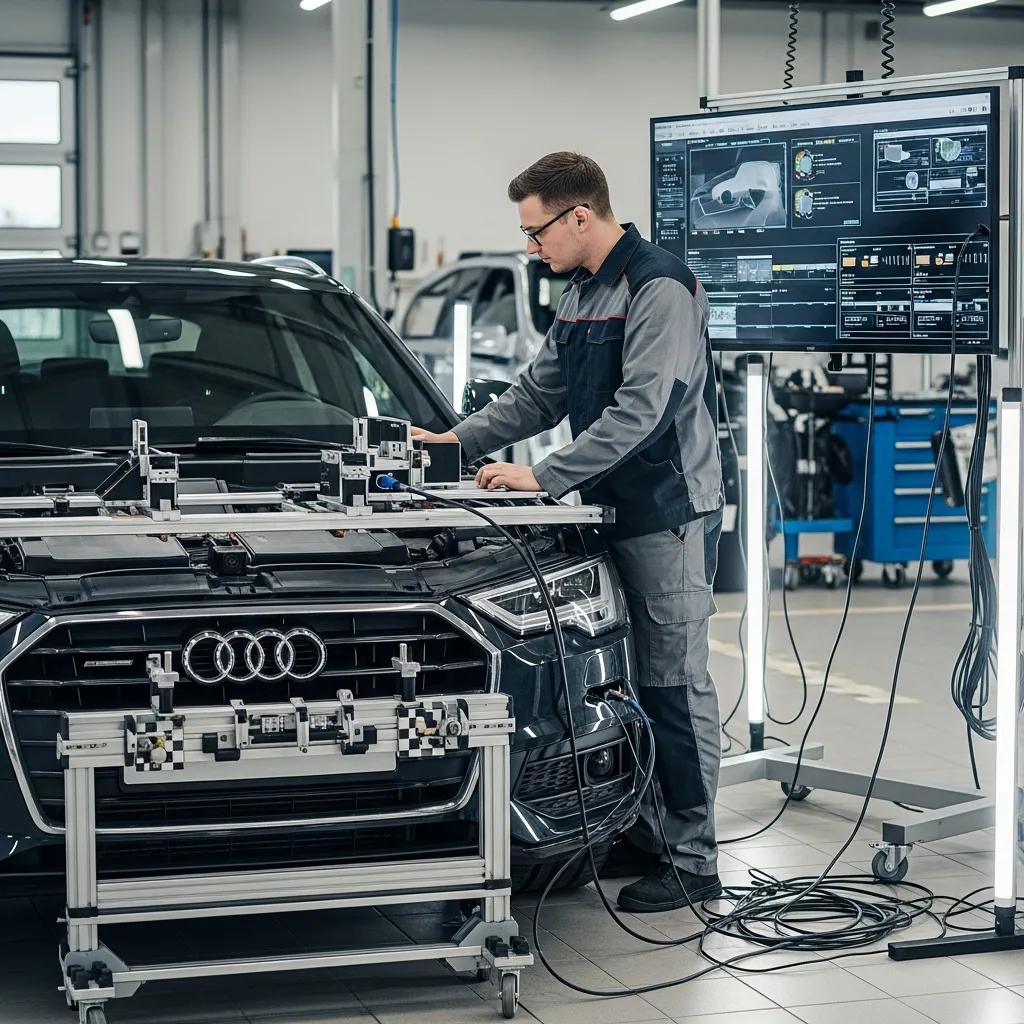
ADAS calibration and advanced systems repair follow a step-by-step workflow: an initial diagnostic scan to find sensor faults, repair or replacement of components as needed, static calibration with factory or approved targets, and dynamic road verification to confirm real-world performance. Technicians use calibrated scan tools and manufacturer procedures to ensure cameras, radar, ultrasonic sensors and LIDAR (where applicable) align to factory tolerances before the vehicle returns to you. After calibration, a documented road test and system checks verify lane-keep, adaptive cruise and collision mitigation functions. Those verification records become part of the repair file for insurers and owners. The compact table below outlines core ADAS steps and typical durations so you know what to expect.
| ADAS Task | Attribute | Typical Step / Value |
|---|---|---|
| Diagnostic scan | Identify fault codes | 0.5–1 hour |
| Component repair | Replace/repair sensors or modules | 1–4 hours (varies) |
| Calibration | Static & dynamic procedures | 1–3 hours |
| Verification | Road test and documentation | 0.5–1 hour |
Knowing each step helps owners understand why ADAS repairs can extend cycle time and why certified calibration is essential for safety and warranty records.
Specialized Audi Repair Expertise: Aluminum Body and Paint Matching
Audi increasingly uses aluminum and mixed materials to cut weight and improve performance, and those materials require different repair methods than steel. Aluminum needs specific tooling, joining techniques like rivets and adhesives, and careful heat control because it behaves differently under stress. Matching Audi paint also requires factory color formulas, multi-stage basecoat and clear coat layering, and blending methods to create seamless transitions. Together, proper aluminum repair and precision refinishing preserve performance and the premium appearance Audi owners expect.
To show why these specializations matter, here are the technical essentials for aluminum and paint work:
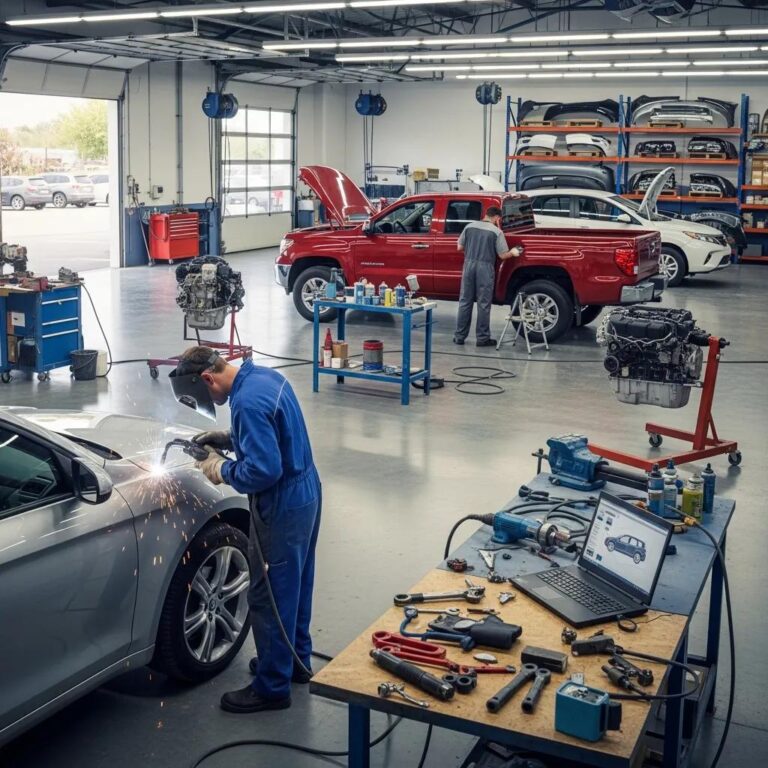
- Material-specific tooling: Aluminum repair uses non-ferrous welding, controlled torque rivet systems and calibrated straightening jigs.
- Corrosion and bonding control: Correct surface prep, adhesives and protective coatings prevent galvanic corrosion at bonded joints.
- Factory color matching: Using Audi paint codes and spectrophotometry ensures exact color and gloss continuity.
These steps reduce the risk of structural weakness, premature corrosion or visible mismatch after repair, preserving value and owner satisfaction. The next section explains why aluminum repair is critical for crash performance.
Why Is Aluminum Repair Critical for Audi Vehicles?
Aluminum’s lower density and different mechanical behavior change how crash energy is absorbed and distributed compared with steel. Repairs that don’t follow material-specific procedures can alter deformation patterns and reduce occupant protection. Proper aluminum repair restores original joining methods — controlled riveting and approved adhesives — and keeps manufacturer-specified panel geometry so energy management in future impacts behaves as designed. Improper heat or conventional welding can create hardening zones and weaken panels; certified protocols avoid those outcomes with controlled processes and specialized tooling. For Audi owners, correct aluminum repair means restored crash performance and dependable interaction with safety systems.
How Do We Ensure Perfect Audi Paint Matching and Refinishing?
An invisible repair starts with the factory color code and measuring the existing finish with tools like a spectrophotometer. We blend new paint into adjacent panels using staged basecoat and clear coat layers, create test panels, refine formulas and follow precise baking and polishing stages to match gloss and texture. Quality checks include visual inspection under varied lighting and adhesion/durability testing where needed to ensure the repaired area ages consistently with the rest of the vehicle. Delivering a seamless finish protects resale value and owner satisfaction while meeting manufacturer appearance standards.
Navigating Audi Accident Repairs and Insurance Claims in Los Angeles
After an accident, initial steps focus on safety, documentation and starting the claims process; later steps include choosing a repair facility that documents OEM procedures and handles ADAS calibration. First, prioritize safety and get a police or incident report if required. Photograph damage, note dashboard warnings, and collect witness or contact information. When filing a claim, ask that repairs follow manufacturer procedures and state your preference for OEM parts on safety-critical items. Keep copies of all estimates and communications. The checklist below helps Audi owners manage the early stages of repair and claims while protecting long-term value.
Owners should follow these immediate actions after a collision:
- Ensure safety and medical needs are addressed: People come first.
- Document the scene: Photograph damage, surroundings and any sensor dashboard warnings.
- Notify insurer and request OEM repair consideration: Ask how OEM parts and certified procedures are handled.
- Obtain a detailed estimate from a certified shop: Include ADAS diagnostics and calibration needs in the estimate.
How Does Prime Time Collision Assist with Audi Insurance Claims?
Prime Time Collision Center helps Audi owners with detailed, OEM-focused estimates, documentation for part traceability and repair procedures, and coordination with insurers during appraisal and approval. We provide free estimates and work with all major insurance companies to submit OEM parts documentation and calibration requirements as part of the repair file, reducing back-and-forth and protecting owner requests for factory procedures. Practical services like 24/7 towing and local handling of appraisal follow-ups streamline the process after an accident. These supports help ensure repair decisions prioritize safety and preserve warranty or resale documentation.
What Is the Typical Timeline for Audi Collision Repairs?
Repair timelines depend on damage severity, parts availability and whether ADAS calibration or aluminum components are involved. Typical stages run from initial appraisal through parts procurement, structural repair, paint, calibration and final verification. Minor cosmetic work can finish in a few days, moderate repairs often take one to two weeks, and major structural or parts-limited repairs can extend several weeks because of part lead times and calibration scheduling. The table below maps common repair stages to typical durations and key deliverables so you know what to expect during each phase.
| Repair Stage | Typical Duration | Key Deliverable |
|---|---|---|
| Initial appraisal | 0.5–1 day | Detailed estimate with OEM vs. aftermarket notes |
| Parts procurement | 1–14 days | Verified part availability and ETA |
| Structural & body repair | 1–7 days | Restored geometry and aligned panels |
| Paint & refinishing | 1–4 days | Matched finish and cured coatings |
| ADAS calibration & testing | 0.5–2 days | Static/dynamic calibration report |
Delays can come from back-ordered OEM parts, complex ADAS calibrations needing maker-specific targets, or extensive structural repairs. Clear communication and progress checkpoints help keep expectations on track throughout the repair cycle.
The Prime Time Collision Center Difference for Audi Owners in Los Angeles
Prime Time Collision Center is a local shop focused on OEM-quality repairs, transparent documentation and practical support for Audi owners who need certified-level work in Glendale and greater Los Angeles. Our key differences include technician training aligned with industry standards, help with insurance coordination, and services like free estimates and 24/7 towing to make the repair process easier. The list below summarizes the owner-facing value we bring when repair decisions get complicated.
- I-CAR Platinum certified technicians: Our team stays current with collision repair training and standards.
- Works with all major insurance companies: We facilitate estimate submission and documentation.
- Free estimates and 24/7 towing coordination: Practical help to reduce stress after an accident.
These points show why local owners choose a facility that pairs technical capability with hands-on support, and they indicate the kinds of evidence owners should request before authorizing repairs.
What Certifications and Training Do Our Technicians Hold?
Certifications matter because ADAS calibration, aluminum repair and modern structural work require up-to-date training and standardized processes. Prime Time Collision Center lists I-CAR Platinum among its training credentials. I-CAR Platinum reflects advanced training in collision repair technologies and repair planning, helping technicians follow manufacturer repair sequences and documented safety processes. Ongoing training keeps the team proficient with ADAS diagnostic tools, approved joining methods and finishing techniques specific to Audi vehicles. For owners, these certifications translate into documented procedures and a clearer path to meeting factory standards.
How Do Our Warranty and Customer Service Stand Out?
Customer service for certified repairs focuses on clear documentation, open communication about parts and procedures, and practical supports like towing and free initial estimates. Prime Time Collision Center emphasizes these policies to simplify your repair experience. By documenting OEM part usage and calibration steps, we help owners and insurers verify compliance with factory procedures and support warranty discussions if questions arise. Free estimates and coordinated towing remove logistical hurdles right after an incident, while our focus on OEM-level quality aims to deliver durable, verifiable repairs. Together, these service elements prioritize safety, transparency and owner convenience.
Frequently Asked Questions About Audi Certified Collision Repair in Los Angeles
What Should I Expect During the Audi Collision Repair Process?
Expect a thorough damage assessment and a detailed estimate outlining needed repairs and parts. Repairs typically start with structural work, then paint refinishing and ADAS calibration. Good communication matters — the shop should update you on timelines and any parts delays. Before you get your car back, a final inspection confirms the job meets factory standards.
How Can I Ensure My Audi Repair is Covered by Warranty?
To protect warranty coverage, choose a certified collision repair facility that follows manufacturer guidelines. Ask for documentation that shows OEM parts and certified procedures were used. Keep all repair records — estimates and invoices — since they’re essential for any future warranty claim. Tell the shop you want warranty-friendly repairs so they can follow the right steps.
What Are the Costs Associated with Audi Certified Collision Repairs?
Costs vary with damage extent, parts needed and repair complexity, such as ADAS calibration or aluminum work. Certified repairs can cost more than non-certified options because of OEM parts and specialized labor, but that investment often pays off in safety, warranty protection and resale value. Request a detailed estimate up front to understand the expected costs.
How Do I Choose the Right Audi Certified Collision Repair Shop?
Look for I-CAR Platinum or similar certifications, positive customer reviews, and experience working on Audi vehicles. Confirm the shop provides clear documentation of repairs and will coordinate with your insurer. Visiting the shop to check equipment and cleanliness can also build confidence in their capabilities.
What Happens if My Insurance Company Suggests a Non-Certified Shop?
If your insurer suggests a non-certified shop, remember you can choose where your vehicle is repaired. Insurance companies may have preferred shops, but you can insist on a certified Audi facility to ensure factory-standard repairs. Tell your insurer your preference and provide documentation to support it — prioritizing certified repairs protects safety and warranty.
Are There Any Special Considerations for Leasing Audi Vehicles?
Leased Audis often have stricter return requirements, so having collision repairs done at a certified facility helps maintain value and meet lease-return standards. Document every repair with OEM parts and certified procedures to avoid disputes at lease end. Check your lease agreement for any repair stipulations and follow them to reduce potential fees.
Do Audi Certified Shops Always Use OEM Parts?
Certified shops prioritize OEM parts for safety-critical and structural components because genuine parts preserve fit, crash performance and system compatibility. Insurance policies or parts availability may lead to aftermarket use for non-critical items; if OEM parts are important to you, request them in writing. Reputable shops document part numbers and traceability so your repair history supports warranty and resale needs. Asking the shop to include OEM preferences in the estimate and authorization helps protect your vehicle’s engineered safety characteristics.
How Do Certified Repairs Affect Audi Resale Value?
Certified, OEM-compliant repairs create a documented maintenance and repair history that reassures buyers and leasing companies, usually reducing disputes at resale or lease return. Appraisers and buyers trust repairs done to factory procedures with verifiable part traceability and ADAS calibration records. Keeping a clear paper trail showing OEM parts and certified procedures preserves perceived value and minimizes surprises during inspections. If you plan to sell or return a leased Audi, choosing certified repair and organizing the documents is a practical way to protect value.
Conclusion
Choosing Audi certified collision repair ensures your vehicle gets the safety, warranty protection and finish quality it was built for. At Prime Time Collision Center, you’ll find trained technicians, genuine Audi parts and repair processes designed to restore factory standards. Understanding the importance of certified repairs helps you make decisions that protect your investment. Contact us today to schedule your free estimate and see the difference certified service makes.