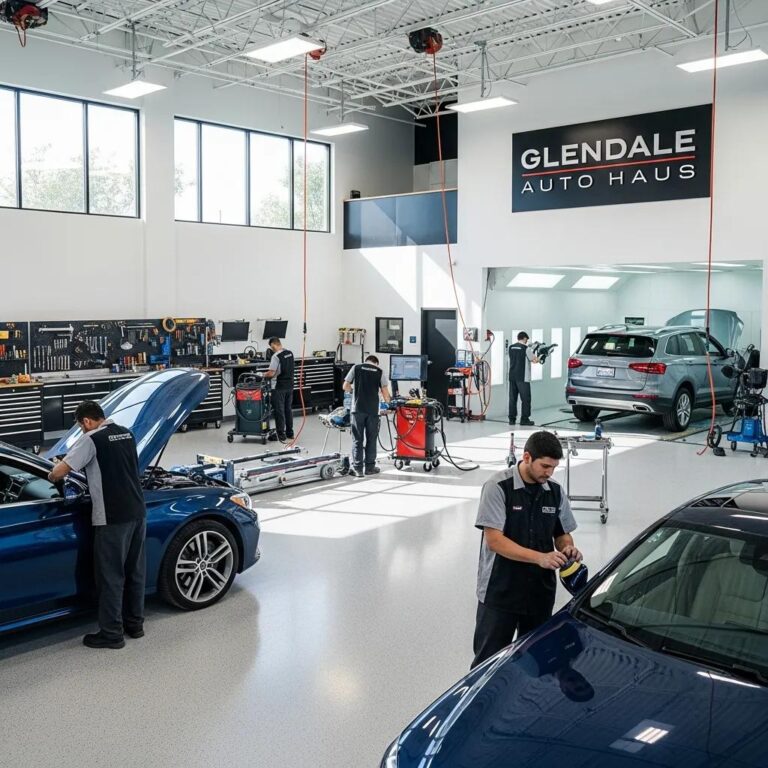
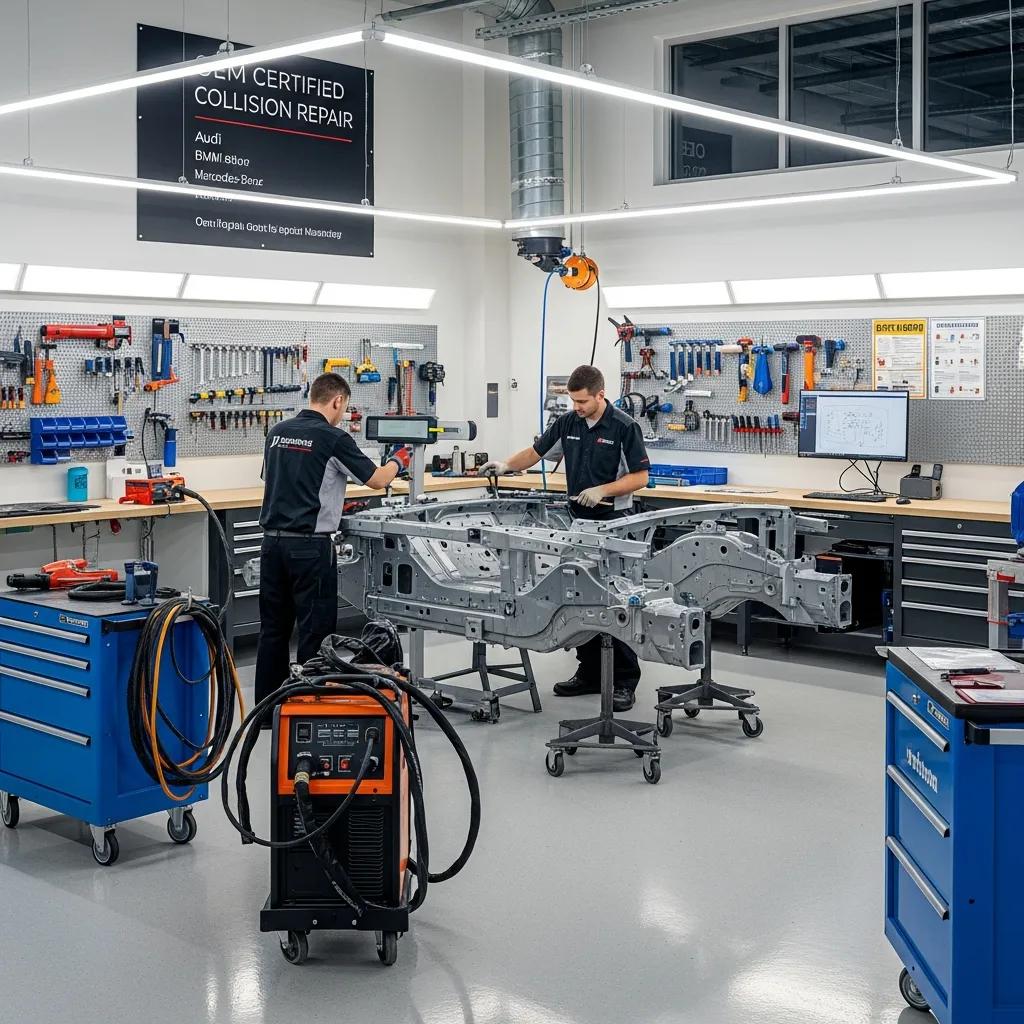
OEM-Certified Collision Repair in Media District Burbank — Your Clear Guide to Quality Auto Body Service
OEM-certified collision repair follows manufacturer procedures—trained technicians, factory-calibrated tools, and correct parts—so your vehicle’s safety and resale value are protected. This guide explains why OEM standards matter after a crash, how they preserve structural integrity and vehicle safety systems, and how drivers in the Media District can confirm trustworthy repair shops. If you’re dealing with the stress of an accident, you’ll find a step-by-step path from documenting the scene to completed repairs, plus checklists and local dent-repair options. You’ll also learn how OEM certification works with insurance workflows, what to ask a body shop, and how repair choices can affect value for both daily drivers and luxury cars. Below: why OEM certification matters; how to find and verify reliable shops; an efficient post-collision process; dent repair choices in the Media District; and the benefits of insurance-approved body shops for faster, well-documented results.
Why OEM-Certified Collision Repair Matters in Burbank
OEM-certified repair restores your vehicle to the maker’s specifications so fit, finish, and safety systems perform as intended. Manufacturers publish procedures for frame alignment, structural welding, parts selection, and ADAS recalibration because those steps directly affect crash performance and occupant protection. For Media District drivers, following OEM standards lowers the risk of improper repairs, helps keep warranty coverage aligned when applicable, and protects resale or lease-return value. Knowing what to look for helps you choose shops that follow documented procedures and use calibrated equipment instead of improvising fixes. The sections that follow break down how OEM certification enforces these standards and the specific advantages for local drivers.
How OEM Certification Protects Quality and Safety
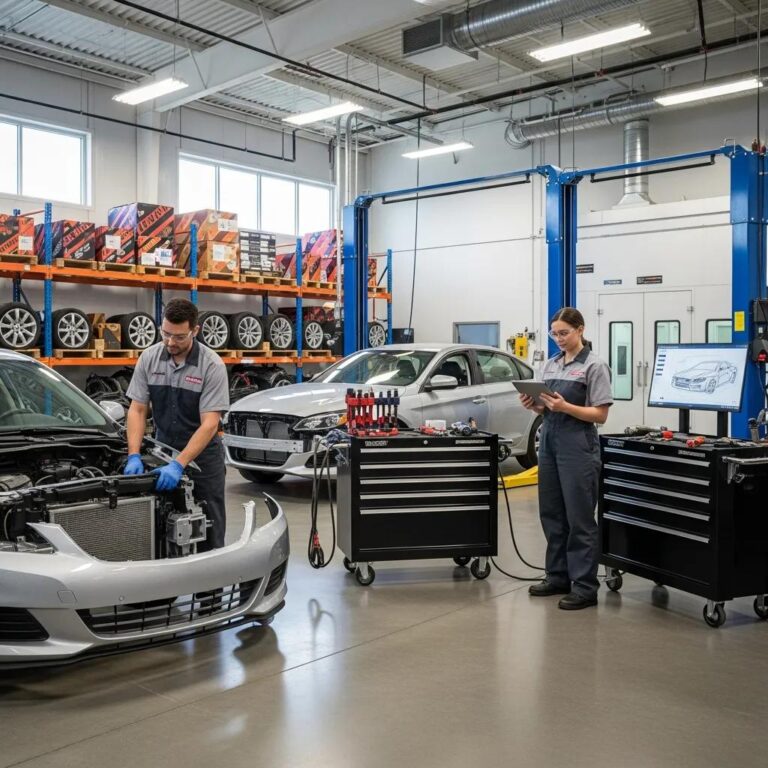
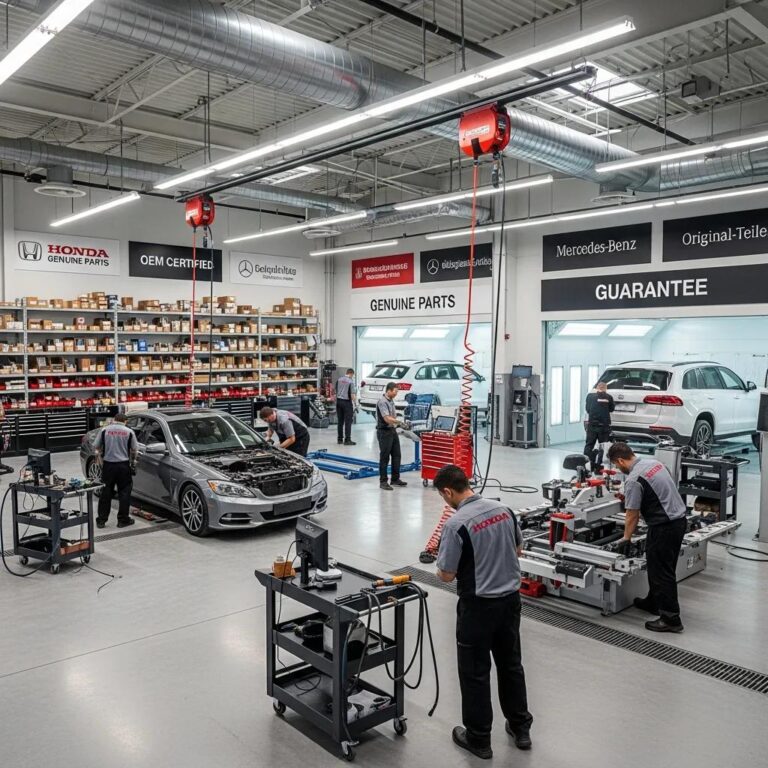
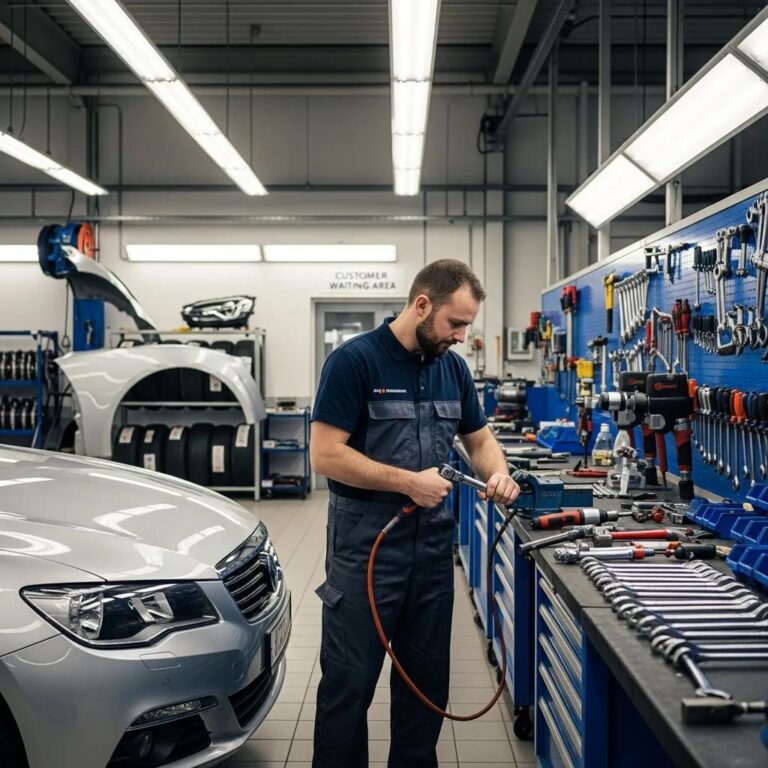
OEM certification requires shops to use manufacturer-approved training, calibrated equipment, and written repair processes that match factory methods. Technicians trained by the manufacturer learn model-specific welding techniques, frame tolerances, and ADAS calibration routines—reducing variability in structural work. Calibrated tools, like frame machines and ADAS alignment rigs, restore geometry and sensor positioning so airbags and driver-assist systems operate correctly. Put simply: training sets the standard, equipment enforces the tolerances, and genuine parts return the vehicle to original form. That combination delivers safer, more reliable repairs for drivers who choose OEM-certified shops in the Media District.
| Certification Area | What It Means | Benefit to You |
|---|---|---|
| Manufacturer training | Technicians hold documented, model-specific courses | More consistent structural and system repairs |
| Calibrated equipment | Factory‑spec alignment and ADAS calibration tools | Restored geometry and correct sensor function |
| OEM parts sourcing | Genuine parts built to manufacturer specs | Better fit, safety, and resale value |
This side‑by‑side shows how training, tools, and parts combine to deliver measurable safety and long‑term value for vehicle owners in Burbank.
Benefits of Choosing OEM-Certified Shops in the Media District
Picking an OEM-certified shop gives you clear, practical benefits: restored safety, easier warranty and lease handling, and stronger resale outcomes when repairs are documented to factory standards. Safety gains come from correct frame alignment and ADAS recalibration, which reduce the chance of post-repair system failures. Documented OEM procedures also simplify insurance and lease-return checks. For higher‑value vehicles, factory‑standard repairs lower the risk of diminished-value issues at resale. Administratively, you’ll see clearer estimates, fewer disputes over parts, and better records for future owners. Next, we’ll cover how to find and verify trusted body shops in the Media District.
Where to Find Trusted Auto Body Shops in Media District Burbank
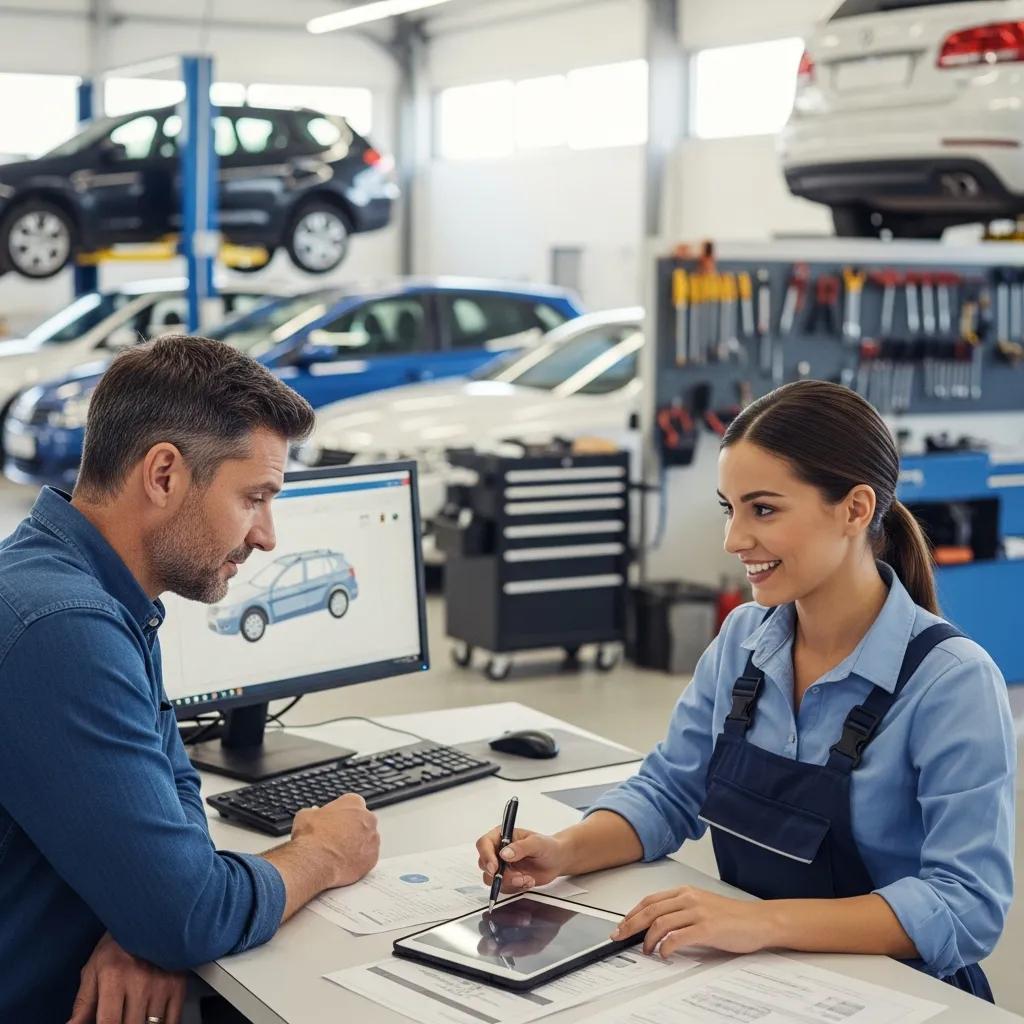
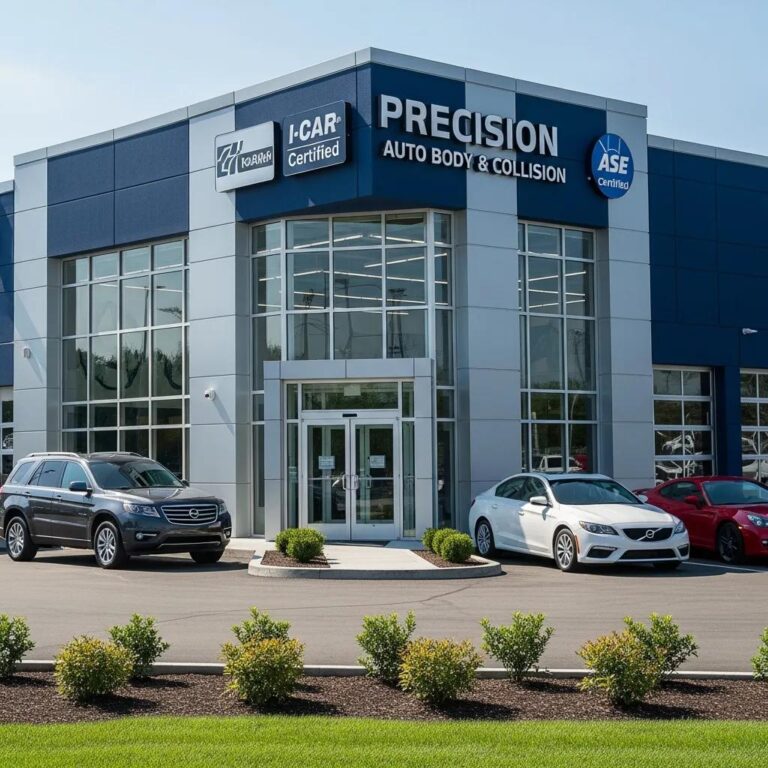
Start your search by checking manufacturer affiliations, transparent repair practices, and insurance relationships—those factors help avoid surprises during a claim. Use a simple verification checklist to evaluate shops consistently and spot ones that follow OEM procedures and know insurer workflows. Look for proof of manufacturer training, visible calibrated equipment, and clear warranty language in writing, plus local credibility like steady reviews and repair examples. Use this short checklist when calling or visiting collision centers in the Media District.
- Ask about manufacturer-affiliated training and which models they service to OEM standards.
- Confirm they use calibrated frame and ADAS equipment and request calibration records.
- Request written warranty terms, parts sourcing policy (OEM vs. aftermarket), and sample repair files.
These core questions help you prioritize shops during initial contact. The next paragraphs unpack the key features to look for and how to confirm insurance approval.
Top Features of Reliable Collision Repair Centers
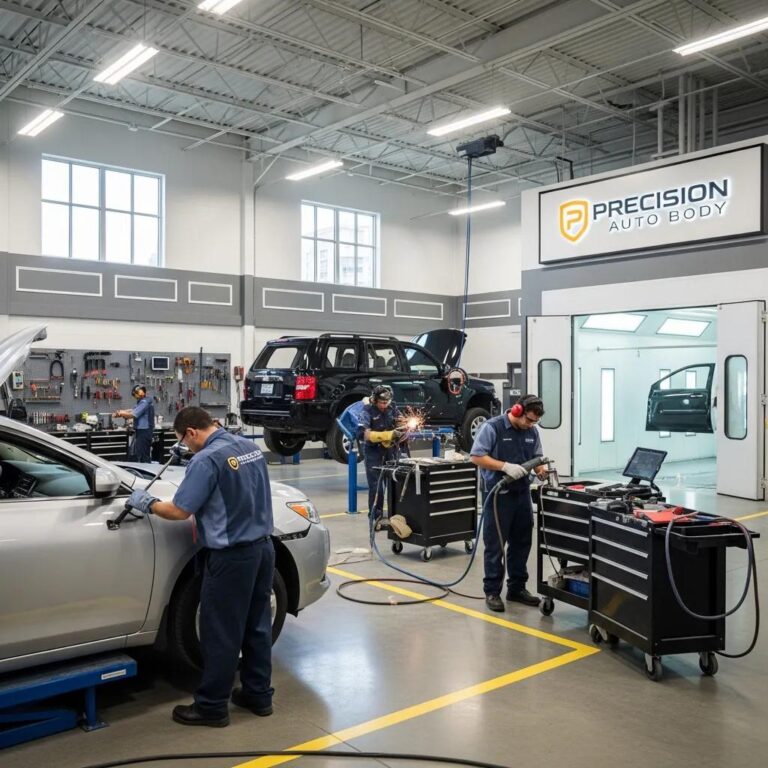
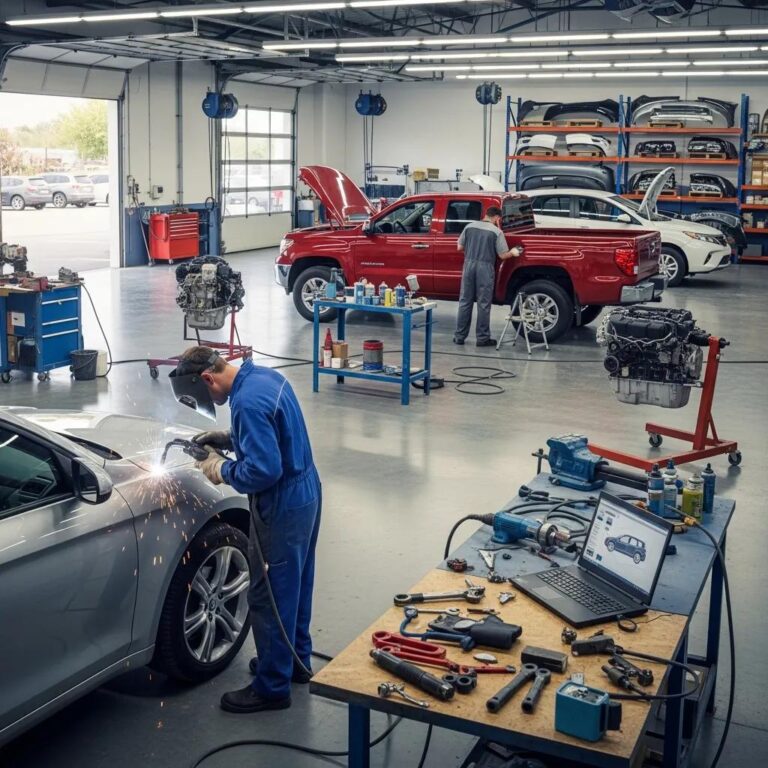
Reliable shops combine certified technicians, factory-calibrated equipment, transparent workflows, and solid warranties to deliver consistent results and predictable claims handling. Certified technicians keep records of manufacturer courses tied to specific models, ensuring they understand structural and safety-system requirements. Factory-calibrated tools—frame racks, alignment rigs, and ADAS calibration bays—let shops meet manufacturer tolerances rather than guess. Transparent workflows include written estimates that list parts origin, repair steps, and timelines so insurers and owners have a clear audit trail. Those features directly affect safety, resale value, and the ease of completing an insurance claim.
- Certified technicians with documented training
- Factory‑calibrated equipment and ADAS calibration bays
- Clear written estimates, parts policy, and warranty terms
Together, these elements form a reliable basis for choosing a shop that will restore your vehicle to manufacturer standards and give you documentation you can trust.
How to Verify Insurance Approval for Burbank Body Shops
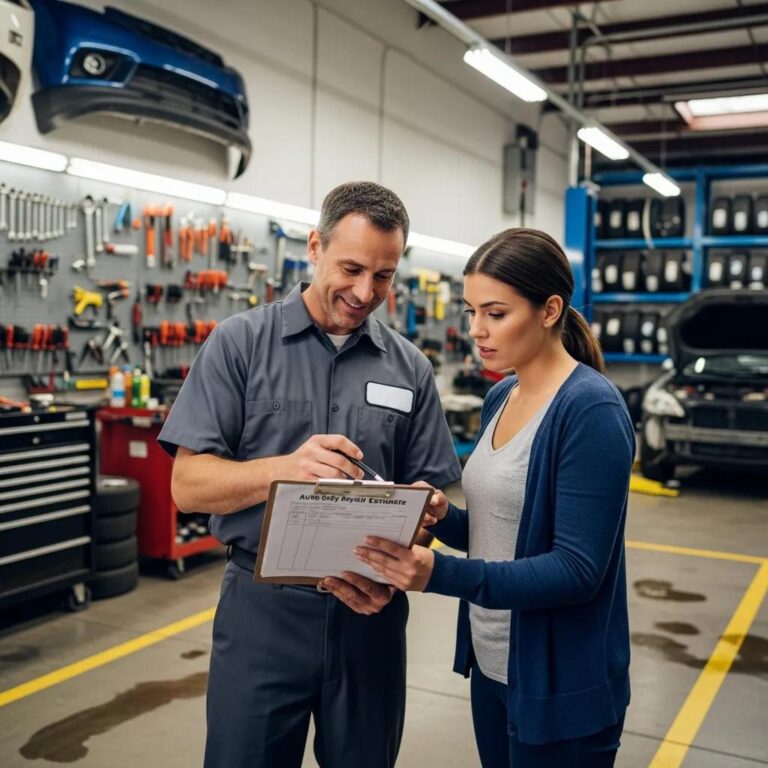
Confirming a shop’s insurance approval means checking for Direct Repair Program (DRP) participation where relevant, asking your insurer about preferred-shop policies, and getting written authorization procedures to prevent later disputes. Start by asking your carrier if they recommend or prefer shops in the Media District and whether those shops are in a DRP that speeds approvals. Then ask the shop how they prepare estimates—do they provide full line‑item estimates accepted by adjusters, and how do they handle parts substitutions? Insist on written authorization for any deviation from OEM parts. Finally, request sample documentation showing previous DRP interactions or claims handling so you can compare their process to your insurer’s expectations. These verification steps lead into the practical, step‑by‑step process you should follow after a collision in the Media District.
Shops that publicly state OEM-focused procedures and show clear insurance coordination—like Prime Time Collision—are useful models when evaluating local options because they emphasize factory-quality repairs and claim-friendly documentation.
How to Handle Car Accident Repair in Burbank, CA Efficiently
Handling accident repairs efficiently means following a clear sequence: ensure safety at the scene, document damage, notify your insurer, choose an OEM-friendly shop, and track repairs to completion. This approach minimizes delays, protects your claim, and helps ensure repairs follow manufacturer procedures. Working directly with an insurance-friendly, OEM-focused shop streamlines authorizations and cuts down on estimate revisions. The checklist below summarizes the core steps to take immediately and in the days after a collision to keep repairs moving.
- Make sure everyone is safe, exchange information, and photograph the scene and damage.
- Get a police report if required, then notify your insurer and share your documentation.
- Collect written estimates from OEM-focused shops, compare line items, and ask your insurer about authorization procedures.
- Approve repairs once estimates match expectations; confirm parts sourcing (OEM vs. aftermarket) and ADAS recalibration needs.
- Monitor repair progress with documented updates and do a final inspection with the shop before accepting the vehicle.
This order of steps clarifies responsibilities and timing. The table below maps typical responsibilities and documents you’ll need at each stage to help with claim coordination.
| Step | Who’s Responsible | Documents / Proof to Keep |
|---|---|---|
| Scene documentation | Driver / Occupants | Photos, contact info, police report |
| Insurance notification | Driver | Claim number, photos, initial estimate |
| Shop selection | Driver / Shop | Written estimate, parts policy, warranty terms |
| Repair authorization | Insurer / Shop | Signed authorization, supplemental approvals |
| Final delivery | Shop / Driver | Final invoice, repair records, calibration certificates |
These steps help drivers, shops, and insurers align expectations and reduce back‑and‑forth during claim resolution.
Working with an insurance-approved, OEM-focused shop—an example being Prime Time Collision—often means fewer estimate disputes, clearer documentation, and a smoother path to restoring your vehicle to factory standards.
Step-by-Step After a Collision in the Media District
After a collision, start by confirming everyone’s safety and documenting the scene thoroughly—fast, organized documentation is the foundation for a smooth claim and repair. Take multiple photos from different angles, capture interior and exterior damage, and note any dashboard warnings tied to safety systems. File a police report if required, then notify your insurer and share the documentation so an adjuster can open a claim. While you wait for insurer instructions, get written estimates from at least one OEM-certified or OEM-focused shop and confirm their parts policy. Those estimates prepare you to compare options once the adjuster evaluates the damage and help you move repairs forward without surprises.
Working with Insurance-Approved Shops for Smooth Claims
When you work with an insurance-approved shop, keep communication open, review estimates line-by-line, and document any agreed deviations from OEM procedures to avoid misunderstandings. Ask both the shop and insurer to confirm approvals in writing, and request periodic status updates with photos of structural and ADAS work as it’s completed. If an insurer suggests aftermarket parts, ask for written justification and, when safety or value is at stake, request the shop document safety equivalence or pursue OEM parts. Proactive, clear communication cuts down on supplemental estimates and makes the repair timeline more predictable and less stressful.
Best Dent Repair Solutions in Media District Burbank
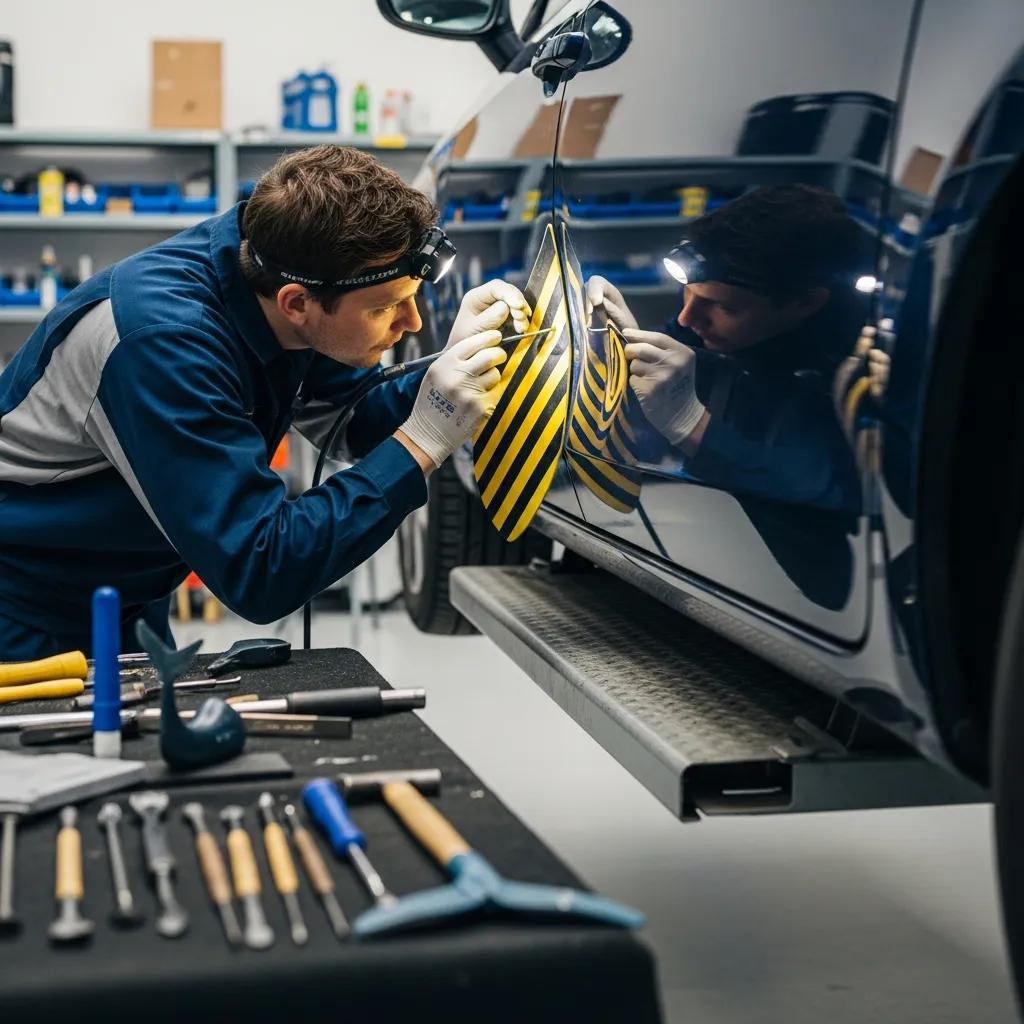
Dent repair options in the Media District range from paintless dent repair (PDR) for minor, paint‑intact dents to traditional panel repair or replacement for deeper damage. PDR preserves the factory paint and is ideal for small creases and door dings, offering faster turnaround and a repair that’s easy to document for insurance. Conventional bodywork—filling, sanding, and repainting—or panel replacement is needed when paint is cracked, panels are stretched, or structural components are affected; these restore the surface but require color matching and longer cure times. Use the comparison below to decide which approach fits your vehicle and expectations.
| Repair Method | Best For | Typical Result / Limits |
|---|---|---|
| Paintless Dent Repair (PDR) | Small hail dents and door dings on daily drivers and many luxury cars | Fast, preserves factory paint; not suitable if paint is cracked or metal is creased |
| Traditional bodywork & paint | Cracked paint, twisted panels, moderate structural damage | Restores appearance; longer timeline and requires color matching |
| Panel replacement | Severe structural damage or bent mounting points | Restores integrity; higher cost and impacts claim totals |
This comparison helps you weigh speed, cost, and effect on vehicle value before approving repairs.
Common Dent Repair Techniques and When They Work
PDR reshapes metal from behind the panel without disturbing the factory paint, making it ideal for small dents and preserving original finishes. It’s usually quicker and less costly than conventional methods and often leaves no visible repair when done by experienced technicians. Traditional filler-and-paint techniques are required when paint is broken or panel replacement is the only safe option due to structural damage; these restore appearance but need color matching and curing time. Choose the technique based on dent size, paint condition, and your vehicle’s market value—PDR when possible, conventional methods when necessary.
How to Choose the Right Dent Repair Service Nearby
Pick a dent repair provider by confirming experience with both PDR and conventional repairs, asking for recent before-and-after photos of similar vehicles, and reviewing warranty terms. Ask whether the shop coordinates with insurers to document that PDR preserves factory finishes. For luxury or high-value cars, prioritize shops that follow OEM repair workflows and can document ADAS recalibration or structural alignment when needed. Finally, get a written estimate that separates labor, materials, and any calibration work so you can compare offers clearly.
Why Choose Insurance-Approved Body Shops in Burbank?
Insurance-approved shops offer faster claims workflows, established communication with carriers, and clearer documentation that helps avoid disputes and protect vehicle value. A shop that partners with insurers or participates in DRPs typically has processes for submitting line-item estimates, documenting OEM parts use, and handling supplemental approvals—cutting administrative delays. Those relationships can mean quicker authorizations and a single point of contact to simplify scheduling and follow-up. The next sections explain what insurance approval looks like in practice and how it streamlines the repair experience.
What Insurance Approval Means and How It Affects Repairs
Insurance approval usually means an insurer accepts a shop’s estimate and repair workflow, sometimes through a direct repair program, and it affects part choices, timelines, and authorizations. When a shop is insurance-approved, adjusters may accept estimates more quickly, reducing re‑inspections. Still, confirm parts sourcing and request OEM parts when necessary for safety or value. Ask for written confirmation covering approved parts, labor, and any aftermarket substitutions to avoid surprises at pickup. That written clarity helps ensure repairs meet both insurer and manufacturer expectations.
- What insurance approval and DRPs mean
- What to request in writing: parts, processes, and warranties
- Red flags: pressure to accept aftermarket parts without clear justification
When these elements are documented, owners have stronger records for resale and lease-return checks, which reduces long-term disputes.
How Insurance-Approved Shops Make Repairs Easier
Insurance-approved shops simplify the repair process by handling estimate submissions, coordinating supplemental approvals, and providing regular status updates so you don’t have to manage every step. They often assign a single point of contact who communicates with both the insurer and the technician team, which reduces back-and-forth and shortens total repair time. These shops usually document repair stages—photos of structural work, calibration certificates, and final walk-through notes—so you can see the work and feel confident it meets manufacturer standards. Choosing an insurance-approved, OEM-focused shop improves the odds of a smooth return to pre-accident condition.
If you’d like a local example of an OEM-focused, insurance-friendly provider, Prime Time Collision highlights OEM-quality repairs, clear insurance coordination, and customer trust built through documented procedures.
Frequently Asked Questions
1. What should I do immediately after a car accident in Burbank?
First, make sure everyone is safe and move to a safe spot if possible. Take photos of the vehicles, damage, and road conditions. Exchange insurance and contact information with other parties and, if needed, file a police report. Notify your insurer promptly and provide the photos and any report to start the claim. These steps make the repair process smoother and protect your claim.
2. How can I ensure my vehicle is repaired to OEM standards?
Choose a body shop that’s OEM-certified or clearly follows manufacturer procedures. Ask about technician training, the equipment they use, and their parts policy. Request written documentation of repair steps and warranties. Also verify whether they work with insurers on OEM repairs—those details help you confirm repairs will meet factory standards.
3. What are the costs associated with OEM-certified collision repairs?
Costs vary by damage severity, vehicle type, and required procedures. OEM repairs can be pricier because they use genuine parts and specialized labor, but they often protect safety, resale value, and warranty coverage. Get detailed estimates from multiple certified shops to compare what’s included and make an informed choice.
4. How long does OEM-certified repair usually take?
Repair time depends on damage extent, parts availability, and shop workload. Minor repairs may take a few days; major repairs can take weeks. Shops that follow OEM procedures prioritize correct repairs over speed, so discuss realistic timelines and ask for regular updates to manage expectations.
5. Can I choose any body shop after an accident?
Legally, you can choose your shop, but pick one that meets your standards—ideally OEM-certified—especially if you want to protect safety and resale value. Insurers may recommend shops, but you have the right to select a shop you trust. Verify they follow OEM procedures and have a proven track record.
6. What’s the difference between paintless dent repair and traditional bodywork?
PDR fixes small dents by gently reshaping metal from behind the panel without repainting, preserving the factory finish and usually costing less and taking less time. Traditional bodywork fills, sands, and repaints damaged areas and is necessary when paint is cracked or structural repair is required. Traditional work restores appearance but takes longer and requires color matching.
7. How do I verify if a body shop is insurance-approved?
Ask your insurer for preferred shops in the area, and ask the shop directly about relationships with insurance companies and DRP participation. Request documentation of their approval status and examples of how they handle claims. A reputable shop will share these details and explain their claims process clearly.
Conclusion
Choosing OEM-certified collision repair in Media District Burbank helps ensure your vehicle is returned to manufacturer standards, improving safety and protecting resale value. By picking a trusted shop that documents its procedures and coordinates with insurers, you can move through repairs with greater confidence and clarity. Take the next step by contacting recommended local shops to compare estimates and timelines—your vehicle deserves careful, factory‑correct care.