Mercedes‑Benz C‑Class Body Repair Experts — Certified OEM Collision Service in Glendale
If your Mercedes‑Benz C‑Class was damaged in an accident, Prime Time Collision Center in Glendale delivers certified, OEM‑quality repairs that restore safety, fit and resale value. Below we explain what Mercedes‑Benz certification means, how our technicians diagnose structural and ADAS issues, and why genuine parts plus correct calibration matter for safety and lease returns. Drivers searching “Mercedes C‑Class repair” or “C‑Class body shop” will find a clear, step‑by‑step repair overview, how we coordinate with insurers, and the materials and technologies a C‑Class requires. Our aim is to reassure you after an accident, show how factory procedures protect long‑term value, and make it easy to request a free estimate or inspection. After the technical sections, you’ll see how Prime Time Collision Center guides owners through insurance, warranty coverage and final delivery while keeping OEM standards front and center.
Why choose a certified Mercedes‑Benz C‑Class body shop?
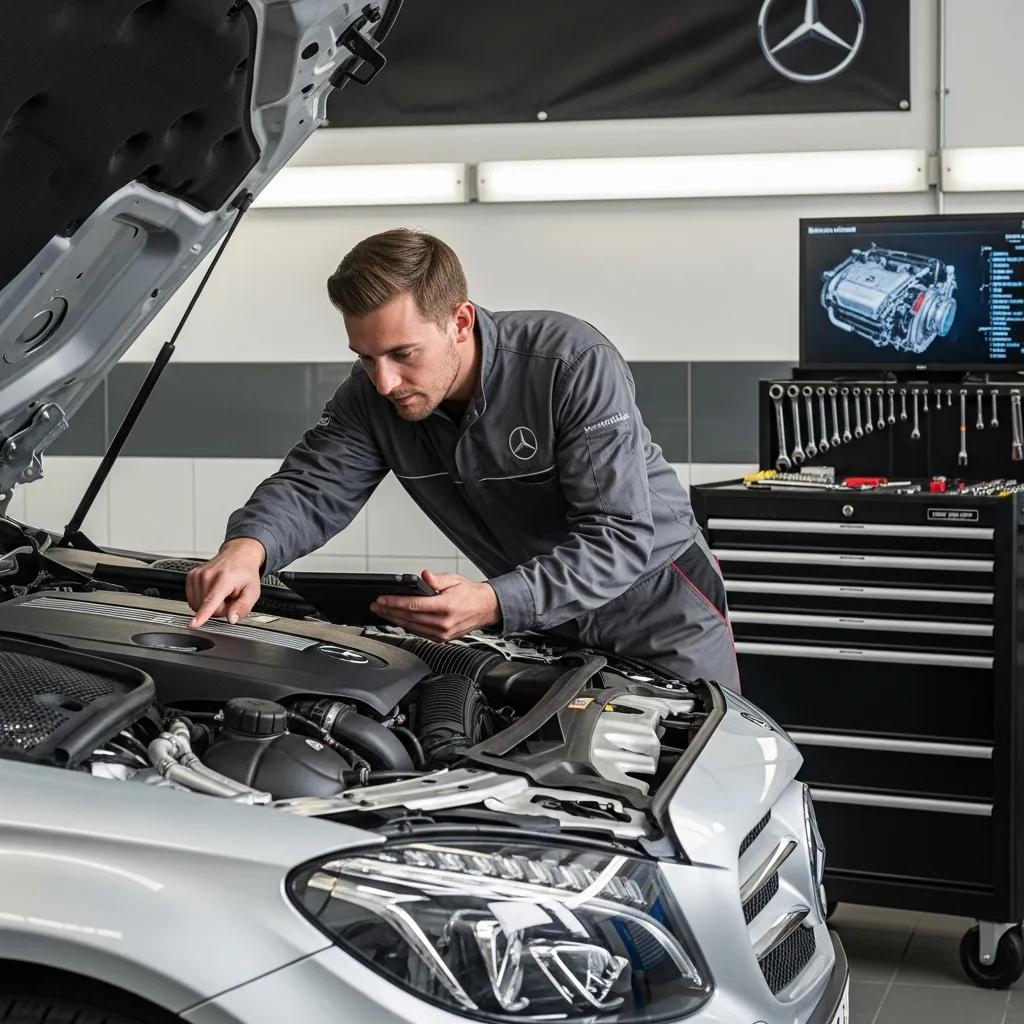
A certified Mercedes‑Benz repair shop follows factory procedures to protect your vehicle’s safety systems, structural integrity and factory fit and finish. Certification means technicians are trained on Mercedes systems, the shop uses specialized equipment, and repairs follow verified processes — all of which lower the chance of misaligned panels, weakened crash structures or incorrectly calibrated ADAS sensors. Choosing a certified provider helps preserve long‑term value, makes lease returns smoother and ensures systems like adaptive cruise and lane assist work as intended after repairs. Below are the core benefits C‑Class owners should expect from a certified facility.
This section summarizes the main benefits of certified C‑Class repairs and explains how certification translates into real customer outcomes.
- Certified shops protect factory safety by using OEM repair methods and documented calibration procedures.
- Certified repairs preserve fit and finish, reducing gaps, paint mismatch and assembly stress.
- Certified processes support resale and lease requirements with documented OEM parts and manufacturer‑approved techniques.
Those points explain why certified repairs are recommended for Mercedes C‑Class vehicles and lead into a closer look at what OEM certification requires technically and procedurally.
What does Mercedes‑Benz OEM certification mean for your C‑Class?
OEM certification shows a repair center meets Mercedes‑Benz standards for training, tooling and documented procedures. Certification usually requires technician training on Mercedes systems, access to OEM service information, calibrated diagnostic tools and adherence to prescribed repair sequences for structural and electronic systems. That alignment helps ensure repairs follow the manufacturer’s engineering intent, preserving crashworthiness and component compatibility. Knowing what certification involves helps you compare repair options and pick a provider that can deliver factory‑grade results for your C‑Class.
Certification ties directly to technician capability — the practical side that produces factory‑quality repairs.
How do certified technicians deliver factory‑quality repairs?
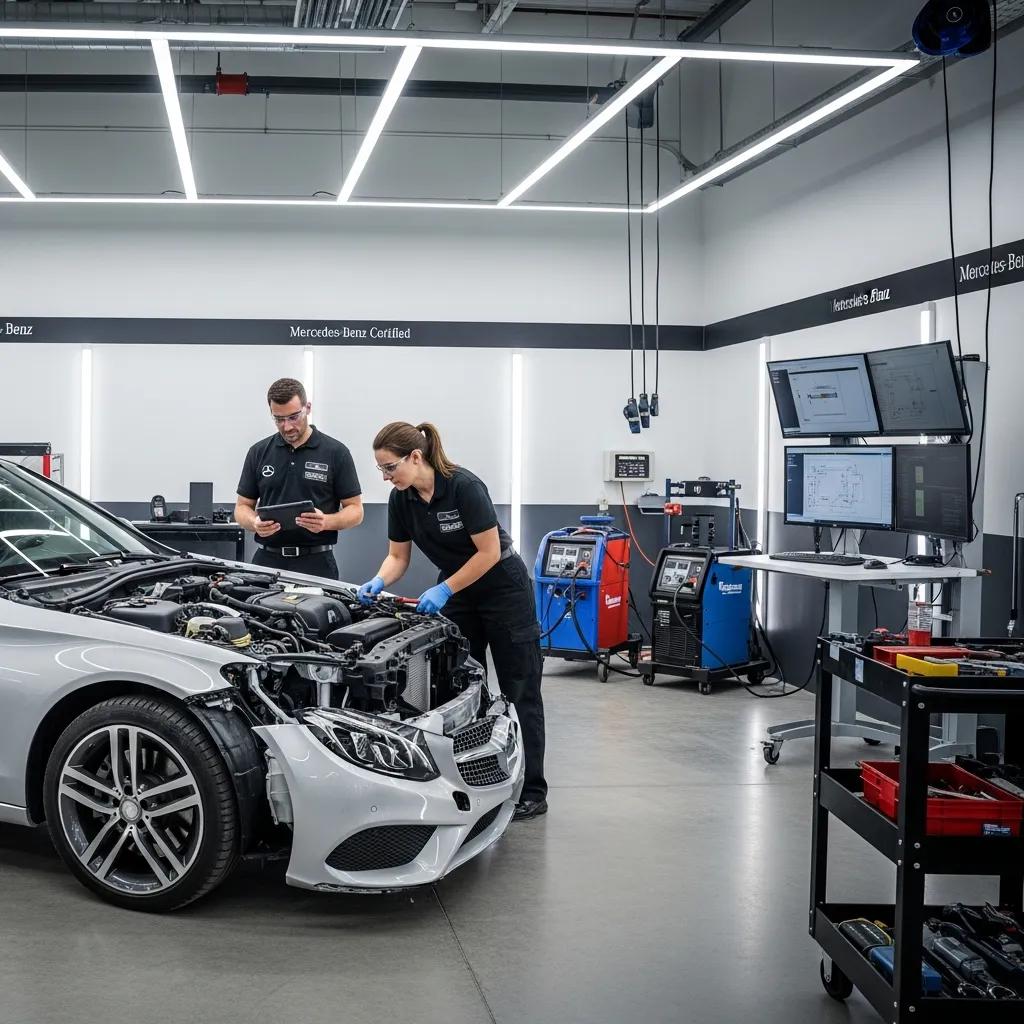
Certified technicians combine formal training, manufacturer resources and systematic quality checks to restore C‑Class vehicles to factory standards. Training — including I‑CAR and manufacturer courses — covers unibody diagnosis, structural straightening and correct torque and assembly specs for doors, bumpers and suspension mounts. Technicians use calibrated alignment rigs, OEM diagnostic interfaces and factory‑matched paint mixes, then perform ADAS checks and validation drives to confirm system performance. These layered QA steps — inspect, repair, calibrate and validate — create predictable outcomes that protect safety and vehicle value.
Those practices set the stage for a transparent, step‑by‑step repair process owners can expect when they bring a C‑Class to a certified shop.
What is the Mercedes‑Benz C‑Class collision repair process at Prime Time Collision Center?
Our collision repair process begins with a thorough inspection to identify structural damage, ADAS faults and paint or finish needs. From there we source OEM parts, perform accurate structural or sheet‑metal repairs, complete paint and reassembly, calibrate ADAS, and finish with final validation. We emphasize clear communication, documented procedures and realistic timeframes so you always know repair status and outcomes. Below is a numbered summary of the typical repair journey for a Mercedes‑Benz C‑Class, with timing and owner responsibilities clarified at each step.
- Initial inspection & estimate: full damage assessment including ADAS scan, structural checks and a written estimate.
- Insurance coordination & approvals: submit photos, estimates and OEM repair plan to your insurer for authorization.
- Parts ordering: source genuine Mercedes parts to preserve fit, finish and safety; track lead times and delivery.
- Structural & mechanical repair: frame alignment, replace or repair unibody components, and restore suspension geometry.
- Paint, reassembly & ADAS calibration: match factory paint, reassemble components and perform static and dynamic sensor calibration.
- Final QA & delivery: road test, ADAS verification and owner walkthrough to document completed work.
This outline prepares owners for what to expect and leads into a detailed mapping of inspection items, outcomes and typical timelines below.
| Phase | What technicians check | Outcome / Typical timeline |
|---|---|---|
| Inspection & Estimate | Structural alignment, ADAS fault codes, visible panel damage, paint condition | Detailed estimate and repair plan; initial timeframe estimate (1–3 days) |
| Parts Procurement | OEM part numbers, availability of genuine Mercedes parts | Parts ordered and tracked; timeline varies with availability |
| Structural Repair | Unibody integrity, subframe alignment, suspension mounts | Restored geometry and safety margins; major repairs: 2–7 days |
| Paint & Reassembly | Paint match, corrosion protection, fit and finish | Factory color match and assembly; finish cure time: 1–3 days |
| ADAS Calibration & QA | Radar, camera and ultrasonic sensors, wheel alignment | Validated safety systems; verification drives before delivery |
This table shows how each repair phase links to customer outcomes and typical schedules, and it leads into specifics about genuine parts and ADAS calibration for the C‑Class.
How are genuine Mercedes‑Benz parts used in repairs?
Genuine Mercedes‑Benz parts are identified by OEM part numbers and sourced to maintain factory tolerances, fit and material compatibility on the C‑Class. Using authentic components reduces the risk of premature wear, improper fit and altered crash behavior because parts are engineered for the vehicle’s specific joining methods and load paths. Our technicians verify part authenticity, document installations and track serials when applicable — all recorded in your repair order to support resale and lease‑return needs. Prioritizing genuine parts is a core element of OEM certified repairs and preserves manufacturer expectations for safety and longevity.
Sourcing genuine parts is followed by ADAS recalibration and validation so new components integrate correctly with the vehicle’s safety systems.
What steps are involved in ADAS calibration for the C‑Class?

ADAS calibration on a C‑Class starts with a full diagnostic scan to capture fault codes and sensor data, followed by a physical inspection of sensor mounts and camera alignment. Calibration may include static procedures using OEM targets and dynamic calibration during a controlled drive to align radar, camera and ultrasonic sensors to the vehicle’s reference frame. After calibration we run verification drives and live monitoring to confirm features such as adaptive cruise, automatic emergency braking and lane assist operate within factory tolerances. Proper ADAS calibration directly supports occupant safety and reduces liability after a collision repair.
These ADAS procedures underscore why certified tools and factory methods matter and tie into how we work with insurers to keep repairs on track.
How does Prime Time Collision Center support your Mercedes‑Benz C‑Class insurance claim?
We help C‑Class owners by streamlining communication with insurers, preparing OEM‑aligned estimates and documenting repair procedures to obtain approval for factory‑grade repairs. As your technical advocate, we submit inspection findings, parts justification and ADAS calibration plans to the insurer to support repair decisions that preserve safety and value. Clear documentation and proactive coordination reduce delays during approvals and help you understand what your policy covers versus what the vehicle needs. Below are practical steps to follow when filing a claim and working with a certified shop to get a free estimate.
- Report the accident to your insurer and provide photos and basic incident details.
- Request a written, OEM‑based estimate from the repair shop and schedule an inspection.
- Allow the shop to submit repair plans, parts lists and ADAS calibration documentation to the insurer for approval.
- Coordinate on authorization, supplemental requests and scheduling; ask the shop for updates during parts procurement.
These steps help you navigate the insurance process and lead into information about the carriers we commonly work with and what to expect at the estimate.
Which major insurance companies do we work with?
Prime Time Collision Center works with major insurance carriers to secure approvals and manage supplements while advocating for OEM repair methods that protect your Mercedes‑Benz C‑Class. We present manufacturer‑approved repair sequences, document ADAS needs and clearly communicate parts lead times so carriers can authorize required work promptly. While insurer policies differ, our goal is to keep the technical justification for OEM parts and calibration visible in the claim file. Bring your insurance information and accident documentation to the estimate appointment to speed coordination.
What is the process for getting a free Mercedes‑Benz C‑Class repair estimate?
To get a free estimate, call the shop, describe the damage and schedule an in‑person inspection where technicians perform a visual and diagnostic assessment, including ADAS scans. During the appointment we document structural concerns, list OEM parts and recommend calibration or replacement work, then provide a written estimate for you and your insurer. Estimate turnaround is typically same‑day to a few days depending on inspection depth. We’ll also advise on towing, rental options and expected timelines after insurer authorization. Bringing vehicle registration and insurance details to the appointment speeds the process.
With a clear estimate and an approval path, you can make informed decisions about repair timing and expected results. That leads into the materials and technologies used on the C‑Class.
What advanced technologies and materials are used in Mercedes‑Benz C‑Class body repairs?
The C‑Class combines aluminum, high‑strength steel and advanced composites in body and structural parts, so repairs require specialized methods and equipment to maintain crash performance. Different materials call for specific joining techniques — controlled welding, adhesive bonding or replacement — and shops need dedicated aluminum benches, calibrated welders and trained technicians to work safely. ADAS and electronic safety systems are tightly integrated with structure, so OEM diagnostic interfaces and calibration tools are essential to restore full functionality. Below are the key technologies and shop capabilities required for proper C‑Class repairs.
- Dedicated aluminum repair equipment and qualified technicians for safe disassembly, welding or bonding.
- Frame alignment racks and precision measuring systems to restore unibody geometry within OEM tolerances.
- OEM diagnostic tools and ADAS calibration equipment for static and dynamic sensor alignment.
These technology requirements lead into a comparative table showing materials, repair methods and shop capabilities so owners can evaluate provider readiness.
| Material | Repair method | Required shop capability |
|---|---|---|
| Aluminum panels | Specialized welding, riveting or adhesive bonding; often replaced rather than repaired | Aluminum‑safe welders, dedicated benches and trained technicians |
| High‑Strength Steel (HSS) | Cold straightening, controlled welding and section replacement per OEM procedures | Frame racks, calibrated welders and access to OEM repair data |
| Composite components | Adhesive bonding or module replacement with controlled fasteners | Manufacturer procedures, parts sourcing and trained technicians |
This comparison clarifies when repair is appropriate versus replacement and leads into specific techniques for aluminum and HSS on the C‑Class.
How are aluminum and high‑strength steel repaired on the C‑Class?
Aluminum and high‑strength steel require different technical approaches guided by OEM instructions: aluminum repairs often need specialized welding or adhesive bonding with strict heat control, while HSS repairs focus on preserving yield strength and following correct welding sequences. Technicians decide to repair or replace based on damage extent, access and the ability to restore original load paths — improper methods can weaken structure or conflict with manufacturer expectations. Shops must follow dedicated aluminum procedures, avoid cross‑contamination with steel work, and document techniques and part replacements in the repair order. Choosing a facility with these capabilities helps ensure structural integrity and occupant protection.
These material‑specific practices underscore the importance of ADAS calibration as the final technical safeguard after structural and body repairs.
Why is ADAS calibration critical for Mercedes‑Benz safety systems?
ADAS calibration matters because many C‑Class safety functions — automatic emergency braking, lane keeping and adaptive cruise — rely on precisely aligned sensors and cameras. Even small misalignments can cause inconsistent responses or system failures, creating safety and liability risks. After physical repairs, technicians perform static and dynamic calibration procedures and validate system behavior in real driving conditions to ensure software inputs match real‑world geometry. Verifying ADAS performance after repair restores the vehicle’s intended safety envelope.
Understanding ADAS importance completes the technical overview and leads to common owner questions about warranties and satisfaction guarantees.
What warranty and customer satisfaction guarantees does Prime Time Collision Center offer?
We build customer trust by following OEM methods and backing our work with workmanship assurances. You’ll receive clear documentation of parts, procedures and ADAS calibration at delivery so there’s a transparent record of what was done. We welcome feedback and use our warranty process to address any workmanship issues that arise after delivery. Below we describe our lifetime workmanship warranty and how customer reviews reflect our C‑Class repair expertise.
What is included in our lifetime workmanship warranty?
Our lifetime workmanship warranty covers the quality of repairs performed — ensuring paint, fitment and structural work meet the standards applied on delivery. If an issue attributable to our workmanship appears, contact us by phone with your original repair order and we’ll schedule an inspection to verify the concern and determine corrective action. The warranty covers workmanship only, not new external damage or misuse, and includes documented follow‑up to restore the affected area. Clear eligibility criteria and a straightforward claims process help owners understand what to expect.
How do customer reviews reflect our Mercedes‑Benz C‑Class repair expertise?
Customer reviews often highlight consistent strengths: clear communication, on‑time delivery and high‑quality fit and finish on premium vehicles like the C‑Class. Reviews noting successful ADAS recalibration, accurate paint matches and smooth insurance coordination demonstrate our technical competence and customer service. Look for patterns in verified feedback and case examples to confirm a shop reliably completes OEM‑grade work and stands behind its repairs before booking an inspection or free estimate.
Prime Time Collision Center — Glendale, CA; phone (818) 396‑4997. We advertise I‑CAR Platinum certified technicians and serve Glendale, Burbank, Pasadena and Los Angeles, positioning ourselves as a local partner for owners seeking certified repairs and clear insurance support.
Frequently Asked Questions
What should I do immediately after an accident involving my Mercedes‑Benz C‑Class?
First, make sure everyone is safe and move to a safe location if possible. Call emergency services for injuries. Take photos of the scene and damage, exchange information with other parties and note witness details. Report the incident to your insurer promptly. Then contact a certified collision repair shop like Prime Time Collision Center to schedule an inspection and start the repair process.
How long does the collision repair process typically take for a Mercedes‑Benz C‑Class?
Repair time varies with damage severity and parts availability. Expect the initial inspection and estimate in 1–3 days. Structural repairs typically add 2–7 days, and paint and reassembly another 1–3 days. ADAS calibration and final QA add time as well, so total timelines commonly range from about a week to several weeks depending on the job.
Are there any specific maintenance tips for my Mercedes‑Benz C‑Class after repairs?
After repairs, schedule routine inspections to confirm everything is performing as expected, especially ADAS functions. Watch tire alignment and brake performance, since these can be affected by collision repairs. Keep the vehicle clean to protect paint and finish, and consider professional detailing to preserve exterior and interior condition.
What are the benefits of using OEM parts for my C‑Class repairs?
OEM parts restore original fit, finish and safety standards. They’re engineered for your vehicle’s joining methods and load paths, reducing the risk of premature wear or improper fit. OEM parts help maintain resale value and meet lease‑return expectations, and they ensure safety systems interact correctly with repaired components.
How can I ensure my insurance claim is processed smoothly during repairs?
Report the accident promptly and provide photos and incident details. Request a written, OEM‑based estimate from the repair shop and let the shop submit the repair plan to your insurer. Stay in regular communication with both the insurer and the shop, and keep organized records of all communications to speed approvals and resolve questions.
What should I look for when choosing a certified collision repair shop?
Look for certification status, technician qualifications and verified customer reviews. Prefer shops experienced with Mercedes‑Benz and OEM procedures, those that use genuine parts and have equipment for advanced repairs and ADAS calibration. Ask about warranties and how the shop communicates throughout the repair so you get clear updates from inspection to delivery.
Conclusion
Choosing Prime Time Collision Center for your Mercedes‑Benz C‑Class repairs means factory‑grade service that protects safety, fit and resale value. Our certified technicians use OEM parts, manufacturer procedures and calibrated tools to deliver reliable results and stand behind their work. By understanding the repair process and how we coordinate with insurers, you can make informed decisions that preserve your vehicle’s longevity. Contact us today to schedule a free estimate and see the difference certified collision repair makes.