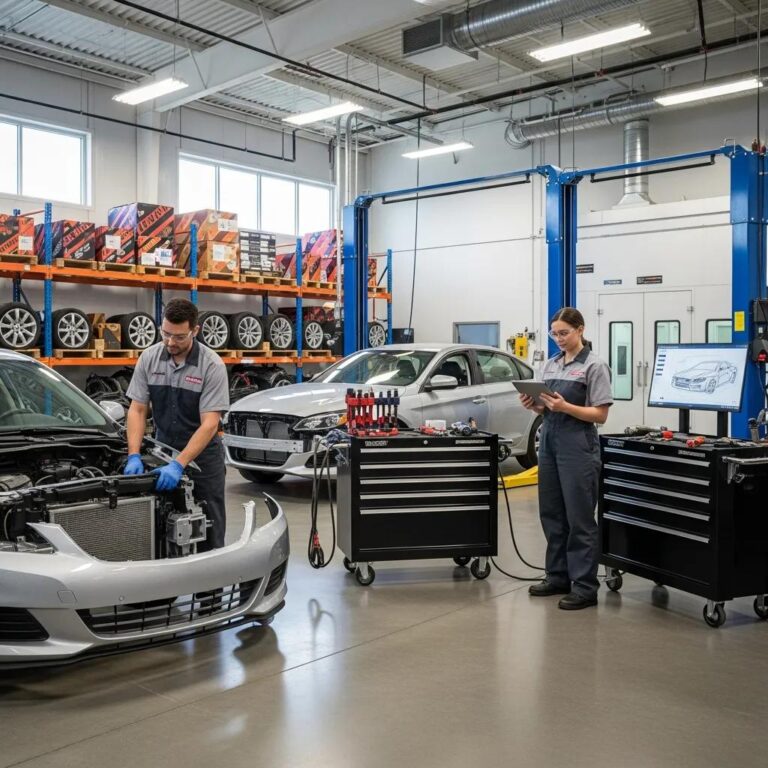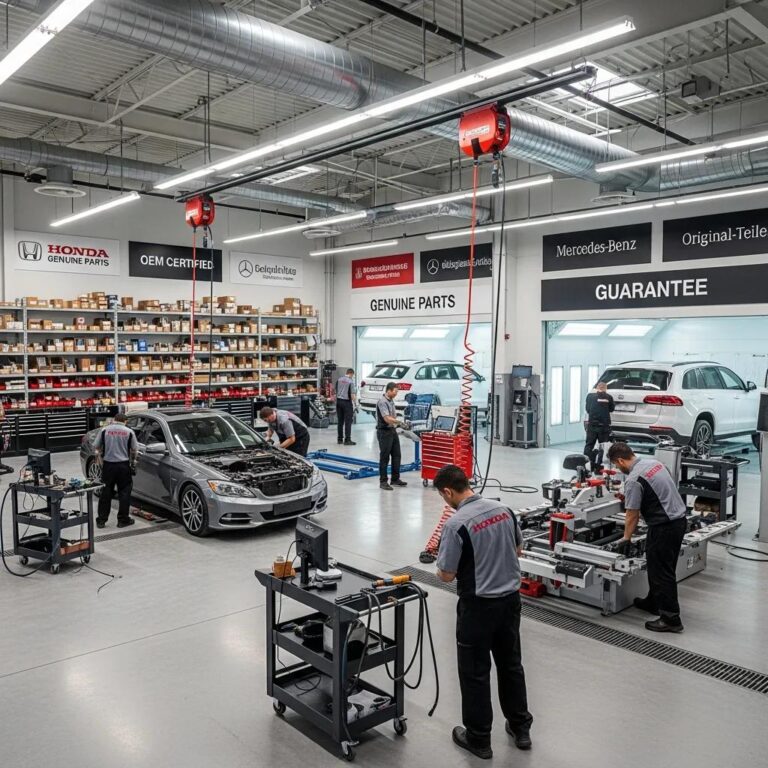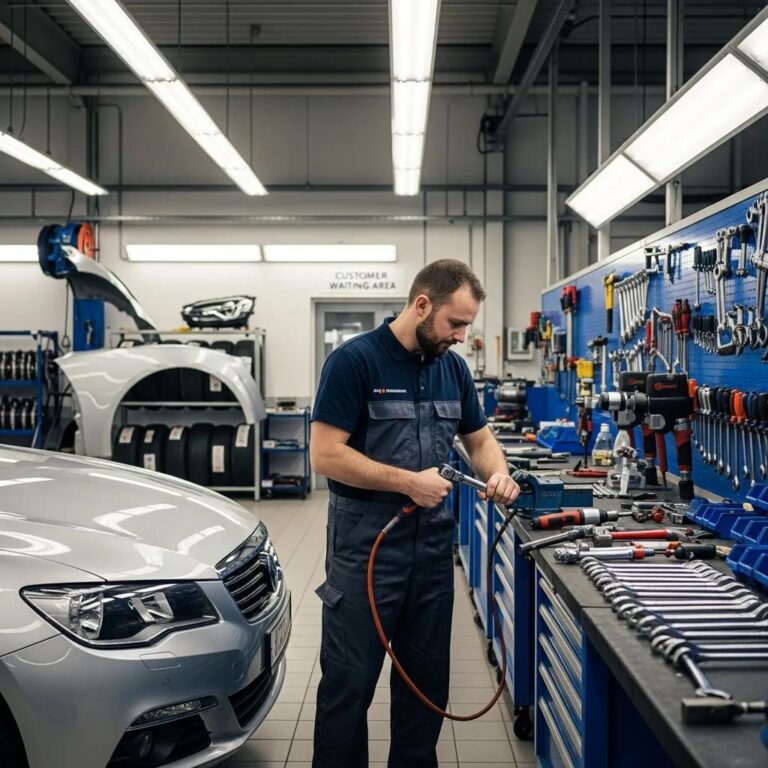

OEM vs Aftermarket Parts: Which Is Right for Your Vehicle? A Practical Guide to Smart Repair Choices
There’s a clear difference between OEM and aftermarket parts. OEM parts are made to the vehicle manufacturer’s original specs, while aftermarket parts come from third-party suppliers and can vary in fit and finish. Most repair decisions boil down to three factors: safety, warranty, and cost. This guide walks you through what each part type is, how they compare for fit and performance, when lease or safety rules make OEM the better option, and how insurers and repair shops influence the choice. You’ll also learn how certified repair procedures and trained technicians restore safety, and where a certified auto body shop fits into the claims process. Read on for practical checklists, comparison points, and real-world scenarios to help you decide when to insist on factory-quality parts.
What Are OEM Parts and Why Are They Viewed as the Factory Standard?
OEM parts are produced by, or for, the vehicle maker to the same specifications used on the assembly line. That means consistent fit, finish, and performance that match the original components. Because OEM parts meet factory tolerances and use the same materials, they help restore a vehicle’s designed safety and appearance—important for structural pieces and alignment-sensitive systems. OEM parts also tend to align more directly with manufacturer warranty language and maintenance procedures, which can prevent coverage disputes after repairs. The trade-offs are price and sometimes wait time: OEM panels or electronic modules can cost more and may take longer to source. Knowing these trade-offs helps you decide when factory-spec parts are worth the investment.
How Do OEM Parts Deliver Better Fit, Finish, and Warranty Protection?
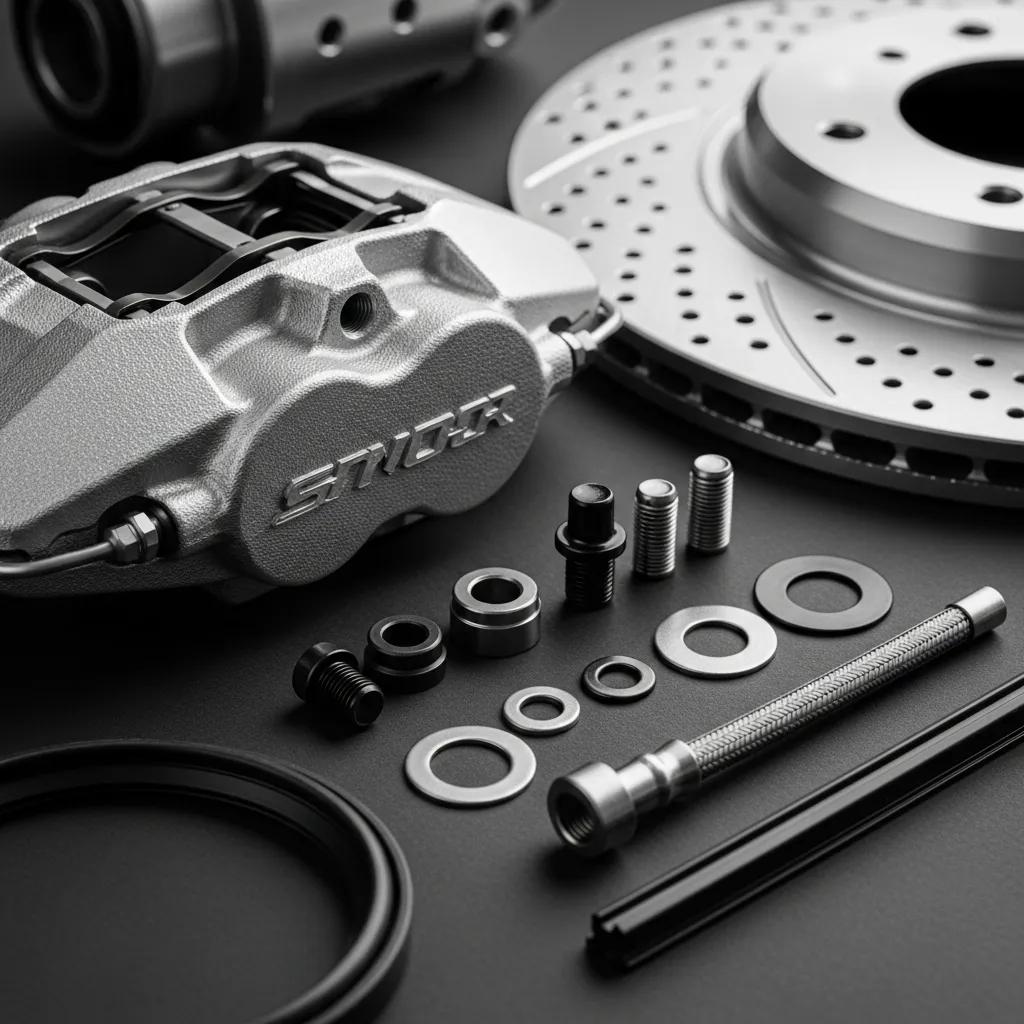
OEM parts meet tight manufacturing tolerances and official specifications, which reduces gaps, misalignments, and paint mismatches. That precise fit lowers the need for on-the-spot modifications and reduces stress points that can affect crash performance or aerodynamics. From a warranty standpoint, manufacturers recognize factory-spec components as compatible with the vehicle, so using OEM parts makes it less likely a warranty administrator will question cause. For electronics and calibrated safety systems, OEM units often include proprietary firmware or calibration data that aftermarket alternatives may lack, reducing the chance of functional mismatch. Those quality and compatibility assurances make OEM the predictable choice when restoring original performance.
What About Cost and Availability for OEM Parts?
OEM parts usually carry a price premium compared with many aftermarket options. The difference can be small for basic mechanical pieces and much higher for body panels or electronic modules, depending on make and model. Availability varies too: common, mass-market vehicles generally have good OEM supply through dealer networks; luxury or low-volume models can face longer lead times. When you compare immediate cost to long-term value—things like resale price and warranty alignment—paying more for OEM can make sense. If a repair is time-sensitive, owners sometimes choose a high-quality aftermarket part, but safety-critical status and long-term ownership plans should factor into that decision. These cost and supply considerations help form a practical rule of thumb for when to choose OEM.
What Are Aftermarket Parts and How Do They Compare on Price and Variety?
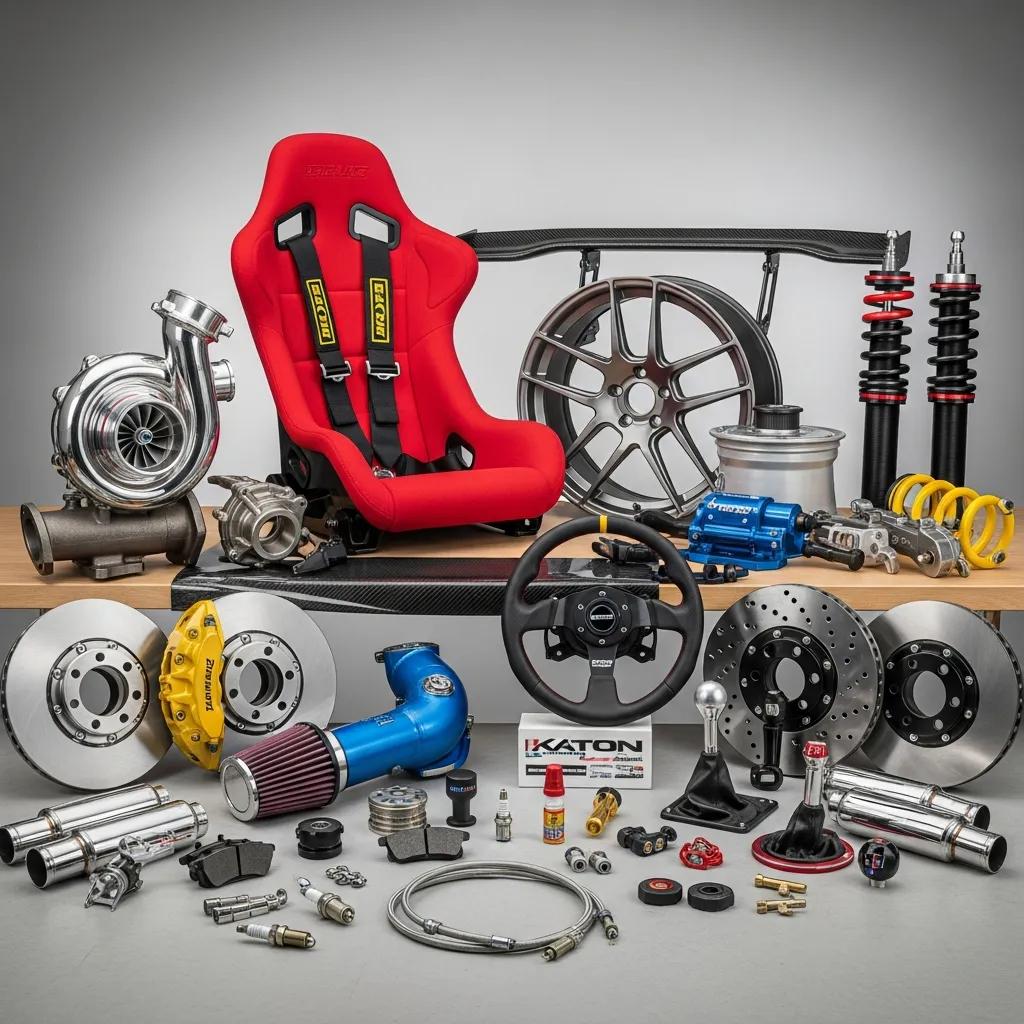
Aftermarket parts are made by third-party manufacturers and cover a wide range—from high-quality, OEM-equivalent replacements to lower-cost budget items with mixed reliability. The aftermarket offers variety, including performance upgrades, economy replacements, and improved designs that sometimes add functionality the original part didn’t have. That choice can benefit drivers looking to save money or gain performance. The downside is quality variability: fit, finish, materials, and durability can differ widely between reputable brands and inexpensive imports. For many non-structural or cosmetic repairs, a reputable aftermarket part gives strong value, but insurers often steer toward aftermarket options to control claims. Knowing the tiers within the aftermarket helps you balance price, availability, and expected lifespan.
Intro to EAV table: The table below outlines typical aftermarket tiers, their quality signals, and common warranty and price expectations to help you pick the right option.
| Aftermarket Tier | Typical Quality Indicators | Price Range & Warranty |
|---|---|---|
| OEM-equivalent brands | Close fitment, tested designs, similar materials | Moderate price; usually limited warranty |
| Performance aftermarket | Upgraded materials or design for better performance | Moderate–high price; performance-focused warranty terms |
| Economy/budget imports | Fit and materials vary; higher inconsistency | Low price; minimal warranty or limited guarantees |
What Are the Benefits and Drawbacks of Aftermarket Parts?
Aftermarket parts offer clear benefits: lower cost, faster availability for many items, and a broader selection that can include performance upgrades. Those features make them attractive for older cars, cosmetic repairs, or owners who want immediate savings. The risks include inconsistent fit, paint mismatch, and uncertain long-term durability—especially for parts that affect crash energy management or sensors. For electronics and calibrated components, some aftermarket units lack the firmware or sensors needed for proper function, which can cause diagnostic or calibration issues after installation. The key is to match the aftermarket tier to the part’s role in safety and long-term value.
How Do Aftermarket Parts Impact Warranties and Insurance Claims?
Using aftermarket parts doesn’t automatically void a vehicle warranty, but a manufacturer can deny coverage for a failure it can prove was caused by a non-OEM component. Consumer protection rules generally put the burden on the warrantor to show causation. Insurers often prefer aftermarket parts to reduce claim costs, and repair estimates may default to aftermarket unless you ask for OEM. If you disagree with an aftermarket-only recommendation, document the part type, request a line-item explanation on the estimate, and provide manufacturer guidance if a safety-critical system is involved. If an insurer insists on aftermarket components, present evidence—like OEM repair procedures—to support OEM use before work starts.
How Do Safety and Repair Quality Compare Between OEM and Aftermarket Parts?
Safety and repair quality depend on fit, materials, and whether a part needs calibration. Safety-critical components—structural members, airbag modules, sensors, and crash-management parts—benefit most from OEM specifications because they’re engineered to precise tolerances and energy-absorption standards. But parts alone don’t restore safety: certified repair processes and technician skill matter just as much. Proper installation, calibration, and quality checks complete the repair system. Evaluate repair quality by looking at part origin, installation method, calibration needs, and final inspections. The table below highlights when OEM parts are typically recommended for safety-critical items.
Intro to EAV table: The table below compares several safety-critical components by fit, certification needs, and warranty impact to show where OEM is usually preferred.
| Component | Key Attribute | Repair Recommendation |
|---|---|---|
| Airbag module | Reliable deploy performance | OEM recommended for guaranteed compatibility |
| Structural member (frame rail) | Material grade and precise geometry | OEM recommended to preserve crash energy management |
| Sensor (radar/LiDAR/ABS) | Calibration and software integration | OEM or OEM-approved unit with required calibration |
Why Do I-CAR Platinum Technicians and OEM Repairs Offer the Best Safety Outcome?
I-CAR Platinum certification shows a facility and its technicians meet high standards in collision repair training, covering structural work, electronics, and OEM repair procedures. Certified techs know when to follow manufacturer instructions, how to perform necessary calibrations for driver-assist systems, and how to verify structural alignment to factory tolerances—steps that restore crashworthiness. Pairing OEM parts with technicians trained in OEM procedures connects correct components with correct installation, which is essential for safety-critical repairs. Choosing a repair shop that follows factory-quality processes reduces the risk of downstream safety issues and makes insurance communication clearer.
When Should You Insist on OEM Parts for Collision Repairs?
Prioritize OEM parts when a component affects occupant protection, structural integrity, or advanced driver-assistance systems—or when preserving warranty or resale value matters. Common scenarios include repairs to airbags and restraints, frame members and crumple zones, electronic control modules and sensors, new or luxury vehicles under warranty, and lease-return work where OEM parts help meet contract terms. For non-safety cosmetic panels or older, cost-sensitive cars, high-quality aftermarket parts may be acceptable. Use a simple framework: choose OEM for safety-critical and warranty-sensitive items; consider aftermarket for low-risk components.
What Should You Weigh When Choosing Between OEM and Aftermarket Parts?
Choosing the right part means balancing price, vehicle age and value, safety impact, performance goals, and insurance limits. Upfront cost often pushes owners toward aftermarket parts, but long-term value—resale, warranty alignment, and reliability—can make OEM worth the extra spend for newer or higher-value cars. Older daily drivers usually tolerate quality aftermarket parts for non-structural repairs, while collectible or luxury cars benefit from OEM authenticity. Insurance policies and repair estimates influence options, so document why you want OEM (safety, warranty, lease) and keep that in writing. The table below summarizes the main attributes to compare when deciding which parts to use.
Intro to EAV table: This table presents the core decision attributes to help owners apply a consistent checklist when choosing parts.
| Decision Attribute | What to Evaluate | Practical Impact |
|---|---|---|
| Cost | Price premium vs. potential savings | Affects out-of-pocket expense and claim totals |
| Availability | Lead time for OEM vs aftermarket | Impacts repair timeline and daily use of the car |
| Safety | Role in crash management or electronics | Determines whether OEM is strongly recommended |
| Warranty | Manufacturer coverage implications | May affect future claims and resale value |
| Suitability by vehicle age | New vs. older vehicle priorities | Guides whether cost savings are appropriate |
How Do Cost, Vehicle Age, and Performance Goals Change the Decision?
Cost often steers owners to aftermarket parts for older cars or non-critical items because OEM repairs can exceed a vehicle’s market value. Vehicle age and intended lifespan matter: a budget daily driver benefits more from aftermarket savings than a near-new or luxury car where OEM fit and provenance protect value. Performance-minded drivers may pick performance aftermarket parts intentionally, accepting trade-offs in warranty or compatibility. Weigh lifetime savings against possible downsides like lower resale value or warranty disputes; percentage price differences and simple examples can help decide when aftermarket savings are worth it.
What Role Does Insurance Play in Which Parts You Get?
Insurers commonly favor aftermarket parts to control claim costs, and repair estimates often reflect that preference unless you ask for OEM. To request OEM, document safety or warranty reasons, ask for a line-item estimate, and provide manufacturer procedure references if needed. Keeping written records during the claim supports your case. Repair shops that handle insurance coordination and provide clear OEM-versus-aftermarket cost breakdowns make negotiations easier; a certified facility can supply the technical rationale for OEM use. If a dispute continues, use insurer dispute channels or furnish third-party evidence showing why OEM parts are necessary for safety or warranty reasons.
How Prime Time Collision Center Delivers Factory-Quality Repairs with OEM-Grade Parts
Prime Time Collision Center is a local collision and auto body shop focused on factory-quality repairs, OEM-certified work, and helping customers through the insurance process. We follow OEM-style workflows that combine manufacturer-spec parts with certified repair procedures to restore vehicle safety and alignment to factory tolerances. Our I-CAR Platinum-trained technicians support safe, certified processes for structural work and electronics calibration, and we help document OEM needs during insurance claims. If you want factory-quality repairs and clear communication with your insurer, we provide free estimates and hands-on claim assistance to back it up.
What Do I-CAR Platinum Technicians Bring to the Repair?
I-CAR Platinum technicians complete advanced, role-based training in structural repair, electronics calibration, and manufacturer repair procedures—skills that matter for returning modern vehicles to factory safety standards. They measure and align structural components to OEM tolerances, perform required recalibrations for driver-assist systems, and follow documented repair steps that identify when OEM parts are required. That training lowers the chance of missed steps that could compromise crash performance or electronics, and it gives extra assurance that an OEM part will be installed and validated correctly. OEM components plus certified technician skill equals safer, more reliable repairs.
How Prime Time Helps with Free Estimates and Insurance Claims
We offer free estimates so you can see the repair scope, compare OEM and aftermarket options, and make informed choices before any work starts. We work with insurers by documenting repair procedures and part needs and by providing technical reasons for OEM use when safety or warranty issues demand it. Our estimates list parts line-by-line—so you can easily spot OEM vs. aftermarket costs—and we explain the safety rationale behind OEM recommendations to claims adjusters. Having an experienced shop manage these steps simplifies the claim process and increases the chance OEM requests are understood and approved.
Common Questions About OEM vs Aftermarket Parts
Vehicle owners often ask quick, practical questions when deciding on parts. The short Q&A below gives clear, actionable answers about definitions, warranty effects, and cost trade-offs, plus the steps to request OEM when it matters.
What’s the difference between OEM and aftermarket parts?
OEM parts are built to the manufacturer’s original specifications and generally match the vehicle’s fit, finish, and performance exactly. Aftermarket parts come from third-party makers and can range from OEM-equivalent to budget-grade. Key differences include fit consistency, warranty alignment, and price—OEM tends to be most predictable; aftermarket offers variety and savings. Use OEM for safety-critical, warranty-sensitive, or resale-driven repairs; choose aftermarket for cosmetic or low-risk work where cost and availability matter.
Do aftermarket parts void my vehicle warranty?
No—using aftermarket parts doesn’t automatically void your warranty. However, a manufacturer can deny coverage for a failure it proves was caused by a non-OEM part. Consumer protection rules generally force the warrantor to show causation. Keep receipts and repair records so you can document what was used if a warranty issue arises.
Are OEM parts more expensive, and when are they worth it?
Yes—OEM parts usually cost more. They’re worth it when the component affects safety, warranty protection, or resale value—examples include airbags, structural members, sensors, and vehicles under lease or warranty. For older cars with low replacement-value economics, quality aftermarket parts often make more sense. Choose OEM selectively for the highest-impact scenarios to balance immediate cost with long-term risk.
Key decision factors at a glance:
- Safety-critical status: Choose OEM when occupant protection is involved.
- Warranty and lease rules: Use OEM to avoid disputes and meet contract terms.
- Cost and vehicle age: Favor aftermarket for older, budget-focused cars.
Frequently Asked Questions
1. What are the main benefits of using OEM parts over aftermarket parts?
OEM parts offer predictable fit, finish, and performance that match the vehicle’s original components. They’re built to the manufacturer’s standards, which supports safety and can help preserve warranty coverage and resale value—making them a smart choice for critical repairs.
2. How can I tell if an aftermarket part is quality?
Check brand reputation, customer reviews, and the warranty offered. Look for parts labeled OEM-equivalent or backed by testing documentation. Ask a trusted mechanic or repair shop for recommendations on reputable aftermarket brands.
3. When are aftermarket parts a good choice?
Aftermarket parts work well for non-structural repairs, cosmetic fixes, or older vehicles where cost savings matter. They’re also common for performance upgrades when you want improvements beyond the factory design.
4. How do I negotiate with my insurance company about part selection?
Document your preference and the reasons—safety, warranty, lease terms—and request a line-item estimate. Provide manufacturer guidance or repair procedure references if needed. Clear written communication strengthens your case during the claim.
5. What should I look for in a repair shop when choosing parts?
Look for certifications like I-CAR Platinum, experience with your vehicle make, and transparency about part options. A good shop will explain pros and cons of OEM vs aftermarket and support your preferred choice during the claim.
6. Will aftermarket parts lower my vehicle’s resale value?
They can—especially for critical components—because buyers often prefer OEM parts. High-quality aftermarket parts from trusted brands reduce that risk, and keeping thorough repair records helps reassure future buyers.
7. Do aftermarket parts affect vehicle safety?
It depends on quality and part type. High-quality aftermarket parts can meet safety standards, but lower-quality options may not fit correctly or meet required specs. For airbags, structural pieces, and sensors, OEM parts are generally recommended.
Conclusion
Choosing between OEM and aftermarket parts affects safety, performance, and long-term value. Understanding the benefits of each option helps you make the right decision for your vehicle and budget. If safety and warranty preservation matter most, OEM is usually the best bet; for lower-risk repairs on older cars, reputable aftermarket parts often make financial sense. Talk with a trusted repair shop to review your options and choose the best path for your vehicle.