Old Town Pasadena Dent Repair & Paintless Dent Removal — Expert Solutions for Local Vehicle Owners
In Old Town Pasadena, Paintless Dent Repair (PDR) and full dent-repair services focus on returning panels to their original shape without unnecessary repainting or replacement — protecting your factory finish and your vehicle’s value. This guide walks you through how PDR works, which dents are good candidates, and how repair choices can affect safety, warranty, and resale. You’ll find simple eligibility checks, realistic repair timelines, insurance-claim steps, and mobile service options so you can make confident decisions after a door ding, hail event, or minor collision. We also explain OEM-certified repair considerations, the role of ADAS calibrations, and the local support available from a certified collision repair shop. By the end you’ll have step-by-step claim guidance, a clear service matrix comparing PDR vs. traditional methods, and criteria for choosing mobile versus shop repairs in Old Town Pasadena.
What is Paintless Dent Repair and How Does It Benefit Old Town Pasadena Vehicle Owners?
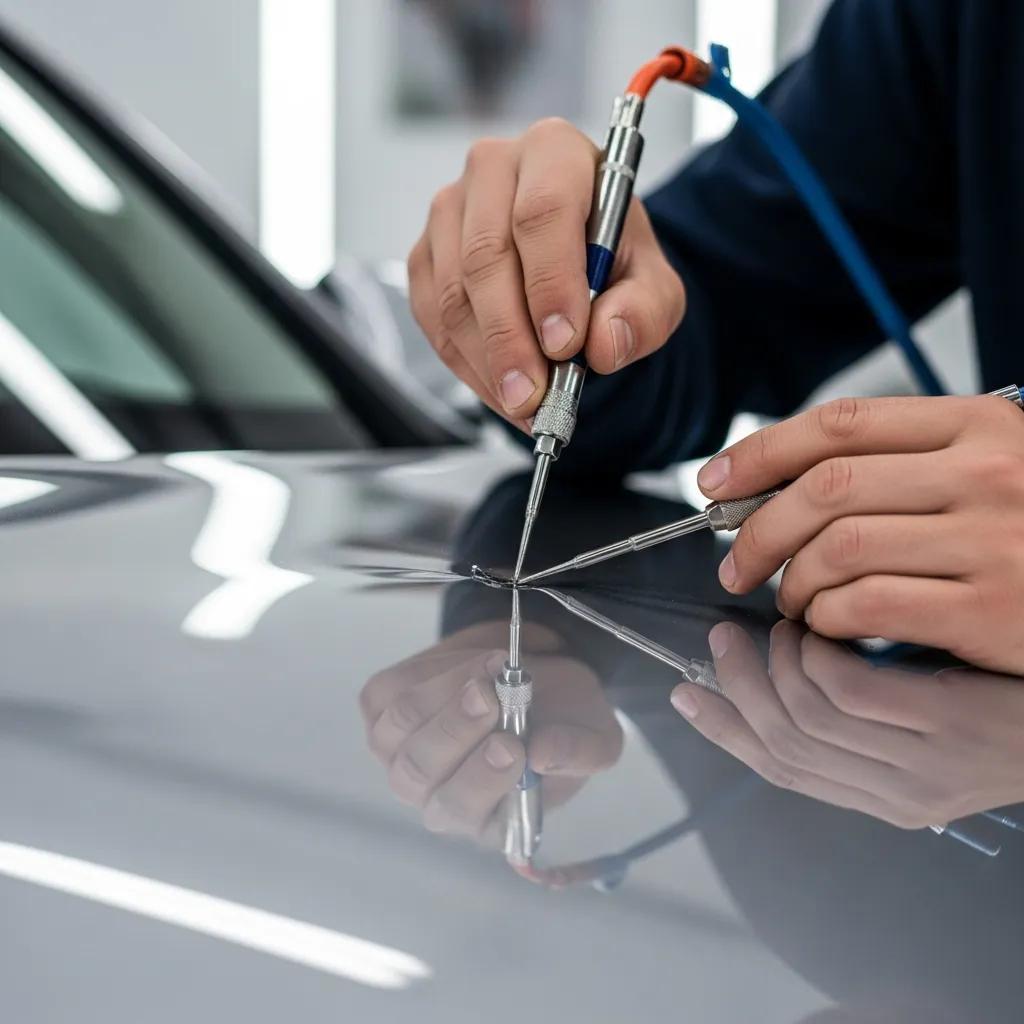
Paintless Dent Repair (PDR) removes dents by accessing the back side of a damaged panel and gently reshaping the metal back to its original form. Skilled technicians use PDR rods, glue-pull tools, and inspection lighting to restore panel geometry without filler or repainting. That means faster turnaround, less environmental impact, and — most importantly — the original paint and factory finish stay intact. Preserving that factory finish helps protect warranty coverage and resale value, and it avoids visible repair seams that can show up later. Knowing these advantages helps Old Town Pasadena drivers decide when PDR is the best option versus traditional bodywork.
Prime Time Collision Center offers paintless dent repair as part of its OEM-quality services, pairing certified technicians with proper PDR tooling for common local repairs. This overview highlights typical PDR capabilities and points you to the shop’s full service details under “Why Choose Prime Time Collision Center.” Their certified approach reinforces the core PDR benefits described here and ties the repair method to documented quality standards.
This comparison clarifies when PDR is usually preferred over conventional body-and-paint repairs and sets up the practical eligibility checklist that follows.
Different repair methods produce different results across paint preservation, time, cost, and warranty impact.
| Repair Method | Paint Preservation | Typical Timeframe | Warranty / Resale Impact |
|---|---|---|---|
| Paintless Dent Repair (PDR) | Preserves factory paint | 1–3 days for small panels | Neutral or positive; maintains factory finish |
| Traditional Dent Repair (fill & repaint) | Requires repainting; new finish | Several days to weeks | Can complicate color match; documented repainting |
| Panel Replacement | New panel and paint | Days to weeks depending on parts | OEM parts preserve specs if documented |
How Does PDR Preserve Your Car’s Original Paint and Value?
PDR preserves factory paint because it avoids sanding, fillers, and repainting. Technicians carefully reshape the metal so the original clearcoat and color layers remain untouched, preventing common color-match and adhesion issues. That matters for warranty and resale — insurers and buyers often value unaltered panels and documented OEM finishes. A clean, well-executed PDR can help maintain trade-in value and avoid problems at lease return compared with panels that have been repainted.
Keeping the original paint also lowers the long-term risk of rust or mismatched panels, which leads naturally to how to tell if a dent is a good PDR candidate.
Which Types of Dents Can PDR Effectively Fix in Old Town Pasadena?
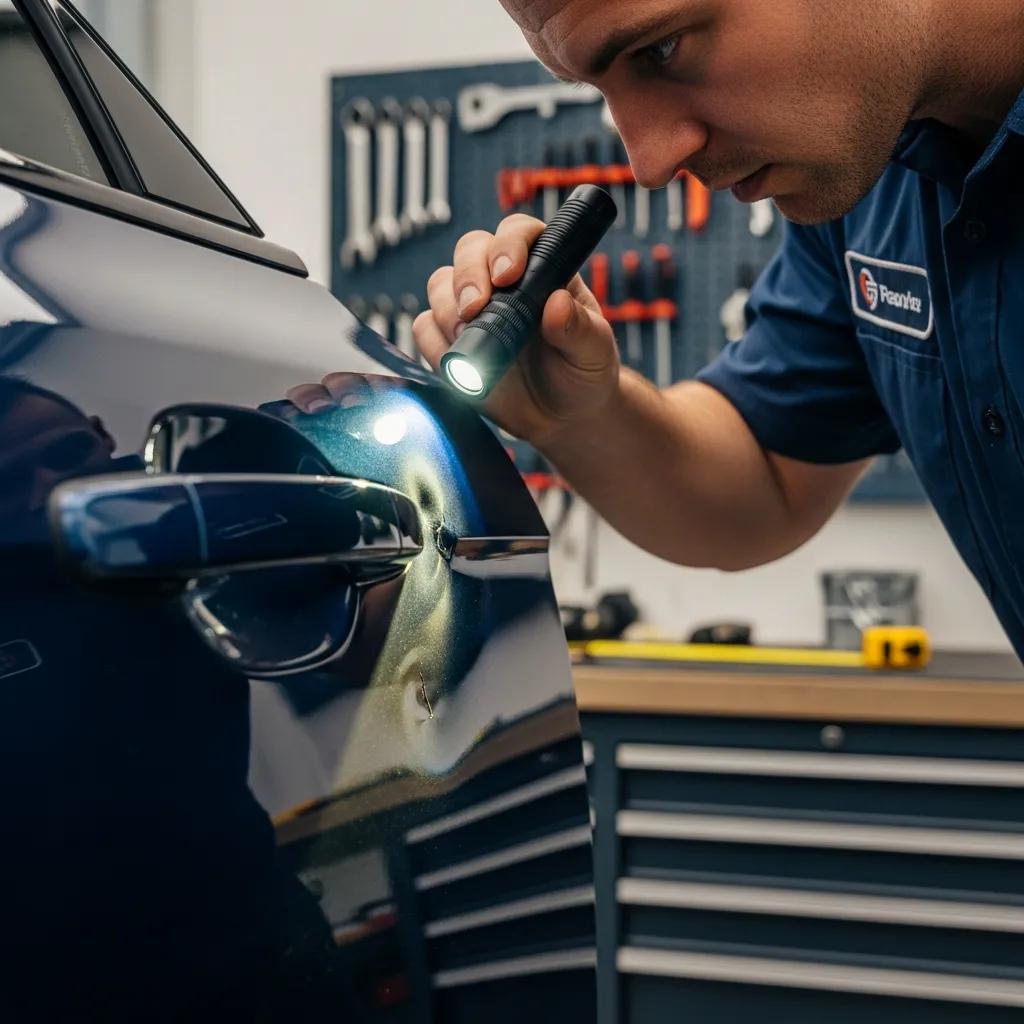
PDR works best on small, shallow dents where the paint surface is intact and there are no sharp creases or torn metal. Common successes include door dings, small hail dents, and minor bumper indentations. Dents near panel edges, deep folds, or areas with cracked, chipped, or bubbling paint are usually poor candidates and may need traditional repair or replacement. A quick homeowner check: look for continuous paint, shallow depth, and whether the technician can access the panel’s backside — if so, PDR is more likely to be successful. These rules help you decide whether to schedule an in-shop estimate or consider other repair methods.
Use the short checklist below to self-evaluate dent suitability before scheduling a professional inspection.
- Paint surface is smooth and unbroken.
- Dent is shallow rather than deep or folded.
- Panel can be accessed from behind or via glue-pull methods.
- No attached trim or structural damage blocking the panel.
If most items apply, book a professional estimate; if not, expect a traditional repair path explained in the following section.
Why Choose Prime Time Collision Center for Dent Repair in Old Town Pasadena?
Prime Time Collision Center is a local choice for OEM-quality dent repair and PDR. We bring certified technicians, assist with insurance coordination, and offer customer conveniences designed for Pasadena drivers. Our I‑CAR Platinum credential shows our team trains to current repair procedures and vehicle safety systems — important for consistent results and ADAS calibration awareness. We work with all major insurers and provide free 24/7 towing and complimentary estimates to simplify logistics after an incident. Those service elements — training, insurance support, and local conveniences — connect technical repair choices with real-world ease for vehicle owners.
Key value points that matter when picking a repair provider in Old Town Pasadena:
- I‑CAR Platinum technicians: trained on vehicle-specific repair procedures and safety systems.
- Insurance coordination: help with estimates and adjuster communication.
- Local conveniences: free towing services and complimentary repair estimates.
These features reduce hassle for owners navigating repairs and lead into what I‑CAR certification means for repair quality.
How Does I-CAR Platinum Certification Ensure Quality Dent Repairs?
I‑CAR Platinum certification means a shop’s technicians have completed advanced training relevant to modern vehicles — from structural repair to refinishing and electronic system calibration. That training increases the chance repairs follow manufacturer procedures, lowering the risk of mistakes that could affect safety systems like ADAS. Certified teams are more likely to document repair steps and apply OEM techniques, which supports consistent results and traceable quality. Choosing a certified provider helps you align repairs with manufacturer expectations and with insurer requirements that increasingly reference certified pathways.
Knowing why certification matters prepares you for the insurance support a certified collision center can provide.
What Insurance Claim Support Does Prime Time Collision Provide?
Prime Time Collision Center helps by preparing detailed estimates, communicating directly with adjusters, and submitting documentation to speed approvals for PDR or traditional repairs. Our experience with major insurers reduces back-and-forth by clarifying repair scope and timelines early in the process. For many owners this coordination means faster authorizations, smoother scheduling, and less administrative burden — especially after hail storms or multi-vehicle incidents. The next section outlines the full range of dent repair services available in Old Town Pasadena and how eligibility guides the repair path.
What Comprehensive Dent Repair Services Are Available in Old Town Pasadena?
Repair options in Old Town Pasadena range from mobile PDR for small dings to full OEM-certified body-and-paint repairs for complex damage, giving owners flexible choices based on severity and urgency. Common services include paintless dent repair, conventional dent repair with filling and repainting, panel replacement, hail cluster repair, and mobile on-site PDR for accessible dents. Each option has different turnaround times and OEM considerations. Your choice depends on damage severity, paint condition, and whether ADAS calibration or structural work is required. The service matrix below helps match common dent types to realistic expectations and constraints.
The service matrix below maps common dent repair types to practical expectations and repair constraints.
| Service Type | Typical Turnaround | PDR Eligibility | OEM Considerations |
|---|---|---|---|
| Hail Repair | Several days to weeks | Often eligible for PDR if paint intact | May require documented multi-panel repairs for insurers |
| Door Ding Removal | 1–3 days | Highly eligible if shallow and paint intact | Minimal OEM impact if PDR used |
| Crease Repair | Several days | Usually not eligible for PDR; needs filling/repaint | OEM methods recommended for structural accuracy |
| Mobile PDR | Same day to 1–2 days | Eligible for small dents and dings | Limited for ADAS work; shop repairs may be required |
How Is Hail Damage Repaired Using Paintless Dent Repair?
Hail repair usually starts with a full assessment and mapping of affected panels to count dents and confirm paint condition. When paint is intact and dents are shallow across panels, technicians use PDR cluster techniques to methodically restore metal continuity and return the vehicle to its pre-loss appearance. Large hail events stretch timelines because multiple panels are involved and insurers may need to coordinate rentals and approvals. Still, when applicable PDR is a cost-effective, paint-preserving solution. If paint is cracked or there are deep creases, supplemental traditional repairs or panel replacement may be required and documented for warranty and resale purposes.
That workflow leads into the typical door-ding and minor-collision scenarios we handle next.
What Are the Options for Door Ding and Minor Collision Dent Removal?
For door dings and small collision dents, PDR is often the preferred option when paint is intact and the dent is accessible — delivering factory-like results without filler or repainting. When panels show sharp folds, metal stretch, or paint damage, technicians will recommend traditional repair that includes pulling, filling, sanding, and repainting to restore shape and color match. Luxury vehicles or panels with integrated sensors may require OEM-specified procedures and parts, which can affect cost and turnaround. A qualified estimate will clarify trade-offs and expected results before any work begins.
The next practical decision many owners face is whether to use mobile or shop-based PDR.
How Does OEM Certified Dent Repair Protect Your Vehicle’s Safety and Warranty?
OEM-certified repair means following manufacturer procedures, using approved techniques, and when required, genuine or OEM-equivalent parts. That approach protects safety-system integrity and warranty coverage because repairs follow documented sequences — structural straightening, torque specs, sensor recalibration, and final inspections — so airbags, ADAS, and other systems remain within factory tolerances. For owners, OEM-certified repairs reduce liability risk, preserve warranty terms, and provide clear documentation for resale or lease-return inspections. In short, certified repairs create traceable proof that safety-critical work was performed to manufacturer standards.
Understanding OEM requirements sets the stage for why many owners prioritize certified repair workflows.
Why Are OEM Certifications Important for Dent Repair in Old Town Pasadena?
OEM certifications and adherence to manufacturer procedures reduce the risk of improper repairs that could change crash performance or affect ADAS calibration. Manufacturers define specific repair and calibration steps for each model, and certified facilities document repair sequences and keep training records showing technicians understand model-specific needs. Insurers and buyers respect that documentation during inspections. For complex repairs that need sensor recalibration or replacement parts, OEM guidance helps ensure safety systems return to factory specifications. Recognizing these requirements helps owners choose certified workflows when safety or warranty implications matter.
The effect of OEM-certified repairs on resale value and safety is the next topic.
How Does OEM Certified Repair Affect Resale Value and Vehicle Safety?
OEM-certified repairs protect resale value by providing documented evidence that repairs followed manufacturer procedures, reassuring buyers and appraisers about both structural and cosmetic integrity. Properly calibrated safety systems and documented OEM parts usage reduce future claims of improper repair and limit depreciation tied to visible or suspect bodywork. From a safety standpoint, certified repairs help ensure airbags, frame alignment, and ADAS features operate within intended tolerances, lowering the risk of system failures. Sellers and lessees can present repair documentation as part of a clear vehicle history, which often improves marketability and eases lease-return inspections.
Those resale and safety benefits lead naturally into the limits and advantages of mobile repairs, discussed next.
What Are the Advantages of Mobile Dent Repair Services in Pasadena?
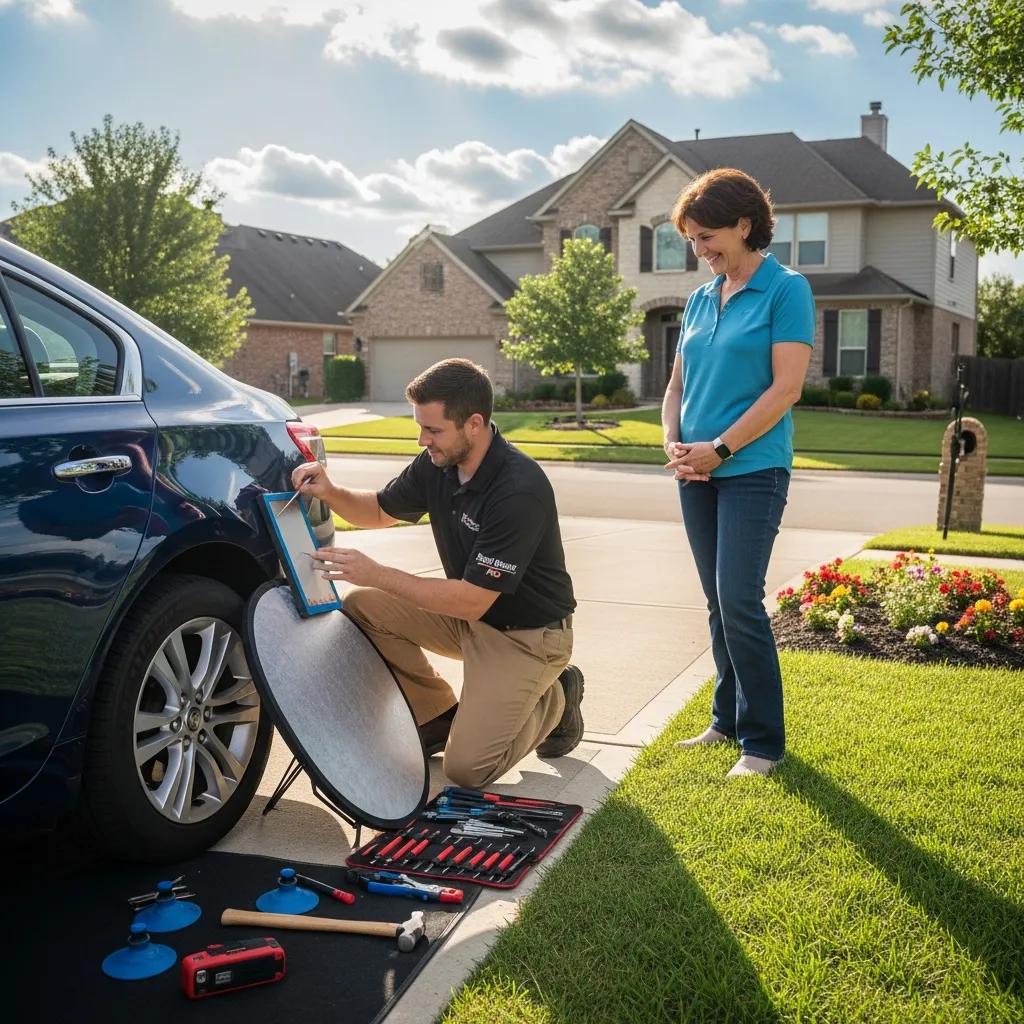
Mobile dent repair brings PDR technicians to your location for fast, convenient service on many small dents. The main benefit is time saved: technicians can often fix door dings and minor dents the same day at a parking lot or driveway using portable tools and inspection lighting. Limitations include the need for suitable conditions — flat, clean, shaded space and good weather — and the fact that ADAS calibrations or major structural repairs can’t be completed on-site. For owners who value speed and convenience, mobile PDR is practical; for sensor-related or complex work, a shop visit with calibration equipment is still required.
Next we outline the typical mobile PDR workflow and what to expect for timing.
How Does Mobile PDR Offer Convenience and Speed for Dent Removal?
Mobile PDR usually begins with a remote assessment or photo estimate, followed by a scheduled on-site visit where technicians set up lighting and access points and use portable rods or glue-pullers to restore panels. Single-panel door-ding jobs often take 30 minutes to a few hours depending on access and complexity, letting you get back to your day quickly. Quality control includes before-and-after inspection under consistent lighting to confirm paint integrity; if deeper issues appear, the technician will recommend a shop follow-up. When conditions or technical needs demand it, we shift the job to a shop that supports OEM procedures and system calibrations.
Here are the common mobile-eligible repairs and their constraints in Old Town Pasadena.
What Types of Mobile Dent Repairs Are Offered in Old Town Pasadena?
Mobile PDR commonly handles small door dings, shallow hood dents, and minor hail dents when paint is intact and access is feasible — perfect for quick work in parking lots or driveways. Constraints include deep creases, edge-area dents where backside access is blocked, paint damage, and weather that prevents safe on-site work. Vehicles with ADAS sensors or structural concerns will be recommended for shop-based repair and calibration. Request a mobile assessment to confirm eligibility and whether a shop visit is needed for complete restoration.
A short pros and cons summary for mobile repair:
Mobile PDR is best suited for the following situations:
- Small, accessible dents with intact paint.
- Owners needing same-day or low-downtime service.
- Locations with adequate shade and flat working surfaces.
Mobile PDR is less suitable when repairs will require calibration or parts replacement — which brings us to insurance considerations below.
How Can Vehicle Owners Navigate Insurance Claims for Dent Repair in Old Town Pasadena?
Filing an insurance claim for dent repair typically follows a set sequence: document the damage, notify your insurer, obtain estimates, submit documentation, and schedule repairs once approved. Each step benefits from clear photos, estimates that separate PDR from traditional methods, and technician notes about OEM or ADAS needs. Expect insurers to ask whether repairs preserve factory paint, require parts, or involve safety-system work — providing detailed estimates and certified-shop documentation speeds approvals. The table below maps each claim step to the owner’s actions and how a repair shop can help.
| Claim Step | Owner Action | How a Repair Shop Assists |
|---|---|---|
| Document Damage | Take photos, note time/place | Provide photos of repairable dents and initial assessment |
| Contact Insurer | Report claim, get claim number | Prepare and submit a detailed estimate to the adjuster |
| Obtain Estimates | Get PDR vs traditional quotes | Offer written estimates and explain OEM requirements |
| Approval & Scheduling | Approve scope, schedule repair | Coordinate with adjuster and confirm timeline |
| Repair & Documentation | Inspect repair and collect documentation | Deliver repair records and calibration certificates if needed |
What Steps Are Involved in Filing a Dent Repair Insurance Claim?
Start by photographing all damage from multiple angles and recording the location, date, and any witness details. Contact your insurer to report the loss and get a claim number, then gather written estimates from qualified shops that distinguish PDR from traditional repair and note any OEM calibration needs. Submit those estimates and photos to the insurer and coordinate with your chosen repair facility for an adjuster inspection or remote estimate submission. After approval, schedule repairs and request documentation of all work performed, including any calibration records or OEM parts used to preserve warranty and resale evidence.
How Does Prime Time Collision Center Assist with Insurance Processes?
Prime Time Collision Center prepares and submits detailed estimates that explain whether PDR or traditional repair is recommended, communicates directly with adjusters to clarify scope, and documents OEM-specific needs like sensor calibration or parts ordering. Our experience with major insurers, combined with free estimates, helps reduce administrative friction after hail or minor collisions. We can coordinate towing, arrange repair schedules, and provide the repair documentation you’ll need — helping you focus on recovery while our team manages the technical and paperwork steps.
Get a Free Dent Repair Estimate
Need dent repair or paintless dent removal in Old Town Pasadena? Contact Prime Time Collision Center for a free estimate and to discuss whether mobile PDR, OEM-certified shop repair, or traditional body work is the right fit for your vehicle. We support insurance coordination, I‑CAR Platinum-trained repairs, and offer free towing and estimates to make the process easier. Describe the damage and ask for an assessment that notes PDR eligibility, expected turnaround, and any ADAS calibration needs so you can compare options with confidence. Scheduling an estimate is the first step toward restoring your vehicle while preserving paint integrity and safety documentation.
Frequently Asked Questions
1. What is the typical cost range for Paintless Dent Repair in Old Town Pasadena?
Cost varies by dent size, location, complexity, and shop pricing. Small dents often run $75–$150, while larger or more complex repairs can be $150–$500. We recommend getting estimates from certified shops to compare price and quality.
2. How long does it take to complete a Paintless Dent Repair?
Timing depends on dent size and complexity. Small dents are commonly repaired in 1–3 days; larger jobs may take longer. Mobile PDR can sometimes complete minor repairs the same day. Ask your technician for a tailored timeframe.
3. Can Paintless Dent Repair be performed on all types of vehicles?
PDR suits many vehicles but not all. It works best on shallow dents with intact paint and no sharp creases. Luxury vehicles or cars with advanced safety features may need specialized or OEM-certified repairs. Have a qualified technician assess your vehicle to determine viability.
4. What should I do if my vehicle has a dent but the paint is damaged?
If the paint is damaged, PDR may not be appropriate since it requires intact paint. In those cases traditional repair — pulling, filling, sanding, and repainting — is often necessary. A certified technician can recommend the best approach for appearance and long-term protection.
5. How can I maintain my vehicle’s value after a dent repair?
Choose a certified repair shop that follows OEM methods and uses approved parts. Keep detailed records of all repairs, including PDR documentation, to reassure future buyers. Regular maintenance like washing and waxing also helps protect the paint and overall condition.
6. Are there any warranties associated with Paintless Dent Repair services?
Many reputable PDR providers offer warranties that cover workmanship for a specified period. Warranty terms vary, so ask about coverage and any exclusions before you commit to repairs.
7. How does weather affect the Paintless Dent Repair process?
Weather matters for mobile and some shop PDR work. Ideal conditions are dry, mild temperatures and low humidity. Extreme heat, cold, rain, or high humidity can interfere with tools and technique, so schedule work during favorable conditions when possible.
Conclusion
Choosing Paintless Dent Repair in Old Town Pasadena lets you protect your vehicle’s original paint and value while often reducing repair time. With certified technicians and an emphasis on OEM standards, Prime Time Collision Center delivers reliable solutions that work with your insurance needs. Understanding PDR benefits and available services helps you make informed choices that safeguard your investment. Contact us today for a free estimate and take the first step toward restoring your vehicle’s appearance.